
0

0
Read Time:2 Minute, 55 Second
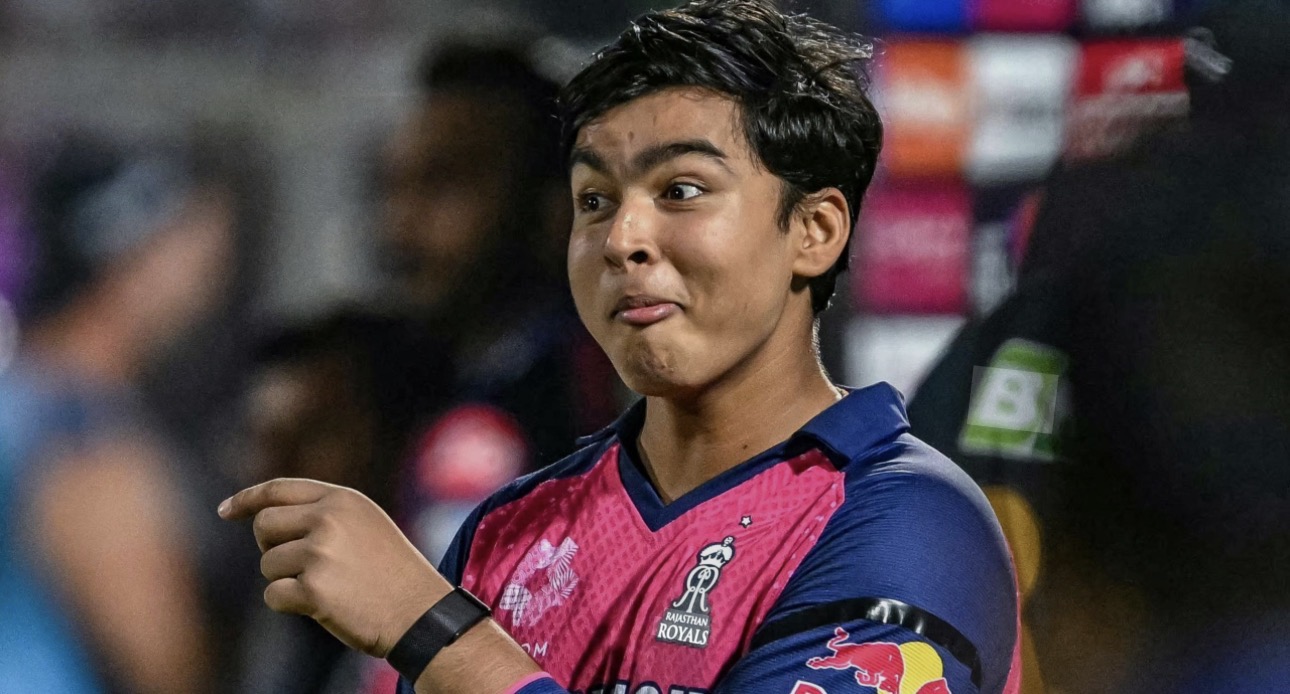
Vaibhav Sooryavanshi has suddenly become the toast of the nation. Wherever you go, conversations seem to circle back to one thing — his extraordinary hitting ability. It’s not just the Rajasthan Royals benefiting from his presence in the middle; he appears to have captured the imagination of cricket followers across the country.
The way he is striking the ball, almost as if there is no tomorrow, has left many in awe. CricBlogger spoke to several budding and current domestic cricketers, and the response was unanimous — they are mesmerised by the sheer force and clarity of his batting. The impact he creates at the crease has become the biggest talking point, overshadowing almost everything else.
But there is a slightly worrying trend emerging alongside the hype. Many young players are now trying to replicate his style during their net sessions. The focus has shifted almost entirely to power-hitting — aiming for six sixes in an over, treating every delivery as a boundary opportunity. This is being celebrated as “power cricket,” but it comes with its own set of concerns.
Bowlers, in this narrative, are left with little respite — almost reduced to mere targets. When totals like 265 start looking chaseable in a T20 game, the question arises: where does the balance lie?
There is a growing urge among youngsters to emulate Sooryavanshi without pausing to assess whether it suits their own game. Everyone wants to step out and clear the ropes, but not everyone has the same skill set or temperament. Senior Indian cricketers, when asked privately, offer a more measured view — they believe he needs time. No one is willing to say, with certainty, that he has already “arrived,” even though the craze around him is undeniable.
The bigger point is that cricket is not just about operating at top gear. The ability to shift gears remains crucial.
Take Suryakumar Yadav, for instance — one of the finest T20 batters in the world and India’s current T20 captain. When tested in the ODI format, he struggled, largely because adapting his game across formats proved challenging. With India looking to build more all-format players in the mould of Virat Kohli, it’s time we also start endorsing cricketers who can shift gears and adapt to different match situations. Otherwise, the consequences could be dangerous in the years to come.
That’s where Sooryavanshi’s journey becomes interesting. He may well be ready for the T20 stage, but other formats will demand a deeper evaluation of his technique and temperament.
At a micro level, however, the “Sooryavanshi effect” is already making an impact — and not entirely in a positive way. Young cricketers are increasingly drawn to an all-or-nothing approach, obsessed with boundaries and sixes, often ignoring the nuances of building an innings.
Everyone wants to get there quickly. But in cricket, as in most things, the shortest route isn’t always the smartest one. In other words, no one wants to be Rahul Dravid anymore. Ironically, he is the very figure who once warned the system against overhyping youngsters amid the glitter of the IPL. Yet, the game seems to be drifting in exactly that direction.
Who said Under-19 cricketers shouldn’t play the IPL? They are playing it — and many are doing so successfully.
The real question, however, isn’t about opportunity; it’s about readiness and longevity. As Dravid has often emphasised, early exposure is valuable — but without proper grounding, the glitter of the IPL can sometimes outpace genuine development.

Happy
0 %

Sad
0 %

Excited
0 %

Sleepy
0 %

Angry
0 %

Surprise
0 %