

Sure, maybe it starts as a small idea. Drive a little less. Ride your bike to work a couple days a week. Try transit when it makes sense. But it’s revolutionary. Rising costs, a dying planet, constant traffic, the creeping sense that your daily routine revolves around a machine that drains your time, money, and […]
Sure, maybe it starts as a small idea. Drive a little less. Ride your bike to work a couple days a week. Try transit when it makes sense. But it’s revolutionary.
Rising costs, a dying planet, constant traffic, the creeping sense that your daily routine revolves around a machine that drains your time, money, and attention.
What better time to rethink it?
Going car-light—or even car-free—isn’t about sacrifice. For most people, it starts with one small shift and quickly turns into something else entirely: more money, less stress, better health, and a stronger connection to the places you move through every day.
And here’s the surprising part: the benefits don’t stop with you. They ripple outward—to your city, to the environment, and even to the people still driving.
Here are 46 reasons to ditch your car (or at least stop using it for everything).
Cycling Montreal’s Plateau neighborhood
Bike Commuting Benefits
- Stop paying for gas. Fuel prices fluctuate constantly, and it’s hard to budget around them. Choosing to walk, bike, or take transit means more money stays in your wallet.
- Reduce your daily stress. Traffic alone is a major source of anxiety. Leaving the car behind can make your commute a calmer, more predictable experience.
- Skip insurance bills. Insurance can be a massive ongoing expense. Without a car, you can cut it entirely—or at least reduce it.
- No more parking fees. City parking can add hundreds a month to your costs. A bike or walking commute doesn’t care about meters.
- Forget registration renewals. No paperwork, no deadlines, no extra fees.
- Lower overall cost of living. Transportation is one of the biggest expenses for most people. Reducing it frees up money for rent, groceries, or experiences.
- Have more disposable income. Travel, hobbies, dining out—you can enjoy more of life.
- Live closer to work. Without a car, proximity matters more than parking. You can move to walkable, bike-friendly neighbourhoods.
- Stop losing money to depreciation. Cars lose value the second you buy them, but bikes or transit passes don’t.
- Enjoy calmer commutes. Moving through your city feels less like a battle and more like a transition.
- Build in daily decompression time. Your commute becomes a mental buffer between work and home.
- Create a better work-life boundary. Cycling or walking helps you leave work stress at the office and enjoy home life more fully.
- Smell the world again. Rain, flowers, food—it all becomes noticeable.
- Improve your mood. Exercise, fresh air, and sunlight boost serotonin and reduce stress.
- Get daily exercise without trying. Walking or cycling to work adds movement naturally, no gym required.
- Lose weight naturally. Consistent movement contributes to gradual, sustainable weight loss.
- Improve cardiovascular health. A commute that moves your body is better for your heart than sitting behind the wheel.
- Avoid large repair costs. Cars break down. And when they do, it’s almost always expensive.
- Build stronger muscles. Especially your legs—and yes, you’ll notice the difference.
- Increase stamina. Everyday movement adds up quickly, making even weekend adventures easier.
- Spend more time outdoors. Exposure to sunlight and fresh air improves mental and physical health.
- Say goodbye to car payments. Monthly payments can rival rent. Removing them feels like an instant raise.
- Sit less. Your body was not designed for hours of sedentary driving.
- Make spontaneous stops. You see something interesting? Stop and enjoy it.
- Redefine freedom. It’s not about speed—it’s about choice.
- Travel more intentionally. Every trip becomes a conscious decision, not a default.
- Notice the seasons changing. The smell of rain or the colors of fall become part of your day.
- Breathe fresh air. Not filtered, not trapped inside glass.
- See your neighbourhood up close. Details you’d miss in a car suddenly become visible.
- Hear your surroundings. Cities sound different when you’re immersed in them.
- Feel connected to your environment. You’re part of it, not just passing through.
- Stop whenever you want. No rules, no rush, no frustration.
- Interact more with neighbours. A simple nod becomes a conversation, a sense of community.
- Experience your city at a human scale. Not 60 km/h behind glass.
- Support local businesses. Stopping is easy when you’re not driving.
- Reduce traffic congestion. Fewer cars = smoother flow for everyone.
- Improve air quality. Cleaner air benefits everyone in your community.
- Reduce your carbon footprint. One of the simplest ways to lower greenhouse gas emissions.
- Lower air pollution. Fewer tailpipes mean cleaner air for everyone.
- Reduce noise pollution. A quieter city is a happier city.
- Help improve public health. Clean air = healthier lungs, less disease.
- Be a great example for your kids. Kids who grow up walking or biking learn how to navigate their world, not just be driven through it.
- Participate in shaping your city: When you bike or walk, you notice infrastructure gaps—and you’re more likely to push for change.
- Create visible change. One person biking might feel small—but many people doing it reshapes norms quickly.
- Challenge car-first thinking. You become a quiet counterpoint to the idea that every trip requires a vehicle.
- Support local democracy. People who move through their neighbourhoods are more likely to engage in local issues, meetings, and decisions.
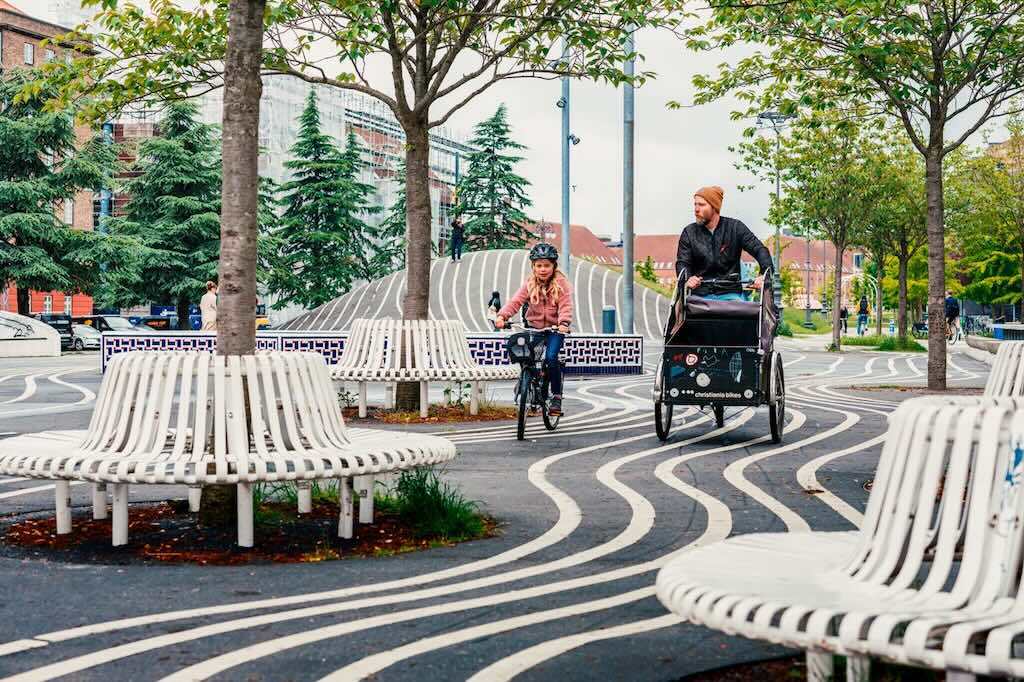
Copenhagen a great bicycling city for families
The Takeaway
You don’t need all 46 reasons to make a change.
Most people start with one: saving money, getting exercise, or avoiding traffic.
But what keeps them going is everything else.
Because once these benefits start stacking up—once your days feel easier, lighter, more connected—it becomes clear that this isn’t about giving something up.
It’s about getting a lot more back.