
What is the greatest image in cricket? If you were a sculptor, it might be a perfect elbow up cover drive. If you’re filming, it would probably be a bowler leaping at the crease. And if you’re painting, the entire scene of a ground is majestic.
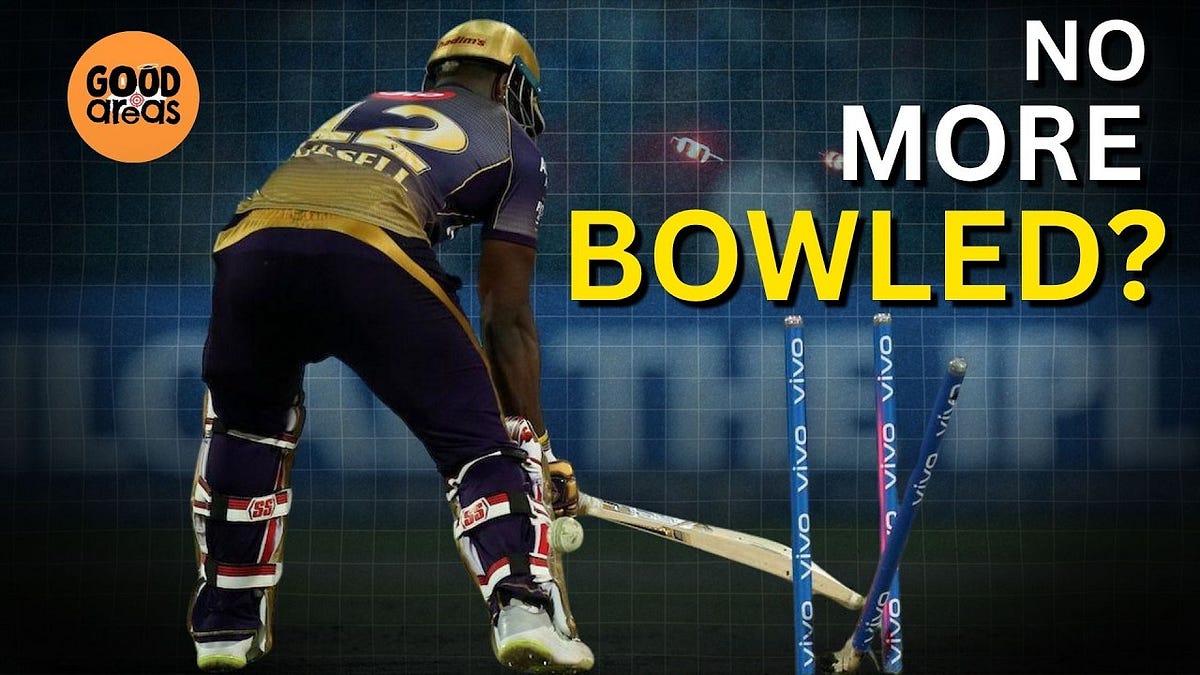
But there is something about stumps splattered from a fast bowler. The rawness, carnage and finality. They were there, the batter was supposed to protect them, and now it’s a wooden massacre. They sit splayed, the bails are who knows where, and the batter is terrified of looking back.
If you are in a ground, the biggest reaction of any crowd is always for a bowled. It’s primal. And this year in the IPL, you are less likely to see one than ever before.
Our sport’s greatest event is disappearing and being replaced by wides. The best thing in cricket, replaced by the worst.
***
Cricket used to be government-run. Sure, there was a slight difference, but it was a not-for-profit style. It was essentially run by grey men in old-boy blazers to sit in private dining rooms and get their friends free tickets. It was not marketed or monetised. It existed, and paid for itself, and that was all anyone needed from the sport.
But cricket is now at the whims of free markets and is a billion-dollar industry. The players get paid, probably still under their worth, but decent professional athlete wages. They work for billionaires, not cricket administrators exclusively. And the future of the game is no longer in committees, but instead moves on the whims of the market cycle.
That has affected how cricket is played on the field. In the early 2000s, teams looked at Moneyball as a template for limited-overs cricket. England used it even in Tests. TV companies like SuperSport, Channel Four and Channel Nine brought in gimmicks that eventually changed the sport on the pitch and became playing conditions.
Then through the Rajasthan Royals early analysis, cricket changed on the field at a rapid rate. Match-ups are now an old cricket phrase your uncle moans about.
And what the IPL did was not invent new tactics, but franchise them. Players and coaches move around the world playing in other leagues. They’re sponges, mopping up tips and tricks, but now they have the budget and time to use them at this level. Most non-Indian franchises don’t have time to think about what they are doing beforehand due to their low budgets. IPL teams spend months preparing for their league.
New Zealand cricketers would do similar things in the 80s, but they would be taking their ideas from local cricket, and fitting in between their jobs of teaching or driving cabs. The current brain trusts in the IPL are like cricket’s first funded strategic thinktanks.
But even with all that money, brains and time, the IPL was not all that different from any other league on the field. And that will not do when you are the most expensive show in town.
After the Hundred’s tinkering and the Big Bash’s random experiments, the IPL had the Impact Sub.
According to the officials at the time, “A number of team sports allow teams to make tactical substitutes i.e., football, rugby, basketball, baseball. The substitute is allowed to perform or participate like any other regular player.”
What is interesting about this change is that the unintended consequences were never tested in other lower leagues. The Impact Sub came into the SMAT (India’s second T20 league) in the same year. And even more incredibly, after bumping the rates up, it left, but left the RPO at the elevated level.
There is an argument made by many (and me frequently) that batters have been held back by orthodoxy way too much. The Impact Sub (along with the natural elevation of run scoring, T10 and even Bazball) has thrown that out the window. Batters know they can score quicker now, and they’re going for it. The Impact Sub going away might slow the rise, but not bring it back to previous levels.
Toothpaste does not easily go back into the tube.
There is no way those involved in the rule could have believed it would move this quickly. To the point where the chase for 300 scores now seems inevitable and once breached, will be consistently scaled.
It took the free market and breaking up of traditional cricket to get here – an experimental, half-thought-out rule change that has led to the greatest period of runflation in cricket history.
***
A few years back, the NBA had a problem: people stopped dunking on fast breaks. It is hard to dunk in the league, because there are a lot of very tall men to jump over. So the easiest time is when a steal or rebound turns into a fast break.
And once the offensive player has the ball and is ahead, there is little anyone can do to stop their highlight play.
So defences took an idea from European basketball and would simply grab a player in a non-traditional manner to make sure the referees saw it and called the foul. They were willing to give up one foul, to stop two automatic points.
The reason was to slow scoring, but it also stopped dunking. Which is one of basketball’s main attractions.
So the NBA introduced a rule that any foul like this resulted in a free throw from your best shooter, and you got the ball back. Now there was no reason to make this foul, as it would end up with more points, so it stopped. And the dunks came back.
Years ago, a cricketer pointed out to me that Chris Gayle had a huge amount of wides delivered to him. And I checked, and he was right. At a certain time in the innings, it made more sense to deliver a wide to him than let him reach the ball.
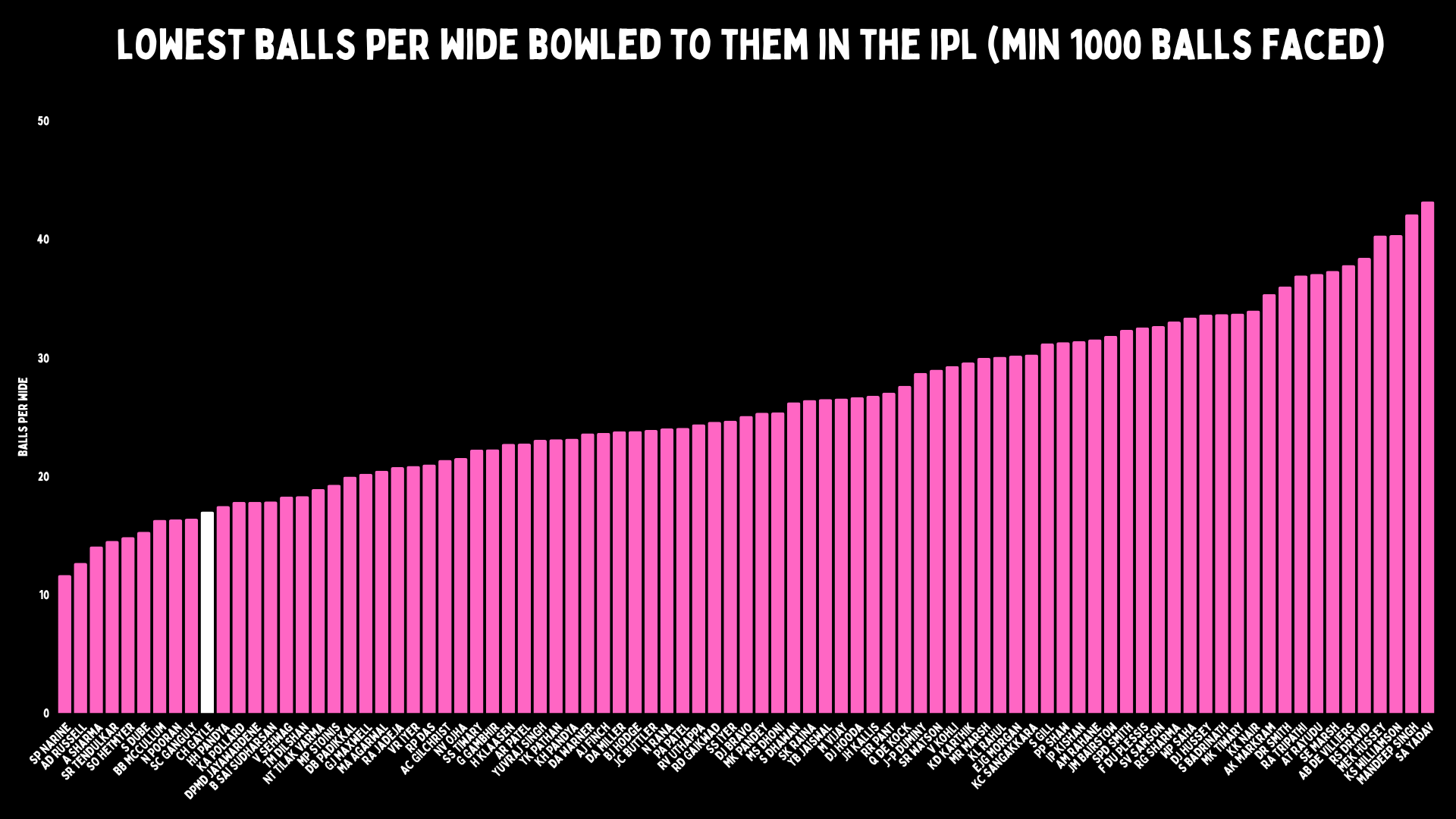
Not long after that, many players got the same treatment, and wide yorkers became a part of cricket. West Indians seem to almost always top these lists; no one wants to bowl anywhere near them.
But it makes sense for all cricket, while players have been better at hitting over the offside, usually power hits to go leg. That’s where the sixes are hit.
Bowling in T20 has been moving wider every year.
***
When DRS was introduced in cricket, many people opposed it. It wasn’t their cricket. It took a long time, nothing seemed to be sliding down legside, and the technology was clearly not perfect. It was just all wrong for them.
And many thought we could go back to a simpler time, when the TV audience knew the ball was out, but the umpire didn’t. That, of course, could never happen.
The fact that no balls and wides weren’t called with technology was also strange. So many mistakes were made by umpires, especially on wides, as batters move around the crease so much.
It is the correct decision to review wides. It is also the worst moment in cricket.
There is almost a dread that cricket fans have the moment a wide ball is bowled, and either the keeper or batter looks annoyed at the call. You know what is coming, time is about to stop still while grainy Patterson–Gimlin type footage and 1970s TV graphics appear on the screen. Some poor technician is trying to find the batter’s toes, the ball is blurred off near a weirdly drawn blue line, and for some reason, the entire thing takes three times longer than any other DRS decision.

And the pain of watching this is always worse, because you know, next ball, there will be another wide ball, and someone else will disagree with the decision, and the whole thing could happen again.
In what is the fastest-moving format of cricket, we have managed to make time stand still.
***
Mitchell Starc delivers a wide basically every two overs in the IPL, whereas Washington Sundar takes 12 overs to deliver one. And being he barely bowls any more, that means he might not even have one every year.
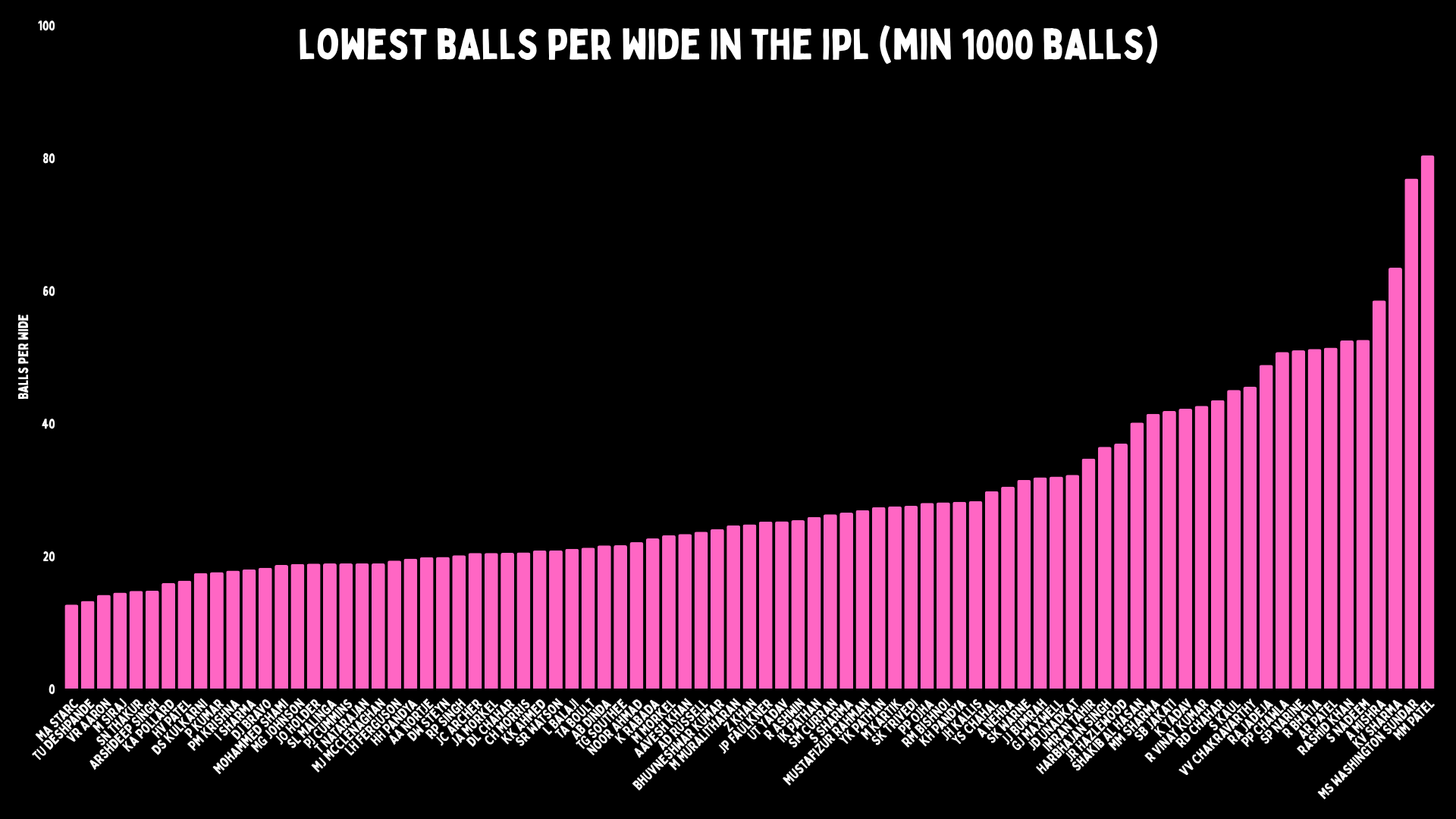
Clearly, there are different kinds of bowlers who are more likely to deliver them; most at the top are swing bowlers. It is an occupational hazard of that art.
The most interesting person here might be Kieron Pollard, a bowler who didn’t swing it much, but was always ahead of the game tactically. And he was one of the first bowlers to consistently bowl wide, and probably one of the first batters to have this delivered to him.
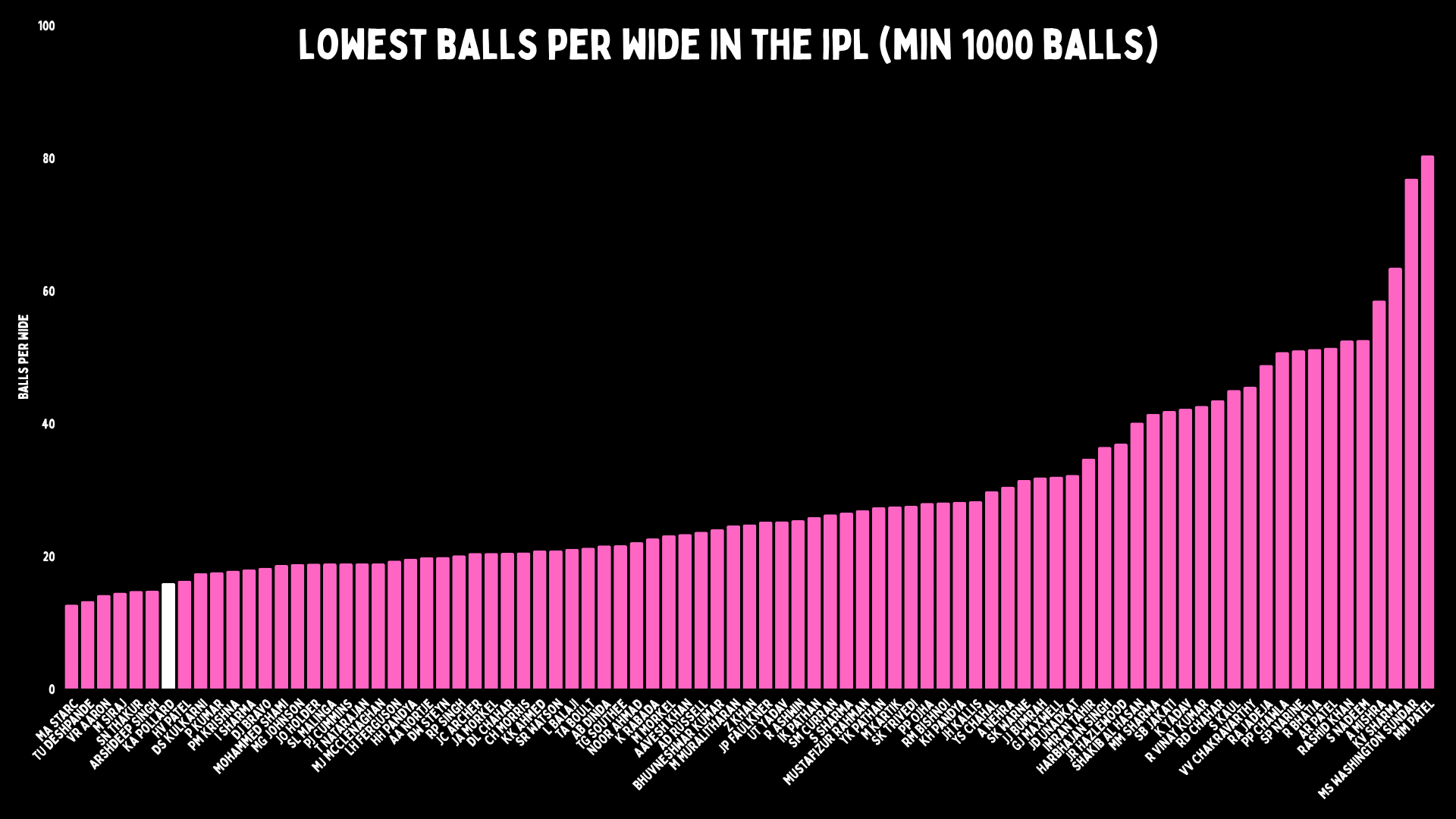
So Pollard would bowl very wide, not even at the death, and was also happy to bowl bouncers as well.
At the time, Pollard was going against the grain; now everyone is on his side.
There are 74 games played in the IPL now, and that was not always the case. But those many matches have happened before – from 2011-2013. At that stage we were looking at 600 wides delivered, the last four years it’s been around 800.
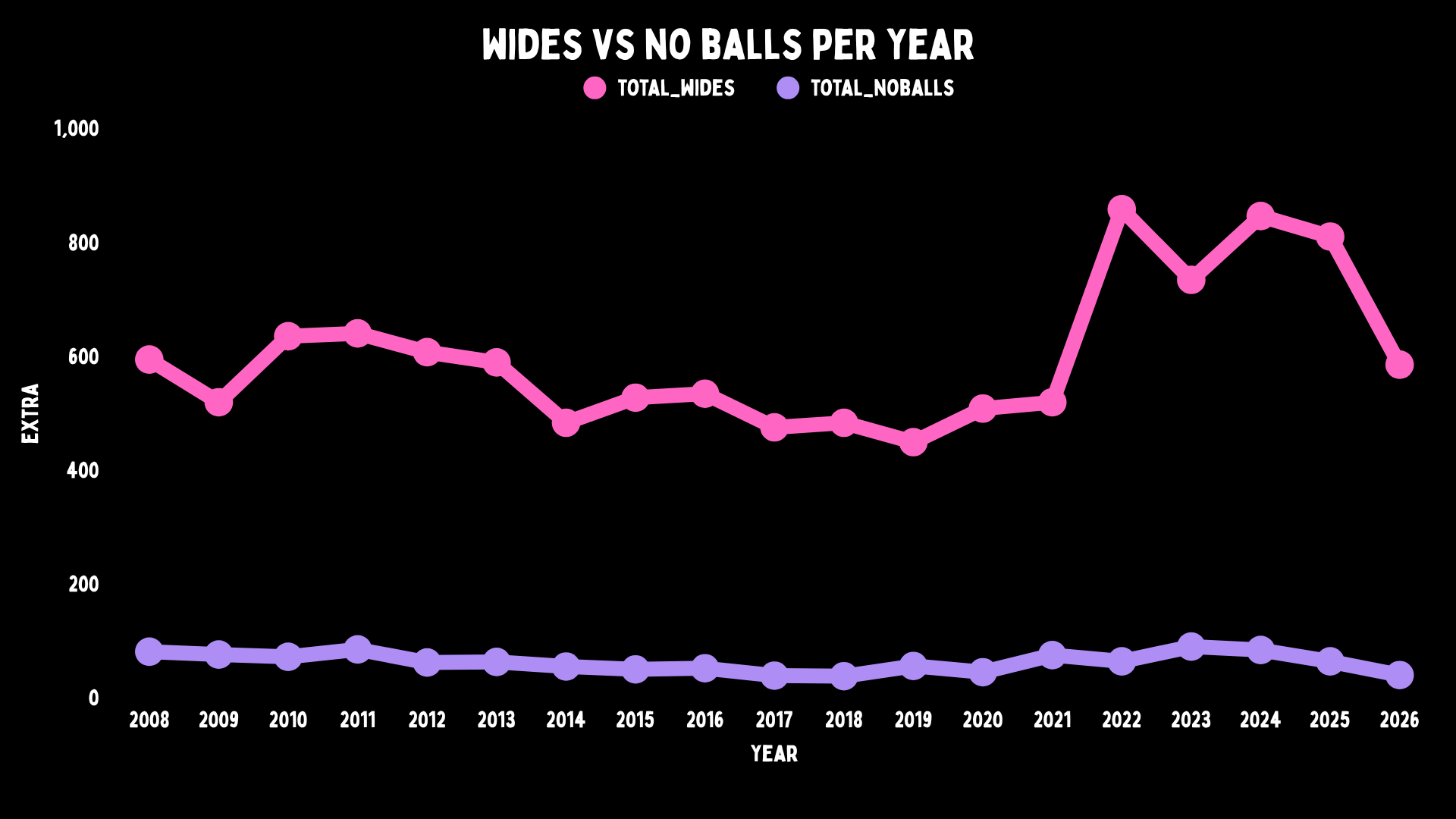
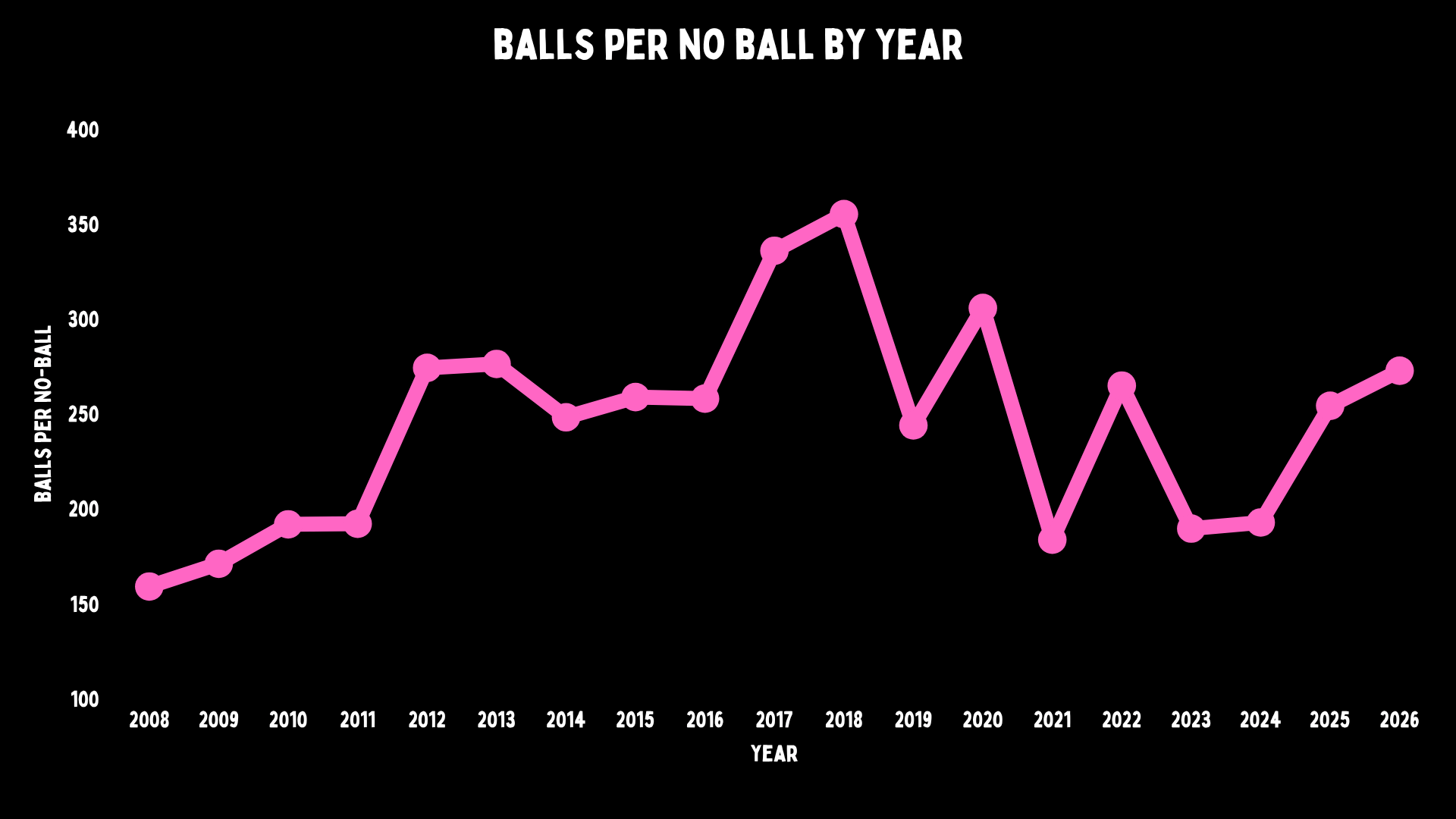
If you look at balls per no ball, there is no strong pattern here. It bounces around, but after 2018, bowlers’ frontfoots started crossing the line more. But after the Impact Sub, bowlers are not delivering them again.
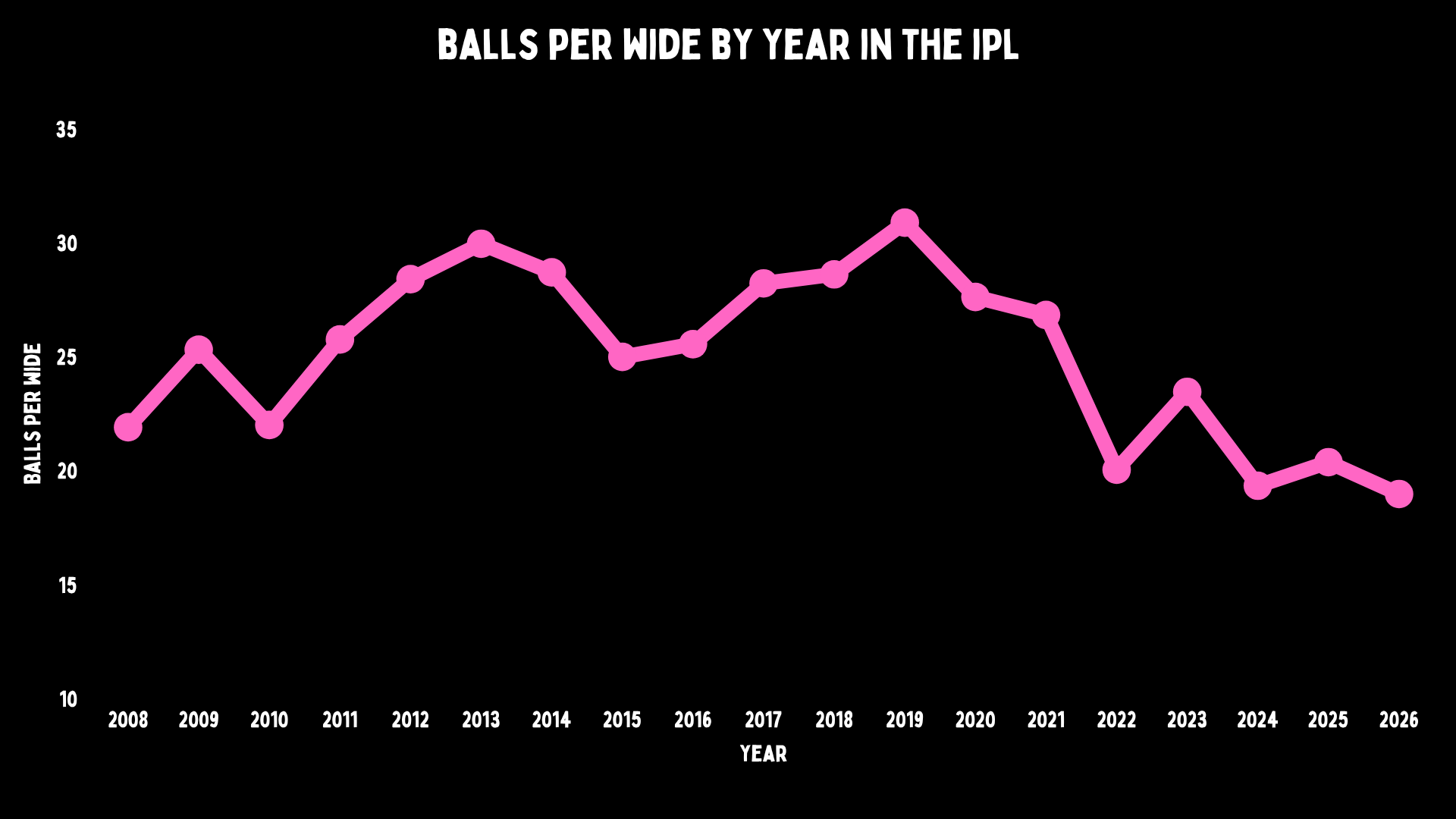
Compare that with the wides, there used to be one every five overs, and we’re now down to every three. It is hard to look at this and not think the bowlers have made a conscious decision to uncouple themselves from the stumps.
But let’s split that up, yes wides are happening more all game through, but not massively. The wide rate was roughly the same, no matter when in the game you bowled them. That is no longer true. After 2016, we have seen every year a clear separation.
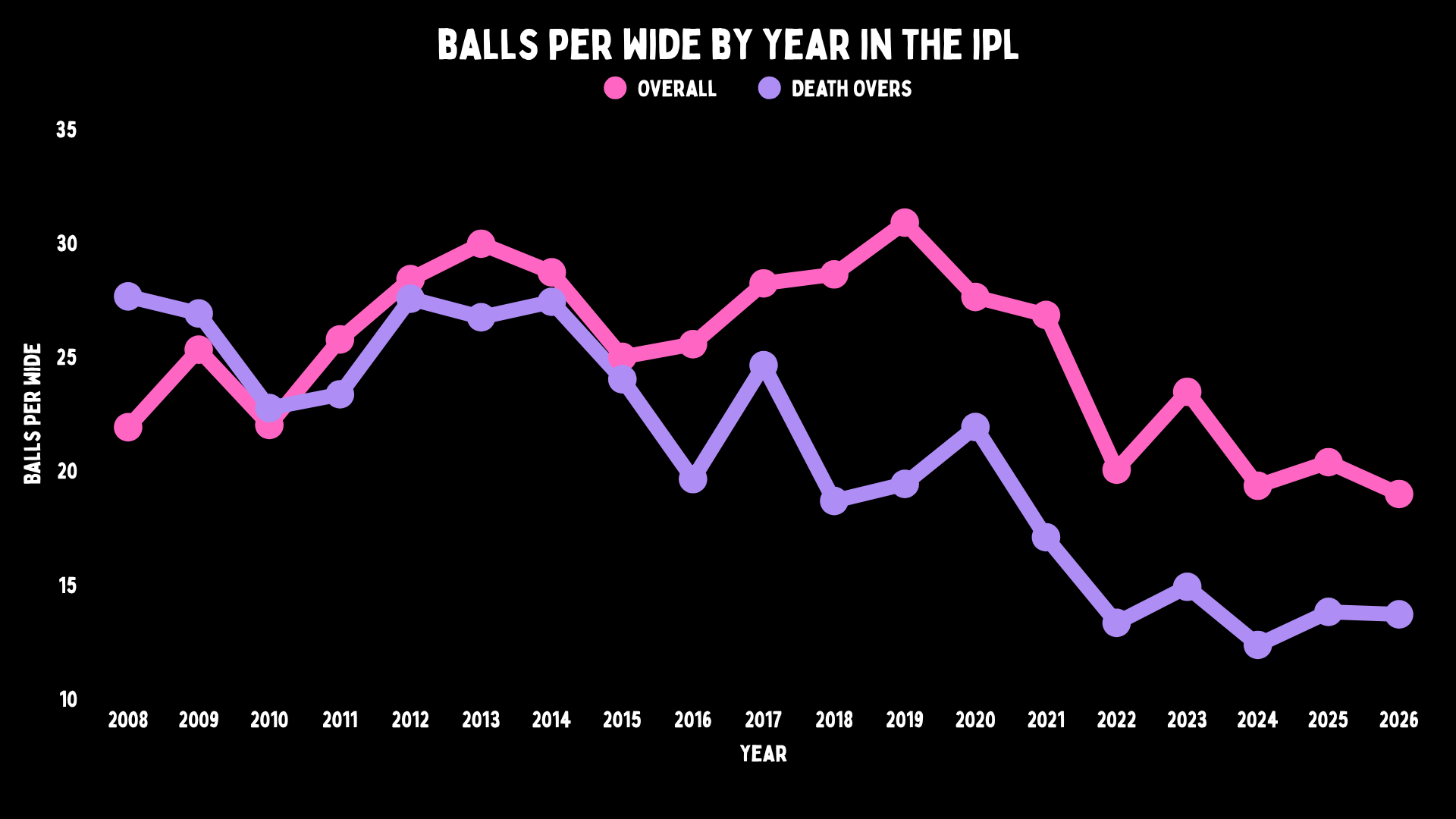
Of recent times at the death, we have more than doubled the amount. There is a wide every two overs, which is the same rate of Mitch Starc, the widest bowler in the league.
Wides at the death are now an epidemic.
***
It is up to bowlers to devise methods to stop batters. And that is not always going to be pretty. The Kedar Jadhav sidearm sling is not fun to watch. Mark Watt’s 30 yard delivery is clever, but that’s it. Dwayne Bravo’s around the wicket back heel yorkers are miserly and boring.
That is the job of these bowlers: to stop runs. So they are already the party poopers of this format. But we can accept them in this role, even if it stops some fun.
Even the wide yorker, sure it is a bit boring at times, but when delivered correctly it feels like a genuine part of the natural battle between bat and ball.
But there is no way to deliver this without bowling the occasional wide. To make the idea work, it has to be well out of the arc, so at best, the bowler has around a 30 cm window to put this ball. Oh, and the batter is moving too. So that window opens and closes randomly like an evil clown running a mini golf course.
There is no way to pull this delivery off legally more than about 60% of the time. Seamers hope that sometimes the ball will be hit, or mis-hit, to save them from the umpire’s wrath.
At best, for every ball delivered to hug the inside of the wide demarcation zone, we’re looking at about 30% that will be called if missed or left.
Sometimes, the real wide ones are just left. We can tolerate a leave in a Test, not in the death. No one wants to see any of this.
You can’t blame the bowlers, but also, is this what we want in the sport? There is a duty of care of the administrators to make cricket as watchable as possible. Now, clearly, they have shat every bed on this for generations.
But here it is more complicated; they have almost legislated bowlers into an apocalyptic future already, and the best defense bowlers have is hanging the ball wide, and it just turns out that is the absolute worst thing imaginable to view. We could bring in a condition that says it’s two runs for a wide (especially at the death). Penalising the bowlers for this is a hideous idea as they are already under attack.
But also, NO ONE WANTS TO WATCH WIDES.
***
The biggest moment I have been in a ground for was not Martin Guptill’s run out, Carlos Brathwaite’s sixes, Anya Shrubsole’s spell or Ben Stokes’ winning runs at Headingley. It was Mitchell Starc to Brendon McCullum in the 2015 World Cup final. One ball. You can find the video on the subreddit known as Death Rattle Porn.
New Zealand were the side of the moment, and Australia were at home, in a full MCG. Starc was bowling fire, and McCullum was breathing fire. It was such a big moment. And when Starc bowled McCullum, the ground shook in a way I have never felt before.
Bowled hits different. We use the phrase castled, and not lightly. Your home has been raided, and you hear that death rattle.
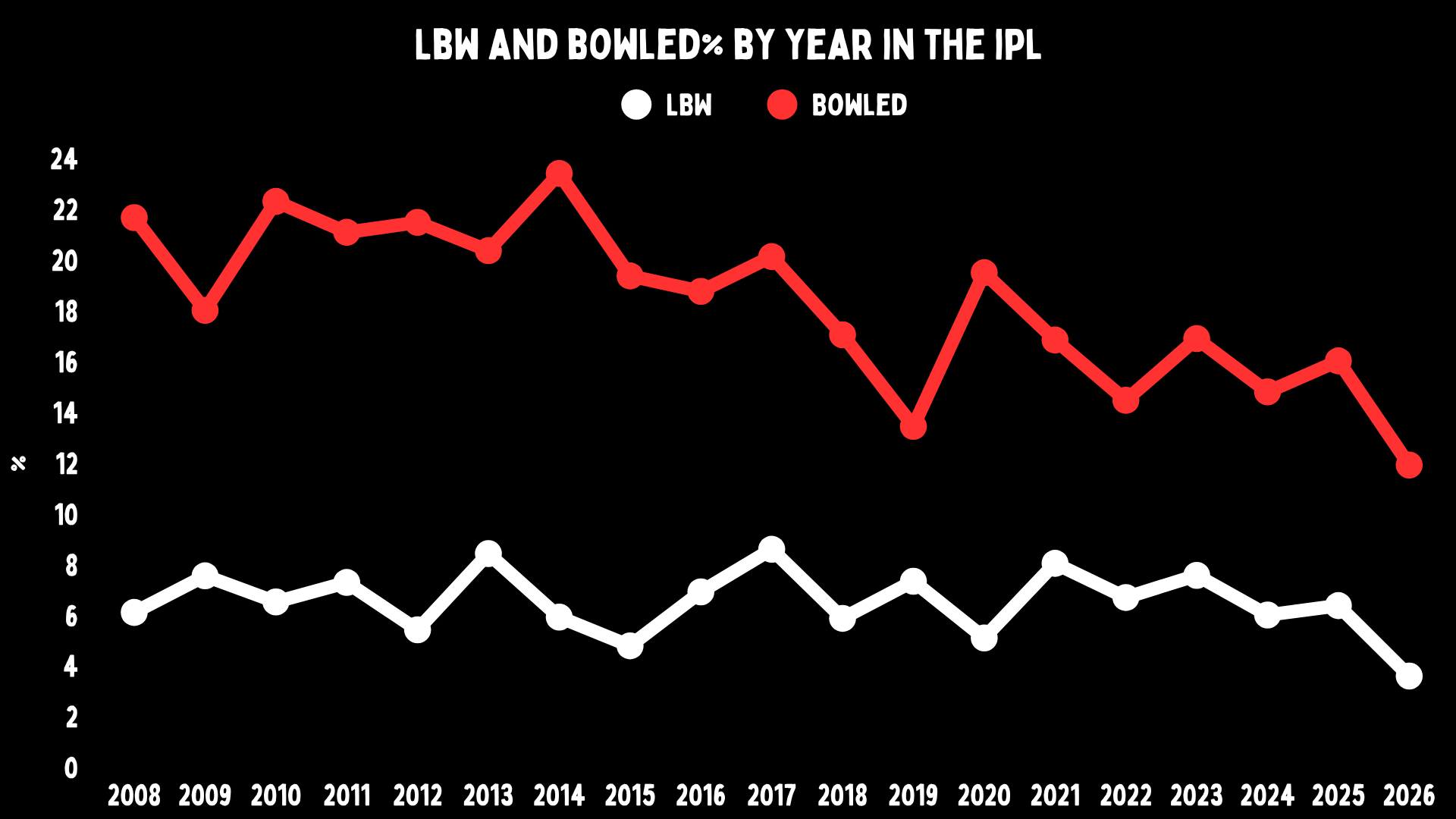
But, we are hearing that less every year. We are close to hearing a death rattle on this as a T20 dismissal. It used to be around one in five wickets; now it’s hovering close to one in ten.
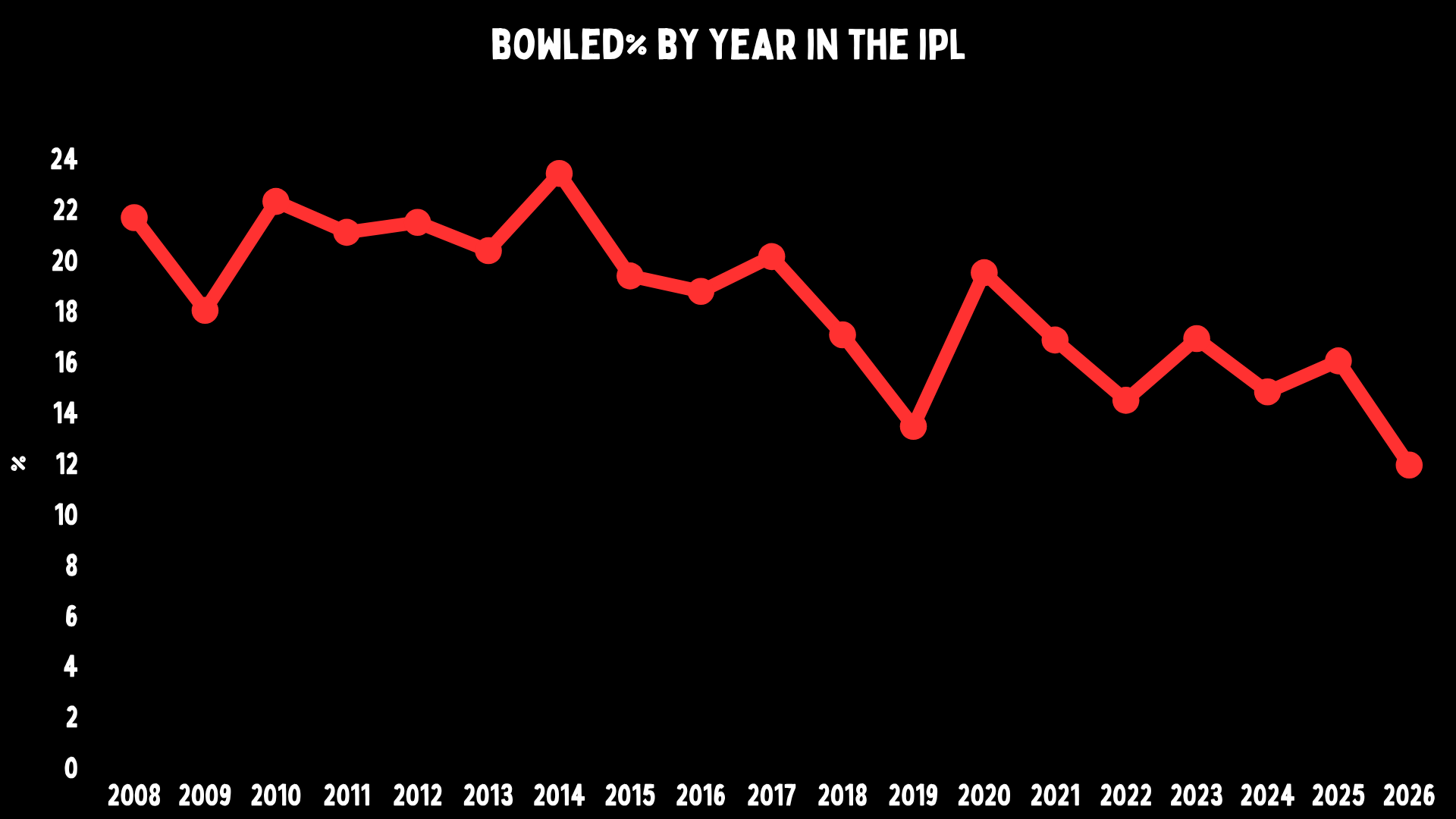
Until this year, LBWs had stayed the same. Meaning bowlers are still going for the stumps, they’re just not getting through as much. This is going to sound odd, but seamers are bowling as straight as they ever did, and also as wide as they ever have.
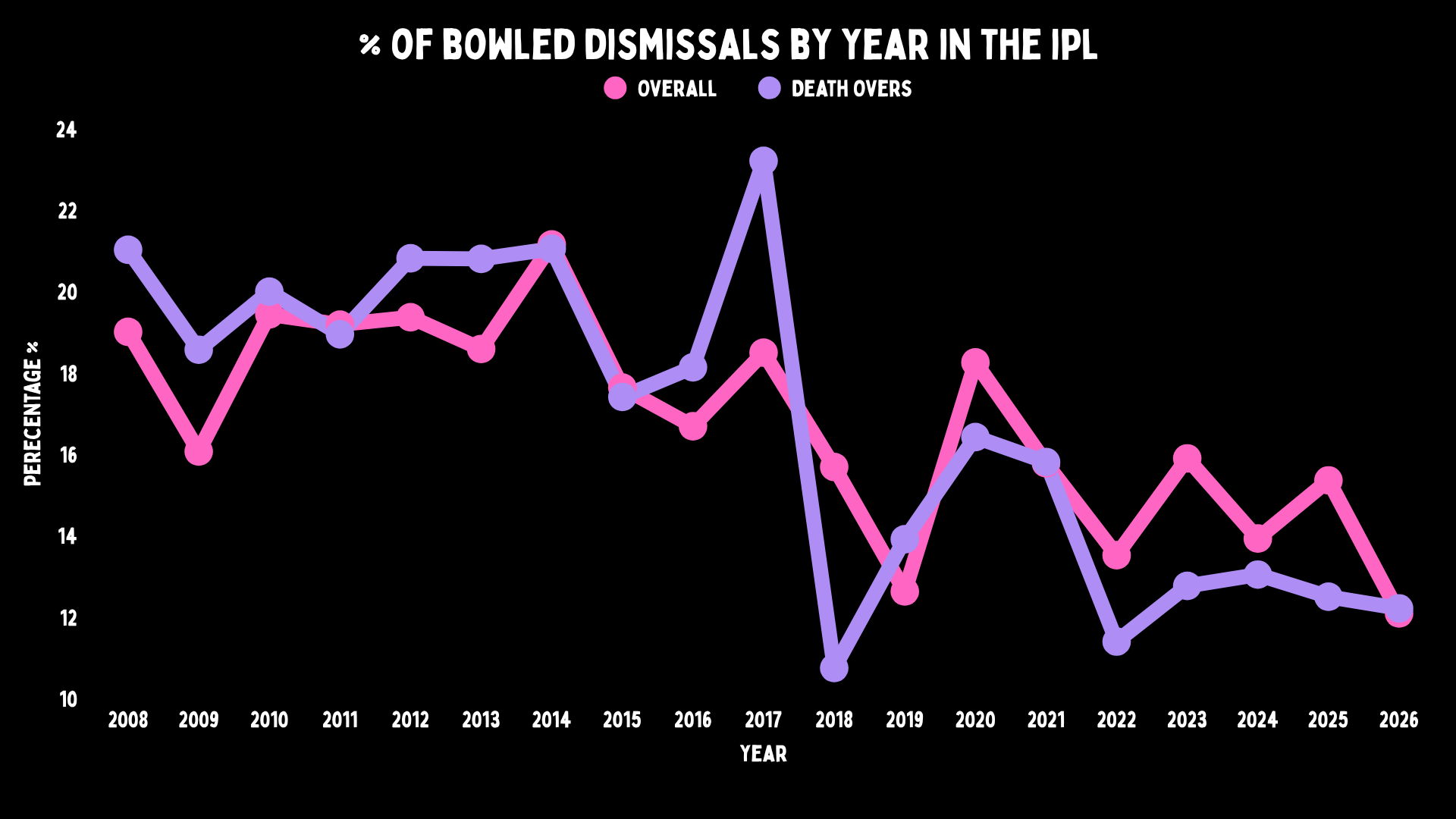
In the last few years, LBWs and bowleds at the death are moving towards each other, Compare that to 2014, where almost no LBWs happened at the end of games, and bowled was really common. That year, 1.62% of wickets at the death were off the pads, and 23.8% were bowled. In 2025, 6.9% were LBW, and castled was down to 13.8%.
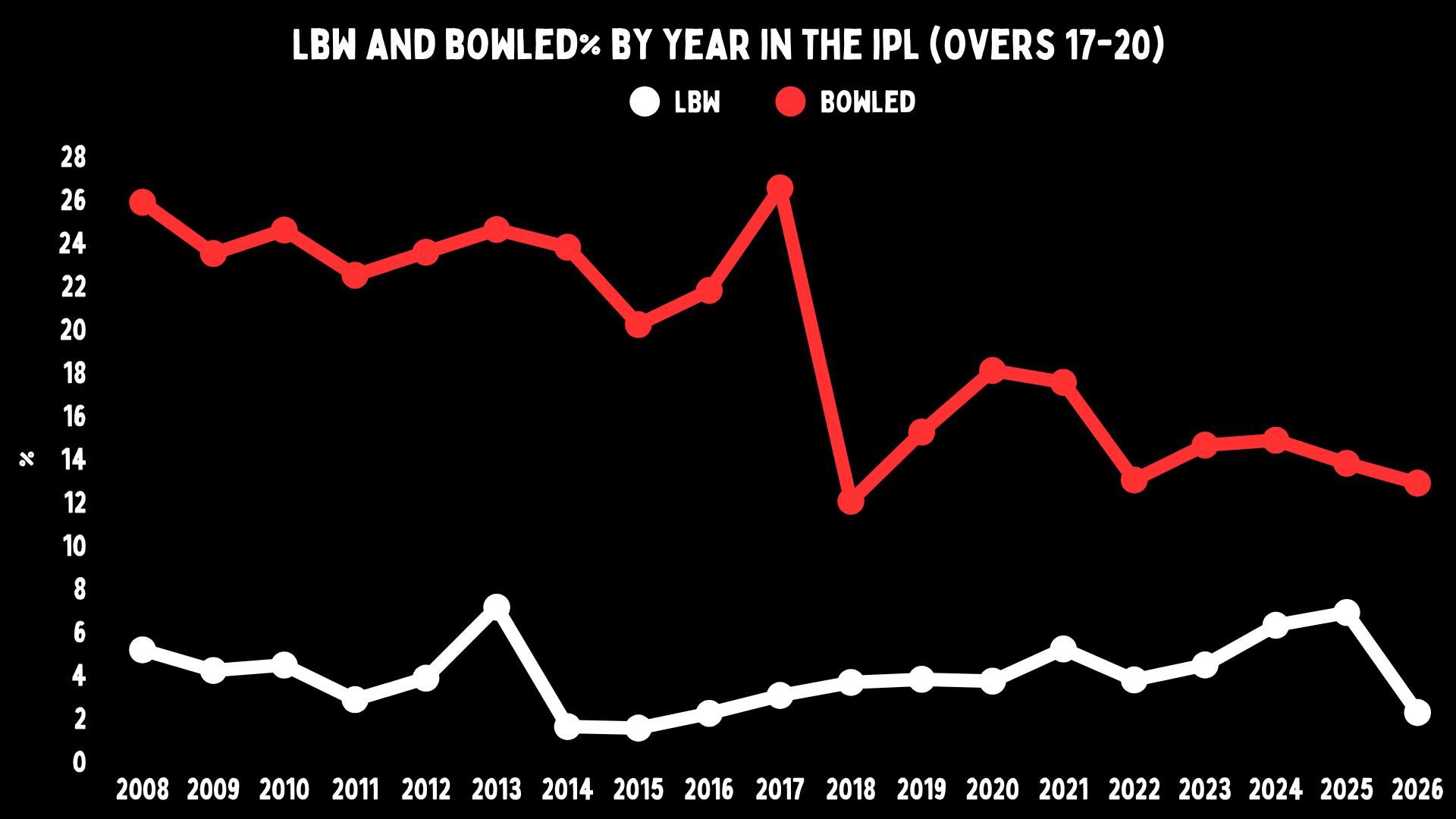
Bowled has nearly halved. LBW has more than quadrupled.
How is that possible?
Well, there is a very clear reason for this. What used to happen is that batters would clear their front leg and swing hard through the ball. Meaning bowled was still a valid option, but LBW, not as much.
As bowlers went wider, even if you clear the front leg, you have to do it from in front of the stumps, so you can still reach the wide ones.
The geolocation of batters has changed. But the bowling, not as much.
There are still lots of balls at the stumps; in fact, this year there has been a rise. However, there is a difference.
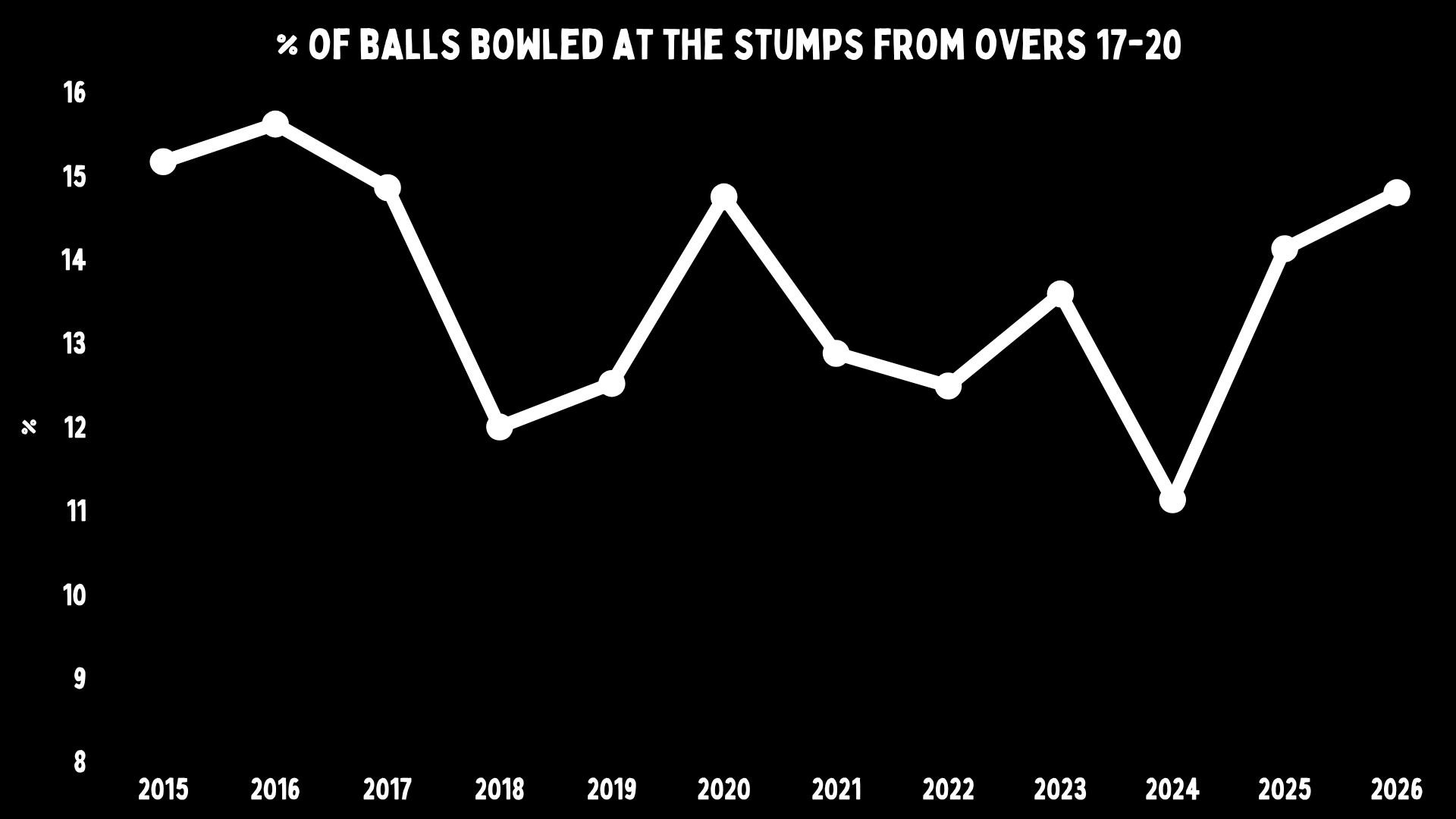
From 2015-2018, the majority of death balls were at the base of the stumps or just outside off bail.
Those balls in the channel have almost all been replaced by wide full balls. On top of that, you will now see more bouncers as well. These obviously can also be called when they are too high.

So, yay, more wides.
If you look at Arshdeep Singh’s bowling at the death, you can see he is a combo of everything. Wide yorkers, a little bit of near off bail, various straight yorkers and heaps of short balls.

Compare that to Anshul Kamboj. He has two deliveries. Straight, or wide – both full. It is very rare for him to do anything else. For either guy, all those wide deliveries are moving batters in front of their stumps.
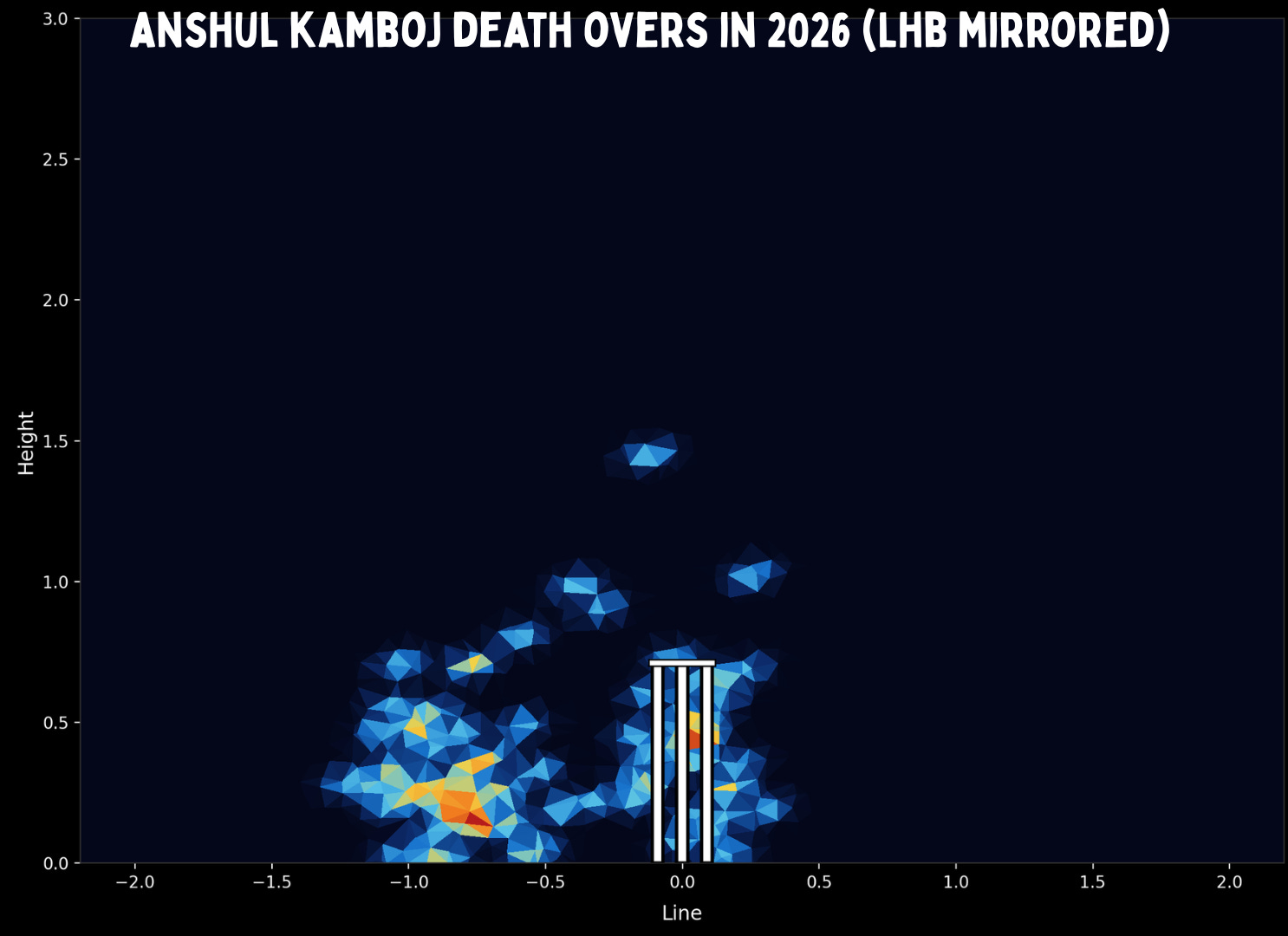
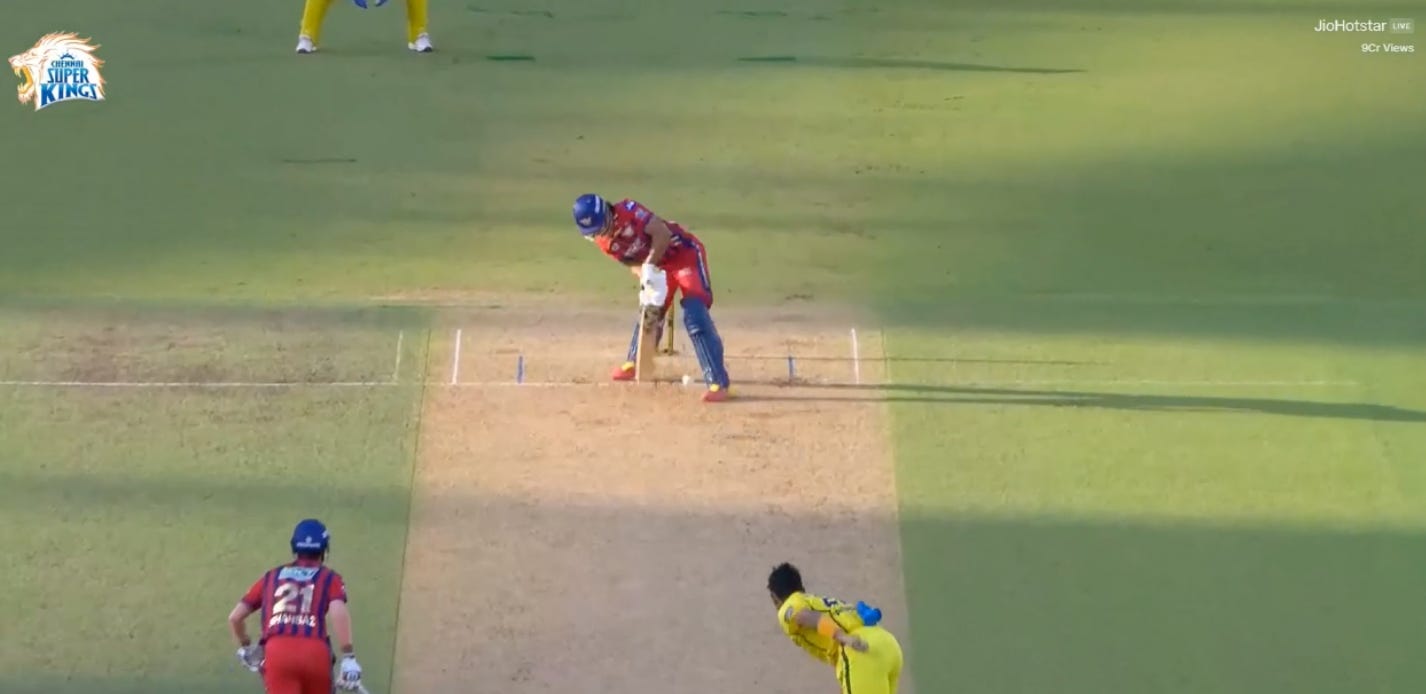
When Kamboj bowled Himmat Singh this year with a yorker, he had moved his place on the crease so he could reach the wide ones. The only reason he was bowled was because he got nutmegged. Through the legs is one of the few chances of anyone getting bowled any more.
***
There is an eternal battle in all sports when it comes to fans, hardcore versus casuals.
It is the hardcore fans watching this video now, those who complain on social media, who base their nights around who is playing the next game. No sport would ever survive without us. We are the reason cricket is the second biggest sport in the world. And we have always been treated like shit.
When sports want to get bigger, they don’t try to get casuals to be more hardcore; they try to find more casuals.
The IPL’s method to get people to cricket was through Bollywood. In England, the ECB consulted a website called Mumsnet and asked whether the games were too long. Even back as far as the first-ever tour of English cricketers to Australia in the 1850s, they were so worried cricket was not good enough entertainment that they brought in a hot air balloon during the lunch break.
Casual fans have always been courted, pleaded with and even begged to come to cricket. And the people who built the sport were ignored and taken for granted.
In modern T20 cricket, this plays out very clearly. There is a feeling among administrators (no one has ever shown me the data to back it up) that casual fans love runs, while hardcore fans usually prefer wickets.
Nothing is ever this clear, but on the basic level, if you are just watching a little bit of cricket, the exciting parts are probably the big hits. Those obsessing over every ball need the tension of wickets to break that up.
So, according to administrators at least, there are two clearly different products needed.
In that fight, we always see casuals win. The mass market pays more than the hardcore. And so this chase towards 300 with an impact sub is really less to do with cricket, and more to do with marketing.
What is strange is that in doing this, the only time where the runs and wickets markets overlap is at the death. There is almost always a chance of a wicket, that being hopefully bowled. And boundaries should come, with more sixes almost guaranteed.
The death is no longer that time. This year in the IPL, there have been fewer sixes than in any other recent year. But incredibly, there are so many sixes in the other parts of that game that they have almost merged. The ball clears the ropes every 10 balls at the death now, and 12 balls the rest of the time.
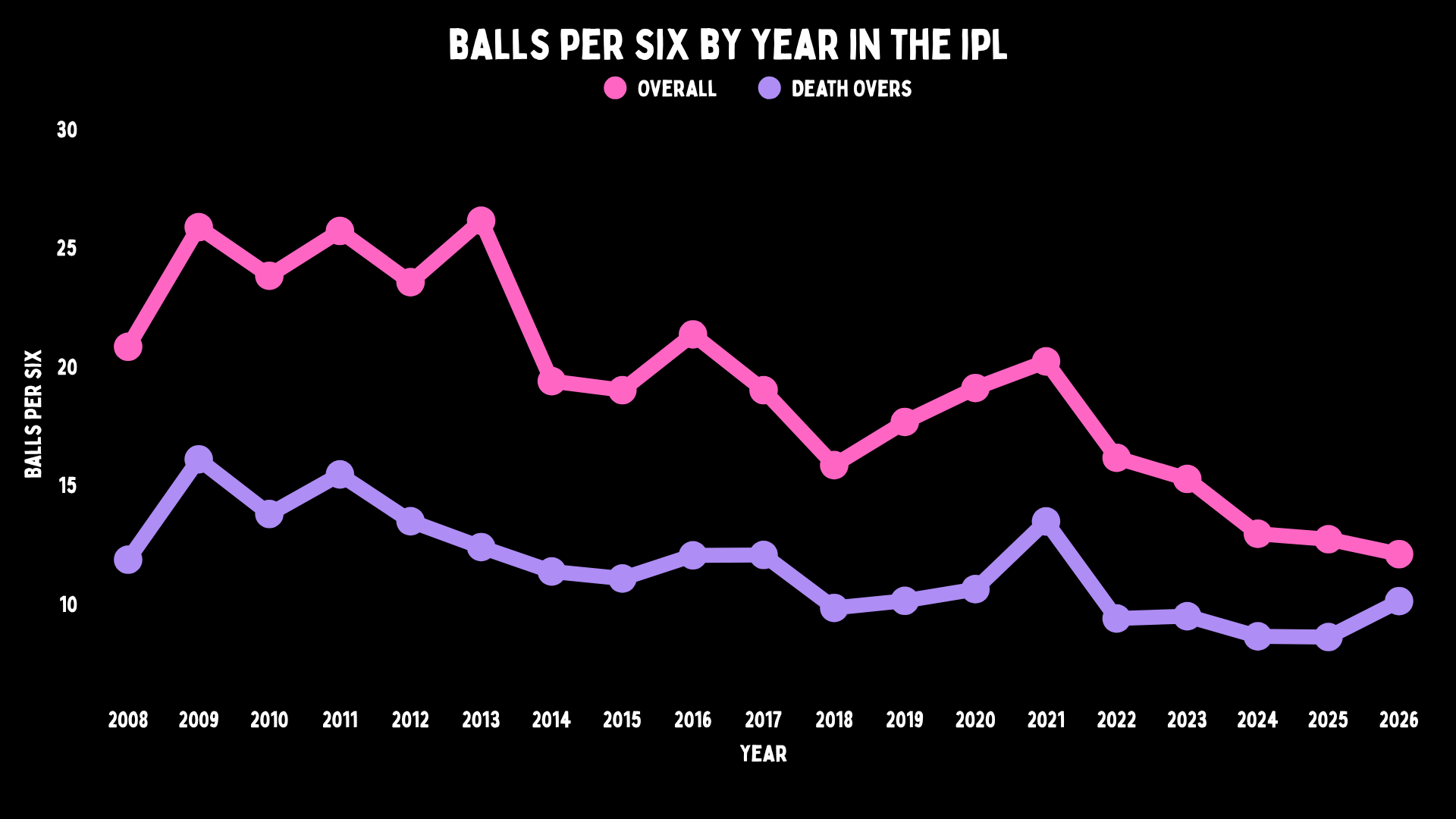
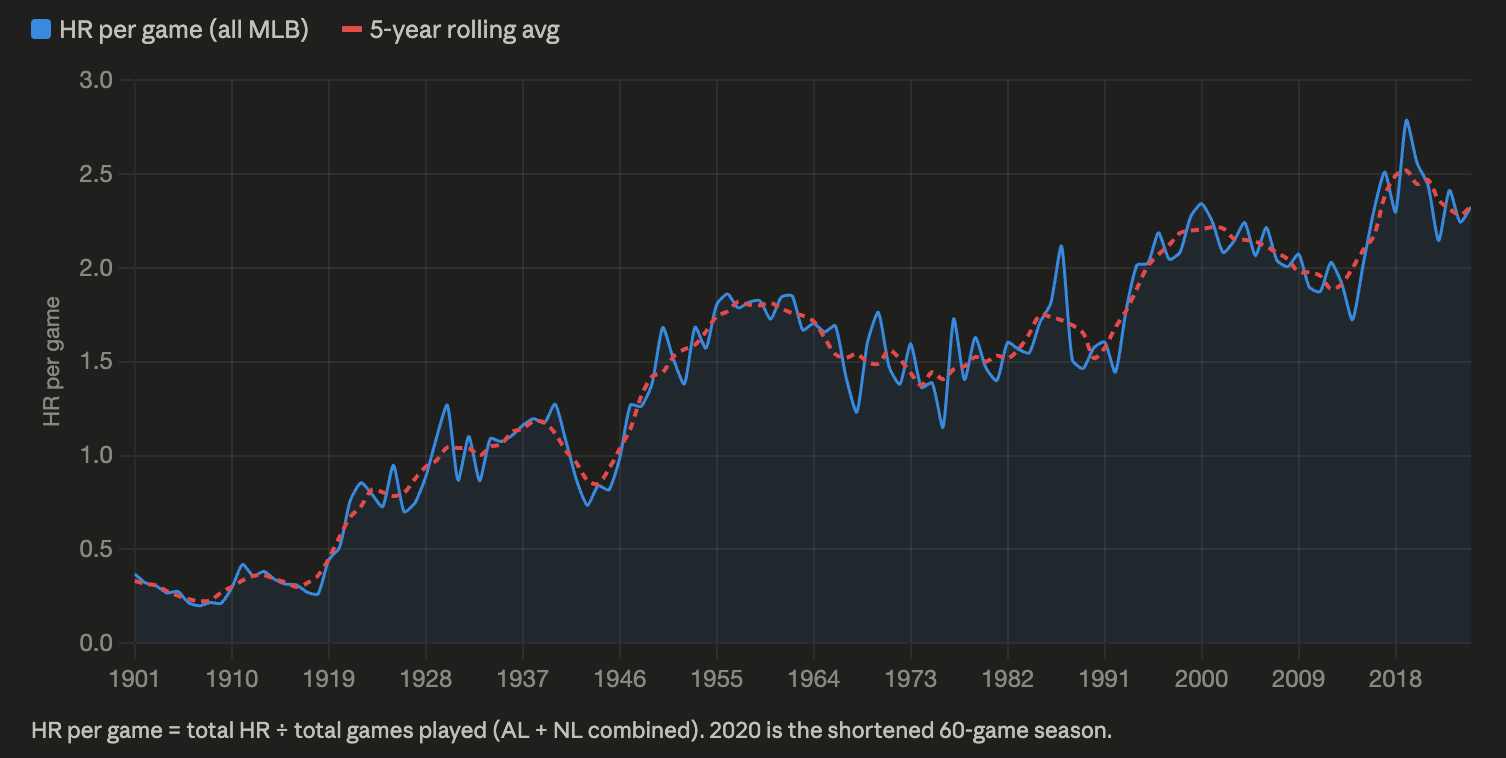
This has produced something we have seen in baseball with home runs. It means you get more exciting moments, but fewer balls are in play from ground hits. It turns it into a highlight sport. Which, for casual fans, is perfect.
That seems to be what the chase to 300 is getting us to as well.
Does it matter if there are more wide balls where nothing happens, if we still see more sixes overall? Should the end of the game have the same six rate as any other time? Is there an actual need to balance the bat and ball part of our sport?
The issue with cricket is that no one really asks, let alone answers, these questions. We have a general low murmur of moaning, and then surprise changes that no one asked for.
Should we be worried that 300 will soon be breached, or is that just the evolution of the sport where batters finally understand they don’t have to be conservative anymore?
Not all of this is down to the Impact Sub, some would argue (I did for about 15 years) that T20 bowlers were actually beating their conservative batters. And that one day, we would see a huge boom in runs. But the Impact Sub was like steroids in the 1980s to athletics, supersizing the results.
As the SMAT and the Indian team has shown us, taking the Impact Sub away doesn’t really slow them down. Batters’ consciousness has been altered. And we’re never going back to the pre-Impact Sub era.
The two best questions in cricket right now should be, is this how we want cricket to be played, and who are we making cricket for?
The good news is, in the last over, when your favourite fast bowler delivers a wide, that could never hit the stumps and rarely be hit for six. There is plenty of time to reflect on this while the bowling team is reviewing a wide.
If the greatest image in cricket was the stumps splayed, the worst might be the wide signal.