
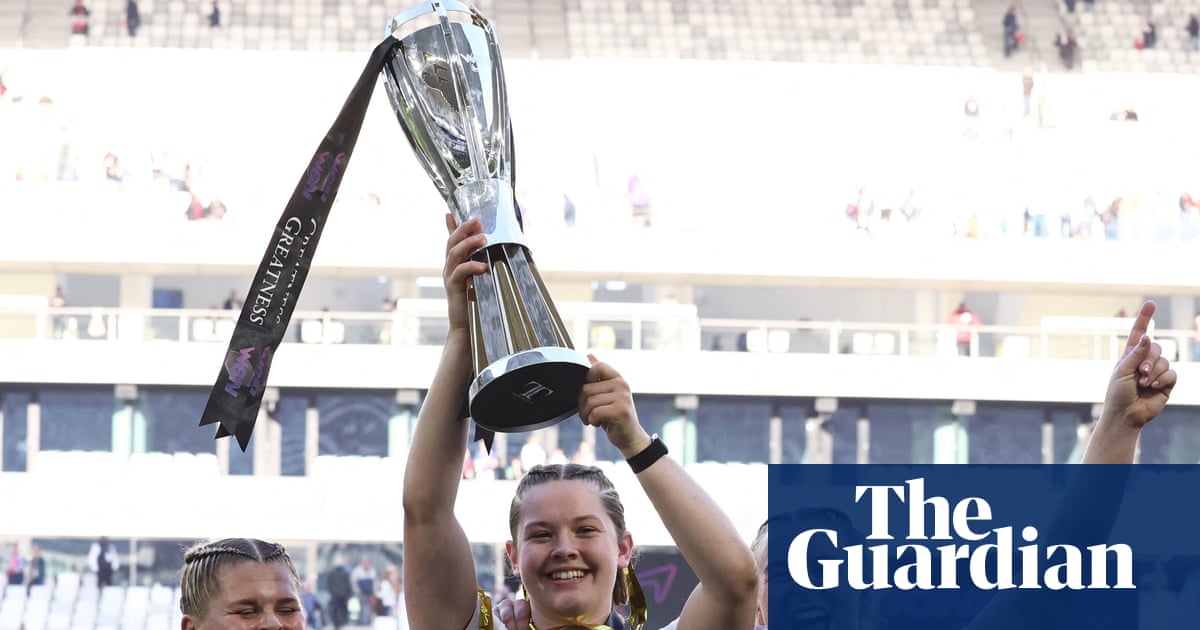
If the top of the pyramid is defending their Rugby World Cup title in 2029 then this Women’s Six Nations has formed the base from which England can build. The world champions won their eighth straight Six Nations and proved they can succeed even when they have to stretch their squad to the maximum.
Blooding new talent was always the plan for the head coach, John Mitchell, but not in the manner it happened. The team knew they would be without some of the pillars of their side because of retirement or pregnancy but the sheer volume of injuries is not something they could have foreseen. Stars such as Hannah Botterman, Alex Matthews and Morwenna Talling were ruled out for either all or large chunks of the tournament with others like Sadia Kabeya and Maddie Feaunati missing the odd game.
That led to the coaching staff having to play Tetris to plug holes in the team. England’s fourth-choice loosehead prop Liz Crake was on the bench for the decider and there were various different starting lock pairings among the upheaval. This is why this Six Nations does not feel like a sequel to the World Cup for the star full-back Ellie Kildunne.
“There has been a lot of change,” the 26-year-old said. “This feels like the start of something new. We want to be a team that wins back-to-back World Cups as well. You can’t really rest on all of the successes that have happened before because every time you play you go back to zero. We have got to keep on seeing it like that.
“We weren’t perfect throughout this Six Nations but we still won it. I see that as excitement, as a group we have standards. When you are at the top you are always wanting more, wanting to be better and I think that is what makes us so brilliant. We will never be comfortable with winning however many grand slams or winning World Cups. We always want more. We always want better. We will keep pushing this team to heights that it has never been before.”
It is quite a daunting thought that England could keep getting better but it seems at the moment like everything they touch turns to gold. They also have more than 10 players to welcome back into the fold with competition for places higher than ever thanks to new talent like Demelza Short, Millie David and Haineala Lutui all being capped during the Six Nations. While the World Cup is three years away, the manner of England’s Six Nations win underlines them as early favourites to lift the trophy again.
Mitchell said: “It was fantastic to win a World Cup at home and we will never forget that. We are in a new cycle. No English team, men’s or women’s, has gone back-to-back after the World Cup and a grand slam. Not that we are driven by outcome but we wanted to be really intentional around winning on winning because in four years’ time we want to do that same thing. We are in a really good place and today is the first step in being intentional about what we want to do [at the next World Cup].”
There will be thousands more words written on the subject of whether the Red Roses’ domination is bad for the game, but those who watched the match against France on Sunday would have to agree it was an exceptional contest. It was highly competitive and had France capitalised on their attacking momentum early on they would have been the ones lifting the trophy. England managed to find a way again but this tournament is not suffering because of it, this year has been the biggest to date. England, France, Scotland, Ireland and Italy all had landmark attendances and all of the home nations played at their main stadiums for the first time in one tournament.
For Scotland and Ireland it was their first standalone matches at Murrayfield and the Aviva respectively. While Scotland drew 30,498 for their match against England, it could be argued the 31,294 in Dublin was more impressive. The Red Roses tend to bring crowds with them but for Ireland’s record-breaking game they played against Scotland. This tournament feels like it has set the benchmark for what is now acceptable for women’s rugby. Television viewership is also increasing, and the Ireland back-row Aoife Wafer highlighted the game’s ambitions after her side’s thumping round five win.
“To be out here in front of 32,000 people is my wildest dream come true,” Wafer said of the crowd that broke the record for a women’s rugby match in Ireland by 240%. “See you all here next year.”
So what comes next? The Barbarians take on Wales in June and then the WXV series starts in September. Canada, New Zealand and Australia are among those travelling to the northern hemisphere to take on various Six Nations sides and they will have their own ambitions of ending England’s winning streak, which now stands at 38 games.