
The ’80s and ’90s gave us the best cars. Sorry, but that’s a hill I’ll die on.
The machines of that era perfectly blended performance with practicality. A 2100-pound Honda CRX could easily swallow a set of race tires while effortlessly handling a full track weekend at Roebling Road. Mine never broke. Never needed oil, either.
These cars were dead simple, too. You could fix them in your apartment parking lot with parts picked up from the local dealer. You just needed a basic mechanic’s tool set. That was me.
When I replaced the grille on my ’84 Rabbit GTI–the original had a weird kink in it–I ordered a new one from the VW dealership here in Daytona. I sprang for a fresh GTI badge, too. At the time, the car was only a dozen years old.
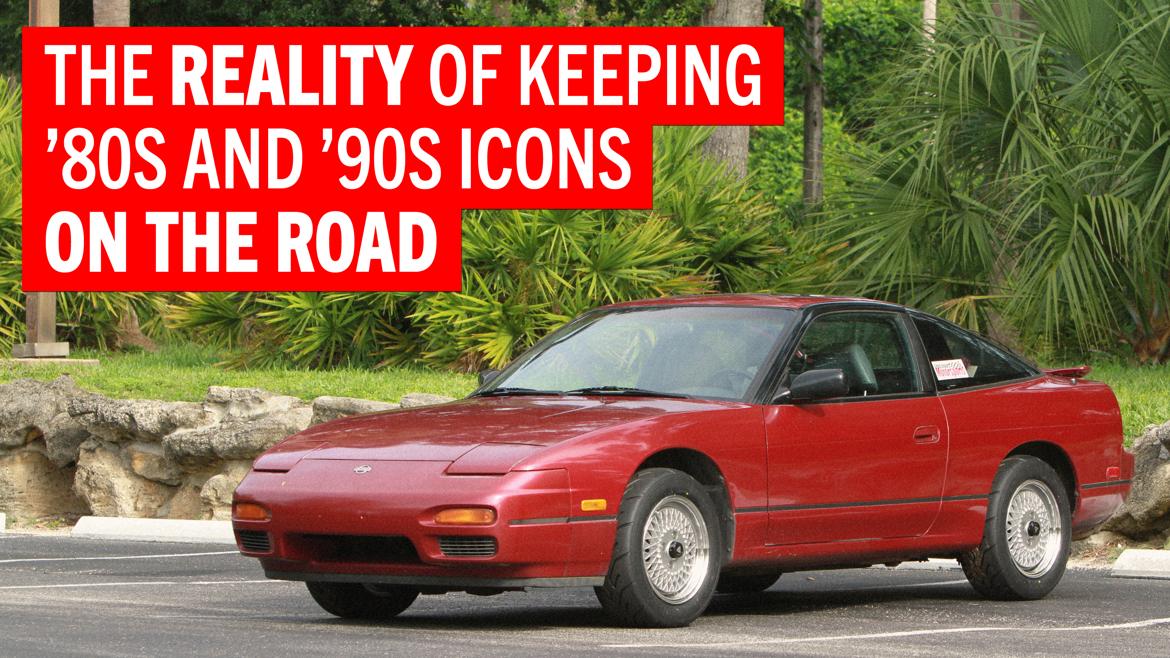
I’ve been lucky to live with many of the era’s other greatest hits: Nissan 240SX and Sentra SE-R, early Impreza and the legendary AE86 Toyota. I bought an A2-chassis VW Golf soon after graduation. I installed a Pacesetter exhaust in a friend of a friend’s gravel driveway.
Hondas? How about a run with the Civic Si going back to the model’s debut in 1986 plus a pair of CRXs–one supercharged, the other powered by the high-revving B16A. In college, I drove an ’82 Accord sedan. Yes, it had the five-speed and wore an SCCA sticker. I have photos of it at Road Atlanta’s infield, back when 99% of it was red clay.
At the time, the sale of one funded the purchase of another. Most were bought for like $3200, give or take. Cars come, cars go. At least I still have the memories, right? I also still have my early Miata and G-body Porsche, though, so I didn’t let them all get away.
Today, I enjoy seeing these cars cherished. We just saw a mess of the ’80s and ’90s greatest hits at Radwood, again part of the Amelia concours weekend. The antiquities on the main field might get the headlines–best-in-show honors went to a 1931 Duesenberg J and a 1969 McLaren M8B Can-Am racer, two cars that, likely, you’ll rarely see in real life–but, truth be told, I felt more at home strolling among the rows of E36 BMWs across the way with Randy Pobst. Give me a set of Kosei K1 wheels any day.
An issue with keeping our ’80s and ’90s favorites on the road, though? Well, in addition to the dearth of 14-inch tires and the challenges of landing a good one–gone are the days of finding a clean example on Craigslist for $3200–there’s the parts situation.
Need something for your MGB, early Mustang or classic Mini? It’s likely available new and from various suppliers. You can even buy brand-new body shells from authorized sources for all three.
I can get nearly anything for my ’84 Carrera. The Orlando Porsche dealer, in fact, has a big display right in the middle of the sales floor showing off the replacements they’d like to sell to me–stuff like new Fuchs wheels, an engine fan and the rear reflector panel that sits between the taillights. The company even offers brand-new dashboards for my car.
What about older? Porsche still makes dashes for the 924 and 944 as well, now taking us back to 1976. Older? The Porsche Classic catalog goes all the way to the 356, the car that put them on the map circa 1950.
My CRX never let me down back in the day, but what if I need a window regulator today? I don’t think the dealer can help–and I don’t see aftermarket replacements out there, either. Heck, I couldn’t even buy a new ABS/DSC module for my BMW M3, and it’s from 2004.
I am seeing some hope, though, from the OEMs and the aftermarket. Back in 2019, Mazda released a 42-page list of restoration parts for the early Miata. Maybe the list contains the little screw missing from my convertible top.
Subaru recently announced heritage parts for the early Impreza: trim, stickers, brake parts and stuff like that. Toyota’s Gazoo Racing can hook up your Hachiroku with lamps, wiring harnesses and, if you ask nicely, cylinder heads and short blocks. For my fellow Honda fans, there’s a company called FF Motion offering aftermarket replacement parts for the second-generation Honda CRX.
That car, a favorite among the GRM staff, recently came up in conversation as I ran an idea past JG: We should prep a CRX for historic racing. Gotta paint it like an old IMSA Firehawk car, he replied, and run some Revolution wheels.
I bet Randy would totally co-drive with us.
Comments
Tell me about it. I slowly got rid of all of my 90’s cars because I no longer have time to wrench and parts availability is getting worse. The current crop of used cars I see are just more expensive than ever and really aren’t good quality anymore since people treat things as disposable.

I occasionally get a yearning for a late 80’s Mazda MX-6 GT.

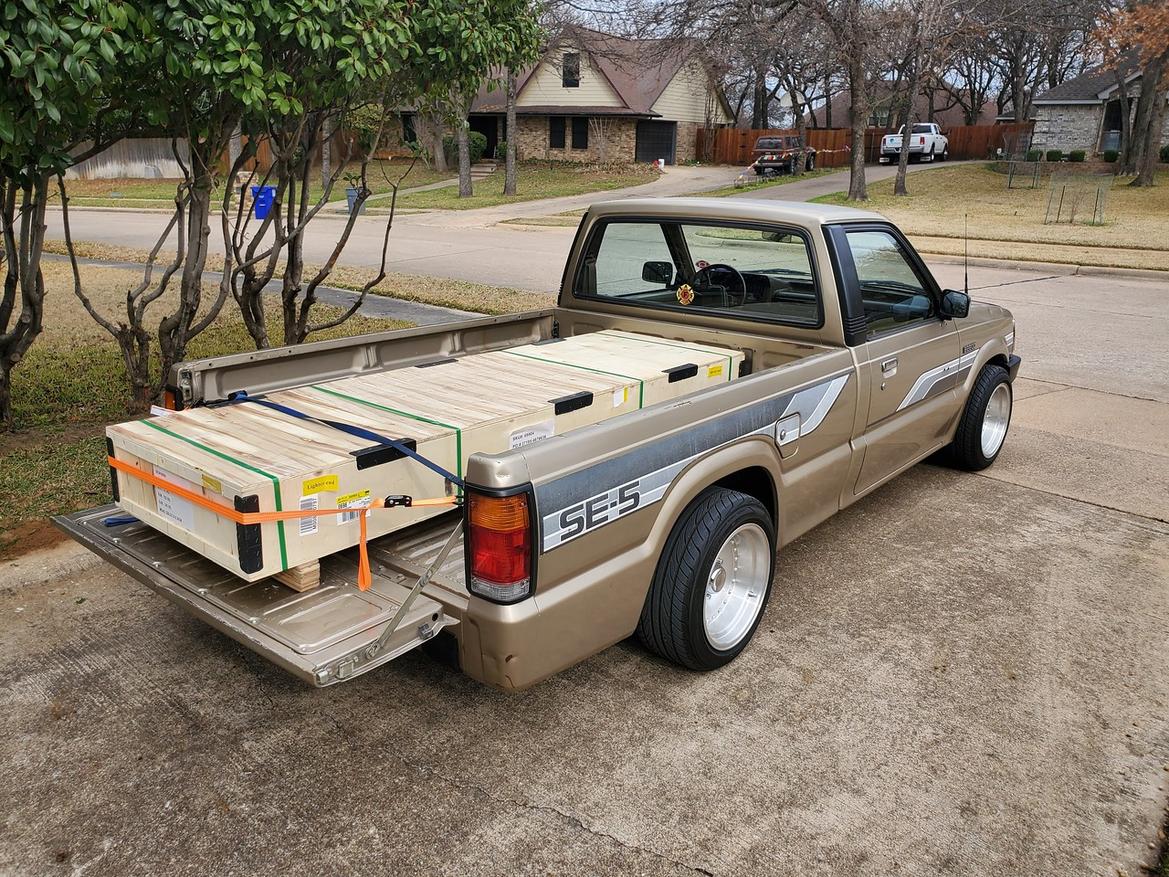
I finally had to give up my beloved minitruck because I just couldn’t find the little parts that were failing.

I mean, it’s promising that some car makers are starting to reproduce parts, but I worry if it’s too little too late.

I might have been looking at early WRXs on Facebook Marketplace last night, but when did they become 20 years old?

docwyte
UltimaDork
5/15/26 10:44 a.m.
Yeah, some manufacturers are far better than others. You say you can’t get parts for your E46 M3, but BMW does a far better job of parts support than VW/Audi does. Trying to get parts for my 1993 VW Corrado is mostly impossible. For my last corrado I basically had a spare corrado’s worth of parts in my basement.
In reply to docwyte :
I agree, totally depends on the OE.

With how overloaded new cars are with overarching tech, I want nothing more than cars from the 80s, 90s, and early 2000s that are easy to wrench on and still somewhat simple. I’ll buy them all…

BMW is pretty good about supporting older cars, I can still get a lot of factory parts for my ’86 M535i and ’88 325iX.
I think the real future proof is a simple chassis that can accept a modernized drivetrain. Simplified interiors also allow for future proofing.
Displaying 1-10 of 57 commentsView all comments on the GRM forums
You’ll need to log in to post.