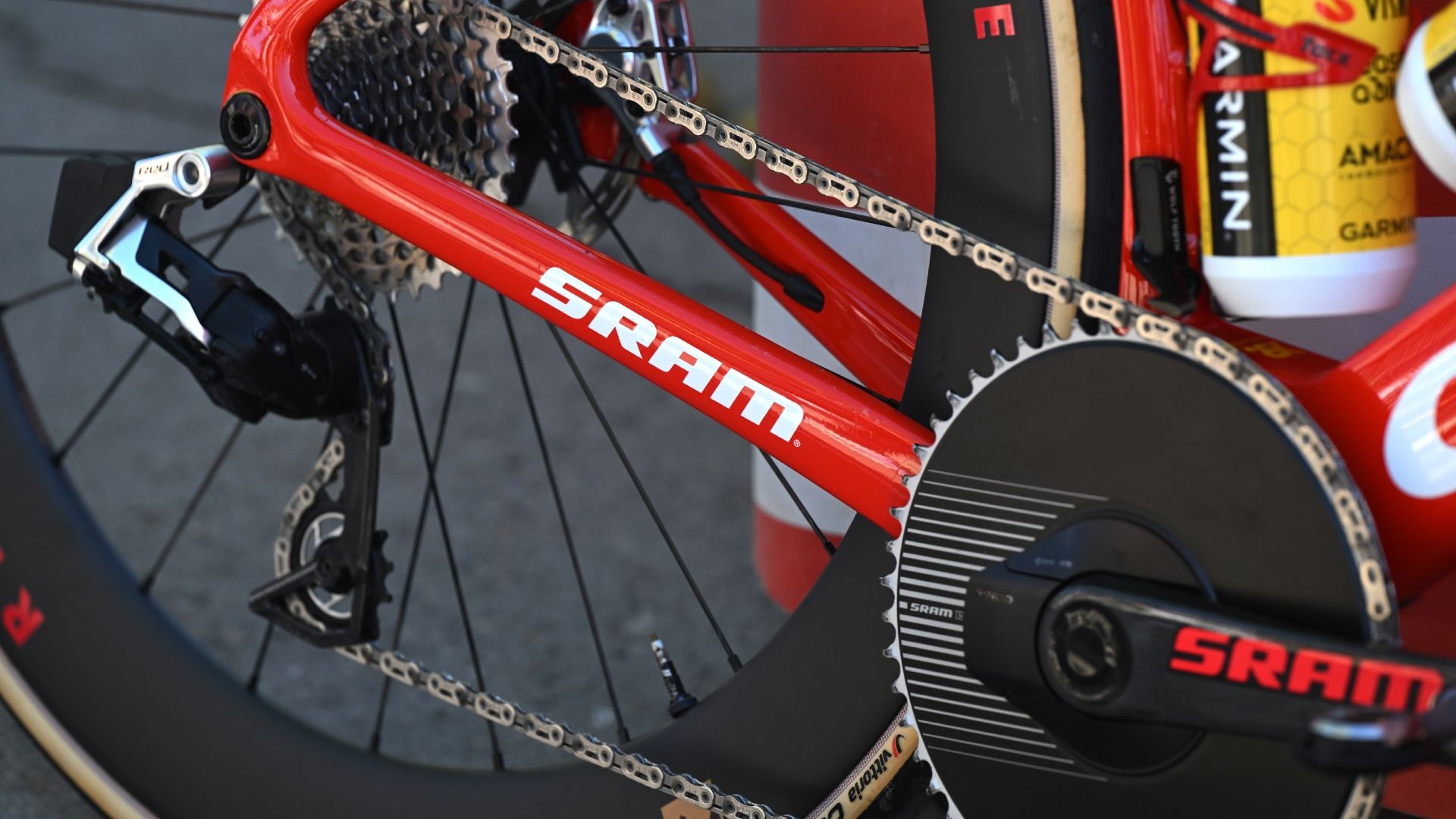
The UCI has lost its appeal against a ruling which stopped its plans to introduce gear restrictions in the peloton, after a legal challenge from SRAM.
On Wednesday, the Belgian Market Court upheld the Belgian Competition Authority’s (BCA) decision to suspend the UCI’s maximum gear ration standard.
In October, the BCA sided with SRAM over its argument that the proposed gear-limit rule hurts innovation and unfairly tilts the playing field. The UCI appealed the decision, but that has now been rejected.
Last year, the UCI attempted to introduce the Maximum Gear Ratio Standard, which limits bikes to a 54×11 top gear. The BCA said last year that the standard “generates disproportionate negative effects on a sports equipment supplier, namely SRAM”.
SRAM, one of the two dominant drivetrain suppliers in the WorldTour, argued that the rule would effectively outlaw its 10-tooth sprocket system, which is used in its latest Red and Force AXS groupsets, and that, in turn, would disadvantage its sponsored teams.
The BCA agreed that the measure was “likely to cause harm to SRAM that is serious and difficult to repair,” extending that harm to “professional cycling teams equipped with SRAM transmission systems”.
This week, a press release from the BCA read: “In its judgment, the Market Court confirms the validity of the provisional measures ordered by the BCA and finds, in particular, that: (i) the BCA had jurisdiction to intervene in this case because of possible effects of the technical standard on the Belgian territory; (ii) the BCA rightly concluded that there was a prima facie restriction of competition due to the UCI’s failures to apply transparent, objective, and non-discriminatory criteria when developing the standard.”
It continues: “(iii) the UCI failed to justify why the maximum gear ratio standard was necessary and proportionate to achieve the objective of improving rider safety; and (iv) the BCA correctly assessed the existence of a risk of serious, imminent and irreparable harm to SRAM and the cycling teams equipped with its drivetrain systems.
“In general, the Court emphasises that norms adopted by sports federations must comply with competition law requirements when they produce economic effects and need, in such a case, to be based on transparent, objective, and non-discriminatory criteria. “
The UCI has therefore been forced back to the drawing board for its gear restriction plans. It has been contacted for comment, but last year it said that it was “surprised at the intervention of a competition authority on a subject desired by all stakeholders of cycling”.
SRAM has also been contacted for comment.