
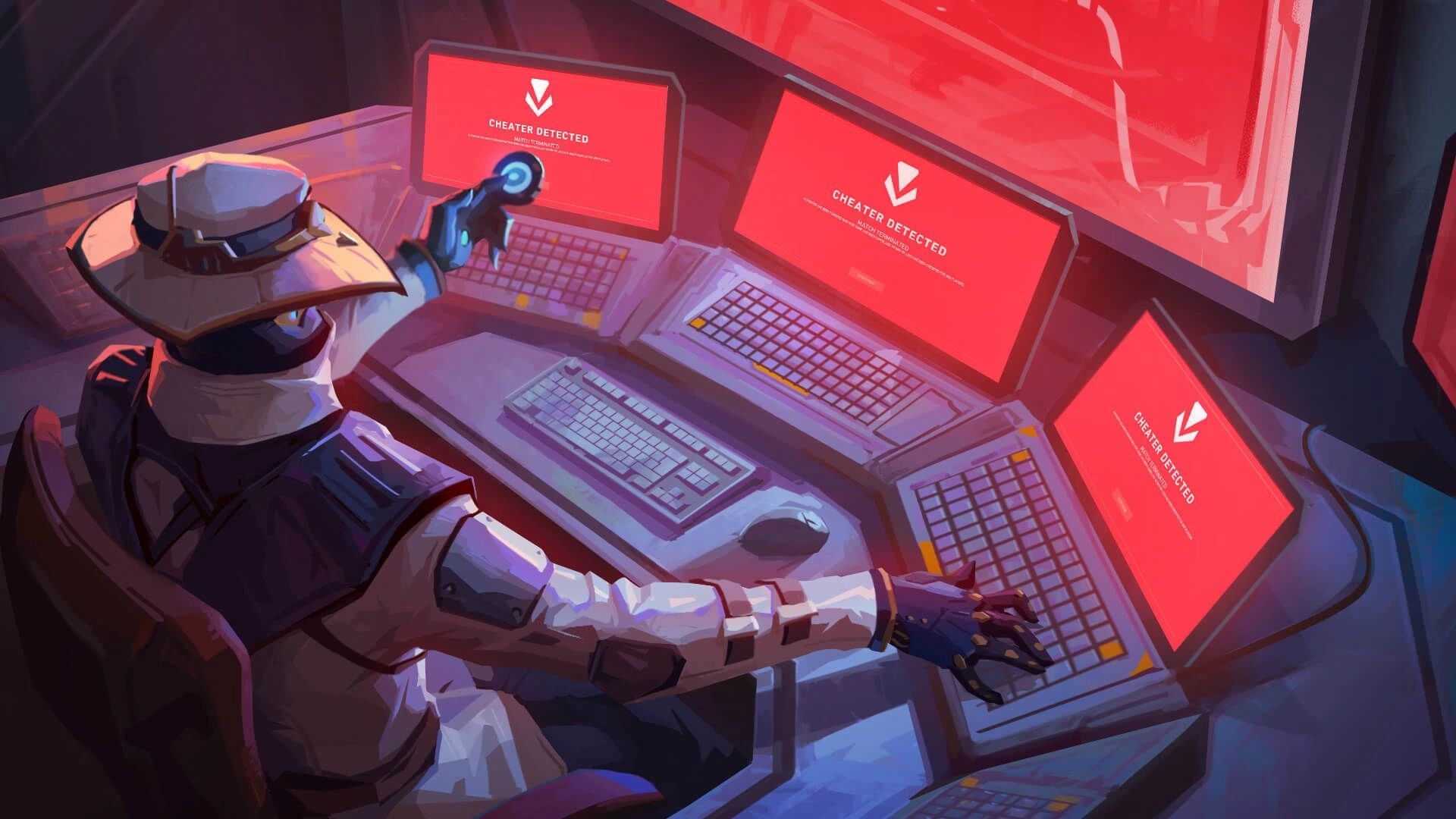
Riot Games has once again ignited some serious controversy among gamers with its latest Vanguard update, rendering Valorant’s anti-cheat system capable of permanently disabling users’ hardware, and the company is openly celebrating it.
The drama kicked off after Riot confirmed reports of yesterday’s Vanguard update disabling a wave of DMA (Direct Memory Access) cheating devices.
Riot Games’ official X handle posted a photo of the bricked devices, known as Heino 2, with the caption: “Congrats to the owners of a brand new $6k paperweight.”
New Vanguard Update Can Brick Cheaters’ Hardware
DMA cheating devices work by reading game memory from a secondary piece of hardware plugged into the motherboard, keeping the actual cheat software invisible to any anti-cheat running on the main system.
Vanguard’s new update counters this by going after the NVMe and SATA drive firmware that these devices rely on, corrupting it on detection so the DMA card can no longer talk to the host machine at all.
The damage doesn’t stop when you close the game either. Some users reported that the firmware remained broken even after fully uninstalling Vanguard, leaving a complete operating system reinstall as the only path to recovery, not to mention that the process carries risks of permanent data loss.
This could have been possible through Riot’s partnerships with major motherboard manufacturers, including MSI, ASRock, and ASUS, which could have given Vanguard the low-level access it needed to identify and target these devices.
The reaction within the gaming community to this Vanguard update has been rather mixed. While some users applauded Riot for taking the battle against cheaters to the next level, a lot of users have raised some serious concerns about the precedent it sets, with some even uninstalling the game entirely in revolt.
For the uninitiated, Vanguard runs at the kernel level on your PC, which is already deeper than most software. Critics argue that giving a game company the power to modify firmware crosses a line that shouldn’t be crossed, even against cheaters and other bad actors.
The worry isn’t just about cheaters either; it’s about what happens when the system gets it wrong. A false positive on a legitimate player’s machine could easily result in wiped data and a dead OS.
Whether Riot’s boldness here is seen as genius or recklessness may ultimately depend on how long it takes for that first wrongful brick to happen.