

SRH beat RCB by 55 runs, but couldn’t sneak into the top 2. The bowlers did their best to throw away RCB’s wire-to-wire league stage win, but their batters just about salvaged the opportunity to play Qualifier 1. Which they will lose if they play like this.
But, what happened beyond the headlines?
🚨 If you’re an RCB fan, I’d love if you could fill out this 2-minute survey on how you feel about the franchise this year. I plan to create a graphic story of your answers soon! 🚨
✍️ Written by Karan Jain, who runs CricNuance. You can follow him on X.
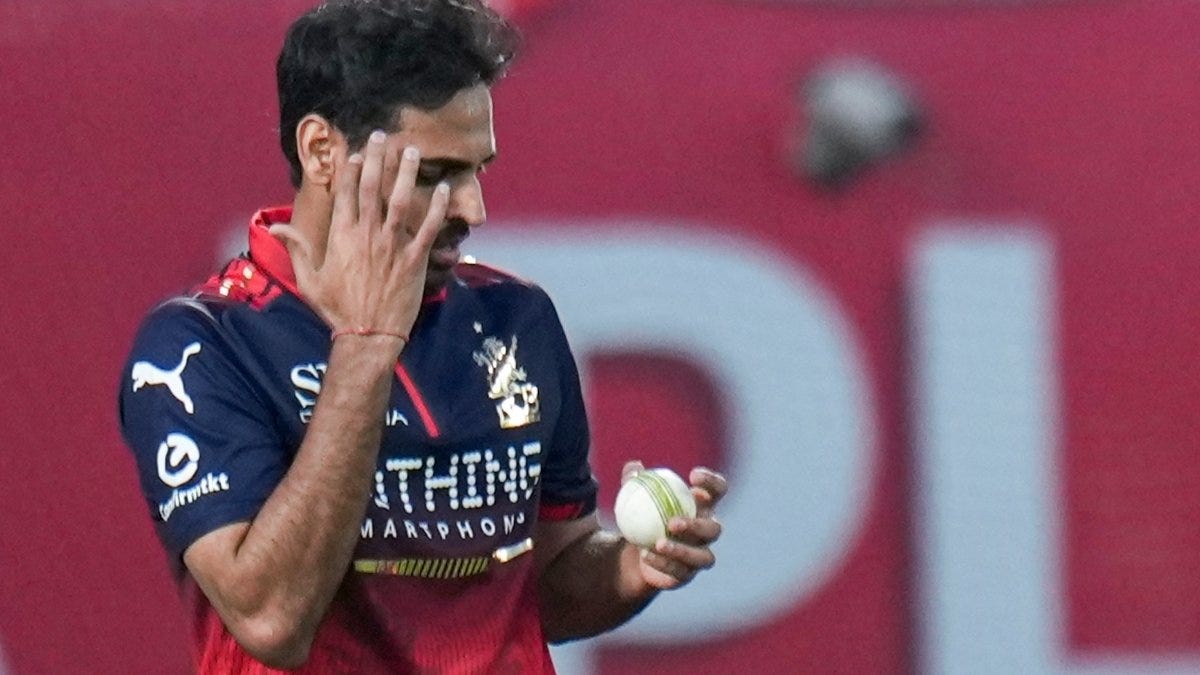
Before tonight, Bhuvneshwar Kumar was the league’s best powerplay bowler with 15 wickets at a league-leading average (12.53) and economy (6.71). His line control and execution of the fundamentals have played a key role in this success. 86% of the deliveries have been at the stumps or in the channel, while just 6.96% were pitched down leg.
However, Travis Head & Abhishek Sharma – SRH’s opening duo – have struck at 189.4 in the last three seasons of the IPL. While most batters have struggled against Kumar’s line of attack, the southpaws have thrived against pace bowling at their stumps or just outside it – Sharma strikes at 204.6 against these balls, and Head strikes at 188.3.
The openers’ proficiency was evident in the first over of the match bowled by Kumar. The smallest hint of width on his out swinger was punished by Head for the first boundary of the night. On the fifth ball of the same over, Abhishek hit an outswinger in the channel for a 6 well beyond mid off.
By his second over, Kumar was intentionally pitching the ball down leg as a ploy to stop them. RCB’s leading bowler had read the pitch, determined that run constriction was more realistic than wicket-taking, and changed his strategy accordingly. It set up a new, unconventional strategy that Josh Hazlewood & Rasikh Dar would follow in the powerplay.
Against Head, RCB bowled to his hip and rib cage to cramp him. Against Abhishek – especially with the longer leg-side boundaries in overs 3 and 5 – the pacers pitched the ball well down leg. It forced the Indian opener to go big on the legside, while also countering his usual leg side trigger movement by making sure their balls were not straight enough to hit through the offside.
This run-protection strategy reached a pinnacle with Rasikh. He started by replicating Hazlewood’s plan of bowling to Head’s hip and rib cage. But when this backfired with two boundaries in his first two balls, he went to deliveries most associated with the death: slower balls and yorkers. Salam’s final ball of his first over was the magic yorker that got him Head’s wicket.
RCB limited SRH to just 63 runs and a 10.5 RPO in the first – usually most productive – phase of the game. Not only is this better than their average powerplay runs in evening games at home (68), but it’s much better than their RPO for the succeeding middle overs (16.22). SRH’s openers have to fight for every run and boundary on what is normally a flat track, despite RCB’s multitude of fielding errors in the phase.
Data from Cricmetric.
✍️ Written by Aarush Adil Khan.

RCB conceded 63 runs (10.5 RPO) in the powerplay, and another 46 runs (11.5 RPO) at the death. Both reasonable concessions on a relatively flat pitch, especially since their batting order was more than capable of a 10+ RPO chase. However, problematically, they conceded 146 runs in the normally frugal middle overs (14.6 RPO), which is where they lost the game.
The oddest part of this concession was that RCB were largely doing fine by the 12th over. SRH had only scored 129/2, at a run rate of 10.75, and did not look settled. Despite a quick start to the post-powerplay phase due to a series of dropped catches that went for 6s, Abhishek’s wicket in the 9th over had slowed the game down.
In particular, Heinrich Klaasen was struggling on 5 (9) after the 12th over, with no sense of where his breakout was going to come. Despite a rough 19-run first over – which included one of those dropped catches that went for 6 – Romario Shepherd’s three over spell dramatically hindered the SRH’s ability to find a groove.
Over 12 – Shepherd’s third in a row – was a masterpiece. The West Indian understood the pitch and the batters he was facing. Klaasen was given short and length deliveries, while Ishan Kishan was given fuller balls from under the wicket. The idea was simple; cramp both batters, & remove their ability to play easy legside shots.
SRH only scored 5 runs in the over, and were set to face RCB’s most accurate bowler on the night next; Hazlewood.
The Australian would not follow the same bowling plan. His first delivery was short to Kishan – so short, it went for a high wide. His second delivery was more along Shepherd’s fuller length moving away from Kishan, and was toe-ended for a single. RCB’s premier bowler would get a shot at the struggling Klaasen.
At this point, an important distinction is worth knowing; the shorter boundary – by 6 metres – was on Klaasen’s legside. The commentators actually mentioned this multiple times, saying that the bowlers should bring in the longer offside boundary into play. Unfortunately for Hazlewood, he didn’t get the memo.
His first ball to the ex-Protea batter was a full delivery on leg stump – the exact delivery Shepherd had stayed away from – which was whipped for a no-look maximum over mid-wicket. It was swinging towards leg, bounced right under his bat, and had a lot of pace (144 KPH). It was all but meant to be hit.
Rattled, Hazlewood bowled two wides to Klaasen, one down leg and one too short. His third legal delivery of the over was another full delivery, this time on off. This wasn’t the easiest delivery to play to the leg-side boundary, but Klaasen muscled it over long-on, which was 5 meters shorter than long-off.
The Aussie switched to a wide yorker to stem the bleeding, but Klaasen had found his touch, anticipated the over-correction, and cut him perfectly for another boundary. Just trying to finish the over now, Hoff then bowled a full toss outside off, which the batter again launched for 6 over the leg-side. In all, Klaasen had scored 22 runs in 4 legal deliveries – 18 on the legside – as Hazlewood conceded 27 runs.
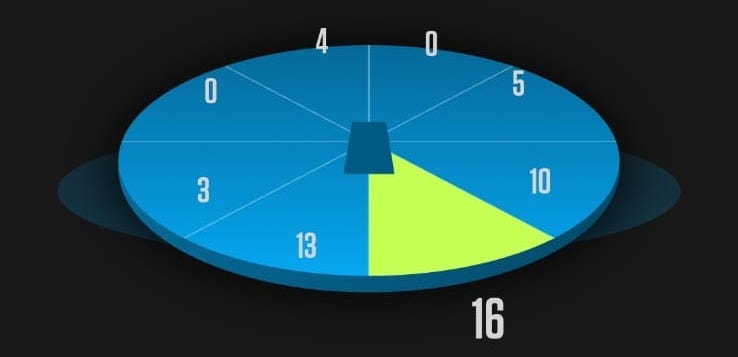
That’s the most runs in a single over that SRH’s explosive batting order have scored all season. It helped Klaasen get settled, created havoc amongst RCB’s bowling plans, and started an incredible 81-run collapse in 25 balls before the South African finally holed out to Krunal Pandya (a bowler that RCB had deliberately avoided bowling in the middle overs for matchup reasons).
Suyash Sharma – who had broken the last partnership – was brought on to work some magic in the 14th over. Despite not bowling the worst balls, he went for two maximums over the legside.
Kumar in the 15th over tried to replicate Shepherd’s fuller deliveries to Kishan – but came at it from over the wicket, and therefore landed it on Kishan’s pads and was inside-edged for a deep square leg boundary. Shepherd’s around-the-wicket, on-stump fuller balls angled away from Kishan and cramped him, while Kumar’s were gun-barrel straight onto the body and easier to put away.
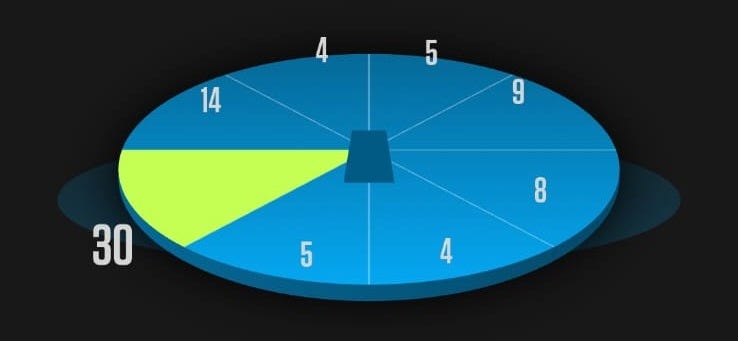
Klaasen ended Bhuvi’s over by converting an off-side delivery into a deep midwicket 4 by shuffling across, then an off-side maximum for good measure. Hoff’s terrible over had forced RCB to bring on their other elite pacer, and he was put away for 18 runs as well. It was just the third time Kumar and Hazlewood had both bowled in the middle overs in a single RCB innings in two seasons – and the strategy backfired.
Part of this problem is the muddled lines and lengths as described above, but part of it was poor execution. RCB gave away 12 wides in 20 overs, with 6 off them against Kishan and Klaasen as they struggled to find the right line and length to stifle the combination. Hoff gave away three wides in that disastrous 13th over alone.
Rasikh would face the ignominy of a 20-run over in the 16th – including multiple good balls that were ruthlessly hammered to the boundary – before RCB finally brought back Krunal. It took him two deliveries to get Klaasen’s wicket, via an expectedly unexpected round-arm delivery at 115 KPH.
RCB had a grip on the innings by the 12th over courtesy some smart bowling by Shepherd, Suyash & Krunal – but squandered that with Hazlewood’s terrible execution in the 13th. Their compounded errors on that bad over lost them the momentum in the middle overs, muddied their bowling plans – none of their three least expensive bowlers finished their quota – and lost them the game in the first innings.
Data from the IPL Match Centre.
✍️ Written by Tarun Pratap, who runs The Rank Turner. Follow him on X.
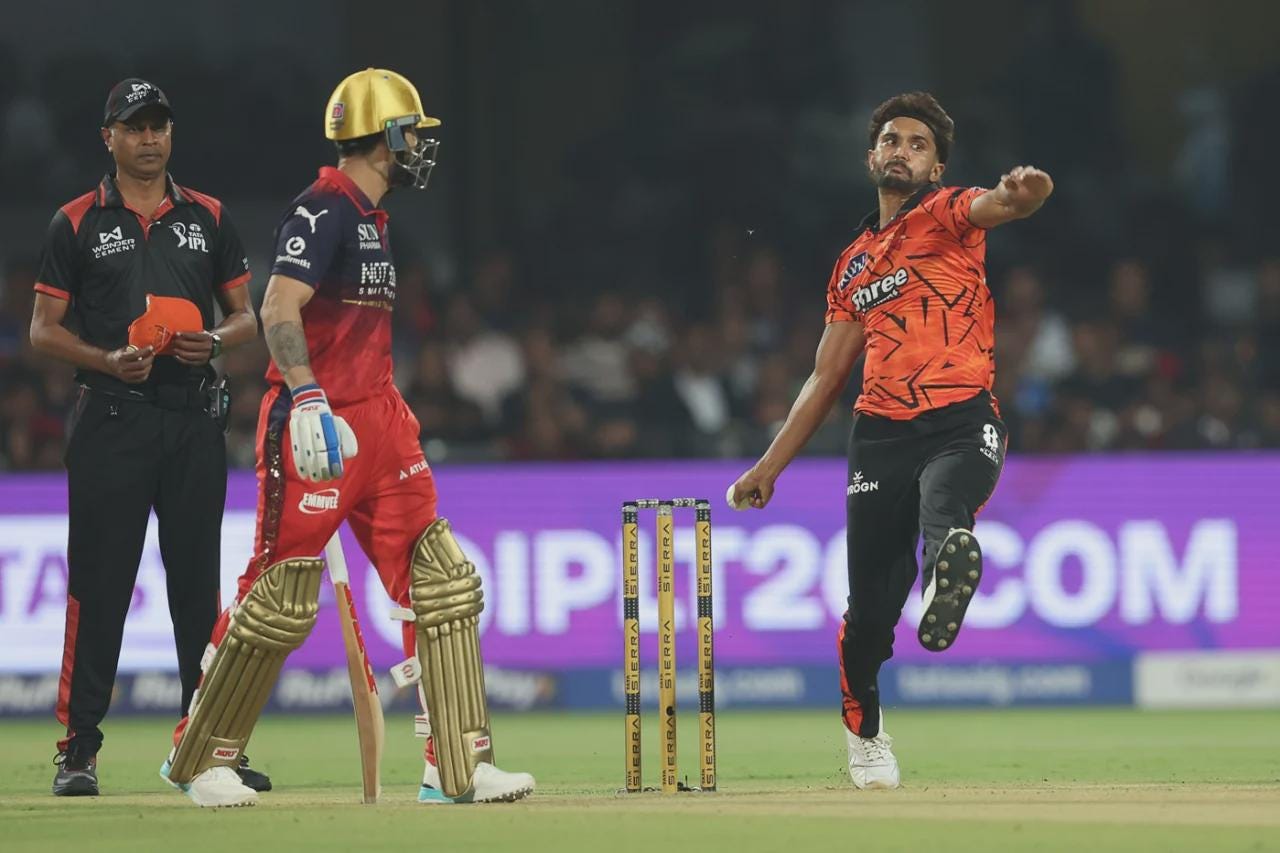
RCB’s bowlers spent much of the first innings searching for the right pace and lengths while SRH’s batters piled up 255. In particular, RCB failed to grasp the importance of slower deliveries on the flat, bouncy track. By the time they bowled their first slower ball, SRH had already scored 30 runs off the first 15 balls of their innings.
You can understand why RCB stayed away from the variation. Throughout the season, they have enjoyed a lot of success in the powerplay with hard lengths and short-of-good-length bowling. In fact, in the previous meeting between these sides, RCB had managed to keep SRH’s top three quiet using exactly that plan.
But tonight, the conditions demanded adjustment earlier than RCB anticipated. Across 20 overs, they bowled just 27 slower deliveries, which went for 47 runs (10.44 RPO). Their two senior fast bowlers, Kumar and Hazlewood, bowled only four slower balls each. In Hazlewood’s case, three of those four slower deliveries were wides, perhaps another reason why he hesitated to keep going to the variation.
The one clear exception for RCB was Romario Shepherd. He bowled 11 slower deliveries and conceded only 14 runs off them. In contrast, the other 7 balls he bowled at regular pace went for 23 runs. His first over captured the difference perfectly. The three deliveries bowled at normal pace disappeared for 16 runs, while the four slower balls, including a wide, conceded only three.
But even Shepherd’s slower balls perhaps lacked the deception that SRH’s bowlers managed. His slower deliveries were mostly in the late 110s to early 120s, while his quicker balls were generally in the early 130s. That meant his pace range remained relatively narrow.
SRH, meanwhile, began using slower balls almost immediately when bowling. Eshan Malinga bowled a slower ball on the very first delivery of the 2nd over, and went back to the variation two more times in that over alone. Rookie pacer Sakib Hussain pushed the idea even further in the 6th over. RCB were flying at 71 in five overs before Sakib bowled an entire over of slower balls. The over went for just 4 runs and included the wicket of Virat Kohli, effectively taking all momentum out of the chase.
By the end of the 14th over, SRH had already bowled 36 slower deliveries, which had gone for just 37 runs. Sakib alone bowled 13 slower balls in his first 3 overs. Speaking after the game, he said bowling coach Varun Aaron had specifically told him that slower balls would work on this surface.
SRH certainly had advantages. They were the home side, understood the conditions better, and also had the benefit of bowling second. But they also executed their skills more effectively. Their slower balls worked not just because they used them more often, but also because their pace variation was significantly wider and harder to pick up.
Malinga, in his very first over, ranged from 114 to 143 KPH. Sakib varied from 111 to 139. Harshal Patel touched 139, while Pat Cummins ranged between 115 and 145.
RCB’s bowlers, apart from Hazlewood, largely operate in the mid-to-high 130s, and their slower balls were mostly into the late 110s. Rasikh Salam went as low as 103, but his quickest ball was only 135.8, with most deliveries around 131-133. Hazlewood went as quickly as 145, but his slower balls were in the early 120s.
RCB’s pace variation mostly hovered in the range of 15-20 kmph; on the other hand, for SRH, Malinga and Sakib had a range of 25-30 kmph. SRH’s pace variations, therefore, looked sharper, were more deceptive, and therefore were far more effective.
RCB’s ability to decipher a pitch and chase totals effectively have been the hallmark of their league-leading season in 2026. However, the inability to latch on to either the right angles or the right pace variations tonight led to their biggest second innings loss (by 55 runs) since…they lost to SRH by 42 runs at the backend of the 2025 season.
The defending champions will hope that this loss is a precursor to another championship rather than a harbinger of weaknesses that can be exploited in the playoffs.
Data from the IPL Match Centre.