
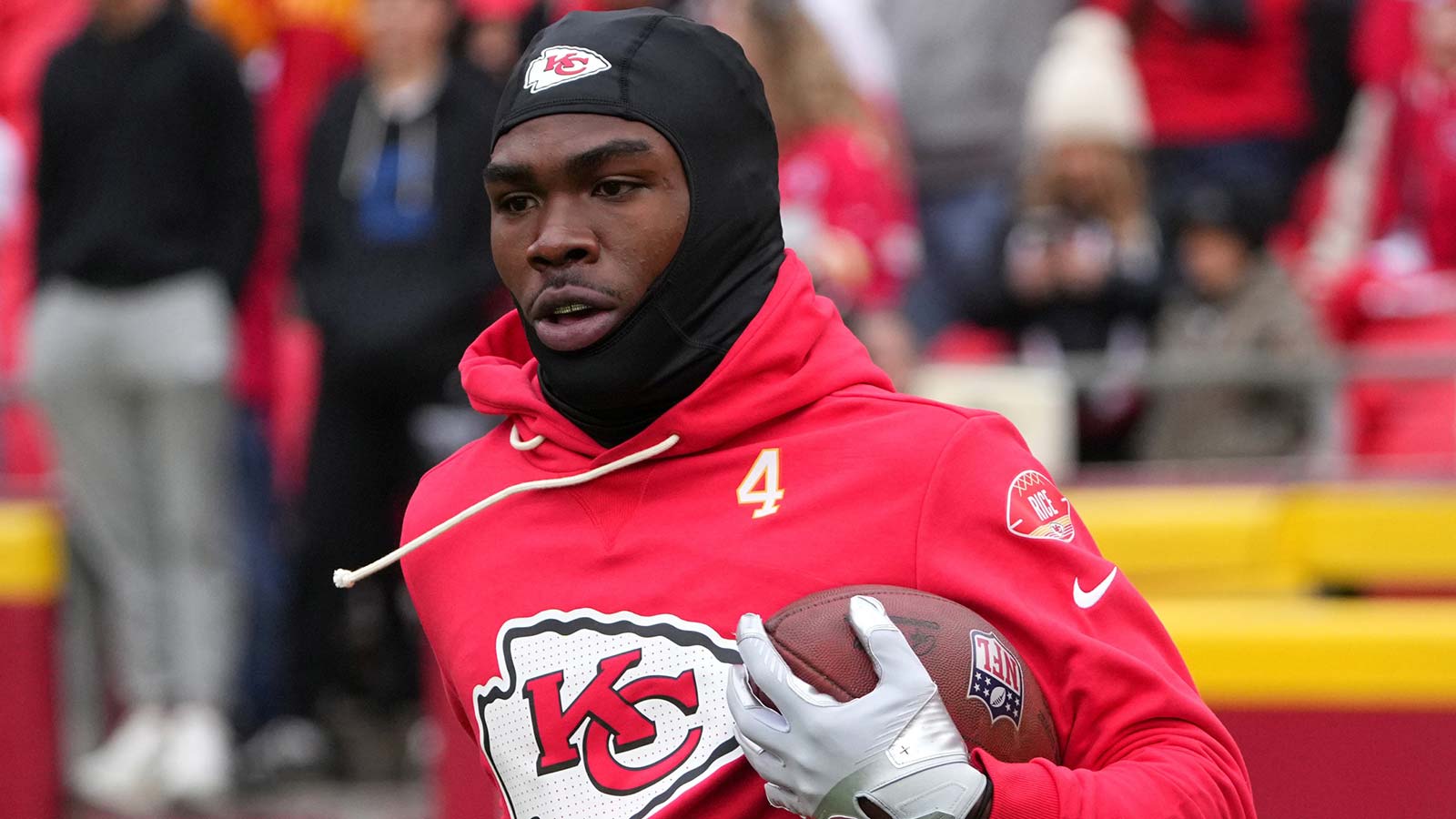
The Kansas City Chiefs’ offseason plans faced a significant setback with the news that wide receiver Rashee Rice violated his probation after testing positive for marijuana.
As a result, he has been ordered to serve 30 days in a Dallas County jail, which means he will officially miss both Organized Team Activities (OTAs) and mandatory minicamp.
With Rice behind bars, NBC Sports’ Mike Florio raised important questions about whether the NFL will impose an additional suspension.
He noted that this situation introduces a complex legal debate centered on the league’s Personal Conduct Policy.
Although a probation violation triggered by a positive THC test does not constitute a new criminal offense, it does breach the strict terms of his five-year probation agreement.
Florio pointed out that the policy includes a broad provision targeting conduct that could jeopardize the integrity of the league.
This means the Commissioner has complete control over how to interpret and apply disciplinary measures.
Alternatively, the league could also take action through the Substance Abuse Policy, but any appeal in that case would be decided by an independent arbitrator rather than the league office.
Florio emphasized that the NFL has discretion akin to that of a prosecutor, meaning it must decide whether Rice’s month in jail, the missed critical team activities, and the potential $100,000 fine for missing minicamp are sufficient punishment.
Regardless of the league’s final decision on disciplinary actions, Rice’s immediate focus will need to be on physical recovery.
According to ESPN’s Adam Schefter, Rice recently underwent a necessary procedure on his knee to address ongoing inflammation.
With a projected rehabilitation timeline of two months, Rice would likely have missed spring workouts even if he were not incarcerated, leaving the Chiefs to manage his status as training camp approaches cautiously.
The Kansas City Chiefs’ offseason plans faced a significant setback with the news that wide receiver Rashee Rice violated his probation after testing positive for marijuana. As a result, he has been ordered to serve 30 days in a Dallas County jail, which means he will officially miss both Organized Team Activities (OTAs) and mandatory minicamp.