
Published May 28, 2026 06:41PM
Half a century ago the cycling community was buzzing about a new velodrome being built in a small Pennsylvania place called Trexlertown. The project was embraced with excitement and fanfare by the regional cycling community. Finally, a real world-class velodrome was being built by an honest-to-goodness philanthropist who had a vision to get kids on bikes and promote the health benefits of bicycling. Clubs could run races and people could come to ride their bikes for fitness. To the existing, relatively small tribe of cycling enthusiasts, Bob Rodale was their benevolent chief.
Bicyclists wholeheartedly embraced Bob. As the head of Rodale Press, he had a beard, wore earth shoes, didn’t care for business suits and loved to ride his bicycle. He was a man of the people and this 333-meter concrete velodrome in his cornfield was a gift to like-minded bicyclists (See TT Early Planning sidebar).
But not everyone in the community understood Bob Rodale or his motive. In fact, after covering the velodrome’s first event on October 12, 1975, the local newspaper published several negative articles, one with a headline that referenced the Trexlertown Velodrome as Rodale’s white elephant.
Transitions
Track cycling in the 1960s and ‘70s was a sport in transition. Although hundreds of velodromes existed around the world and Olympic track cycling events were gaining popularity, they were very different from the track cycling races that had gripped the sports world from the late nineteenth century into the early 20th. That was cycling’s Golden Age of highly paid pros who rode hectic six-day races in smoke filled indoor arenas like New York’s Madison Square Garden and the Chicago Amphitheater. And there was a summer circuit of packed outdoor velodromes in Philadelphia, Newark, New York City, Providence, Boston and more that fed a class of international pros well into the ‘30s.
By the 1960s that era was long gone. The wooden velodromes had all burned down or been demolished, remembered only in fading scrapbooks or by the retired promoters and stars who then opened restaurants, auto dealerships, and bike shops. One of them was Jack Simes, Jr., son of a top racer from the early 1900s and himself a national champion in 1936. He owned Westwood Cycles, a nostalgia-rich bike shop in Westwood, NJ. He had a son, Jack Simes III.
Jackie was blinding fast on a bike. At 17, he was a sprinter on the 1960 Olympic Team. By 1964, he was America’s top cyclist and a standout for an Olympic medal in Tokyo. Flashy and charismatic, Jackie Simes rode a chrome bike and had all the class of the super stars that had come way before him. So much so that Sports Illustrated wrote about him and his cycling family exploits in a feature article entitled ”The Lure of the Wild White Noise.“
When I was coming up in the sport, Jackie Simes was my hero. I devoured that article. I watched him qualify for the 1964 Olympic Team at a new asphalt velodrome in Kissena, Long Island. By 1968, I was under his wing and qualified along with him for the Olympic Team to Mexico City. We were roommates at the Games and became fast friends.
Athletes in different sports sometimes mingled in the Olympic Village. It was there that Bob Rodale, a member of the Olympic Shooting Team bumped into Jackie Simes. The two talked about their sports. Jack didn’t know that shooting was even in the Olympics and was fascinated to learn about Skeet, Bob’s specialty. Bob was curious about cycling, having seen track racing the year before at the Pan American Games in Winnipeg. Jack talked about track cycling and his post-Olympic goal of turning pro in Europe because there were no good velodromes in the US. Rodale was fascinated, as anyone was who talked to Jackie. They parted company. That was it.
Flash forward to 1975. Simes had turned pro and had raced 11 Six Day races in Europe. He came back to the US to help drive a fledgling track race series at a few of the country’s outdoor velodromes. The Dutch promoter of those Six Day races came over from the Netherlands to revive indoor American Six Day racing on a temporary wooden indoor velodrome erected at the Los Angeles Sports Arena and Cobo Hall in Detroit. Jackie and a few US Olympic team riders were top billing. Those efforts failed and by the summer of 1975 he had transitioned from active pro racer to coach of the U.S. Pan American Games Team in Mexico City where the US team won an unprecedented four medals.
While Jack had been chasing his pro career, I remained amateur to ride in my second Olympics in Munich as a track racer in the team pursuit. After the Games I switched to road racing and by early 1975 was selected to ride for the US National Team in two 12-day stage races, the Tour of Baja in Mexico and the Tour of Britain. I was working at a ski and bike shop in Vermont and needed to prepare by going South for two months to train. There was a new track, the Dick Lane Velodrome, being built in Atlanta and, to make ends meet, I was offered “the job” to plan and run their grand opening meet. The organizing committee put me up in a fire house and gave me carte blanche and no money to make it happen. I got Pepsi to sponsor the race for $3,500, convinced the top American track riders to come including Jackie Simes as headliner, the only pro and three-time Olympian. When he arrived to race, I gave him an envelope with $100 cash start money. He was shocked.
At that same time, early 1975, an eccentric rich guy named Bob Rodale was building a world class outdoor velodrome in a never-heard-of place called Trexlertown, Pennsylvania. As the news dribbled out and construction pictures emerged, it was clear that this was for real. The right designers had been consulted, and Rodale was paying real money. He knew he needed to hire experts to figure out how to run the place. The word was out that Bob was hiring a velodrome director.
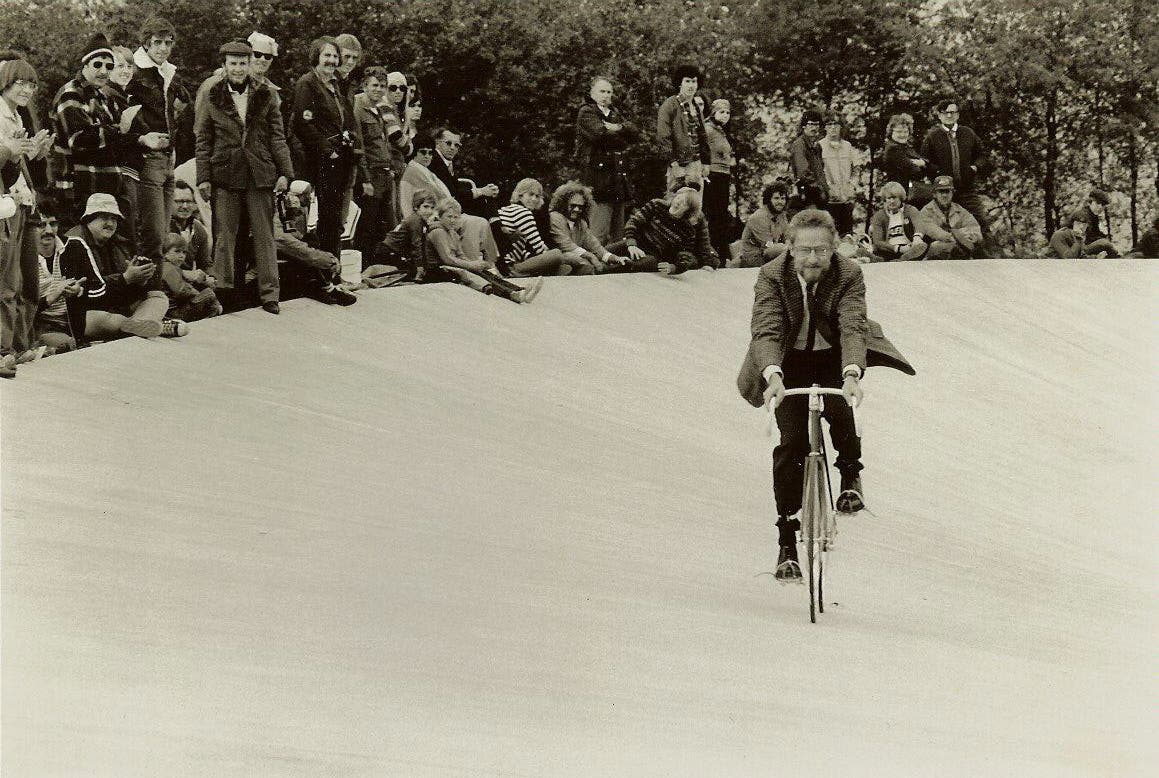
By late fall, Jack had returned from coaching the best-ever track racing performances by an American team and was looking for work that would complement his upcoming position as 1976 Olympic track cycling team coach. I retired from racing after winning the last stage of the Tour of Britain to take a job selling Weyless high end bike components to bike shops across the country. It wasn’t a career that inspired me.
We both wanted the paying job to manage Rodale’s new velodrome that was officially completed in October 1975. For good reasons, Jack got the nod. He was pissed at me for going for it. I was disappointed but remembered that I was always glad we never had to compete in the same event as racers. He was a high-octane sprinter; I was a steady pursuiter.
Jack and I had been teammates for a long time. I understood his deep understanding of the sport and how he had encouraged me when I was coming up. He remembered that I had paid him a hundred bucks at a time when no US race promoter attached any value to an American pro cyclist.
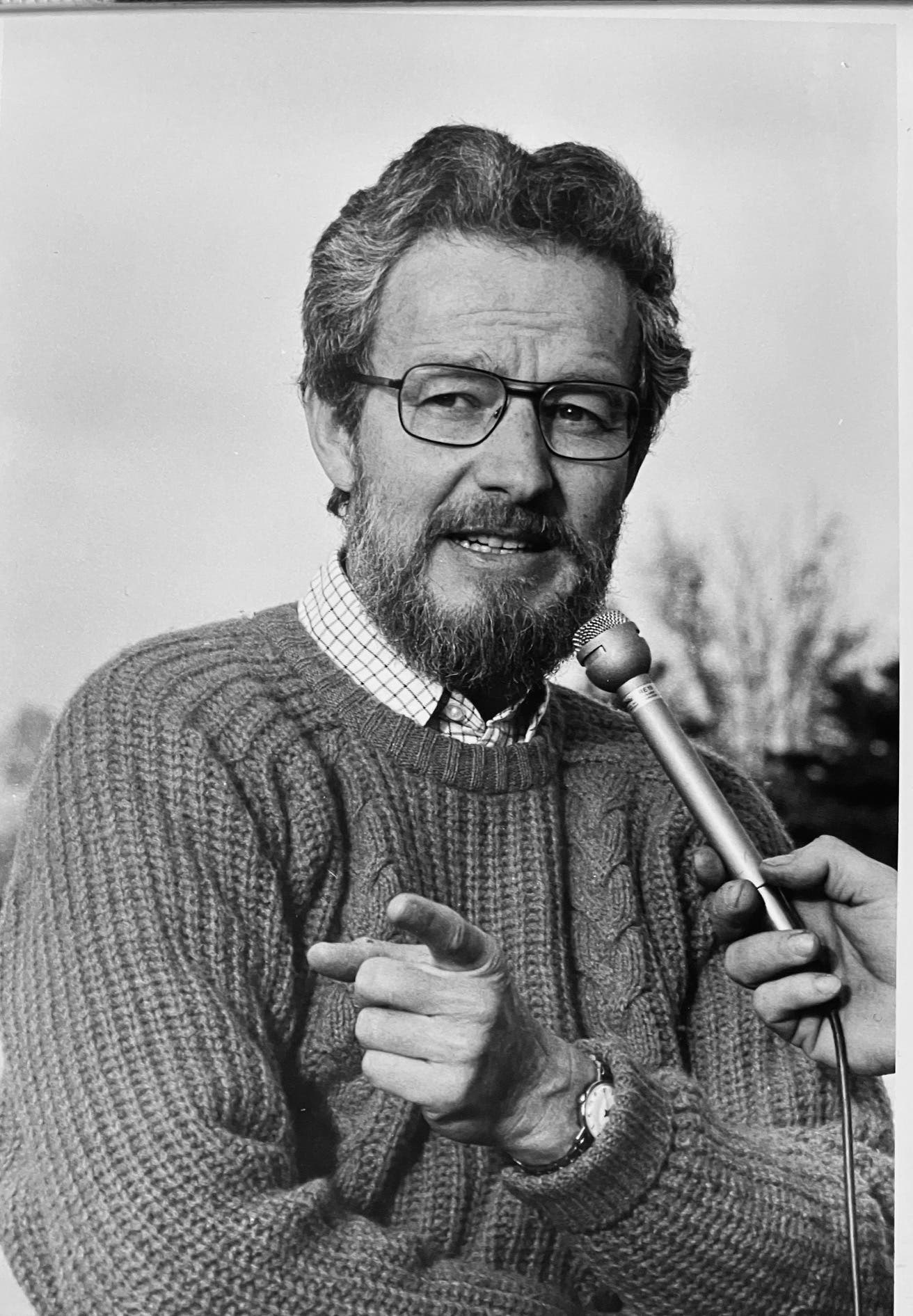
It was a mutual friend of ours, Jerry Casale, who convinced us to get back together. He reminded me that after every hard-fought race, true champions bury the hatchet. I called Jack. He had not yet moved to Pennsylvania and invited me to come for the weekend at his place in Closter, NJ for a summit meeting about the future of American cycling.
We drank and talked late into the night about the sport and our futures in it. If we wanted to stay in cycling, we had to figure out how to make it a livelihood.
Both of us felt that American cycling was on the cusp of a revival and that Bob Rodale’s Velodrome represented the opportunity to create new fans by presenting track cycling as entertainment, like in the old days in Madison Square Garden. We also agreed that our vision for the sport’s revival at Trexlertown had to be run as a business with many integrated parts. It would take much more than a single director.
1976: The Birth of T-Town and More
Bob Rodale committed to pay Jack an annual salary of $12,500 from Rodale Press to be the velodrome director. I had left my job at Weyless and was making ends meet by doing race announcing and freelance writing. We decided to form an independent company to pool our resources and implement our vision to once again professionalize American cycling. We called the company Omni-Sports with the slogan “Developing American Bicycle Racing”.
Bob Rodale liked the idea, particularly that Omni-Sports would pick up my salary. He warmed to the idea that a couple of ex bike racers had the initiative to start a business that would help the velodrome. So, he offered that Rodale Press would contribute $9,000 towards my salary if Omni-Sports would cover the rest and I would work full time on velodrome projects. The opening in October had attracted enthusiastic bicyclists but there was no clear path of how to turn it into a viable community asset. Bob said Jack and I could share an office in the basement of Rodale’s Fitness House. On my first day, he came in to show us the full-page newspaper story with a picture of the velodrome’s opening October event with a tell all headline, Trexlertown Velodrome, Rodale’s White Elephant.
“See what you can do about this,” he said, clearly agitated, and left.
Jack was coach of the 1976 Olympic Team. We knew that the race program we envisioned for the velodrome needed to showcase top racing and that Olympic Team candidates could provide it. During the week, we worked on the first season schedule of Friday night racing, how it needed to be promoted and how an American velodrome should be professionally managed. To make ends meet, we traveled to various East Coast cities on our own ticket, hauling in $2,000 on weekends by running Omni-Sports Bicycle Racing Clinics. We offered bicycle clubs and developing racers the opportunity to learn about the sport and, of course, promoted the velodrome’s first season.
The build-up to the season opener, however, was not all roses and sunshine. In addition to the early negative “White Elephant” media inertia, it was becoming crystal clear that Lehigh Valley sports media didn’t easily accept anything as a legit sport that didn’t involve an engine, a ball, or a horse. The Morning Call and Evening Chronicle newspapers, where Lehigh Valley got its news in those days, didn’t want to hear much more about “Rodale’s White Elephant.” We approached the owners of the newly formed Lehigh Valley Pro soccer team, The Pennsylvania Stoners, about co-promoting possibilities. They turned us down.
Opening night, billed as “The Grand Opening,” was Friday, April 25, 1976. There were lights for night racing, a 500-seat aluminum bleacher unit for fans, some portable johns and no fence around the top of the track. Jack created a fast-moving format of races featuring the US Olympic Team. We piped in music and my job, as announcer, was to educate and excite the crowd. I stood on the top row of the bleachers and pretended that I was calling an exciting Six Day Race in Madison Square Garden. Some little kid kept looking up at me and pulling at my pants leg.
It was a cool April night. The 400 people who showed up were smiling. We weren’t. Although we were happy that the racing was top notch with a great mix of riders and the presentation was smooth and professional. But the crowd was not what we expected and had hoped for. After the races, I went down to the infield to meet with Jack. We were frustrated and stood just past the judges’ stand, looking at the meager bleacher seats, wondering and discussing what went wrong. Despite this inauspicious beginning, we knew the racing was spectacular and we had the makings of a great show. We decided then and there that we would press on as if it were playing to thousands of fans.
We ran 15 weeks of Friday night races that first season. After opening night, we kept pumping the local newspaper with articles and radio stations with copromotions. More seating was under construction, still not enough for the 800 people that showed up the second week. And then it hit. On a beautiful Friday evening in May, we had to delay the start of the program because of a massive traffic jam. We thought it was caused by a fire or a big accident out on the highway.
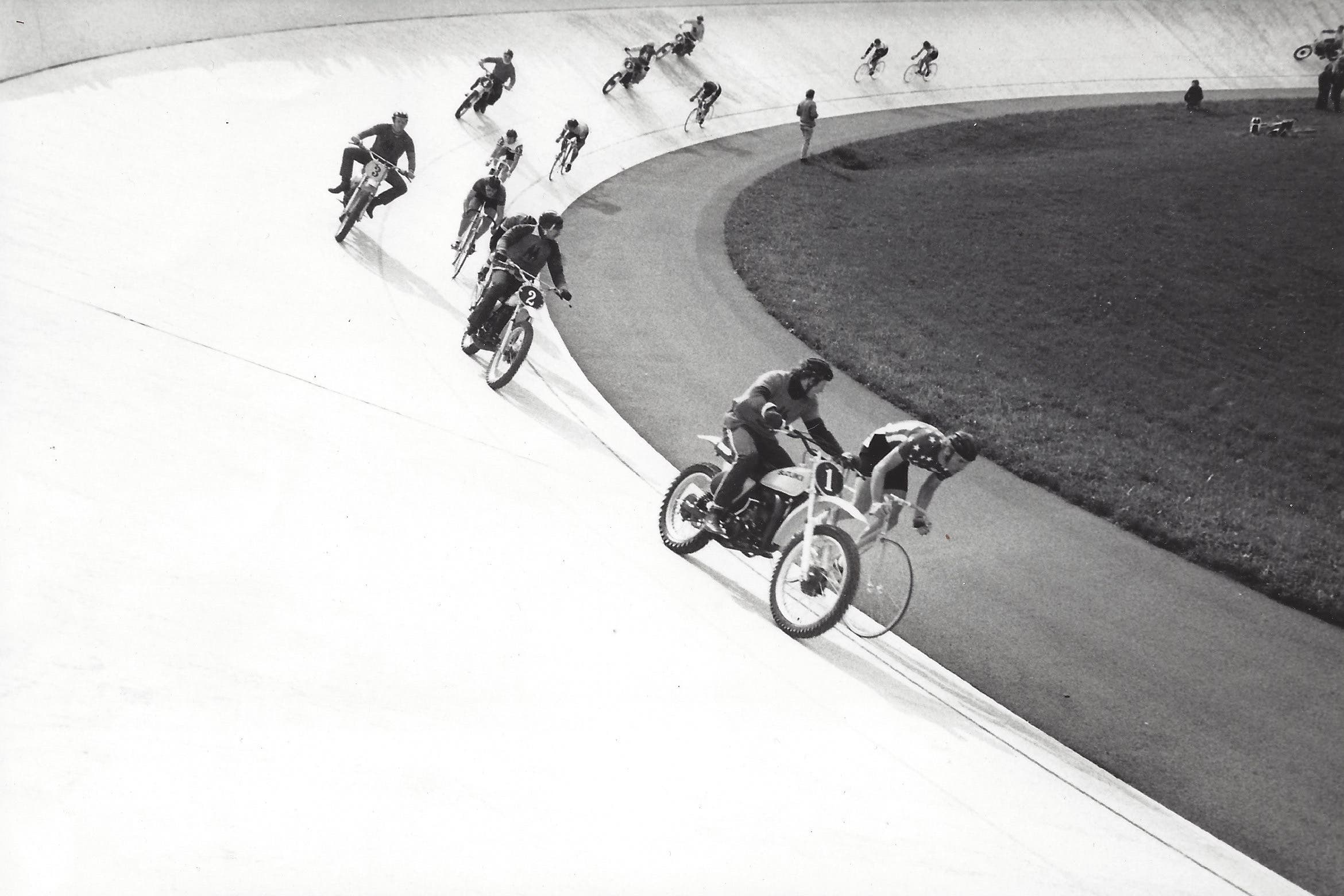
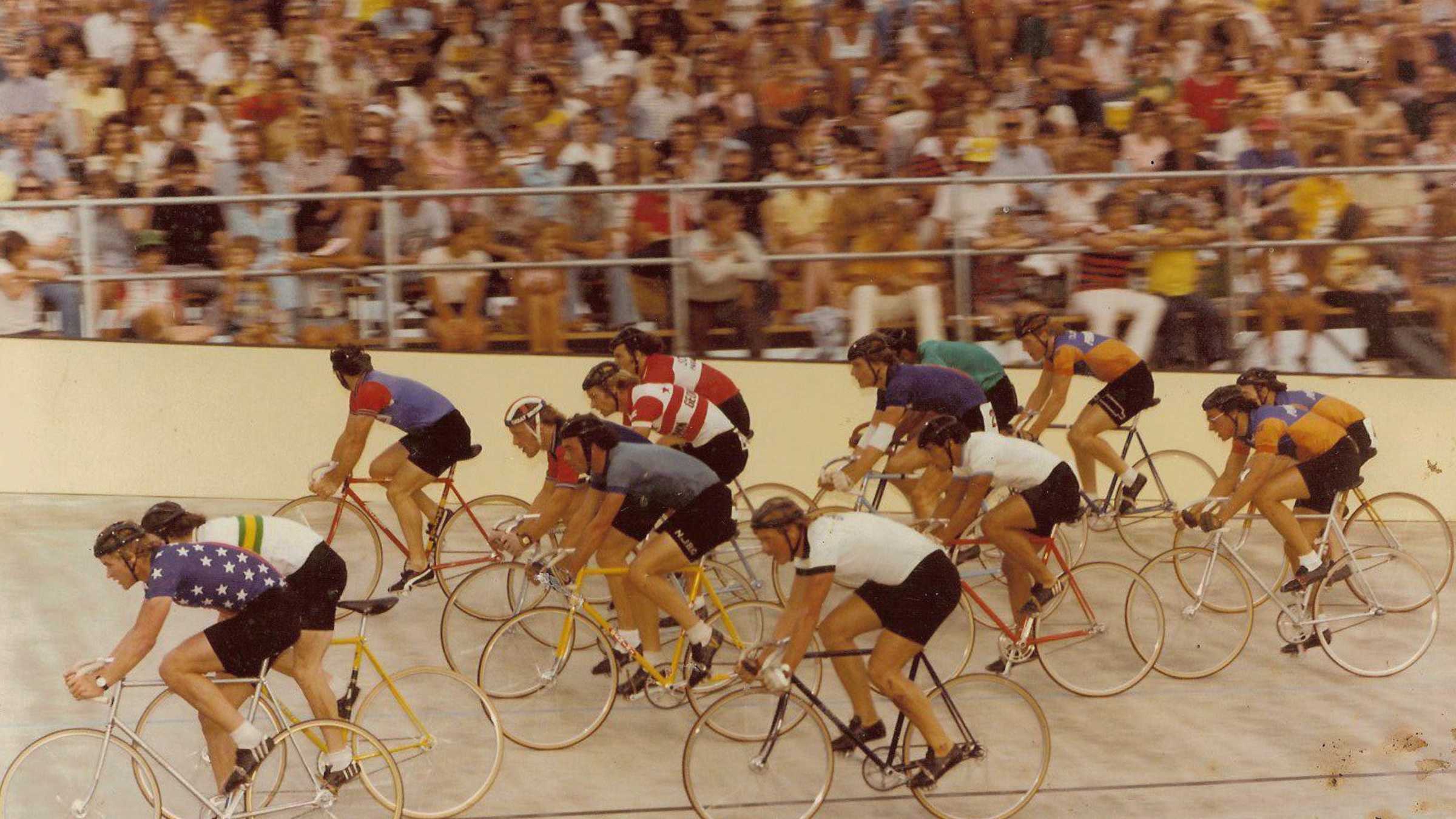
It was no accident. People kept pouring into the velodrome. The word had spread that the US Olympic Cycling Team was putting on a great show every week at Bob Rodale’s new bicycle track. Some 1,500 people came that night. The line to get in stretched out to the road. There still weren’t enough places to sit, no fencing around the top of the track, a small coke wagon that just sold sodas and hot dogs, and not enough porta-johns.
That summer was filled with handling the overnight success of Rodale’s white elephant. Everyone chipped in to help grow the place. Stands for 2,000 were erected, a new restroom building and balustrade boards around the top of the track were added. The Handlebar Concession stand featuring the appropriately named Velowedge was created. Bob Rodale agreed to buy the materials needed for a press box, ticket booths and a judges’ stand. Omni-Sports hired Brian Drebber, a freelance carpenter we met at an Omni-Sports Clinic in Richmond, to do the work and other carpentry around the track. He ended up becoming our Tuesday night race announcer and eventually went on from there to become an acclaimed national cycling and sports commentator.
What made it all possible was The Show. Jack perfected the Friday night schedule with a program that mixed hair-raising events into a cohesive, unified overall season with Madisons of 100 laps or more featured every Friday night. He told the riders they were there to entertain and to let their personalities shine. As race announcer, my job was to excite the fans, explain the events, point out rider and spectator characters and tell some stories, all fueled with a great PA system and loud music.
The owners of the Pennsylvania Stoners called and took us to lunch. They wanted to know why and how a fledgling bike track was out drawing them two to one.
We created a weekly communications strategy, hired a seasonal press officer and hammered the local newspapers and radio stations with inside stories about the riders, the races, and the rivalries that consistently resulted in Friday night crowds of 2,000 or more.
The crowning achievement of that first season was an event we created — the North American Championships, a Post Olympic International Cycling Meet following the ’76 Olympics in Montreal. We brought down a Bieber Bus load of top Olympians from nine nations, including Olympic Sprint Champion, Anton Tkac from Czechoslovakia and several other medalists for two days of racing against the US Olympic team. Over 5,000 fans attended the two-day show.
1977: The Show Goes On
With the Montreal Olympics in the rearview mirror, we were faced with a second act and needed a new hook. The County stepped up to help expand the seating capacity, added new toilets and locker rooms, and a bridge to the infield. Rodale Press supplied materials and Omni-Sports paid for the labor to build a press box just past the finish line, a new health food based concession called the Handlebar and additional ticket booths. We got stronger backing from new advertisers and convinced Bob that sponsor and advertiser names and logos were worth money and should be painted on the balustrade fencing around the top of the track.
Race Officials
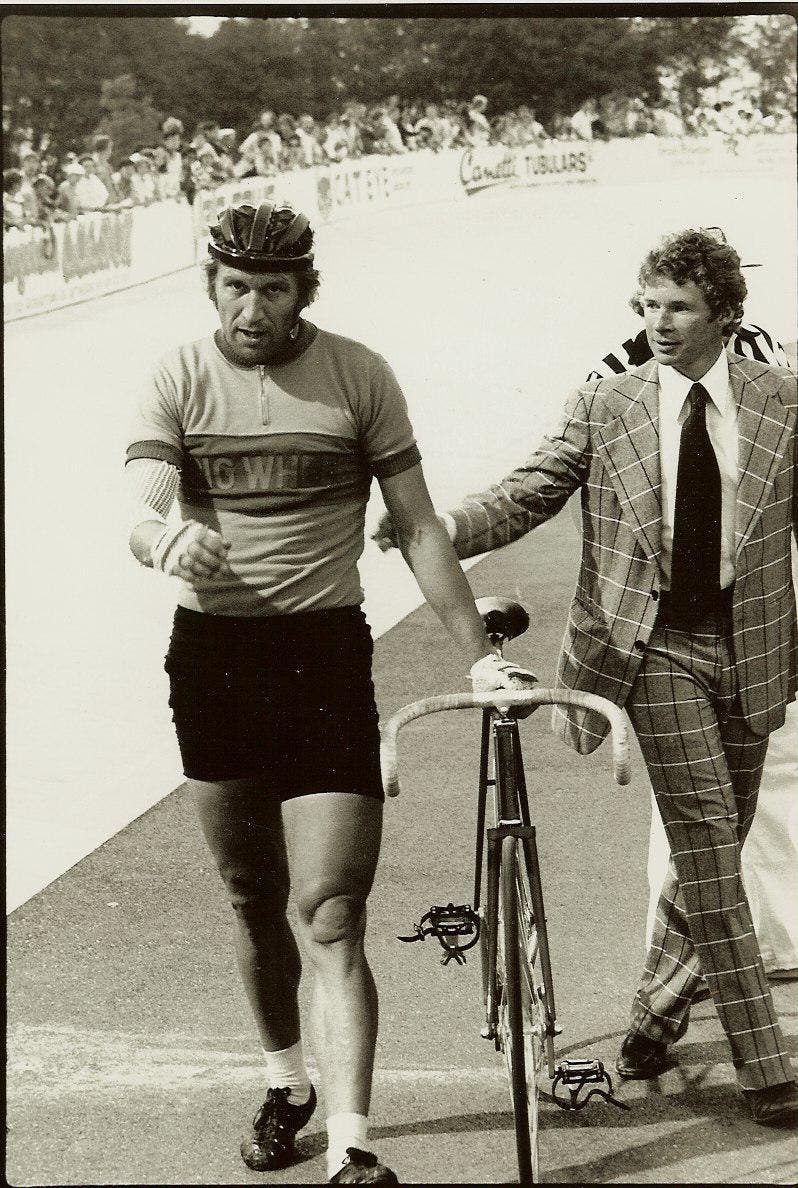
Scheduling good officials was an issue from the get-go. They were still an all-volunteer crew, some used to showing up when they felt like it regardless of what was expected. So, as the ’77 season drew near, we established a system to pay officials. That March Omni-Sports ran a two-day officials clinic focused on track racing. Artie Greenberg, a newly minted race official from the Kissena track in New York had been officiating for us during the first season. He was a master of the rulebook who insisted on fairness and professionalism with a steel trap approach and a twinkle in his eye. Artie taught both the USA and international rules while Jack and I explained race promotion and how the riders needed to be treated. At the end of the course, we administered the federation’s officials test and the clinic participants became licensed. As it turned out, the next year Greenberg scored the highest mark ever to date on a race commissaire’s test in New Zealand to become an “A Grade” UCI International Commissaire.
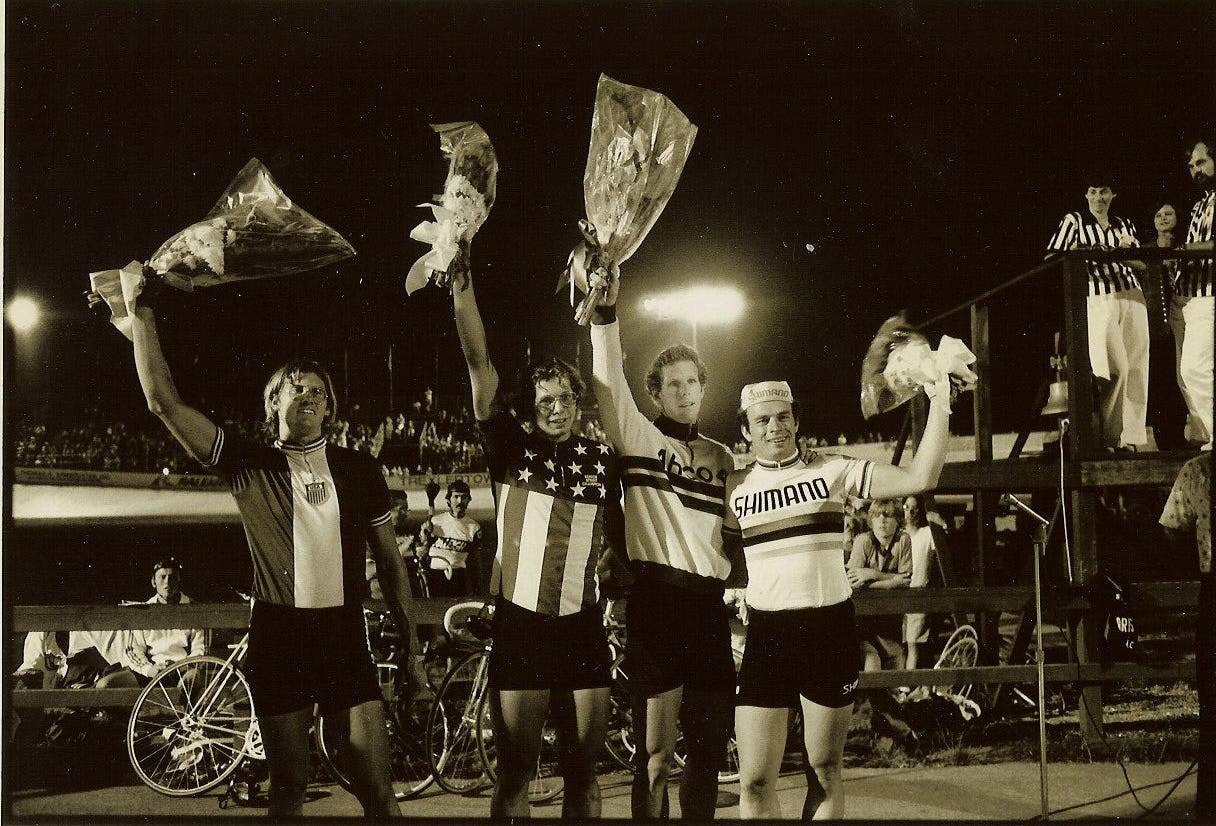
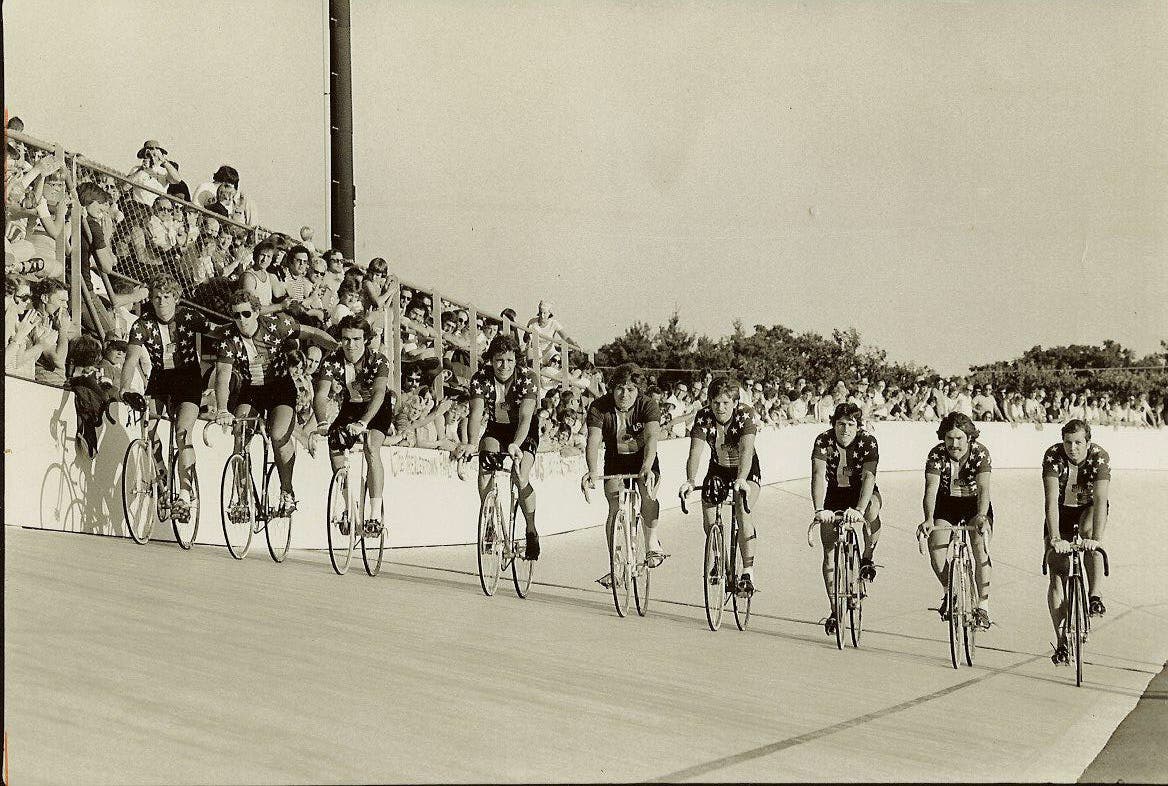
With a core of enlightened professional officials, Jack and I focused on refining a show that would appeal to our growing fan base: a mix of families, kids, college students, and young professionals. We created a home team — the Trexlertown Express — of top riders with talent and personality that we contracted for the season to race Friday nights against all comers. They were favorites from the year before: Jerry “the Gentle Giant” Ash, Gibby “The Bear” Hatton, Nelson “Rabbit” Saldana, Ian “The General” Jackson, Paul “The Animal” Pearson, Bruce, “The Torch” Donaghy, Jeff “The Rocket” Rutter, Bobby “the Baltimore Bullet” Phillips and Olympians Leigh “The Tree” Barczewski, and “Jo-Bob” Vehe.
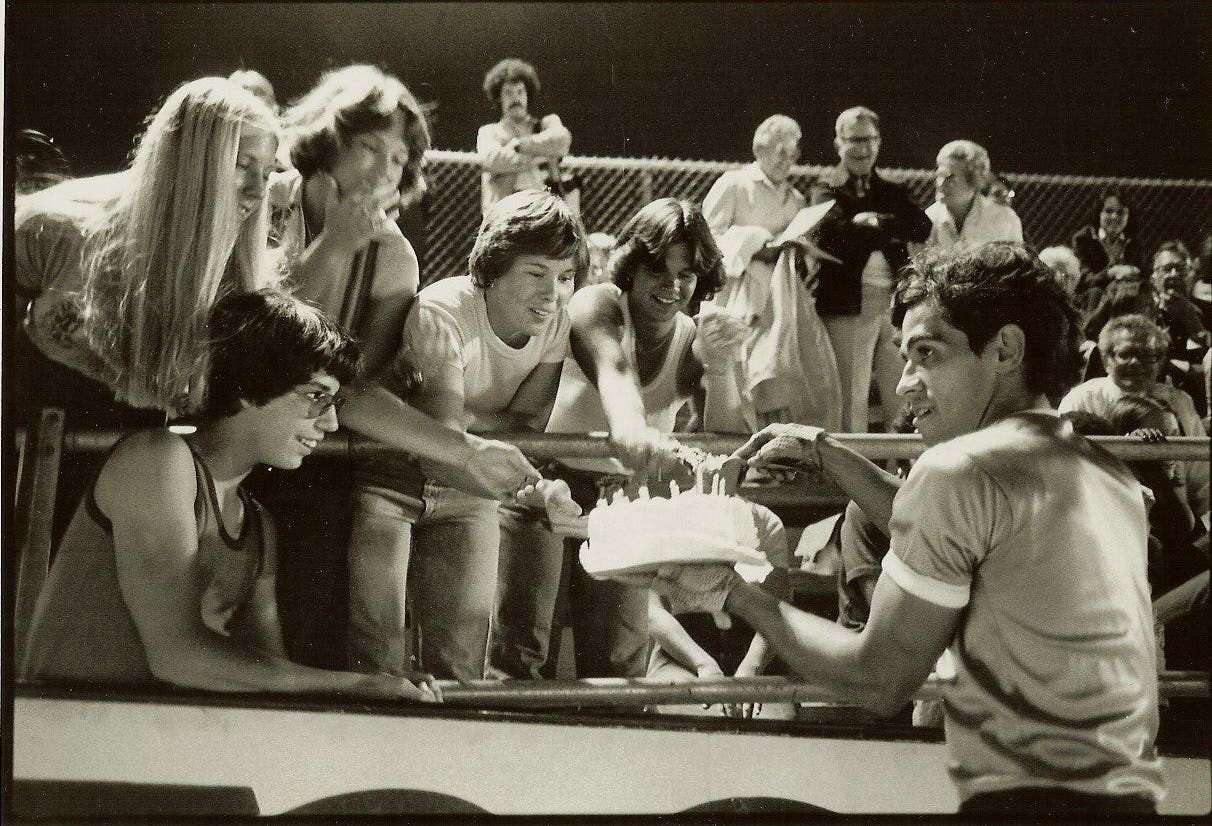
“We knew that the best way to attract fans was to put on a show with the best, most colorful athletes,” Simes says. “My father told me that when women started coming to the old velodromes that brought in a lot more men fans. We gave the riders free tickets and encouraged them to hand them out to the girls they met in town. And amazingly, we soon had a balustrade full of rail bunnies and T-Town became the place to be on a Friday night.”
We spruced up the entertainment by trying out an organist from the Six Day race at the Montreal Forum, made an organ stand in the infield, dressed her in a white suit and had her play under the spotlight. It was a hit performance, so we decided to find our own organist. Kay Lilly, a 4’11” church organist clinched her spot over rock keyboard players and local bingo hall organists by showing she could improvise theme songs on the fly for each of our featured riders. “Kay Lilly on the Keys” became a popular Friday night addition.
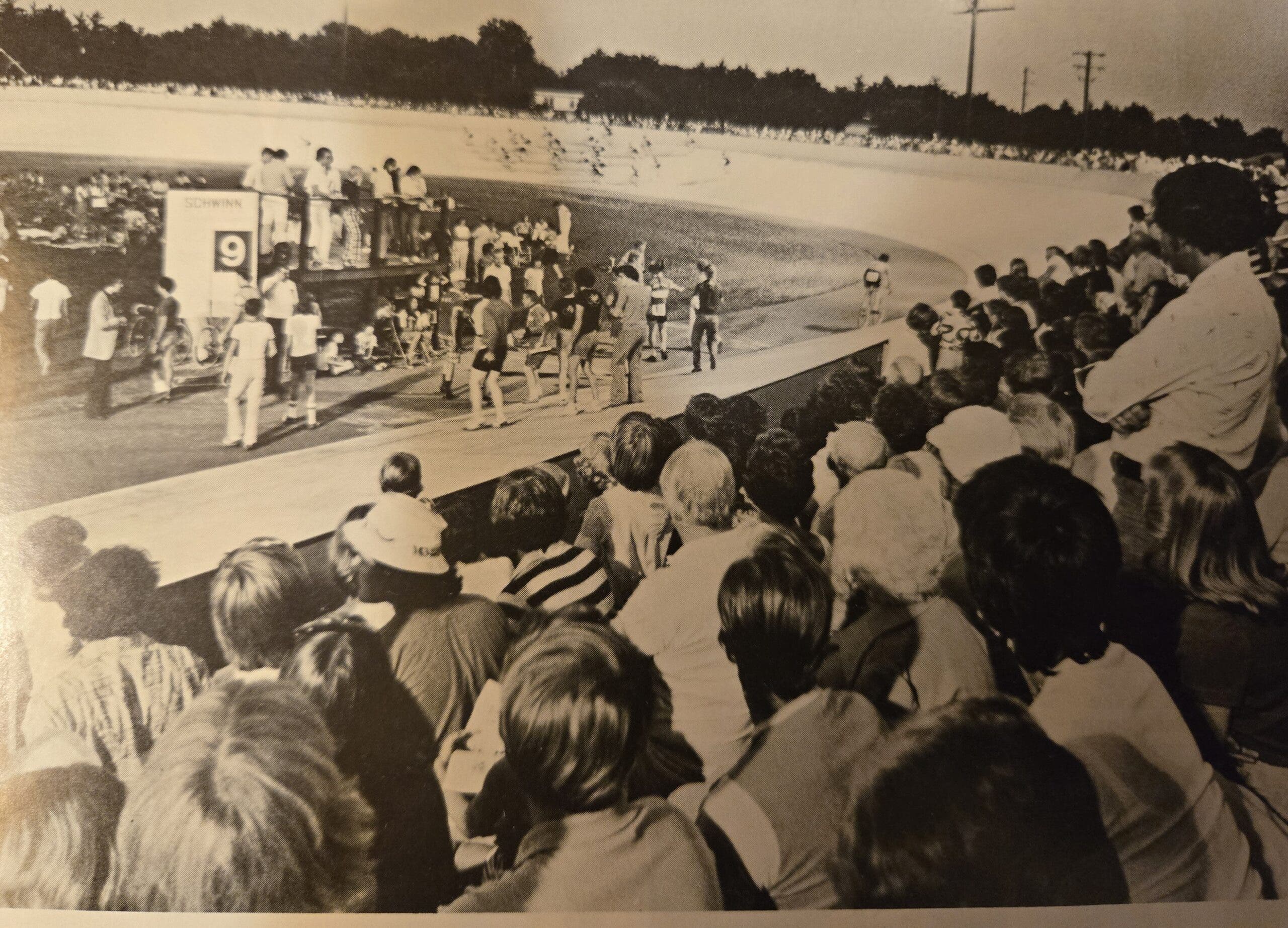
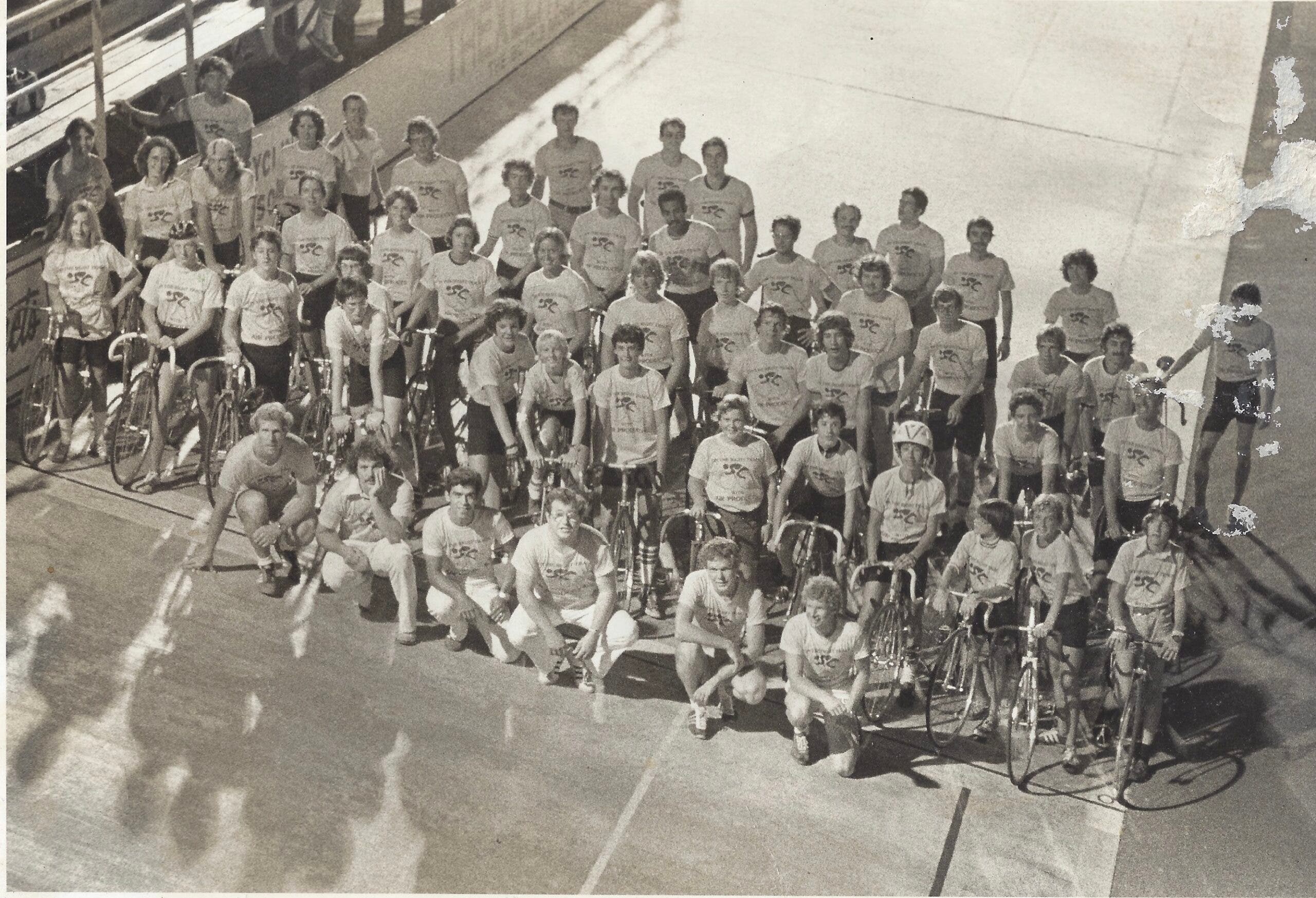
The Tuesday night feeder races got bigger with their own heroes and villains and average paid attendance of about 400. We created a kids development program and sold title sponsorship to Air Products, secured the donation of dozens of starter bikes and made our Friday night stars the coaches. Hundreds of kids signed up for the free program, thrilled to learn from champion riders and hopes that they might someday be good enough to race Friday nights.
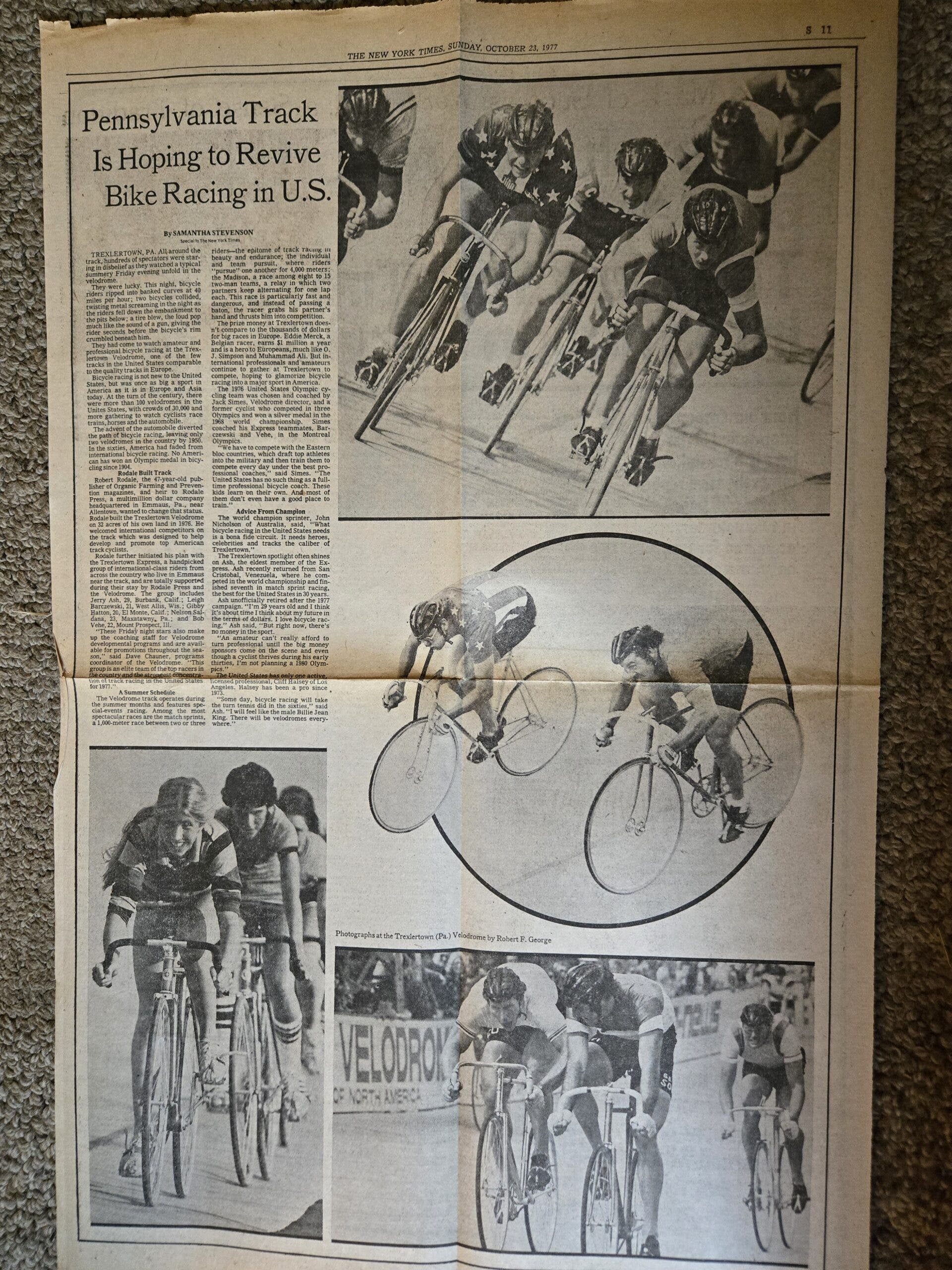
In addition to the Friday night races, we created two weekends of international competition featuring professionals and amateurs from 12 nations, drew record crowds and media coverage, including a feature article in the New York Sunday Times entitled “Pennsylvania Track is Hoping to Revive Bike Racing in U.S.”
Jack and Bob were sitting in the stands one warm summer evening. A big crowd was filing in for the show and dozens of colorful riders were swinging up and down the banking at speed, warming up to the blaring music of the Platters belting out their hit song, …Yes, I’m the Great Pretender, just laughin’ and gay like a clown…
“Bob gestured with his hands to the whole scene before us,” Jack recalls “ ‘Well I think this is great’, Bob told me. He said that he never envisioned anything like what we created and loved that cycling was becoming such a high-profile sport in the Valley. He said ‘I was naïve and didn’t know anything about bike racing. I thought the Velodrome would be like a Little League field where people could just ride and kids could learn and have fun’. He said he liked everything about the velodrome and in appreciation would be giving us the maximum increase in pay allowed by Rodale Press in any given year which was 10%. He also said there were two things he wanted to see always endure. He liked the word, velodrome, because it means the same in all languages. He wanted to be sure that velodrome would always be in the name. He also insisted there be free time allotted every day for the public, anyone, to ride the track.
1978: The Final Chapter
The buzz leading up to the ’78 season was the selection of the United States to host the 1978 Junior World Championships in June, the first World Cycling Championship held in the US since 1912 at the long-gone Newark Velodrome. US Cycling officials had put in their bid two years earlier for the road race to be held in Washington DC and the track events at Trexlertown. European inspectors representing the world governing body visited Trexlertown and called it “the best cement-surfaced bicycle racing track in the world.”
It was a big prestigious event with thirty participating nations that would further our impact on the world stage and confirm the value of the velodrome as an international asset for the Lehigh Valley. But to cover the costs of the championships, we needed a major sponsor.
At a health and fitness conference in Washington, DC, Bob met Loren Smith, a consultant to the Shaklee Corporation that was seeking promotional opportunities in the sports and fitness space. Smith visited the velodrome, liked what he saw and wanted to learn more about various sponsorship opportunities in cycling including the Junior Worlds.
Bob asked us, as representatives of the velodrome, to meet with Smith and Bob Brouse, the CEO of Shaklee at their headquarters in Berkeley, California, to interest them in the Junior Worlds. Bob specifically instructed us to not talk about Omni-Sports unless Shaklee brought it up. The planned two-hour meeting turned into lunch and another four hours discussing the status of cycling and how Shaklee could make a national impact on the sport, in addition to sponsoring the Worlds.
The conversation led to Shaklee wanting to contract with Omni-Sports to serve as its agency to implement their sponsorship of the Worlds and to develop additional cycling initiatives and programs in other markets around the US. Bob was pleased with the news and encouraged us to proceed with Omni-Sports as we saw fit so long as the Worlds were underwritten directly and that our work at the velodrome didn’t suffer. He said, “I’ll never let anything happen to Omni-Sports.” It was a big win for the velodrome, the Lehigh Valley and for Omni-Sports.
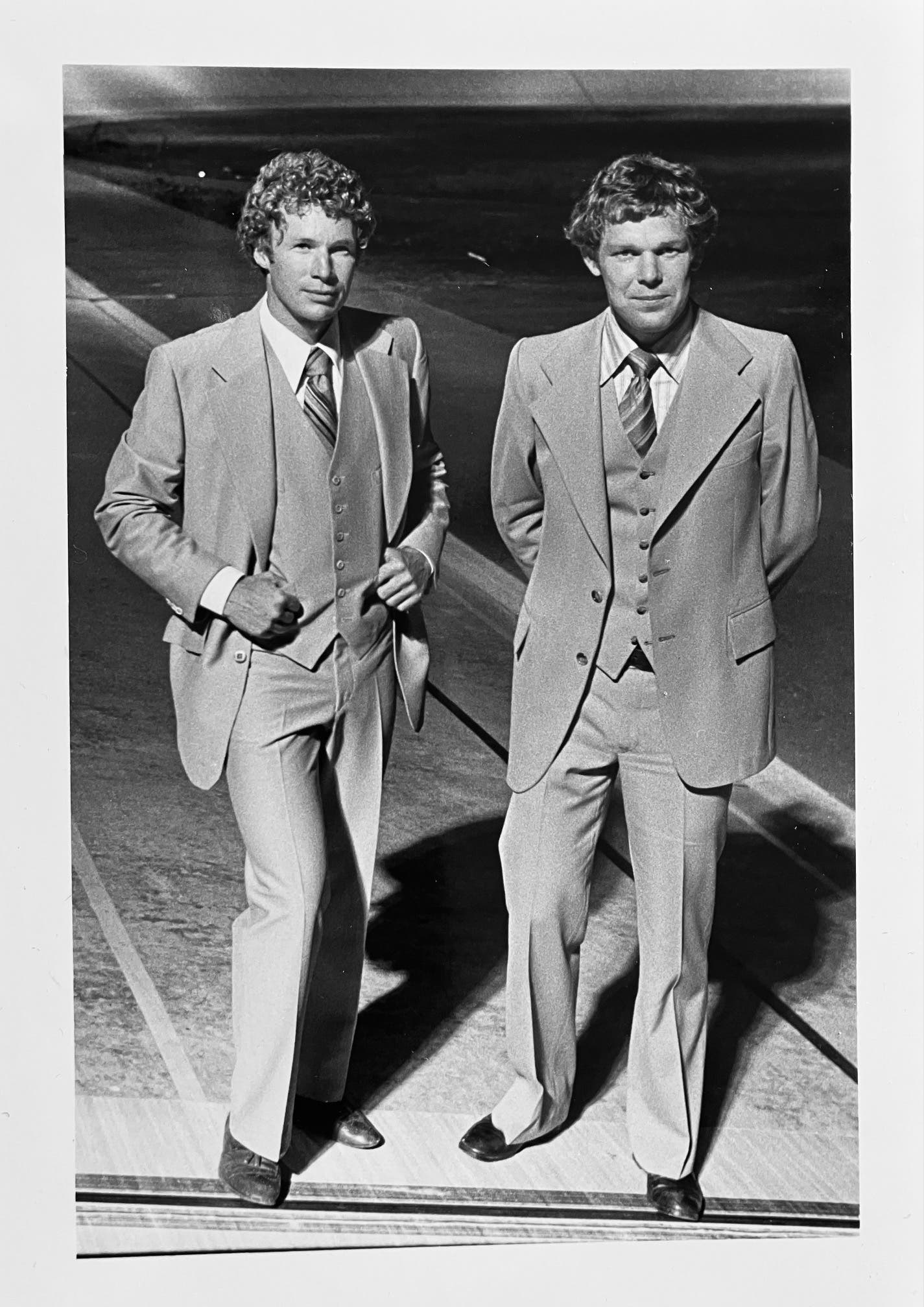
The Worlds went well. But running the World Championship meant we had to adjust the velodrome’s focus and modify our successful fan-oriented program to meet requirements of the international governing body, the UCI. They had certain stipulations about how the races had to be run. No music, no play-by-play announcing, stuffy official protocol, excessive time delays between races. In other words, a big step down from the exciting and entertaining show we ran every Friday night.
After the Worlds we went back to the weekly Tuesday/Friday show. Best of all, the regular top-quality competition spilled into expanded scholastic and youth development programs that surpassed any similar activities elsewhere in America. The April to June High School All Star Sprints program drew 250 students from 18 surrounding schools and the Air Products Development Program registered over 350 participants. We created a second full-time team of talented riders and coaches, the Lehigh Valley Stokers, to go against the Trexlertown Express and other temporary teams like the Detroit Motown Motors that we assembled with riders from other parts of the country.
But, at the end of the day, it was the International Madison Championships, September 6-7, 1978, that closed out the season and became the velodrome’s high mark of those first three years. It was the first appearance in America by top European pros Eddy Merckx, Danny Clark, Patrick Sercu and Rene Pijnen. Merckx, who had retired from competition since originally signed to race here, came as a guest and stayed with the Rodale family at their Organic Farm. On Saturday, before the evening’s final, he led a public ride on cycling-friendly country roads around the velodrome that afforded hundreds of people the memorable fun of riding and mixing with the world’s greatest cyclist.
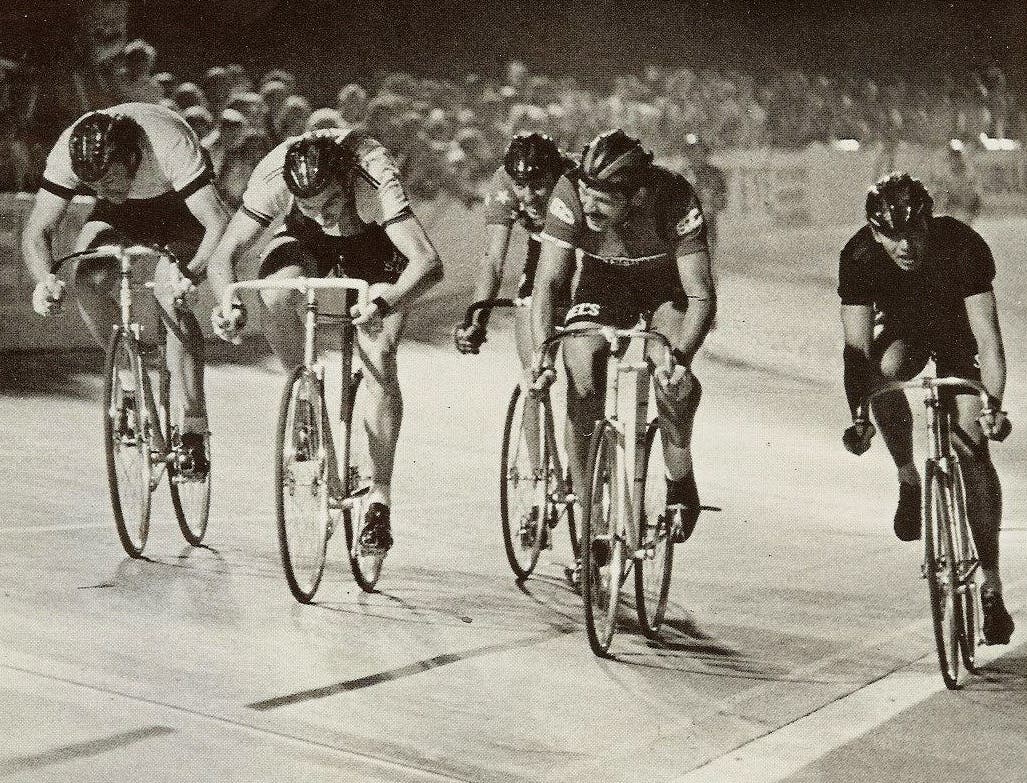
Looking back, just three years earlier Jack had scrapped with the original velodrome BOD to charge admission for Friday night racing, and only about 400 tickets were sold at a dollar a head for the 1976 “Grand opening.” And now, our capstone event, the 1978 international Madison championship sold out both days with ticket sales at $10, $6 and $4 dollars ($10 is equivalent to about $58.40 in 2026 money). The only complaints we encountered were traffic jams to and from the velodrome.
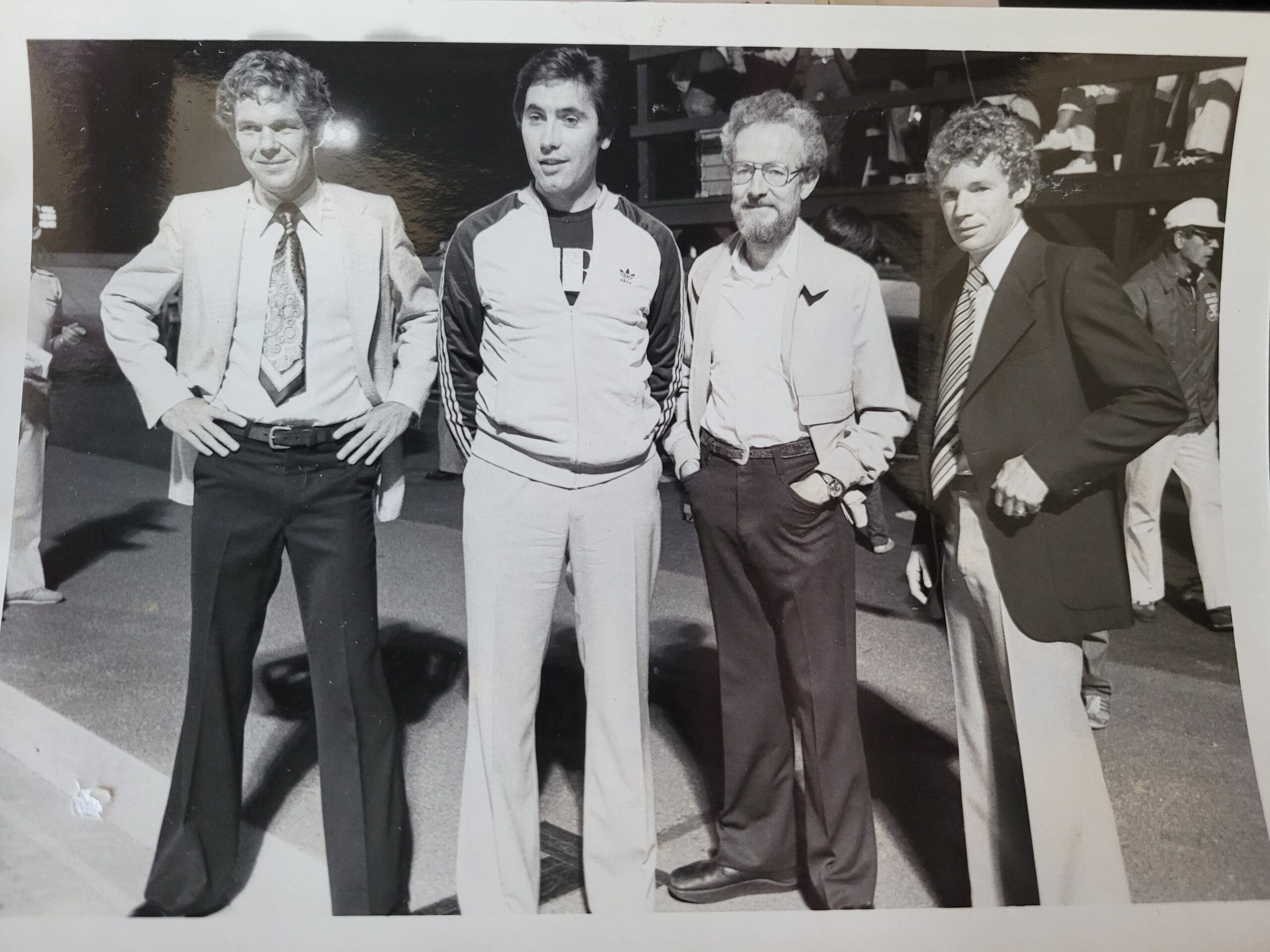
In three years, T-Town had become known world-wide for creating one the most successful racing programs anywhere, ever. The youth, scholastic and citizens cycling programs that spun from the racing also became shining examples for American cycling. Indeed, T-Town had crossed over into mainstream Lehigh Valley and American sport. It had become a huge asset for the community, Rodale Press and Omni-Sports. Most importantly, it set a new standard of promotion for cycling in the United States.
A Growing Culture Clash
Around that time, Rodale Press, thanks in part to the success of the velodrome and the innovation it represented, decided to buy Bicycling Magazine, a small publication out of California that targeted the growing audience of cycling enthusiasts. The magazine featured articles about bicycles and equipment, riding for fitness and fun bicycle tours. As Rodale’s resident cycling experts, we were invited to an editorial meeting to help determine the focus and growth strategy of the new acquisition.
We pointed to the overwhelming success we had created at the velodrome. We argued for a bold, colorful magazine that featured bicycle racing as a global sport, the inside stories of road and track events from around the world including the Tour de France and high-speed track racing. It would be about racers and the drama of racing, the Sports Illustrated of cycling.
While excitedly pitching the concept, I looked around the conference room filled with the editors of Rodale’s publications: Organic Gardening and Farming, Prevention and the writers of Rodale’s most popular books about natural foods, organic farming, composting, and self-sufficiency. They weren’t nodding and smiling as we had hoped. The Sports Illustrated vision clearly wasn’t aligning.
We knew Rodale Press was going in a different direction when Rodale’s new Bicycling! came out featuring an article entitled “How to Grow Sprouts Under Your Saddle.”
Housing the velodrome under the Rodale Press publishing umbrella was becoming a clash of cultures that increasingly bubbled up toward the tail end of the 1978 blockbuster season. We heard rumors that some of the top Rodale executives were suggesting that the Press should not be involved in running the track at all. Rodale’s CEO, Bob Tuefel, told Jack “The velodrome is the most over promoted thing in the Lehigh Valley.”
Epilogue
As the racing season ended, Jack and I became increasingly busy with our growing Omni-Sports business. The season-long Shaklee contract was our first big source of outside income and there were increasing opportunities for announcing and event organizing gigs cropping up around the country. We realized that our mission of “Developing American Bicycle Racing” could go far beyond what we were accomplishing at Trexlertown.
Rodale Press executives realized that as well. At Bob’s suggestion we prepared and delivered an Operations Report for the first three seasons, summarizing the successes, challenges and recommendations we had for improving the velodrome operations. We suggested that a new non-profit entity, independent from Rodale Press, be formed and that Omni-Sports could then be retained by the new entity to manage the velodrome.
We were told that there was a shake-up. We went straight to Bob’s office for the answer. He was uncomfortable as he explained that Rodale Press had made a decision. He started off by saying how pleased everyone was with the velodrome’s success. He thanked us for our vision and commitment to the task that went well beyond what anyone had expected, and he recognized that Omni-Sports was making a significant contribution to American cycling and to the Trexlertown Velodrome. And then he explained that we were the only salaried employees of Rodale Press who also ran their own high-profile business that was clearly making money. Our Operations Report had detailed the spectacular popularity of the velodrome, including the significant contributions that Omni-Sports had made to support the effort. Resentment was bubbling up in Rodale Press over that.
Bob said that Rodale Press would continue to pay the salaries of velodrome management. He indicated there might be a possibility for us to continue with one stipulation: We had to choose between the financially secure jobs as employees of Rodale Press or the higher risk but potentially more lucrative future with Omni-Sports.
For us, it was time to move on. We thanked Bob for the opportunity, shook his hand and left.
Legacy and New Beginnings
As it turned out, we were pleased to see that throughout the ‘80s and beyond, the velodrome continued to flourish and expand the programs we created.
Most importantly, we accomplished our goal to revive an American track cycling culture not seen since the early 20th century. T-Town had become known around the world as the place to be for summer track racing. Top cyclists from Australia, New Zealand, Great Britain, Germany, Belgium, Canada, Trinidad, Barbados, and the Netherlands regularly came to live in the Lehigh Valley, race Friday nights, coach in the development programs during the week and train on quiet country roads through the surrounding farmland.
Thousands of kids have participated in a variety of youth programs, hundreds of them became national champions and dozens went on to become Olympians, more than from any other velodrome in the US. Lehigh Valley natives who got their start in Trexlertown youth programs then went on to US Olympic teams include Bobby Lea (’08, ’12, ’16), Tanya Lindenmuth (‘00), and Marty Nothsteinm who became a World Champion, Olympic gold medalist and hometown hero.
As for us, in 1979 Omni-Sports rented new offices in Allentown. Loren Smith, the consultant to Shaklee became an investor. We hired a secretary and a bookkeeper and went to work.
Within the next five years, we partnered with Artie Greenberg and Brian Drebber to create Event Services, a business that provided professional officiating and announcing to race organizers. We created and ran the American Bicycle Racing Circuit of five road and track races around the country, played cameo roles in a cycling themed Schlitz beer commercial, created and ran the Yoplait 50K Bicycle Challenge of eight events in four major markets, created and ran the Panasonic/Shimano semi-pro team, consulted with Madison Square Garden on a plan to bring back Six Day racing, helped start and publish Winning, Bicycle Racing Illustrated magazine, got control of pro cycling in the US and started and ran the first USPRO Championship in Baltimore and the CoreStates USPRO Championship in Philadelphia. Jack became the president of USPRO and I started my own company with some tennis marketers to create and run more cycling events.
What followed during the next three decades was a strong revival of American cycling.
And it all began in a little place called Trexlertown.