
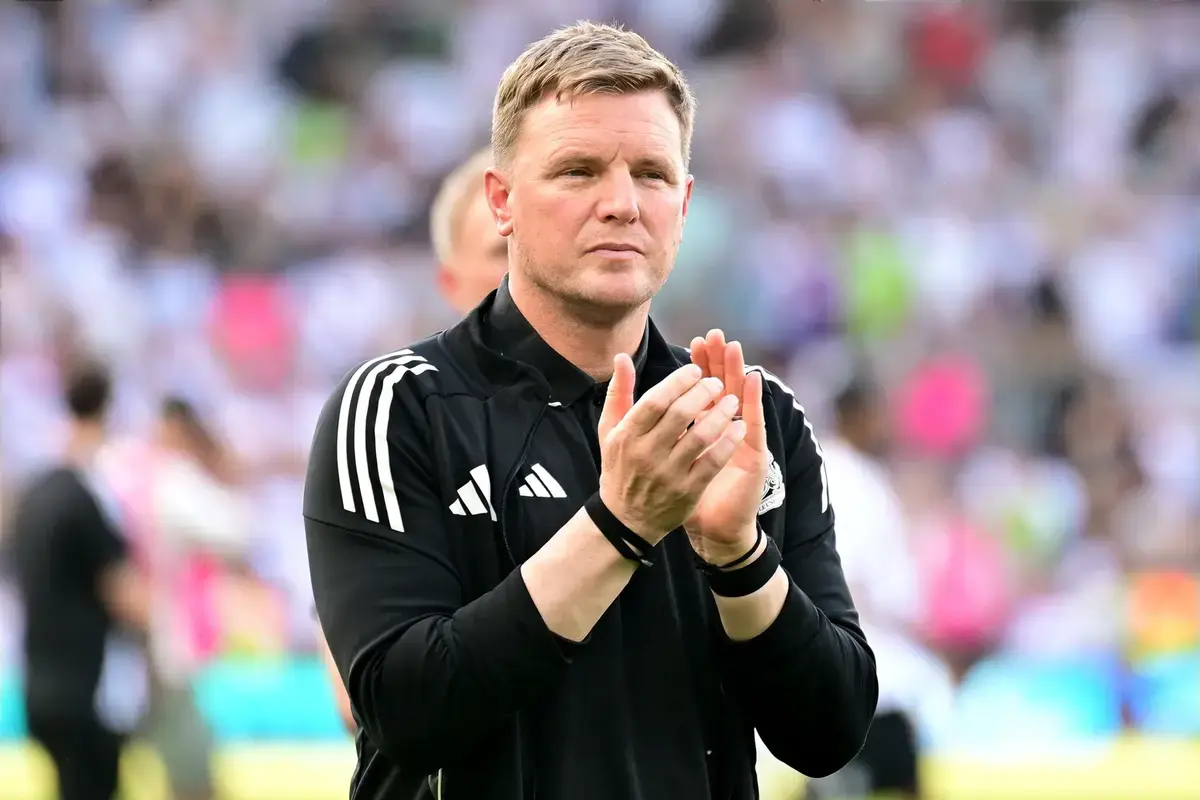
There is no point pretending this Newcastle United season has been good enough.
Newcastle United supporters are not frustrated without reason.
The Premier League campaign has too often lacked consistency, defensive stability and attacking fluency. Expectations have risen dramatically over the last three years and with those expectations, scrutiny inevitably follows. That is modern football.
But serious football analysis requires something deeper than frustration in the aftermath of defeat. It requires perspective.
Because before Newcastle supporters decide whether Eddie Howe remains the right man for the future, they should first remember precisely what this football club looked like when he arrived.
In November 2021, Newcastle United was nineteenth in the Premier League, winless after eleven matches and drifting towards relegation. Confidence was broken, the squad looked physically underprepared, the atmosphere around the club was fatalistic and years of underinvestment had left Newcastle structurally behind the clubs they were supposedly expected to compete with.
The club Eddie Howe inherited was not an elite football institution temporarily underperforming. It was a club emerging from a long period of stagnation.
That context matters and it matters even more now because modern football has an increasingly short memory.
The Newcastle United that Eddie Howe inherited
When Howe arrived, survival was the immediate objective.
Not Europe.
Not trophies.
Not Champions League football.
Survival.
Steve Bruce’s side had failed to win a league game all season. The squad looked disorganised, physically weak and psychologically fragile. Newcastle was widely expected to go down.
Instead, Howe engineered one of the most remarkable recoveries in modern Premier League history. Newcastle became the first side in Premier League history to survive after failing to win any of their opening fourteen matches.
That achievement alone deserves more respect than it often receives.
The transformation was immediate and visible.
Newcastle United before and after Eddie Howe
Before
League Position – Relegation zone
Identity – Reactive, survival football
Fitness Levels – Frequently criticised
Atmosphere – Flat, pessimistic
Cup Competitiveness – Minimal
European Football – Distant ambition
Recruitment Appeal – Limited
After
League Position – Champions League qualification
Identity – Aggressive, front-foot football
Fitness Levels – One of league’s highest intensity sides
Atmosphere – Unified and ambitious
Cup Competitiveness – Finals and silverware
European Football – Champions League participation
Recruitment Appeal – Elite internationals willing to join
The emotional transformation mattered almost as much as the tactical one.
For years Newcastle supporters had become conditioned to endure football.
Under Howe they began expecting to compete again.
That is a profound cultural shift.
What Eddie Howe has actually achieved
Football supporters often discuss managers emotionally but the evidence supporting Howe is substantial.
Since arriving at Newcastle, he has:
• Saved the club from probable relegation
• Delivered Champions League qualification
• Reached multiple domestic cup finals
• Ended Newcastle’s long trophy drought
• Established a clear tactical identity
• Dramatically improved numerous players
• Rebuilt standards and professionalism
• Reconnected supporters with the club emotionally
Most importantly, he made Newcastle United relevant again.
That should never be underestimated.
The Trophy that changed everything
The single most important achievement of the Howe era was the 2025 League Cup triumph.
Newcastle’s victory ended a 70 year wait for a major domestic trophy.
That matters historically.
Entire generations of Newcastle supporters had grown up without seeing the club lift a major trophy. Near misses, false dawns and glorious failure had become part of the club’s identity.
Howe changed that and he did so while operating under financial restrictions that significantly limited Newcastle’s ability to accelerate their rebuild.
The symbolism was enormous.
Eddie Howe became the first English manager to win a major domestic honour in England since Harry Redknapp.
For Newcastle supporters, Wembley ceased being a destination associated only with disappointment.
That psychological barrier was broken.
Howe’s Greatest Strength: Player Development
One of the clearest indicators of elite coaching is improvement.
Not transfer spending, improvement.
Under Howe, numerous Newcastle players produced the best football of their careers.
Examples of improvement under Eddie Howe, before and after
Joelinton – From misfit striker to dominant midfield presence
Fabian Schar – From useful squad player to elite ball-playing defender
Miguel Almiron – From inconsistent output to best scoring form of career
Sean Longstaff – From squad depth to reliable Premier League midfielder
Jacob Murphy – From peripheral player to effective attacking contributor
Dan Burn – From functional defender to cultural leader and symbol of commitment
Alexander Isak – From talented striker to one of Europe’s most feared forwards
This matters because coaching at elite level is not simply about buying better players. It is about elevating existing ones.
Howe has repeatedly demonstrated that ability.
Eddie Howe and Newcastle’s modern managerial history
This is where perspective becomes especially important.
Newcastle supporters rightly revere figures such as Kevin Keegan and Sir Bobby Robson because they restored belief, ambition and emotional connection to the football club.
Howe belongs in that conversation.
Not because he is flawless but because the scale of his achievements already places him there historically.
Comparison with recent Newcastle United managers
Context and Achievement
Steve Bruce – Survival management and Lower-table consolidation
Rafa Benitez – Organised stability and Championship promotion and survival
Eddie Howe – Full institutional rebuild Champions League, trophy, finals
Eddie Howe’s Premier League win percentage at Newcastle sits around 47%, placing him among the club’s strongest modern managers statistically.
He has also already matched or exceeded achievements that many Newcastle managers never came close to delivering.
Champions League qualification twice.
Major silverware.
Multiple Wembley appearances.
Elite European nights.
These are not minor accomplishments.
The difficult season and why it happened
Howe has undoubtedly done some great work but supporters are also correct to acknowledge this season’s failings.
The 2025/26 Premier League campaign has exposed real weaknesses.
• Defensive inconsistency
• Squad fatigue
• Tactical predictability at times
• Recruitment concerns
• Poor runs of form
• Lack of attacking depth
• Heavy reliance on key individuals
Recent criticism has intensified as results declined and Newcastle slid down the table.
Those criticisms are legitimate. But context matters here too, because Newcastle’s current limitations are not simply managerial.
They are structural.
The problem most rival supporters do not understand
There remains a strange misconception around Newcastle United.
Because the ownership is wealthy, many assume the club should already operate like Manchester City.
That is not reality.
Newcastle inherited years of institutional underdevelopment.
The club’s commercial infrastructure, training facilities, academy systems and recruitment networks lagged behind the Premier League’s elite for years.
At the same time, Profit and Sustainability Rules severely restricted how quickly Newcastle could rebuild.
This created a paradox:
Newcastle possessed wealthy ownership but limited operational freedom. That distinction is crucial.
Howe has effectively been asked to accelerate Newcastle into elite competition while parts of the club are still catching up structurally.
That is an extraordinarily difficult balancing act.
The Isak Disruption and the Cost of a Protracted Exit
The Alexander Isak situation also must be treated honestly.
This was not simply the loss of a high-quality centre-forward. It became a destabilising episode. Liverpool’s pursuit, Newcastle’s resistance, Isak’s stated belief that promises had been broken, and the stand-off that followed created a level of disruption no manager would welcome. BBC Sport reported that Isak said the relationship with Newcastle “can’t continue”, while Newcastle had already rejected a Liverpool bid worth around £110 million.
There were also reports that Isak did not want to play for the club again as he tried to force through the move. Whether viewed as player power, poor communication, contractual failure or transfer-market reality, the effect on Newcastle was obvious: Howe lost the focal point of his attack, the club lost control of the narrative, and the summer became defined less by calm squad building than by crisis management.
That matters because Isak was not an ordinary player in Howe’s system. He gave Newcastle depth, speed, finishing, pressing intelligence and elite movement. Losing him late, or under pressure, did not simply create a vacancy. It created a tactical rupture.
The perception of panic buying then followed almost inevitably. Replacements were needed, but they were being judged against one of the best forwards in Europe and acquired in the emotional shadow of a protracted departure. That is rarely the ideal environment for coherent recruitment. Supporters saw the club trying to respond quickly, but speed in the market can easily look like strategy under pressure rather than strategy under control.
That should not excuse every recruitment decision. Newcastle must be sharper, calmer and more joined up. But it does help explain why the season became so awkward. Howe was not just managing a football team. He was managing the consequences of a high-profile transfer stand-off, the loss of his most important attacking player, financial restrictions, and a squad still not deep enough to absorb elite-level disruption. To make matters even worse, there was no CEO or Director of Football in place. This had a major impact in the way the club conducted transfer business last season.
Infrastructure matters more than fans think
Modern football supporters understandably focus on players and managers.
But elite football clubs are increasingly systems.
Recruitment departments.
Data operations.
Medical departments.
Academies.
Commercial growth.
Facilities.
Long-term strategic planning.
Manchester City did not become Manchester City overnight.
Neither did Liverpool under Klopp.
Nor Arsenal under Arteta.
All required infrastructure, patience and years of institutional alignment.
Newcastle is still in that process and Howe has been central to stabilising it.
The most important question
The real question Newcastle supporters should ask is simple:
What kind of football club does Newcastle United want to become?
A permanently reactive club that changes direction every eighteen months? Or a serious institution capable of sustained long-term growth?
Because constant managerial turnover is usually the behaviour of unstable clubs. Not elite ones.
That does not mean managers should never be replaced. It means replacement should happen for compelling strategic reasons, not emotional impatience.
Why Howe still deserves backing
Eddie Howe is not beyond criticism. No serious football manager is.
There are legitimate questions around recruitment, tactical adaptability and league consistency this season.
But it is equally true that Newcastle supporters are now disappointed precisely because Howe raised expectations so dramatically in the first place.
That is the paradox of success.
He inherited a club drifting towards relegation and transformed it into a Champions League side that ended one of the longest trophy droughts in English football.
He rebuilt belief.
He rebuilt standards.
He rebuilt ambition.
And he did so while operating under structural and financial constraints that remain significant.
Perspective matters in football. So does patience.
And when Newcastle supporters eventually look back on this era, they may conclude that Eddie Howe did something even more important than winning matches.
He made Newcastle United feel like Newcastle United again.