
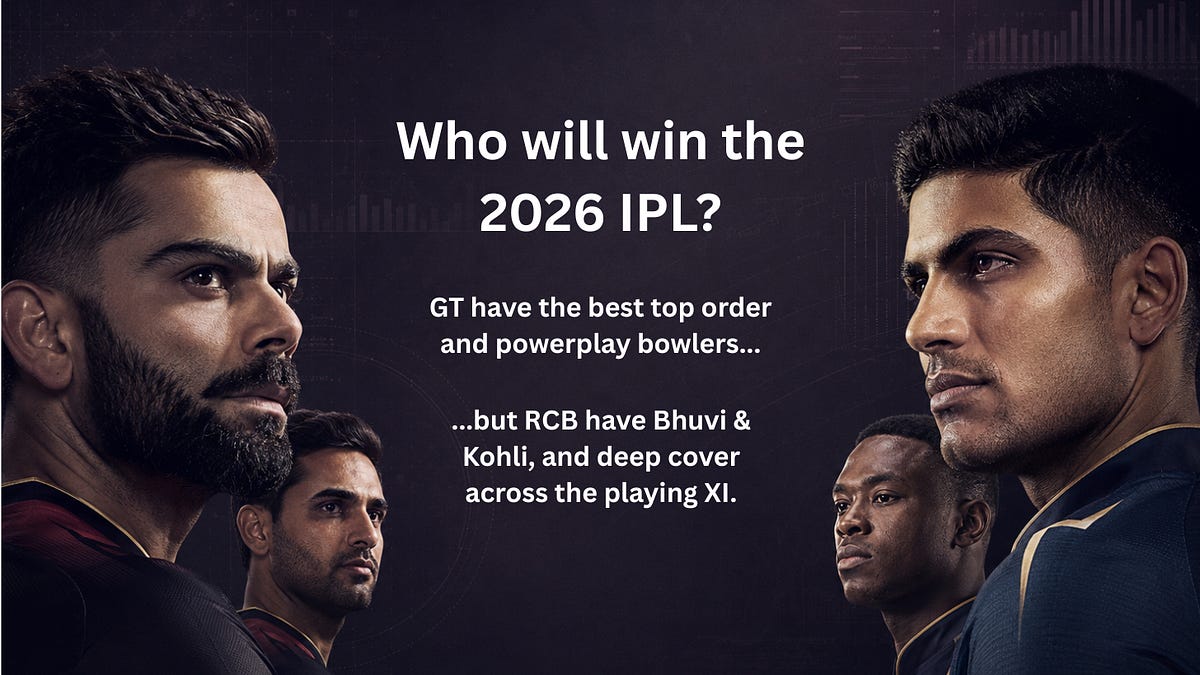
RCB are chasing history. They can become just the third team in IPL history to retain the title, following CSK’s 2010-11 and MI’s 2019-20 runs. For a franchise historically associated with chaos, they have been clinical in the last two years: from offseason recruitment to a balanced data strategy, and smart coaching to efficient performances on the field.
Tuesday’s win was another reminder of why RCB are so successful. Ruthless in the powerplay, the ability to snatch back the middle overs momentum when put under pressure, and players to cover all phases with bat and ball.
Meanwhile, GT can lay claim to their own unique dynasty tonight. Three finals in their first five years as a franchise can only be matched by CSK at the dawn of the IPL, while two wins would suggest that the league’s on-field power base has shifted to Ahmedabad.
However, first they have to beat RCB.
If Qualifier 1 was a reminder of GT’s potential shortcomings, Qualifier 2 showed what makes this team so good when they can optimise their strengths. When their powerplay bowling clicks, not even the power-hitters at RR could make hay. Meanwhile, GT’s own top order consistently outperforms the responsibilities placed on them.
The stakes could not be higher between the two most successful IPL teams of the 2020s – and it’s all going to come down to who executes better in the powerplay.
GT’s top three are exceptional. Shubman Gill, Sai Sudharsan & Jos Buttler have scored 1,939 runs this season, with both openers in the top three for the Orange Cap race. This dominance has been built on their ability to maximise the powerplay overs; they’ve lost a league low 1.13 wickets per powerplay, while scoring at a more than respectable SR of 151.39.
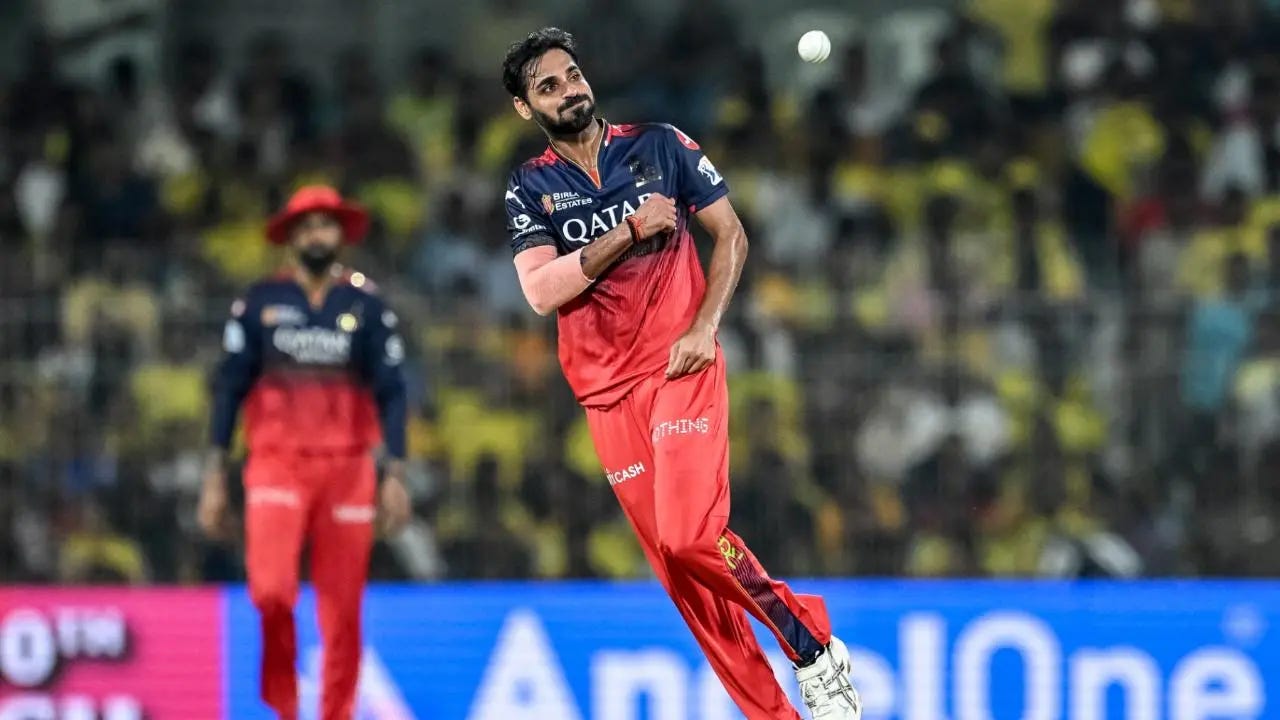
Meanwhile, RCB employ perhaps the best powerplay bowler this season, Bhuvneshwar Kumar. He has the second-highest powerplay wickets (16), the best bowling average (14.06), and the best economy (7.03). Backing Bhuvi up are Josh Hazlewood (6 powerplay wickets), and Rasikh Dar (5).
GT’s brilliant top order hides a vulnerable middle order. The top 3 have scored 69.55% of their team’s middle overs runs despite having to bat through the powerplay first. More damningly, the trio goes at 163.95 SR in the middle phase, while everyone else goes at just 126.44.
All three are great at preserving the wicket, and GT have only ever faced two instances where they’ve all been dismissed in the powerplay this season; when they struggled to just 100 all out against 9th placed MI, and the Qualifier 1 capitulation against RCB.
Meanwhile, Hazlewood has had an underwhelming season. He’s gone at 10.21 RPO in the powerplay this season, and has been susceptible when batters come. down the track to him. More importantly, if GT’s Top 3 can navigate the tricky powerplay phase, they can feast on RCB’s middle over options. The trio has scored 119 Runs in 10.4 overs against the defending champions during the middle phase.
GT can try manipulating the length of RCB’s powerplay bowlers, especially Hazlewood. Against GT, the Australian has figures of 80-1 in 6 powerplay overs as GT’s batters have systematically charged down or stood back (for a conventional shot or scoop), to mess with his head. As a result, Hoff has atypically erred in length (usually by going too full) and line.
However, Bhuvi’s unerring accuracy could prove to be a trump card. Tight stump lines to Sudharsan can dry up his runs and cause errors, while the pacers need to ensure they don’t over pitch against Gill (he’s scored at 218.31 SR against full deliveries this season).
Depending on the overseas combination for the final, the defending champions could field a lineup that includes Jacob Duffy. As seen in the Qualifier, Duffy can regularly err in line and length, but he has a knack for taking wickets (team-best bowling SR of 13.33, while going at 11.25 RPO).
Against a GT Team that’s so reliant on its top three, this trade-off could be worth it if the bowler can take an early wicket. This decision would also save Hazlewood for the backend of the powerplay (9.64 Econ in Overs 4-6), where he has fared significantly better compared to the start of the innings (11.00 Econ in Overs 1-3) this season.
In both league games this season, GT’s batters dominated RCB’s bowlers in the powerplay phase, cumulatively scoring 126-2 with notable contributions from Sudharsan and Gill. Qualifier 1 was a complete contrast. Attempting a near-impossible chase of 255, GT lost a season-high 5 powerplay wickets en route to a total loss.
Bhuvi has been the standout bowler across the three powerplays, recording figures of 48-3 in 7 overs. But, RCB will need Hazlewood to improve on his figures of 80-1 to ensure Kumar’s pressure doesn’t go to waste.
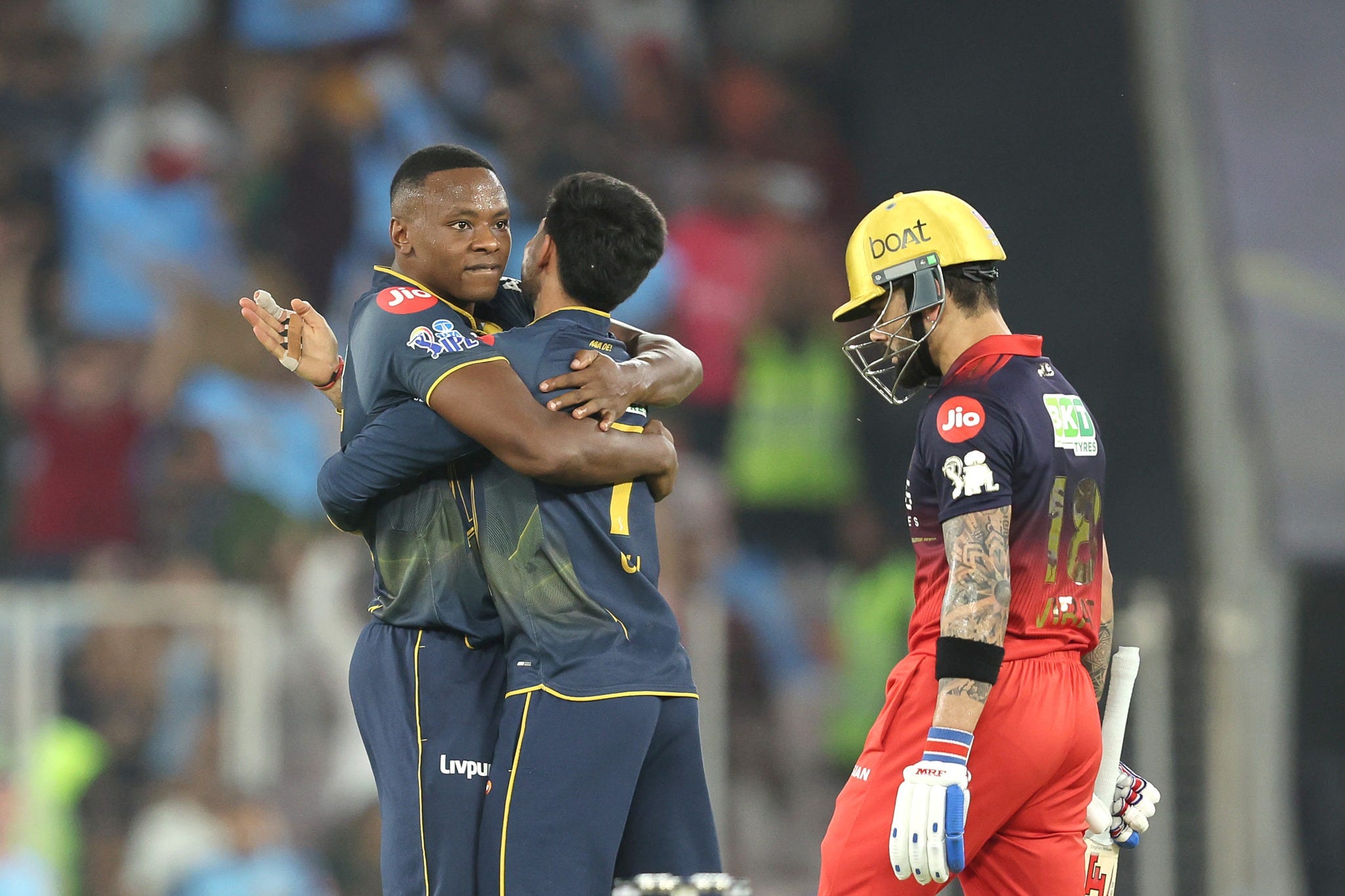
Kagiso Rabada & Mohammad Siraj have been dominant in the powerplay. The former is the leading wicket-taker in the phase (19), while the latter has the third-most scalps (14). Together, they’ve taken all 33 of GT’s powerplay wickets. At “home” in Ahmedabad, the venue for the finals, the pair helped GT take 19 powerplay wickets (highest for “home” teams in the league stage) in 7 innings at an average of 17.79 (league-best) and economy of 8.03 (second-best).
Meanwhile, RCB have some of the most dangerous powerplay batters in the phase. Virat Kohli (167.3 SR) & Devdutt Padikkal (180.7 SR) pounce from ball one – DDP literally has 6 first-ball boundaries this season. RCB will have to make a choice between two explosive players to make up their top three with Phil Salt (157.33 SR) and Venkatesh Iyer (242.3 SR) in the reckoning.
Kohli and Padikkal have been RCB’s key players against GT’s powerplay strength. Combined, they’ve scored 142 runs at a strike rate of 184.42 with just one dismissal against GT this season. The rest of RCB’s batters have combined to average 15.66 and strike at 151.61.
This includes middle-overs star Rajat Patidar, when entering at an unfavourable powerplay entry point. The batter has scored just 36 runs off 39 balls (92.3 SR) with one dismissal when batting in the first six overs, compared to his middle-overs SR of 206.7.
The lack of early wickets can have a trickle-down on GT’s higher-variance middle-over bowlers, such as Rashid Khan and Prasidh Krishna, against RCB’s well-set top-order batters. In Overs 7-16, Padikkal strikes at 161 SR, Kohli at 156, and Phil Salt at 187. Combine this with Patidar batting in his preferred middle-overs phase, and the GT could be in deep trouble if their strike bowlers cannot cause damage in the powerplay.
GT should stick to what’s worked all season at their home venue. Siraj can bowl good and hard lengths on a tight line, while Rabada can focus on hard lengths at a rapid pace. GT’s good length deliveries have been responsible for 17 powerplay wickets, while hard lengths have taken 10 wickets while going at just 7.07 RPO.
RCB have attempted to counter quality pace bowling by attempting to manipulate the bowler’s lengths by charging down the track or hitting shots well within the crease. That is an effective ploy against one of the most dangerous and disciplined opening pair, though RCB should be weary of trying to charge or hit Rabada down the ground off his hard length too often. That’s been the trigger for Kohli’s and Iyer’s wickets in the last two matchups.
RCB have been the dominant side in this phase, scoring 193/4 in 18 overs combined. The impact of a well-set partnership heading into the middle overs was evident in GT and RCB’s first clash, where 80 runs were scored off 6 Rashid and Prasidh overs, with the majority of the damage done by the top-order duo of Kohli and Padikkal.
In the second clash, RCB had scored 59 runs in the powerplay, but Kohli’s wicket – to break his partnership with Padikkal – proved crucial. GT were able to subsequently inflict an RCB collapse in the middle overs, as their lower order batters were unable to keep the run rate while also preserving their wickets.
In Qualifier 1, RCB’s top order put them well ahead with a score of 76/1 after 6 overs, and never looked back.
The final will be decided in the first 6 overs of both innings. GT’s overwhelming top order reliance is only matched by how effective the Top 3 have been, while RCB’s middle order giants only look good if they aren’t forced into the game too early.
Beyond the powerplay and the top order dependence, RCB’s batting order has been much better. Even with Romario Shepherd and Jitesh Sharma struggling this season, the defending champions have averaged 193.07 runs (3rd highest) this season while GT have only put up 181.33 (4th lowest).
GT do have one secret weapon should they lose the powerplay; their middle overs bowling is the best in the league with 58 wickets at a third-best 9.09 RPO. However, with Krunal Pandya showing his potential as a good middle overs batting option against GT’s spinners – and with Venky Iyer back in the middle if Phil Salt opens – RCB should have the edge here as well.
All signs point towards Patidar’s men retaining the title, but GT’s home advantage and top-heavy strengths can easily tilt the match in their favour.