
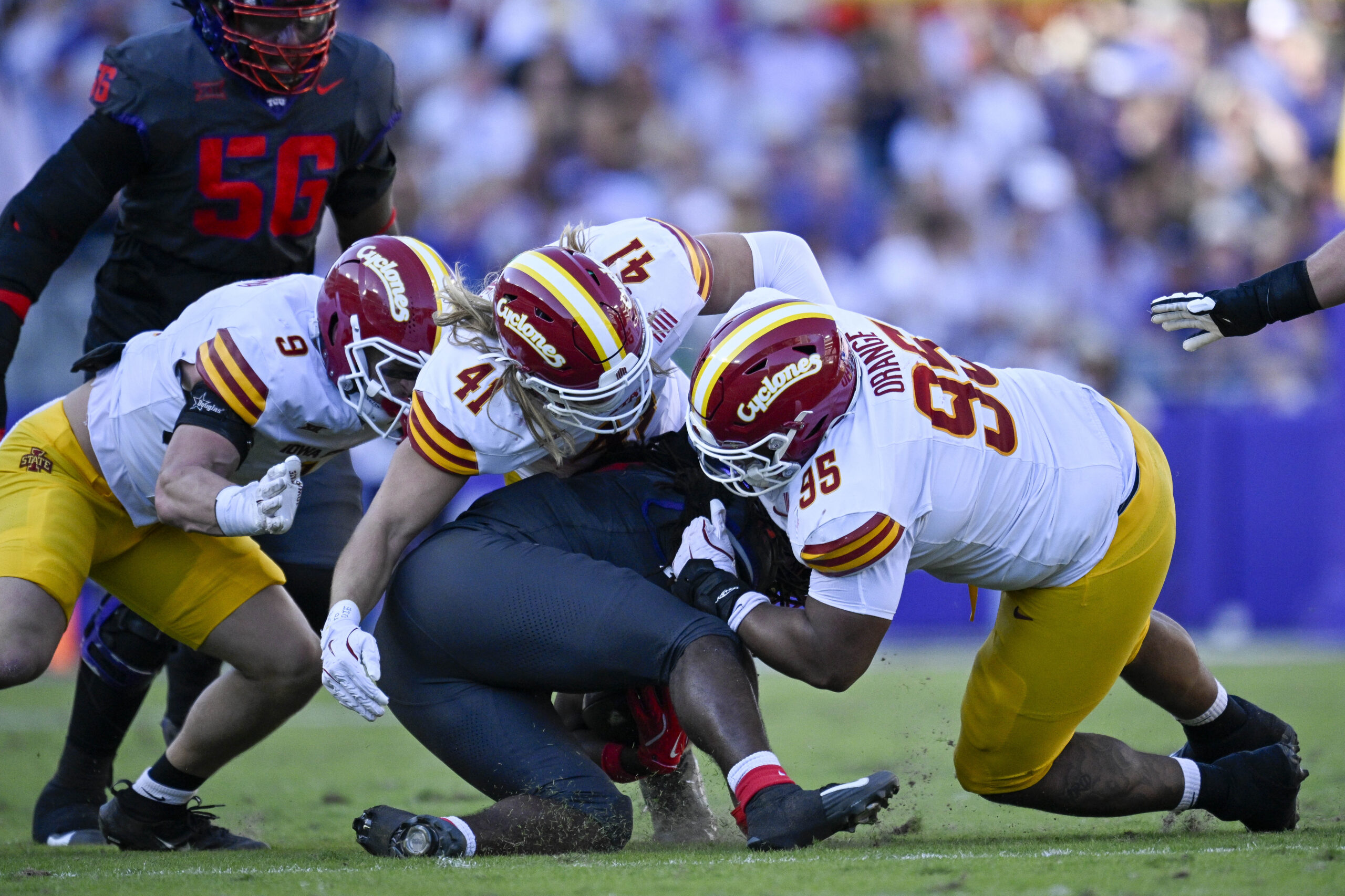
The Minnesota Vikings turned the page on the Kwesi Adofo-Mensah era this offseason, and with that, many hope the team can start drafting well and inserting rookies into the lineup sooner rather than later. That’s the goal anyway.
The club welcomed about 35 new players altogether this offseason; now it’s time to glance at the rookies who could start as early as Week 1.
Listed alphabetically, these are those rookies who have a reasonable or semi-reasonable path to the starting lineup right away.
Training Camp Will Reveal Which Newcomers Can Push Veterans Early
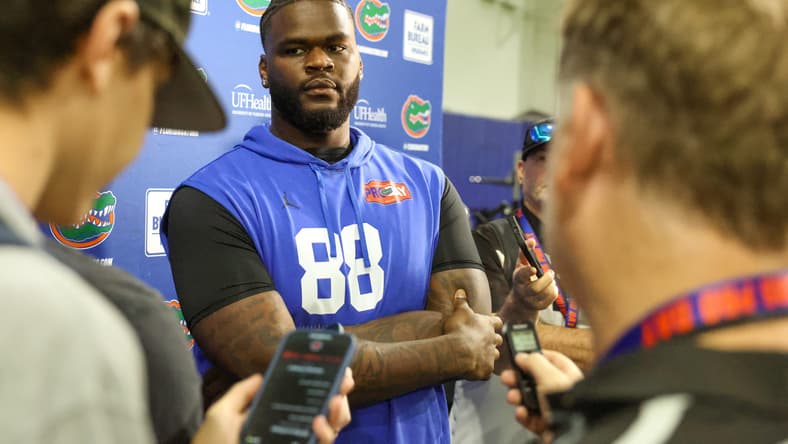
1. Caleb Banks | DT
Probably a no-brainer on this list — the Vikings drafted Banks as their most impactful possible DT solution since Sharrif Floyd in 2013, a DT from Florida who also had foot issues, ironically enough.
Whether Banks is ready to start will remain a summer suspense novel. Head coach Kevin O’Connell recently stated that the goal is to have him ready by training camp, but the Vikings also have a history of slow-rolling injury recoveries.
If Banks’s foot is good to go, he’ll formally take Jonathan Allen’s spot in the 2026 lineup.
2. Gavin Gerhardt | C
This is the most far-fetched on the list.
The Vikings appeared to scout Gerhardt as their youth solution at center from the start of the pre-draft process. Gerhardt said in April about his pre-draft visit, “The coaches were just genuine, good human beings. Obviously, I think highly of them coaching-wise, but they were all very good people. People that cared about me as a human being — and that’s what I care most about, other human beings.”
“Obviously, I think I’m a good football player, but me as a human being, I think that’s my greatest quality. I really strive to be just like my father and be that man everyone can lean on. That’s the vibe I got when I was there in Minnesota from the coaching staff.
Vikings.com’s Craig Peters also noted after the draft on Gerhardt, “The Vikings have 2024 seventh-round pick Michael Jurgens and 2020 sixth-rounder Blake Brandel returning after both played pivot in place of Kelly last season.”
“The Vikings evaluated multiple interior linemen. Gerhardt’s inclusion in the Top 30 process enabled the team to see how he would handle an install and his voice in a simulated huddle.”
There’s a world, albeit far off in a distant galaxy, where Gerhardt takes the summer by storm and ousts Brandel from his frontrunner status. It could happen, especially if Minnesota extensively scouted Gerhardt as “their guy.”
3. Dominique Orange | DT
Orange is the most likely to start out of the gate on this list.
He has no lingering injury issues — like Banks. He’s not a 7th-Rounder. And he’s not battling a savvy veteran like Johnny Hekker, like the next guy on the list.
Nose tackles often acclimate to the NFL faster than other defensive players, and because Minnesota employs no surefire nose tackle in the starting lineup — Levi Drake Rodriguez would be the closest alternative — Orange has a glowing opportunity to seize the moment.
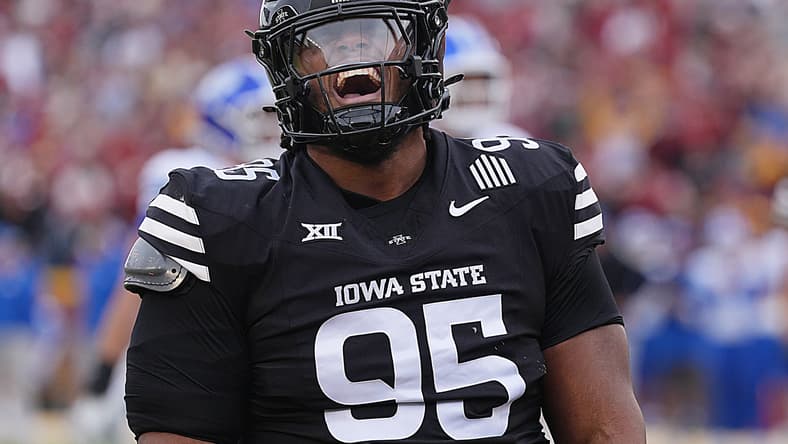
He’s huge. He stuffs the run. The Vikings don’t have a starting nose tackle. And Minnesota picked him in Round 3, a reasonable spot to suggest Week 1 playing time. Orange will likely be the Week 1 starter at NT.
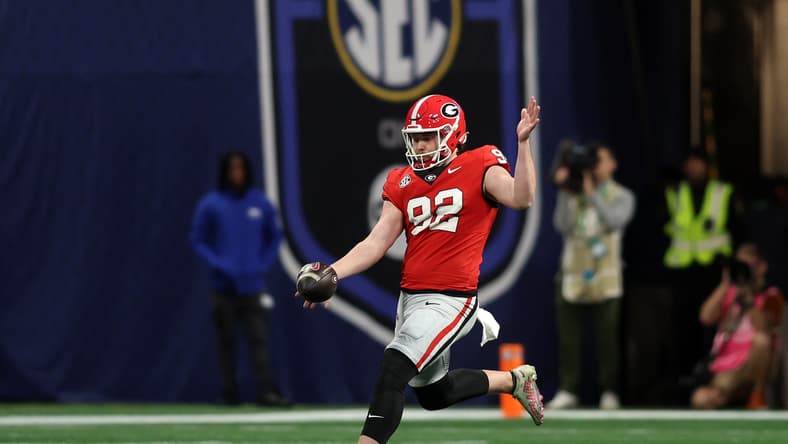
4. Brett Thorson | P
Thorson stands 61″ and weighs 240 pounds. His primary concern is the weather; he didn’t grow up facing the Midwest’s wind, snow, and cold, and Georgia doesn’t provide the same conditions he would encounter in Minnesota.
Additionally, the Vikings have already signed a new punter: Johnny Hekker. Once regarded as the best punter in football, he earned six All-Pro selections, four Pro Bowl invitations, and a Super Bowl ring. However, that version of him is now a few years in the past. In 2025, he performed closer to league average, so for him to rebound in Minnesota, he would need to regain his previous form.
His contract complicates matters further. It indicates he will be the Vikings’ punter through 2026. If they keep Thorson and release Hekker, they would incur dead money, and teams typically do not carry two punters.
While Thorson could be a viable option, he faces a practical challenge beyond his kicking abilities. He must show that he can handle holding for extra points and field goals, a responsibility he did not fulfill at Georgia. For specialists, the skill can be the difference between and active roster spot and the practice squad.
