
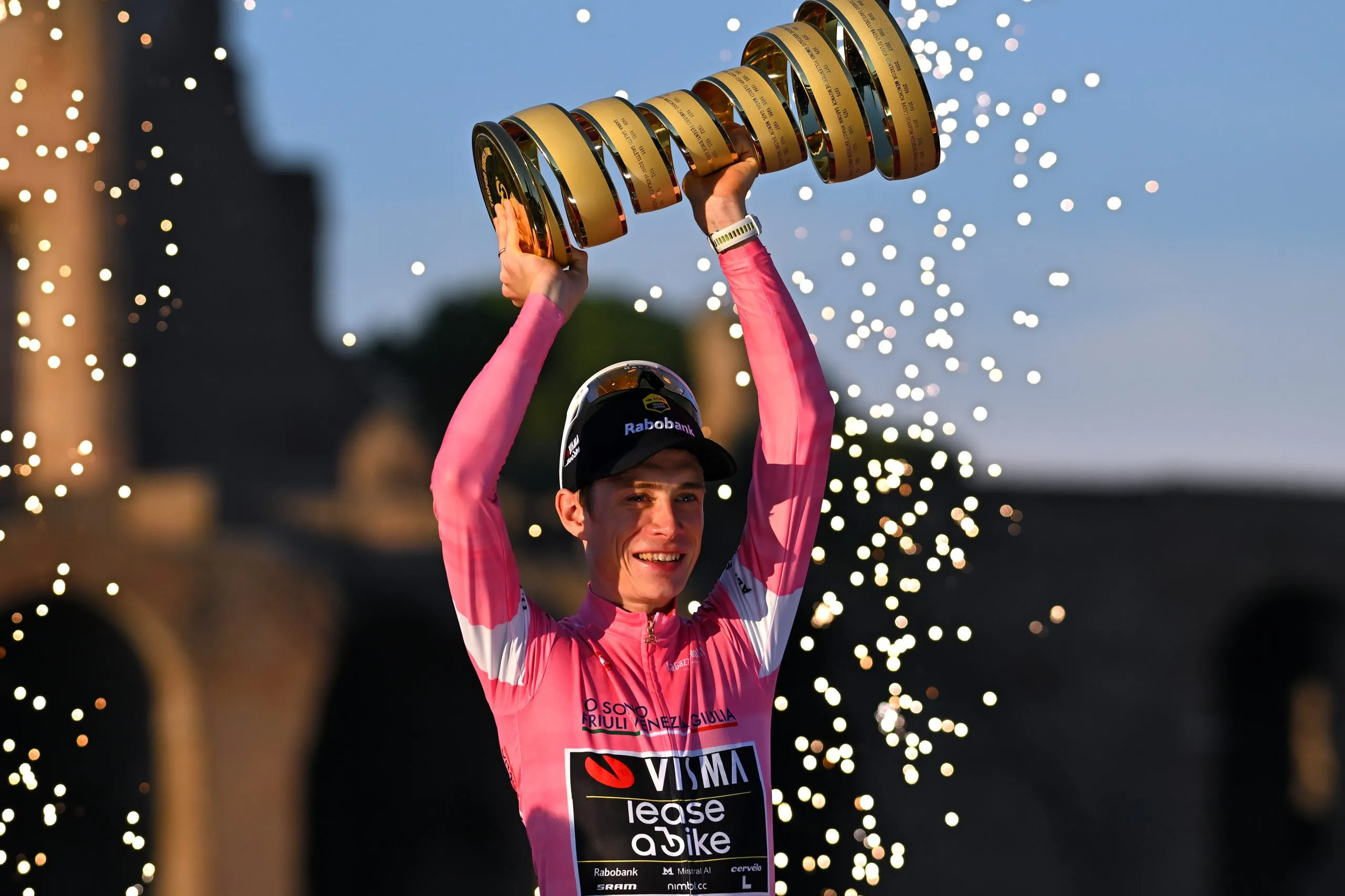
After visiting all four corners of Italy (and part of Bulgaria) over the past month, Jonas Vingegaard has finally been declared the champion of the 2026 Giro d’Italia, with Felix Gall and Jai Hindley joining him on the podium in Rome.
Now the Giro is done and dusted, it’s time for the calculators to come out as the race organisers begin to hand out the Giro’s €1.6 million prize pot, the second largest in cycling. These funds are allocated to riders and teams based on both stage results, intermediate prizes and the final standings in Rome.
We’ve crunched the numbers already, and have a clear idea of who has left the Giro d’Italia feeling a little richer. That said, bear in mind that prize money is divided up differently between teams. Not all prize money will go directly to the rider who achieves the result.
Vingegaard hoovers over 20% of total prize money
After securing five stages, the overall title and a second place in the mountains classification, Jonas Vingegaard receives a huge share of the total prize money at this year’s Giro d’Italia. We believe his prize money from the Corsa Rosa comes to €359,172 in total, which is just under 22% of the complete prize pool at the 2026 race.
That €359,172 sum doesn’t just stem from his final GC result. Yes, that achievement contributed over €265,000 to that figure, but Jonas Vingegaard accrued roughly €90,000 for his stage results and a whopping €25,000 for the days he spent in the pink and blue jerseys during the race.
Vingegaard’s sum is well over double that of the second-best prize earner from the Giro d’Italia, Felix Gall. The Austrian’s cheque was propped up by the €130,000 bonus for finishing second, plus roughly an extra €30,000 for his stage and €2,000 for his placing in the KOM standings. Altogether, his earnings from the Giro come to a very healthy €167,329, which is almost triple what he picked up at last year’s Tour de France for finishing in fifth overall.
Unsurprisingly, Jai Hindley finds himself in third in the prize money standings. The bronze medallist overall at this Giro, the Australian accrued a total of €81,742 during the three weeks.
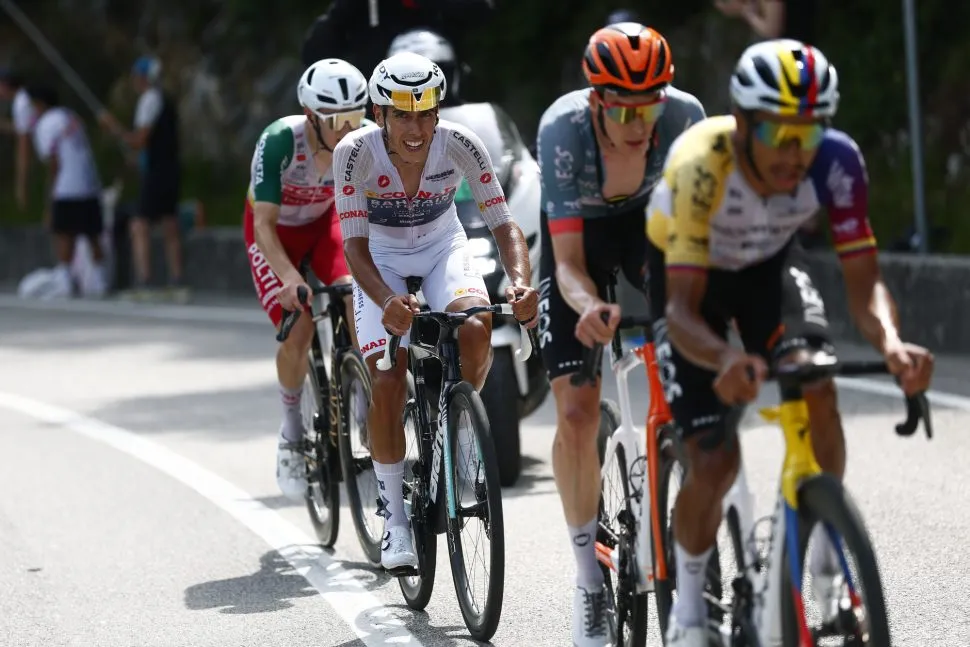
If you were excited by Afonso Eulálio at the Giro, you’ll be glad to know that he is the fourth highest earner from the Giro d’Italia 2026, with €69,430 earned during his breakthrough Grand Tour. Besides the bonus for finishing in sixth overall, the Portuguese rider had a steady source of income through as each of his nine days in pink placed €2,000 in his pocket. Alongside the €18,000 for being in the maglia rosa, Eulálio was handed a handsome €12,000 for his time in the maglia bianca. In fact, the two weeks he spent in white came to a higher figure than his €10,000 bonus for winning the whole classification.
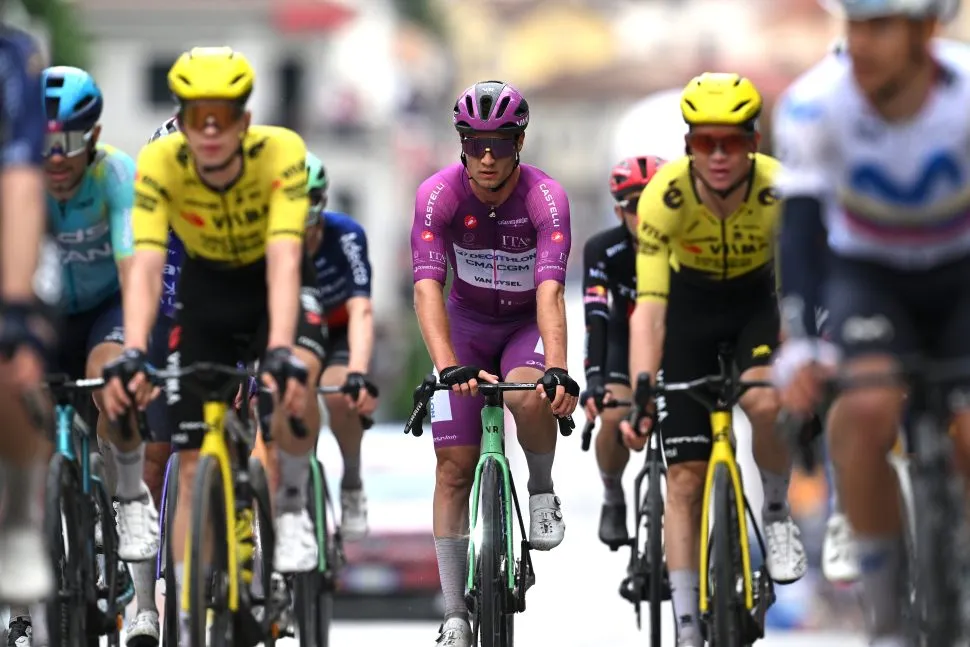
Nevertheless, Paul Magnier leaves the Giro with the fifth biggest wad of cash. The Soudal Quick-Step sprinter was rewarded just €10,000 for winning the maglia ciclamino, which seems quite slender given he earned €11,010 for each stage victory. Totalling each day in the jersey, stage results and final bonus, Magnier’s pay packet comes to €66,111.
As for the remainder of the top ten, serial stage winner Jhonathan Narváez finishes in sixth in the prize money standings despite having to abandon the race a few days before Rome. His teammate Igor Arrieta sits just behind him in the standings in seventh, mainly courtesy of the big bonuses available for the Red Bull KM classification, which offers a €8,000 cheque for the most successful rider at those intermediate points.
Top ten prize money earners at the 2026 Giro d’Italia
- Jonas Vingegaard: €359,172
- Felix Gall: €167,329
- Jai Hindley: €81,742
- Afonso Eulálio: €69,430
- Paul Magnier: €66,111
- Jhonathan Narváez: €44,284
- Igor Arrieta: €43,175
- Thymen Arensman: €34,710
- Guillermo Silva: €32,395
- Jonathan Milan: €31,624
- Derek Gee-West: €31,396
- Andreas Leknessund: €29,002
- Giulio Ciccone: €27,900
- Davide Piganzoli: €25,536
- Einer Rubio: €24,781
- Diego Pablo Sevilla: €22,952
- Manuele Tarozzi: €22,300
- Michael Storer: €18,395
- Damiano Caruso: €17,063
- Sepp Kuss: €16,128
Visma-Lease a Bike dominate the team rankings
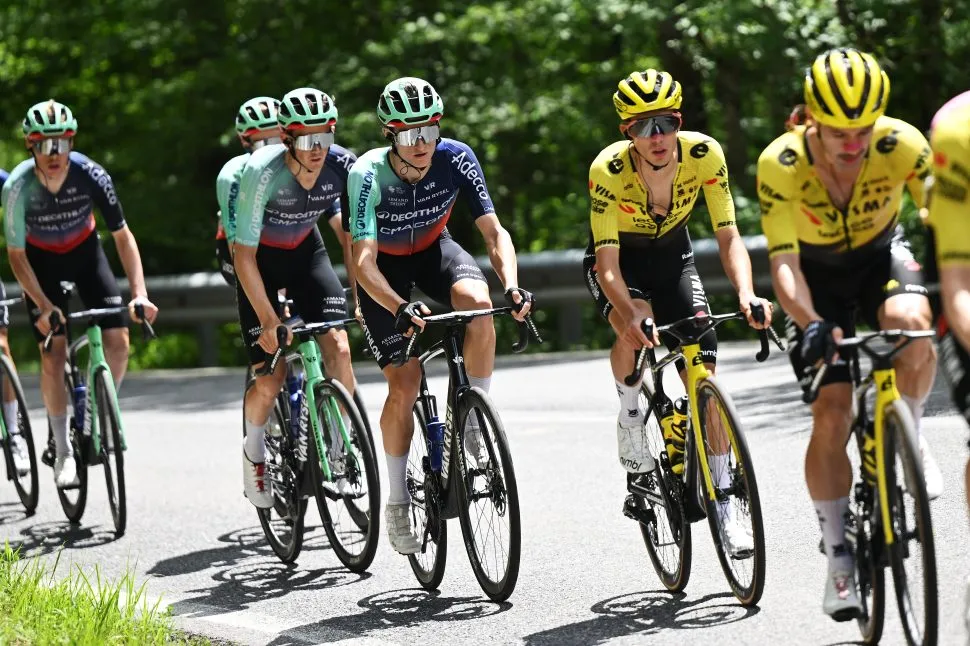
When we add the full teams into the mix, Visma-Lease a Bike remain the big winners. The Dutch team rounded up €408,912 during the Giro, which comes to almost bang on 25% of the race’s €1.6million prize pool. The vast majority of this came from Jonas Vingegaard, but also from Davide Piganzoli’s top ten overall and Sepp Kuss’s stage win. All three riders were among the top earners from this race, so it’s no surprise to see Visma so high on this list.
There’s a big jump down to the trailing Decathlon CMA CGM. The French team goes home with €183,386, most of which stems from runner-up Felix Gall, but Gregor Mühlberger’s top 20 overall (€4,243) and Tobias Lund’s sprint results (€8,387) help the team secure its biggest Grand Tour prize money package this decade.
Bahrain Victorious round out the top three teams with a cheque just above the six-figure mark at €108,044. While Afonso Eulálio makes up around 60% of this total sum, the team’s money bags were bolstered by Damiano Caruso’s strong GC performance (€17,063) and Alec Segaert’s stage results (€13,640).
Even without any big GC results, UAE Team Emirates-XRG wrangled €101,065 in prize money during this Giro d’Italia. Arrieta and Narvaéz’s contributions in the breakaways paved the way for a respectable result for last year’s runners-up.
Red Bull-Bora-Hansgrohe conclude the top five earners at the Giro, having cashed in €95,710 at the Corsa Rosa. The vast majority of this came from Hindley’s performances, as mentioned, but the squad added €14,000 to their pot through Giulio Pellizzari’s turbulent Giro (€5,633) and €4,200 from the team classification.
Full Giro d’Italia 2026 prize money standings
- Visma-Lease a Bike: €408,912
- Decathlon CMA CGM: €183,386
- Bahrain Victorious: €108,044
- UAE Team Emirates-XRG: €101,065
- Red Bull-Bora-Hansgrohe: €95,710
- Lidl-Trek: €94,875
- Soudal Quick-Step: €84,936
- XDS Astana: €74,059
- Netcompany Ineos: €72,374
- Polti-VisitMalta: €62,361
- Uno-X Mobility: €58,838
- Movistar: €51,864
- Tudor Pro Cycling: €44,935
- Bardiani CSF 7 Saber: €35,662
- EF Education – EasyPost: €28,156
- Pinarello-Q36.5: €25,225
- NSN Cycling: €16,260
- Groupama-FDJ United: €15,543
- Lotto Intermarché: €11,872
- Jayco-AlUla: €10,979
- Alpecin-Premier Tech: €10,485
- Unibet Rose Rockets: €8,690
- Picnic PostNL: €2,179
Superteams on top, some WorldTour names flop
Most of the top ten here are to be expected. On the whole, it’s teams with a large budget, although I’d say that Bahrain Victorious overperformed given their relatively mid-pack budget these days. However, by capitalising on breakaway prizes, Polti-VisitMalta sneak into the top ten with a very respectable €62,361, just €10,000 or so below the financially endowed Netcompany Ineos.
Towards the bottom of the standings, there are some really disappointing results for WordTour squads. Both Jayco-AlUla and Alpecin-Premier Tech received just over €10,000, making this the pair’s poorest Grand Tour cheques in some time. They still managed to finish above Giro debutants Unibet Rose Rockets, who didn’t profit from the breakaway awards scooped up by the likes of Polti and Bardiani. Instead, they relied almost entirely on stage results, with Dylan Groenewegen pocketing €5,156 of the team’s total €8,690.
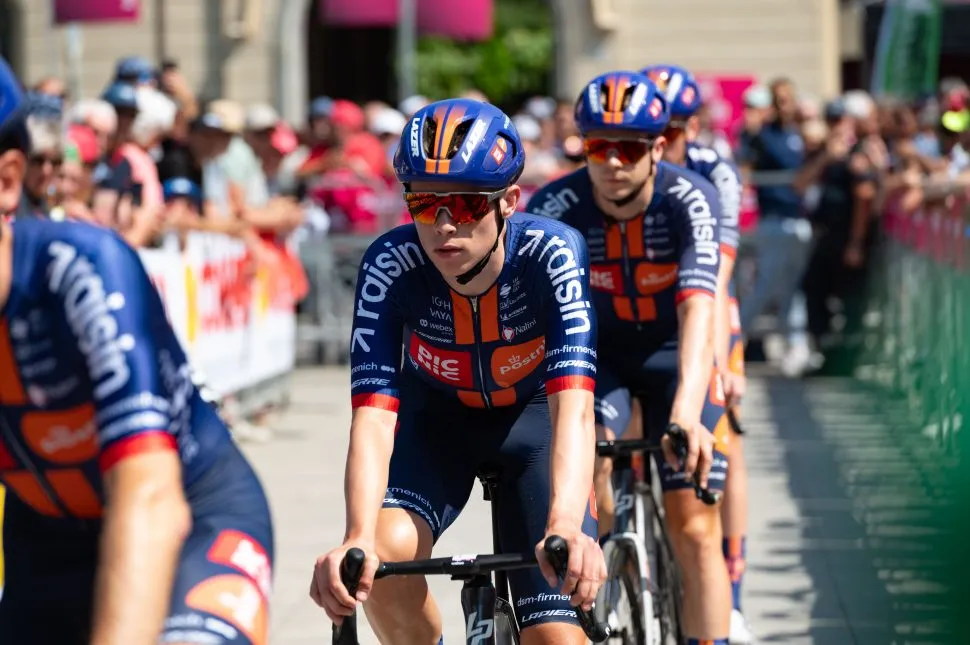
We can forgive Unibet as Grand Tour debutants, but these standings make for abysmal reading for Picnic-PostNL, who finish last by this metric. The eight-man team scored just €2,179 during the three-week race. If the whole Picnic squad were a rider, they would be the 76th highest individual earner at this Giro d’Italia, with a prize pool similar to that of Connor Swift or Groupama-FDJ United’s Josh Kench. Framed this way, we can begin to really appreciate just how poor a race this was for the Dutch squad, who have been in the doldrums of the UCI standings since the beginning of the season.