

There’s something in the air these days. Not exactly nostalgia, but a feeling of excitement and increased interest around Japanese performance cars from the 1990s.
We’re talking about cars that were available here in the U.S., like the FD Mazda RX-7, the Z32 Nissan 300ZX, the A80 Toyota Supra, and the Acura Integra and NSX–as well as cars that were not originally sold in the States, like the R33 and R34 Nissan GT-R, S15 Nissan Silvia, Mitsubishi Lancer Evolution V/VI and the classic Subaru WRX STi.
What’s causing this ’90s mania? Is this misguided enthusiasm, or is there something really special about these cars?
The 1990s were a pretty good time for Japanese performance cars. American tastes had not yet fully shifted to SUVs and crossovers, so there was still plenty of appetite for sporty models, which sold in huge numbers compared to what we see today.
Technology had advanced to the point where engine performance was at a historic high, but not so much that the chassis were larded up with heavy technology. (There were some exceptions–looking at you, Mitsubishi 3000GT VR-4.) There was a huge selection of performance models that were light (at least compared to cars of today), relatively powerful and tons of fun.
But if we had it good here in the U.S., the Japanese market really had the hot stuff. For every top model we got here in the States, you can bet there was a higher-spec model reserved for the Japan home market. And then there were the cars we didn’t even get, but we drooled over them as they appeared in the media and in our video games.
Sure, you say, we know all this, but what has changed that would lead to extra interest right now? There are two major factors: the digitalization of the modern car and U.S. federal import laws.
You could argue that we are in a golden age of performance cars right now. Horsepower levels have never been higher, tire technology has made incredible leaps and the current crop of cars can run circles around their ancestors. That’s not even mentioning the wild performance of the latest fully electric vehicles.
Somewhere in the march of progress, though, something essential has been lost. Maybe it’s the sheer mass of all that technology. Maybe it’s the digital filtering the car interposes between the driver and the road. Maybe it’s the performance limits being so high you just can’t have much fun without endangering your license or the safety of others. The current crop of performance cars just doesn’t seem as visceral, as involving, as FUN as the old guard.
The other element is a quirk of U.S. vehicle import law. It’s basically illegal to import any car from outside the U.S. until 25 years from the date of manufacture.
After 25 years, though, any car in the world is fair game–no restrictions. Since it’s now 2026, that means anything manufactured in the 1990s is completely legal to import, and if you look at the Japanese used car market, there is so much to choose from.
Some Highlights
Photograph courtesy Bring a Trailer.
1999-plus Nissan S15 Silvia
A gorgeous reskin of the Nissan 240SX, which was discontinued here in the U.S. in 1998. Available with manual transmission and a turbo SR20DET engine making 247 horsepower. Under 2800 pounds.
Photograph courtesy 5252 Motors.
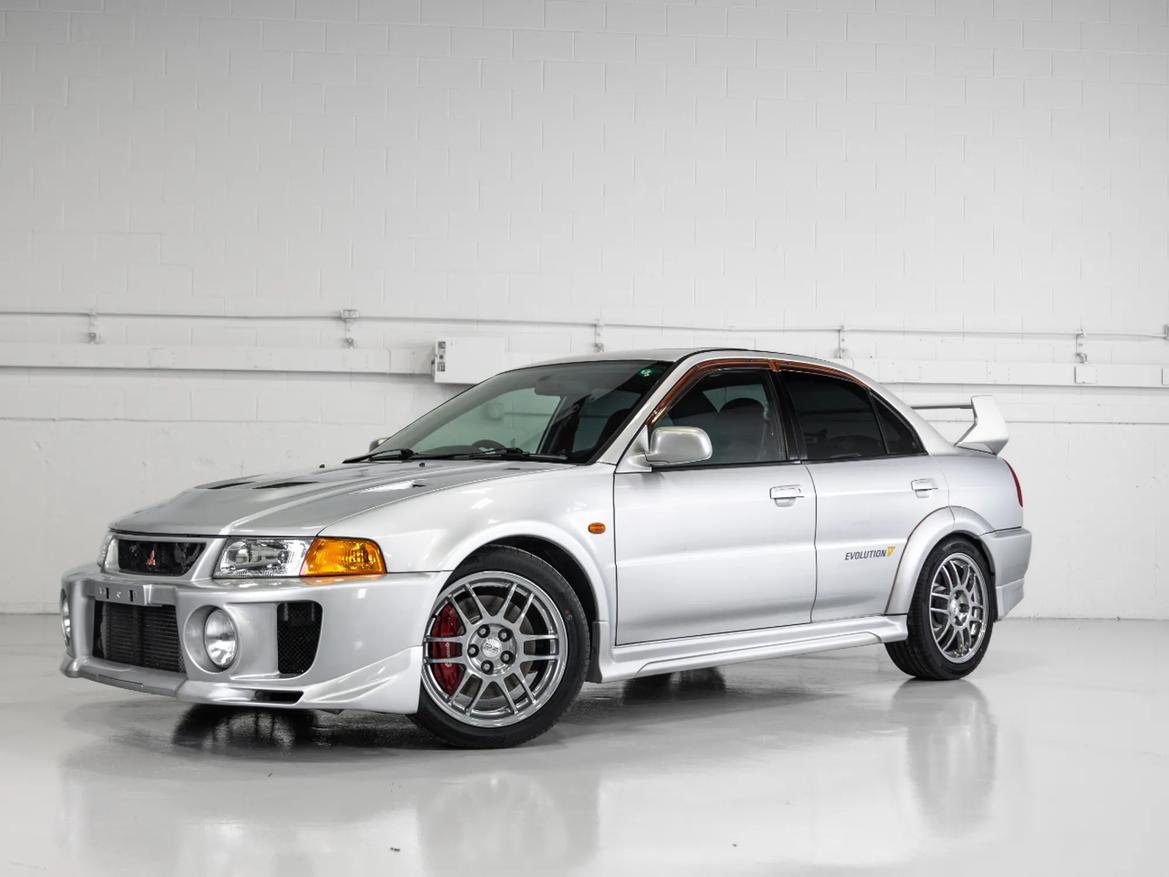
1998-plus Mitsubishi Lancer Evolution V and VI
We didn’t get a Lancer Evo in the U.S. until 2003, and our models are super hard to find now. The Evo V and VI were somewhat cruder than the later models, but the drivetrain is effectively the same, with a 276-horsepower turbo 4G63 engine and AWD. Under 3000 pounds.
Photograph courtesy Nissan.
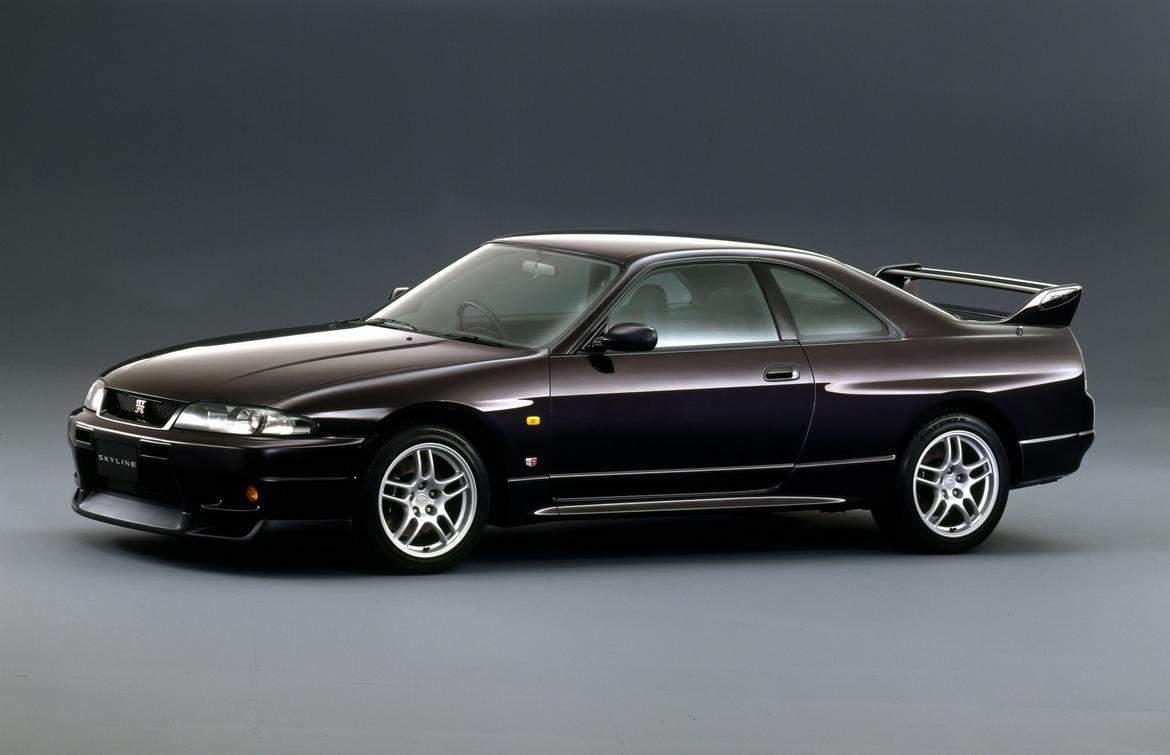
1995-’98 Nissan R33 Skyline GT-R
What, we didn’t say R34? That’s because the craze over that famous R34 model has put the retail pricing out of reach for many buyers. But the R33 has the same basic drivetrain, including the legendary RB26 turbo straight-six powerplant, and prices are still attainable. In stock form, it makes 276 horsepower but can be tuned for far more. Around 3400 pounds.
Photograph courtesy Honda.
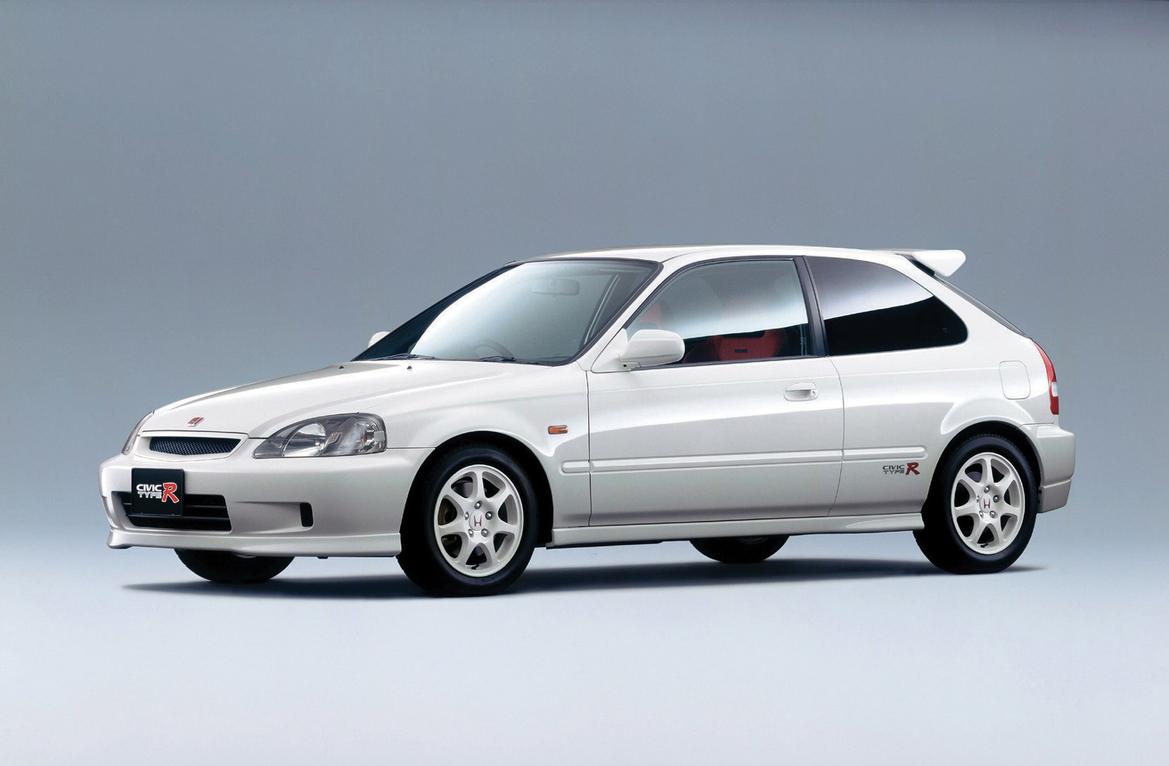
1997-2000 Honda Civic Type R
Sure, we got the Integra Type R, but nice examples of U.S.-market cars trade in the $40,000-to-$50,000 range. The Japanese-market Civic Type R also gets you a radical B-series engine–its B16B made 182 horsepower at 8200 rpm. Under 2400 pounds!
Photograph courtesy Collecting Cars.
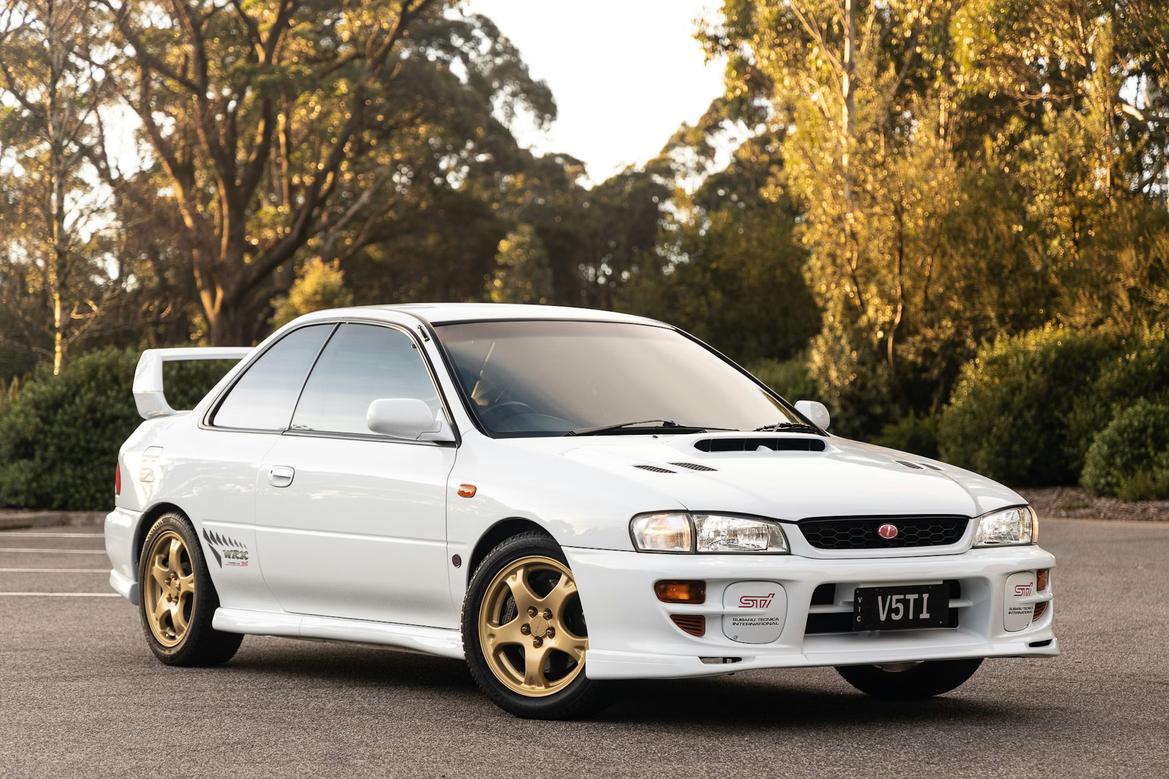
1996-plus Subaru WRX STi Type R
The first generation of WRX STi is beloved by enthusiasts worldwide for its potent (276 horsepower!) 2-liter turbo boxer engines, nimble chassis (2800 pounds!) and reliable AWD system. Various trim levels of these cars exist–there are WRX as well as higher-spec WRX STi models plus further subcategories after that–but as long as you choose a turbo AWD model, the fun is guaranteed. Plus, many Subaru fans would still say this is the best-looking Subaru of them all.
Some Weirder Alternatives
Photograph courtesy Nissan.
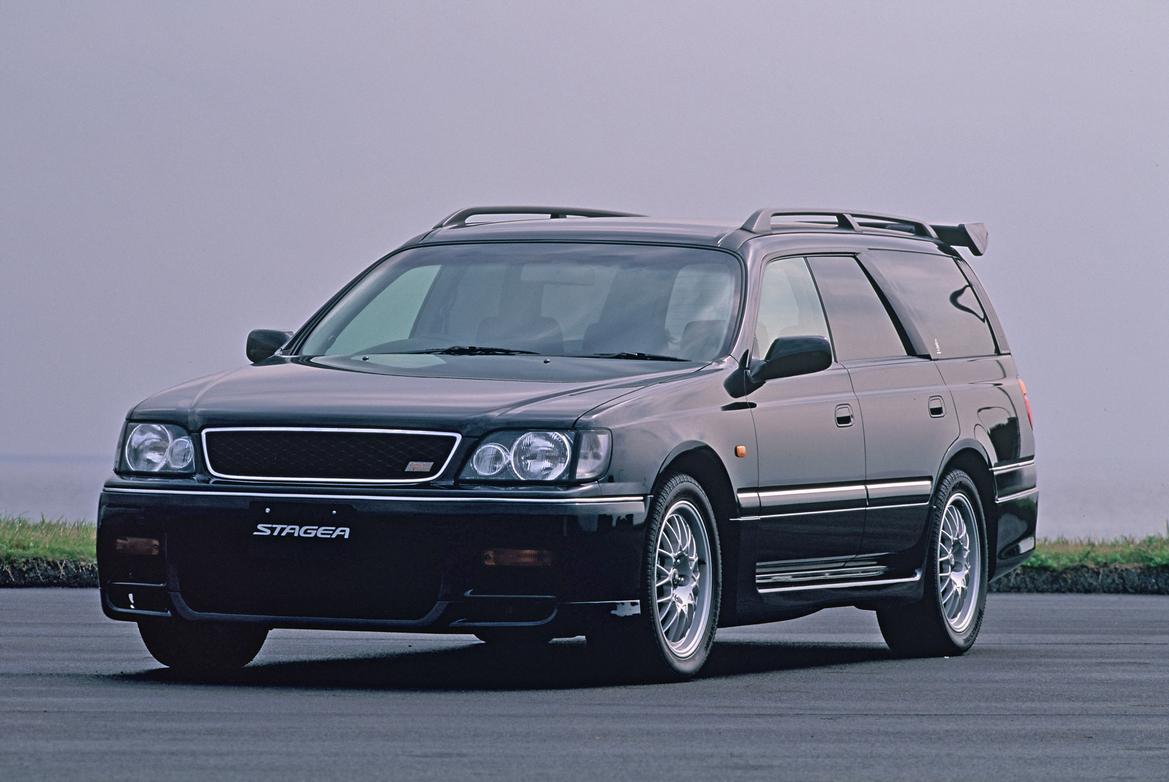
1997-2001 Nissan Stagea Autech 260RS
If you can’t come up with the six figures for an R34 GT-R, how about a manual station wagon with the same drivetrain for under $30K? Just 1734 were made.
Photograph courtesy Collecting Cars.
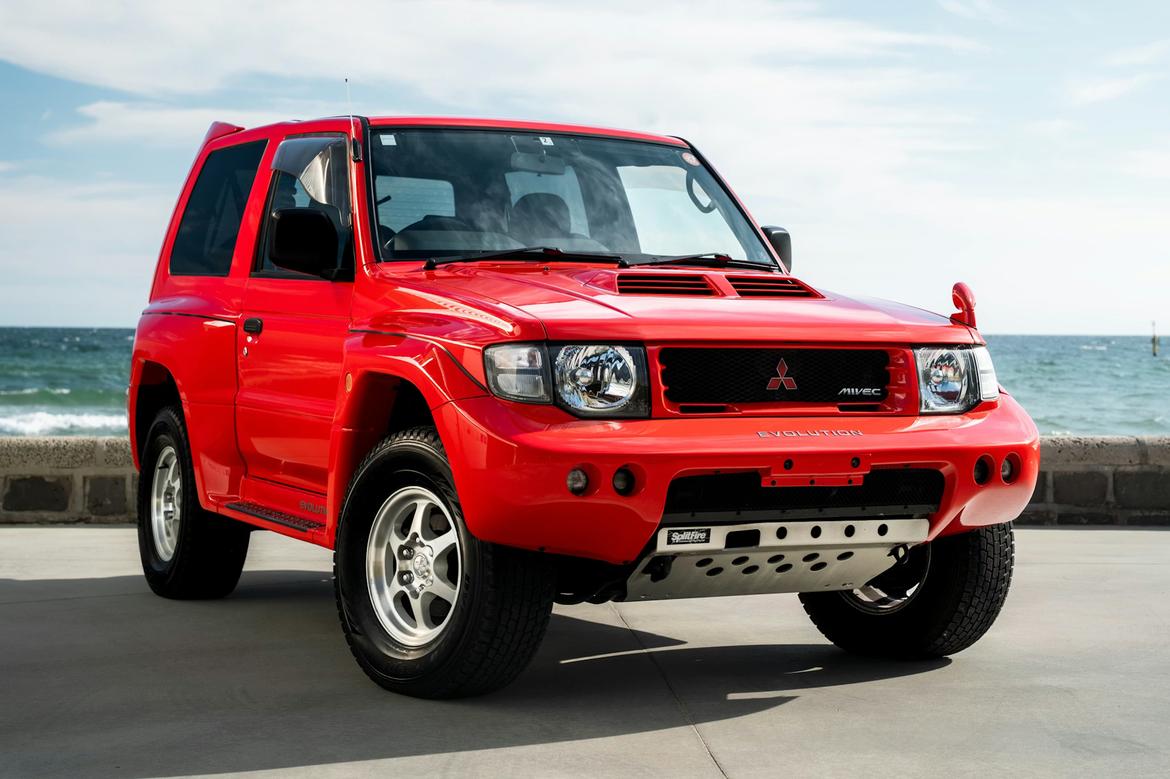
1997-’99 Mitsubishi Pajero Evolution
Okay, it’s not in the same category as the other cars listed here, but it’s crazy! Basically, it’s the street version of a purpose-built Dakar Rally off-road racer. It’s got the goods, including huge fender flares, spoilers, a massive hood scoop, and off-road skidplates and mudflaps.
Photograph courtesy Duncan Imports.
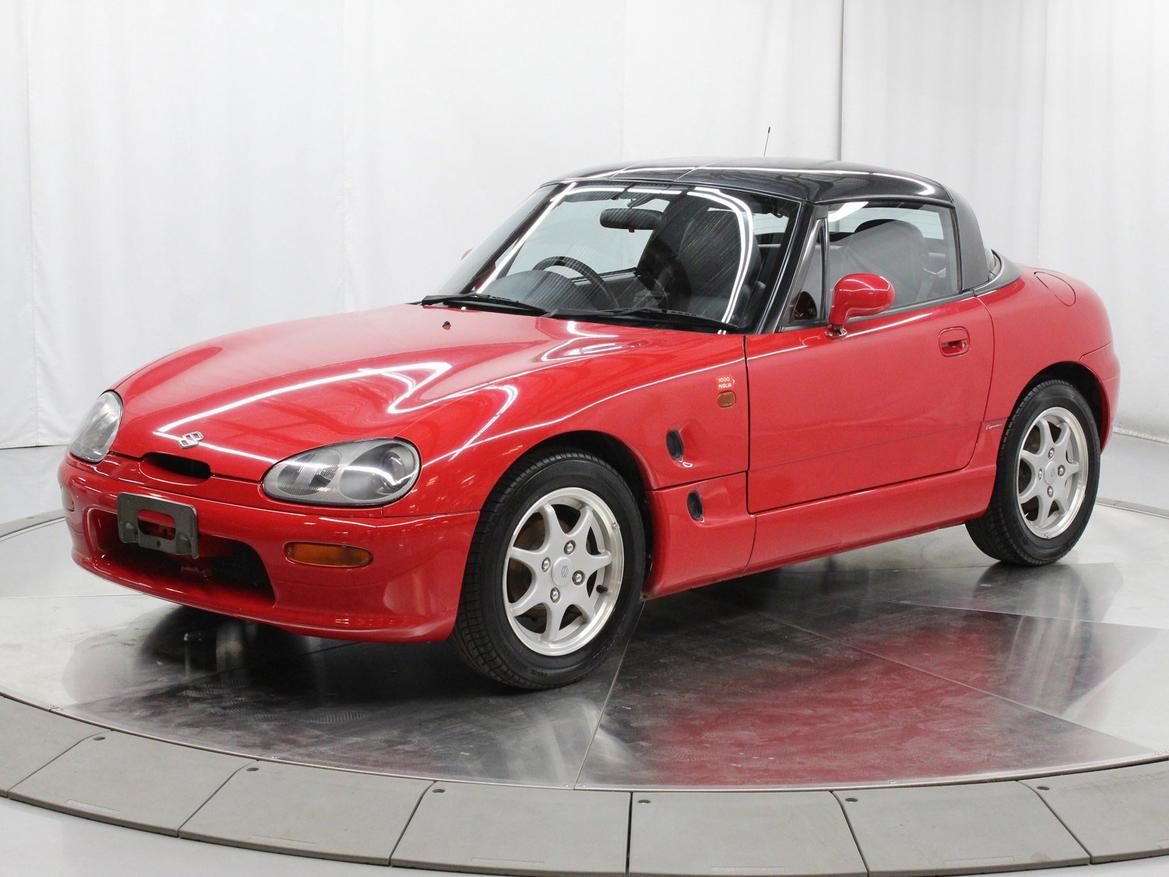
1991-’98 Suzuki Cappuccino
The tiniest, most fun little car you will find. A RWD kei car with a fully configurable roof–coupe, T-top, targa or full roadster–powered by a turbocharged three-cylinder engine with 63 horsepower. Weight was less than 1600 pounds. See also: Honda Beat.
Downsides and Risks
These cars are readily available to import, and there’s a whole ecosystem of brokers, importers and U.S. sellers who are well versed in the laws and process of importing these cars. There are some risks and possible pitfalls to importing a JDM car, though. Here are a few:
- Right-hand driver. All Japanese cars are right-hand drive (RHD). That can take some getting used to and might be a hassle for daily use. Tollbooths and fast food drive-thrus are a challenge, and you might want to think twice before handing over your car to a valet or friend.
- Parts availability. Many of these cars were not sold in the U.S. in any form, so repair parts will not be available in the U.S. at all. Even the simplest parts will have to be imported from Japan, and heaven help you if you dent the fender of your special-edition Lancer Evolution. A new windshield for an S15 Silvia might cost you $1000 before shipping. A fender might not be available at all.
- Skilled technicians. If you’re reading this, you’re probably fairly well versed in DIY mechanicing, but if you’re going to own a 25-year-old, JDM-only import, you should prepare to get your hands dirty and start brushing up on your Google Translate skills: There are going to be very few mechanics in the U.S. who know anything about your Suzuki Alto Works RS/R.
- Insurance and regulation. Japanese cars don’t have U.S. VIN numbers, and some insurers have no idea what to do with them. Specialty insurers like Hagerty and Lockton will probably be comfortable insuring these cars, but you might want to check before importing.
- State laws. Some U.S. states (like Georgia) have banned kei cars, ostensibly for safety reasons, even if they’re legally importable under the 25-year rule. Other states have ruled that JDM vehicles, even if legally imported on a federal level, cannot be registered. These state-level laws or interpretations of laws are often contentious, so things can change over time. Consult your DMV and other enthusiasts to learn what you’re in for before you import, but even then, be aware that you can’t count on your car’s status staying the same forever.
Final Thoughts
Isn’t it a great time to be a car enthusiast? We get to choose from such a large menu of great cars, and right now the entire decade of 1990s Japanese performance is ours to enjoy.
Comments

So yesterday evening, while walking the dog, we passed a dude driving a JDM Legacy GT wagon: dark green, lowered, mesh wheels. It looked (and sounded) just right.
(And, yes, I did check some of the dealers once we got home.)

j_tso
SuperDork
6/2/26 9:25 a.m.
at 3400 pounds the GT-R was considered a heavyweight back then, now it’s normal for a sedan to weigh that much.

A pizza delivery driver in my town dives a Honda City. It’s great.
I’ve imported two JDM cars (a Beat and an Acty Truck) and they both were hilarious to drive.

2001 models are now 25 years old!
That means, Toyota MR2 Spyder ala jdm.

I want so many things. JDM get’s me a lot of what I want in my next car: 4×4, manual, diesel.
Maybe I’m a little biased, but this seems like a decent deal: JDM Impreza WRX STI wagon for $10,555. (I see what you did there with the winning bid.)

A lot of the greatest hits on the “available to import” list.
(Which reminds me I should start compiling a list of cars to import in 2027…  )
)

Tom1200
UltimaDork
6/2/26 11:13 a.m.
A Nissan Sunny GTI-R is the one for me. If not that a Suzuki Cappucino; we had running locally with use and it looked like a lot of fun.
In reply to Tom1200 :
Suzuki Cappucinos are way cool. I have one (but it’s 1/43 scale).
Displaying 1-10 of 22 commentsView all comments on the GRM forums
You’ll need to log in to post.