
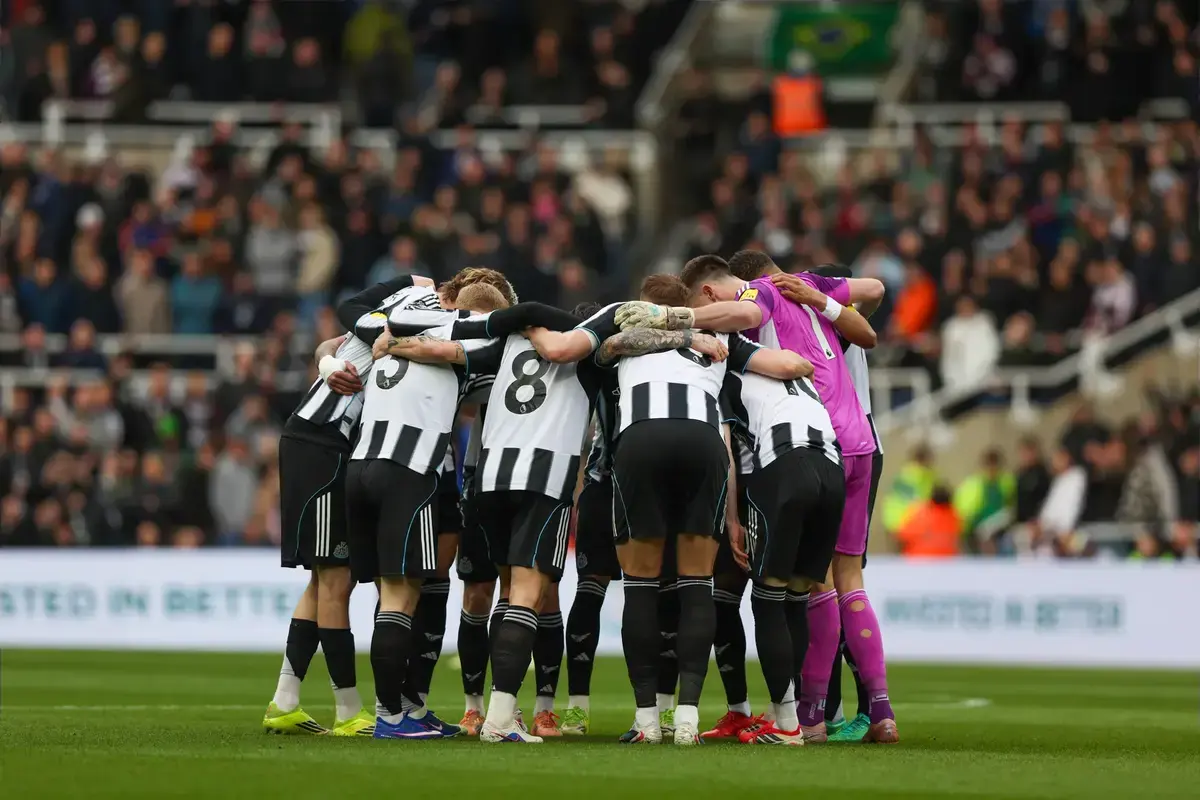
There’s a convenient story doing the rounds at the minute, that Newcastle United have simply come back down to earth.
That legs have gone, players have aged, injuries have taken their toll, and the previous season was always going to be impossible to repeat.
It sounds reasonable enough. It just isn’t the full picture.
This is not a team fading quietly after a good run. It is a side that has drifted away from what made it effective in the first place and that does not happen by accident.
Think back to what Newcastle United were not long ago. They pressed high, won the ball early, and attacked with pace and intent. Everything was done with urgency. You knew what you were going to get and so did the opposition. The difference was they still couldn’t handle us. Now the tempo has dropped. We sit off more. The press is less aggressive and less consistent. Build-up play is slower, and by the time the ball reaches the final third, the moment has often passed. Moves lose their edge. Attacks lose their purpose. There is a lot of possession but not much threat.
It feels like a team trying to adopt a more controlled, possession-heavy style, but without the tools or the structure to make it work properly. Instead of progressing, the side has moved away from its strengths. What used to be sharp and uncomfortable for opponents has become far easier to manage.
That leads straight back to the manager. Eddie Howe deserves credit for what he built. But the job at this level is not just to build a system. It is to develop it, adapt it, and improve it as teams adjust to you. That progression has not been there. Opponents have worked Newcastle United out to a degree and there has not been a clear response. The style has changed but not in a way that plays to the squad’s strengths. If anything, the shift has made the team less effective. That is a coaching issue. It cannot be ignored.
The physical drop across the squad has also been clear. Players have looked tired. Intensity has dipped. Injuries have increased. That has been put down to bad luck in some areas but it is not that simple. The same players have been used heavily, across multiple competitions, with limited rotation. That approach builds fatigue over time. When that happens, performance levels drop and injuries follow. That is not unavoidable. It is a consequence of how the squad has been managed. At this level, rotation is not optional. It is part of the job. Newcastle United have not handled that side of it well enough and it has shown.
Losing Alexander Isak has been significant but it does not explain everything. Top sides lose key players and adjust. They find different ways to create chances and score goals. Newcastle United have struggled to do that.
Without Isak, the attack has often looked short of ideas. Movement is limited, patterns are unclear, and chances are harder to come by. It feels less like a team adapting and more like one waiting for something to click. That points to a structural problem, not just a missing player.
Recruitment has not helped matters either. Players have come in but the starting eleven has not clearly improved. The same core group remains responsible for most of the output, only with more strain placed on them. There is not enough genuine competition for places and not enough trust in the options beyond the regular starters. As a result, rotation suffers and the same cycle repeats. There are also fair questions about the direction of recruitment. At times it has felt narrow, with too much focus on familiar profiles rather than pushing for the strongest possible additions. Whether entirely fair or not, that perception matters, and it reflects a wider sense that the club has not been fully aligned in its decision-making.
The biggest shift, though, is in how the team feels to watch. Not long ago, Newcastle United were energetic, aggressive, and difficult to deal with. There was a clear identity, and it carried through every match. Now the football is slower, more cautious, and far more predictable. That change has been noticeable and it has been frustrating.
This 2025/26 season should not be written off as something that simply had to happen. Yes, there were challenges. Yes, some drop-off might have been expected. But not to this level, and not in this way.
The issues are clear:
The tactical approach has not developed in the right direction
Player management has led to fatigue and decline
Recruitment has not strengthened the team where it matters
The identity that made the side effective has been diluted
That is not just a natural decline. It is the outcome of decisions that have not worked. The positive is that those things can be addressed. But they need to be recognised properly first. Because if they are not, this will not be a one-off season. It will become the new standard.