
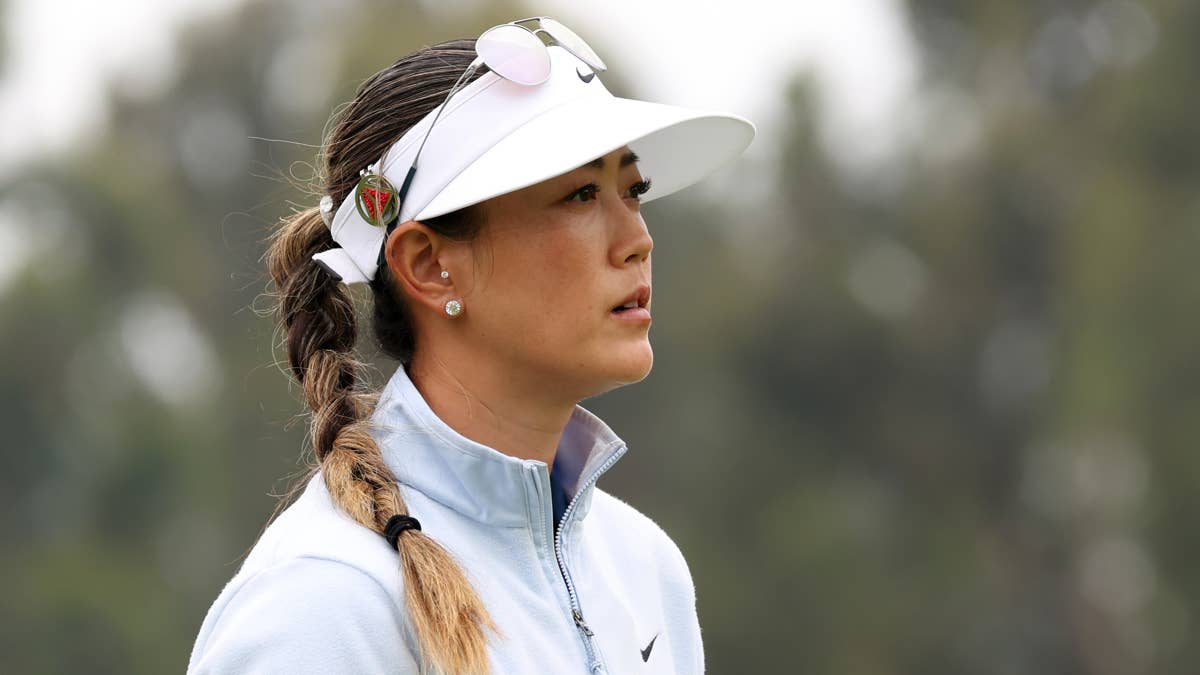
Michelle Wie West did not get the storybook weekend at Riviera Country Club.
She did not make a run up the U.S. Women’s Open leaderboard. She did not turn one more major championship start into one more Sunday push. She did not give herself two more competitive rounds to delay the question everyone around women’s golf already seemed to be asking.
Was this really it?
After rounds of 75 and 74, Wie West finished at 7 over and missed the cut by three shots at the U.S. Women’s Open Presented by Ally. On paper, that is the simple version. A former champion returned, battled, made a couple of memories and went home before the weekend.
But nothing about Michelle Wie West’s career has ever fit neatly onto paper.
Not the teenage phenom years. Not the sponsor exemptions. Not the pressure. Not the injuries. Not the 2014 U.S. Women’s Open victory at Pinehurst No. 2. Not the way she became famous before she was old enough to fully understand what fame could take from a golfer.
And certainly not this week at Riviera.
This was not really about the cut line.
This was about a player who has spent most of her life being watched, judged and measured by impossible expectations walking off one of the game’s great stages with something that looked a lot like peace.
Credit: Kiyoshi Mio-Imagn Images
Riviera Gave Wie West One More Stage
The setting mattered.
Riviera was hosting the U.S. Women’s Open for the first time, giving the championship one of the most iconic venues in American golf. For Wie West, that made the return feel even more layered.
She had already said goodbye once.
At Pebble Beach in 2023, she walked away from full-time competitive golf after a career that had carried extraordinary highs, physical setbacks and more public scrutiny than most players could imagine. The thought then was that Pebble might be the closing scene.
Riviera became something different.
It was not a comeback in the traditional sense. It was not a full return to the LPGA grind. It was not a declaration that she was ready to chase leaderboards every week again.
It felt more like a bonus start.
One more U.S. Women’s Open.
One more chance to feel the nerves.
One more chance to let her children see her as a competitor, not just as Mom.
That may be why the missed cut did not feel like failure. It felt like the ending of a chapter that had already been written, then given a final page.
The Score Was Not Enough To Explain The Moment
Wie West’s two rounds at Riviera were not clean enough to make the weekend.
She opened with a 75, then followed with a 74 on Friday. The result left her three shots outside the cut line. She had flashes, including a late birdie at No. 17, but the kind of sustained scoring required at a U.S. Women’s Open was always going to be difficult after a long competitive layoff.
That part should not be ignored.
The U.S. Women’s Open is not ceremonial golf. Riviera was not handing out soft landings. This was a major championship, and Wie West had to stand on tee boxes, hit shots, manage misses and add it all up like everyone else.
That is part of what made the week meaningful.
She did not come back for a wave and a photo op. She put a scorecard in her pocket and tested herself against the best players in the world.
For a player who spent years trying to live up to the version of herself others imagined, there was something powerful about watching her return on her own terms.
Why It Mattered
This Was Bigger Than A Missed Cut
One more major stage
Riviera gave Wie West another U.S. Women’s Open start after she had already stepped away from full-time competitive golf.
A family-centered return
The week was as much about sharing the moment with her children as it was about chasing the weekend.
A career on her terms
For a player once defined by outside expectations, Riviera felt like a quieter, more personal kind of goodbye.
A Career That Changed The Conversation
There is a generation of golf fans who do not fully understand what Michelle Wie West represented when she arrived.
She was not just a young player with talent. She was a phenomenon.
She made people stop and watch women’s golf differently. She brought outside attention. She invited debate, sometimes fair and sometimes exhausting. She crossed into men’s events, challenged old assumptions and carried a level of expectation that would have been heavy for anyone, much less a teenager.
That is why her career will always be complicated to evaluate if the discussion starts only with wins.
Yes, she won five times on the LPGA Tour.
Yes, she became a major champion at the 2014 U.S. Women’s Open.
Yes, injuries limited what her career might have been.
But Wie West’s impact was bigger than a resume line.
She helped modernize the idea of what a women’s golf star could look like. She became a recognizable athlete beyond the sport’s core audience. She showed young players that women’s golf could be powerful, marketable, stylish and bold.
The hard part is that she had to learn many of those lessons while the world watched.
That is why this Riviera week felt so human.
It was not the child prodigy trying to meet everyone else’s timeline. It was a grown woman, a mother of two, a major champion and a player who has earned the right to decide what golf still means to her.
Legacy Snapshot
Michelle Wie West Changed The Conversation
Her impact was never limited to how many trophies she collected.
|
Major breakthrough |
2014 U.S. Women’s Open champion |
|
LPGA resume |
Five career LPGA Tour wins |
|
Cultural impact |
Helped bring mainstream attention to women’s golf |
|
Riviera moment |
A likely final U.S. Women’s Open start that felt deeply personal |
The Goodbye That Was Not Quite Declared
The careful phrase here is “likely goodbye.”
Golf has a funny way of refusing finality. Players retire, then show up again. Exemptions appear. Invitational starts happen. New formats create new opportunities. Competitive instincts do not always disappear just because a schedule changes.
Wie West is also expected to be involved in modern golf projects beyond traditional tour life, including team and tech-driven formats that could keep her visible as a competitor in a different setting.
So it would be unfair to slam the door and declare Friday at Riviera the absolute final competitive round of her life.
But it sure felt like something close.
The hug with her daughter after the round gave the moment its shape. The scorecard said missed cut. The scene said something else entirely.
It said this was a player who had found a way to leave the arena with her family close, her body healthier than it once was and her relationship with the game no longer defined only by what it demanded from her.
For so much of her career, Wie West had to answer to the question, “What should she become?”
At Riviera, the better question was, “What has she already given?”
The answer is plenty.
She gave women’s golf attention before attention was easy to get. She gave young players a different kind of model. She gave the U.S. Women’s Open one of its most memorable modern champions. She gave the game a career that was never boring, rarely simple and always worth watching.
A Different Kind Of Winning
The beauty of this possible goodbye is that it did not need to be perfect.
In fact, maybe it was better that it was not.
A made cut would have extended the week. A Sunday walk would have been emotional. A surprise leaderboard push would have been incredible theater.
But this ending had its own honesty.
Golf does not always reward sentiment. It asks for a number. Wie West’s number was not good enough to play the weekend.
Still, there was victory in the return.
There was victory in trying again after stepping away. There was victory in letting her daughter see the work, the nerves and the effort. There was victory in walking off Riviera not as a prodigy, not as a burdened star and not as a comeback headline, but as someone who seemed comfortable with what the game had become in her life.
That is not the ending teenage Michelle Wie was once expected to deliver.
It might be a better one.
Because at some point, every golfer has to figure out whether the game is still giving more than it takes.
For Michelle Wie West, Riviera seemed to offer an answer.
One more U.S. Women’s Open.
One more walk.
One more goodbye, or something very close to it.
And this time, it felt like hers.
PGA of America Golf Professional Brendon Elliott is an award-winning coach and golf writer who serves as Athlon Sports Senior Golf Writer. Read his recent “The Starter” on R.org, where he is their Lead Golf Writer. To stay updated on all of his latest work, sign up for his newsletter or visit his MuckRack Profile.
Related: Women’s Golf Finally Has The TV Window It Deserves
Related: WTGL Continues to Build Momentum with New Owner and Star Players
Related: My Top 5 Picks To Win The U.S. Women’s Open At Riviera