
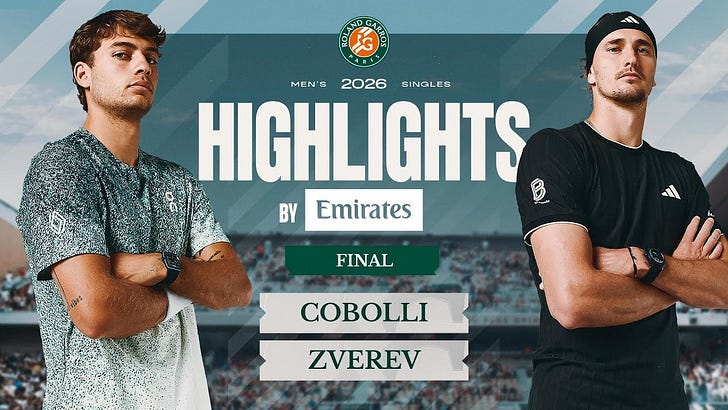
Two things can be true: Alexander Zverev has worked extremely hard to become one of the most accomplished players of his generation, and the domestic abuse allegations that have surrounded him will remain part of how many people understand his career.
This newsletter is about the tennis. I pride myself on bringing technical analysis that is hard to find elsewhere. I can tell you why Zverev won the final. I can’t tell you what to think about him as a person.
On Sunday, Zverev defeated Flavio Cobolli 6-1 4-6 6-4 6-7(5) 6-1 to win his first Grand Slam title. Here’s how he did it.
Zverev admitted to being incredibly nervous in today’s final, but he masked those emotions with clean, aggressive hitting in the opening set, especially off his forehand wing:
Following an early exit from Wimbledon last year, Zverev flew to Mallorca to meet with Toni and Rafael Nadal for some career advice. I wasn’t privy to those discussions, but the sparknotes were: hit the fucking ball.
Of course, Zverev already knew this. But hearing it from a 14-time Roland Garros champion in a Mallorcan seafood restaurant at 1am probably hits different.
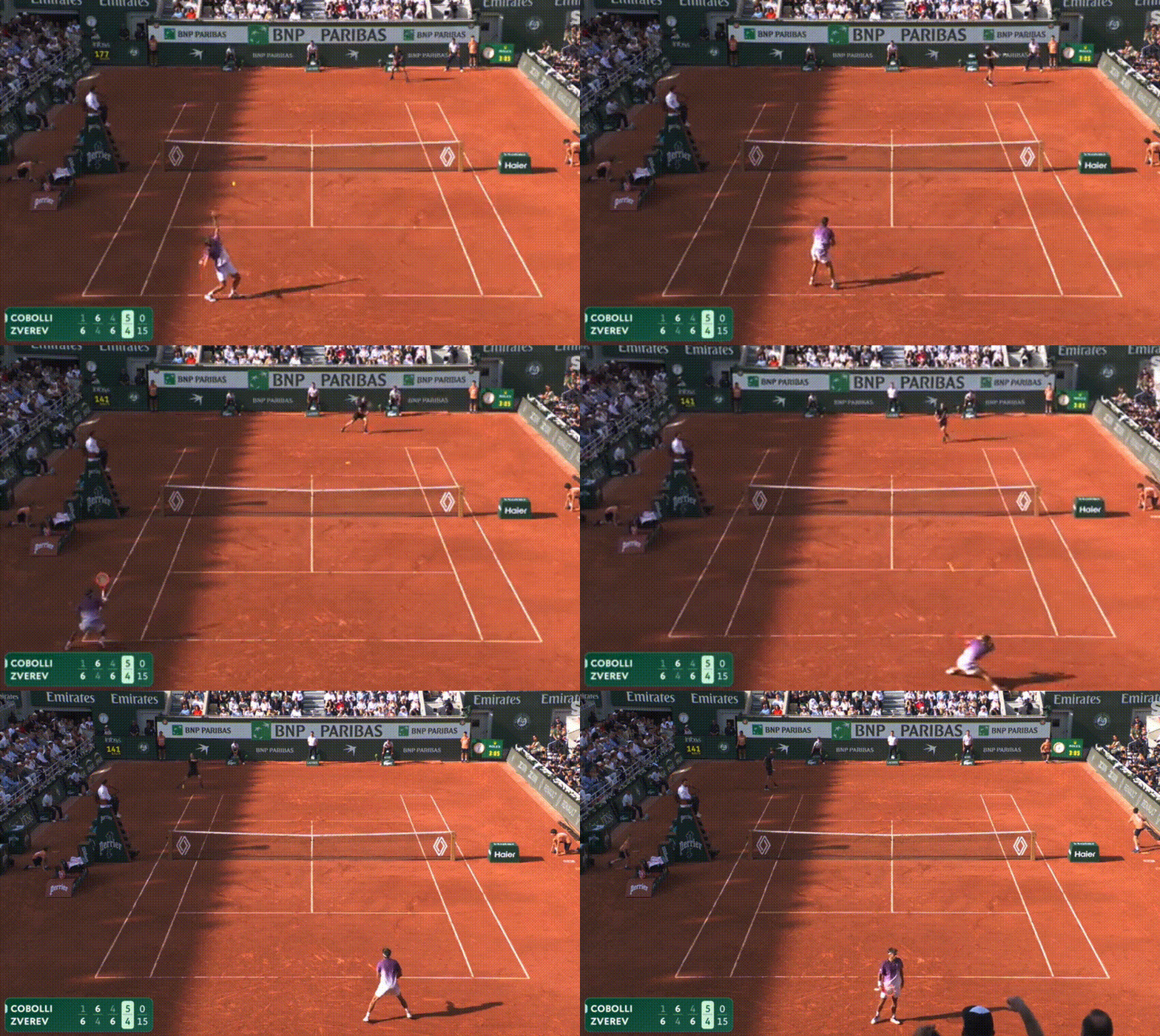
Zverev’s “in-attack” score — a measure of how often a player hits from an advantageous court position — has hovered between 26-27% in recent years, but in the opening set on Sunday that number was up at 34%. He looked to continue the trend early in the second:
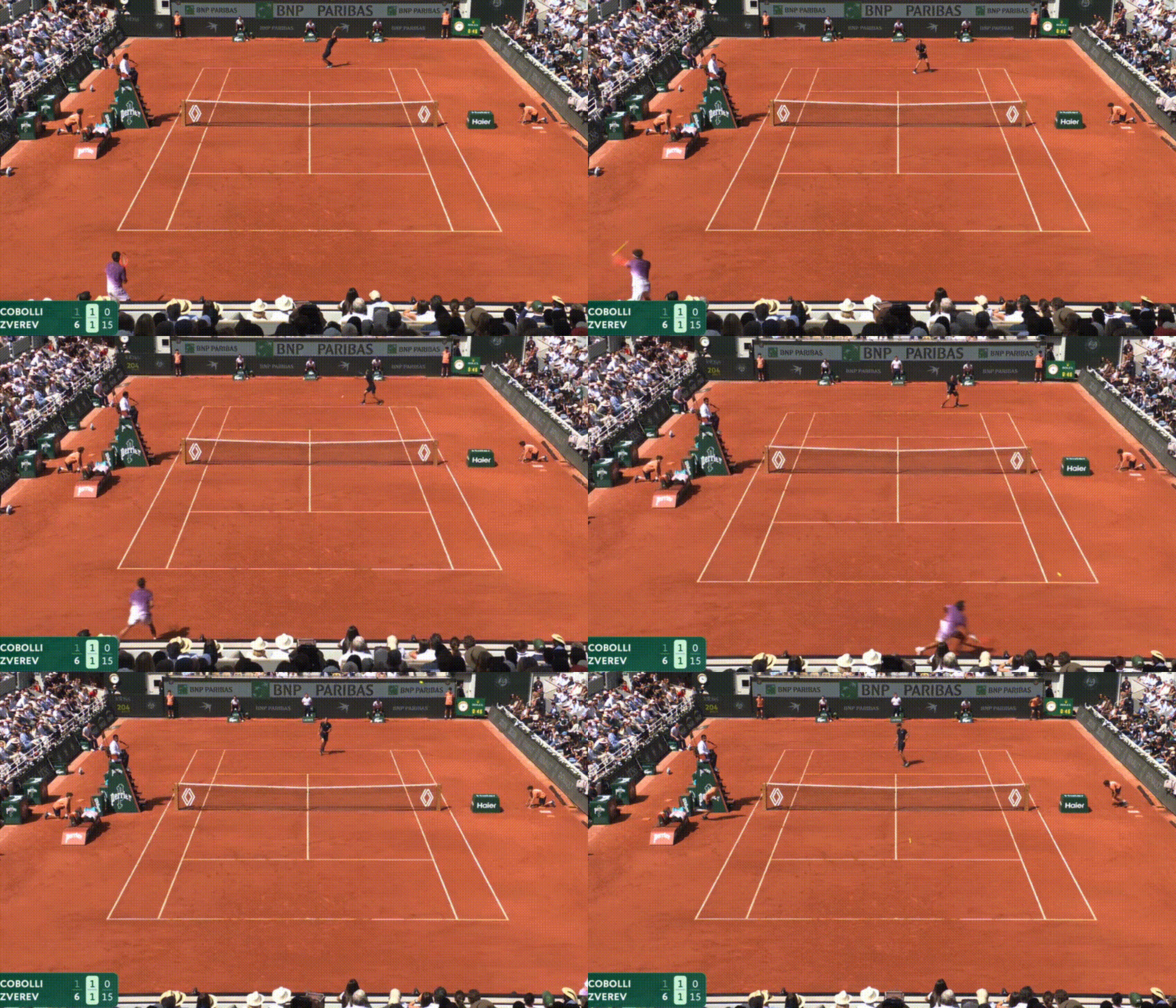
Down the other end, Cobolli was coming to grips with a bad matchup and the possibility of a quick afternoon: his best serve is the high angled kicker out wide on the ad-court, right into the 6’6” Zverev backhand meat grinder, and he struggles to swing the serve out wide on the deuce court, into the German’s more vulnerable forehand.
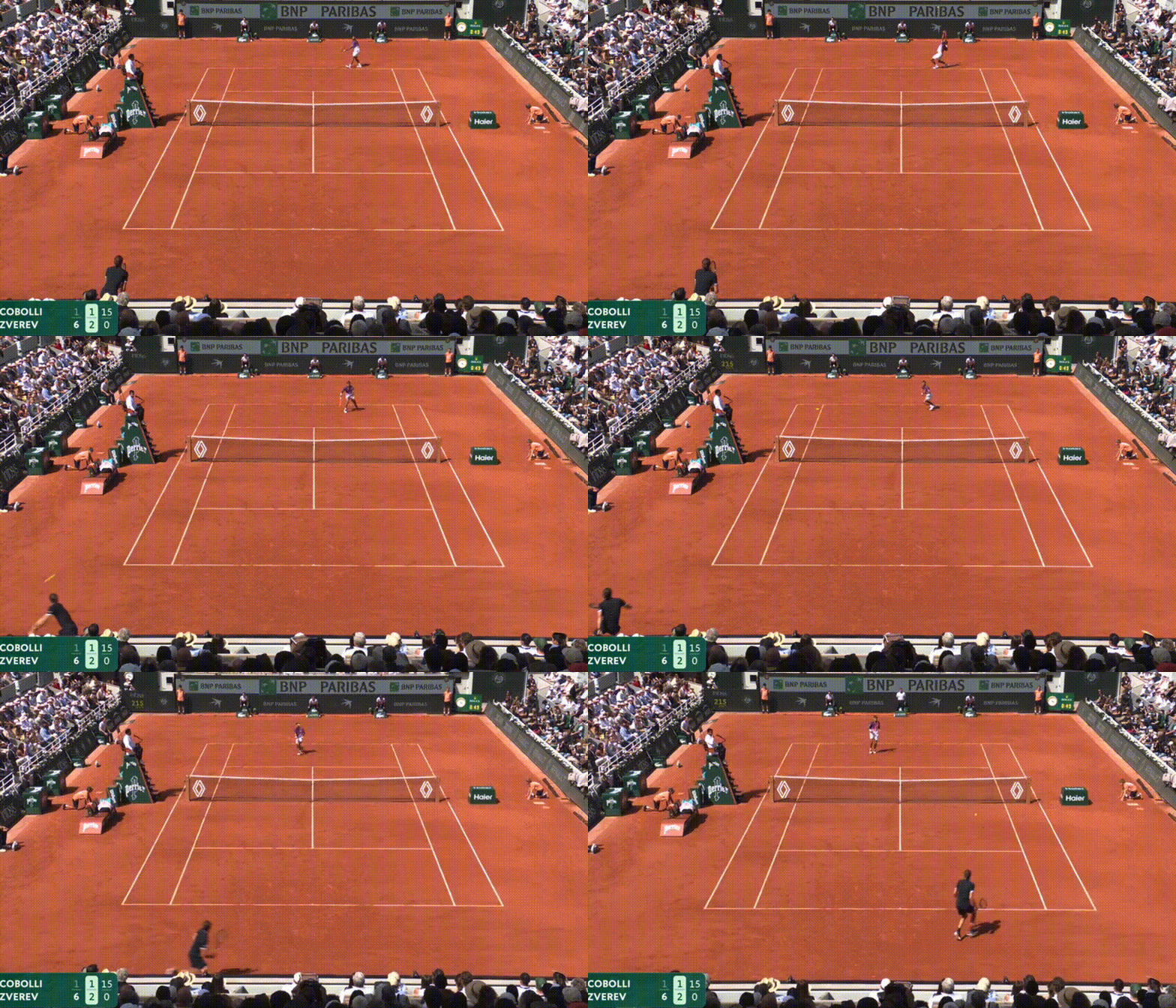
But the Italian made adjustments. The serve got flatter, the forehand often flighted, and the drop shot was deployed to good effect:
The match came alive at 3-3 in the second. Zverev looked to be cruising to another easy hold up 30-0, but he made a poor drop shot attempt off his forehand +1 that Cobolli scrambled down, and then at 30-15 went back to his old faithful backhand +1. Given how deep Cobolli was here after the return, a linear backhand approach was never going to apply a lot of pressure.
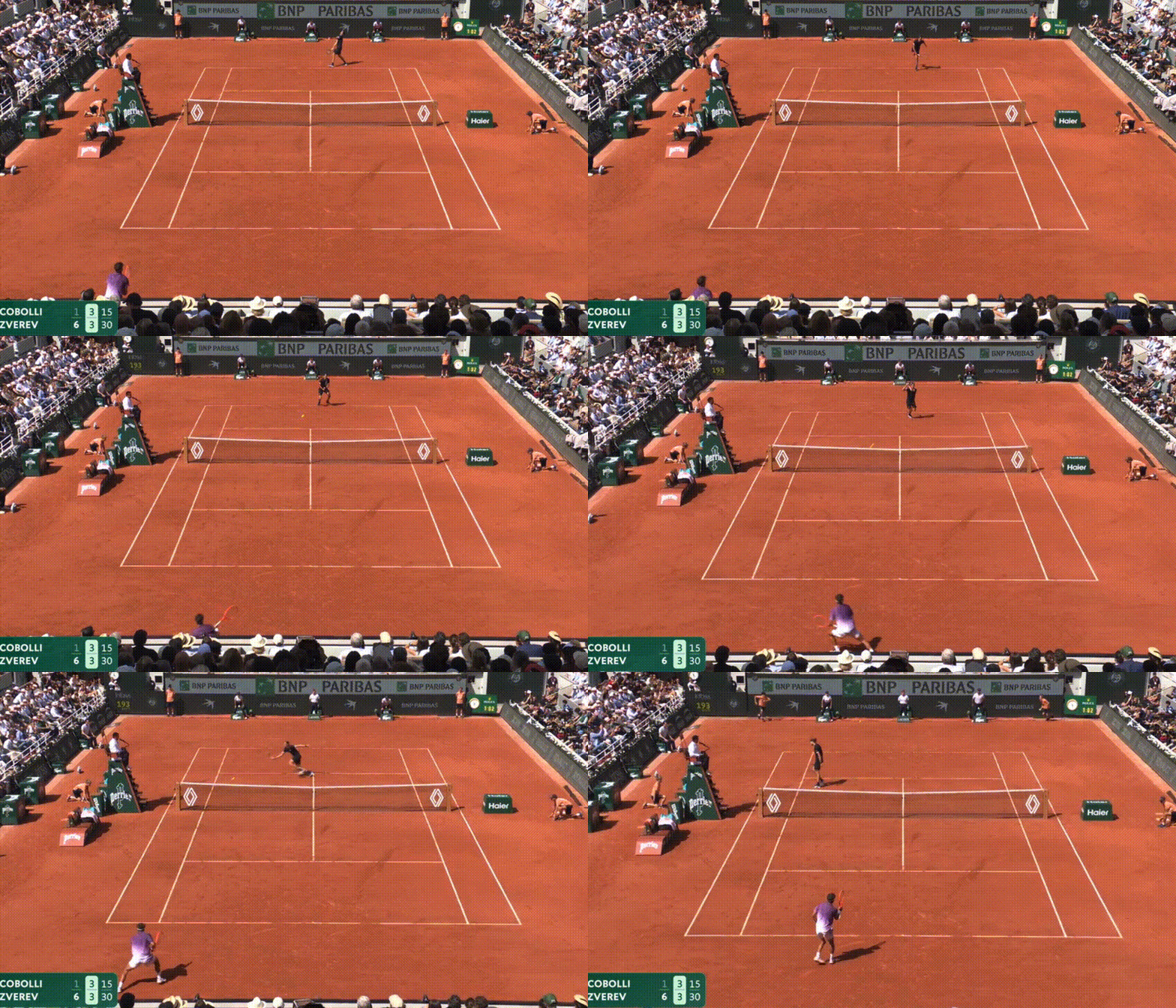
The game got messy real quick, and after a four-deuce tussle, Zverev’s forehand cracked at the worst possible moment:
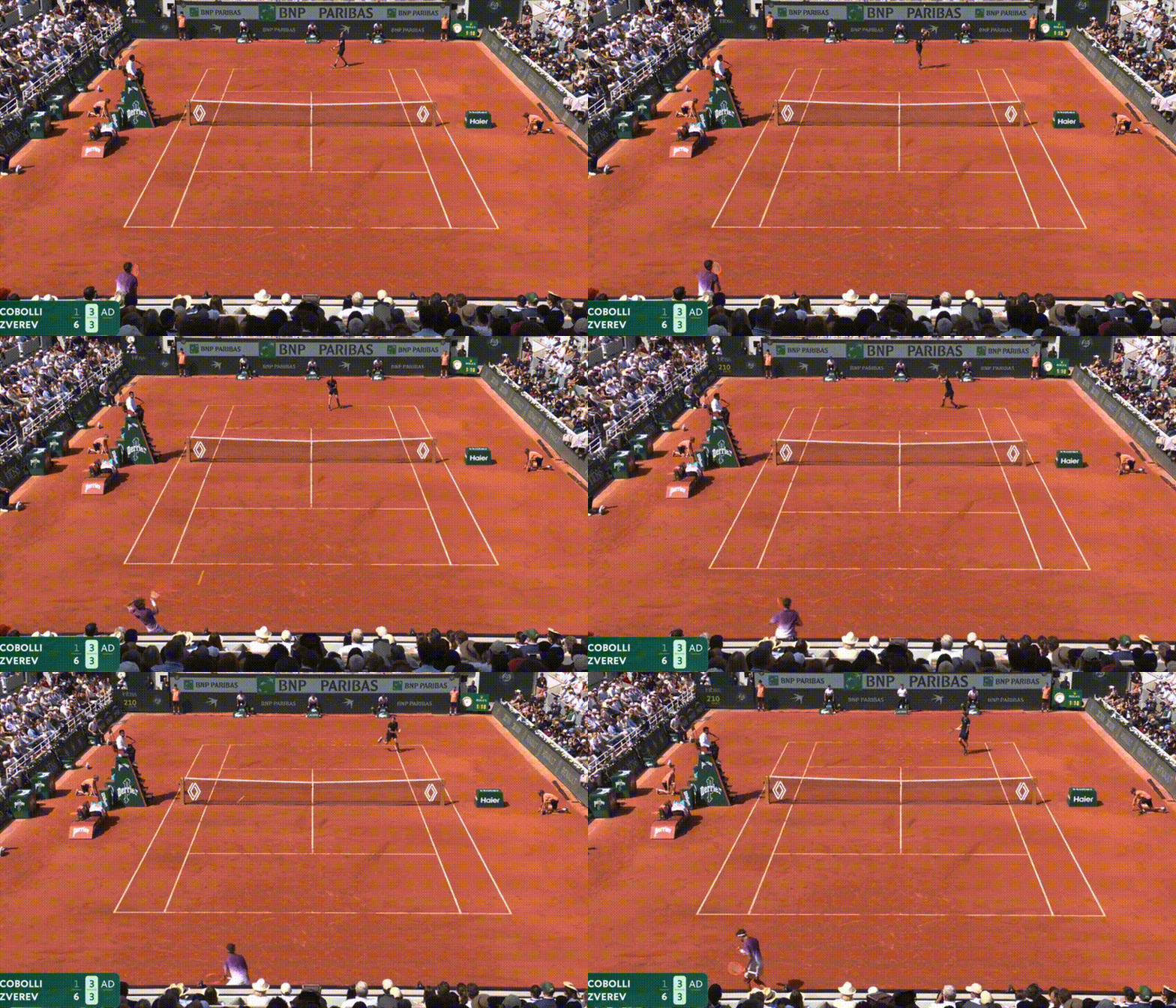
“I always feel though, that Zverev is good for one of those [a loose service game] in a set. You will get one chance. And if on that chance, you can get Zverev to hit a forehand under pressure, you’re in business. And yes, he’s been hitting the forehand well in most of the situations, but in most of the situations he hasn’t been under pressure. I’ve seen it so often.”
— Robbie Koenig
I’ve always felt Zverev’s forehand has a lot of moving parts that can make timing the ball difficult, especially given his wingspan, and especially under pressure.

And so it was great timing when Matt Willis dropped another banger chart during the final showing the variance in Courtside Advantage/TennisViz forehand performance ratings between Zverev, Sinner, and Alcaraz.
Sinner’s worst 52-week performance (7.1) is only slightly below tour average (7.3)
So yes, Zverev can have good forehand moments, and good forehand days. But he’s always vulnerable to greater swings in performance.
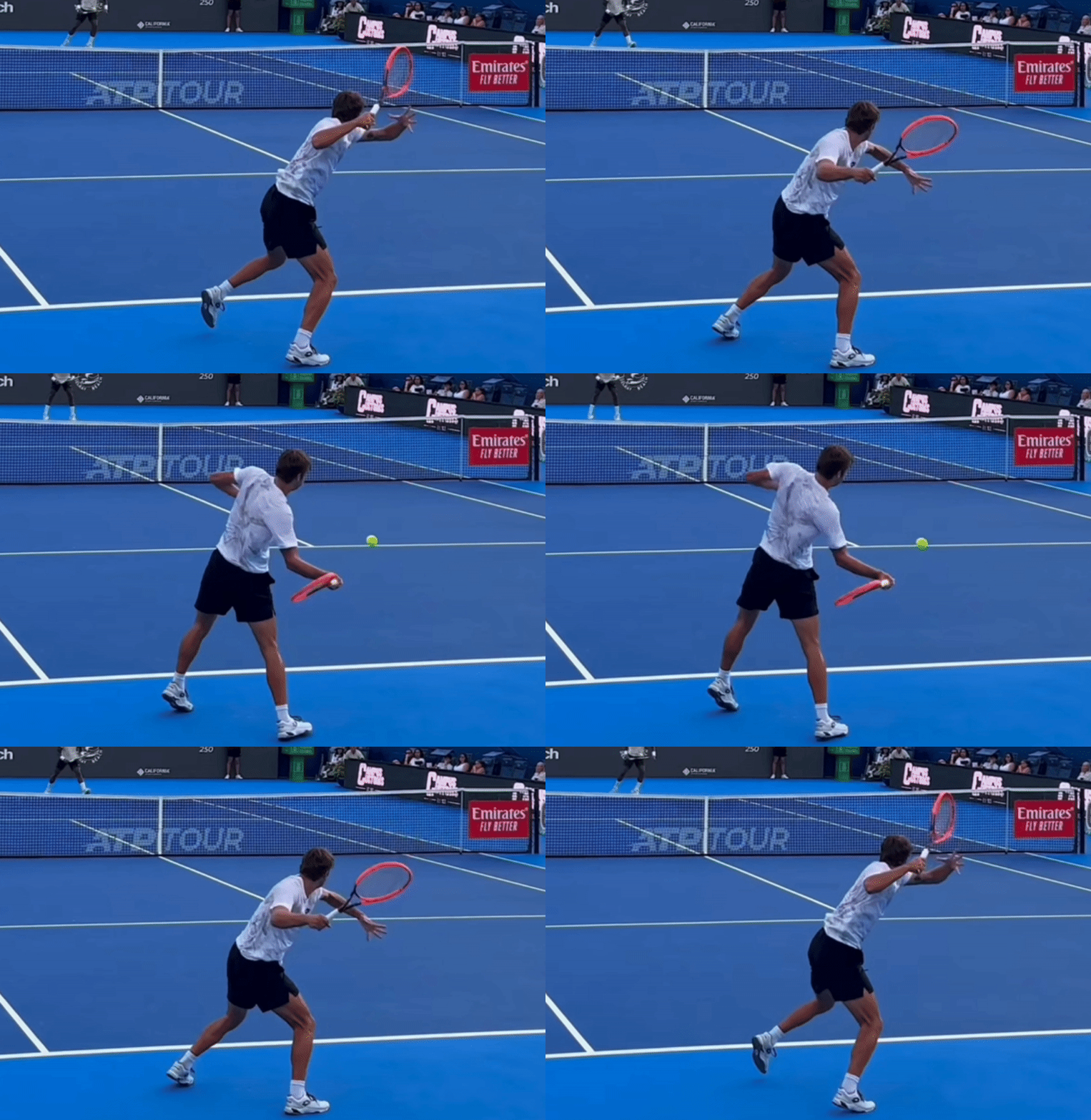
And what of our worthy finalist? While his TennisViz numbers are modest (he’s ranked in the 60’s for 52-week forehand and backhand stats) I like his swing: he coils the upper body so well, and uses gravity to help start that racquet move into a great slot position:
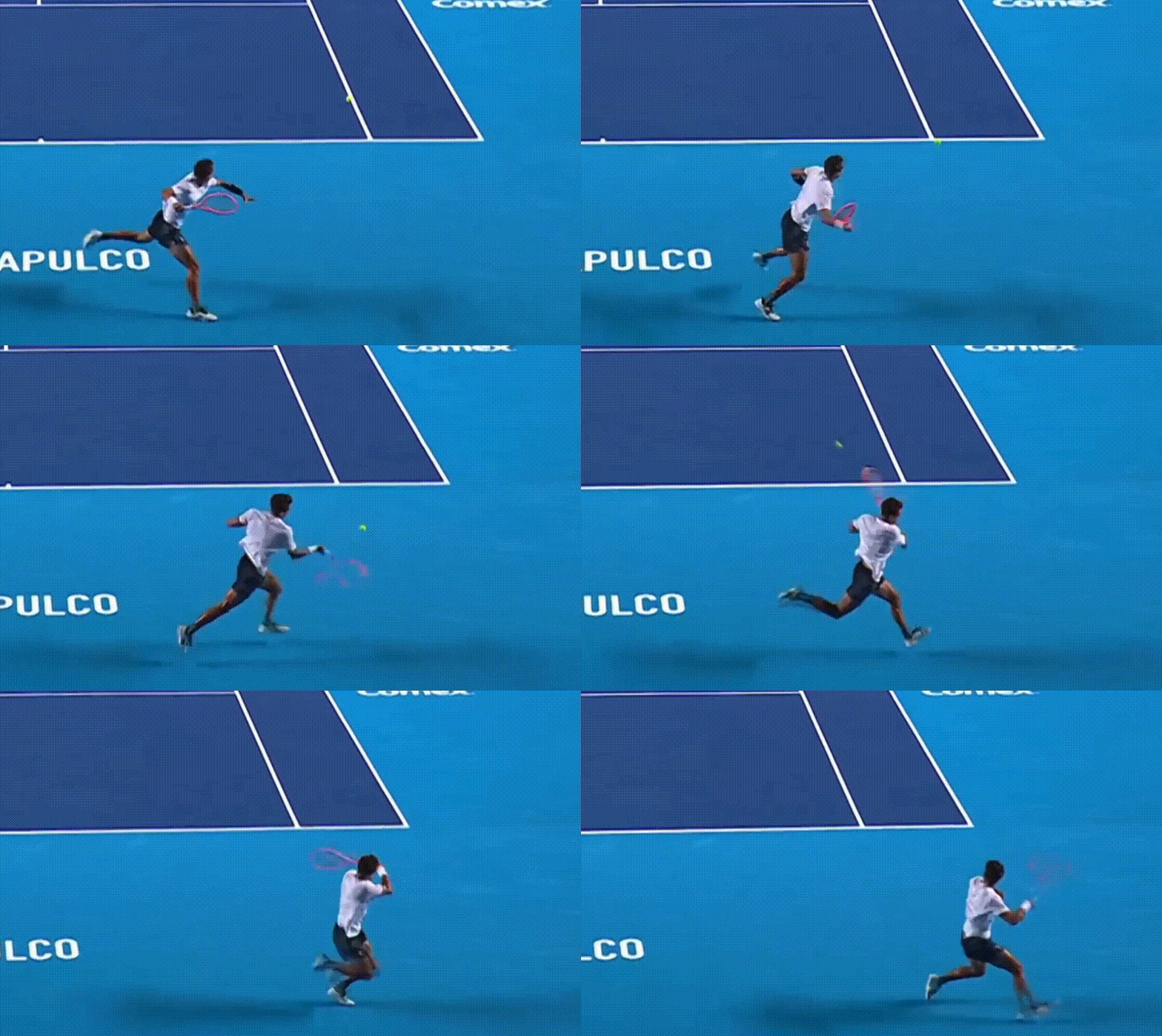
Devout readers might have remembered Cobolli featuring in a quiet February post highlighting the excellence of his running forehand:
That shot was starting to warm as he closed in on the second set:
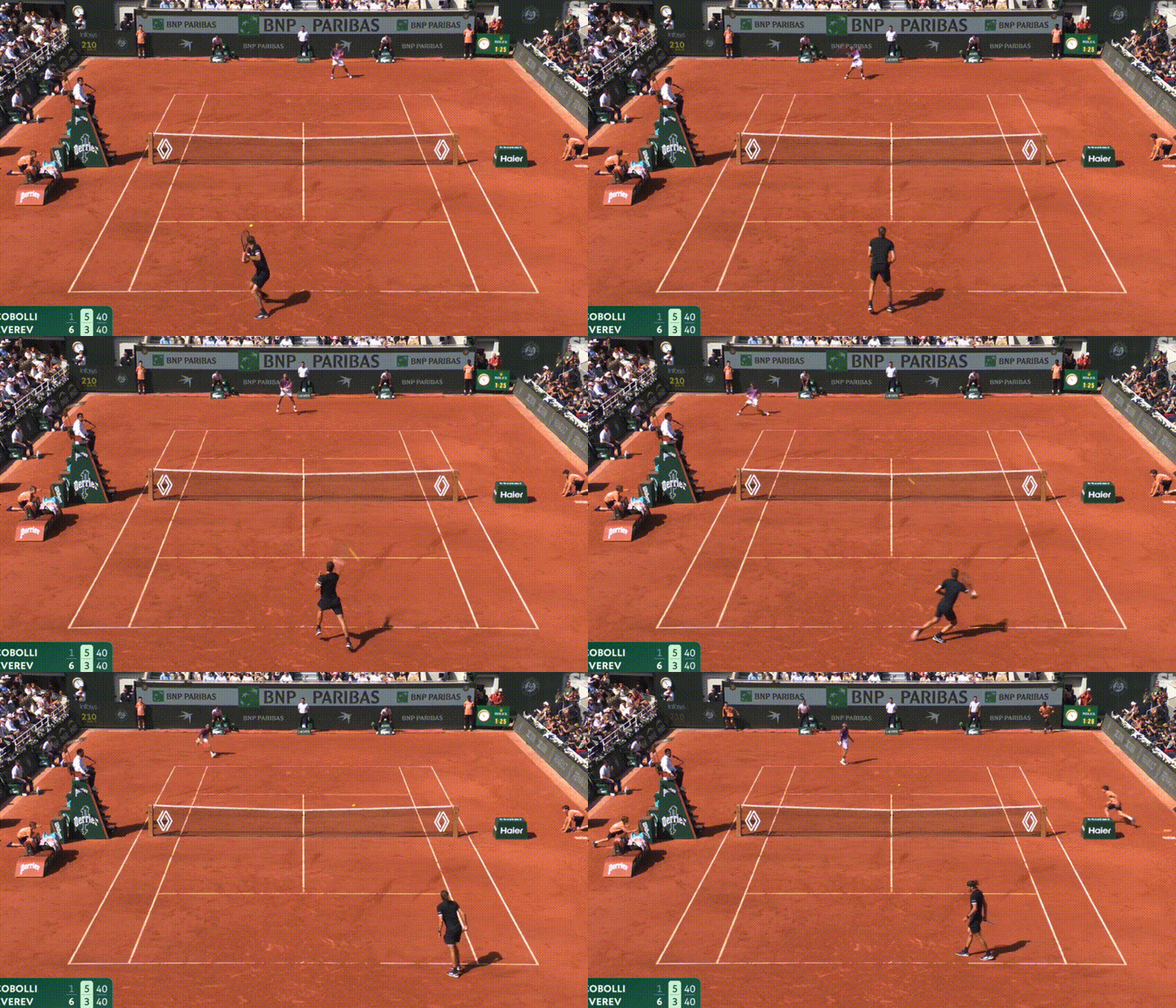
But there’s a good reason Cobolli is in the 60s with his groundstroke ratings: he misses more than the tour average. On both wings. That he found himself in the final of a grand slam being competitive with the third-best player in the world is testament to how high the highs can be for the young Italian. Cobolli had kept the third set even-keeled until he was serving at 4-5 30-0. From here he made four errors in a row to hand Zverev a commanding 2-1 sets lead. Getting passive is a temptation under pressure. Getting loose is a sin.
The fourth set was the best of them all. I say best because it had all the drama and uncertainty that only sports can provide: Zverev looking to finally get over the hump, Cobolli looking to make that hump a little bigger. Zverev’s serve deserted him in this fourth. He had been cruising along in the high 70s — an absurd feat that has become his normal — when all of a sudden he had double faults leaking into his opening game to hand Cobolli the break.
They traded several breaks along the way before Cobolli eventually served for the fourth set at 5-4 when Zverev started to show signs of cramp. His team delivered pickle juice from the player’s box, but the more powerful effect was the fact that it constrained Zverev into becoming a free-swinging aggressor.

Gill Gross 🦣@Gill_Gross
Zverev to TNT: “It helped me that I was cramping a bit… once I cramped, I relaxed. Today I actually think I won because of the cramps.”

Gill Gross 🦣 @Gill_Gross
Zverev feeling crampy/tired in the legs might be the best thing that could happen for him. It happened in the 5th set against Alcaraz in Australia and unlocked his aggressive ballstriking. Certainly was the case at 5-4 there.
6:28 PM · Jun 7, 2026 · 31.3K Views
9 Replies · 10 Reposts · 411 Likes
We advanced to a tie-breaker. Zverev’s Roland Garros tie-break record is ludicrously good: 27 won, just 3 lost. 90% win rate. For perspective, a GOAT-level tiebreak record that Federer and Djokovic have is around 65% won.
This was the moment where Nadal’s advice needed to be honoured. The signs weren’t good in the opening point; old habits die hard; the backhand +1 from the deuce court, and a tentative drop volley that the nimble Cobolli slid up and ripped past.
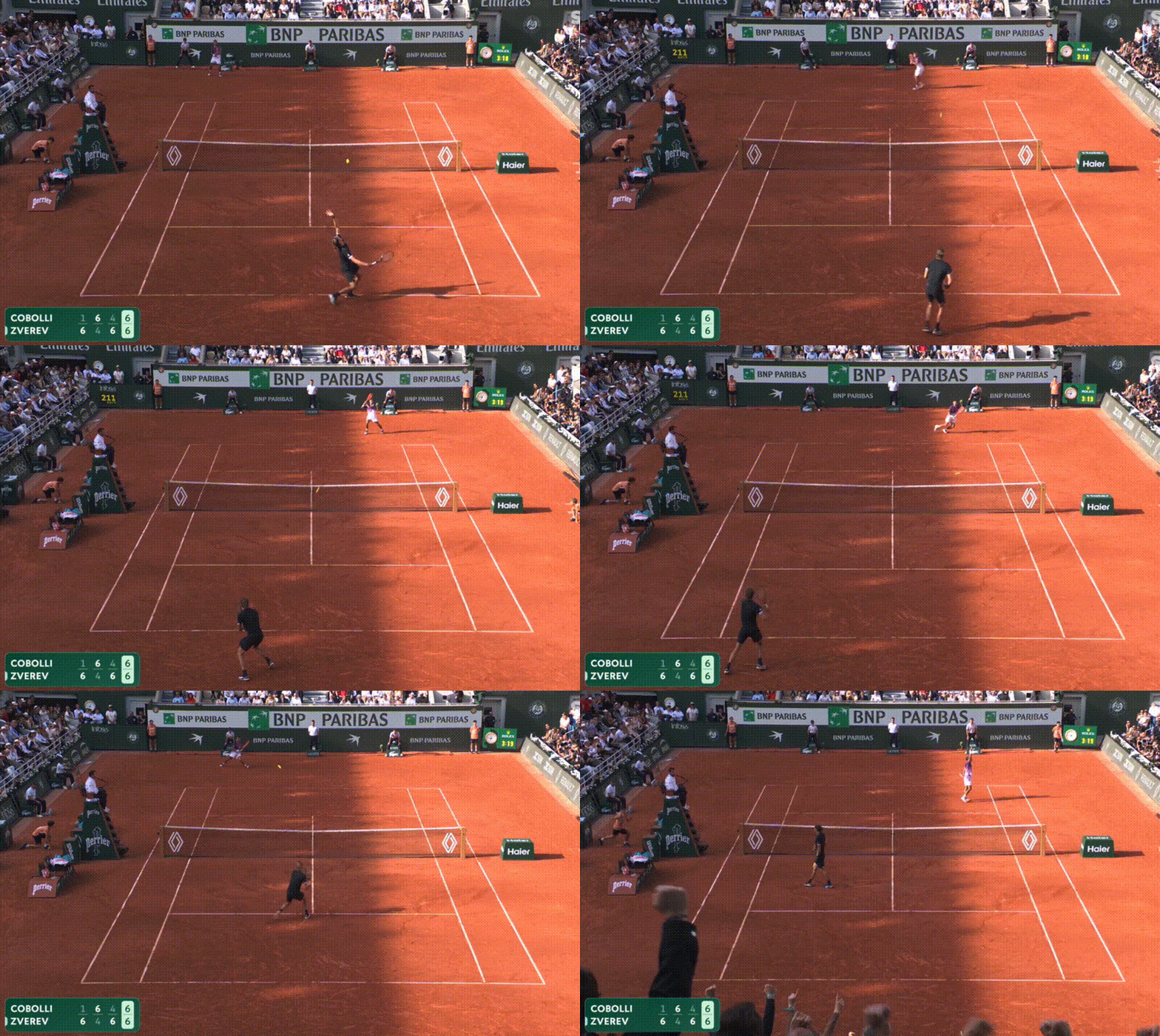
But Zverev would get out to a 3-1 lead off the back of another long rally. The first serve was missing, and the second — which averaged in the 180’s against Mensik — was getting rolled in at 160.
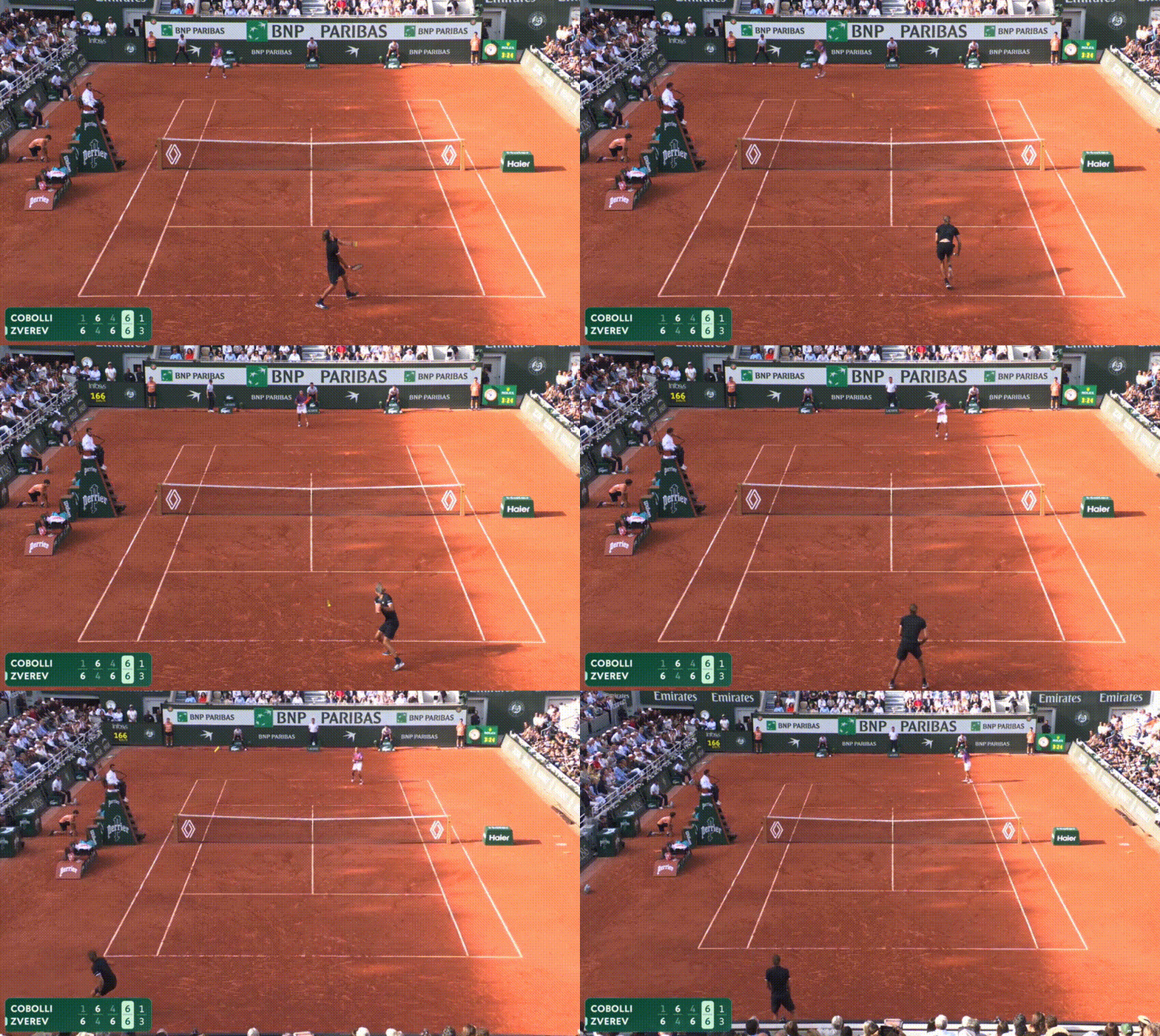
At 4-3 Zverev hit a passive return that Cobolli again clubbed for a forced error.
At 5-3 Zverev double faulted.
At 6-5 Cobolli lit a forehand down the line to send us to a fifth set:
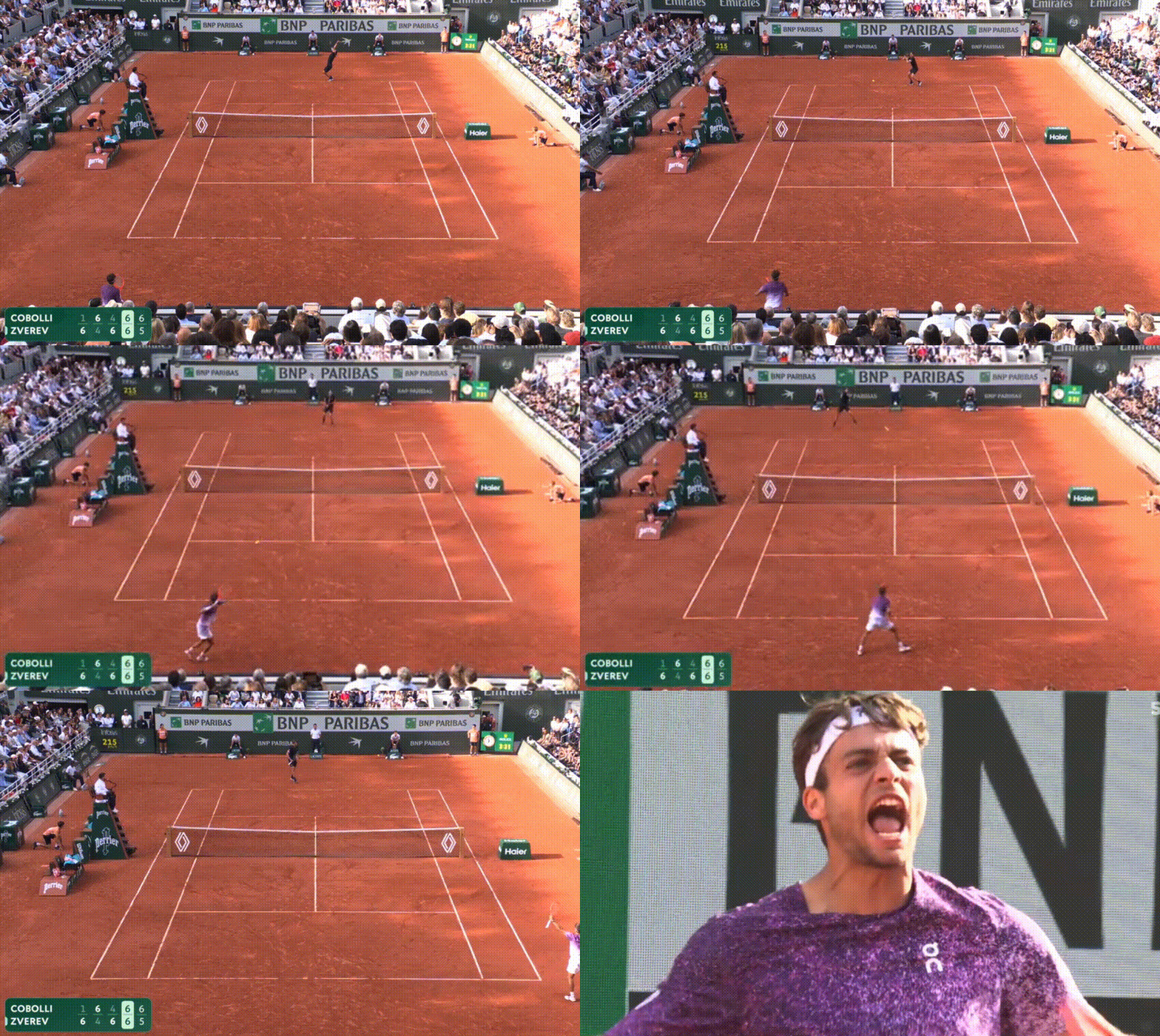
“You can look at all the numbers you want, but when their games came under the microscope of the tiebreak, it was Cobolli who was prepared to be braver and bolder.”
— Robbie Koenig
But there’s a Sisyphean endurance to Zverev. While it seems destined that he will be forever tight and passive in big moments, one of his great strengths is in his ability to show up again and again, and push for point after lung-busting point.
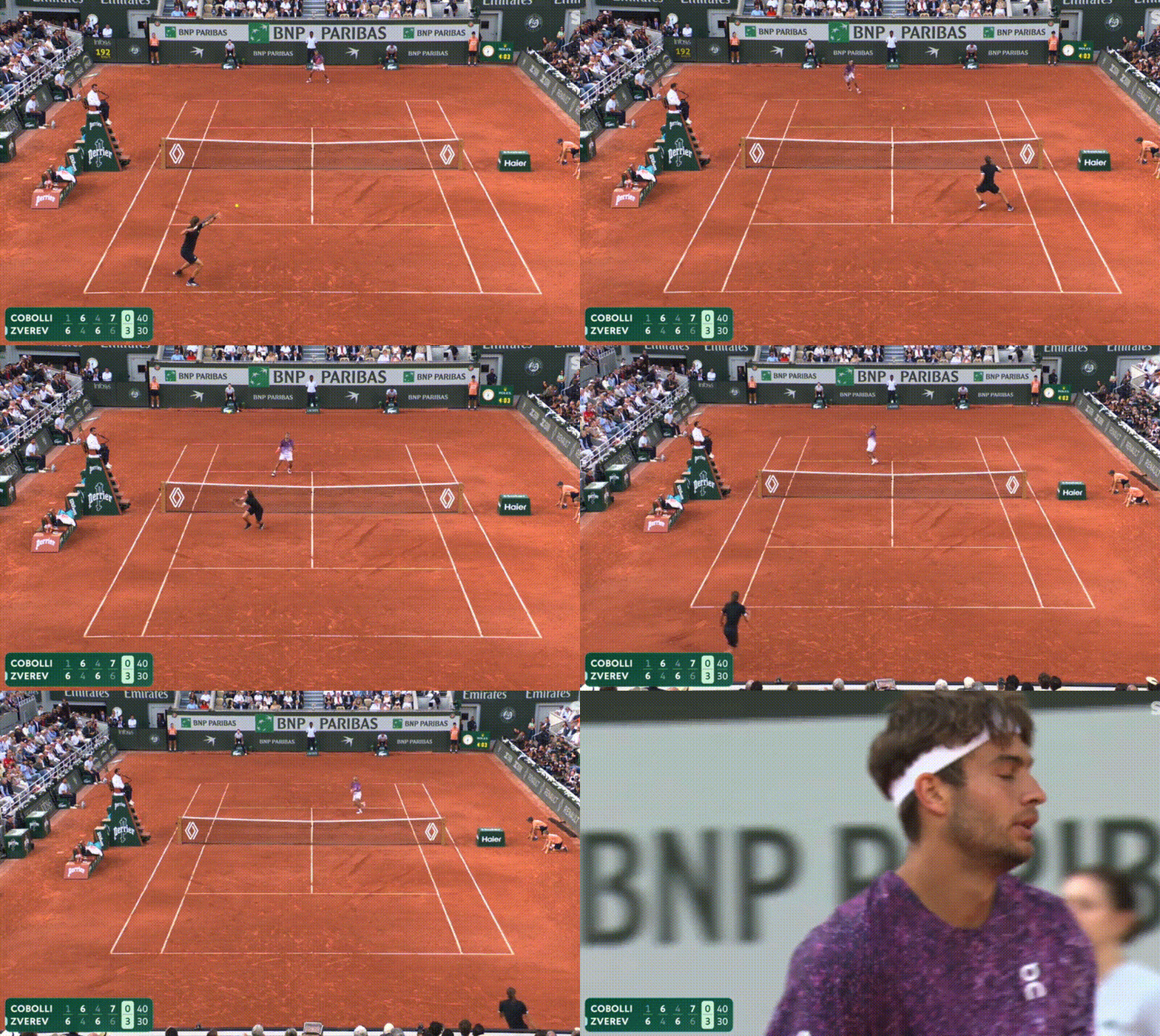
Zverev won the fifth as he won the first, 6-1.
In the post-mortem it turned out Cobolli was struggling physically himself, and perhaps that largely explains his level in the fifth, which lacked the explosiveness of movement or clarity of thought that punctuated much of his performance, gifting match point with another missed overhead.
The “best player to never win a major tag” now passes to Nalbandian and Co.
And where does this leave Zverev moving forward? In the post-match press conference he was asked if he will play more freely now. ‘Perhaps’ was his answer (I’m paraphrasing).
It’s going to be interesting to watch, because while Zverev got the slam win that eluded him all these years, the demons in big moments were not conquered; the forehand passivity was still there. To his credit he kept pushing that rock up the hill, maybe in the hope that it would become lighter, or crumble before he did. It didn’t, but for one afternoon in Paris, it stayed still.
I’ll see you in the comments, and then on the grass. HC