
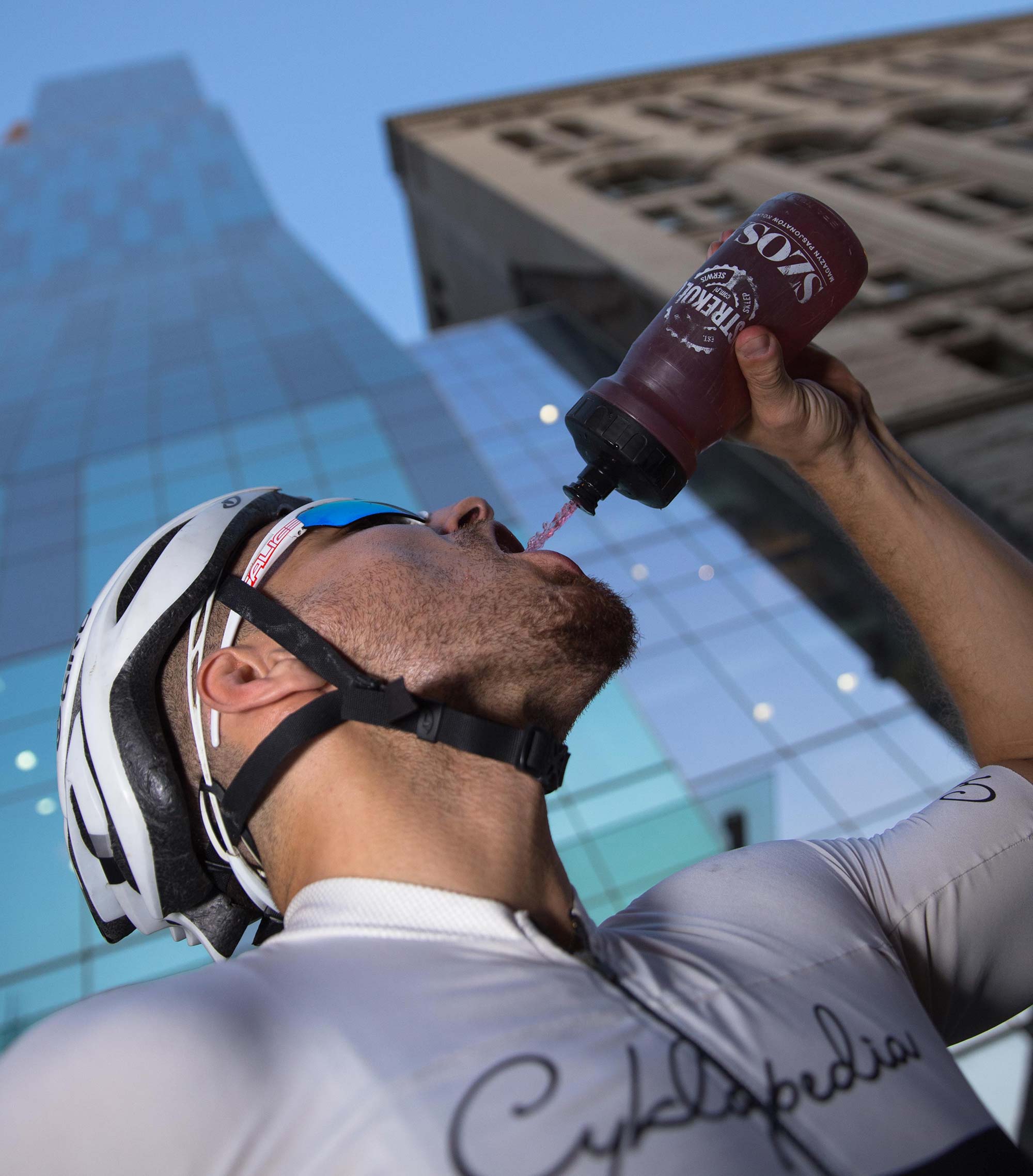
7. Hydration plan for cycling during, and after the event
In case of hydration before the competition on long distances, the process should be started preferably 2 days before the start.
To do this, you should increase the supply of sodium in your diet. The easiest way to do this is to use isotonic and various forms of electrolytes, salting food or introducing products with a higher sodium content such as sea fish, small quantities of snacks such as sticks or crackers. In addition to sodium, calculate your fluid requirements and gently exceed them during these two days (no more than 10%).
During the competition, care must be taken to ensure that dehydration occurs as late as possible (in the case of long distances, this is unavoidable).
Already during the preparation phase, develop habits to reach for fluids frequently and drink small sips at short intervals. A single fluid intake should not exceed 300-400ml due to the risk of gastrointestinal problems.
The optimal amount seems to be 150-200ml. The frequency of fluid retrieval should be as frequent as possible, and with constant access to fluids it should be appropriate every 10 minutes. During the competition, we should try to meet the previously calculated demand for fluids for the duration of the competition.
If we do not have permanent access to fluids, we should carefully plan the amount of fluids taken at certain times before the competition. Additionally, when preparing for the competition, you should increase your stomach emptying capacity by training with more fluids and food during the exercise.
Drinks during the competition should correspond as much as possible to the taste preferences of the competitor, because of the race time the competitor is “doomed” to continuous intake of them and should feel psychic comfort while consuming them.
A feeding and hydration plan should be developed by the staff and a nutritionist to ensure maximum comfort and delay the occurrence of fatigue. For very long distances, electrolyte intake in tablet form should be considered between 2 and 3 hours of competition.
Care should also be taken to ensure that drinks are not too cold due to the risk of gastrointestinal cramps and slower absorption.
After the competition, it will be appropriate to equalize fluids. The optimal strategy seems to be to take a body measurement directly before and after the competition.
The competitor should take 125-150% of the fluid from the difference in body mass measurement.
The hydration time depends on the distance covered and should vary from a few hours to a maximum of 2 days. Equalization of fluids should be carried out in small portions every 15 minutes.
Alcohol after the competition is not a desirable. It is worth getting some common sense.
If the next start is within a few days, the optimal solution would be not to reach for alcohol because of the fact that it very much delays the process of hydration after the competition and has a diuretic effect which additionally does not favor the state of dehydration.
However, if the next start is over a week of time, there are no contraindications within reasonable limits – unless there are symptoms of exhaustion and fatigue.