
In this article, BIG3 Brings Streetball Energy, Pro Names and a Different Kind of Basketball Stage, MyntJ introduces you to BIG3 basketball! Felicia Enriquez, aka Mynt J, is the host of the podcast BlackLove and Basketball – Compton Edition. She is a Clippers fan, an NBA credentialed creator representing thePeachBasket.
INGLEWOOD — For NBA fans who have not tapped into BIG3 yet, the best way to describe it is simple: professional three-on-three, half-court basketball with streetball energy, former NBA names and rules that make every possession feel personal.
What Is BIG3? League Origins and Leadership
BIG3 was founded by Ice Cube and entertainment executive Jeff Kwatinetz, who launched the league in 2017 as a 3-on-3, half-court basketball league. The league was built around entertainment, innovation and giving fans a different way to watch professional basketball. Hall of Famer Clyde Drexler later became BIG3 commissioner, adding another layer of basketball credibility to the league’s foundation.
Inside Intuit Dome: BIG3’s Opening Week in Los Angeles
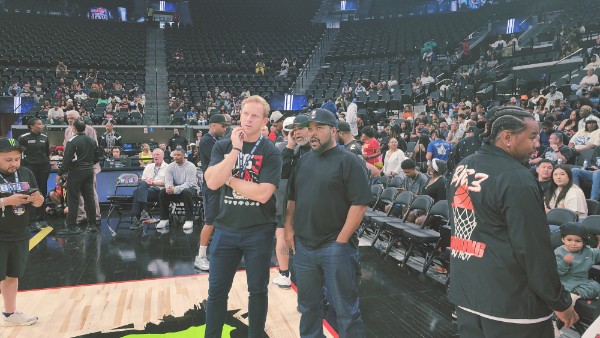
Covering BIG3 for the first time at Intuit Dome, the home of the Los Angeles Clippers, gave me a different look at the game. This was not the NBA. It was not the Drew League. It was not just a summer run. BIG3 sits somewhere in the middle, blending professional structure with a more physical, more vocal and more direct style of basketball.
The event also had a fitting Los Angeles backdrop. BIG3 brought its opening week to Intuit Dome, and there were plenty of Clippers fans in the building taking in a different version of the game. The Clippers’ young center, Yanic Konan Niederhäuser, was also in attendance, and fans were excited to see him courtside. I caught up with Yanic Konan Niederhäuser during the game, and he said it was his first time watching BIG3’s three-on-three, half-court format in person. He was excited to see the style up close, adding another layer to an event that already felt like a crossover between NBA familiarity and streetball energy.
How BIG3’s Three-on-Three Format Works
The format is built for fans who like isolation play, trash talk, strong personalities and players who still have something to prove. Games are played three-on-three, with teams trying to reach a target score instead of playing four traditional quarters. The league also uses special scoring areas, including four-point zones, which gives teams a chance to make a comeback quickly. With fewer players on the court, there is more space, more contact and fewer places to hide.
That is what makes BIG3 interesting. It strips basketball down to basics. Can you create your own shot? Can you use a screen? Can you defend without help? Can you take contact and still finish? The game becomes less about complicated sets and more about pride, skill and one-on-one matchups.
BIG3 Basketball: Jordan Crawford on Why “You Can’t Hide” in BIG3
Before LA Riot faced Miami 305, I caught up with former NBA guard Jordan Crawford, one of Riot’s co-captains. Crawford, who spent six seasons in the NBA and has also played internationally, gave me the player’s view of what makes BIG3 different. He described the format as a stage where the game is closer, more physical and more exposed than traditional five-on-five basketball.
“You can’t hide,” Crawford said of the three-on-three format.
For guards, that challenge becomes even bigger when the floor is filled with bigger bodies and every possession turns into a matchup. In BIG3, every possession puts skill, strength and decision-making on display. That is where the streetball feel meets professional discipline.
The league also gives fans familiar faces. Former NBA players and veterans who still want to compete have another platform to show they can hoop. At Intuit Dome, the matchup between Miami 305 and LA Riot had the kind of names that make basketball fans stop and watch, including Dwight Howard, Michael Beasley, Lance Stephenson and Crawford.
That name recognition is part of the draw. Fans are not just watching unknown players. They are watching players they remember from NBA courts, playoff moments, highlight reels and locker room stories. BIG3 gives those players another stage and gives fans another way to connect with them.
But with that opportunity comes responsibility.
Lance Stephenson and Michael Beasley Suspended After Altercation
The same physicality that makes BIG3 entertaining also has to be controlled. During the Miami 305 and LA Riot matchup, the game became bigger than basketball after an altercation led to discipline from the league. BIG3 later announced that Lance Stephenson and Michael Beasley were each suspended one game, stating that their actions fell short of the professionalism, respect and sportsmanship expected from its players.
That response matters because BIG3 is a league built on second opportunities. For some players, this platform can be a way to stay visible, earn another contract, get an overseas opportunity or simply remind people they can still play. But when emotions spill over on a national stage, the attention shifts away from basketball and onto questions about discipline and control.
Why BIG3 Is Worth Watching for Basketball Fans
Fans expect BIG3 to be intense. They expect trash talk, pride and physical play. But the court cannot turn into a wrestling match. Whatever history players may carry with them, the game still has to remain the story.
For fans, BIG3 is worth experiencing. It is loud, physical, close to the action and full of personalities. It may not be the NBA, but it gives basketball lovers something different: a raw version of the game where pride, skill and competition are right in front of you.