
If the current heat pattern continues into July, the 2026 edition has the ingredients to become the most dangerous Tour in recent memory.
What extreme heat can do to a Grand Tour peloton
Extreme heat can hollow out a peloton quickly. Riders can dehydrate even while drinking constantly, struggle to absorb food, sleep badly through hot nights and carry that damage into the next stage.
The risk goes beyond slower racing or worse performances. Sudden cracks, concentration lapses, crashes, illness, medical withdrawals and days where survival becomes a safety issue all come into play when the heat does not relent.
Grand Tour riders are used to suffering in high temperatures, but repeated exposure changes the equation. A single hot stage can be managed with ice, fluids, pacing and team support. Several days in a row can start to erode recovery. Warm nights reduce the chance to lower core temperature properly. Fluid loss, stomach stress and poor sleep can follow riders into the next stage before the flag has even dropped.
That leaves every part of the race exposed. Opening-week sprint stages are already tense and crash-heavy. Mountain stages push riders deep into fatigue. Time trial days remove the shelter of the bunch. Under extreme heat, discomfort can quickly become something more serious.
The consequences can arrive suddenly. Riders who looked stable can crack without warning. Teams may become more conservative with workload. Domestiques can be burnt before the decisive parts of the race. Medical teams may face harder calls over whether a rider should continue. Organisers may have to decide whether the route, timing or race format still fits the conditions.
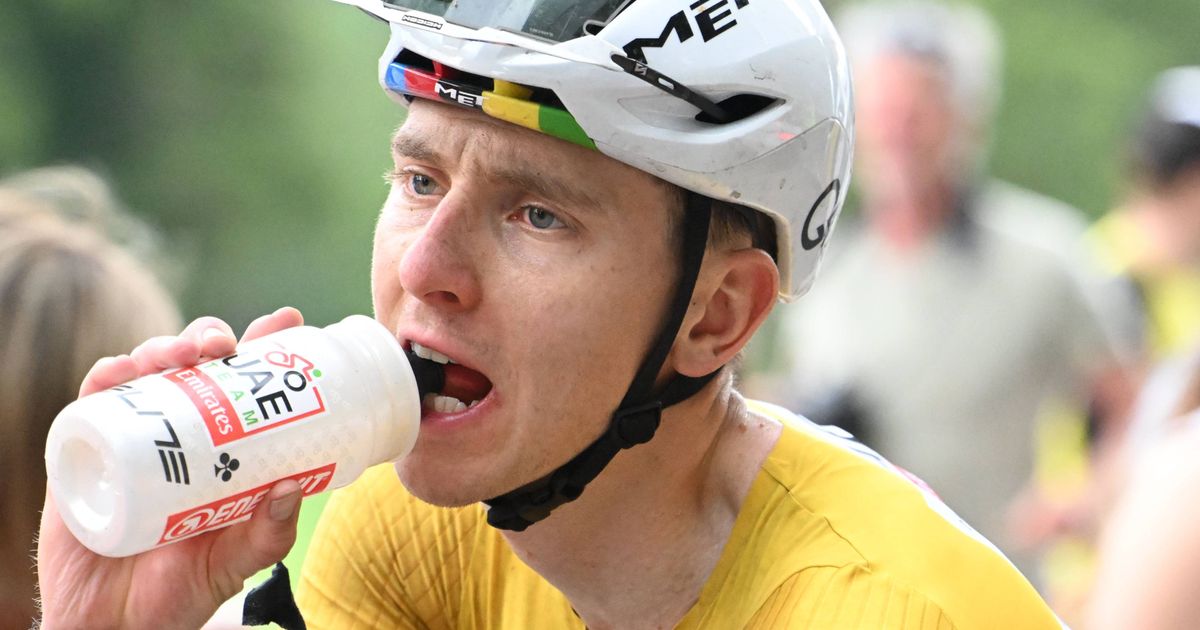
Tadej Pogacar, Jonas Vingegaard and Florian Lipowitz are all expected to contest for the Maillot Jaune again in 2026
Why 2026 carries a different level of concern
A normal forecast shows how hot the air is. Wet Bulb Globe Temperature gets closer to the danger facing a rider already producing huge internal heat at race intensity. Humidity can stop sweat evaporating properly. Direct sun and road heat add to the load. Wind, or the lack of it, changes how much heat the body can shed.
That makes the threat more complex than another hot Tour day. Riders may face conditions where the body’s ability to cool itself is compromised while they are still expected to race, recover and repeat the process for three weeks.
The UCI’s heat protocol allows officials to consider extra cooling, increased drinks access and more flexible support. In severe cases, start times can be changed, parts of a stage can be neutralised, routes can be shortened or races can be cancelled. Those measures would not be cosmetic. If they become relevant at the Tour, rider health will already have moved beyond a background concern.