
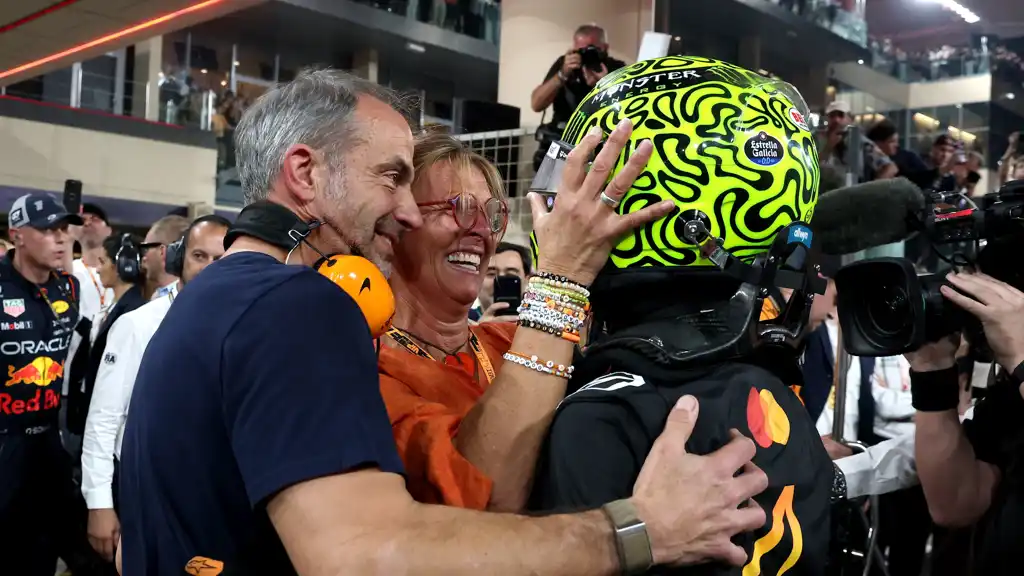
In Part 2 of her 2-part series, Maja Czarzasty-Zybert looks at why the emotional state of parents silently shapes young drivers’ performance and why motorsport still ignores it. Here Maya looks at ADHD families in motorsport, why motorsport needs family-centered performance systems and offers an optimistic outlook for the future. You can read Part 1 here.
ADHD Families in Motorsport
ADHD family systems often contain enormous emotional energy. Communication can become fast, reactive and intense, especially during stressful race weekends. Excitement escalates quickly, but frustration escalates just as fast.
In these situations overstimulation is frequently mistaken for motivation. Parents may attempt to increase focus through constant verbal engagement, emotional intensity or repeated instructions, while the child’s nervous system is actually becoming overloaded.
Shorter communication cycles, emotional pacing and predictable interactions tend to work far more effectively. Many ADHD drivers perform best when environments reduce unnecessary sensory and emotional noise rather than intensifying it.
What appears externally as lack of concentration is often accumulated cognitive fatigue.
Autism Spectrum Families in Motorsport
For autistic young drivers, predictability and emotional consistency frequently matter more than adults realize. Motorsport, however, is naturally chaotic. Delays, technical changes, unexpected incidents and emotionally reactive environments are common parts of race weekends.
When parental emotional states also become unstable, the child may lose the psychological predictability necessary for regulation and concentration. In these situations even minor emotional disruptions can affect performance significantly.
Simple routines, calm communication and stable behavioral patterns can dramatically reduce cognitive overload. Sometimes the most effective intervention is not technical development, but environmental stability.
Motorsport often searches obsessively for mechanical gains while overlooking psychological chaos standing directly beside the kart.
Highly Sensitive Drivers and Emotional Absorption
Highly sensitive young drivers are often misunderstood in competitive environments because they process emotional and sensory information very deeply. Yet this sensitivity can also become a significant performance advantage. These children frequently possess extraordinary awareness of conditions, subtle changes and emotional dynamics.
The problem appears when they begin absorbing not only racing information, but also adult emotional instability.
Parental tone, facial expression, pacing, silence and tension all become part of the child’s internal state. This is why emotional recovery rituals are essential for highly sensitive athletes. Quiet decompression spaces, emotionally neutral post-race communication and structured sensory recovery can significantly improve long-term resilience.
Sensitivity itself is not the problem.
Chronic emotional overload is.
Motorsport Needs Family-Centered Performance Systems
Modern motorsport still largely treats the driver as an isolated performance unit, separated from family psychology. But in junior categories especially, this approach no longer reflects reality.
Parents are already part of the performance ecosystem whether teams acknowledge it or not.
This means future driver development systems may need to become far more family-centered. Academies could integrate psychologists working not only with athletes, but also with family communication patterns, emotional regulation and neurodiversity-informed coaching structures.
This is not about making motorsport softer. It is about making performance science more accurate.
Human beings do not perform independently from emotional environments. Children certainly do not.
The strongest academies of the future may not necessarily be those with the largest budgets, but those capable of creating psychologically intelligent ecosystems around young athletes.
The Future Driver is Built by More Than Talent
Motorsport loves measurable data because data feels objective and controllable. Yet some of the most powerful influences on performance remain invisible. The emotional climate around a child. The nervous system standing beside the kart. The fear hidden inside parental ambition. The silence after mistakes.
All of these shape resilience far more deeply than people often admit.
The future of motorsport will not depend only on engineering sophistication or physical preparation. It will also depend on whether the industry finally learns how to educate the emotional systems surrounding young athletes.
Because sometimes the biggest performance gain is not found in telemetry, setup changes or horsepower.
Sometimes it is found in the silence standing next to the kart.