
The Tour de France is fast approaching, and not everyone has time to sit on the sofa watching the peloton roll by châteaus and swimming pools for three weeks.
To help with that, we’ve drilled through the route to find the truly unmissable days when you will want to block out your calendar and lock in to the greatest race in cycling.
Stage 1: Saturday 4th July, Barcelona – Barcelona, 19km TTT
We start at the beginning. The team time-trial returns to the Tour for the first time since 2019 on Stage 1, but things are different this time. Gone are the days of riders motivating an exhausted fourth man across the line. Now, the time is taken from the first man to hit the finish, and general classification times are taken on each individual’s effort, meaning it places a lot more emphasis on the GC favourites and essentially becomes a big leadout for the team leaders. That means there’s no hiding – the big names will have to perform from the off.
The stage is 19km in length, beginning and ending in Barcelona and feature a couple of short but sharp stings in the tail in the Côte de Montjuïc (1.1km, 5.1%) and finishing ramp up the Côte du Stade Olympique (800m, 7%).
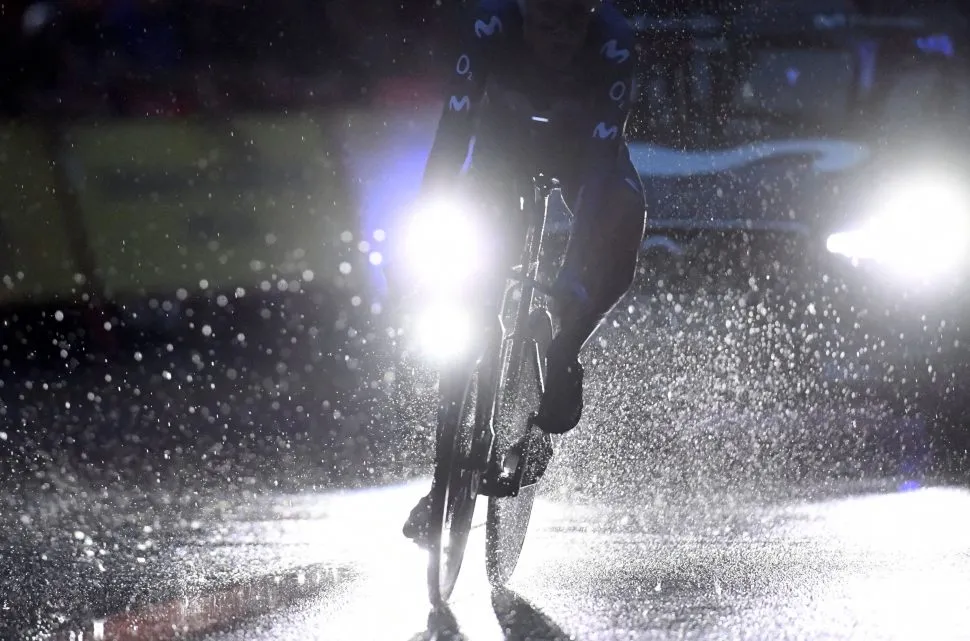
The last Grand Tour TTT in Barcelona was at the Vuelta a España in 2023. It was a travesty. The safety of the race was called into question as darkness and rain descending. While this stage does take place later in the day than the rest, it should still be light when the final team completes their ride, so hopefully it’ll be smoother sailing.
Stage 6: Thursday 9th July, Pau – Gavarnie-Gèdre, 186.2km
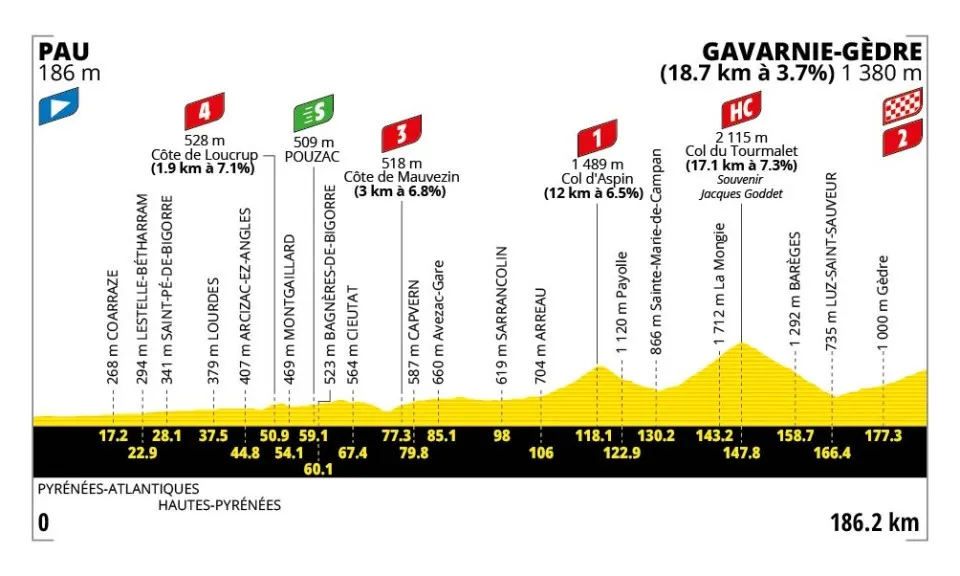
What is the Tour without the Tourmalet? We’ll never know. Stage 6 begins in Tour favourite Pau and sees the race’s first proper mountain stage, including the mighty Col d’Aspin (12km, 6.5%) and Col du Tourmalet (17.1km, 7.3%) – both from the opposite side to usual – before a long climb to the finish at Gavarnie-Gèdre.
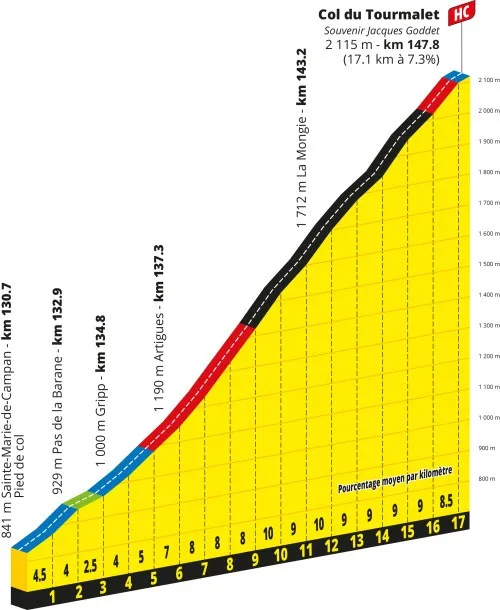
It’s a gnarly obstacle to navigate so early in the race, and whoever crests the Tourmalet first will bag some money for the squad thanks to the Souvenir Jacques Goddet, a €5,000 prize named after the Tour’s second director for the first rider to crest the Tourmalet. Last year it was won by Bahrain Victorious’s Lenny Martinez, and it could be a close contest between the breakaway and the GC favourites on this year’s parcours.
Stage 10: Tuesday 14th July, Aurillac – Le Lioran, 166.6km
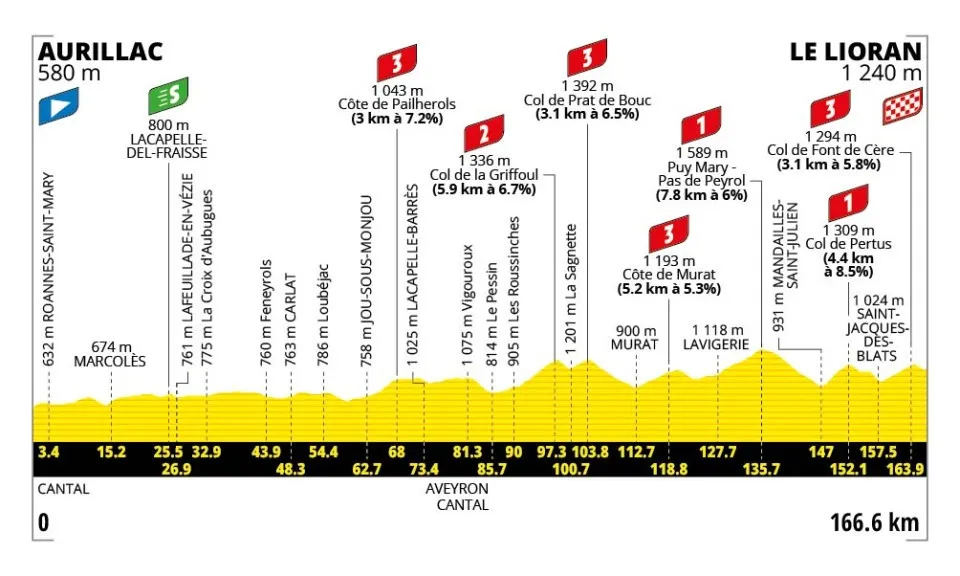
Stage 10 is a massive day in the Massif Central that packs in seven classified climbs on the road to Le Lioran. Not only should this bring GC contenders to the fore with the inevitable attrition, but it also takes place on Bastille Day, so should see French riders scrambling to jump in the breakaway. Think Lenny Martinez, Valentin Paret-Peintre or even Julian Alaphilippe (yes, we still believe).
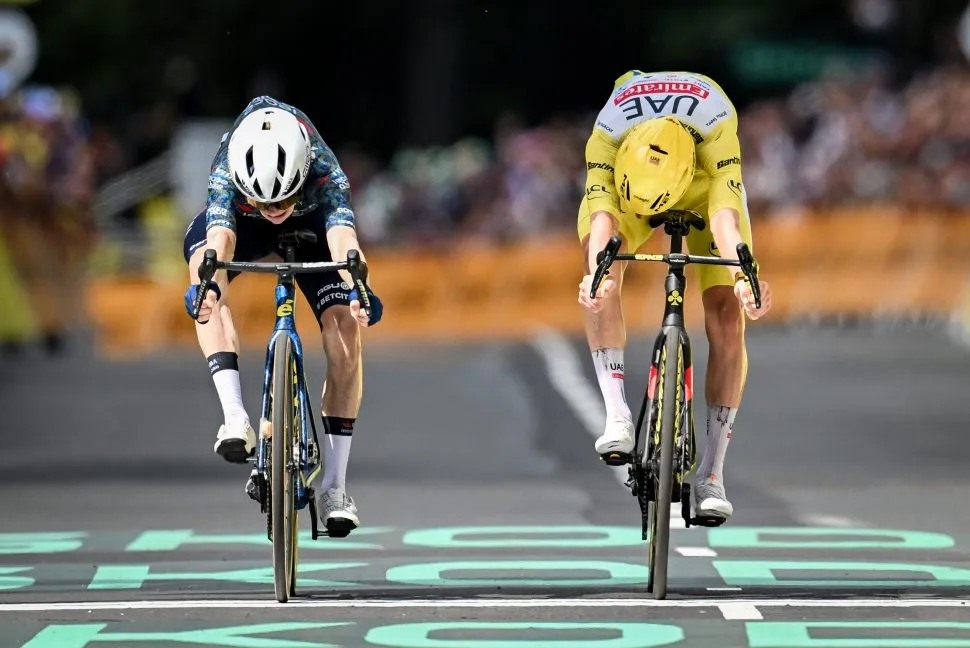
If Le Lioran rings a bell, that’s because it’s where Jonas Vingegaard defeated Tadej Pogačar in a sprint finish back in 2024.
Round two, anyone?
Stage 14: Saturday 18th July, Mulhouse – Le Markstein Fellering, 155.3km
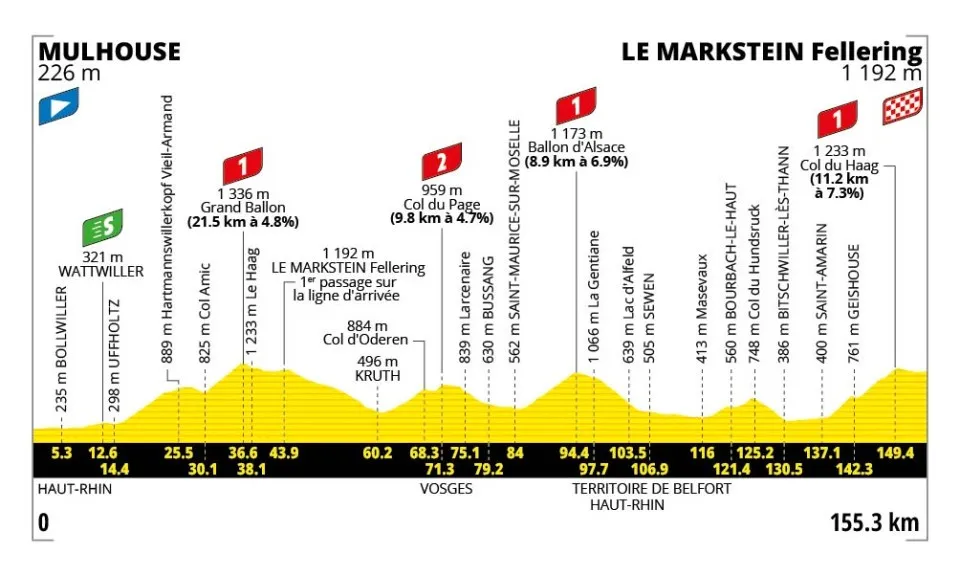
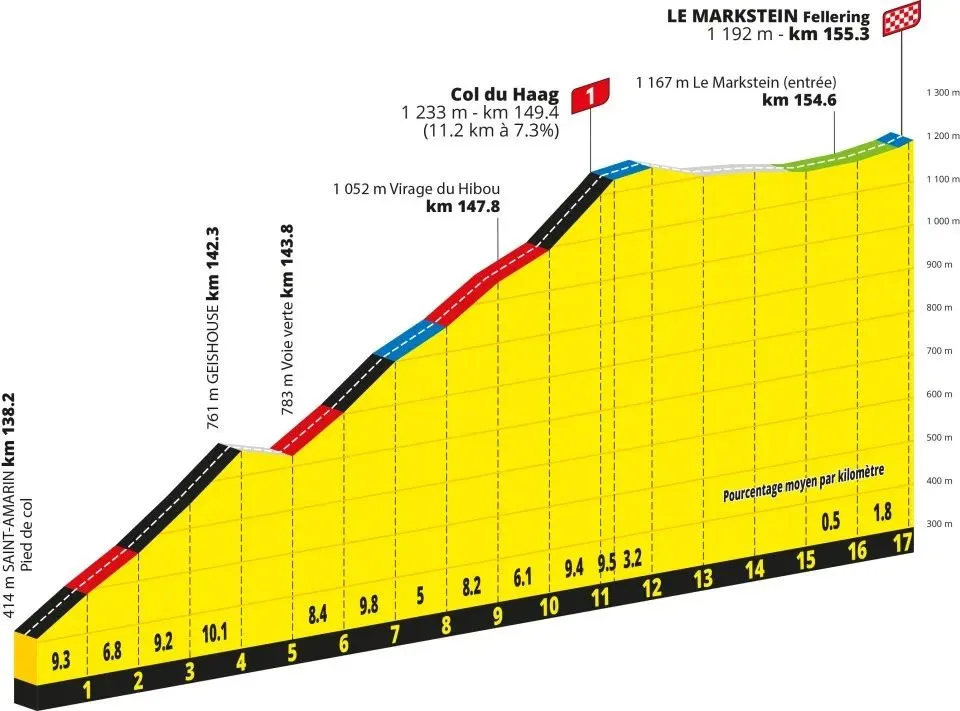
There’s a mountains double header to finish the second week, beginning with Stage 14 on the Saturday, which sees four big categorised beauties in the Grand Ballon (21.5km, 4.8%), the Col du Page (9.8km, 4.7%), Ballon d’Alsace (8.9km, 6.9%) and Col du Haag (11.2km, 7.3%). The road heads upwards after just 10km of racing, and there should be a big battle for the breakaway.
This is one of the shortest mountain stage on offer at just 155.3km, so expect fireworks.
Stage 16: Tuesday 21st July, Évian-les-Bains – Thonon-les-Bains, 26km
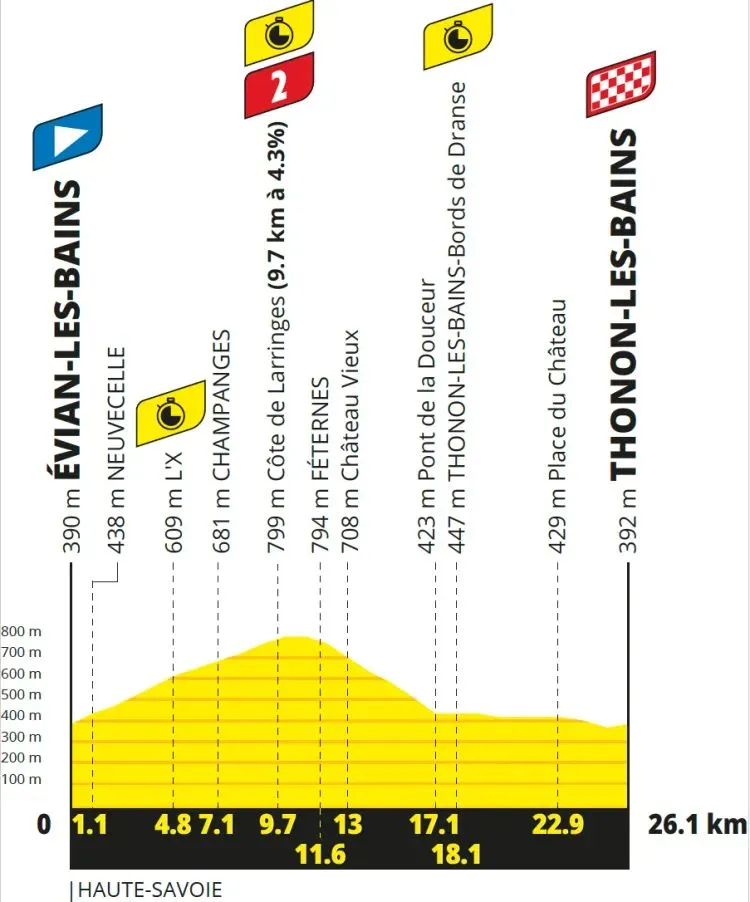
Sure, you probably don’t want to sit through every single rider’s effort on the individual time-trial, but it’ll be interesting as things get down to the business end of the GC. Tours have been won and lost on ITTs, and this is a tricky one.
The opening 10km take riders straight up the Côte de Larringes (9.7km, 4.3%) before plunging down towards a flat final 9km. It’s not the hardest TT the Tour has seen, and it doesn’t benefit the TT specialists as much as was anticipated before the route was released, but anything can happen in these stages – an off-day, minor illness or small mistake could derail someone’s race.
Stage 19: Friday 24th July, Gap – Alpe d’Huez, 127.9km
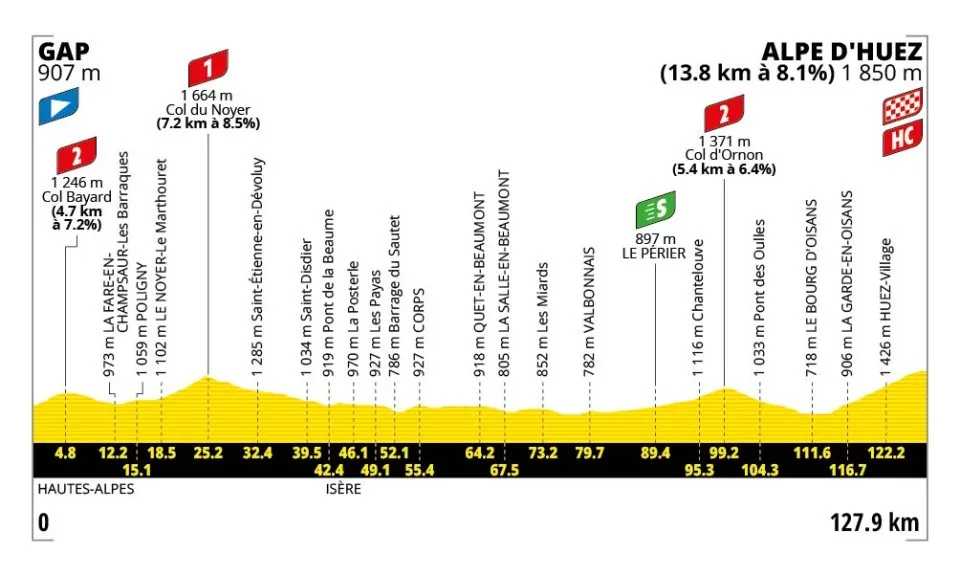
Alpe d’Huez is back in a big way this year, with back-to-back stage finishes at the summit, but there’s only one ascent of its famous 21 bends, and that’s Stage 19.
That day begins with the immediate Category 2 Col Bayard (5.1km, 7.2%), quickly followed by the Category 1 Col de Noyer (7.2km, 8.5%), between them they should sort out a strong breakaway of climbers, who’ll then be met by a massive basin that takes up the bulk of the day’s kilometres.
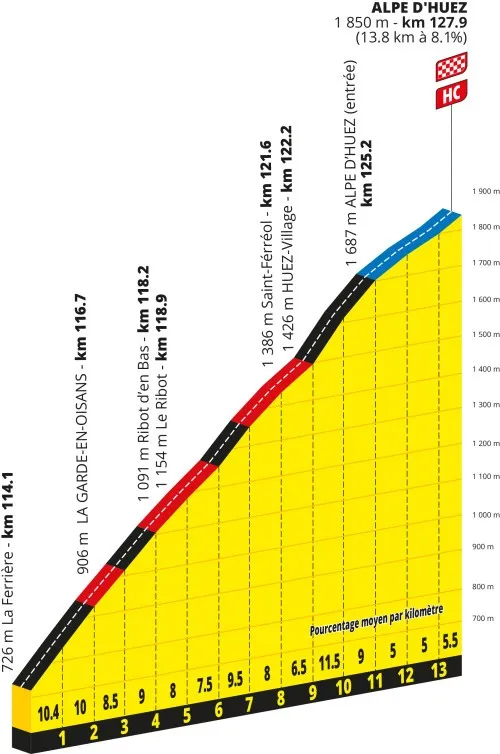
The Col d’Ornon will split the peloton before they arrive at Bourg d’Oisins to begin the final climb, with a rampant 13.8km in store as riders go battle on the Alpe.
Its last appearance at the Tour saw Tom Pidcock take a famous stage win in 2022 after a daring descent of the Col du Galibier. This year’s stage is certainly easier, so expect a record ascent.
Stage 20: Saturday 25th July, Le Bourg d’Oisans – Alpe d’Huez, 170.9km
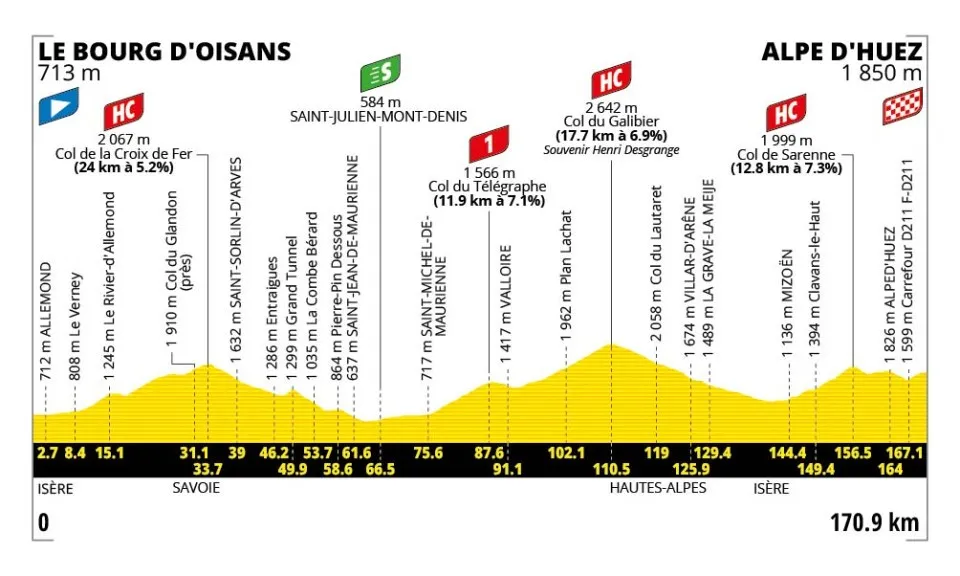
Lock in. This absolute behemoth of a stage is truly designed to not only cause cracks on GC, but chasms. It packs the most elevation of the race with over 5,500m thanks to three HC climbs, including the highest point of the race, the Col du Galibier.
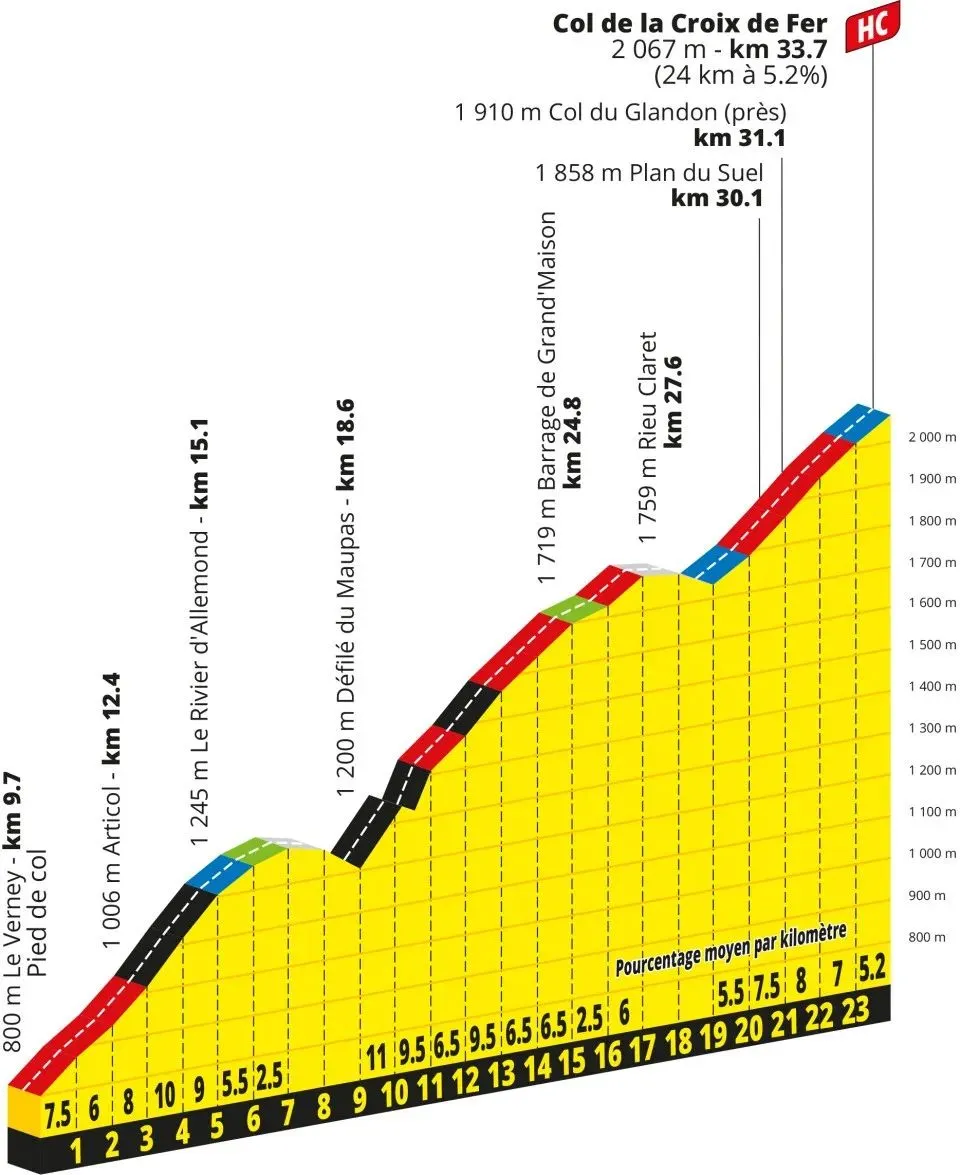
First up is the longest climb of the day. The Col de la Croix de Fer (24km, 5.2%) is not the toughest, providing a couple of small descents along the way to recuperate.
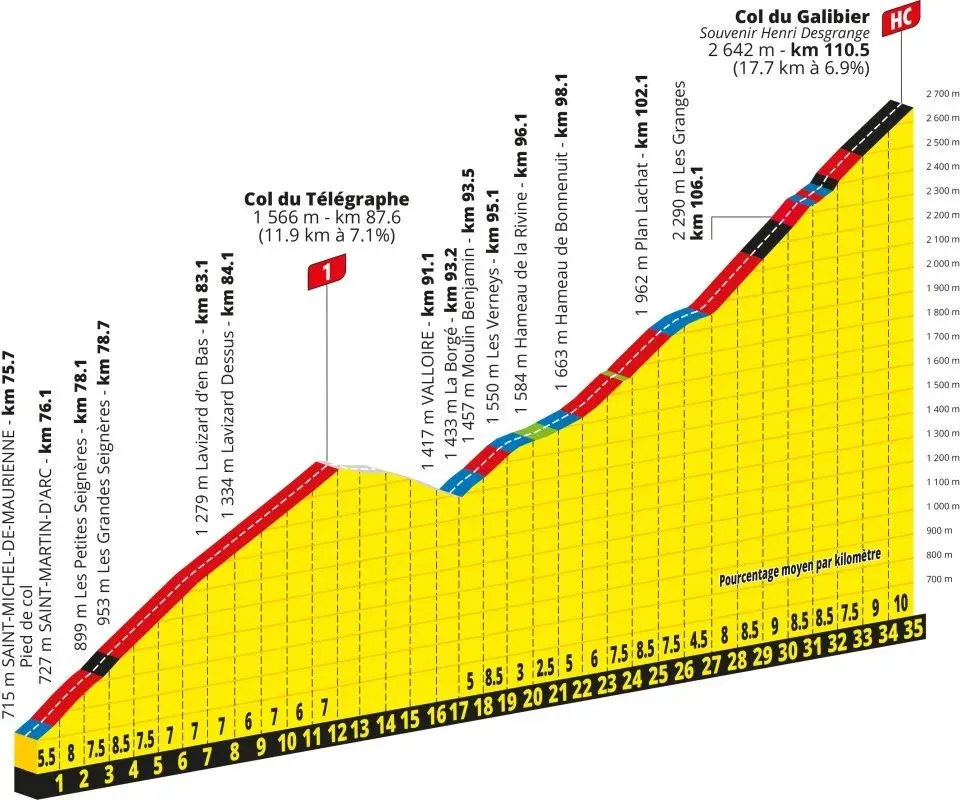
The deadly double act of the Col du Télégraphe and Col du Galibier comes next, making for about 30km of hard climbing. And it’s not over yet.
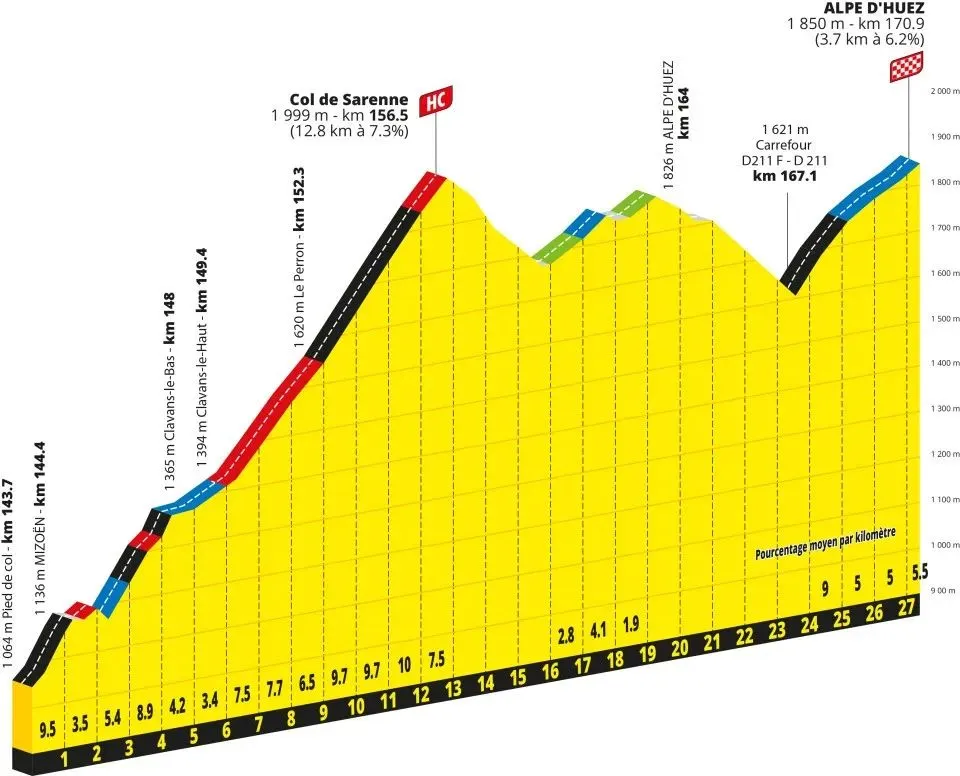
The Col de Sarenne (12.8km, 7.3%) is the real headline act here with a brutal ramp that will surely have riders in ones and twos before they make their way around the mountain back to the top of Alpe d’Huez via the final 3.7km of the climb.
Stage 21: Sunday 26th July, Thoiry – Paris (Champs-Élysées), 133km
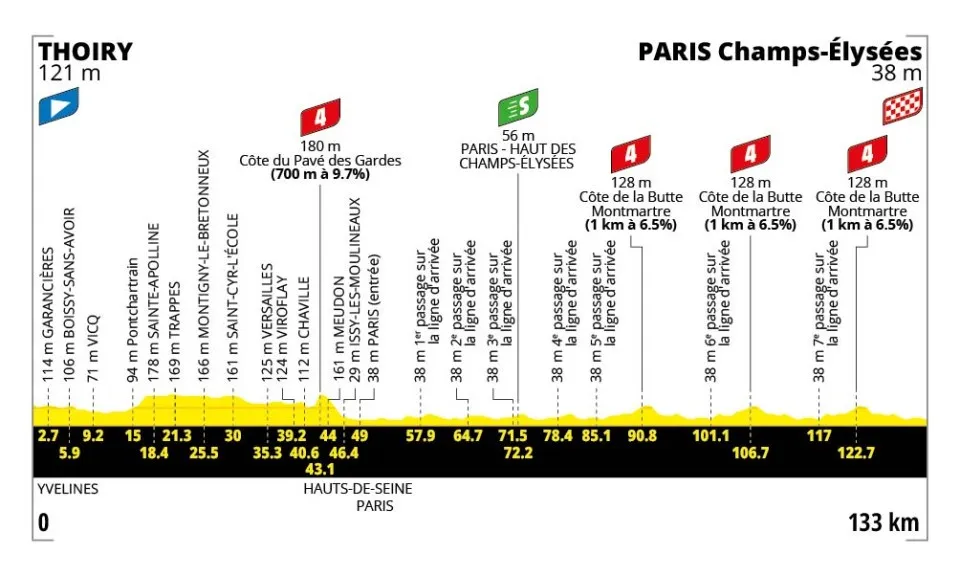
Rejoice. One of the greatest (and newest) spectacles is back. Spare a thought for the sprinters, for whom the traditional jaunt towards the Champs-Élysées bunch finish has been scuppered for the third year in a row. We’re getting another triple helping of the cobbled Côte de la Butte Montmartre climb (1km, 6.5%), which lends itself to the Classics specialists and, well, Tadej Pogačar, so the GC action may not be over if the times aren’t neutralised.
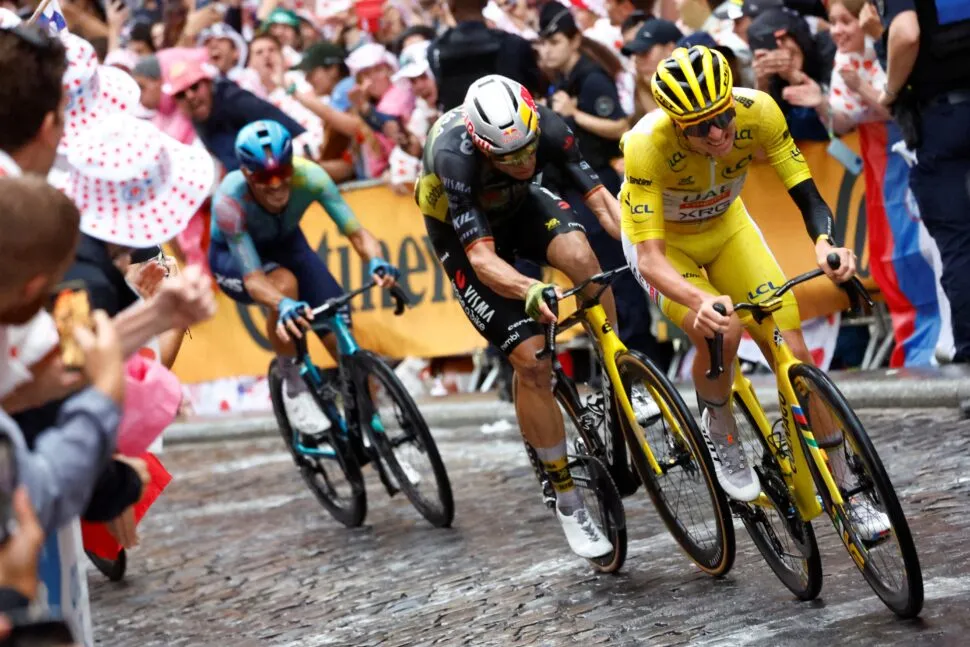
This year though, there’ll no Wout van Aert. Who will take up his mantle? Will Van der Poel stick around to try to repeat his great rival’s iconic 2025 win? There are only so many riders who could beat Pogačar on this parcours.
For more on the Tour de France, visit our hub page.