
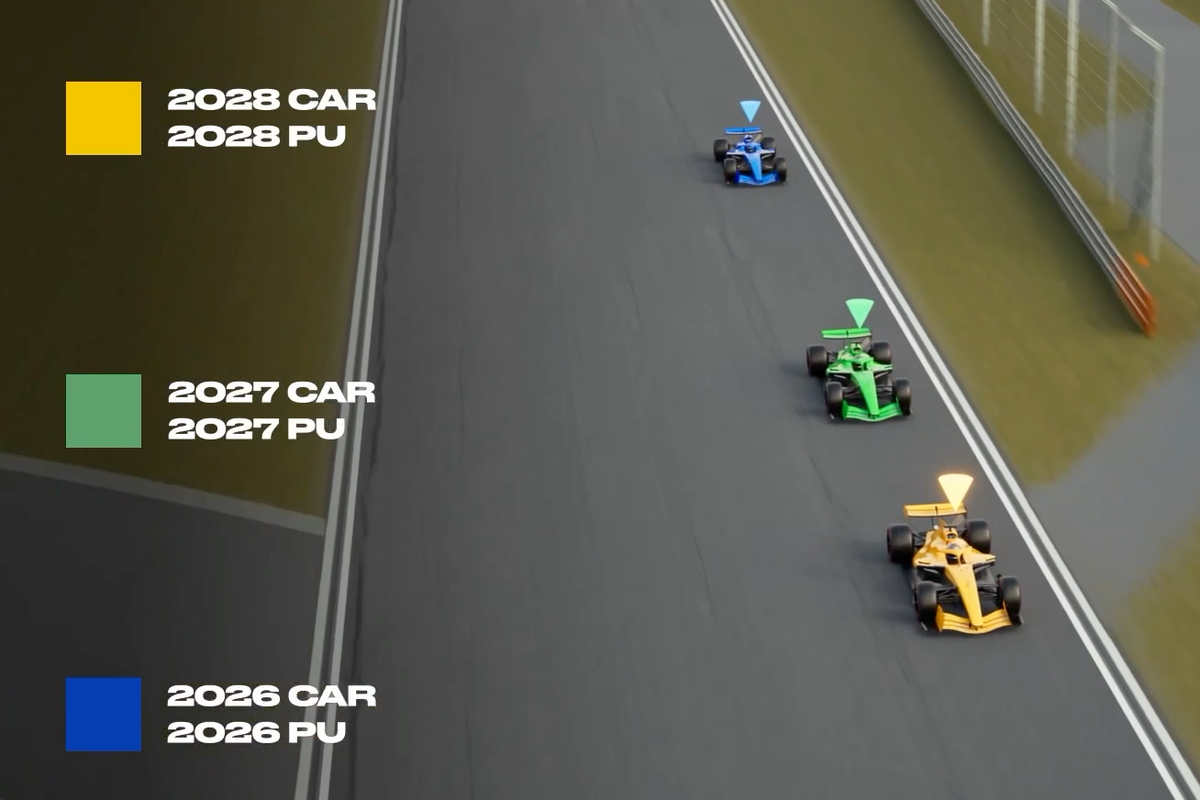
Formula 1’s roadmap for delivering cars that are not so energy-starved was agreed recently, with a two-stepped plan that runs into 2028.
With a push to allow cars to run more flat-out in qualifying, and have a better speed profile down the straights, team simulation data obtained by The Race has given us some first clues about the impact these changes are expected to have out on track.
The quick summary is simple: by the time we get to 2028, the cars will be faster down the straights, maintain their top speed for longer and deliver significantly better laptimes.
And, while downforce levels and tyre performance cannot be predicted accurately at this point, as they could be slashed back over time for safety reasons, this early data based on likely progress from the current ruleset shows us that, untamed, the new power units could be enough to start beating lap records again.
The plan for change
The improvements are the result of moving the current turbo hybrids away from the nominal 50/50 split between the internal combustion engine and battery power (in reality this split is 53/47), to a 58/42 step next year and then a final 60/40 balance in 2028.
This will be achieved through a combination of increasing fuel flow – 5% next year up to 13% in 2028 – as well as reducing the maximum battery power from 350kW to 300kW.
Further assistance will come through an increase in the maximum allowance for harvesting, up from 350kW this year to 375kW in 2027 and then 400kW a year later, with battery capacity jumping up from 4MJ this year to 4.5MJ in 2027 and 5MJ in 2028.
The hope in the F1 paddock is that all these elements added together will result in cars that do not demand extreme energy harvesting techniques, so the drivers can be more flat-out and the cars more natural to drive.
While nobody in the F1 paddock is suggesting the changes will transform the power units and make them the best ever, and this will not stop the push for a V8 comeback, there is consensus there will be an improvement.
As four-time world champion Max Verstappen – arguably the most vocal critic of the 2026 ruleset – said: “I would have hoped that next year would have been already what we get in ’28.
“But I also, of course, understand that there is sometimes politics involved for that.
“At least the changes that they are making are heading in the right direction, so I guess that’s a good thing.”
Overall faster cars
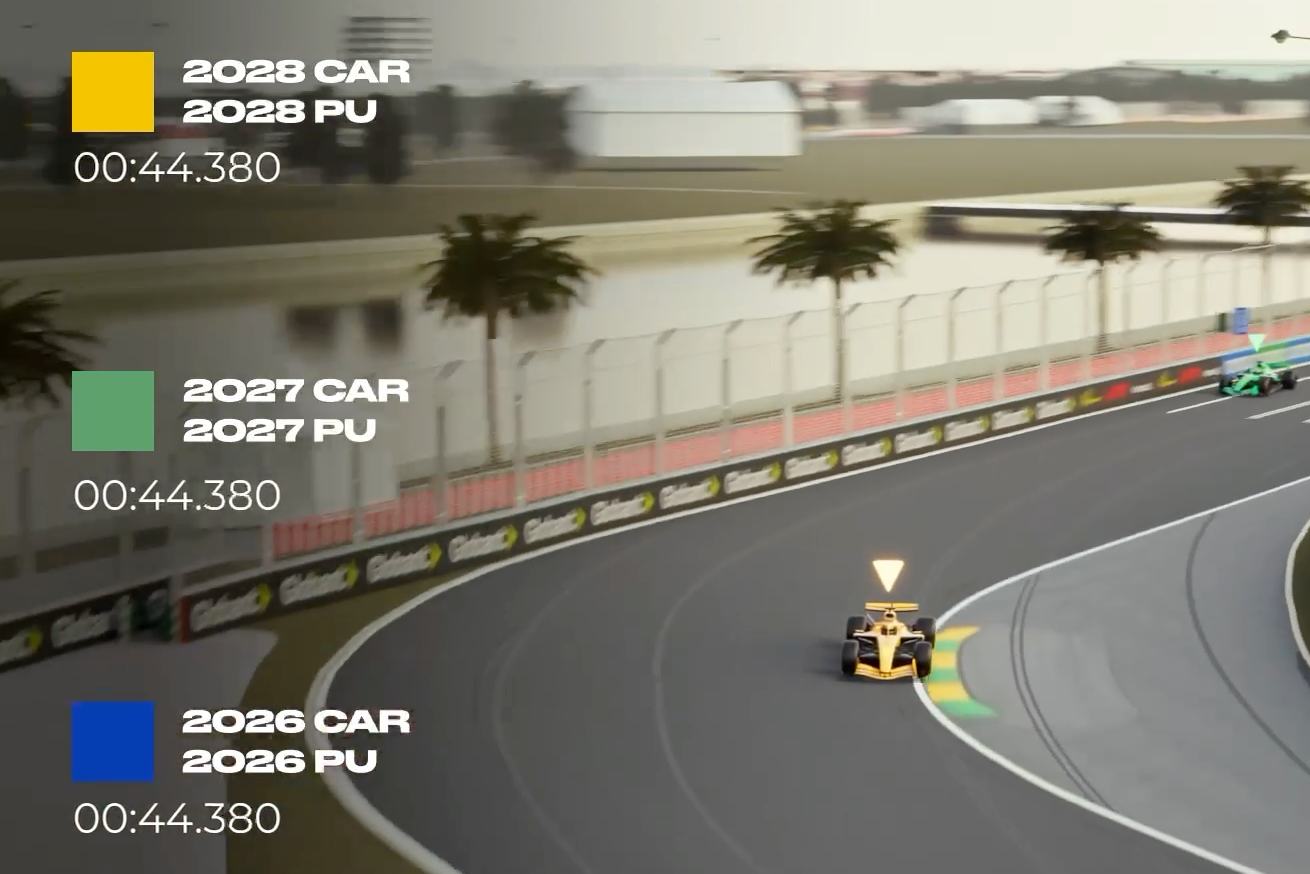
The discussions that culminated in the agreements laid out for 2027 and 2028 came off the back of some big research projects involving the teams, the FIA and F1.
It was clear that, having got things a bit wrong with the initial state of the regulations at the start of 2026, any further changes needed to be based on evidence that they would improve things.
The research included teams going away and doing some simulations themselves to work out the impact of the changes to power levels of the internal combustion engine and battery, as well as increased harvesting.
The Race has exclusively obtained some of this simulation data, which exposes a dramatic shift in performance levels expected over the next few years.
The data shows us a baseline prediction for how things could play out over the next few years, with the speed improvements in 2027 and 2028 coming from both overall aerodynamic gains as well as the power unit shifts.
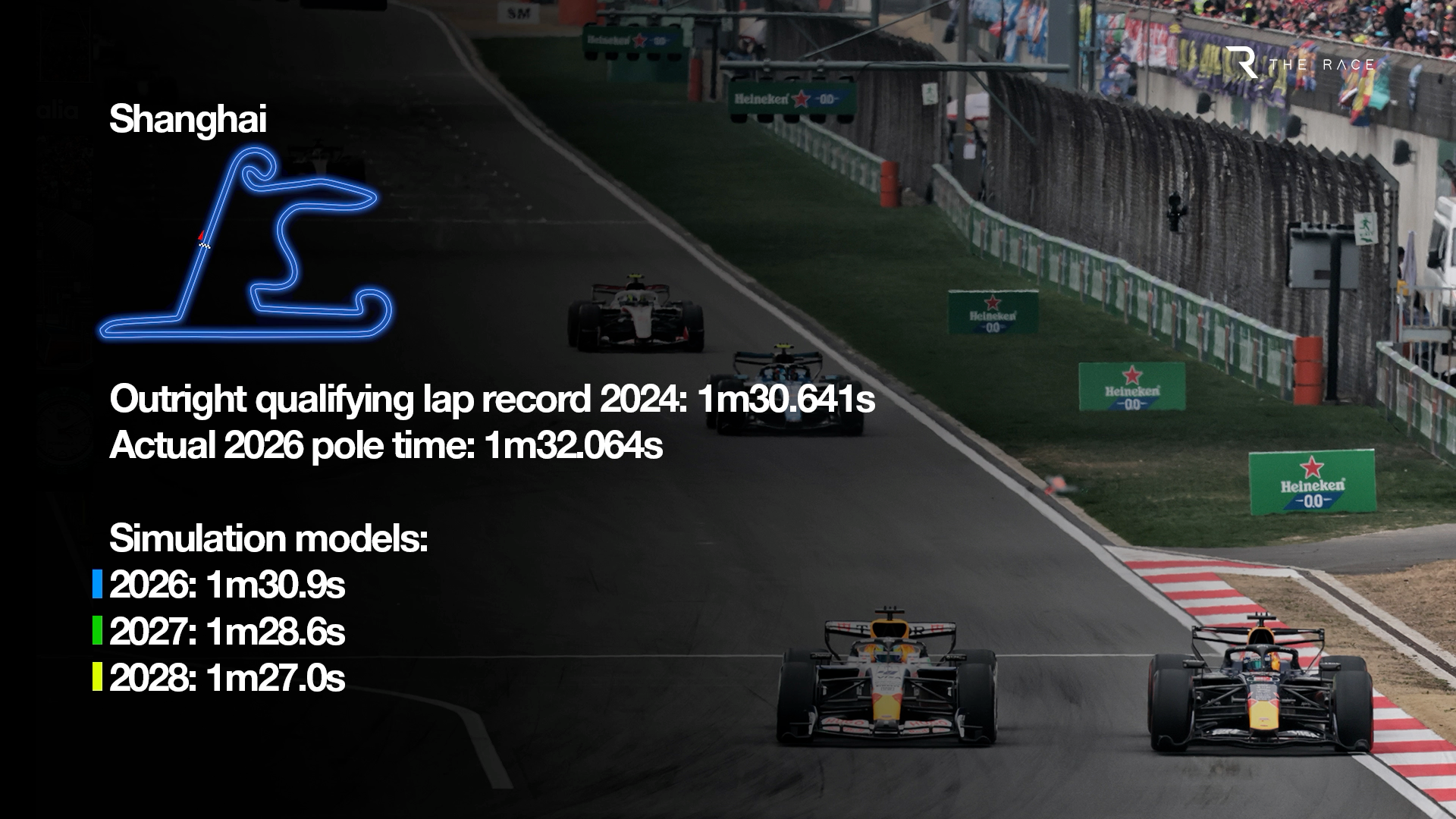
Using three different tracks at the extremes of energy usage – energy-starved Albert Park, mid-range Barcelona, and then energy-rich Shanghai – we get a picture of how the different simulations look.
Across the three tracks there appears to be a common trend of a notable step change for 2028 – of the cars being around three seconds per lap quicker than they are now, and up to four seconds faster at some.
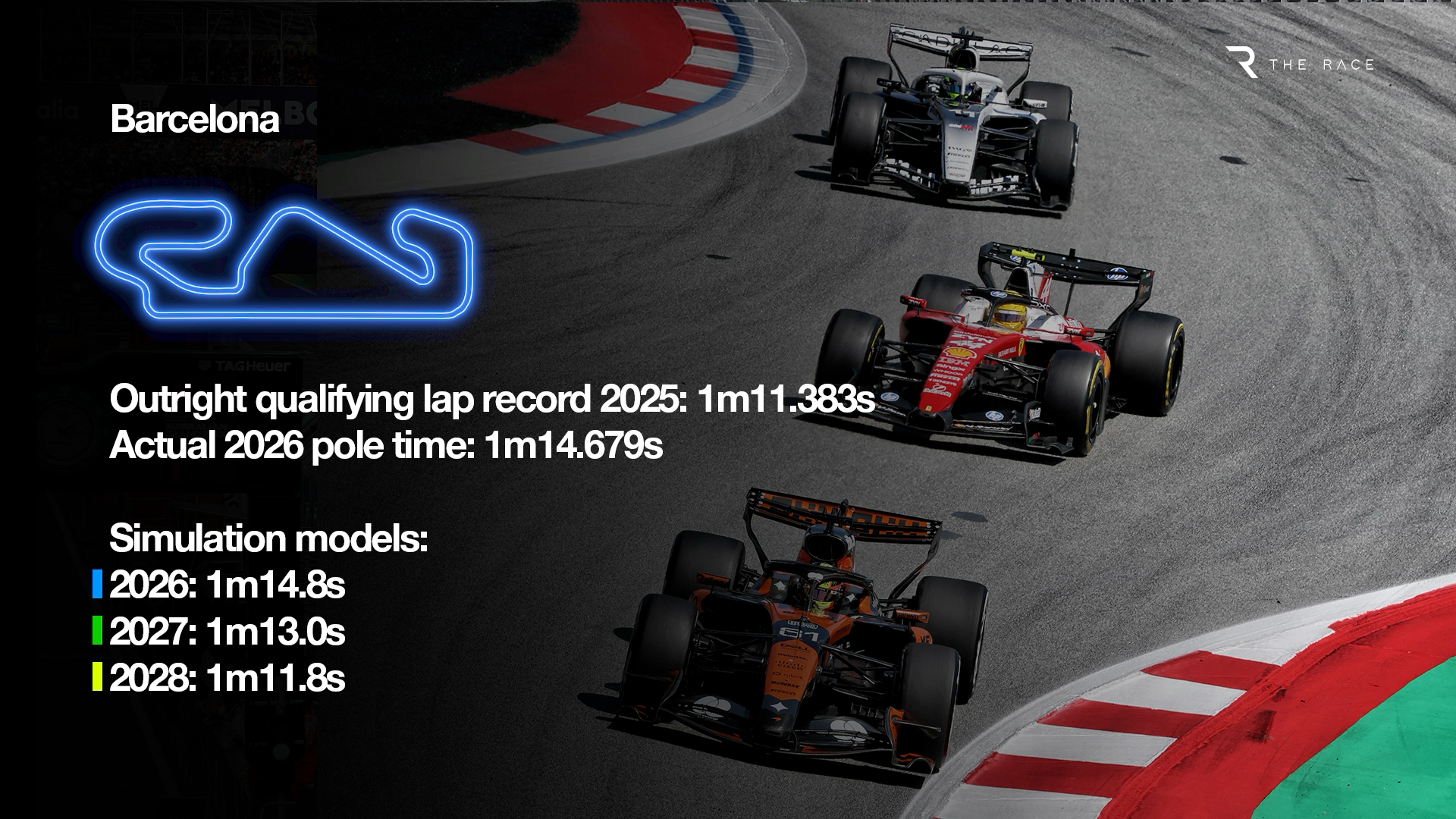
Next year’s halfway house regulations are set to deliver a simulated improvement of around two seconds per lap depending on track characteristics, thanks to power unit and downforce gains.
What is also interesting is that at some quite power-rich tracks such as Shanghai, if not held back by future intervention from the FIA in, for example, cutting back downforce levels if it feels these are advancing too fast, the 2028 cars could become the fastest ever around there.
The speed profile
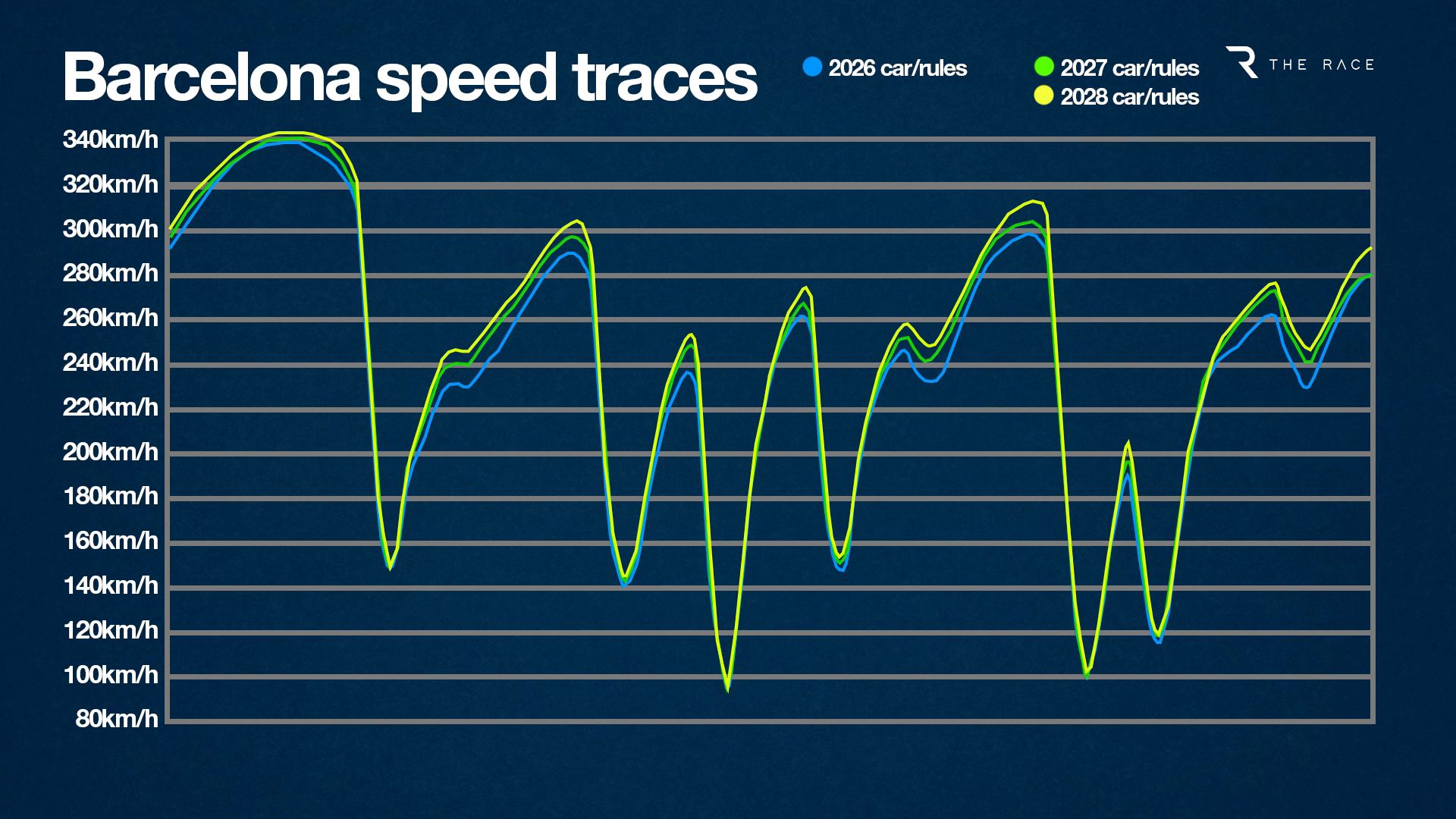
As well as stakeholders wanting the current cars to be flat-out in qualifying and more fun for drivers, one of the key areas of improvement was in terms of the speed profile down the straight.
The dramatic slowing down of cars at the end of long straights became something of a bugbear for drivers at the start of this year, with Lando Norris famously saying it “hurts your soul” when the battery runs out and the car engine note falls away as it loses acceleration.
While this element cannot be eradicated everywhere – Suzuka’s 130R will forever be a problem on this front because of the impact switching off straight mode has when cars enter that corner – the simulation data for new rules show things are much improved.
As can be seen in the speed traces above and below, the 2028 cars seem to be much better in terms of top speed, and they can maintain their acceleration for much longer down the straights.
One topic of discussion amid the rule change debate was that if the power units were not tweaked for next year then it was possible that likely increases in downforce would have resulted in cars suffering more on the straights.
A consequence of bigger downforce loads would have been that the cars were more draggy, so burning more energy being pushed through the air, and then harvesting less because speed reductions in corners would have been down.
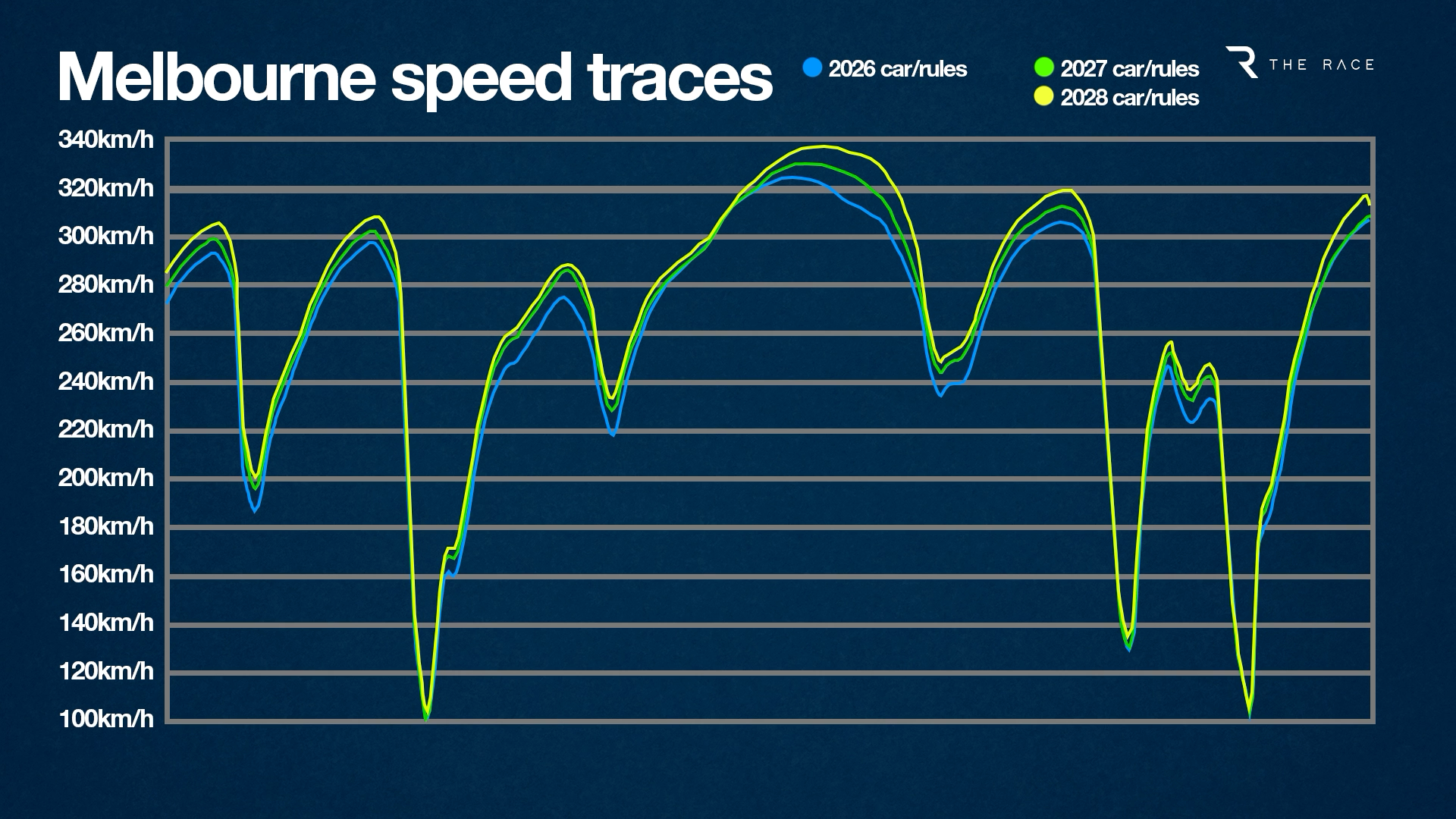
That would have meant that some corners that were not great this year – such as the run to Turn 11 in Melbourne – could perhaps have had even bigger speed drop-offs than in 2026 if things were not improved.
The 2028 rules package shows a clear step change on the run to Albert Park’s Turn 9, which was one of the areas where the original 2026 cars showed off their worst aspects earlier this year.
The overall conclusion is that while next year’s minor shift is not going to change the world, it is better than what we would have got if nothing had been done – and would have been even worse than now.
But F1 is going to have to wait until 2028 to see a solution in play that can get F1 back to a place where speed profiles are more normal and we are knocking on the door of lap records again.