
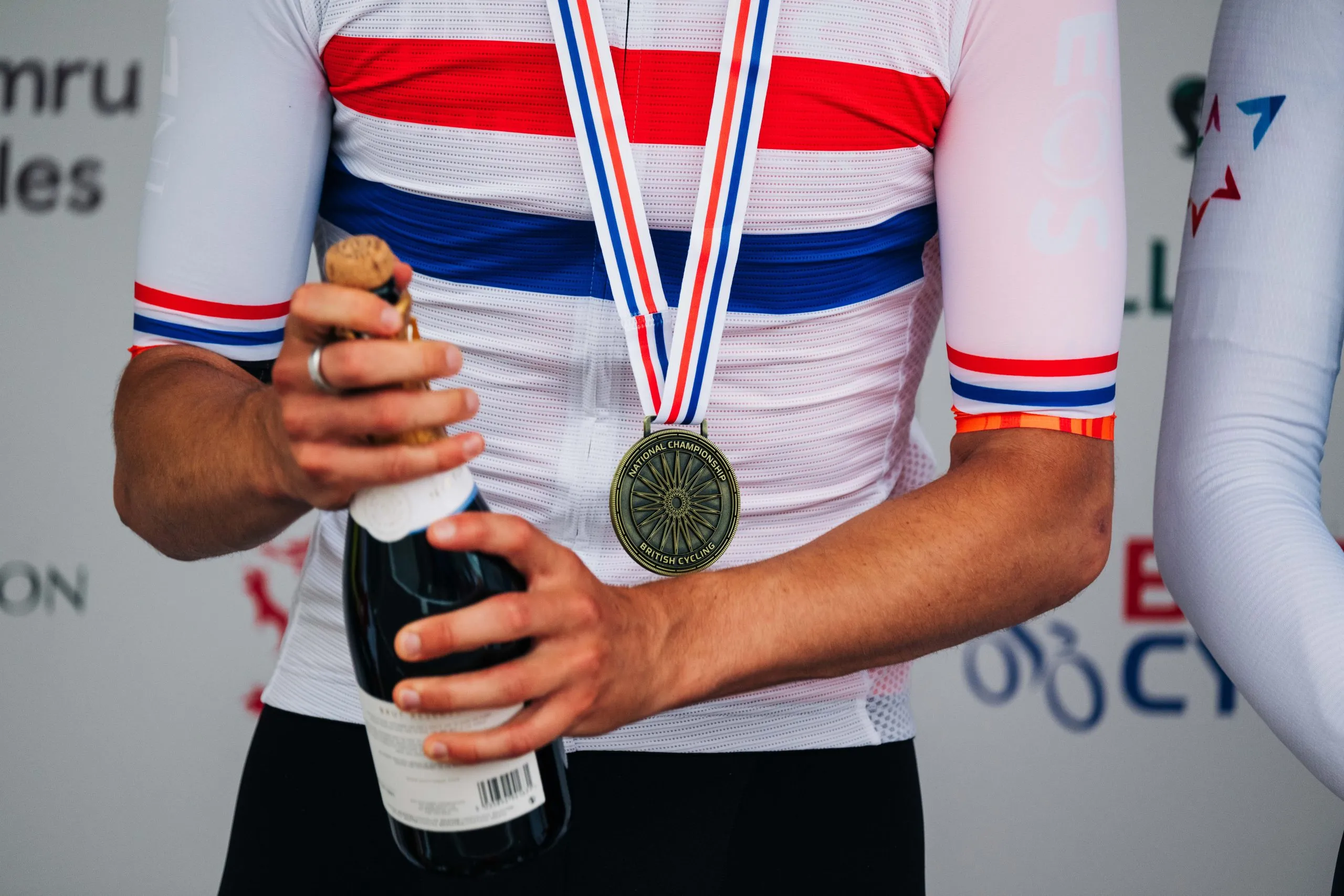
Exhausted, David Millar collapses onto his back as the podium presentation nears its conclusion. Photographers huddled towards the front of the stage capture a rare image of an elite sportsman at their most vulnerable – MIllar’s agony, and ecstasy, offering everyone a brief glimpse into his world.
However, this isn’t a scene from the infamous mountain stages of the Tour de France, or the most gruelling Classic raced over terrain barely fit for purpose. No, this is Abergavenny, with the quiet Monmouthshire market town the unlikely scene of one of MIllar’s biggest victories – the British National Road Race Championship almost two decades ago.
By 2007 MIllar’s career was already a storied one. Having taken a stage win and the yellow jersey in his first Tour de France in 2000, the Scot had experienced a rollercoaster of highs and lows, from becoming Time-Trial World Champion in 2003 to his infamous Biarritz arrest and subsequent ban a year later.
Despite his high profile as Britain’s standout professional of the time, the National Championships had continued to elude him, even at the height of his powers. A bronze medal from a three-up sprint behind John Tanner at the turn of the millennium was as close as he’d previously come.
The championships are one of cycling’s great levellers, where everyone at least starts as an equal with dreams of varying ambitions as they sign on in a local primary school or sports centre adapted into a makeshift race HQ.
Domestiques are unbound, team cars a luxury, and soigneurs are replaced by friends and family – the basic provisions offer a nostalgic return to the riders’ roots, the tactics on display closer to playground chaos than the chess on wheels seen in the upper echelons of the sport.
At the startline Millar was already a marked man, his distinctive yellow Saunier Duval-Prodir jersey no disadvantage given the eyes of the field were already fixed on him. And despite missing an early move, Millar made sure that attack would be his best form of defence, putting in a daring, almost unfathomable attack just over the halfway point of the 175km race alongside Dan Lloyd, now of GCN fame.
Two hours later, a strikingly ragged looking Millar proved the strongest as the pair reached the finish line, the Scot finding just enough energy to raise his arms and display a wide smile through an otherwise pained grimace. Broken, and emotional, he had achieved something many others before him had failed to do. His name now woven into the fabric of British cycling history.
Yet Millar was almost destined to have missed one of the greatest days of his career.
Always a rider ahead of his time, the time-trial specialist had originally planned to forgo the championships in favour of targeting that year’s Tour de France and its London prologue – the sport’s biggest event, and the circus that accompanies it, coming just a week after the National Championships’ traditional slot. It was only flooding in Beverley, that year’s original Nationals host, that forced the event to be cancelled and rescheduled until after the Tour, which allowed Millar to claim the jersey and with it some of the sport’s most memorable moments.
MIllar’s decision to focus on the Tour de France was considered unusual at the time, but it is one that has amplified in recent seasons. This year will again see a large number of the world’s best riders eschewing their respective National Championships in favour of arriving in Barcelona in top condition, with a good performance in the Tour worth its weight in gold for the sponsors as the only race to resonate with the public outside of cycling’s dedicated fans.
The knock-on effect of that shift in attitude leaves the lingering question: are the National Championships losing their prestige?
No stars in stripes
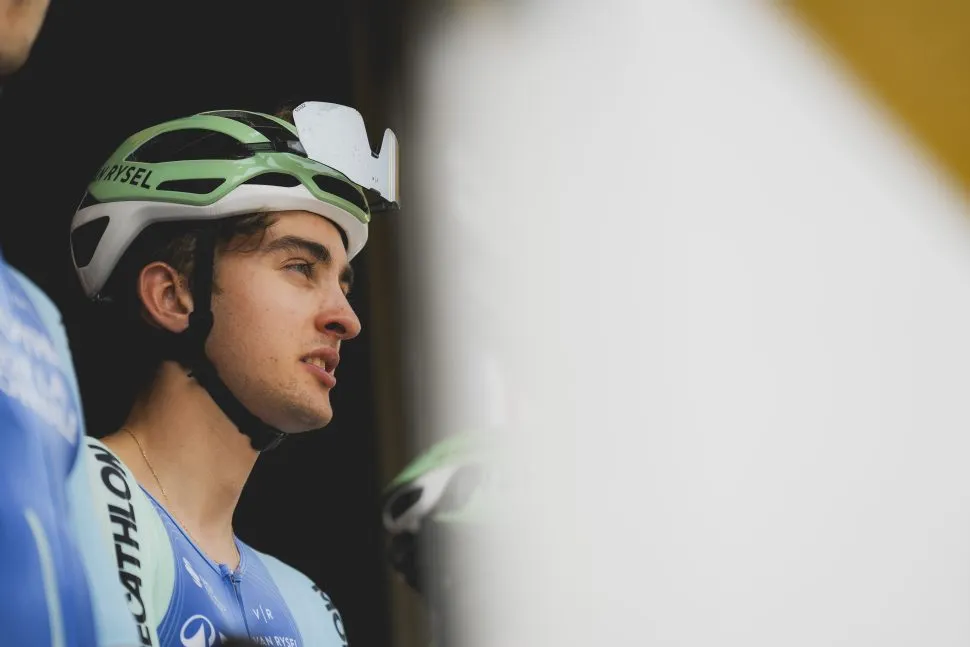
‘It was Team Sky, they kind of started it all with the Tour de France and not all riding the National Champs; Dave Brailsford not wanting any of his riders to ride and crash when the Tour de France was coming up,’ says Brian Smith, the two-time National Champion turned commentator.
‘I think everybody should hold it in high regard, because it’s important that we have our best rider in that jersey,’ says Smith, who has dedicated a whole chapter to the championships in his upcoming autobiography.
‘I became fixated with it,’ he admits, citing near misses in the junior ranks where he finished second to his good friend, the late Dave Rayner, and in the amateur championships in Dudley where, as the strongest rider, he admits the occasion got to him, but fuelled the fire, and he turned professional in 1991 with Banana-Falcon.
‘I wanted to try and wear the jersey at some point, especially because very few Scottish riders had managed to do that,’ he says. ‘So in 1991 I went to the championships around Newport, and throughout the race I was just following and doing as I was told, thinking that we were the strongest team, but I didn’t think that I would have any chance of winning.
‘I got myself in a winning position and it was my first pro title, first pro win, and I was a bit dazed and stunned by it. It’s one of these moments where you kind of look down at your jersey, pull it on, and it feels so special.’
It is a feeling that the likes of Tom Pidcock, who has never taken to the start of the road race as a professional rider, or Adam Yates, may never experience, and the pair join Jake Stewart as Tour-bound riders on the sidelines this year. The international picture is strikingly similar too.
Prodigious talent Lenny Martinez will sit out the French Championships, as will Clèment Champoussin and veteran Julian Alaphilippe, who after making the ‘heartbreaking’ decision to miss the championships 12 months ago is again passing up the opportunity to race for the famous Tricolore jersey. Elsewhere the likes of Jonas Vingegaard and Tadej Pogačar, as well as many of their teammates, are only notable by their absence with the radar pointed firmly towards the first week of July. And even Remco Evenepoel and Tim Wellens are set to skip the Belgian Championships, despite governing body Belgian Cycling mandating participation and threatening a nine-day ban for non-attendance without just reason, which, if successfully enforced, would rule them out of the Tour altogether.
It is perhaps a natural shift in a sport increasingly governed by science over passion – the professionalism of riders now such that every moment of their season is virtually planned down to the hour. Team managers such as Marc Madiot, the staunch traditionalist who stepped down from his position with Groupama-FDJ United this year, are being replaced with coaches from outside the sport, whose insight and innovation in training and preparation has helped to take performances to a new level, but it comes at the cost of certain traditions.
It is a direction of travel replicated in the sport’s stakeholders; worldwide companies and nation states have overtaken local sponsors lending their backing to teams, making the financial arms race among the sport’s biggest players greater than ever before as budgets now push towards €100 million per year. Naturally, a return on such investment is expected, and the sport’s biggest shop window, the Tour de France, is the season’s main target and must be prioritised over championship races with limited coverage in a very localised market.
With these changes to the sport only accelerating, it is not unthinkable that the next generation of talent could never grace their respective championships. Decathlon CMA CGM, the newest player to grace the ‘superteam’ moniker, may have been spared the difficult decision of whether to send Paul Seixas to the French Championships by his crash in the Tour Auvergne-Rhône-Alpes, but it is now entirely possible the 19-year-old has ridden his final nationals and will never grace the jersey like the legends of French cycling before him given its proximity to the Tour and the pressure on his shoulders.
The long term prognosis of such a shift is concerning. The next generation of riders may never come to value the National Championships in the way that they were just a few years ago. Brian Smith himself noted that even he only realised exactly what the blue and red bands meant to him after narrowly losing out on defending his title to Sean Yates in 1992 after the pair set out on an epic 130km break in his native Scotland.
‘Sean wasn’t faster, he was just stronger in the end,’ Smith says, recalling the moment he stood on the podium, surrounded by his family, with the silver medal. ‘That’s when it kind of dawned on me that the year and the jersey meant so much to me.’
Is there a solution?
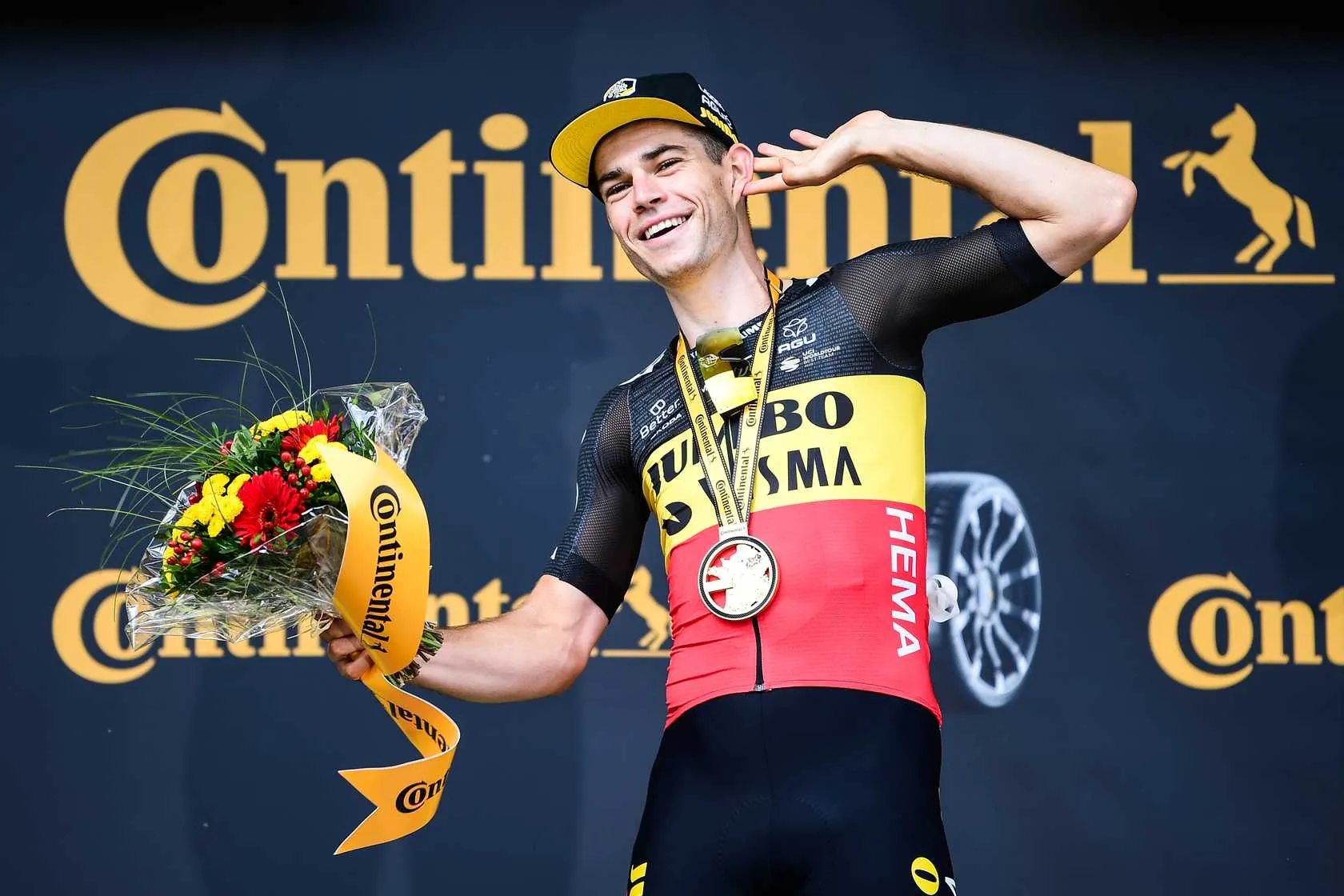
What can be done to protect the prestige, and ultimately the integrity of the National Championships? A move of date would be a natural choice with championships of yesteryear occasionally held in an August pre-World Championship slot. However, as the sport continues to grow such options are incredibly limited – the European calendar is essentially full from March through to October.
In the Covid-affected season of 2021 the British Championships were moved to October, the curtain falling on the season once Ben Swift crossed the line to retain his title in a rain soaked Lincoln. However, the autumnal vibes continued past the weather with many riders choosing not to extend their already lengthy seasons for the race.
Yet, despite those two potential big absences this year, the Belgian Nationals set the benchmark.
‘There’s an agreement that if you’re fit, you ride the national championships,’ explains Smith, who’s in no doubt that the system should be widespread. ‘It should be compulsory, and the best rider in Britain should wear that jersey.’
With the start list for Sunday’s race in Aberystwyth already dwindling since British Cycling sent out its provisional lineup a week ago, the question is: can the National Champion call themself the best rider in Britain?
For our full preview of this year’s British Nationals click here.