
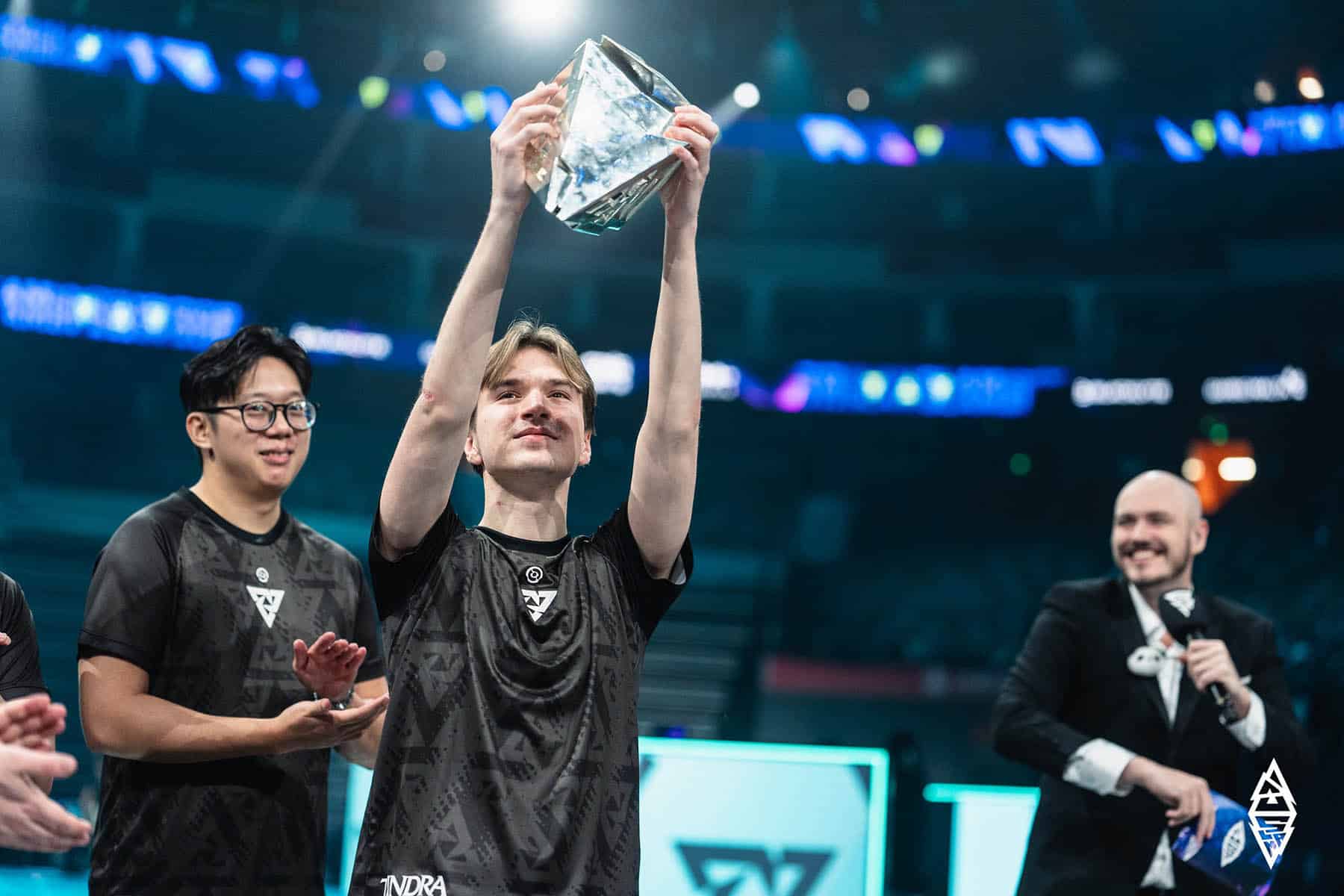
Tundra Esports exiting Dota 2 this year was definitely not on our bingo cards. The roster has already won four trophies this season and remains a solid top-five team in the world, but Tundra still decided to sell its roster to 1win Team before the Esports World Cup and The International.
Naturally, this move sparked plenty of discussion within the Dota 2 community, leaving us with many questions surrounding player salaries, tournament prize pools, and more. Well, rather than speculating ourselves, let’s just hear directly from the man behind the decision.
Esports Insider was provided a full English-language interview with Tundra Esports founder Maxim Demin. Here, he discussed the reasons behind his big decision, the state of the esports ecosystem, and what comes next.
Tundra Esports Leaves Dota 2 Despite Success
There aren’t that many organizations that can call themselves “legendary” in the Dota 2 space, but I’d argue Tundra Esports has definitely become one of them.
The London-based org entered the scene in early 2021, picking up a promising stack called mudgolems, which featured the likes of 33, skiter, and Nine. Five years later, the org bagged an Aegis and accumulated $14.8 million in tournament winnings.
Tundra has consistently been a Tier 1 team throughout the campaign and was even the most successful team this season if we’re counting trophies won. And despite all of this consistency and results, the org still pulled the plug and sold the roster to 1win.
Of course, the timing of when he sold the roster could leave your head scratching. The team qualified for two of the biggest events of the season – the Esports World Cup and The International.
So, if you’re wondering why Maxim didn’t see it through, here are the three reasons he stated:
- “The regulatory environment around betting companies became much stricter, which had a direct impact on the ecosystem and some of the support structures that had helped organizations operate at the highest level.”
- “Maintaining a top-tier Dota 2 roster has become increasingly expensive. In previous years, larger prize pools helped justify those costs, but the economics of the game have changed significantly.”
- “The third reason was the roster itself. We had built an exceptional team that had achieved outstanding results and established itself among the best in the world. From both a business and personal perspective, selling one of the top rosters in Dota 2 was a reflection of how far the organization had come.”
He couldn’t share the exact details behind the deal, but he explained that it ended up being a win-win situation for all parties involved:
“Esports has never been purely about profit for me; it’s always been driven by passion and the ambition to build something successful.
“Most importantly, the deal allowed the roster to stay together and continue competing under a new organization. For the players, that provided stability, and for the fans, it meant they could continue supporting the same team they had followed throughout their journey.”
Maxim clarified he wasn’t “abandoning” the players. He put continuity and stability above all else. He made sure we can still watch 33 and his boys compete at the highest level, though they were forced to wear ski-masks on 1win’s roster teaser for some god-awful reason.
The Problem With Modern Dota 2 Economics
Though Maxim concluded that the roster sale ended on a positive note, he also touched on how running a Dota 2 team – especially a Tier 1 one like Tundra – has become increasingly difficult.
“Over the years, we’ve seen more money enter the scene through sponsorships, increased viewership, and the arrival of well-funded organizations, particularly those backed by betting companies. That has naturally pushed both salaries and buyout fees significantly higher.
I do believe the market is quite inflated today. For organizations without strong commercial backing, it has become increasingly difficult to compete financially.”
On top of higher salaries, orgs are also paying for bootcamp expenses. You also have to keep in mind that players are pocketing most of the money from tournament prize pools: “In addition to salaries, players also received the majority of prize winnings, with the organization typically retaining around 10-20%, depending on the agreement.”
The thing is – they were mainly talking about players who would place low in top-tier events or fail to qualify at all. The Tundra guys are literally title winners, so you can imagine how much higher their salaries could be.

So, this insight should paint a picture on how expensive Dota 2 teams can be – especially Tier 1 squads. And according to Maxim, Tier 2 teams have an even tougher time floating around in the scene.
A Game in Transition
Maxim then shared his thoughts on his first experience with Dota 2 during the pandemic. Like many investors eyeing the game at the time, he admitted that the $20 million+ prize pools at The International were definitely one of the factors that pulled him in.
“One of the major attractions was The International and its enormous prize pool. That was definitely a factor in our decision, as it created opportunities that simply didn’t exist in most other esports titles,” he said.
Then, he also pointed out that Dota 2 had a lower barrier to entry compared to franchised titles like League of Legends, where you need to buy a franchise slot. For reference, these slots have historically sold for eight figures.
The game also entered the Dota Pro Circuit (DPC) era for a little bit. Maxim thinks it gave the scene some structure, but wasn’t a fan of how it was operated. To be completely fair, his concerns made total sense.
In the DPC, you would have teams spend three to four weeks in a bootcamp, only to play one official match per week. You don’t need to be a business major to realize that it was simply too inefficient and expensive.
But today, despite TI’s prize pools falling off a cliff, we have third-party organizers like BLAST, PGL, and ESL pitching in several tournaments per year. Maxim actually likes the move from a business perspective:
“Today, I think the ecosystem is more efficient, with more frequent tournaments and strong prize pools throughout the year. From a business perspective, that creates more opportunities for teams and sponsors.”
But still, just because Maxim sees the new ecosystem as a net positive doesn’t mean orgs are financially stable. Orgs still have limited revenue streams beyond sponsorships and are left searching for ways to keep the lights on. And for most orgs, that search leads to one place.
We see betting sponsors plastered onto esports jerseys all the time, unless you’re a rare case like Team Falcons. I mean, three of the top five teams in Dota 2 right now are directly owned by betting sites. Looking at how the scene is developing, it looks like betting sponsors are here to stay.
So, what happens if you don’t have a betting site as your partner? Well, Maxim was pretty clear on that:
“I think it’s extremely difficult to compete at the highest level today without major commercial partners, particularly betting partners in Dota 2. Considering the player salaries and buyout fees have increased significantly, prize money alone is no longer enough to support a top-tier organization.”
The problem is, esports orgs don’t have many other ways to make money. You sell jerseys? That’s cool. Are any gamers going to buy them? Probably not – we don’t go outside.
In traditional sports, there are media rights deals which can generate you some serious bag, but esports just doesn’t have that: “Esports still lacks revenue streams such as media rights that traditional sports benefit from. As a result, sponsorships remain the primary source of income for most organizations, which makes profitability challenging and relatively rare across the industry.”
Valve has tried toning down betting sponsorships in Dota 2 in the past. For example, teams like PARIVISION and BetBoom Team – which are directly owned by betting companies – are not allowed to play at The International under their respective team names. That’s why they’ll play under TEAM VISION and BoomBoys.
Of course, teams shoving gambling on our faces is not a great look. But, teams like Tundra are already struggling to keep their rosters afloat. In the interview, Maxim even said that Winline – the org’s long-term partner – was an important factor in their operations.
The sponsors that both a) have enough money and b) are willing to invest in Dota 2 teams have historically been these betting companies.
And if we go back to Maxim’s first reason for leaving Dota 2, he pointed to the changing regulatory environment around betting companies. So, if the scene continues moving away from betting sponsors, who’s going to replace that money?
With this in mind, it begs the question – are there any other games doing this better?
Comparison to Counter-Strike’s Sticker Revenue Model
In the interview, Maxim also compared Dota 2 to its sister title – Counter-Strike 2:
“The viewership is larger, the player base is bigger, and revenue streams such as Major sticker sales create significant value for organizations. From a purely business perspective, it’s generally easier to monetize and attract brands in Counter-Strike.”
In Counter-Strike, you have two Majors per year – they’re like half of a TI each. Qualified teams and players get their own little stickers and autographs in the game, and a large portion of the revenue Valve receives is shared with participating teams and players.
Teams have historically received millions of dollars for just participating at the event – even if they finish dead last. So, qualifying for just one of these Majors per year can already keep your roster running for a few months, giving orgs an additional income stream. And if you’re a top 15 team in the world, you should be able to qualify for both Majors every year.
So, why didn’t Tundra just enter CS2 if the grass is much greener? Well, Maxim said it wasn’t that simple – at least back in 2021 when he was making the decision. In that era, there were lots of franchised leagues where you had to pay big bucks for buy-ins to play in those tournaments. He just felt like it wasn’t the right move.
He explained: “Our philosophy was always to build a championship-caliber team rather than simply enter a title for the sake of it. In Dota 2, we saw a stronger opportunity to acquire a top roster and compete for titles immediately. In Counter-Strike, we never found an opportunity that met that standard.”
Looking back, Maxim did mention that many of those franchised leagues were eventually abolished, meaning he may have dodged a bullet.
What’s Next for Tundra Esports
Even though this chapter of Tundra Esports comes to a close, Maxim doesn’t see this as the end of its story. Tundra has already made an official announcement that they’d transition into a media platform instead.
“We felt that staying connected to Dota 2 and the wider esports scene was a natural thing to do. The content will continue to be managed by the same team that previously handled our social channels, albeit on a smaller scale.”

So, I know some of you have been asking… But judging by Maxim’s words, the Tundra social media guy is most likely going to continue uploading those fire edits.
But for now, Maxim will be sitting on the sidelines and has hinted at a possible return. He’s focused on other projects and taking some time to reflect on everything – both Tundra’s successes and mistakes.
“Esports is going through a period of change, and there is still a lot of uncertainty across the industry. That said, I wouldn’t rule out returning in the future,” Maxim said.
So, if such a successful org like Tundra can’t make the current model work, what does that mean for everyone else? Is it time for Gaben’s divine intervention?