
Published June 27, 2026 05:21PM
Hundreds of heatwave-related deaths in Europe in recent days have led to serious concerns over potential health risks at the Tour de France, with some advocating significant changes in how the race is held.
Pascal Chanteur is one of those speaking out, with the president of France’s National Union of Professional Cyclists (UNCP) warning of the danger for the national championships and also the Tour itself.
“The riders, they want to race, but the riders, they also want to preserve their health,” the former pro told l’Equipe. “Health is a big part of it. We talk about it all the time and we should not just talk about it. It is also necessary to take action, to plan ahead and not be systematically just reacting, and that the rider is the adjustment variable. We are here to practice our profession in the best conditions.
“At some point, I ask that we get around a table and work, that we plan ahead. Instead of having starts as we do today, we should have starts at 9am, to have finishes at 14h30. Television [the cameras] will be there, because at 14h30, there are people in front of the TV. I’m sure it’s common sense to do that.”
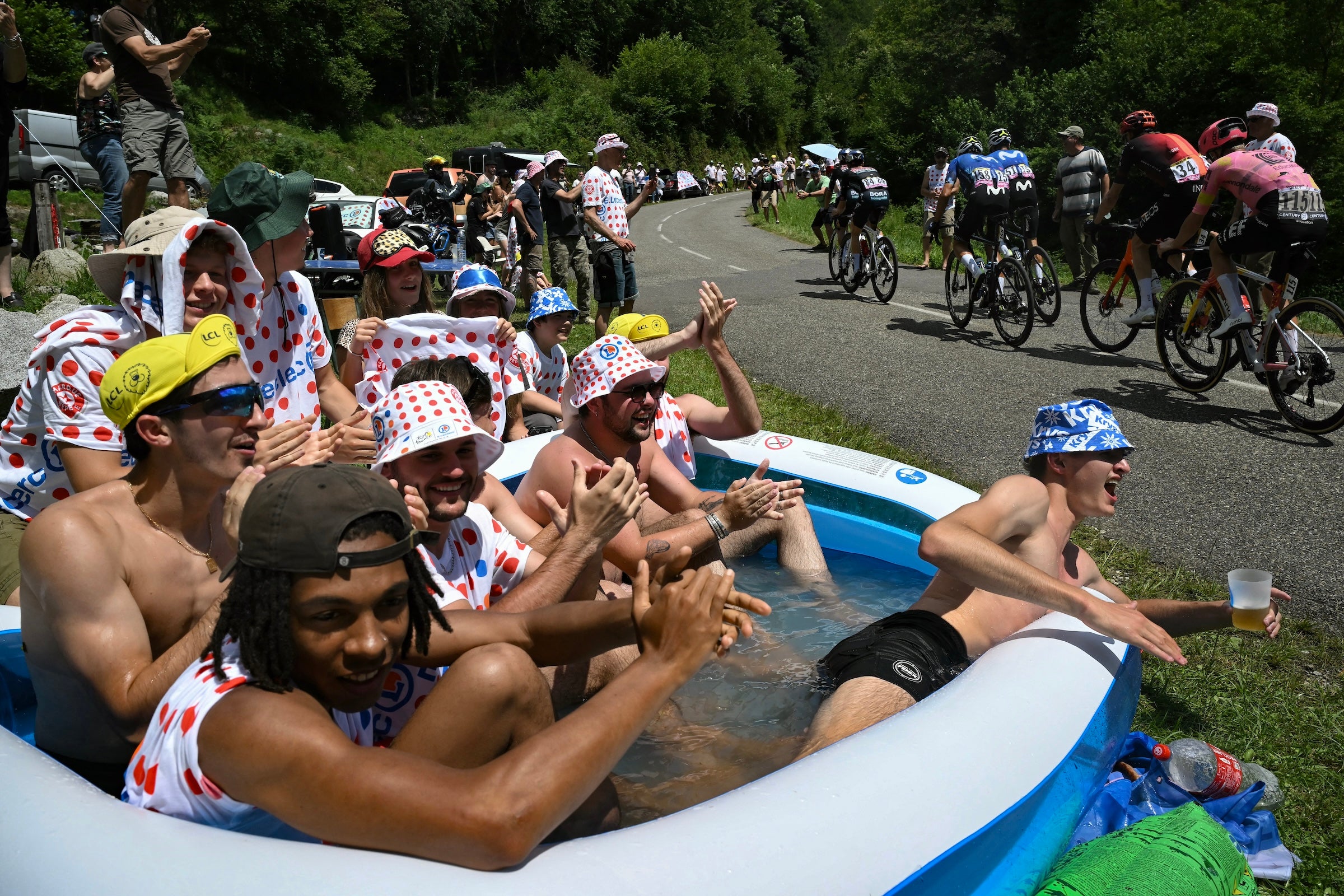
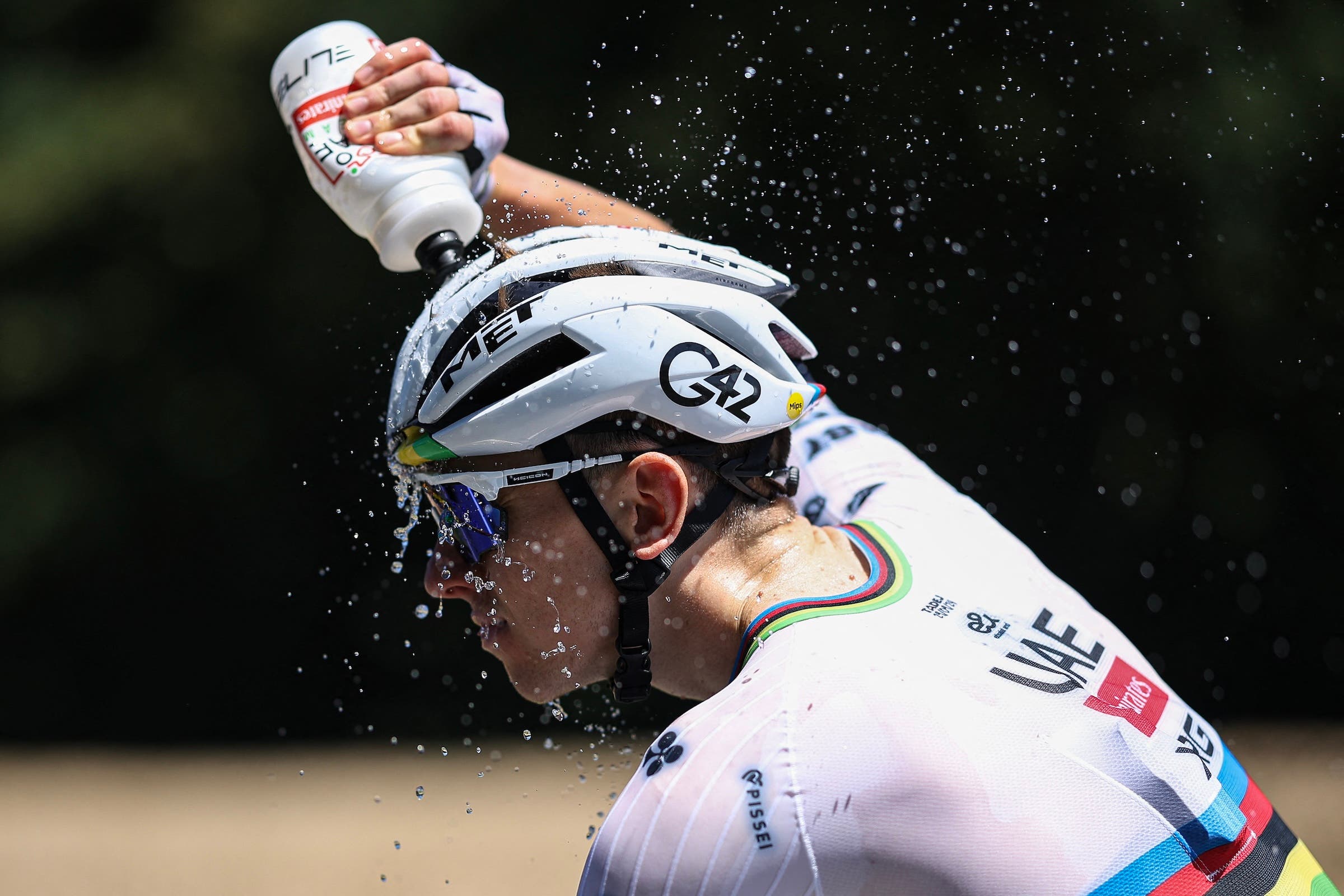
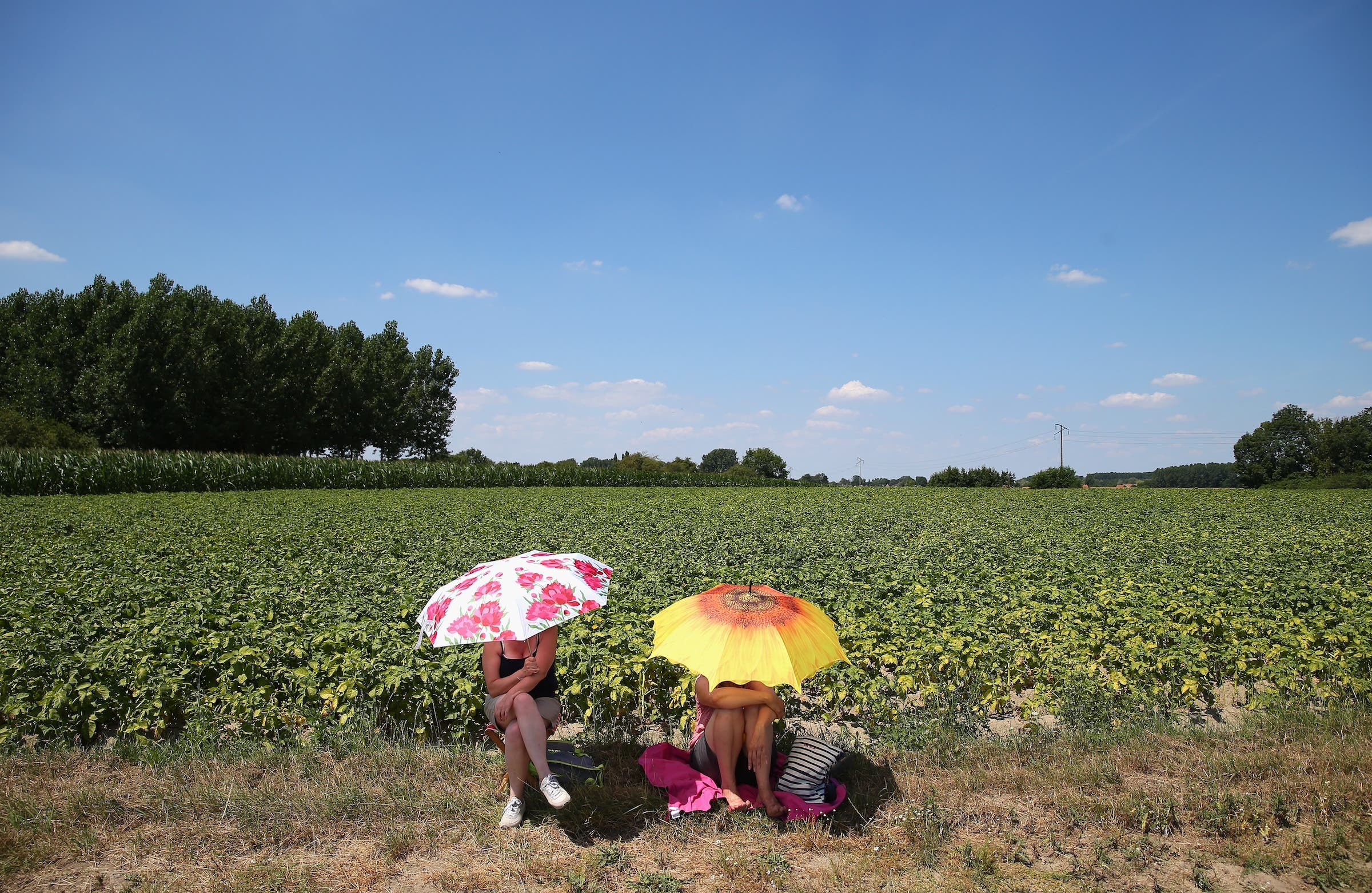
Temperatures have been extreme across Europe in recent days, with France experiencing its hottest day ever on Tuesday and one region of the country hitting a staggering 44.3 degrees Celsius.
Emergency services recorded 109 heat-related deaths in 24 hours, although this number related just to those who succumbed at their homes or in public places. The figure did not include those who died in hospitals.
The figure was many multiples of the usual average of seven heat-related deaths.
‘The Tour is even worse’
Chanteur has serious concerns about the risks to cyclists, particularly due to the effects of climate change.
“We would preserve the health of the riders,” he said of his proposed changes to race schedules. “The riders would perform their profession in good conditions and everyone would be happy. Why, us cyclists, would we have to race under 45 ° C? It is not possible
“In other sports, when the weather conditions are difficult, the players stay two hours in the locker room waiting…”
An example of the dangers was seen one week ago when, on the final stage of the Tour de Suisse Women, Elisa Longo Borghini cracked and lost almost ten minutes.
She revealed on social media on Monday that she had suffered heat stroke. “It was a real struggle to get to the finish line yesterday and I barely remember the final climb.”
Unsurprisingly, Chanteur has worries about this weekend’s French national championships, suggesting that there should be feeding areas every five kilometers, presumably to hand up water. He also suggested races could be shortened slightly.
However he has even more concerns about July’s big event.
“The Tour de France is even worse. You repeat the efforts over 21 days,” he stated. “Imagine that we have just experienced this for 6 days. And we’re being told that there could be a second period of a big heat wave.
“So now is the time, today, and I say it solemnly, to get around a table and find solutions together.”
A clear, worrying pattern has been revealed
Chanteur’s arguments are certainly emotive yet they are also echoed by recognized experts.
Le Parisien also wrote about the subject in recent days, referring to a study published earlier this year in the journal Scientific Reports.
Conducted by experts in France, Britain and Spain, the study assessing the levels of risk of heat stress which Tour de France riders had been exposed to at different locations and on different dates between 1974 and 2023.
The findings were clear that heat stress has risen steadily in that time, with the greatest number of extreme episodes occurring in the past decade.
Institut National de Recherche pour le Développement Durable (IRD) researcher Ivana Cvijanovic gave a clear warning.
“With the increasing frequency of record heat waves, it’s only a matter of time before the Tour faces a day of extreme heat that will test existing safety protocols,” she said.
That’s a big concern.
What are the options?
The authors of the study said that protecting the health of riders and the public required a revaluation of the conditions which trigger safety protocols.
However IRD climatologist Benjamin Sultan goes even further. The study’s co-author noted that the Tour’s timing of mid-afternoon racing in summertime is likely for media and economic reasons, but argues for a rethink.
“From a climatic point of view, it seems clear to me that advancing it in the morning or even in the spring would be the best option to reduce the risks incurred by cyclists, the staff of the event and the spectators,” he stated.
For now at least Tour race director Christian Prudhomme isn’t speaking about daily time shifts or date changes, but rather more subtle tweaks.
Asked how the Tour would tackle the danger, he said it would do so via ASO’s “way of designing certain routes. The climb of the Haag, which is among the novelties of 2026, is entirely under trees.
“Five or six years ago, when you imagined a race route, you thought it had to be exposed for television coverage and for the public,” he told Le Dauphiné.
“Today, in the contrary, we seek, when possible, ascents in the undergrowth.
“But obviously, places like the Galibier or the Tourmalet will never be removed from the Tour de France.”
He may say that, but any serious heat-related incident on such slopes could take the decision out of ASO’s hands.
June was record-breaking in France. July could be even warmer. If so expect some real disruption in the weeks ahead.