
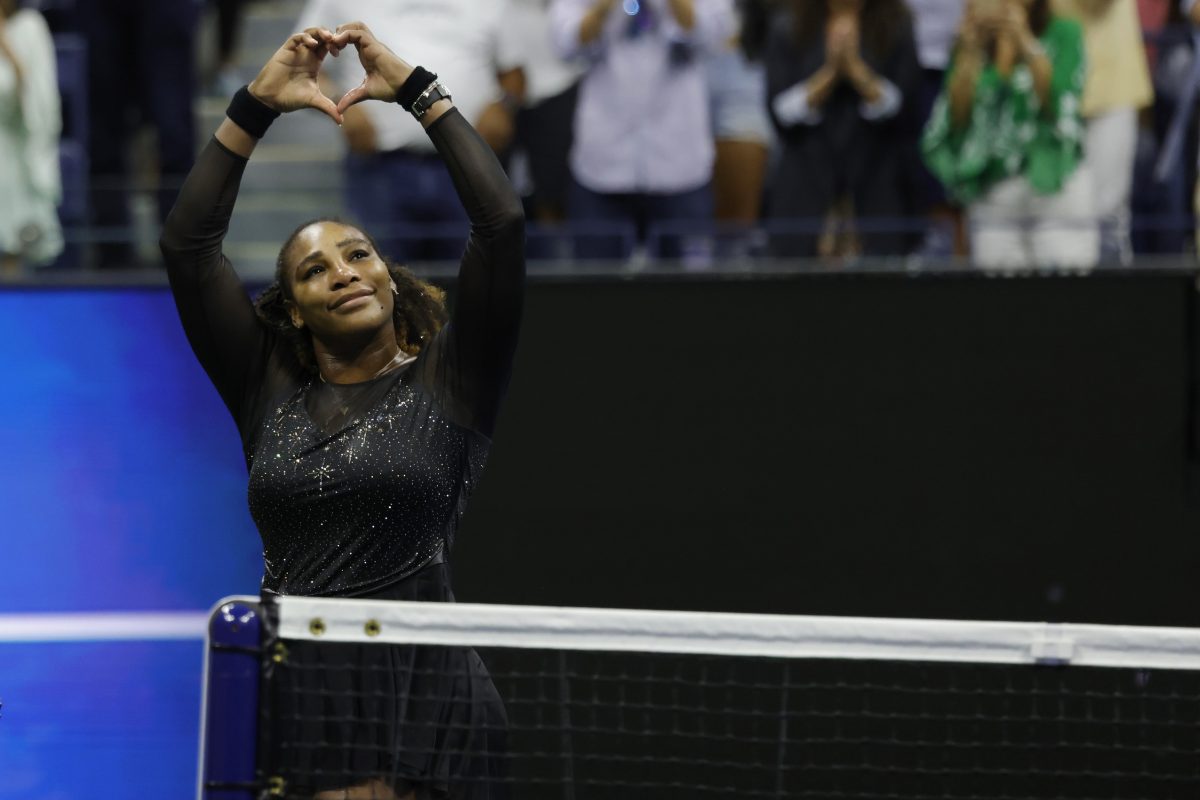
As Serena Williams gears up for her Wimbledon comeback, nearly four years after her last competitive appearance as a singles player at the 2022 US Open, opinion in the tennis world is divided as to what she might be able to achieve: a few wins; a deep run; or even an attempt at winning her eighth Wimbledon title.
What is certain is that she will have to go some to match the greatest ever comebacks made at Wimbledon in the near-150 years that the tournament has been going.
Here, in reverse order, are the five greatest ever Wimbledon comebacks, the top three of which resulted in a singles title win.
The Five Greatest Ever Wimbledon Comebacks
-
John McEnroe in 1992 (Reaching the semifinal in the men’s singles)
Nearly 50 years after John McEnroe first appeared at Wimbledon in 1977, when he reached the semifinal as an amateur (an achievement that will undoubtedly never be matched in the 21st-century era of ultra-professionalism in sport), John McEnroe remains inextricably linked with The Championships.
After that first breakthrough in 1977, McEnroe went on to win the men’s singles title three times, although his greatest ever achievement at SW19 was probably taking part in and losing the 1980 men’s singles final against Bjorn Borg. Until the epic Nadal-Federer Wimbledon final of 2008, nearly 30 years later, it was regarded as probably the greatest tennis match ever played and it was further immortalised in the 2017 film Borg vs McEnroe, which is not just the most beautifully artistic film ever made about tennis but the most beautifully artistic film ever made about any sport.
McEnroe’s great Wimbledon comeback came in 1992, 15 years after that first thrilling run to the semifinals as an amateur. By 1992, he was long past his best as a player, having never recovered the near-stranglehold he had held on men’s tennis after Borg’s early retirement following the prolonged break or sabbatical that he took from the sport in 1986.
In 1992, however, he rekindled memories of his brilliant serve-volley tennis of a decade earlier when he made it all the way to the semifinals of the men’s singles, beating fellow grass-court luminaries Pat Cash and Guy Forget en route. He ultimately lost in straight sets in the semifinal to Andre Agassi, his successor as the enfant terrible of tennis, but for most of that Wimbledon fortnight he reminded a whole new generation of tennis fans why he had been so uniquely revered by grass-court aficionados.
-
Martina Navratilova in 1994 (Reaching the final in the women’s singles)
As great a Wimbledon champion as John McEnroe was, Martina Navratilova was arguably three times greater, because she won a remarkable nine women’s singles titles between 1978 and 1990, including six in a row between 1983 and 1987. Like McEnroe, she was a natural serve-volleyer at a time when that was almost the default setting or style for all professional tennis players. From her first title in 1978, only a few years after she had defected from her native Czechoslovakia to the United States, to her last title in 1990, she dominated Wimbledon in a way that, on the men’s side, only Pete Sampras ever came close to matching when he won seven singles titles between 1993 and 2000.
In 1994, however, Navratilova had been usurped as the Queen of Wimbledon (and indeed of all women’s tennis) by Steffi Graf, the German prodigy who had won a hat-trick of women’s singles titles between 1991 and 1993. But Graf astonishingly lost her first-round match at Wimbledon in 1994, to Lori McNeil of America, and the path was suddenly open for Navratilova to turn back the years and go on a run all the way to the final.
It seemed likely that, even at the age of 37 and not having won a Major of any kind since 1990, Navratilova would make it a perfect 10 Wimbledon titles. However, Spain’s Conchita Martinez, who had largely been thought of as a clay-court specialist until that point, denied her by winning an epic final 6-4, 3-6, 6-3 to claim her only Major title as a player.
-
Roger Federer (Won the men’s singles in 2017)
Wimbledon comebacks come in many different forms, and at first glance it might seem strange to include Roger Federer’s eighth and last Wimbledon men’s singles title in 2017 in any list of the greatest Wimbledon comebacks ever. After all, he had reached the semifinal of Wimbledon just a year earlier. However, the fact that he had lost that semifinal in five sets, and from two sets to one up, against Milos Raonic, appeared to be the final confirmation of his relative decline since winning his seventh Wimbledon title in 2012. And after so surprisingly losing that semifinal against Raonic, Federer did not play another match in the 2016 season, due to serious knee and back injuries, which constituted the first major injury break of his career.
What followed from the start of the 2017 season to his triumphing at Wimbledon in the summer of that year was one of the greatest comebacks ever seen in tennis or indeed in any sport. Having not won a Major of any kind since that 2012 Wimbledon triumph, Federer entered the late, great period of his career, first by winning the 2017 Australian Open title (defeating his nemesis Rafael Nadal in a truly epic five-set final) and then, having skipped the entire clay-court season to protect his newly rebuilt knee, he won his very next Major at Wimbledon, defeating Marin Cilic in the final to become the most successful male player ever at the tournament.
-
Evonne Goolagong (Won the women’s singles in 1980)
Evonne Goolagong recently followed Borg and McEnroe by becoming another tennis legend who has been immortalized on film, or at least in the three-part TV drama that has just been released in time for Wimbledon 2026. And it is no surprise that her life story, on and off court, should have been dramatised, given that she was an Australian Aboriginal or Native Australian who rose from relatively humble (if not impoverished) beginnings to become one of the greatest female tennis players in the first half of the 1970s, including winning Wimbledon in 1971 when she was only 19 years old.
By 1980, however, it appeared that Goolagong’s early-career brilliance had fizzled out. After winning six Major singles titles between 1971 and 1977 at every Major except the US Open, where she was a finalist four times in succession between 1973 and 1976, she had effectively gone into semi-retirement, playing only sporadically on tour. All of which only made her 1980 Wimbledon triumph all the more remarkable.
In the great Wimbledon era of Navratilova and to a lesser extent her great rival Chris Evert, which lasted for the whole of the 1980s, Goolagong was the only female player other than those two to win a Wimbledon women’s singles title. She surprisingly beat Evert in straight sets in the 1980 final to win her second Wimbledon singles title and her final ever Major title.
1. Rod Laver (Won the men’s singles in 1968)
Only one player can truly be said to have made the greatest ever Wimbledon comeback, and that will still hold true even if Serena Williams should shock the world (both the tennis world and the actual world) and somehow win the women’s singles title in 2026. That player is Rod Laver–and the reason that his Wimbledon comeback is the greatest ever and will always remain so is because unlike Serena and every other player on this list, his long exile from Wimbledon was not self-imposed (by retirement or sabbatical) or even injury-imposed. Instead, it was imposed by the tennis authorities themselves.
That was because Laver had been denied the chance to compete at the Majors during the prime of his career (his mid to late twenties), as he had turned professional after winning Wimbledon for a second time in 1962, which was part of a genuine Grand Slam (winning all four Major titles in the same calendar year) that year. Consequently, in what was the last age of amateurism (or rather “shamateurism,” because many supposedly amateur players were actually receiving remuneration of some kind for playing, if only from their national federation) in tennis, Laver was banned from playing at the Majors, the four greatest events in the sport.
So, when tennis finally went fully professional or “Open” in 1968, Laver returned with a vengeance, eager to make up for all the time that he had been forced to lose. He not only won Wimbledon in 1968, but won it again in 1969 as part of yet another genuine Grand Slam. And the fact that he won genuine Grand Slams as both an amateur and a professional, more than half a decade apart, is why many tennis fans and writers (including this writer) still regard him as the greatest ever tennis player, who would have reached the 20-Major mark long before Federer, Nadal and Djokovic if he had only been allowed to compete at the top of the game when he was at his absolute peak.
Main Photo Credit: Geoff Burke-USA TODAY Sports