
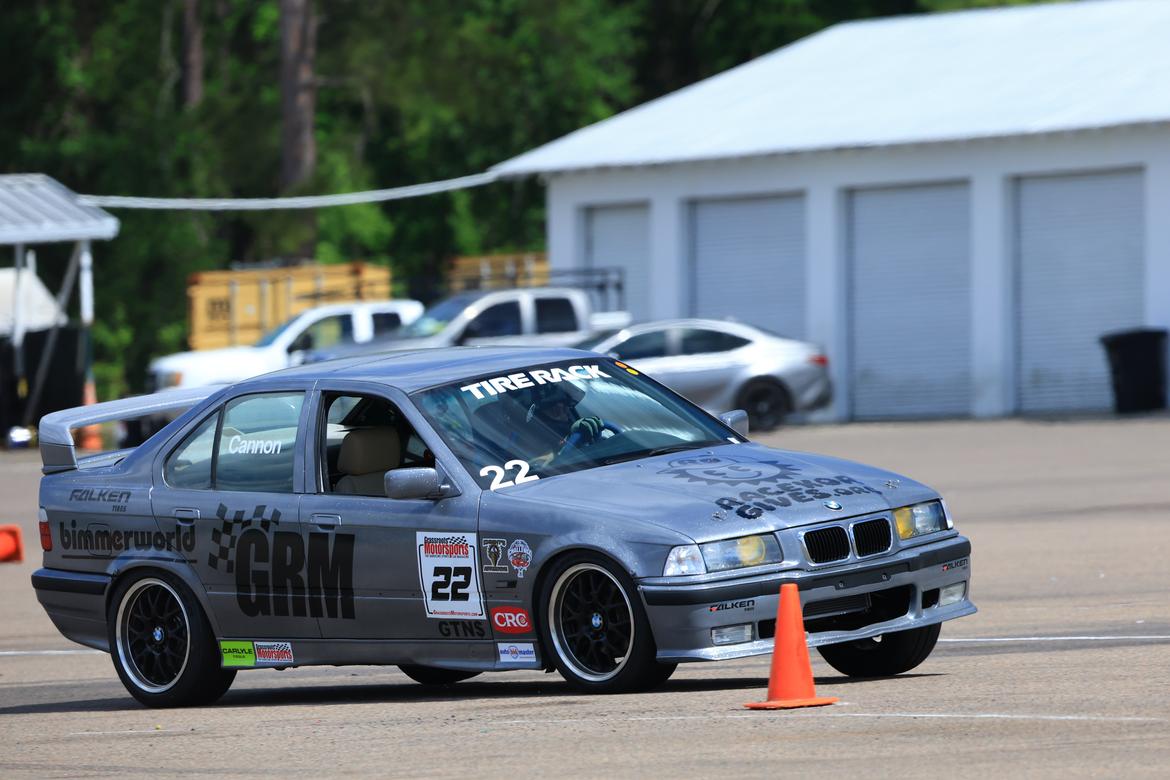
It’s been a long, long time since the GRM staff built a car for our $2000 Challenge Presented by Tire Rack, Powered by AutoBidMaster and Built by Carlyle Tools. We don’t have a central recordkeeping office or anything, but I’m pretty sure it’s been 20 years since somebody on the payroll bought and entered a car in the event. That changed this year with the No. 22 BMW 325i.
But this wasn’t an official company project, carefully planned by the editorial team and generously supported by our partners in the industry. Instead, it was impulse bought by Austin, who handles Reader Services. When he’s not answering the phone and helping readers, he’s surfing Facebook Marketplace and making bad decisions. No wonder he fits right in around here, right?
Austin bought the rusty, non-running E36 BMW just a few weeks after he got hired, and I actually offered a small reality check: “Dude, slow down, you’re getting in over your head and you’re on your own with this one.”
Photograph by Austin Cannon.
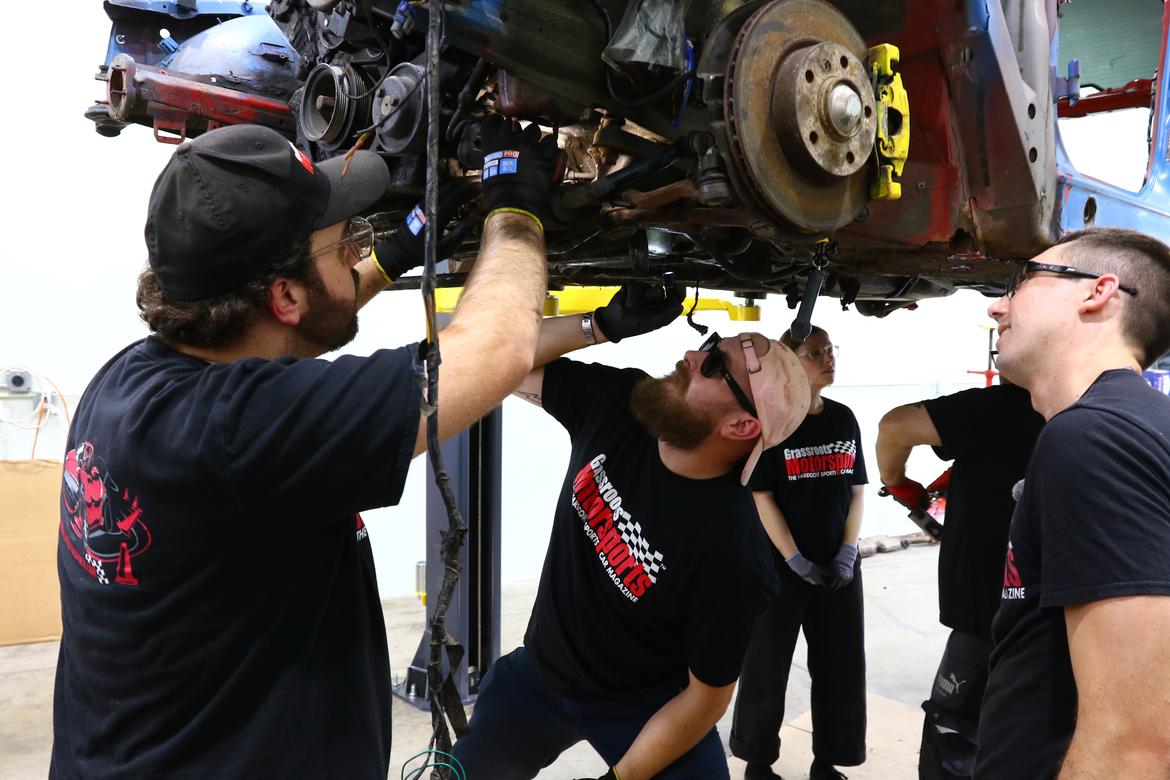
As it turns out, he was in over his head, but he wasn’t actually on his own. What started as a purely personal boondoggle gradually morphed into a company-supported project car–company support that looked like an exponential growth curve as we all spent more and more time and money working on the BMW in the weeks leading up to the $2000 Challenge.
We didn’t want to completely take over Austin’s project, but we didn’t want him to fail, either. We were aiming for something akin to bumper bowling, where we’d keep the car out of the gutter but not much else. Shoutout to BimmerWorld and Falken for lending their support, too.
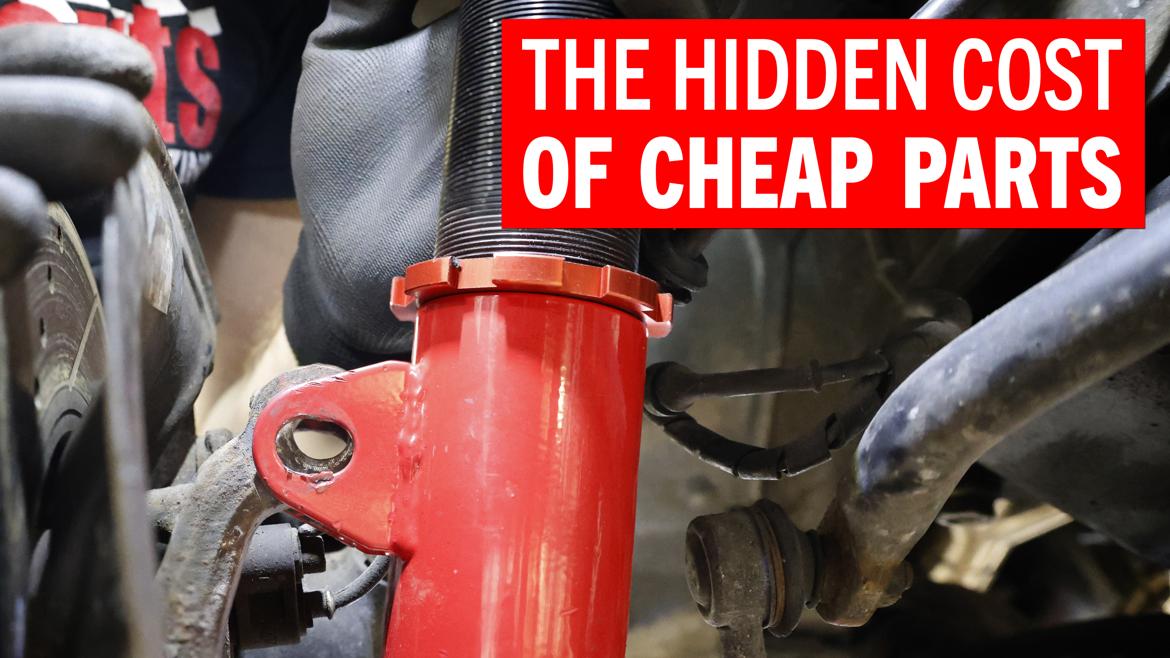
Winning the $2000 Challenge usually takes incredible fabrication skills, plentiful tools and limitless patience for looking for deals. Without any of these, Austin instead made his budget work by buying the cheapest off-brand parts from the least reputable sources, usually brand new or close to it. Piles of boxes piled up in the shop from Amazon, Temu and eBay, all branded with logos I’d never even seen before.
Bumper bowling, remember? This exercise is all about letting Austin make his own decisions and learn his own lessons. And some lessons need to be learned the hard way. So I’d grit my teeth and brace for the issues.
Photograph by David S. Wallens.
On a certain level, I was morbidly curious. “Grassroots” means getting strong value for money and doing things yourself. That usually doesn’t mean buying the most expensive parts on the market, nor does it usually mean buying the cheapest: “Value for money” is often found by carefully shopping the midrange, a premise we reinforce as much as possible when building project cars.
But what if that premise is wrong, and Temu parts are a speed secret we’ve been sleeping on? So this wasn’t just Austin being cheap: This was science!
Spoiler alert: The world’s least expensive off-brand parts are pretty terrible. Almost every single thing Austin purchased needed to be significantly modified to install, never mind work properly, and those modifications often required machine tools or welding. I figure we used $5000 of equipment to install $500 worth of parts. And that’s not counting the stuff he returned because it arrived absolutely destroyed from shipping.
Despite these setbacks, though, he did finish the car on time and under budget, if only barely. And it did complete every event at the $2000 Challenge, even managing to finish not last. Considering Austin’s starting point and available resources, I’d call that a major win.
Photograph by Dave Green.
So what did I learn? Well, this certainly reinforced my prejudice against the cheapest parts on the market. You don’t have to spend top-shelf money on parts, but building cars is drastically easier if you at least buy things from a real company, preferably run by car enthusiasts instead of an algorithmic patent-infringement robot or whatever was churning out the crap we installed.
No budget for name-brand parts? Buy them used. It’ll take some patience and some forum for-sale ads, but we’d have been far better off buying used versus buying new.
I also learned that the pointy end of the $2000 Challenge field is even more impressive than it used to be. $2000 really doesn’t go as far as it did 20 years ago. The bottom end of the used car market, even adjusted for inflation, is just way more expensive than it used to be. What folks like Derek Penner are doing is nothing short of heroic, and he and his peers beat our BMW not with better luck or budget shenanigans but purely with more skill and much more blood, sweat and tears.
[For this repeat $2000 Challenge winner, patience paid off]
Oh, and what did Austin learn? He learned that turning a non-running Facebook find into a race car is really, really hard. But he also learned that he could do it, and that right there is what the $2000 Challenge is all about. You could probably do it, too, so start shopping and mark your calendar for April 17-18, 2027. We’ll see you at the next $2000 Challenge.
Comments

This project was a lot of fun, but I definitely learned a lesson here.

Tom1200
UltimaDork
6/30/26 1:21 p.m.
Cheap parts on a German car suck.
Cheap parts on old Japanese cars work surprisingly well.

Displaying 1-3 of 3 commentsView all comments on the GRM forums
You’ll need to log in to post.