
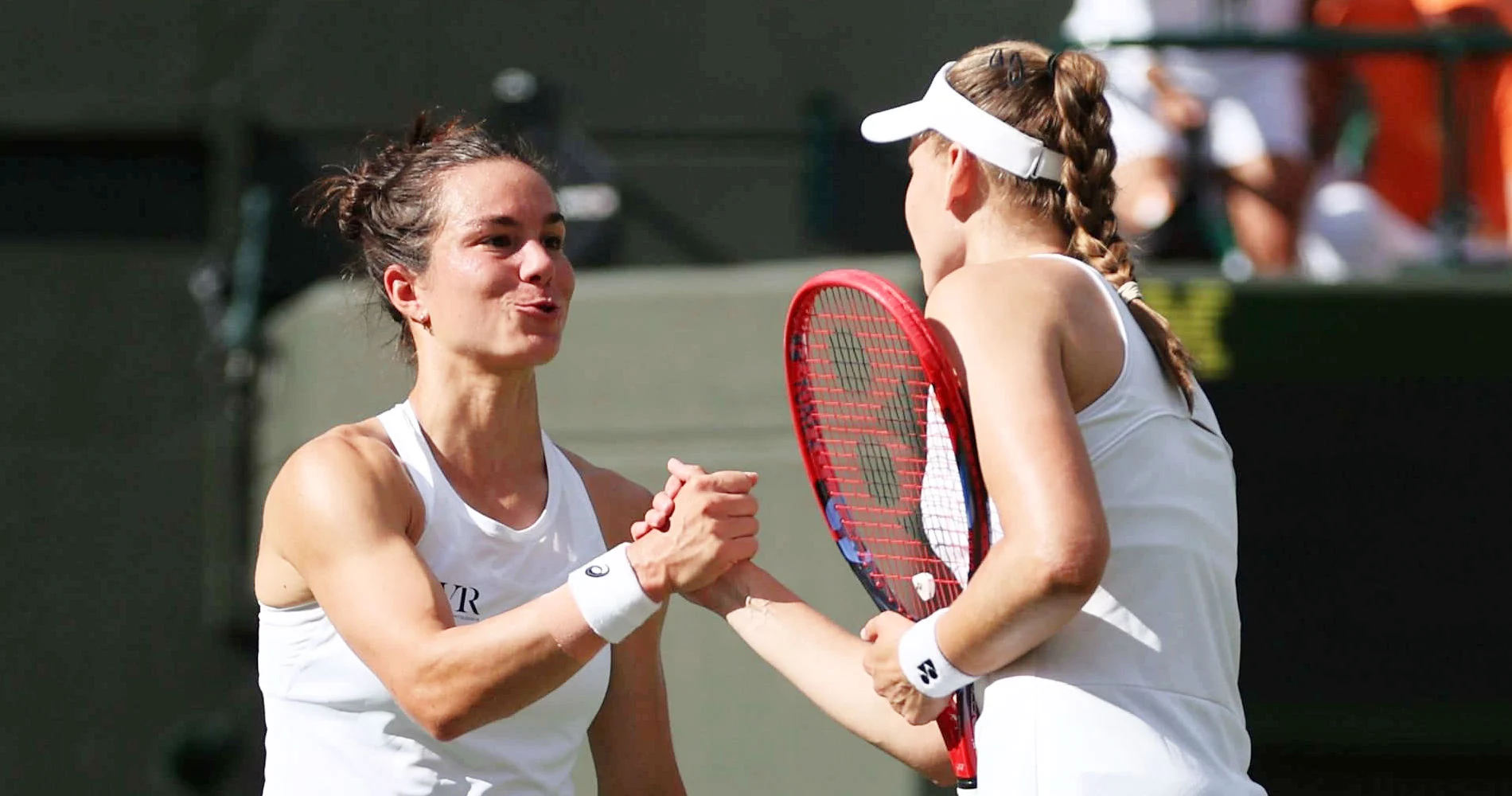
Kazakh second seed Elena Rybakina came through a scrappy opening test on Tuesday, recovering from a one-sided second set to beat France’s Lois Boisson 6-4, 1-6, 6-3 and begin her Wimbledon campaign at the tournament where she won her first Grand Slam title in 2022.
It was far from her best tennis, and she knew it. Rybakina edged a tight opening set, was overrun in the second as Boisson took it 6-1, and had to dig in through a third interrupted by a medical timeout, during which she consulted her box, before steadying herself to close out the win.
“It was a really difficult match, and I’m not coming in off too many wins, so I had to really fight,” she said afterwards. “I need to improve quite a lot, but I’m happy to get another opportunity. It’s amazing to be back on these beautiful courts.”
Rybakina : “Glad I managed to get through”
The 2022 champion, who lifted her maiden major on these lawns, was candid about the work still ahead and about the nerves behind a famously impassive on-court manner. “Inside there are a lot of emotions,” she said. “People who know me well, like my team, see when I’m stressed and when things aren’t working. I’m glad I managed to get through.”
She pointed to her footwork and the awkward rhythm Boisson’s variety had imposed. “The percentage of my serve was not the greatest, and the most important thing for me was the intensity and moving my legs quicker, because she was playing quite high, with some slices. Being so tall, going from up to down is not easy. My box were telling me to keep going, bring the energy, better footwork.”
Boisson made no attempt to dress up how underprepared she had been. “I came in with no preparation, clearly – there’s no other word for it,” she said. Having played just two matches on grass on her return from injury, she had been running on fumes physically, and was simply relieved her body lasted the distance. “The calf held up,” she said. “I could feel I was at my limit.”
Boisson “not there to make the numbers”
For all that, a brave defeat was no comfort to her. The Frenchwoman was blunt about why pushing a former champion to three sets did not soften the loss. “I don’t play tournaments to make up the numbers,” she said. “The goal is to win.” The frustration, she admitted, ran deeper for how close she had come.
Rybakina has been searching for her best form of late, but few in the women’s game can match her on grass when she finds it – a first-strike game tailor-made for the surface. She will look to sharpen it in the next round, where she faces Catherine McNally.
She traced the turning point to a single game in the decider, at 4-3 on her serve, rather than the fall that followed it. “She played that game well,” Boisson said of the break that put Rybakina ahead for good. “I lose focus on two or three games after my fall. She’s not missing this opportunity. When someone does that to you, it’s over.”