
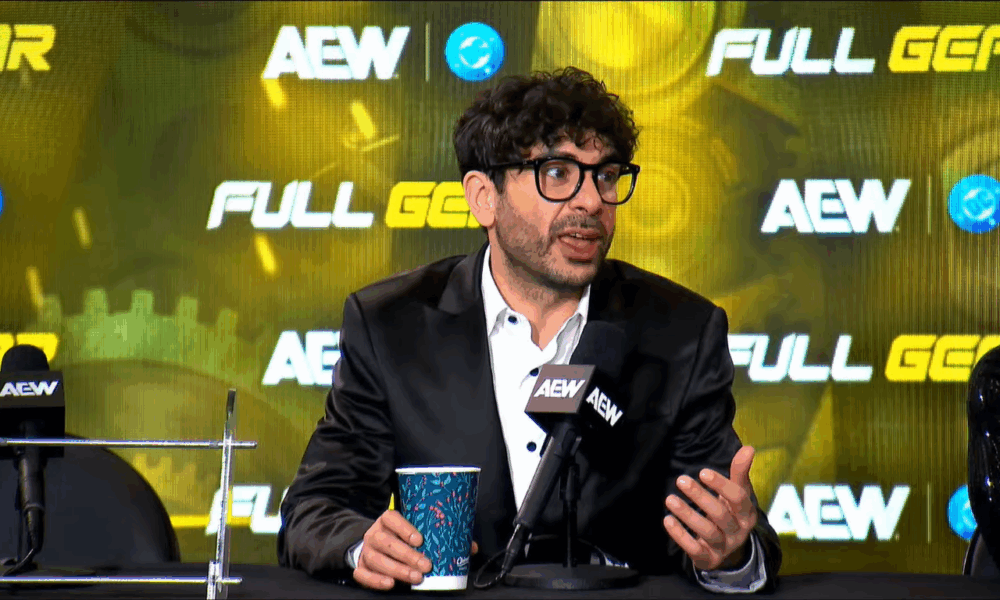
Wrestling fans have long debated the marathon length of All Elite Wrestling pay-per-views, but company president Tony Khan just pulled back the curtain on why these events consistently clock in at nearly four hours. Speaking at the Full Gear post-show media scrum, Khan revealed contractual obligations that ensure every AEW PPV exceeds the three-and-a-half-hour mark, regardless of fan complaints about late finishes.
The Contract Behind AEW’s Extended Runtime
Khan’s most revealing admission centered on the business side of AEW’s pay-per-view production. The wrestling executive disclosed that contractual requirements drive the lengthy broadcasts more than creative decisions.
“Our contracted time from the shows has always been close to four hours…every AEW pay-per-view has gone over three-and-a-half hours. There’s never been an AEW pay-per-view that went under three-and-a-half hours in the history of the company because we were contracted to do shows that go about 3:45.”
This revelation explains why AEW consistently delivers packed cards that stretch deep into the night. Rather than artistic choice alone, Khan operates within predetermined time parameters that guarantee substantial content delivery.
East Coast Timing Adjustments After Dynasty Backlash
The AEW president acknowledged fan criticism regarding late Sunday night finishes, particularly for East Coast audiences. Following Dynasty’s reception, Khan implemented strategic scheduling changes to address viewer concerns.
“After Dynasty, I like the feedback, so I do think like, to your point, after Dynasty, I said I probably on the east coast wouldn’t do a Sunday night like that again.”
This feedback-driven approach led to afternoon start times for several subsequent events. Khan praised how these earlier slots worked “really well,” suggesting a willingness to prioritize fan convenience over traditional prime-time scheduling.
Weekend Show Strategy Differences
Khan outlined his flexible approach to weekend programming, treating Saturday and Sunday events with different timing considerations. West Coast shows receive particular attention due to their scheduling advantages for national audiences.
The success of earlier start times at All In Texas, Forbidden Door, and All Out reinforced Khan’s confidence in this scheduling strategy. These events demonstrated that afternoon starts could maintain audience engagement while accommodating East Coast viewers.
Combat Sports Influence on Khan’s Perspective
Drawing from his experience attending MMA and boxing events, Khan revealed personal preferences that don’t translate to professional wrestling’s audience expectations. While he enjoys combat sports main events starting at 1 AM, he recognizes wrestling fans operate under different viewing patterns.
This insight highlights the delicate balance between Khan’s personal entertainment preferences and the commercial realities of running a wrestling promotion. His acknowledgment shows awareness that wrestling audiences have distinct needs compared to combat sports viewers.
Fan Reception Split on Marathon Broadcasts
The wrestling community remains divided on AEW’s extended pay-per-view format. Long-time critics continue voicing concerns about viewer fatigue and late finishes, while others have adapted to expect comprehensive cards packed with matches.
Khan’s approach of cramming maximum content onto each card reflects his “more is better” philosophy for premium events. This strategy aims to deliver perceived value through sheer volume of wrestling content.
Looking Ahead to Future Scheduling
With contractual obligations ensuring nearly four-hour broadcasts will continue, Khan’s focus shifts to optimizing start times rather than reducing overall length. The success of afternoon starts suggests a potential template for future East Coast events.
As AEW heads into 2025 and beyond, will Tony Khan find the sweet spot between contractual requirements and fan satisfaction, or do wrestling audiences need to accept that marathon pay-per-views are simply the new normal in professional wrestling?