
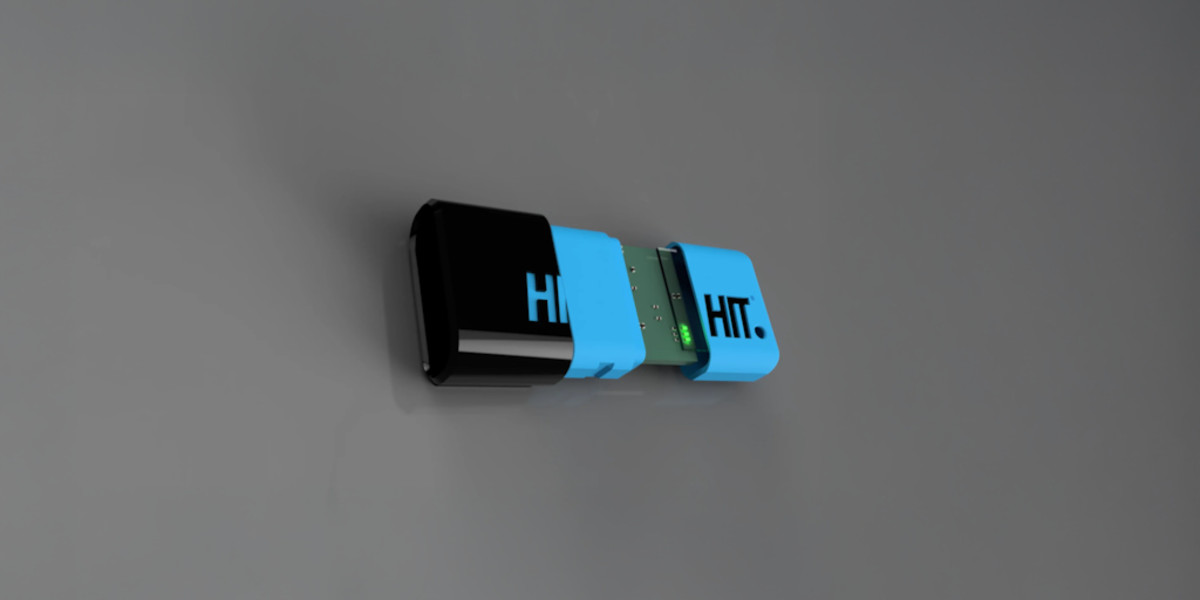
When it comes to protecting riders helmets are usually judged on crash-test performance, padding, and shell durability. And even then, most helmets are meant to prevent skull fracture more than they are concussions. But a recent collaboration between 6D Helmets and UK-based Head Impact Trauma Limited (HIT) begs the question: what if helmets didn’t just buffer impact, but measured them and gave quantitive feedback about what your brain just went through?
6D recently announced it will partner with HIT to develop data-driven systems that track every hit, monitor brain stress, and eventually improve concussion detection and overall brain-health awareness for athletes in action sports. 6D isn’t new to helmet innovation. Their signature tech, Omni‑Directional Suspension (ODS), is designed to reduce the forces transmitted to the brain during impact — including those from angular and rotational acceleration, which many experts believe play a major role in concussions and traumatic brain injuries.
But even given the advancement of modern helmet design and tech, helmets have historically had no way to tell you how hard, how often, or how severely your head got hit. They did their best to protect your brain at the time of the impact but thats about it.
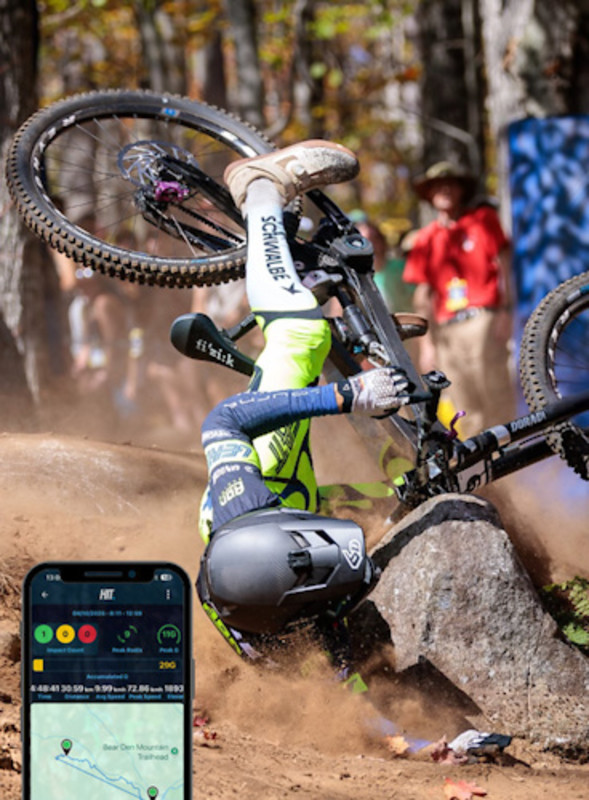
That’s where HIT comes in. Their device, HIT Connect, is a sensor that attaches to your helmet and tracks every impact — whether you have a visible impact or barely feel it. It logs both linear and rotational G-forces, stores event data, and then syncs to the companion app. Even if your phone is tucked away or offline during the ride, HIT Connect captures and retains each event for later review giving unprecedented insight into impacts. Once the divide and app are connected, the HIT App processes the data and gives riders an easy-to-understand classification of impact severity — with a simple traffic-light system (green = ride on; amber = rest & monitor; red = stop & check in).
But beyond the “what-just-happened” mode, the system adds a deeper layer: long-term exposure tracking. Even if no single crash triggers alarm bells, repeated smaller hits — the ones you barely notice — can add up and cause “brain fatigue.” HIT Connect lets you see these cumulative patterns over time, potentially giving you reason to rest or adjust training long before symptoms appear.
View the 2 images of this gallery on the
original article
Mountain biking is going to inevitably involve some crashes, but even before you ever have a faceful of dirt, there are hundreds of hits, compressions, jolts, heavy landings, and small impacts that the rider may barely register that may take a toll on your brain. Traditional helmet design can mitigate some of the risks of head contact, but beyond that there’s virtually no way to know what the brain actually endured.
By combining 6D’s protective ODS technology with HIT’s real-world data collection, this partnership could offer a far more holistic model of brain safety: one that merges protective design with actionable data. Riders, coaches, and medical professionals could make decisions based not just on how people feel — but on hard data. In a sport where “it felt fine” sometimes masks the very forces that lead to long-term damage, this kind of visibility might be a game-changer.
According to the companies, the partnership will focus on research and development, integrating HIT’s measurement system with 6D’s helmets and pushing distribution so riders can access the device commercially in the United States. If successful, this could mark a turning point in helmet safety: from reactive protection to proactive intelligence and improved brain health. Over time, aggregated and anonymized data from real rides could also help inform helmet standards, design improvements, and maybe even influence how mountain bike organizations define “safe riding.”
For more info check out 6D’s website