Published December 9, 2025 12:46AM
Pros
550-gram frame weight
Standard round seat post
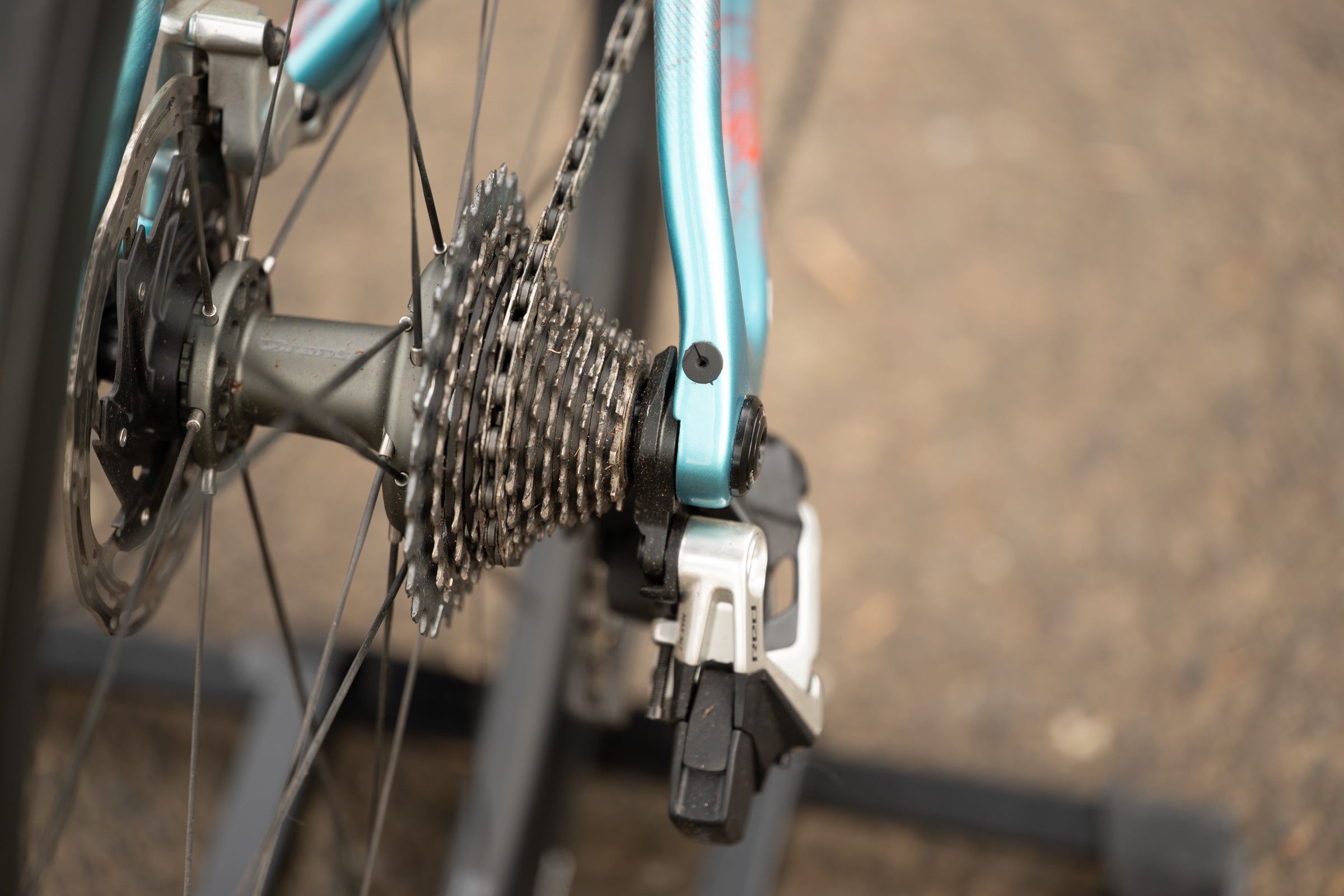
SRAM UDH
Threaded BB
Significantly less expensive than competition
Weight achieved with 50mm aero wheels
Fully internal routing
Nicely balanced stiffness
Cons
Lacks expected integrated cockpit sizes
Overly stiff handlebar
Difficult to purchase
50/37 with 10-26 Gearing
Specs
- Size tested: Medium
- Price: Under $10,000 (not yet final)
- Brand: XDS (X-lab)
Verdict
Sometimes the unique selling proposition doesn’t have to be complicated. The XDS RT9 is a WorldTour climbing bike that currently claims the title of the lightest production road bike you can buy. It manages that weight with aero wheels and it costs thousands less than the next closest competitor. Getting it will be a bit complicated though.
For the third time in the last year or so I find myself reviewing the world’s lightest production road bike. This time it’s from one of the largest bike manufacturers in the world, but one that’s barely known to western markets.
The XDS RT9 doesn’t have perfectly executed builds, and final pricing in the US remains TBD, but from my experience the bike is every bit as good as the top lightweight bikes, for a lot less money. I’ve spent time riding this bike on my home turf, discovering where this bike excels and also some of the places where things are not quite fully realized yet. Here’s what I found.
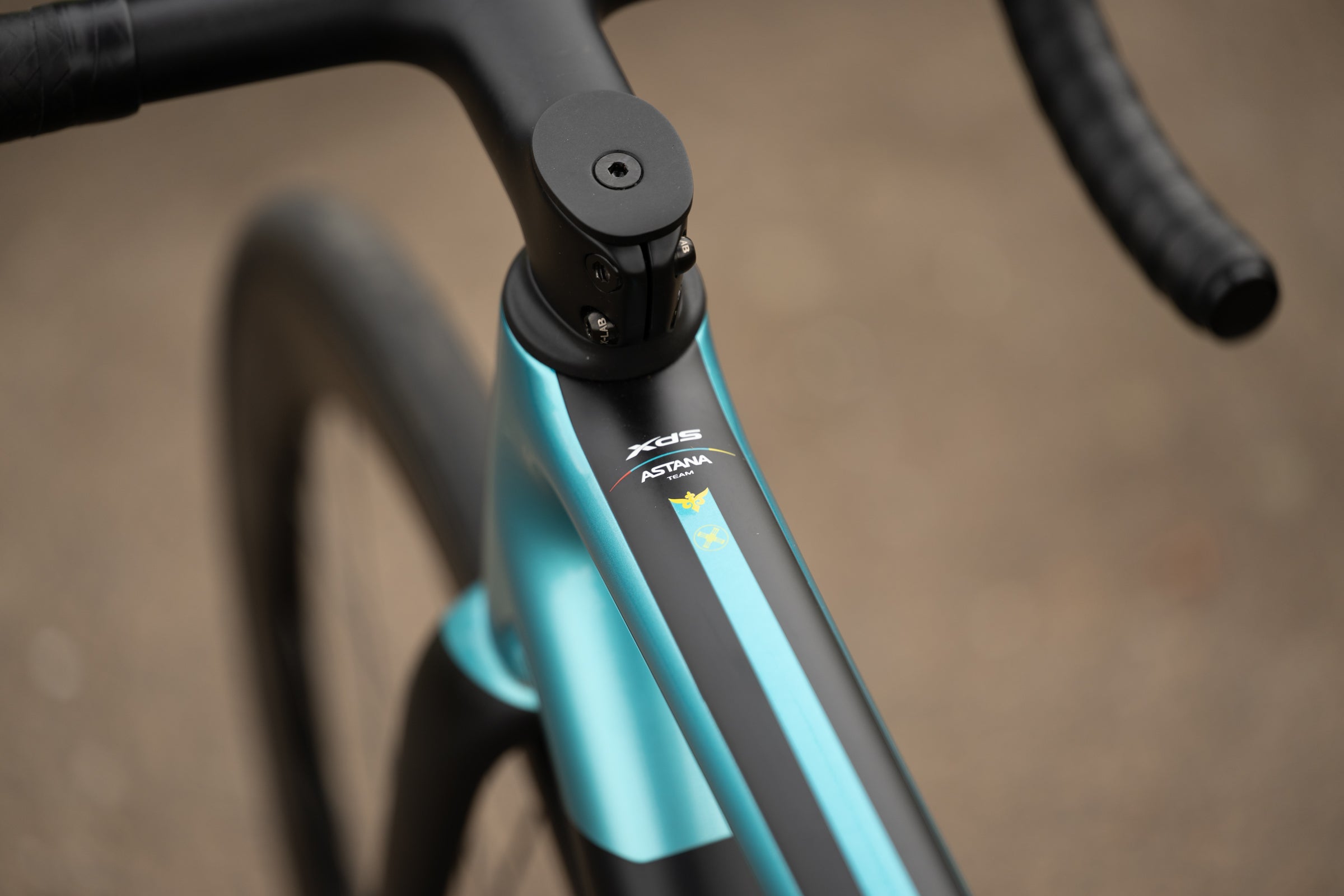
Quick hits: 9 stand out details of the XDS RT9
- Frame is quoted as 550 grams with a 300-gram fork weight
- Measured build weight in ready to ride guise, minus pedals, is 6.1kg.
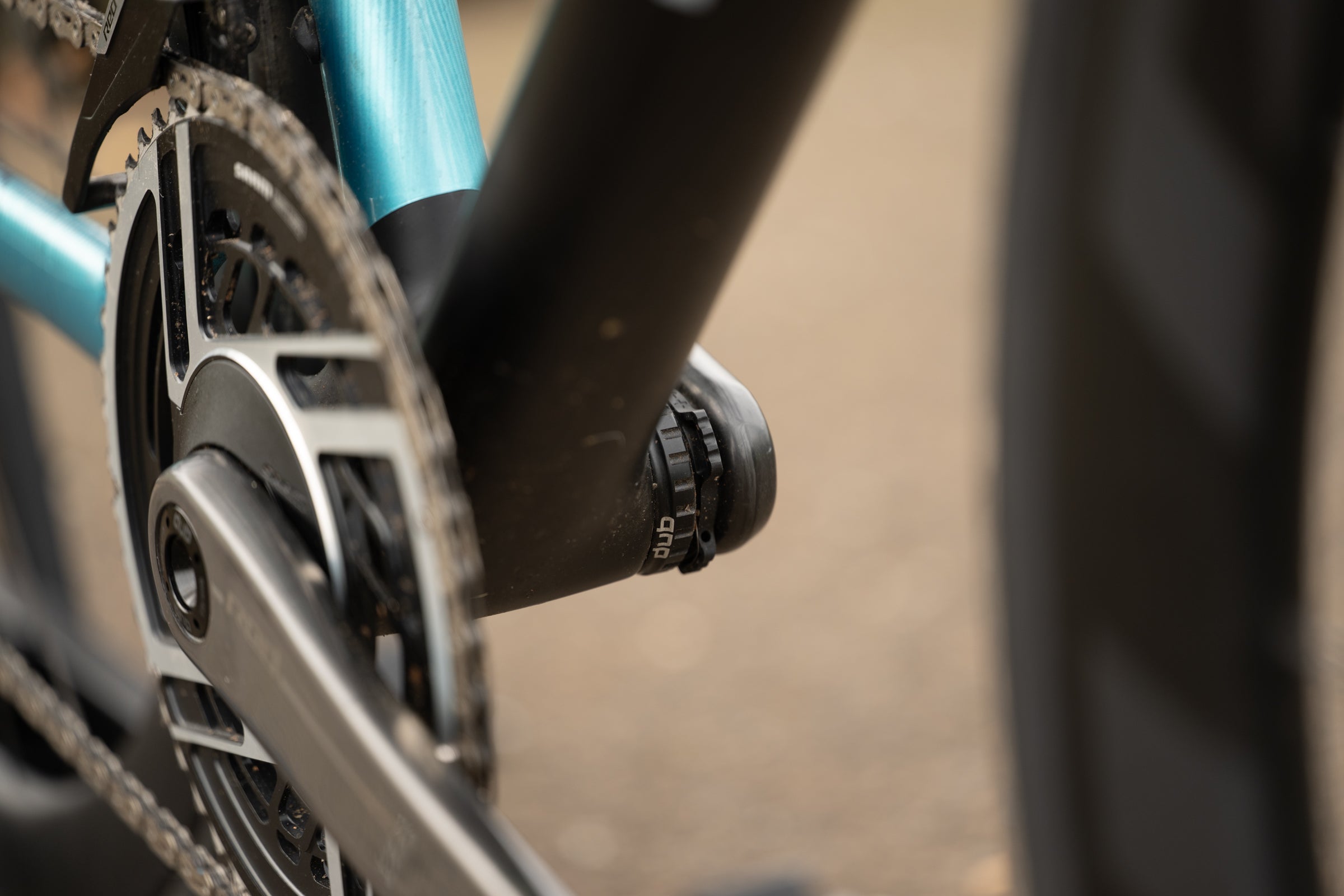
- BSA threaded Bottom Bracket
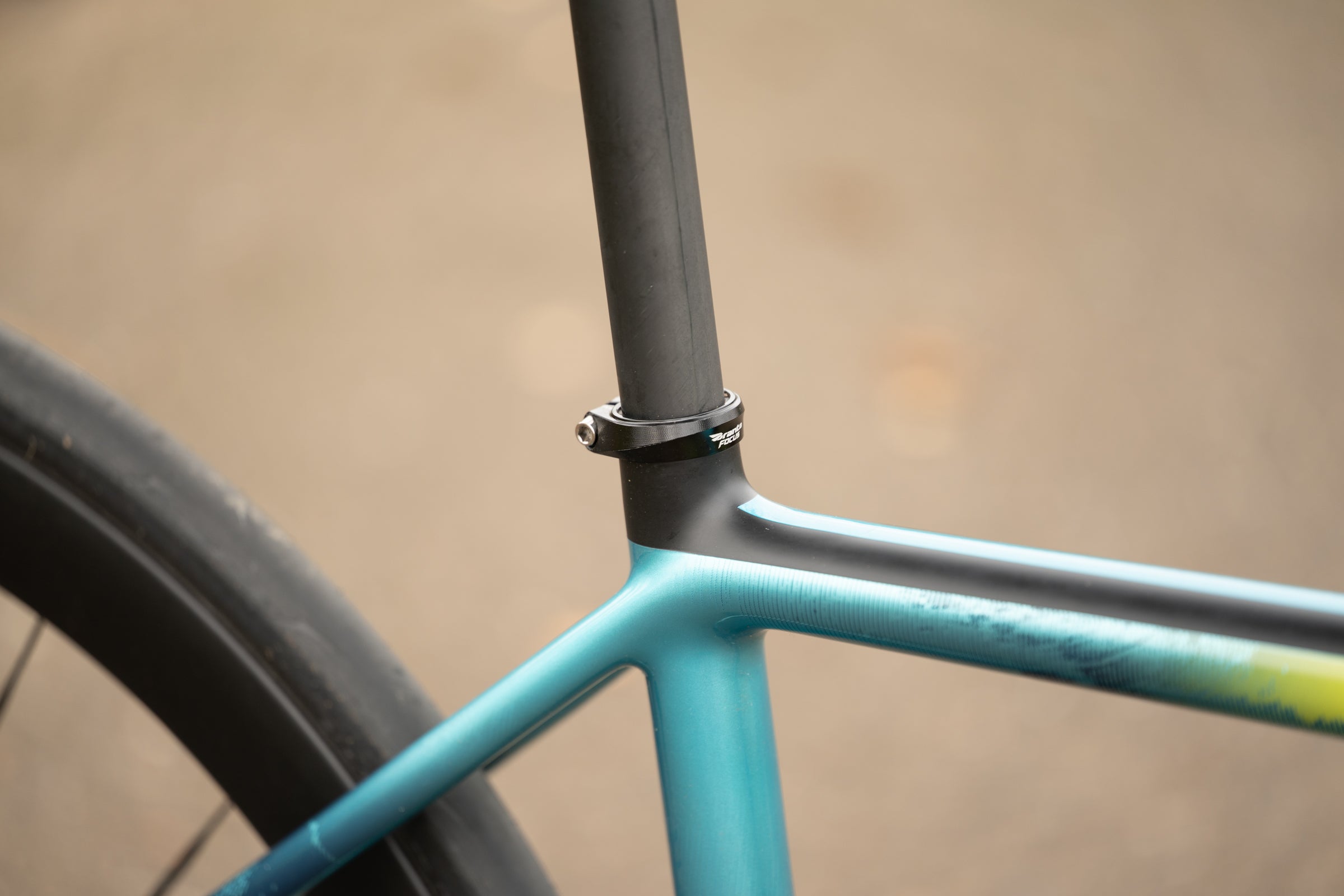
- Standard round seatpost with an external clamp
- 32mm max tire clearance
- Expect around a $4,000 discount compared to the S-Works Aethos 2
- RT9 does not focus on aero performance but “clean tube junctions and reduced frontal area inherently contribute to lower aerodynamic resistance”
- Final build will include a power meter but also includes 50mm aero focused wheels while still hitting weight targets
- XDS is one of the largest bike manufacturers in the world and X-lab is a sub brand of XDS focused on the highest performance options
- For more information visit the XDS website
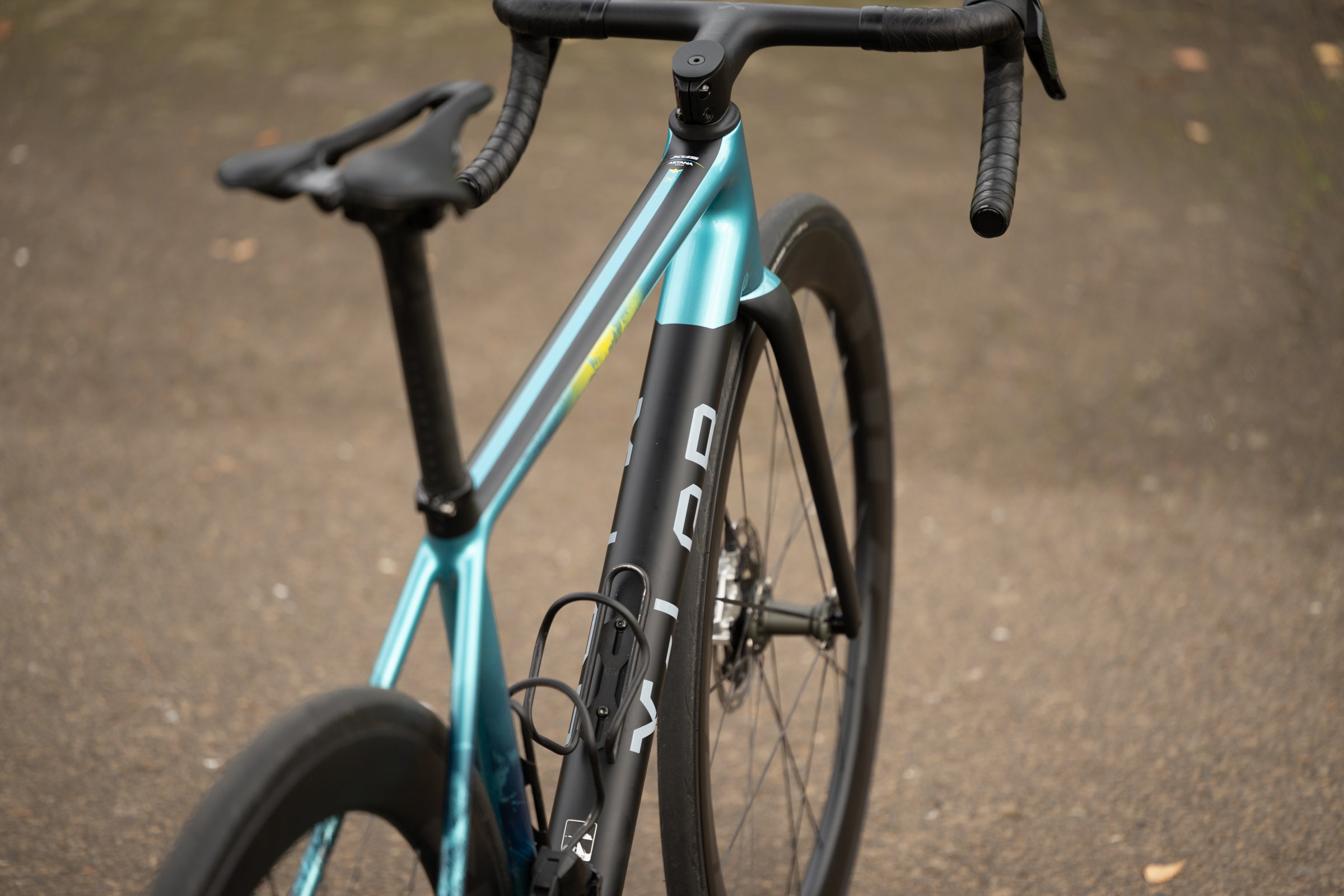
XDS X-lab RT9 frame details
Depending on how closely you follow the details of professional racing, you might have seen this bike. Even if you do follow it though, you still might have missed it. XDS is a title sponsor for XDS-Astana but the bikes you see don’t reflect that. Instead what you see is a big X-Lab logo. Additionally, the frame that’s been getting the most attention is the X-Lab AD9, an aero bike.
So let me start by making an introduction to the XDS (Xidesheng) X-Lab RT9. XDS is the parent company and while not many in the US would recognize the name, XDS bills itseld as “one of the largest manufacturers of carbon fiber in the world and the largest bicycle manufacturing base in China.”
The second part of that name is the performance arm of XDS. I want to be careful about making too many comparisons to other brands but this is similar to Specialized and S-Works. XDS makes a huge range of bikes for all kinds of riders but the kind of enthusiast bikes that find their way into my hands will likely have an X-Lab logo on them.
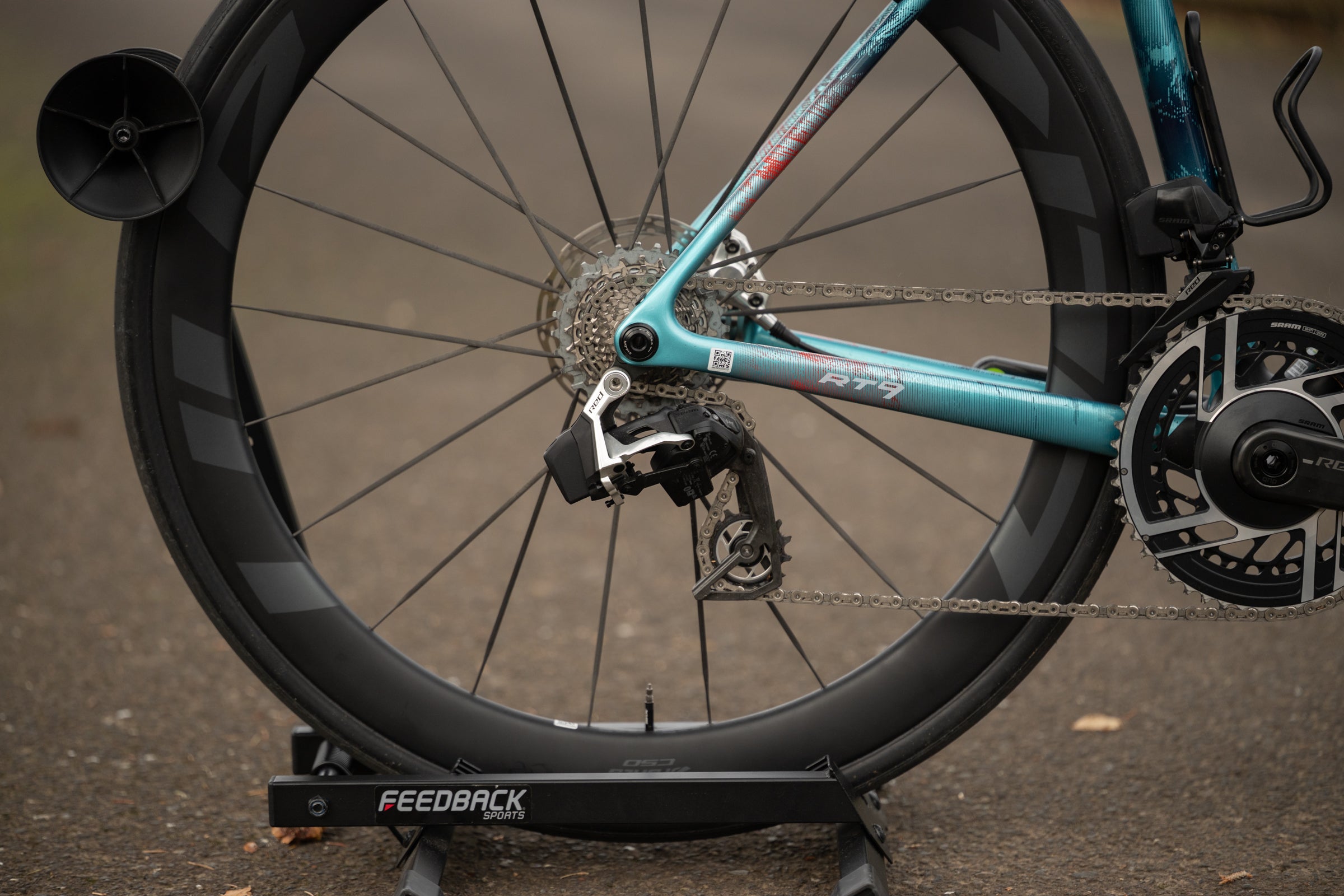
Then the final piece is the RT9 model. The XDS RT9 is the lightest production road bike on the market at 550 grams for a size medium. As with other attempts to capture that title, the RT9 does that by focusing on lightweight first and essentially ignoring aerodynamics as a design consideration.
Despite that similarity though, XDS told me a story that differs a bit from what both Specialized and Scott told me about each brand’s entry into the lightweight race. Echoing what I heard from Specialized, XDS stated that the “design philosophy focuses on structural efficiency through simplified tube geometry” and that “the use of round-section tubes minimizes stress concentrations, allowing the carbon layup to be significantly thinner and use less material overall.” Where things diverged is when I asked about FEA (finite element analysis) and the role it played in the frame design.
Both Scott and Specialized made it clear that advancements in computer technology, and by extension the power of FEA, was primarily driving the new floor level for a lightweight bike. Those two brands both landed around 600 grams with that technology and Specialized in particular made it clear that it was possible to build a lighter bike but not a bike you’d want to ride. XDS is landing 50 grams lighter.
From XDS the story of getting there feels more nuts and bolts. The brand said “while Finite Element Analysis (FEA) is a routine part of our structural development, we see it as a standard tool rather than a headline technology.” Personally, I think of that as the fancy computer tech while XDS is instead exploring the limit of material science.
The brand worked with Toray Industries to manage this feat and the RT9 frame uses a mix of T1100 carbon fiber “complemented by M40X fibers and a small proportion of pitch-based carbon to enhance stiffness and vibration damping.” Those materials offer a balance of strength to weight with T1100 being the current best carbon (which is a product like any other and subject to advancements and new models) that Toray makes available to most companies. Then there’s the M40X which is similar to T1100 but lighter and stronger.
The interesting thing about the M40X from Toray is that it’s not widely available to purchase. Toray controls access to the material and there’s not many brands that use it. Pinarello is one and you can find it in the Dogma F.
That’s not the only exclusive material within the mix either. You might have noticed the reference to “a small proportion of pitch-based carbon.” XDS didn’t elaborate on that but T1100 and M40X are PAN carbon (stands for Polyacrylonitrile and starts life similar to a textile synthetic fiber) while pitch-based carbon is made from petroleum or coal tar pitch.
This pitch-based carbon isn’t flexible but it is light and roughly twice as stiff as even the best PAN-based carbon. Mixing in a small amount is another way to add stiffness without weight but pitch-based carbon is also more effective at dampening vibrations.
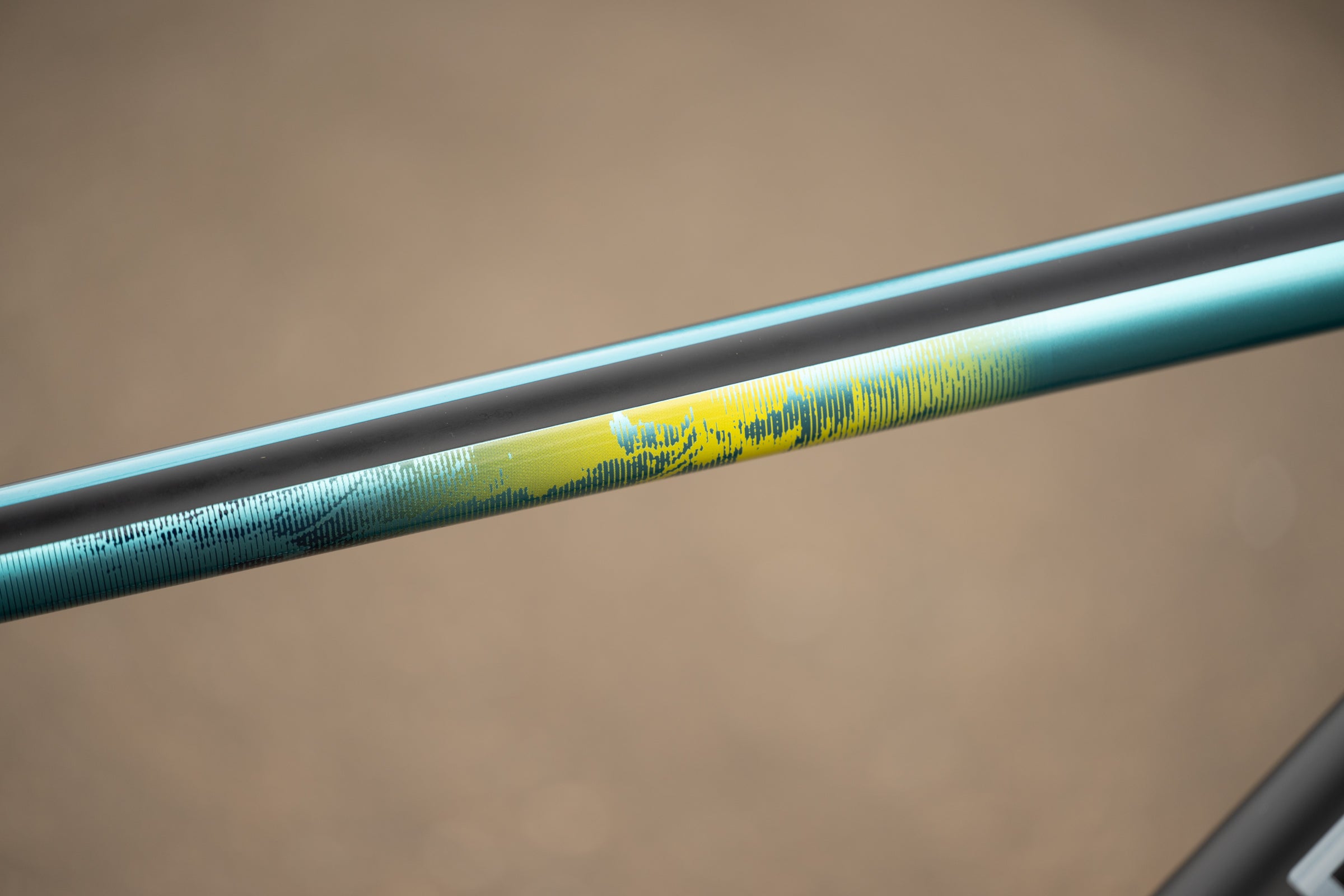
It’s rare because the bike industry competes with aerospace to buy pitch-based carbon from limited factories. Because of that, it’s 10-20 times the cost and rare even in high-end bikes. Factor bikes is an outspoken buyer/user of the material and you can find it in the Ostro VAM and O2 VAM.
Then the final piece of this puzzle that XDS shared had to do with the resin. This was something that Scott also talked about but for Scott it was all about advancement of the bladder designed to better remove extra resin. Again XDS is sharing a different story by talking about the company’s ability to flatten round carbon fiber and minimize spaces between the strands. This is called tow-spreading technology and it minimizes the amount of resin required. Given that resin is heavy and doesn’t add strength, less is always better.
The result is a bike packed with carbon technology that requires incredible precision to manufacture. There are frame walls as thin as 0.4mm in places and a final weight, already mentioned, of 550 ± 15 g. Fancy carbon technology and manufacturing isn’t something you ride though. The bike is light but how’s the ride?
Build details
Normally this section is really a look into what you get for your money. Unfortunately there’s not a lot to say on this just yet. As it stands, US buyers will need to figure out how to get the bike and it won’t come directly from XDS. Currently you are going to be subject to builds put together by shops around the world, or you’ll source a frameset. There’s a possibility that will change in the future but what I tested is the XDS-Astana team issue build with the addition of XDS wheels and cockpit rather than the sponsor-correct Vision pieces.
No matter what shakes out with future sales models though, this isn’t a final spec build you will be able to buy. There’s also no price yet and all I can share from XDS is that the “MSRP will definitely be under $10k,” and this build will include a power meter despite my test bike missing that detail. I am also hoping that the final build has some other changes as well.
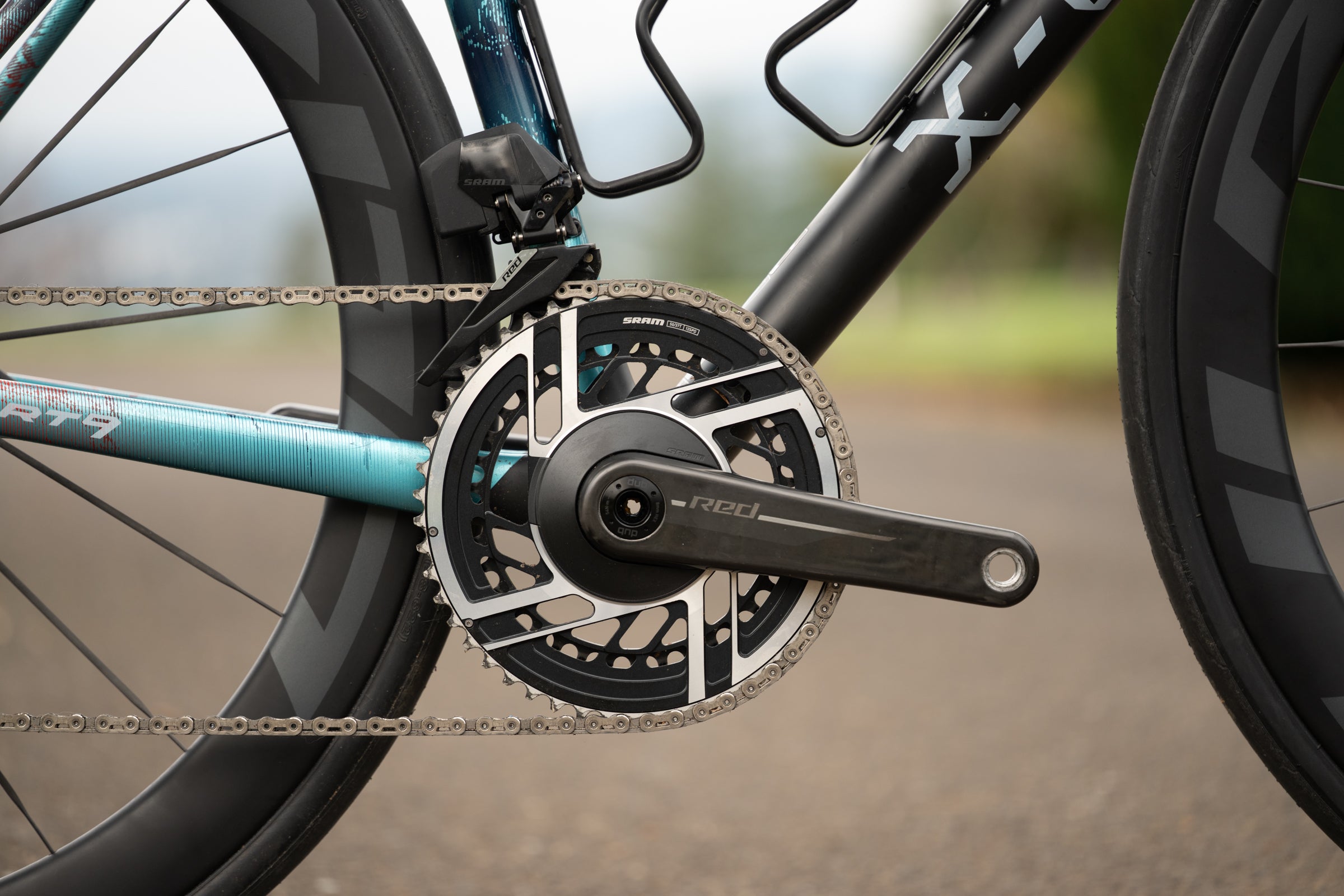
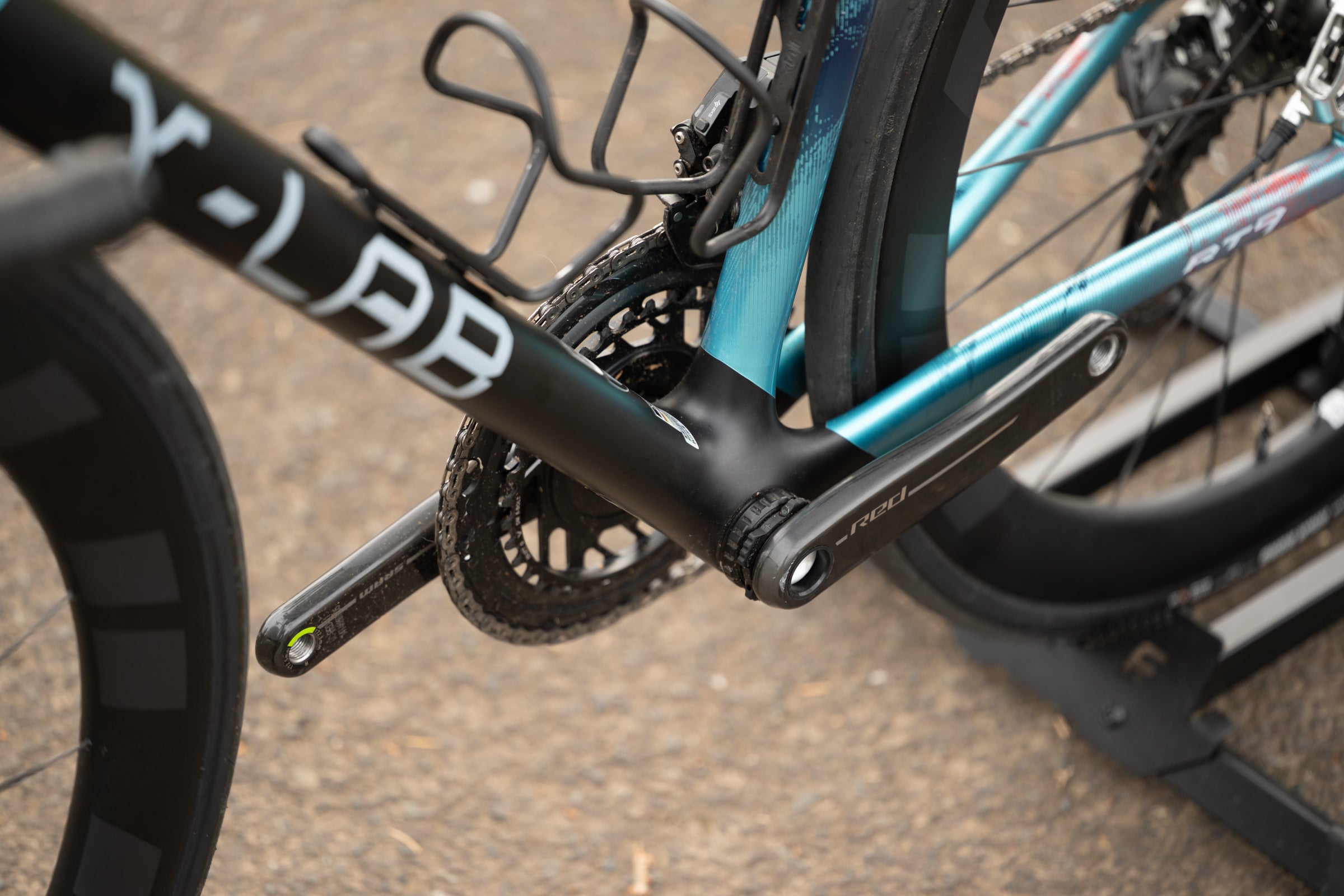
The groupset I tested is the latest SRAM RED AXS and the frame does use the SRAM UDH standard. The first thing I’d like to see change is actually the groupset details. Go ahead and make fun of me but I’m not a WorldTour Pro and while I can push the 50/37 with a 10-26 cassette, I’d rather not. It leaves me regularly moving the front derailleur and even in the flats it puts me rather high in the rear cassette. The semi compact 52-36 and 10-28 is typical for consumer level race bikes and I could even make an argument against that gearing in favor of something with a 1:1 ratio.
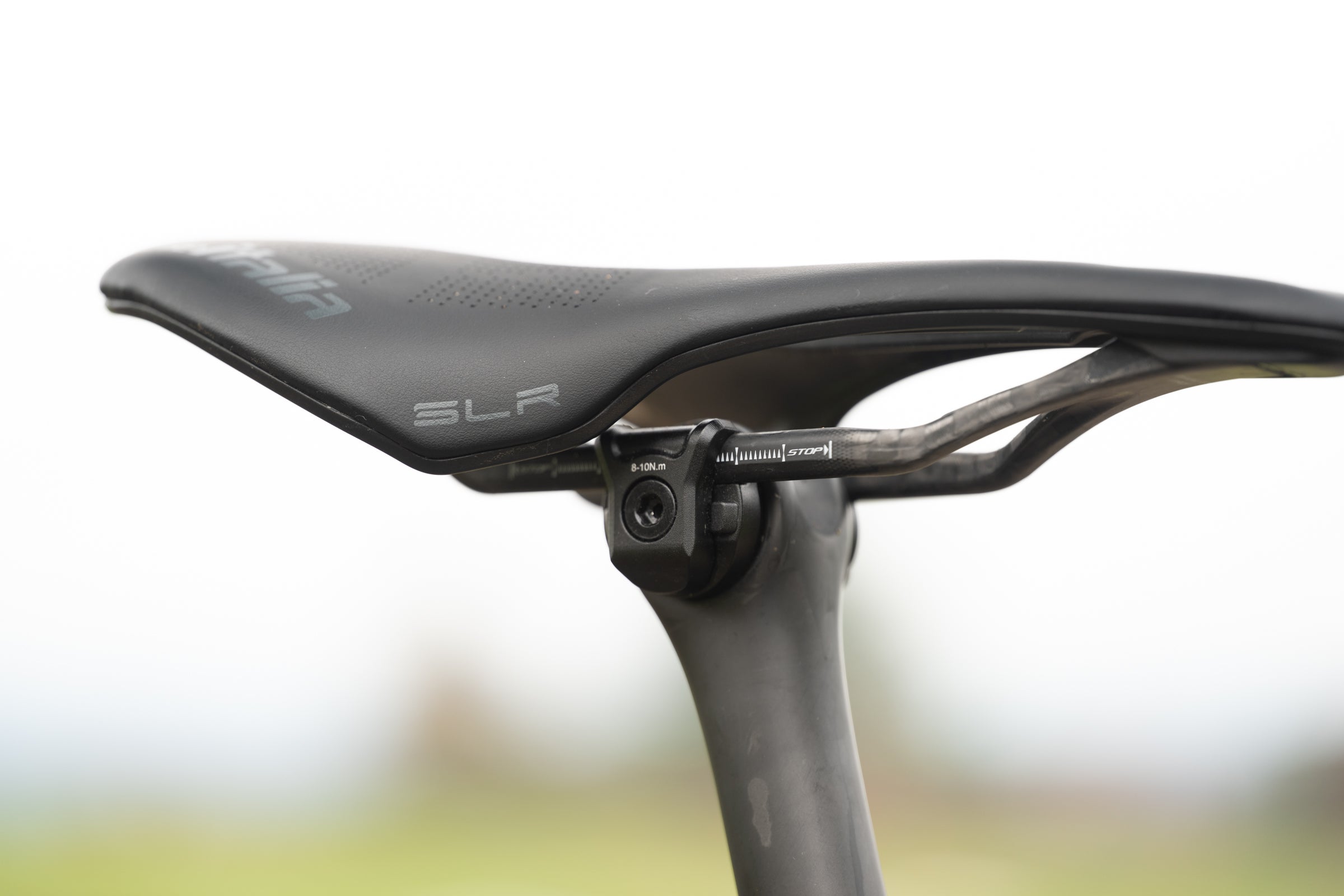
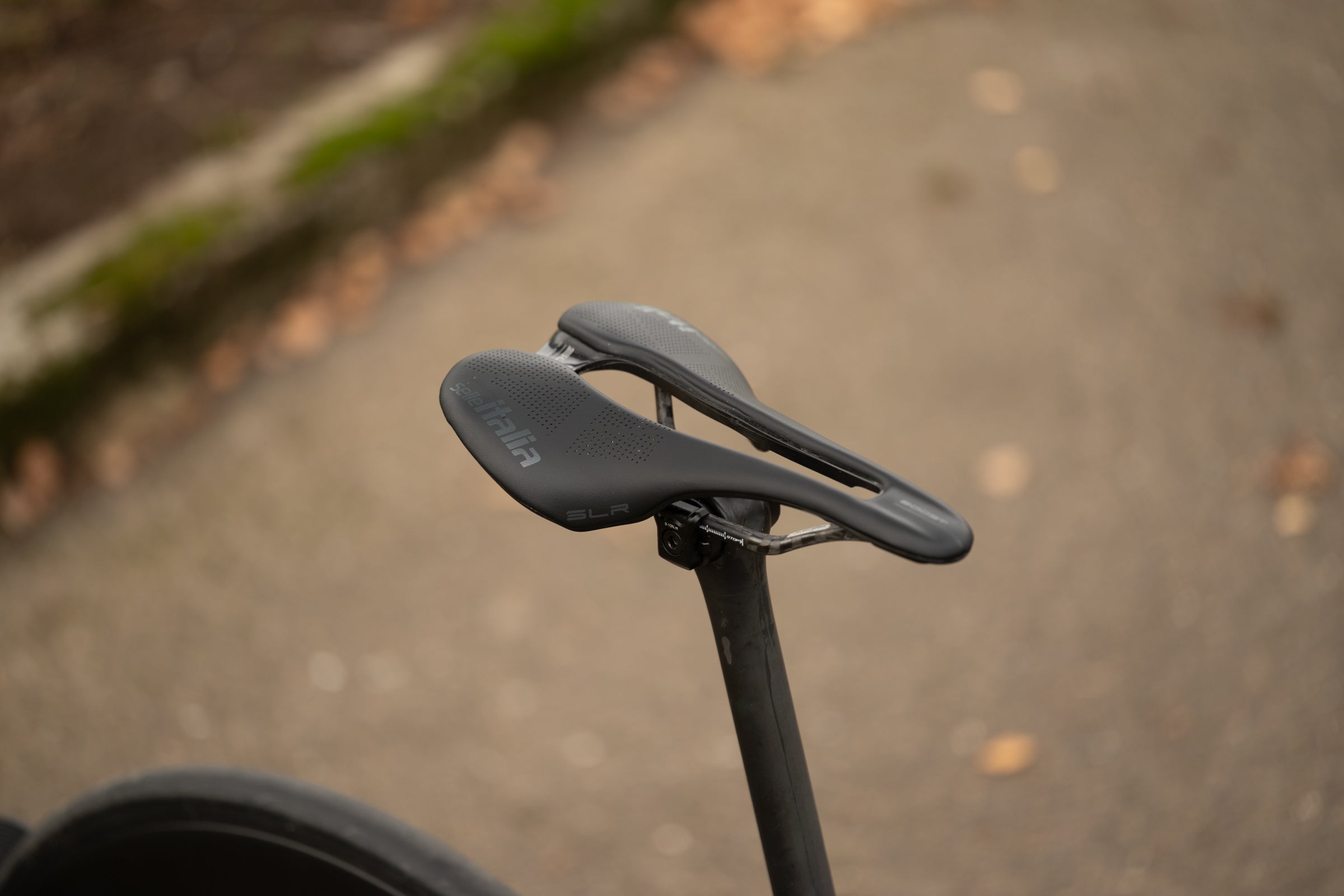
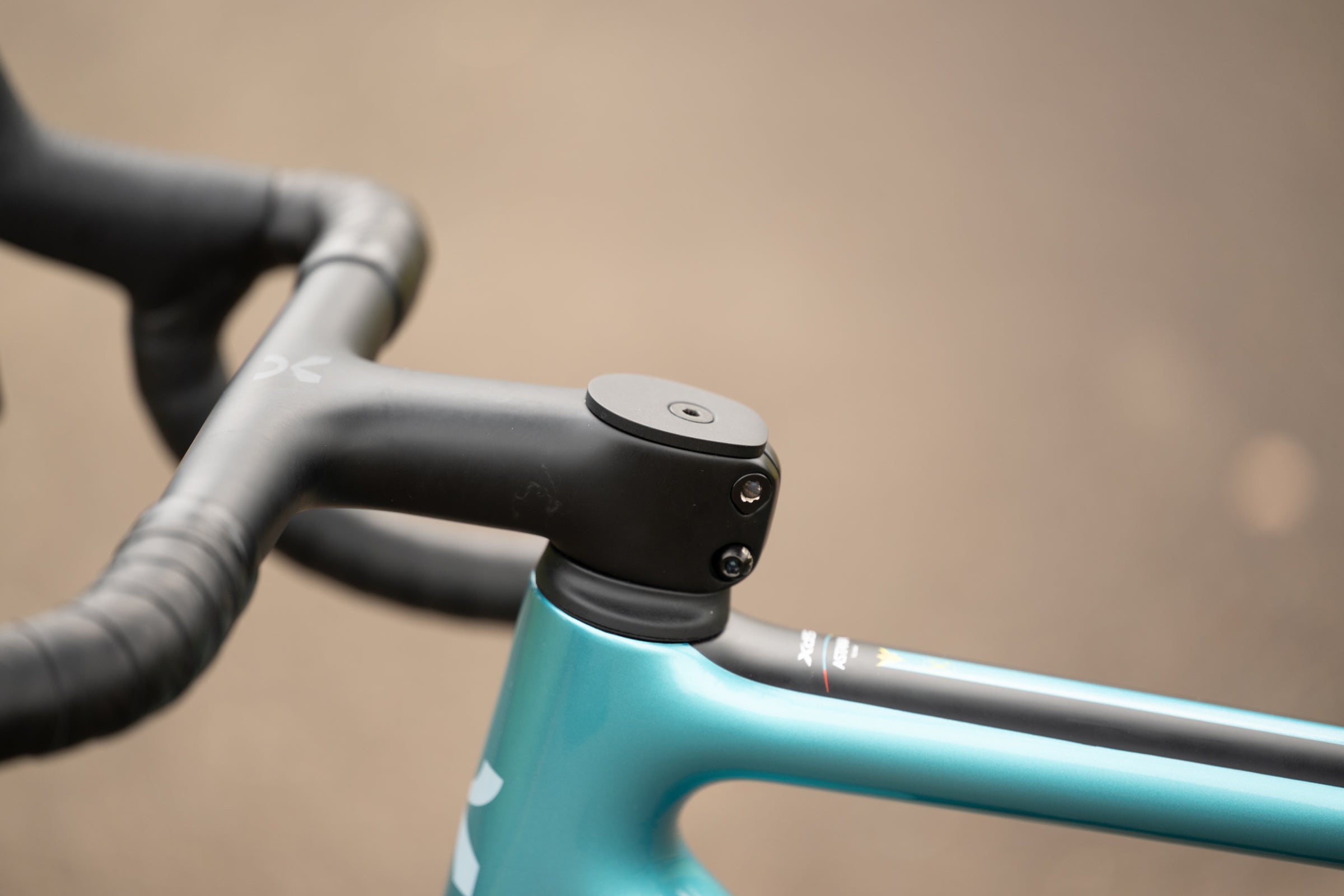
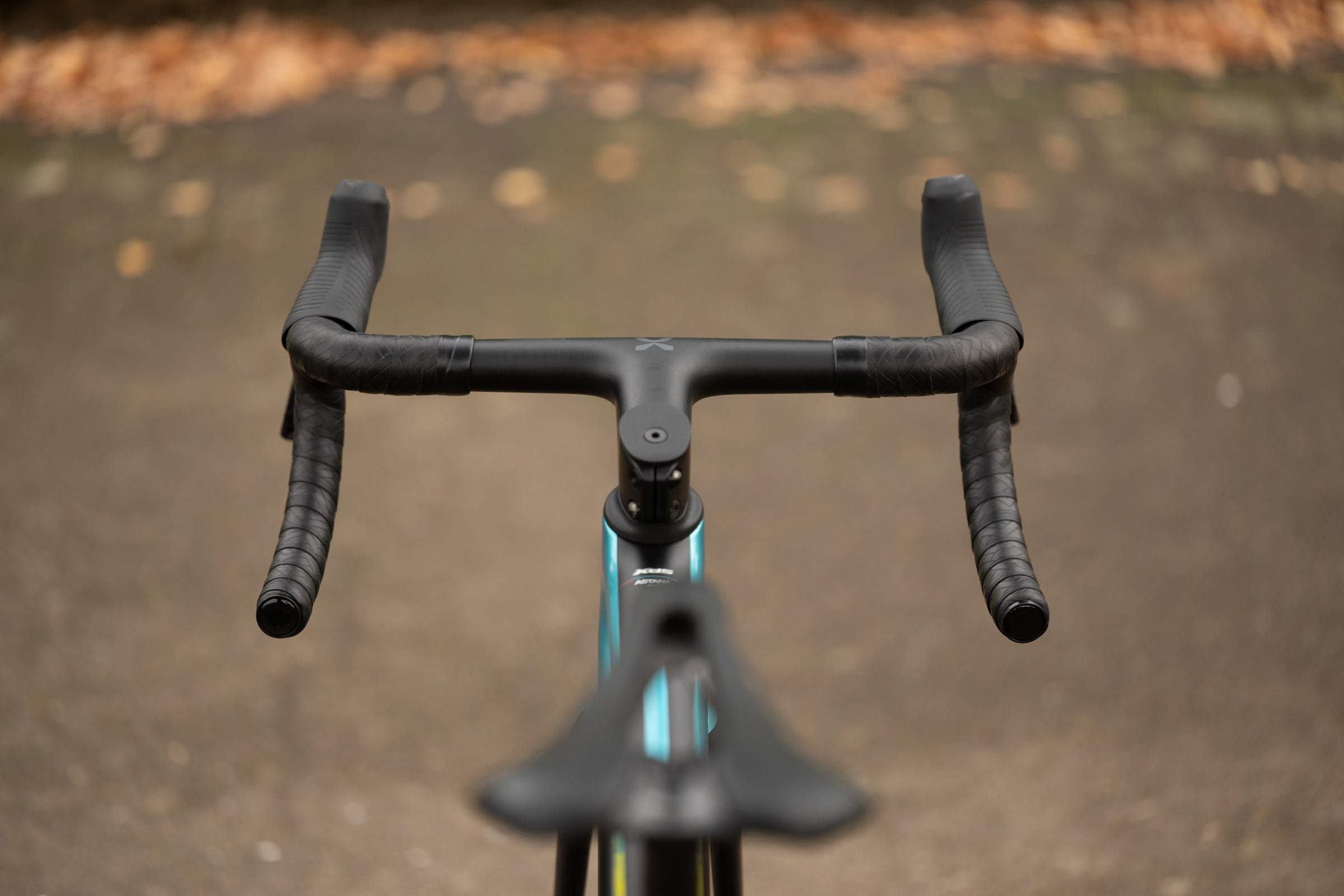
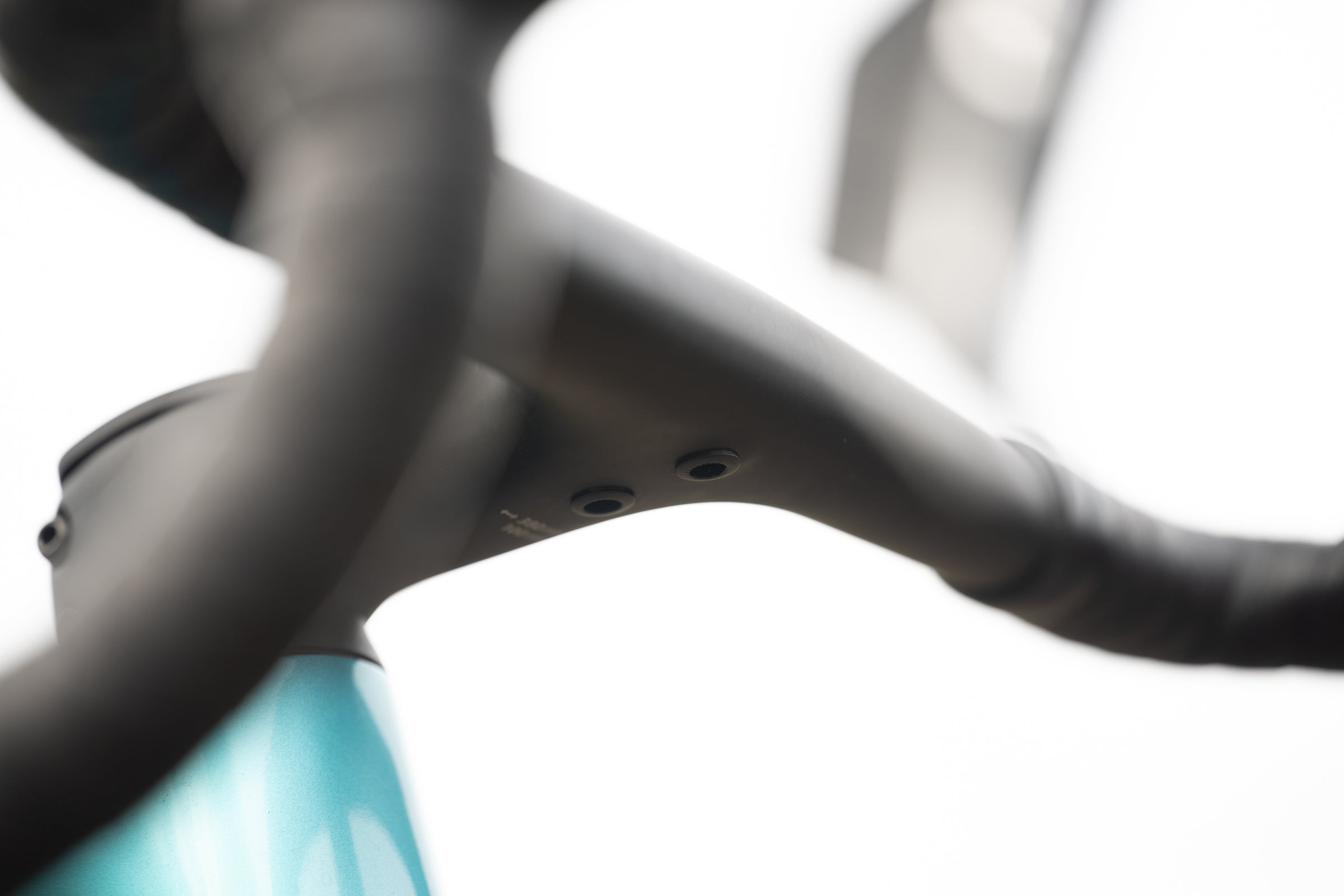
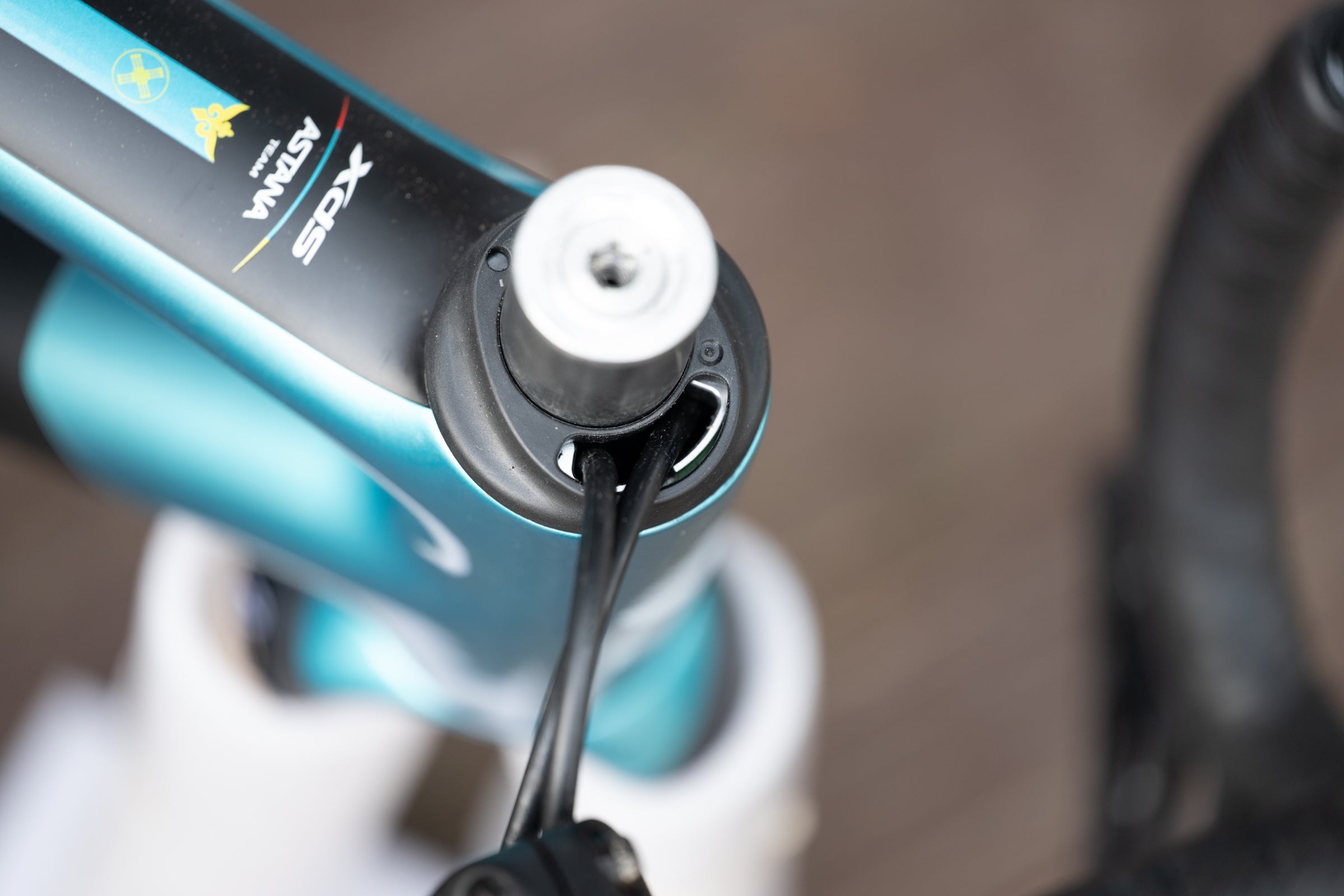
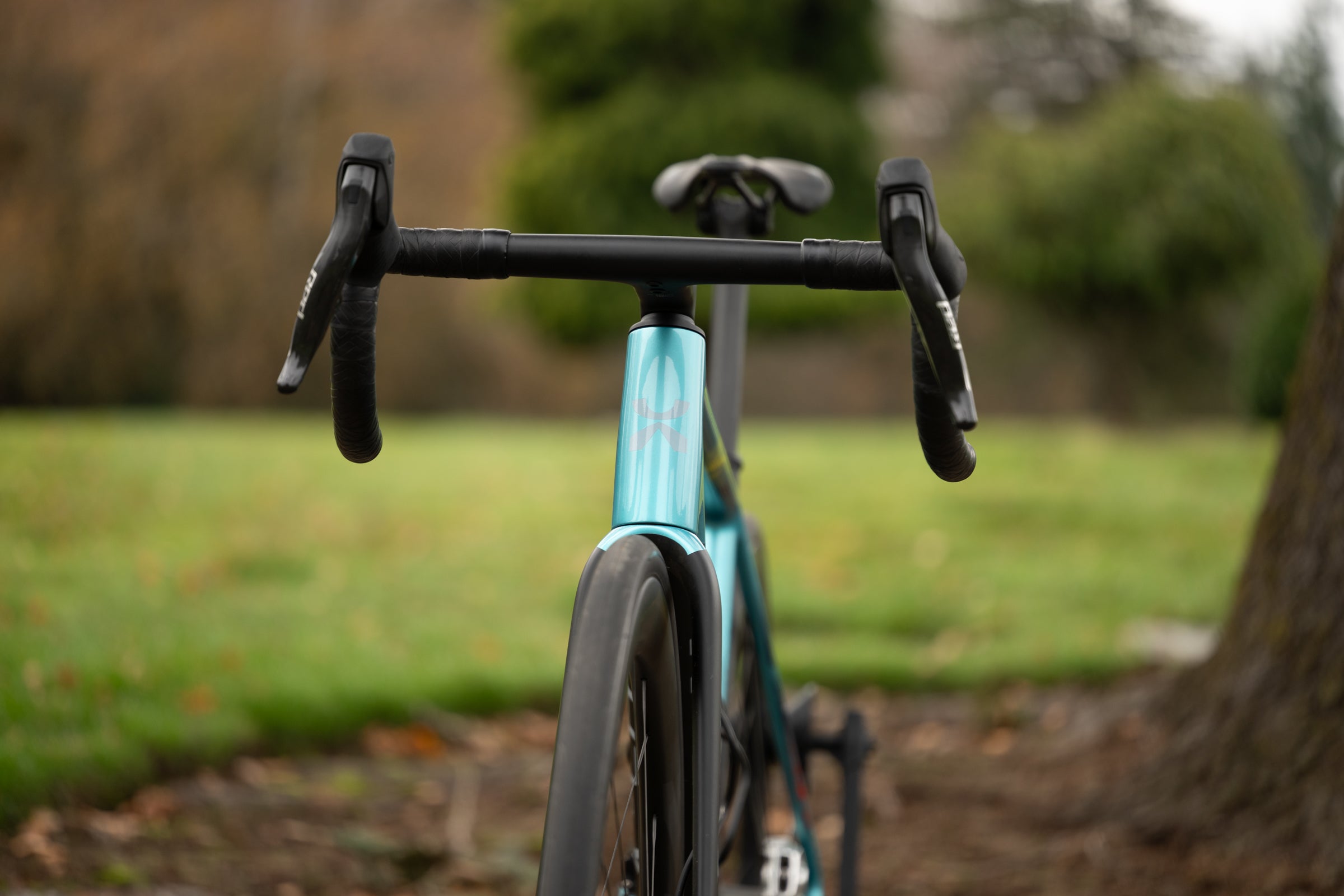
For cockpit pieces, it’s mostly XDS with a Selle Italia carbon-rail saddle. The seatpost is not proprietary however; my RT9 is using an XDS piece with a seat mount that uses a side-grab mechanism. The bar and stem are a single unit with internal routing in front of the steerer tube. The bars are round and I’m running a 37×100 as there’s no 37/38 or 39/40 cm width available with a 110 stem. The design does allow the steerer tube to extend beyond the top of the stem which is always nice for fitting options early on.
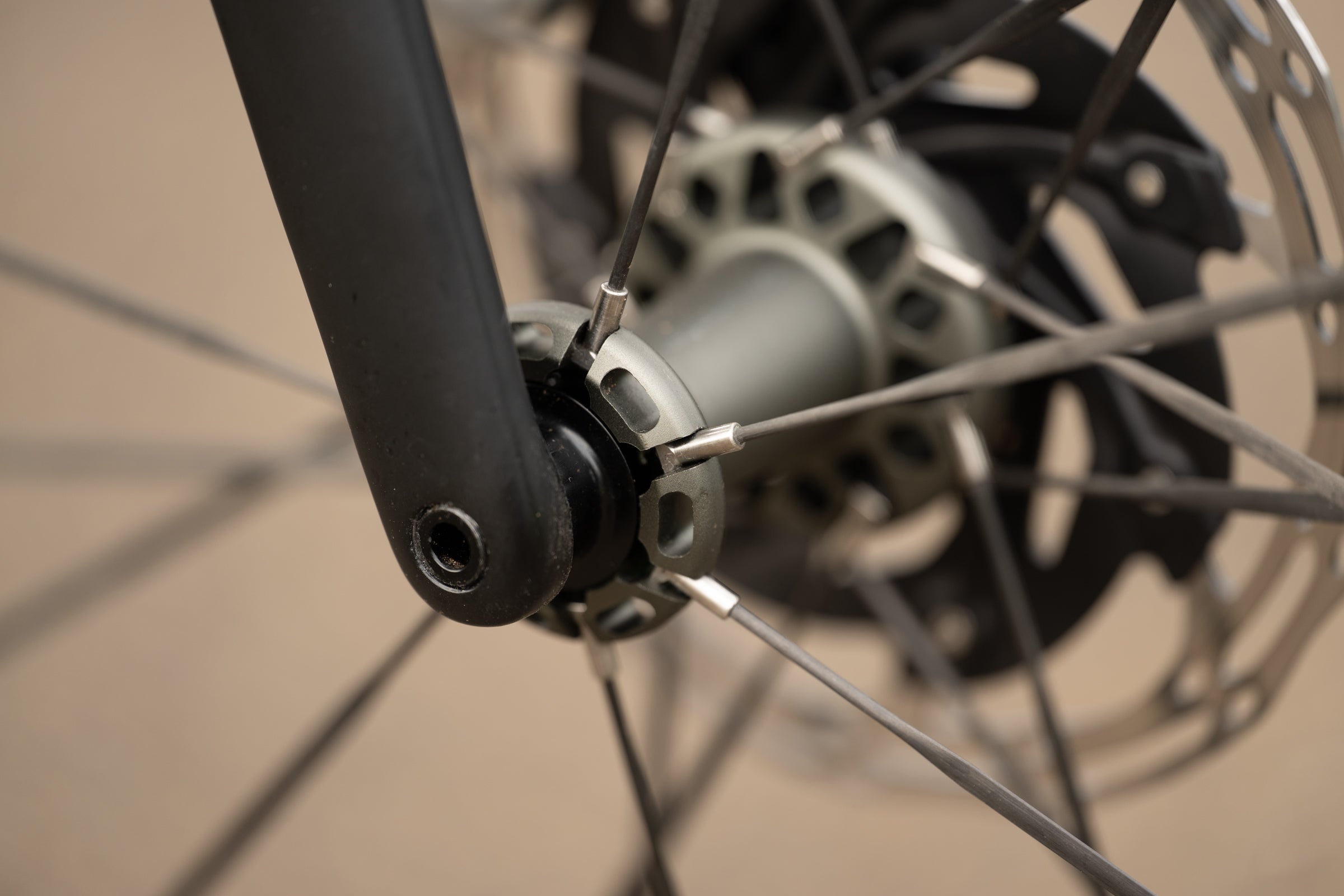
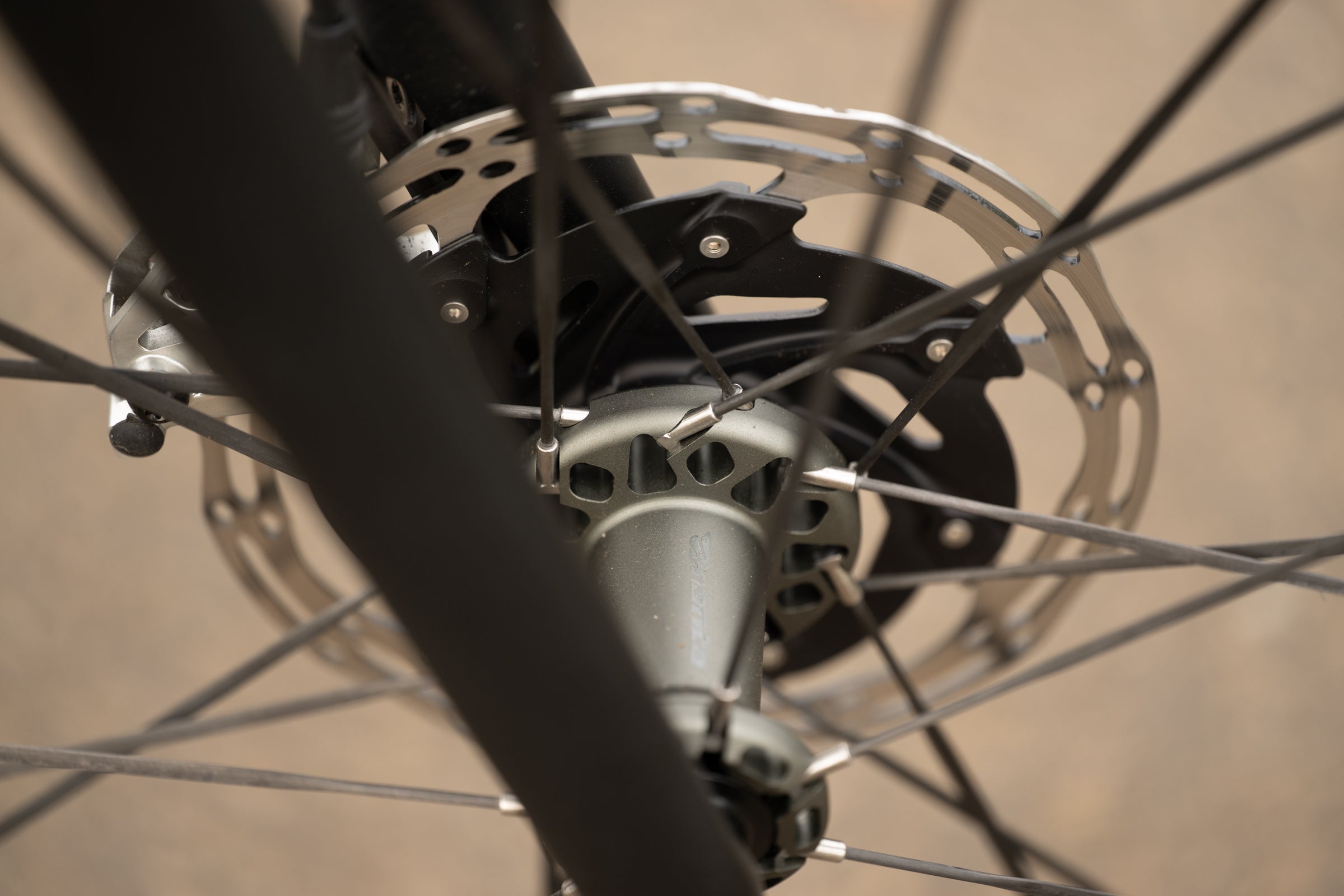
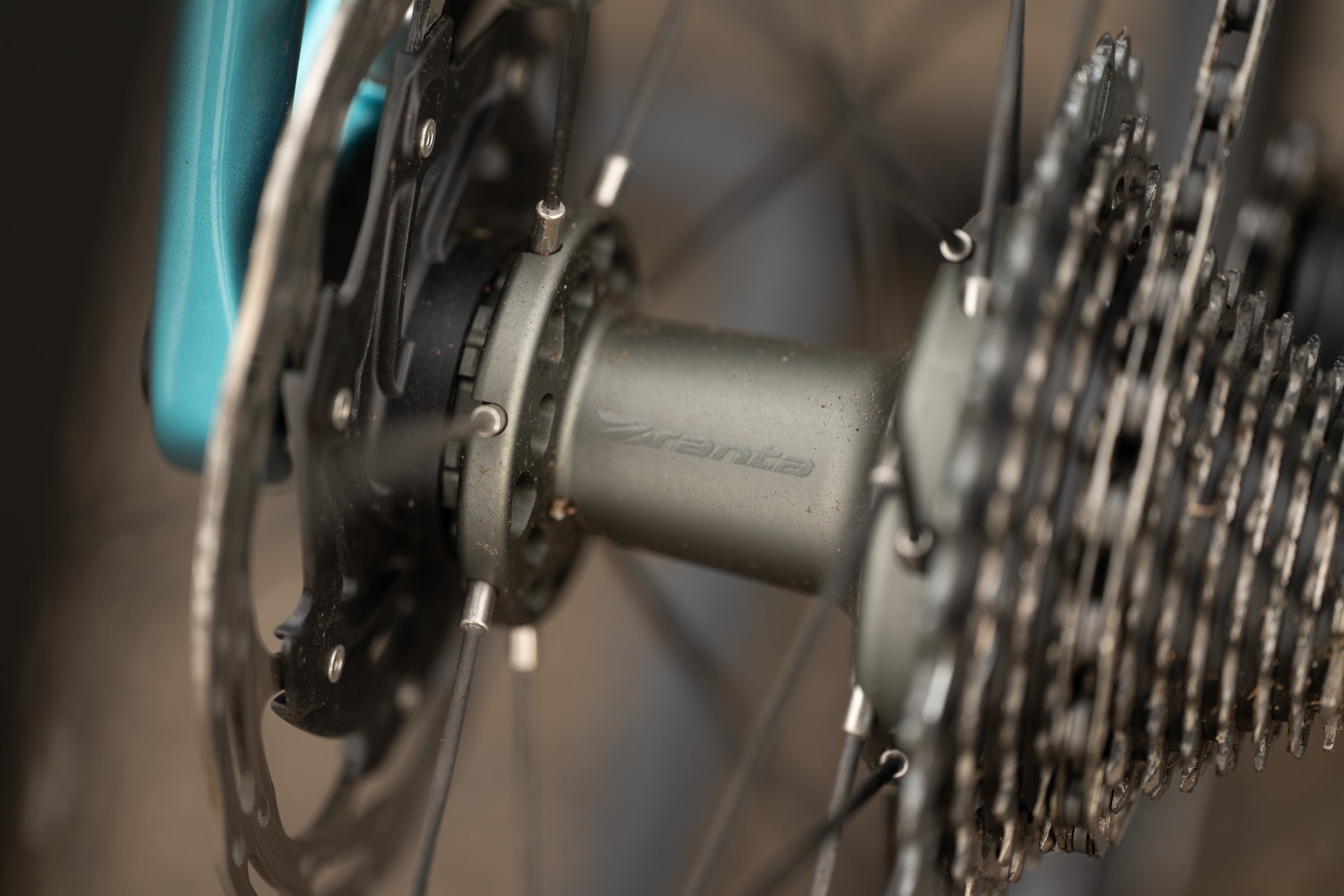
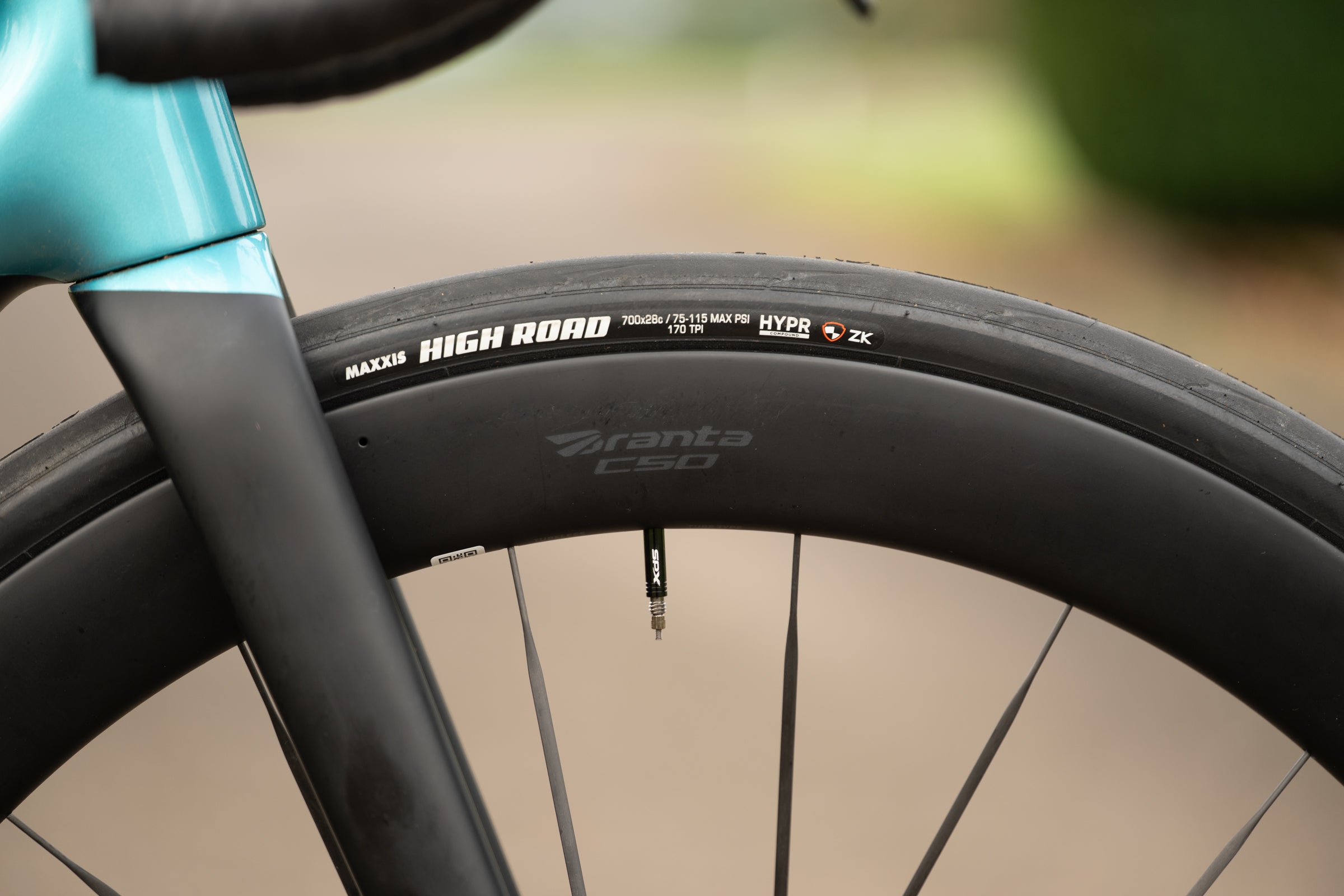
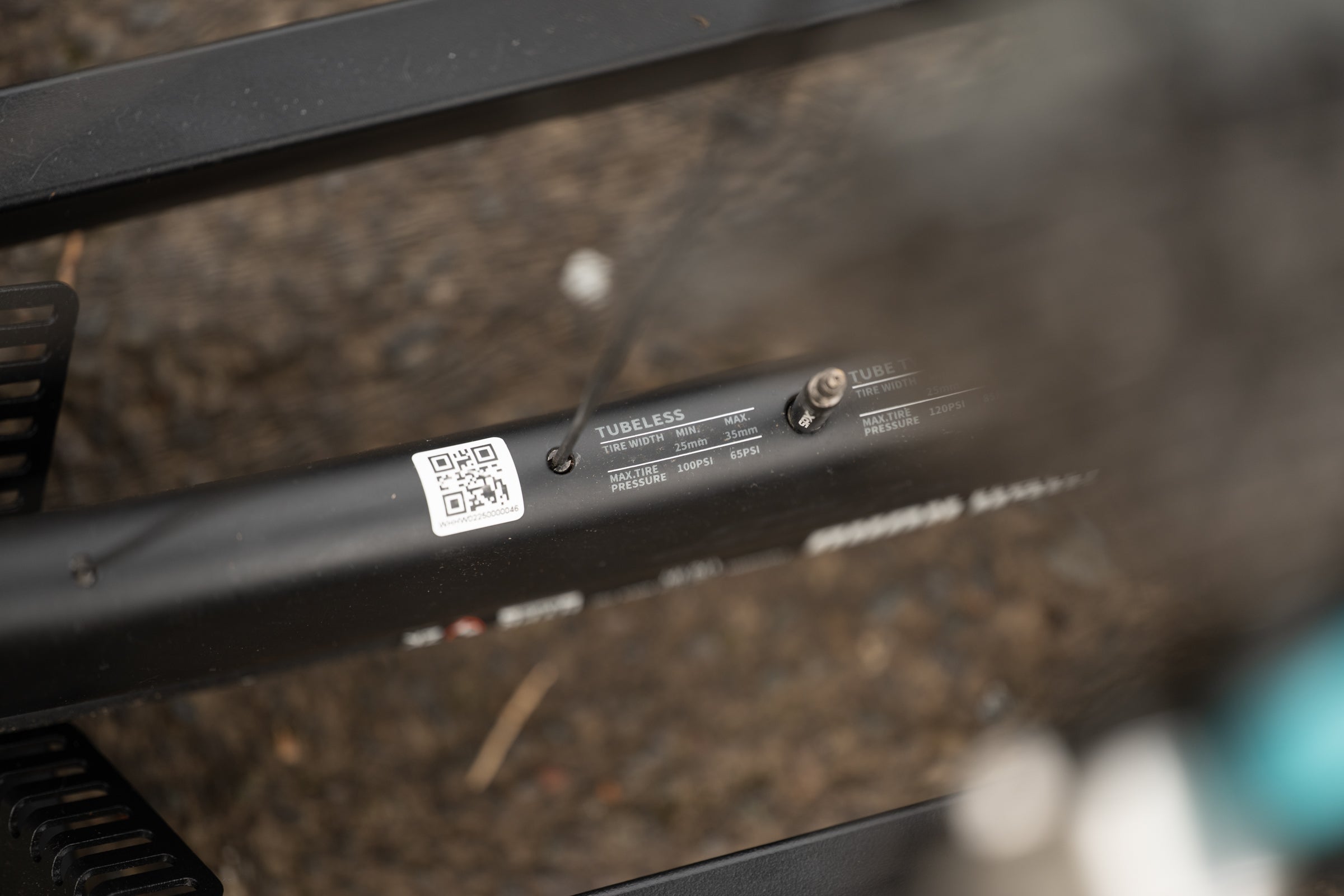
The wheels used are the XDS Branta C50 ULR. As indicated by the name, this is a 50mm deep aero wheel and it has carbon spokes. Internal width is 21mm with a 28mm external measurement. Claimed weight is 1250 grams and the tires on my test bike are the Maxxis High Road in a 28mm width.
XDS RT9 Geometry
XDS RT9 ride experience
Right or wrong my go-to expectation for a bike like the XDS RT9 is flexible and twitchy. Thankfully that’s rare in a modern bike and the RT9 mostly avoids that as well. In a straight line there’s none of the nervousness you can get with frames that resonate and follow road imperfections. During my standard test of riding on the white line at the edge of the road it tracks straight and true and I never found myself struggling to keep the bike in line.
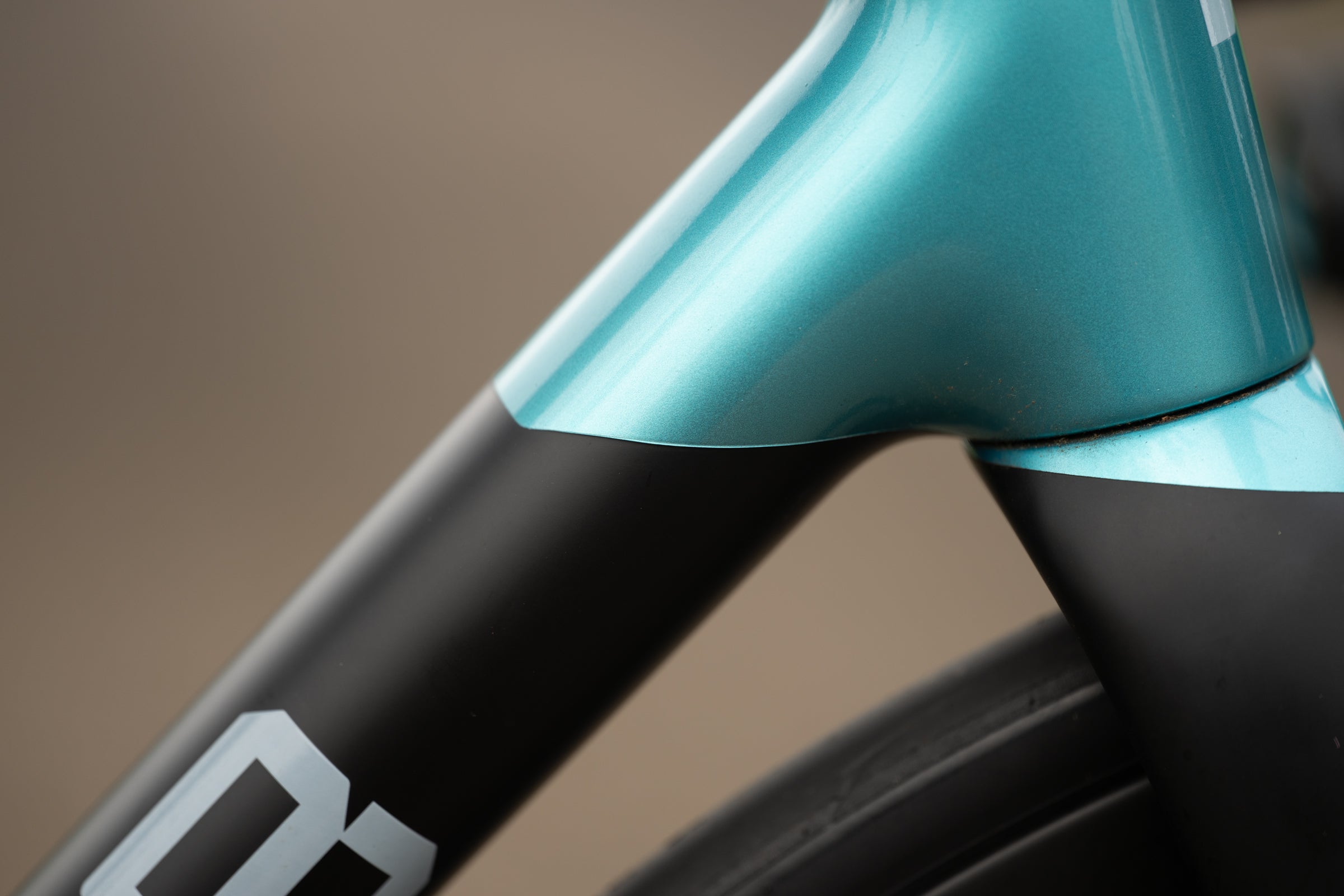
In retrospect I would lay that stability at the foot of the frame technology. There’s an oversized downtube that ties the headtube and the bottom bracket together and that pitch-based carbon to help calm any resonance. You never feel twist and there’s stability here.
There’s also the expected feeling of a bike this light. Even with plenty of experience with bikes in this class, it always brings a smile to my face. Tip it up on one wheel to move it through the house, or carry it down my front steps, and it’s so shockingly light. Around 13.5lbs as you take it out for a ride.
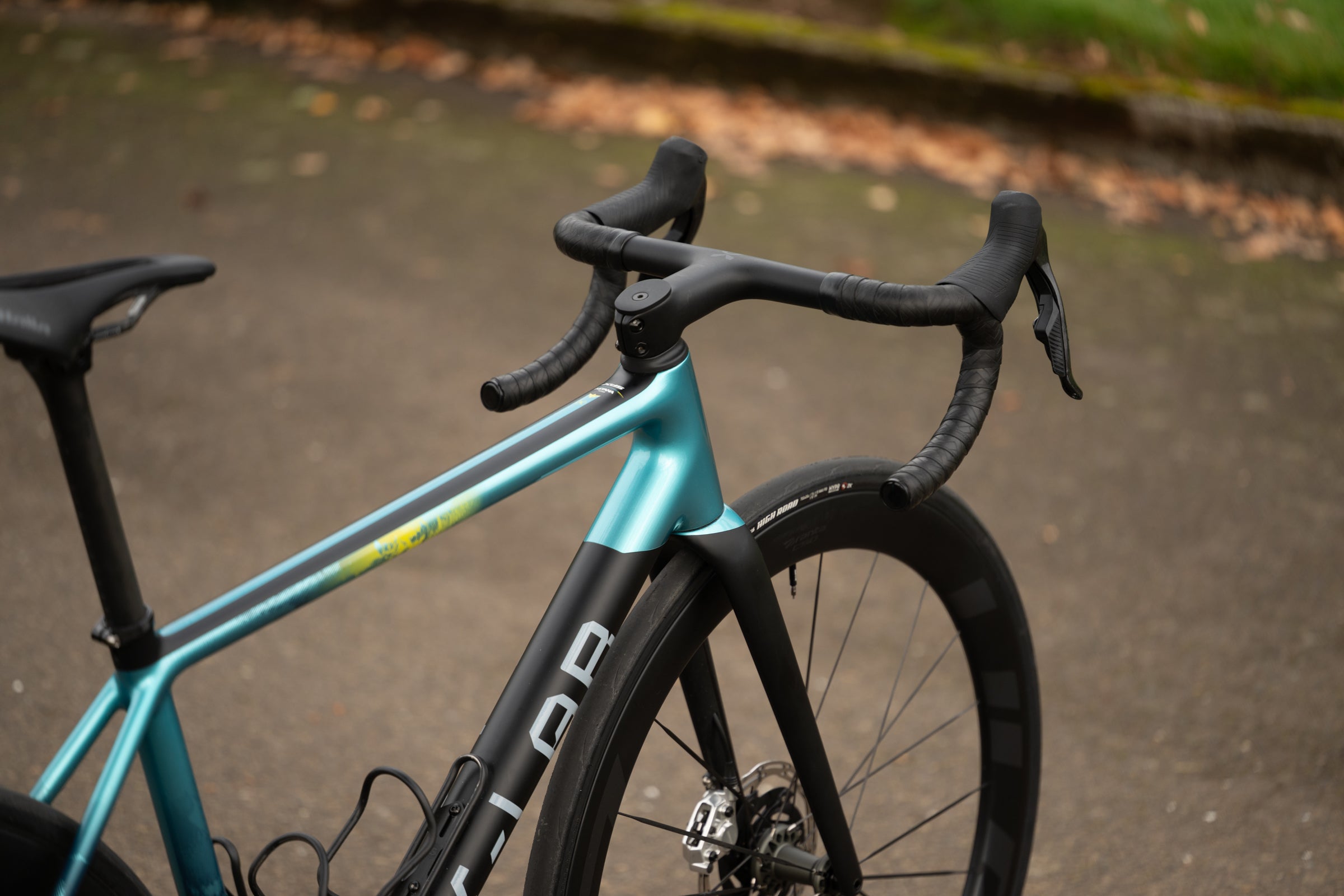
When you attack a hill there’s the carbon tech and the downtube stiffness paired with an exceptionally stiff handlebar but there’s also just a lack of weight. It doesn’t make me any faster up the hill but it certainly makes me feel like a hero. Go ahead and throw it back and forth, it feels like nothing.
That handlebar though, that’s the first thing I’d change. It’s overly stiff and the narrow round tube profile was not something that worked for me as I spent more time with the bike. It’s also not available in sizes that make any sense for my fit.
Typically I request a 38×110 and expect that I’ll actually get a 40×110. XDS offers 37 and 39 widths (with flares on the drop to 40 or 42) which already differs from a number of brands but what the brand doesn’t offer is a 110 stem in those widths. I have to choose between either a 100mm stem in my preferred width or a 120mm with a 39cm width. The larger choice would probably have been the better option for me but it’s still stiff and almost sharp under your hand.
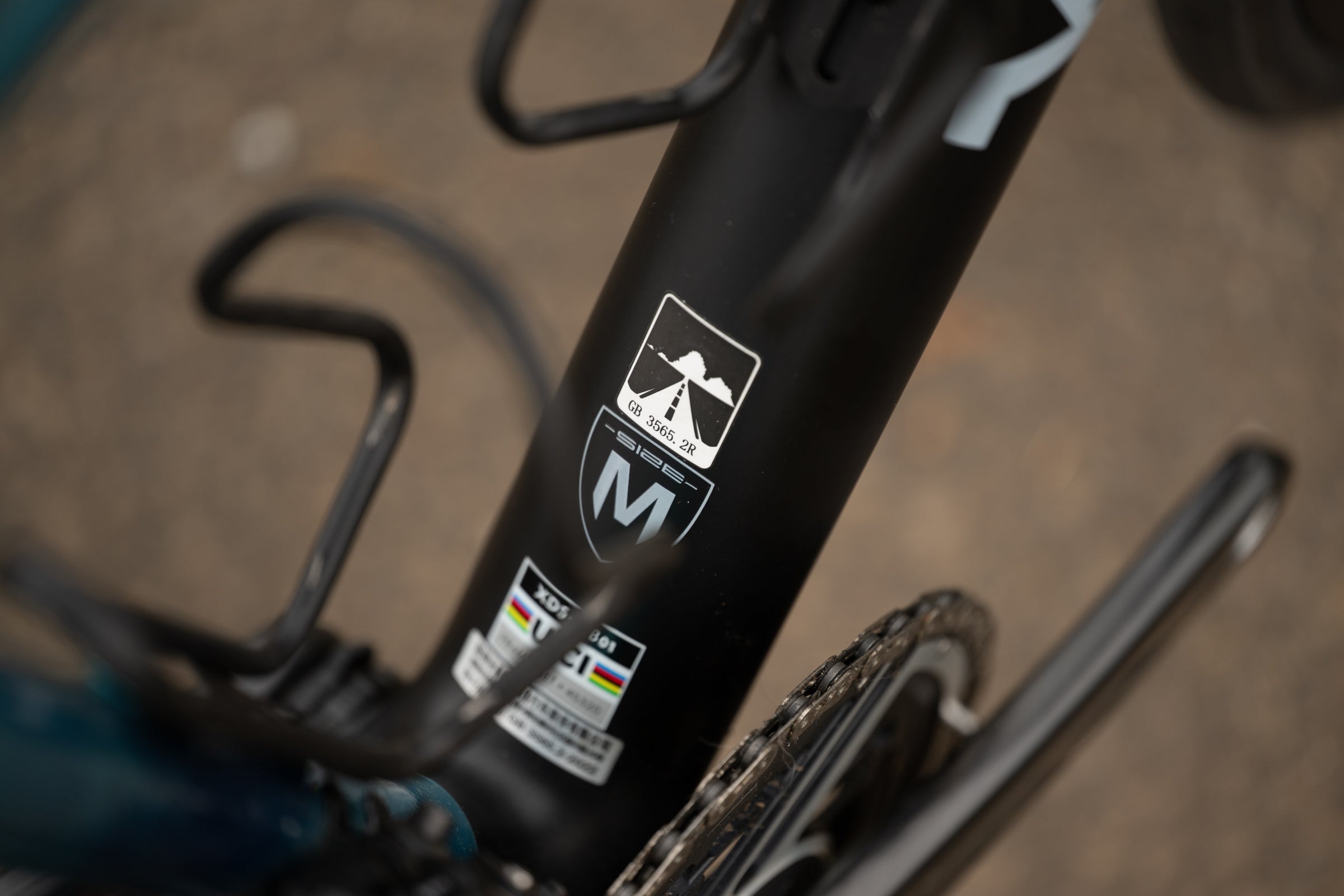
It’s also not only the handlebar that has some sizing issues. I happen to fit a medium perfectly but there’s only four sizes topping out at a 56 for the large. It’s actually refreshing to say but if you are tall, look elsewhere. This is a small bike.
The other oddity, aside from the gearing which I mentioned, is the aero wheels with the climbers frame. This one is a bit easier to deal with though. Given what I’ve seen in our comments you might even prefer this mix.
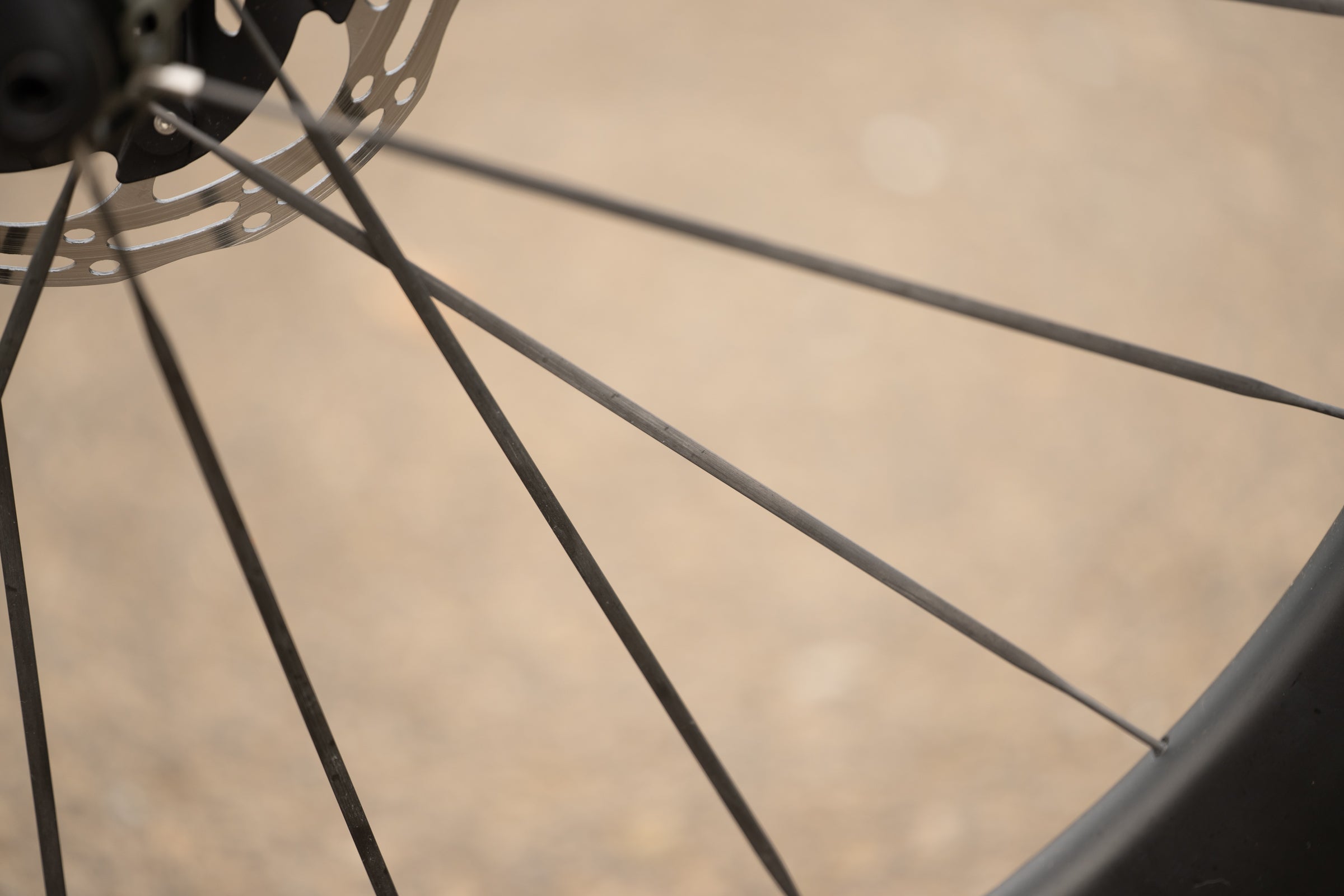
As a reviewer though, I want to see this bike follow a theme to its end. What would it feel like if that same material science tech was applied to matching 35mm climbers’ wheels in the 1100 or even 1000g range?
I’m also not sure I’m a fan of these wheels in general. The Maxxis tires are not doing anyone any favors here but the wheels also seem quite stiff. XDS claims this is intentional with the stiffness designed to compliment the frame and maybe that works but I’d like to see a little more flex somewhere. If the wheels and frame are both matched I’m going to again point to the handlebar as being in need of some finessing.
I’m starting to get into the weeds a bit here though. The overall experience of riding the XDS RT9 is all about that balance of weight and stiffness. Specialized went for a vibe in the Aethos 2 while this is, like the Scott Addict RC, a WorldTour level race bike with stiffness to match. The turn in is fast and precise but there’s no jitteryness.
Usability
This section is almost a copy and paste from recent articles. There’s a threaded bottom bracket and it’s BSA which is easier to get a tool on compared to internal T47. There’s also a standard round tube seatpost and UDH at the rear.
You do have internal routing here, with no special usability tricks, but the ability to stack spacers on top of the stem is often a welcome detail.
Conclusion
The technology in the XDS RT9 frame is incredible. Managing a 550 gram weight in a bike that’s not only rideable but actually does well when sprinting or attacking a hill, is impressive. It also can’t be ignored that while we don’t know the exact price, or what lower models will run, it’s thousands less than the competition.
That said, I think there’s room for some finessing here. More sizes would make this more accessible but given that most frames aren’t that accessible to smaller riders I’d slide on that point. I still want more bar options though and I’d prefer a bit more flex in that bar. I also really want a climbers wheel option, for chasing the lightest possible bike, and the gearing needs an adjustment.
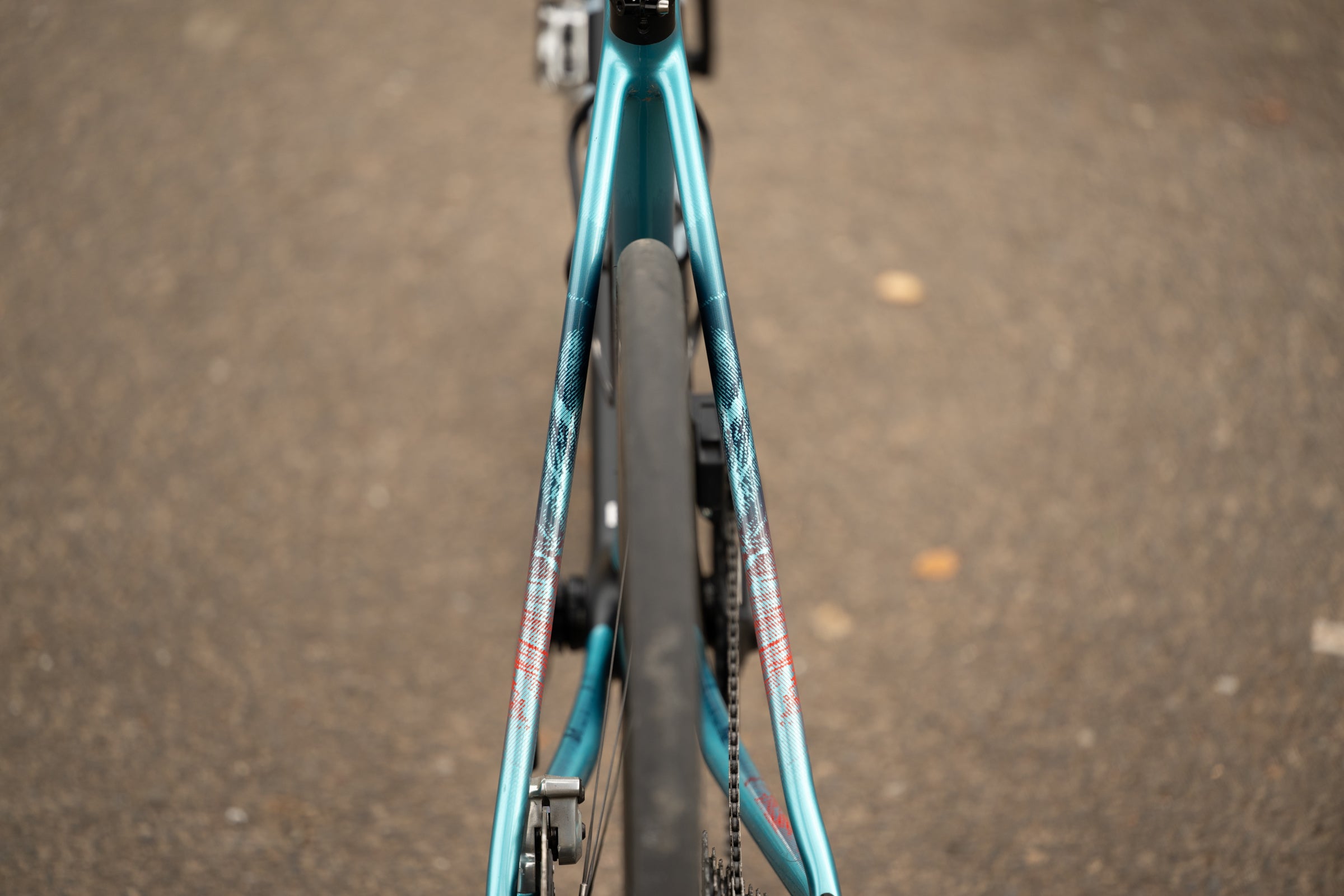
There’s also the challenge of actually getting an RT9. It’s a good bike but getting your hands on one is going to be tough. If you do manage to import it, go for the raw carbon. The team colors don’t do this frame justice and the real showpiece is the carbon anyway. Every bike tells a story and the price of the RT9 shouldn’t be the story when the materials and manufacturing is so impressive.
Additional images