
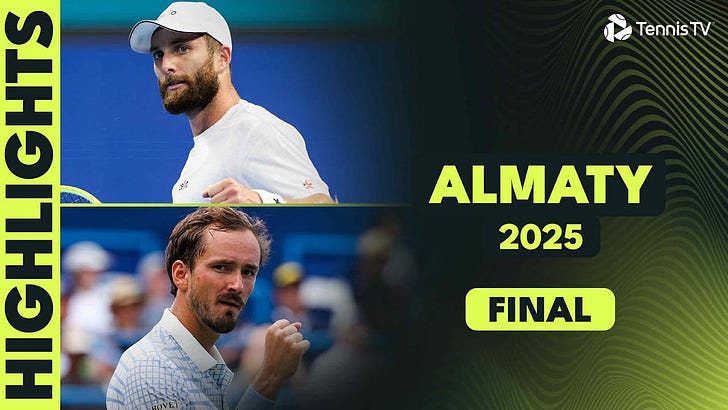
Something a little different this week.
I watched the extended highlights of each final, and in conjunction with Tennis Insights’ summaries, post a few thoughts on each match.
Let’s start in Almaty (highlights).
Themes: swing volleys — drop volleys — defensive slice — serve advantages
Daniil Medvedev defeated Corentin Moutet 7/5 4/6 6/3 in the final of the Almaty Open to end an 882-day title drought. Medvedev now has 21 career titles in 21 different cities.
This was a treat to watch. A genuine middleweight bout given the lack of stopping power off the ground, the rally tempo was something more like chess (okay, maybe blitz chess); momentary conscious thoughts swirling before each strike. Moutet using his guile and slice to bring Medvedev’s game to a stall down low, the Russian’s metronomic groundstrokes often doubling as effective transition volleys. It looked like Moutet was trying to direct slice traffic short and low on the ad side, where Medvedev was forced to hit up with his relatively flat backhand, and as a bonus, bring the Russian in on unfavourable terms. I liked this play as a lefty, because Medvedev is either forced to approach down the line (over the high part of the net) into Moutet’s backhand defense, or he can approach crosscourt — an easier shot to execute — but that’s into the running forehand of the lefty who then has line and cross options with Medvedev having to cover across the net.
If there was a number to describe how cagey it was, how about the average rally length: 5.7!
A look at the match stats:
We can see in the bottom left chart that Moutet had a slight edge in the baseline rallies (counted as rallies from ball 3 onwards), but perhaps surprisingly, Medvedev carved out a clear edge at the net, coming in more often and winning 32 of 54 approaches (59% win-rate to Moutet’s 51%).
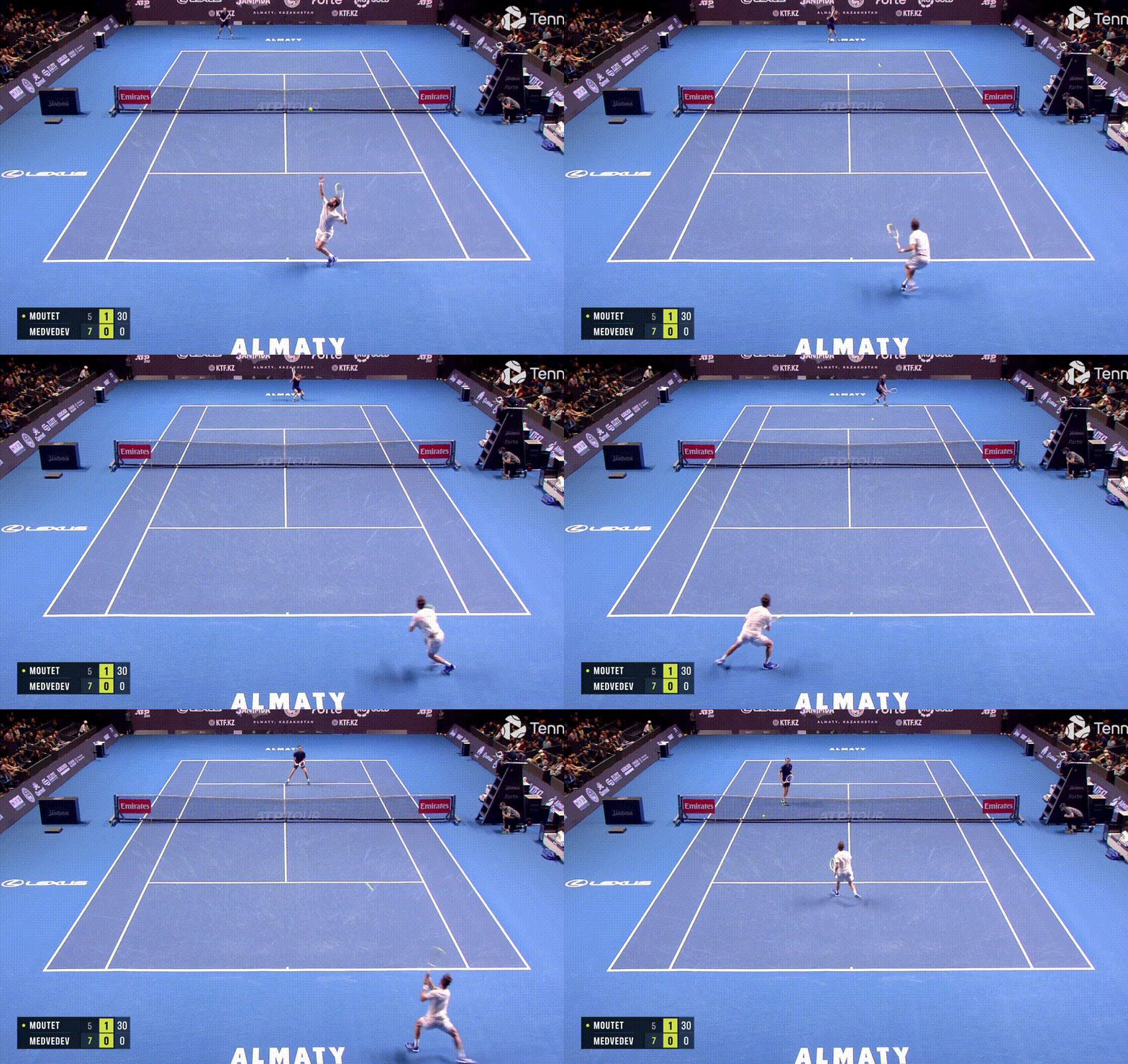
I’ve been critical of the Medvedev transition and net game in the past, but in Almaty the Russian successfully blended nice touch on the drop volley with some swing volley action when given a sliced ball above the net. He did it at 30-30 in his opening service game:
And here’s an example where Medvedev was forced to go short given the low angle stretch Moutet delivered here:
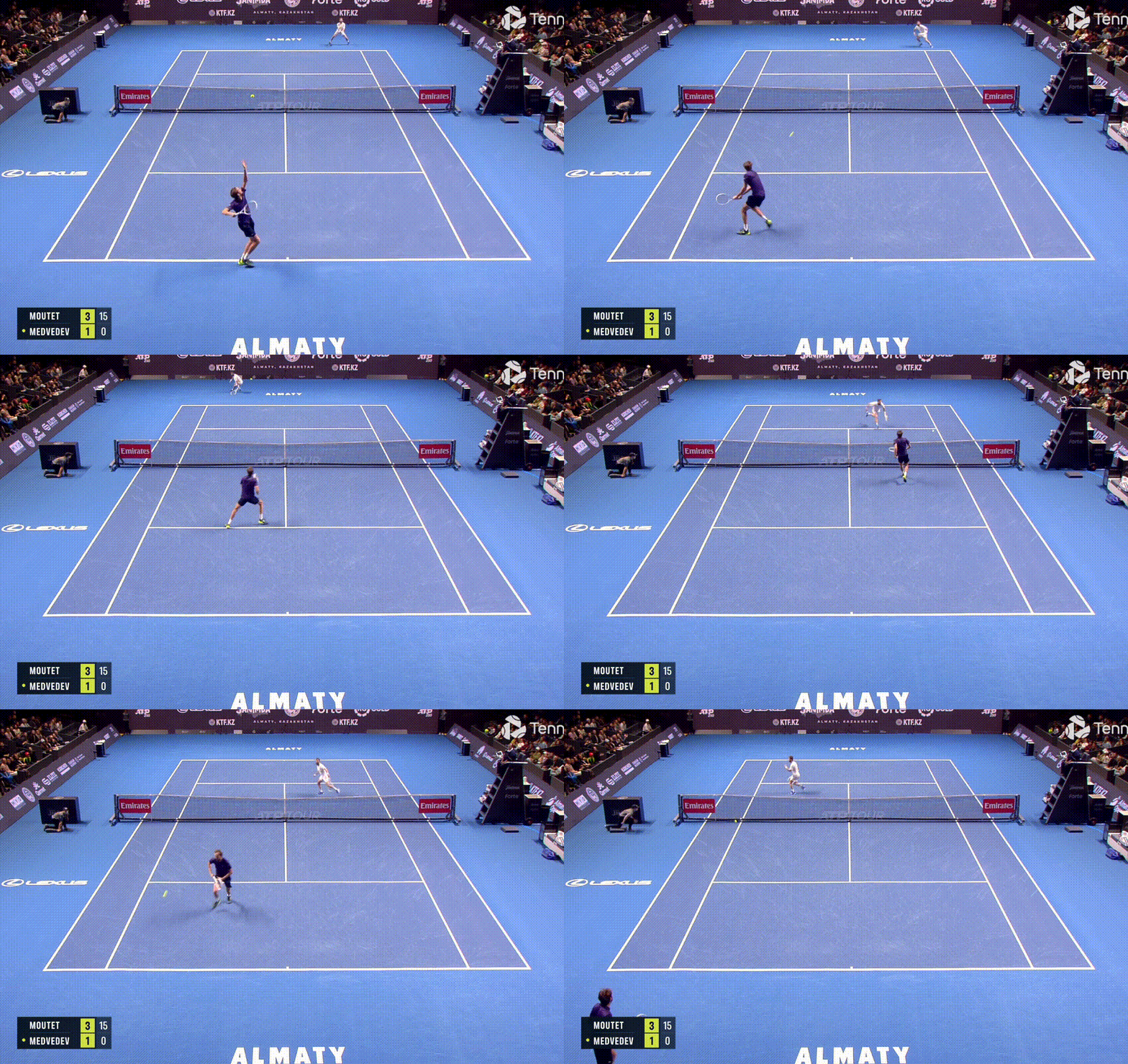
Moutet has a great backhand slice, and he used it not only as a stock rally ball to stall the rallies, but like Alcaraz, the Frenchman is very effective at getting the defensive backhand slice below the net for the two shot pass. It’s basically a defensive drop shot:
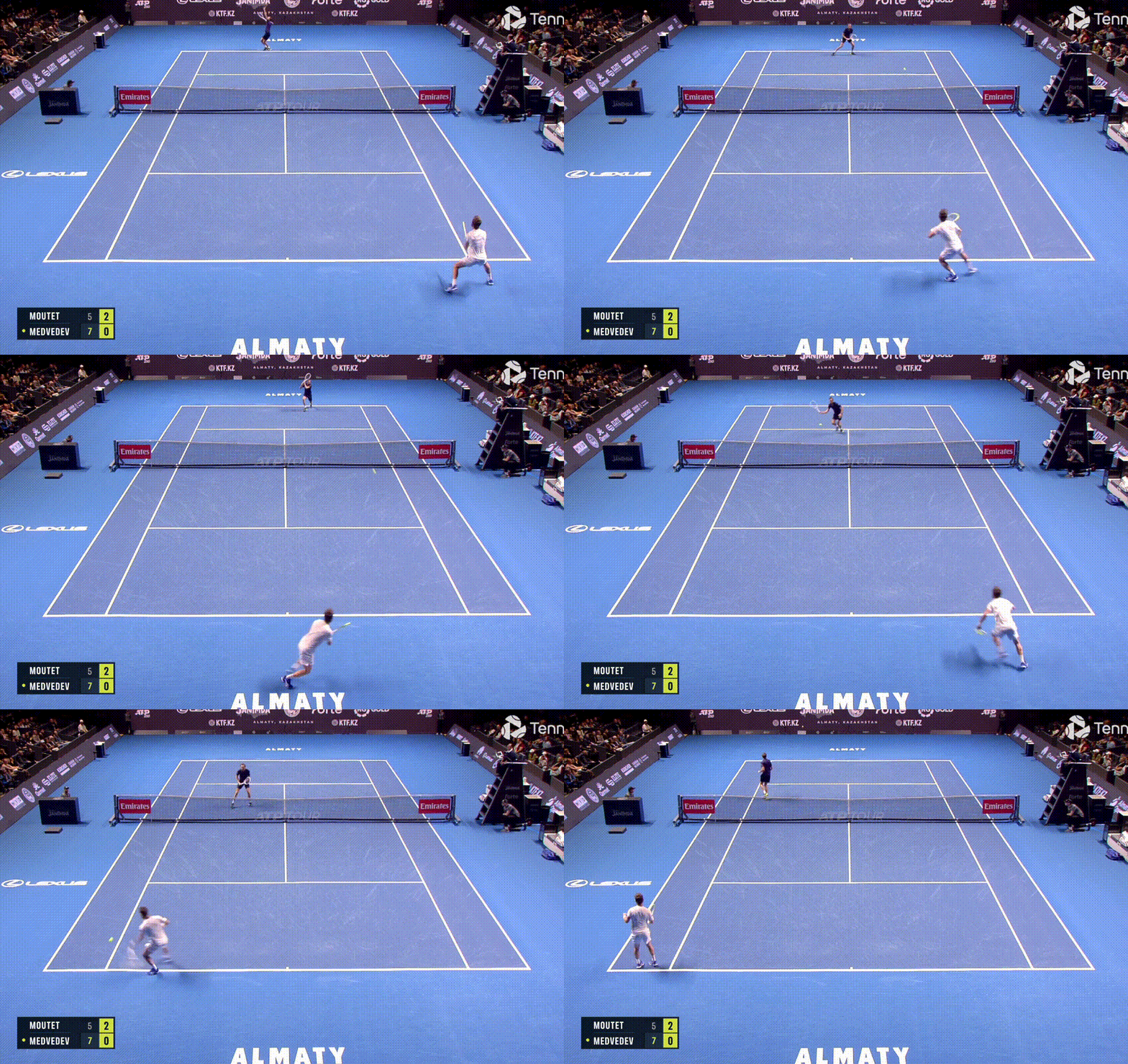
The set point in the first set had everything. Check it out below (and keep watching for the epic point at 2-1 in the third):
Again note the defensive slice below the net in that point above.
On top of having an edge in the net conversions, Medvedev was also able to get into attacking opportunities more often thanks to his bigger first serve. This is the one area where the Russian has stopping power at his best (he’s a middleweight hitter, but he’s still a six-foot-six middleweight hitter), and if you scroll back up to the stats chart, on the right hand side you can see that Medvedev was ‘In Attack’ more than 50% of the time after his first serve, compared to just 21% for Moutet. That added up, with the Russian generating nine break chances in the match to Moutet’s five.
And speaking of breaks, here’s the opening point of the 4-3 game in the third where Medvedev finally broke to serve it out. This was one of those 21% moments where Moutet was actually in attack after his serve, but Medvedev is no steal slouch:

Match point was typical of the whole affair: 16 balls of cagey placement. Moutet again baiting Medvedev in on the short backhand, again getting the pass low, the Russian again answering the test. What a stab volley!

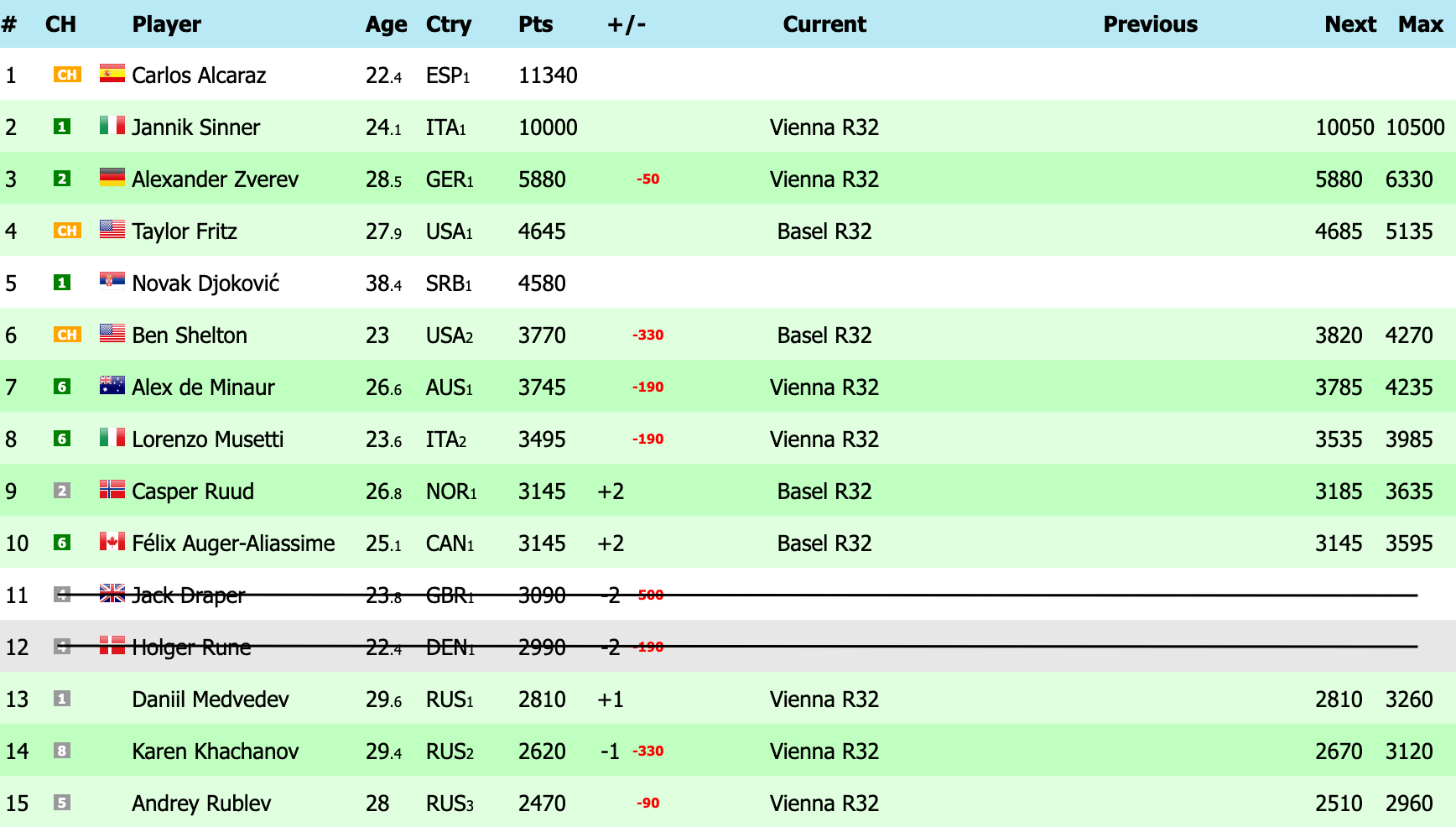
Medvedev moves up to 13th in the race to Turin.
Stockholm (highlights)
Themes: Ruud just smoking groundies — T serve placement — surface sensitivity
Casper Ruud defeated Ugo Humbert 6/2 6/3 in the final of the Nordic Open in what was a dominant performance off the ground.
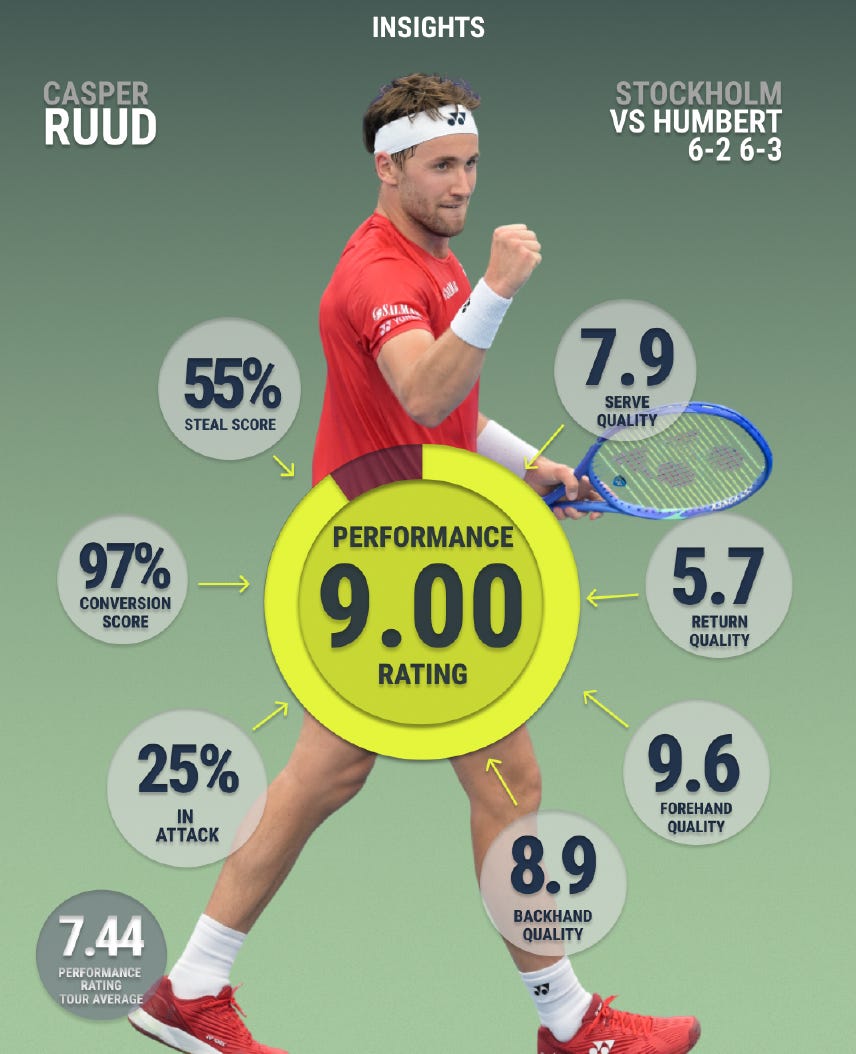
The Norweigian made some equipment tweaks following an early loss at the US Open this year, dropping to a 98 inch head size from his usual 100, as well as some weight and balance changes. While Ruud didn’t specify what those changes were, the trend in recent times is to go more manoeuvrable for more racquet head speed. Perhaps the smaller head size facilitates control for that trade off.
At times this was like watching tennis at 2x after seeing the Medvedev/Moutet highlights. Ruud’s forehand and backhand speeds were up on his 52-week averages (the backhand was up 4 mph and the in-% was up 6%), and overall it meant he rarely lost control of a point once he was in attack. The backhand was firing early: speed, placement, direction changes.
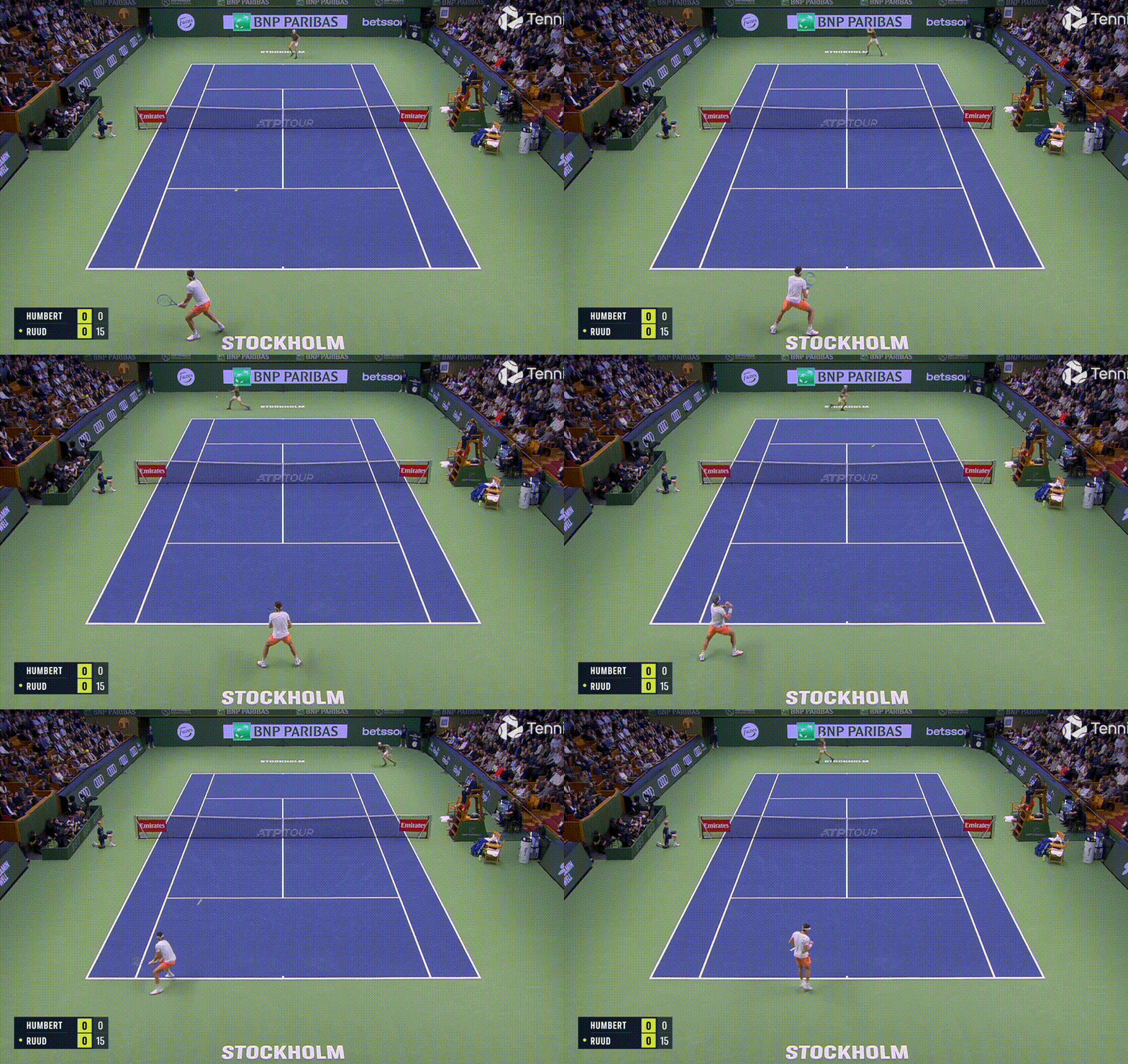
While aesthetically this match looked more one-dimensional in comparison to Almaty — both Ruud and Humbert are attacking baseliners — within the “attacking baseliner” category they are very different. Ruud hits with far more spin off both wings, and varies his return positions to include baseline blocks and deeply positioned arcing rips with the forehand. Humbert, by contrast, is an uber-compact lefty not dissimilar to Adrian Mannarino: hug the baseline, short swings, hit flat. As a result, there’s a certain surface sensitivity in his craft; he likes it fast, he hates it slow. Tennis Abstract did a great piece on Humbert last year that included a list of some players for reference of surface sensitivity. Compare the players who do comparably better on faster surfaces, with those who do better on slower.


Indoor hardcourts are usually the sweetspot for Humbert, but Stockholm is a bit of an outlier in that regard: it is one of the slowest indoor hardcourts on tour:
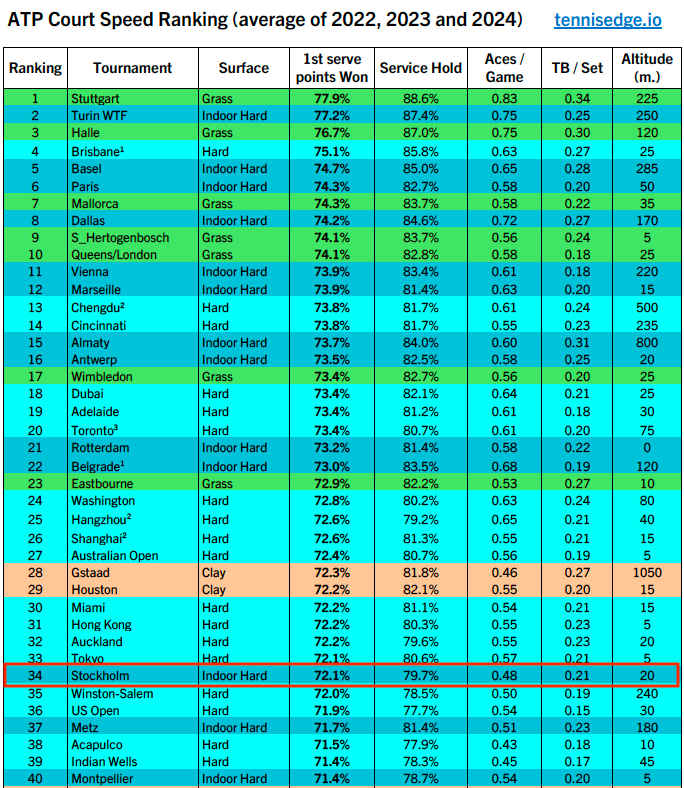
Anyway, all that to say that Ruud certainly looked more comfortable out there than we might expect given the opponent and surface labels, and that the slower court probably helped that somewhat. I’ll submit this for “best unintentional angle of the year”:
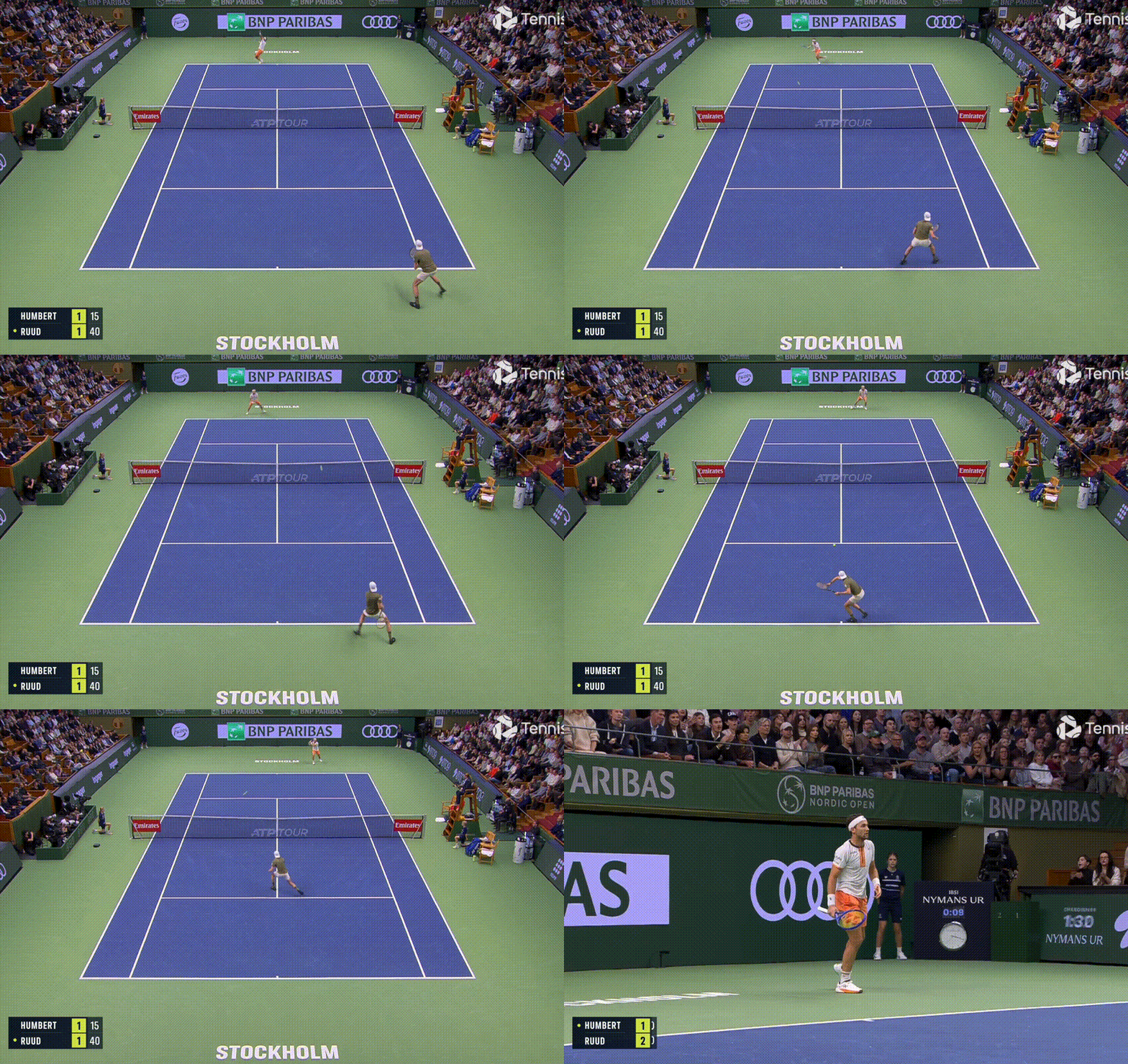
One way Ruud’s adapted to faster hardcourts in his career is to stand up on the baseline and block returns (Stan Wawrinka approves), before dropping back in preparation for defence. Less chip-and-charge, more chip-and-chase:
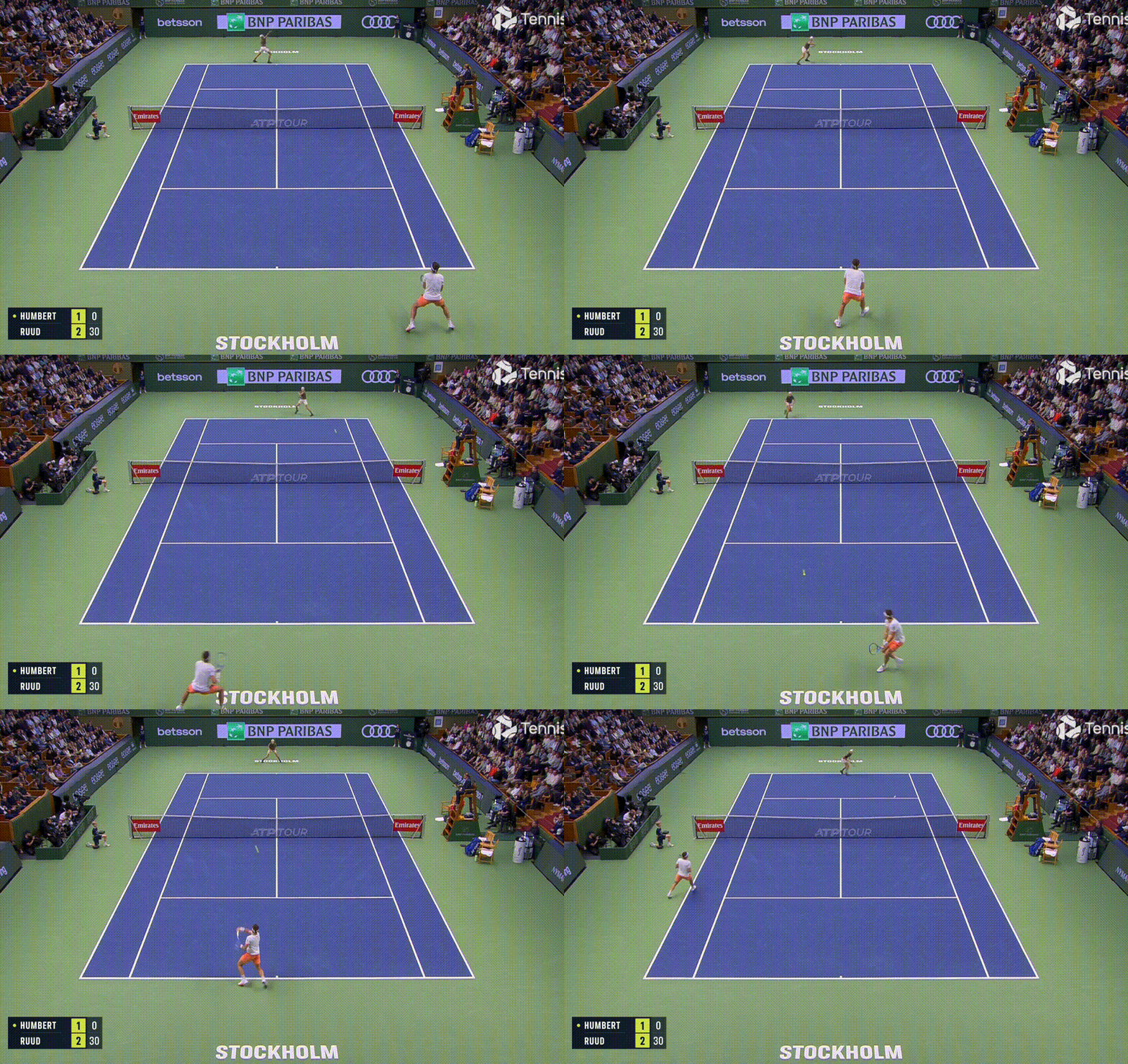
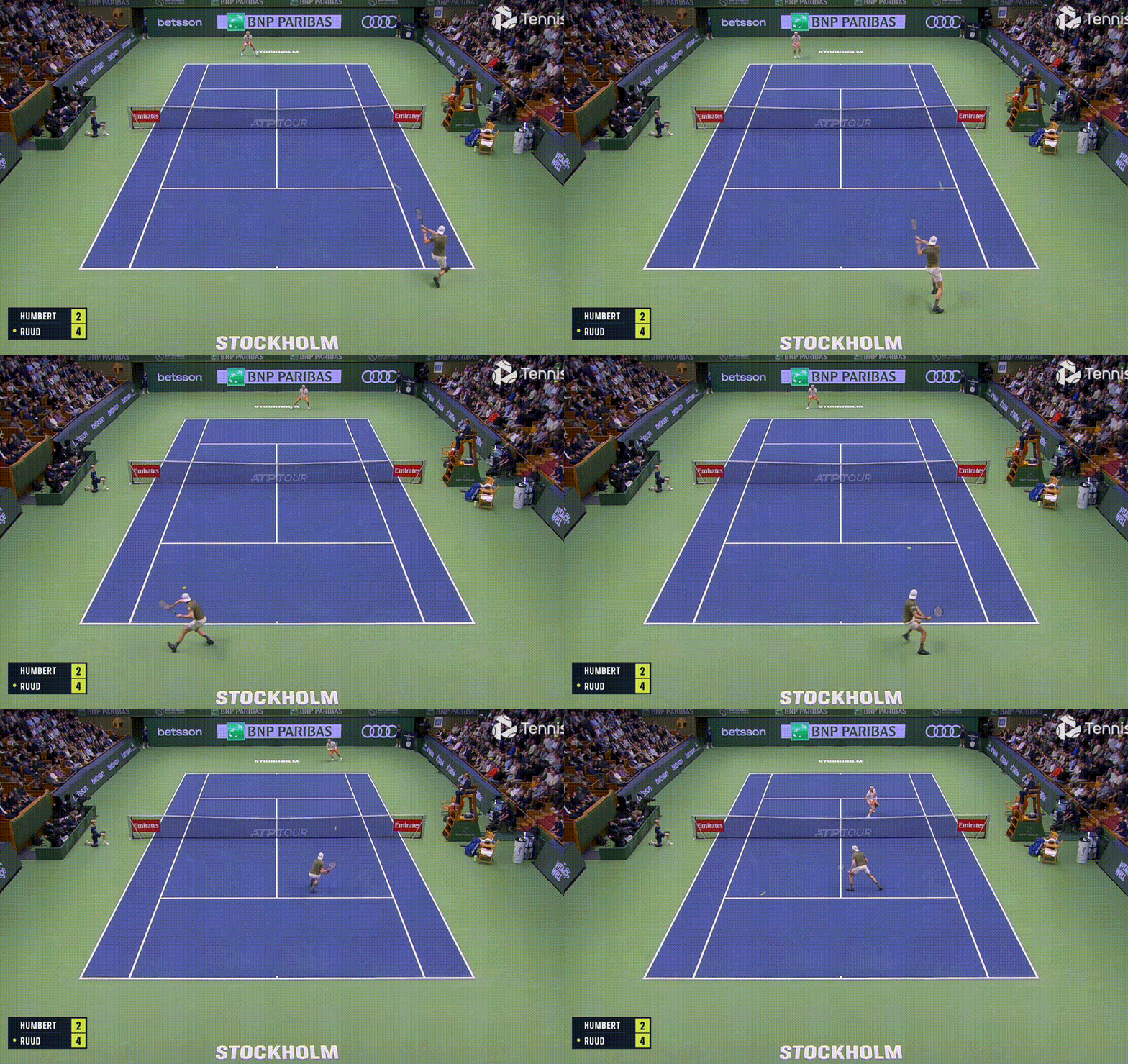
And while I wouldn’t say he’s a great slice defender like Alcaraz or Moutet, he’s certainly adept at using the slice for a two-hander.
It was also interesting to note how often Ruud went T on both sides with his first serve.
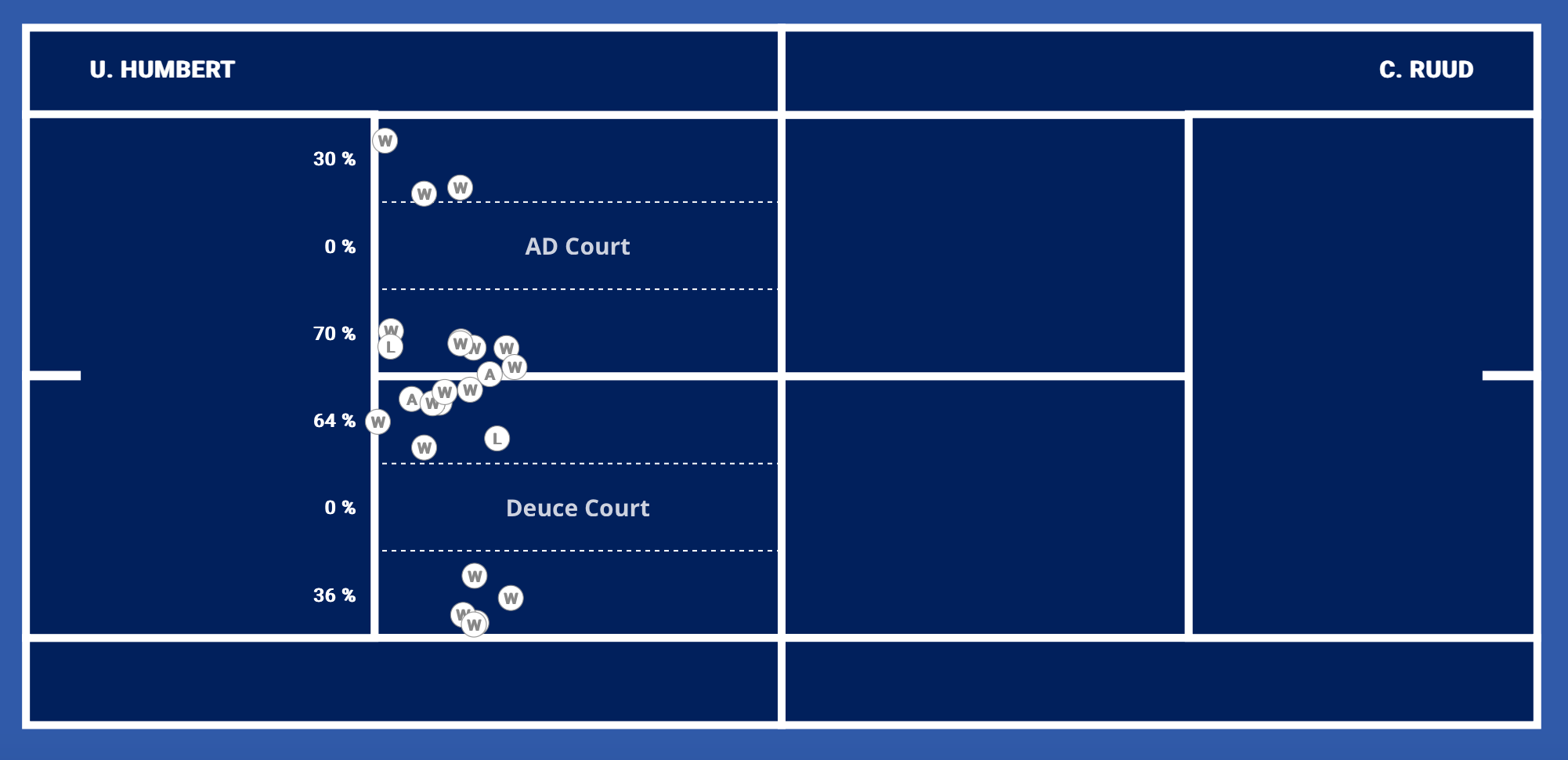
He won 22/24 first-serve points — utter domination — and I don’t have any figures at hand, but I think such a tactic was designed to maximise the Norwegian’s chances of getting middle-of-the-court/prime real estate plus-one-forehands.
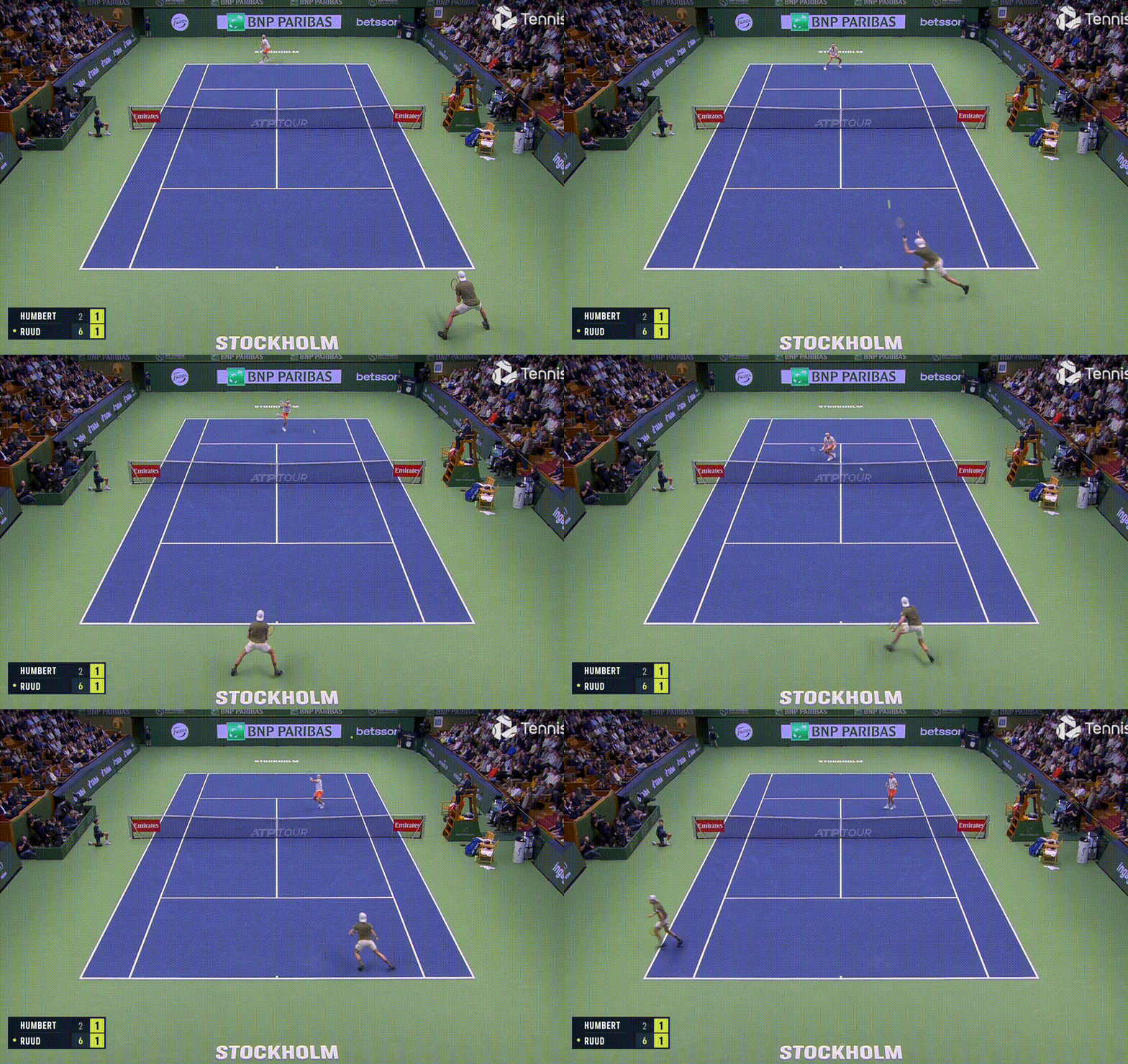
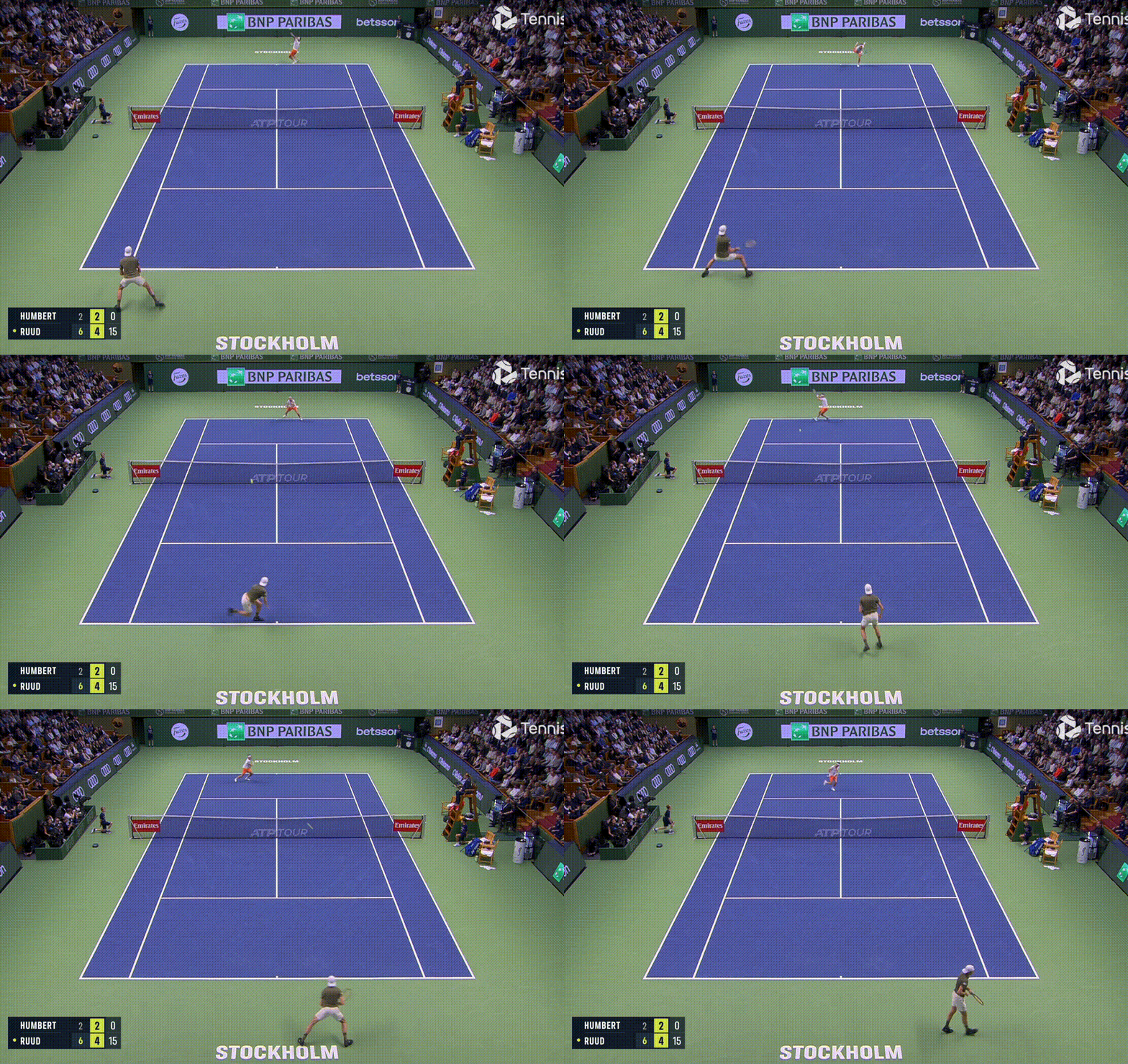
Er, I mean plus-one-backhands? Seriously, Ruud was blitzing that wing today. It’s usually a spin-oriented-holding-pattern kind of shot, but today it looked penetrating:
I also loved this wickedly angled forehand. Spin opens up so many options:
Ruud is currently 11th in the Race to Turin.
Brussels (highlights)
Themes: servebotting — predictably powerful — movement differentials
Felix Auger-Aliassime defeated Jiri Lehecka 7/6 6/7 6/2 in the final of the Brussels Open to clinch his third title of the season (Adelaide, Metz). FAA is now 15-3 since Montreal, with two of those losses coming at the hands of Sinner.
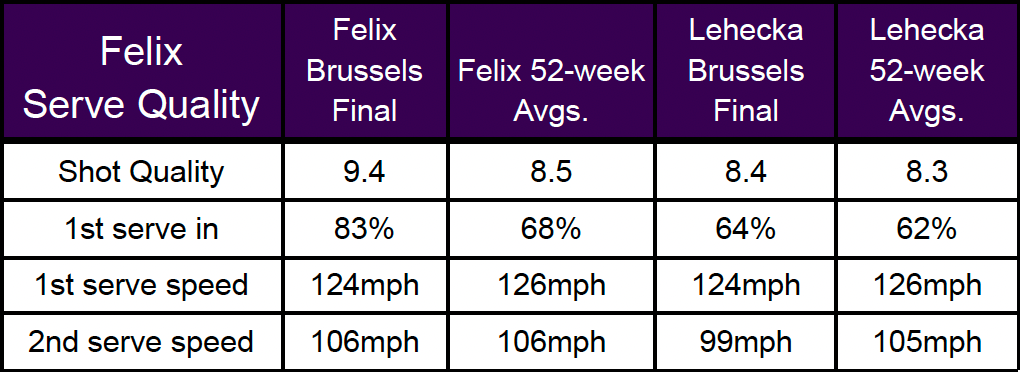
In fast indoor conditions FAA landed 83% of his first-serves, registering a 9.4 serve rating on Tennis Insights. A look at how the Canadian’s serve stacked up against Lehecka:
The serve and forehand are the shots that FAA lives and dies by, but more recently he’s also been doing an excellent job weaving in shield-worthy backhand performances, and forehand drop shots. The tour evolves:

If there was a major criticism of Lehecka’s game, it’s that he hasn’t yet added the kind of variety I was just praising in FAA; there’s very little slice, drop shot, or even directional variation to his groundstrokes (angles, height). Gill Gross made the same point in his Monday Analysis. Everything is very straight and hard, and while he is very good at that, there’s a certain comfort that comes with being predictable; the best players will deal with that speed:
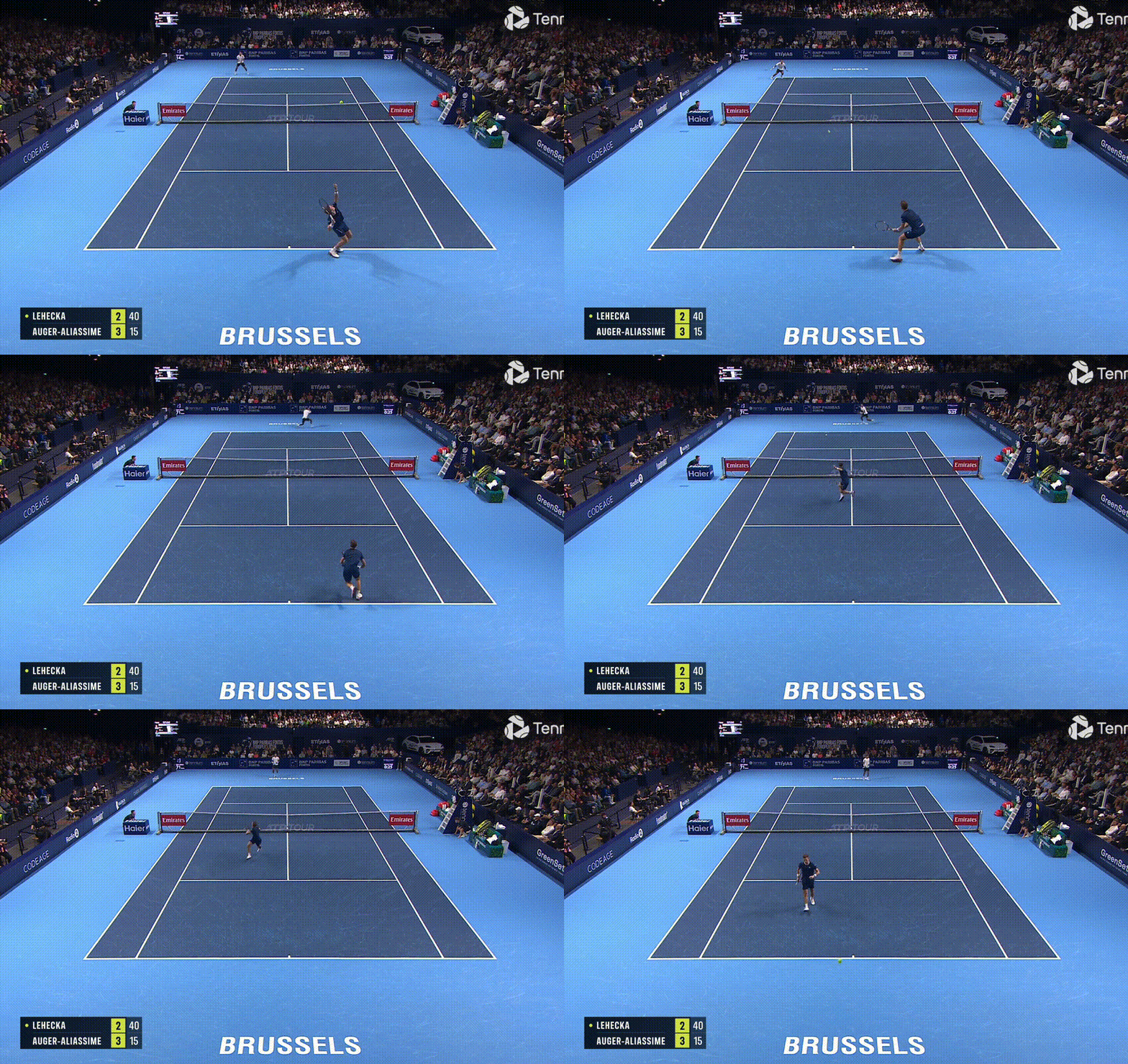

Here Lehecka finds a better use of his forecourt opportunity:
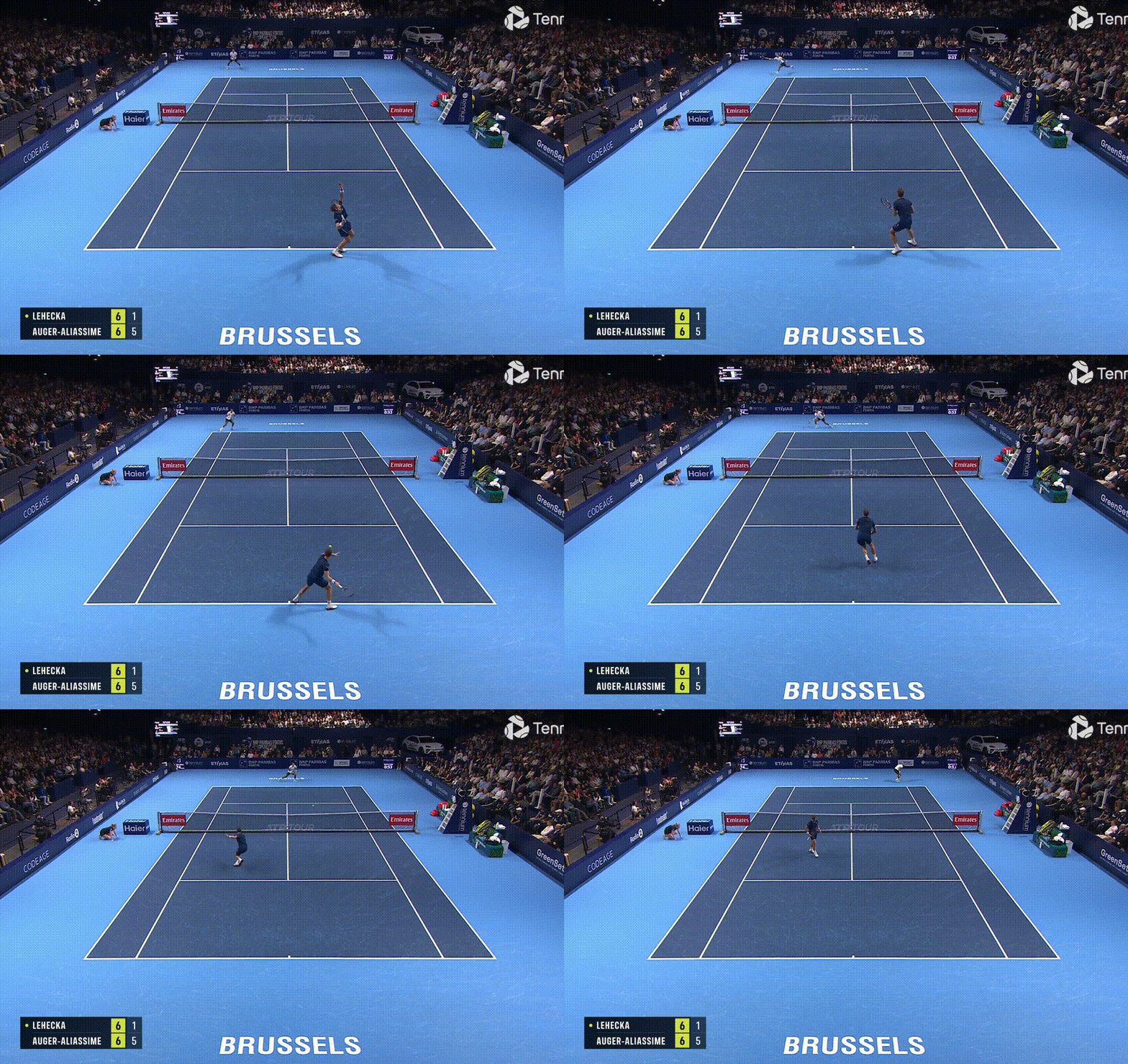
I wonder if that kind of linear style is something the Czech does to protect from getting pulled wide himself: if you keep it hard middle it’s more difficult for your opponent to open the court, and Lehecka — who’s build I would describe as “stacked” — seems to carry too much muscle and tension to be the kind of agile and lithe athlete from the corners that we’ve seen from guys like Sinner, Djokovic, and — when healthy — FAA. For a “servebot”, the 6’4’’ Canadian can move:
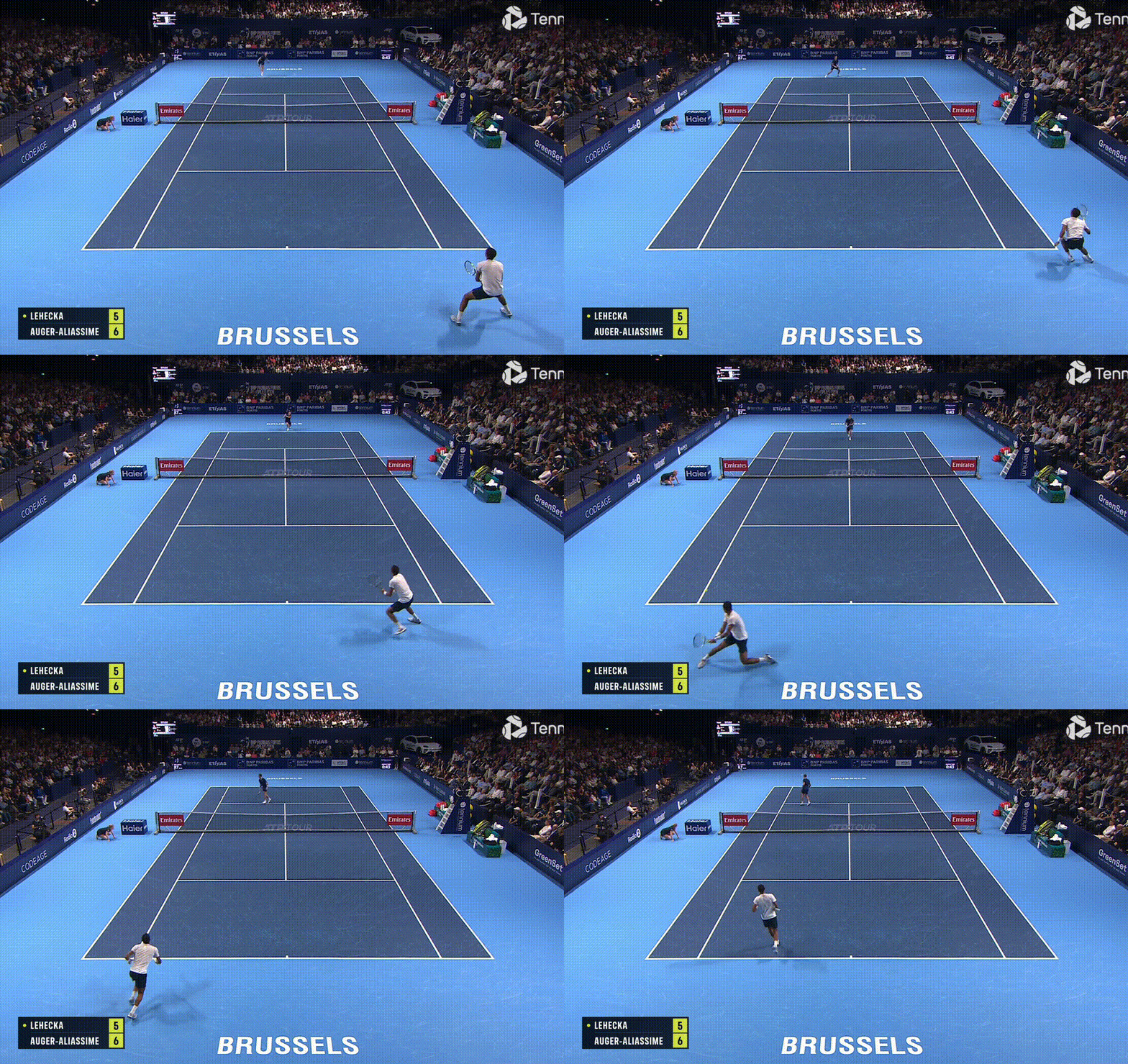
He used his athleticism to good effect to earn the all important break early in the third set, getting that outside leg way out there on the backhand pass:
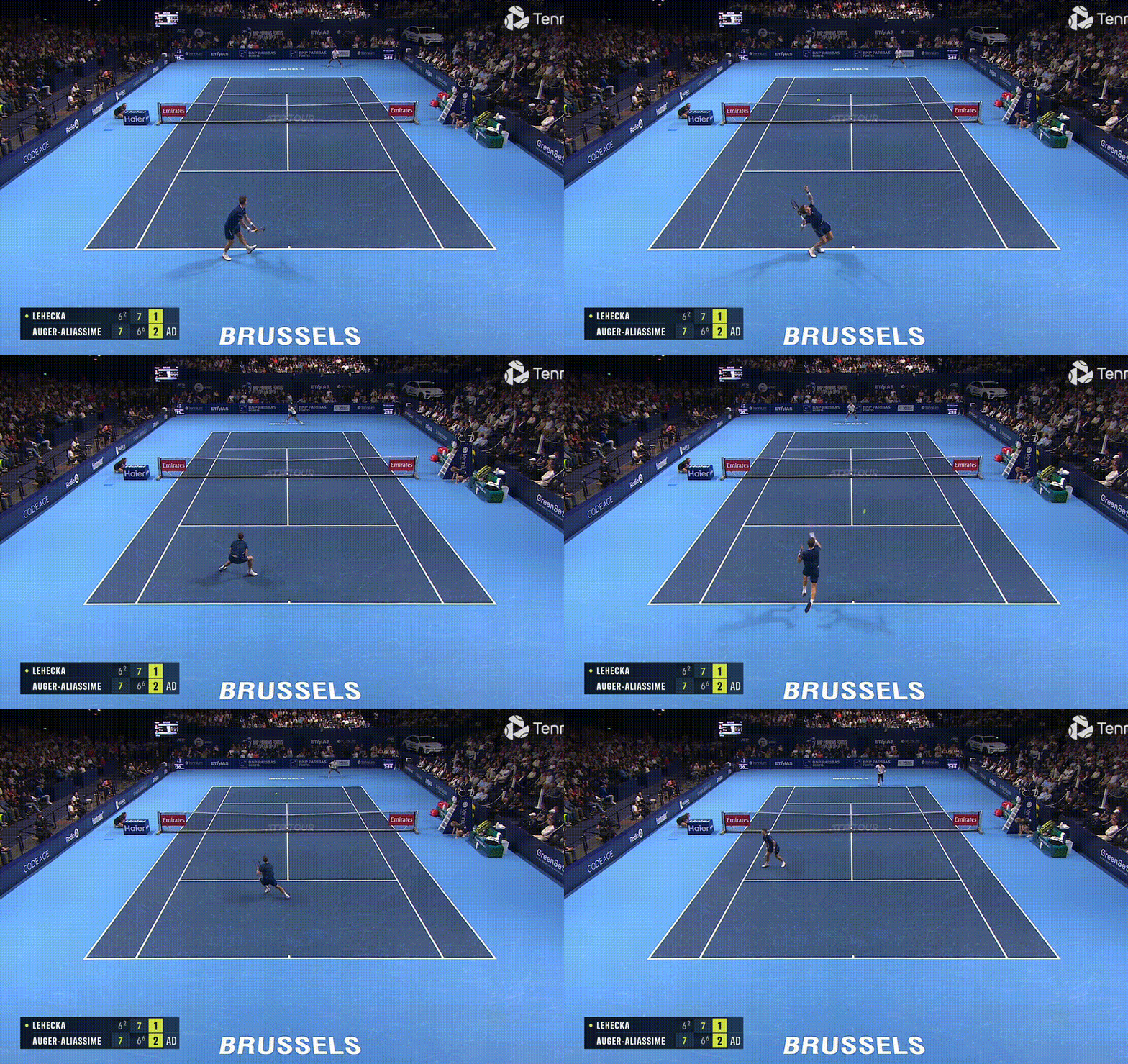
And here’s an example of his forehand dynamism down the stretch in the third set, breaking the sideline to pull Lehecka (who admittedly does very well here after I just drubbed his movement) for an open court winner:
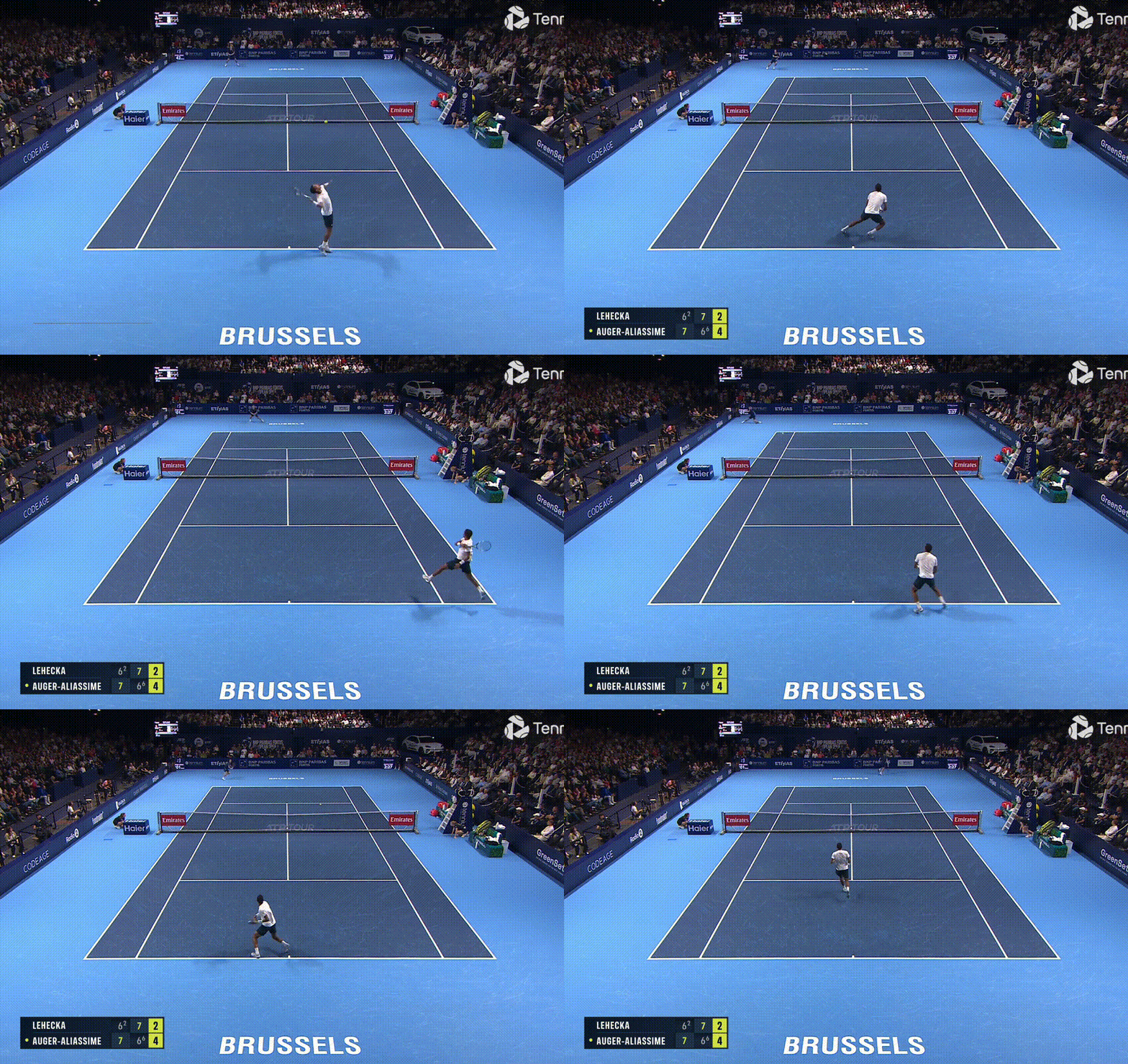
FAA moves up to 9th in the race to Turin.
Here’s how things stand as Basel and Vienna (both indoor 500s) get underway:
That’s all I got. I’ll see you in the comments, and be back after Vienna and Basel.
Drop a like or a comment if you enjoyed this more varied post!