
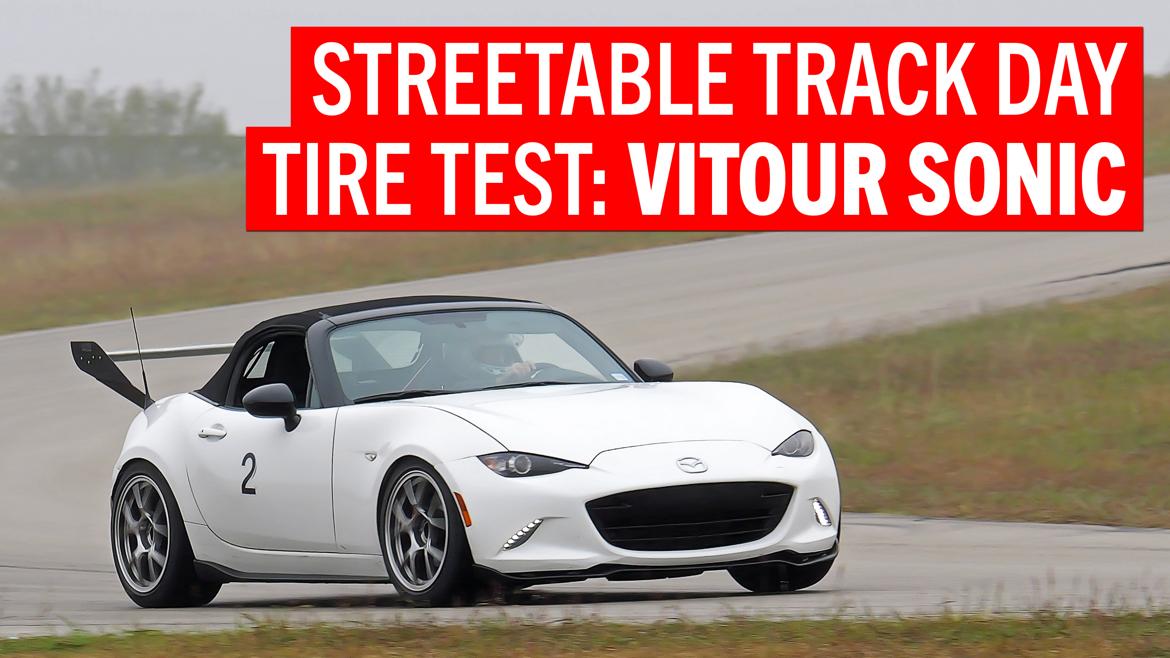
What if you just want to go as fast as possible yet still safely drive your car to and from the track? No rules, just max performance? No pesky 200tw limits either? Streetable Track Day tires are your jam.
Unlike their quasi-street-legal R-comp brethren, these tires have sufficient puncture resistance in the carcass and the tread depth to be OE fitments …
Goodyear Eagle F1 SuperCar 3R
- Fast Lap: 1:24.26
- Price: $274
On the Road: Belying its OE designed roots, the Goodyear Eagle F1 SuperCar 3R is a treat on the road–relatively quiet with reasonable ride quality over bumps. Steering response is intuitive and quick.
On the Track: That quick response magnifies as g-loads increase, willing the driver to go deeper and brake later. But the limit of adhesion is vague, with little audible feedback, so it takes some experience to draw out the maximum available performance. A broad plateau of grip with easy breakaway eases the effort.
On this cool day, it took a whopping four laps to get enough heat into the tire for full grip. In fact, we almost drove right off the track surface as we exited the paddock with cold tries. But once it was warm, magic was on display and the tire clicked off fast lap after fast lap. The progression of lap times was mostly the driver finding bits of time here and there by the end of the session.
Hoosier TrackAttack Pro
- Fast Lap: 1:24.34
- Price: $307
On the Road: With the DNA of an R-comp, the TrackAttack Pro is a bit less streetable than the others. The carcass is very stiff, delivering every bump right into the pit of your stomach. There is no noise from the tread design, but course pavement like chip seal transmits directly to your ears. Ignoring those downsides, the steering response is linear and responsive, bringing a liveliness to the experience.
On the Track: Those characteristics are amplified once on track. Crisp steering and strong combined loading make it especially good at trail-braking. As with the Goodyear, the TimeAttack Pro’s consistency allowed for small driver improvements throughout the session.
Vitour Tempesta Sonic
- Fast Lap: 1:24.52
- Price: $307
On the Road: Thanks to a tread design resembling the brand’s P1 but with the outer groove filled in, the Sonic is quite streetable. The soft tread cap rubber mutes the typical harshness of small road irregularities. Steering response is fairly dull but direct and linear. One odd trait: At low lateral loading, the tire has very little self-centering, requiring more driver interaction than is typical.
On the Track: The Sonic wakes up and delivers under heavy loading asks. Audible feedback announces the approaching limit, while breakaway is smooth and easily managed. Despite the cold track temps, the compound eventually began to heat soak a bit, and performance degraded. This was accompanied by increased squeal, making it easy to manage.
Goodyear Eagle F1 SuperCar 3R (retest)
To bracket our testing and to scout for possible track evolution and driver improvement effects, we reran the Goodyear Eagle F1 SuperCar 3R at the end. Thanks to residual core carcass warmth, it only took two laps to activate the compound fully this time. Lap times remained within a tenth of the earlier session, so we were confident our data was good.
A few days later, the weather changed to a balmier 75° and sunny, so we went back to the track to see if the relative results would change under triple-digit track temps. In short, they did not. While the track was overall a little slower, the gap between the two tires was about the same. The tires did grip up with significantly fewer prep laps, though.
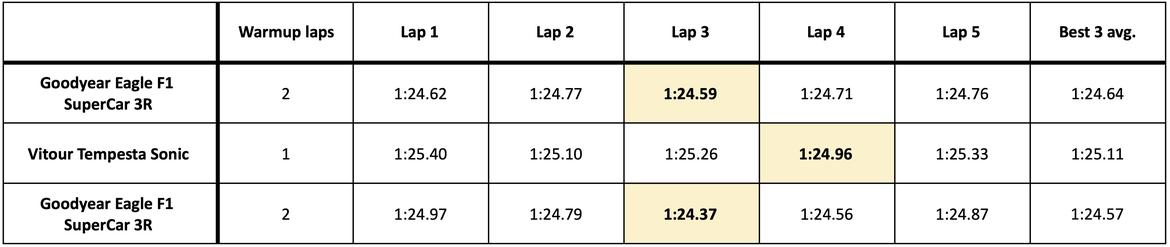
A few days later, we spent another day at the track running just the Sonic for multiple sessions to see if more heat cycles would improve performance. Though we never found significantly more lap time–just a couple tenths–we did enjoy dialing into its finer points. The Sonic is a great tire for turning quality laps and back road shenanigans.
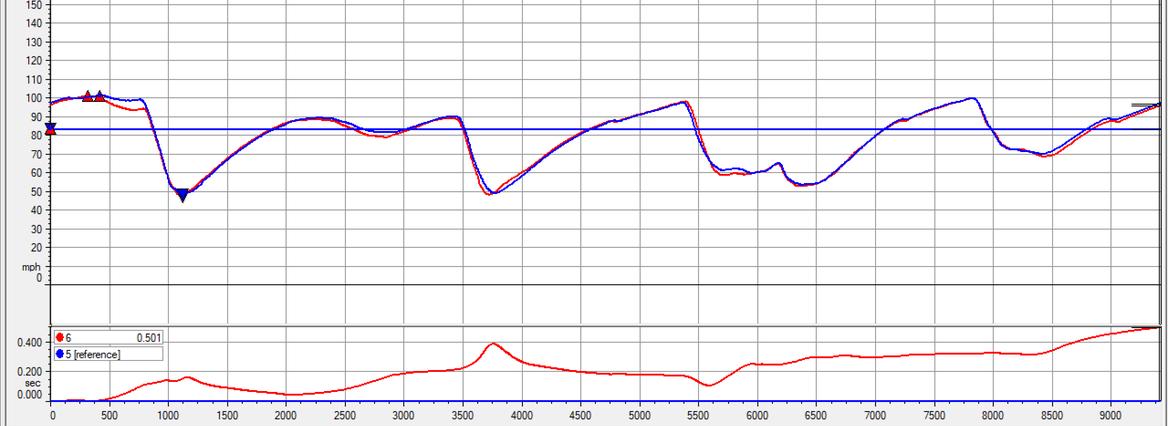
Comparing the Vitour Tempesta Sonic to the Goodyear Eagle F1 SuperCar 3R, we can see the Goodyear’s compound hangs in there longer for high-energy events–long, sustained cornering or corner exit after heavy braking. The cost for this is delayed turn-on time during warmup laps for the Goodyear.
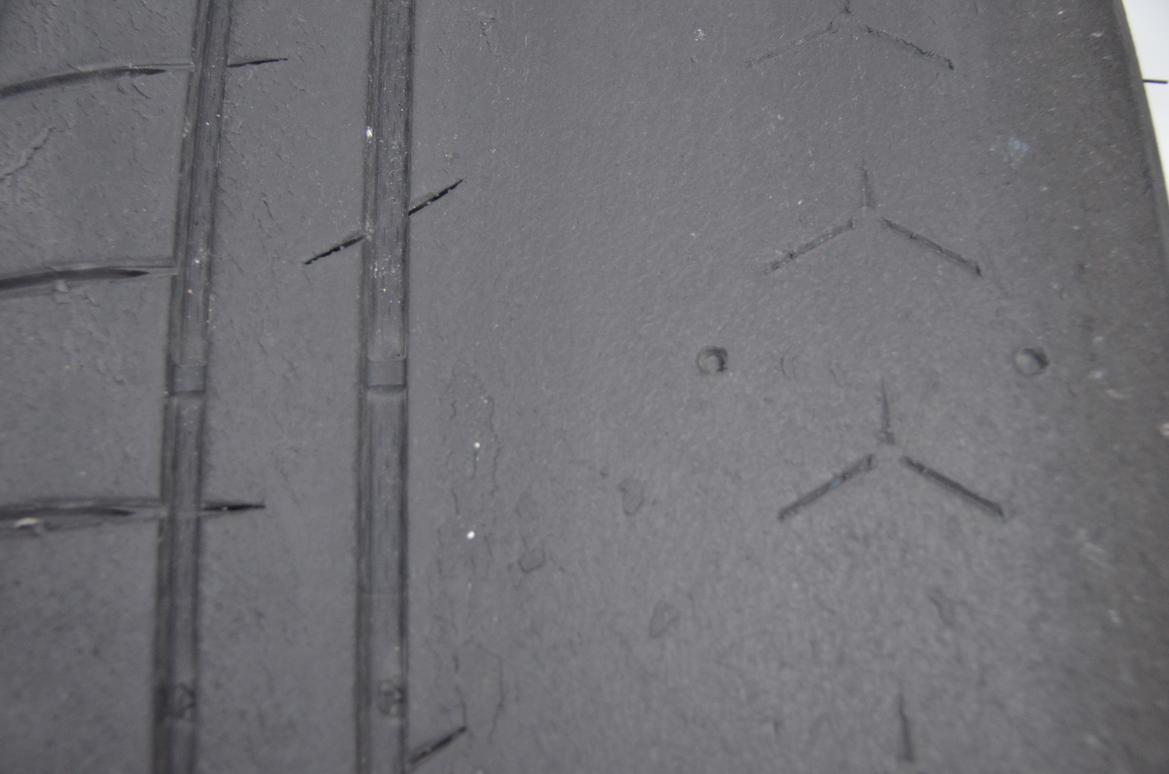
While the other tires wore evenly, the Sonic wore more on the outer shoulder of the tire, suggesting that more camber might be needed. This is the opposite of Vitour’s P1 offering, which typically needs less than other brands. Photograph by Andy Hollis.
Conclusions
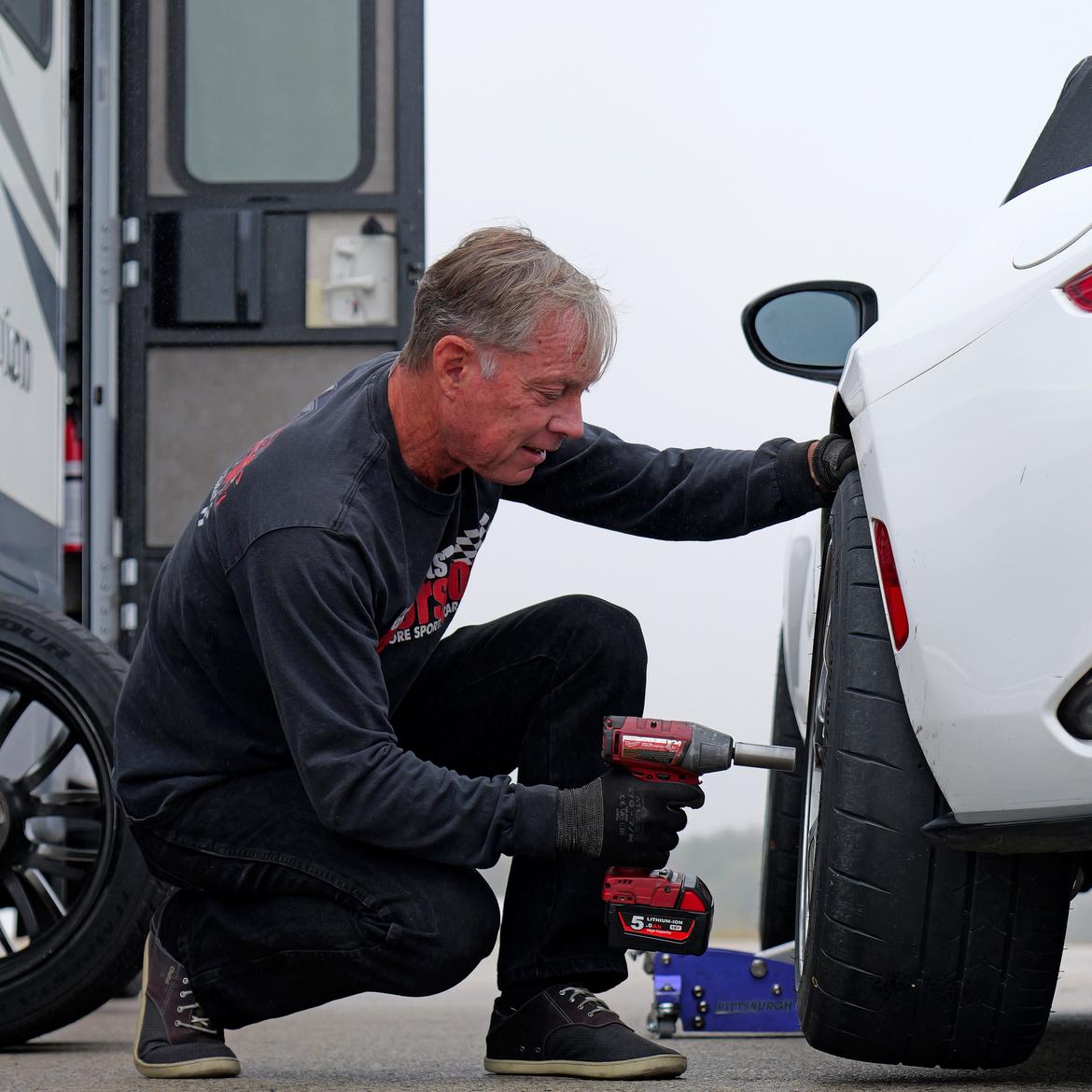
Photograph by Timothy Harper.
While the Sonic is not a game-changer, it’s certainly in the mix in this category–especially if the additional tread depth proves to convey longer life. It’s one thing to be quick, but service life matters, too.
Further, different tires react differently to different situations. As an example, Hoosier’s TrackAttack Pro has worked great on our ND Miata, but we tried a set on the McLaren 720 that we ran at Tire Rack Ultimate Track Car Challenge this year and found them to be off-pace and fragile. We slapped on a set of Vitour P1s, and despite worse conditions, found a second and a half lap time improvement–and much better durability.