
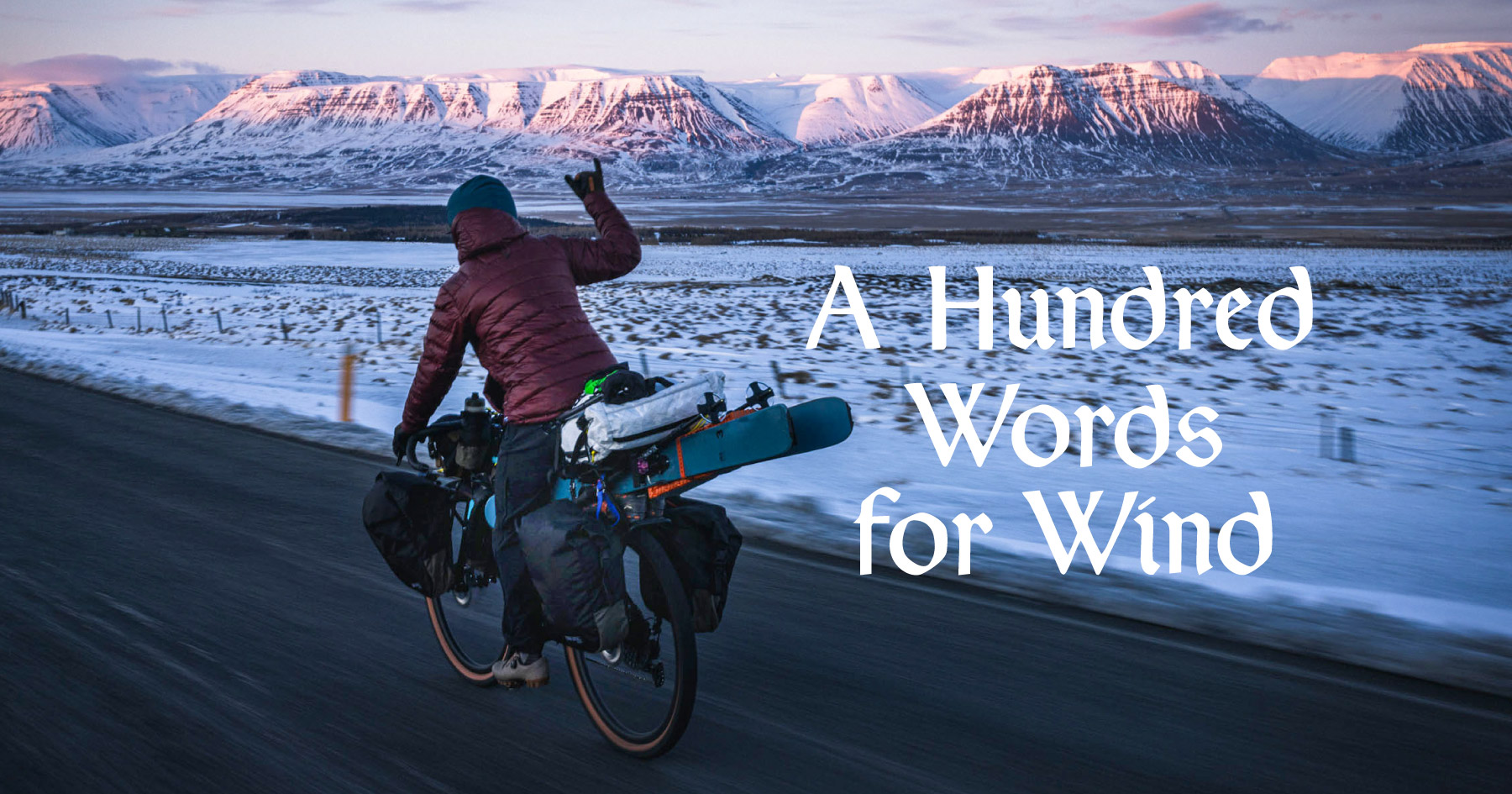
Pro skier Cody Cirillo and photographer Matthew Tufts pedal 1,700 kilometers around Iceland with skis in tow, battling arctic winds and blizzards to chase couloirs that drop to the sea. “A Hundred Words for Wind” is a new film documenting this human-powered saga that blends bikepacking grit with ski-touring joy. Watch it here alongside an original written adventure narrative and a stunning collection of photos from the trip…
With photos by Matthew Tufts
Note: The film (at bottom) premieres at 10 a.m. EST; stay tuned!
In the summer of 2023, I approached friend and photojournalist Matthew Tufts with an idea: a circumnavigation of Iceland to ski its peak-laden fjords and experience its unearthly landscape. But there would be one major caveat, we’d be doing the entirety of the roughly 1,700-kilometer route on bikes with all of our gear in tow.
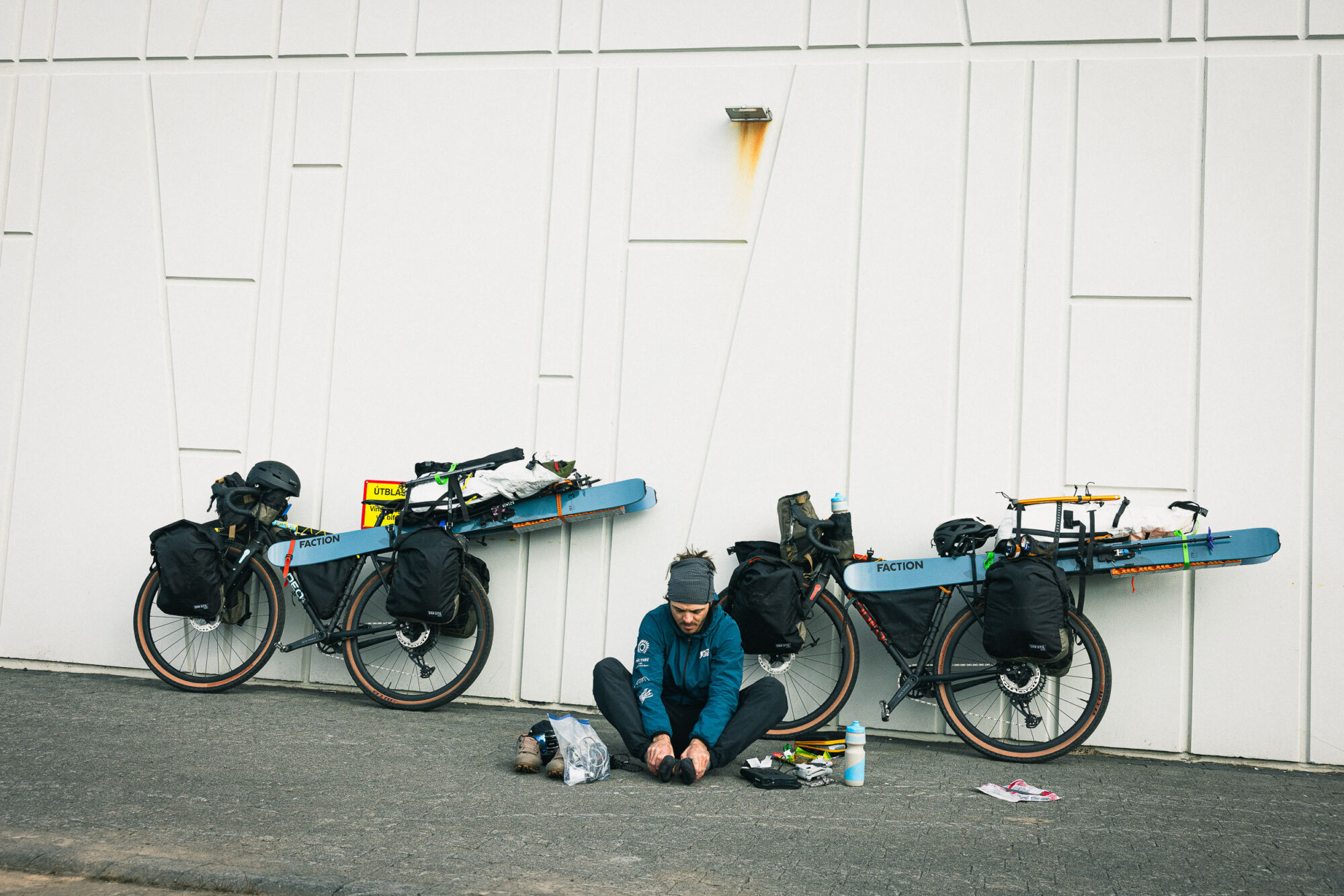

Matt and I have been lucky to travel all around the world together; from Mongolia’s arid steppe to Morocco’s High Atlas and British Colombia’s most picturesque pillowy lines. I’m a professional skier and Matt is a photographer and writer. We’ve made a great team doing commercial work together over the years, but where we’ve really bonded is in our likeminded approach for doing things the unconventional way—the longer and weirder, the better. For instance, he spends 40+ days per season on the Patagonian ice fields with the hopes of skiing one line, and he’s someone who lived in a truck camper for years subsisting on just oatmeal. If there was anyone I knew who would be interested in a questionable human-powered epic, it was Matt.
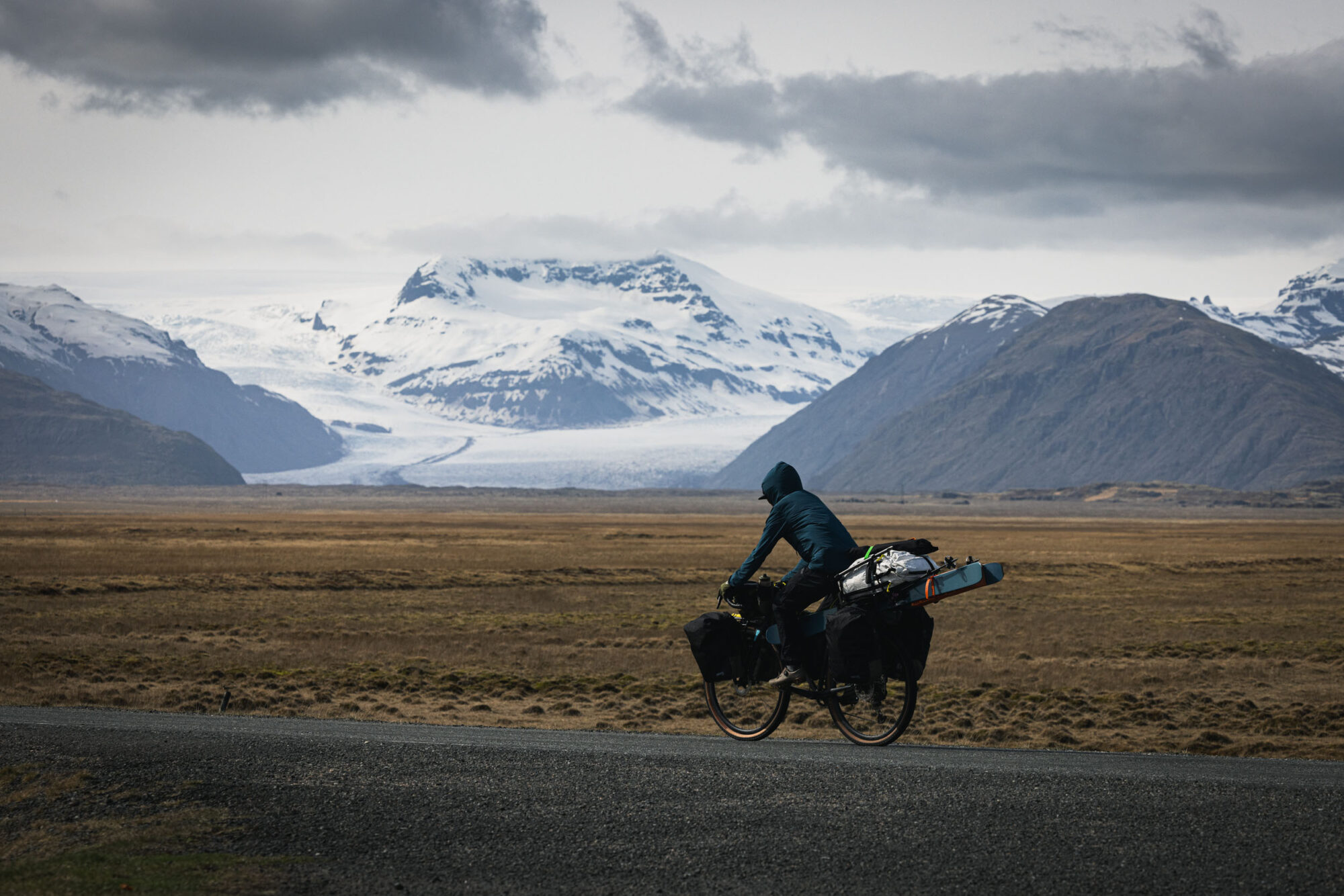
The aptly named Ring Road is the main roadway in Iceland that runs just about the entirety of the country’s circumference, stretching from the nation’s capital, Reykjavík, to the northern “Troll Peninsula,” the eastern “Land of Dragons,” and the black sand beaches of the South Coast. The route connects a variety of the vast and unique geographies of the country. Iceland has been painted as the land to see volcanoes and the aurora borealis, to see puffins and bathe in the famous Blue Lagoon. It’s a country that proudly markets itself as a stop-over destination, a land of bucket-list adventures and plug-and-play excursions.
Deciding to use a bike came from a similar philosophy to ski touring. There’s a deeper connection to the place, a real purpose in the travel, a vulnerability that can’t be matched. It wasn’t an environmental decision (I don’t think flying half-way around the world with skis and bikes makes this an eco-friendly trip, by any means), but rather a means to slow down and to try to feel it all. And in the land of van-life, where people hop from one waterfall to the next, what better way to try and experience it than at a bicycle’s pace.
So, in April 2024, we packed our ski bags, bike boxes, and left for Iceland.
++++++++++
Matt held onto my bike frame as I searched through a bag of tools and parts, struggling to find the correct hex key for my handlebar screws. As a novice bikepacker, it was only my second time putting together a bike – the first was in my garage back home in Colorado, yesterday. Record-breaking winds in Reykjavík kept us huddled in the fenced backyard of our hostel, alternating between holding each other’s bike parts and keeping our cardboard bike boxes from ending up in the adjacent fjord. It was winter alright, and the fabled arctic storms that pummel Iceland made themselves known. If you were of sound body and mind, you’d likely decide that these conditions weren’t conducive to biking, but with snow stacking up in the north, and our powder panic already setting in, we packed our panniers to the brim and got on the road.

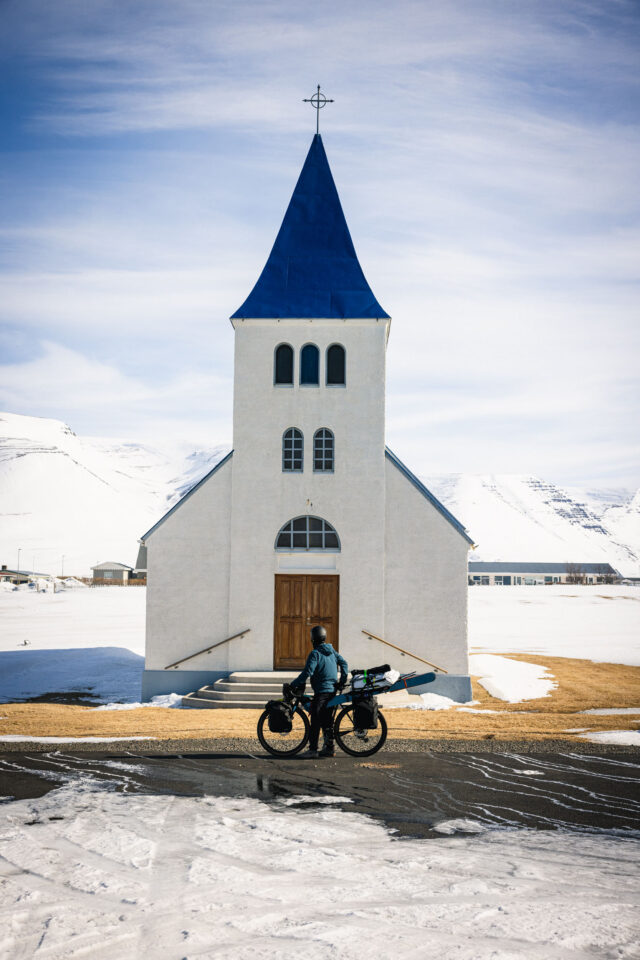
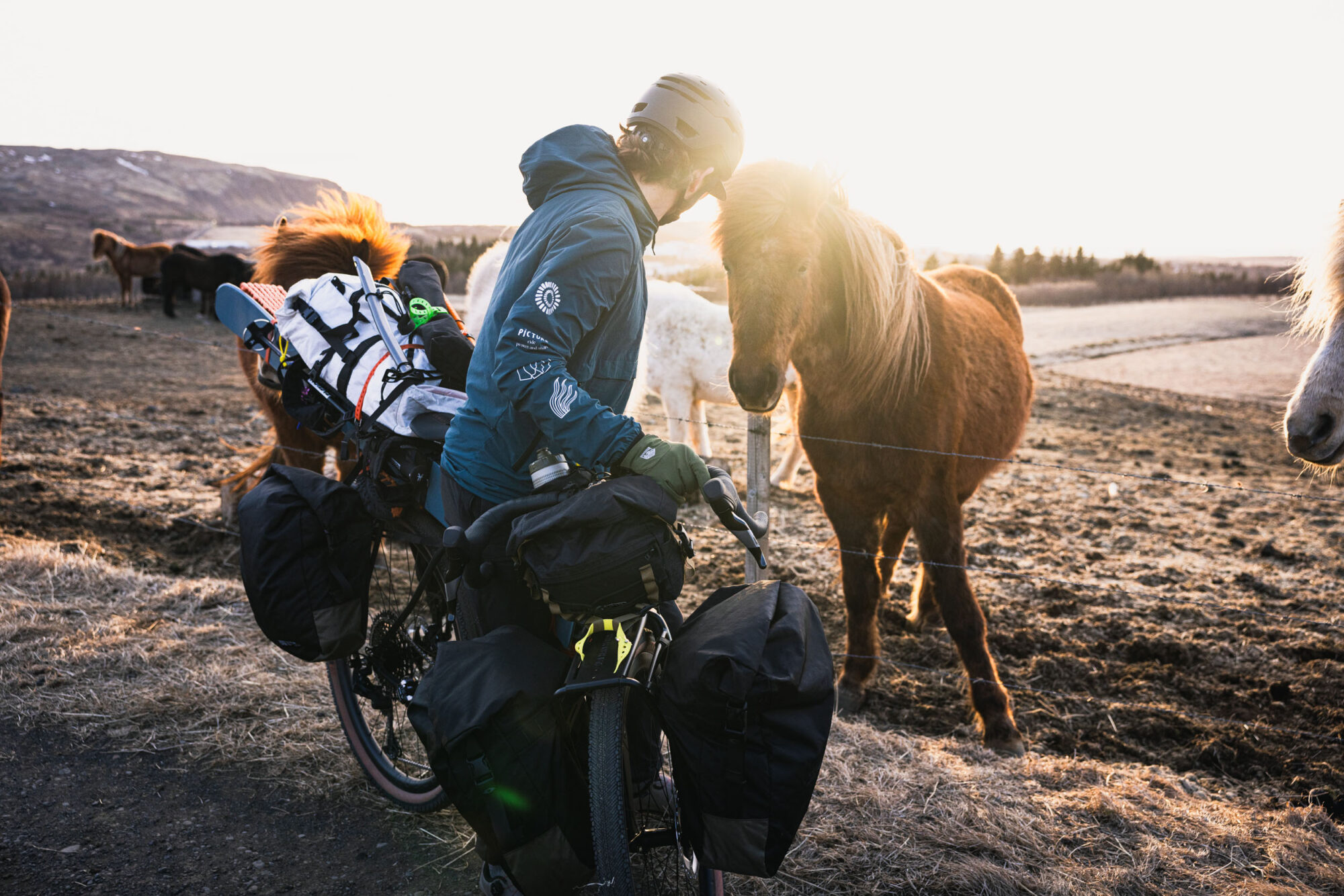
We navigated Reykjavik’s suburban landscape, connecting sidewalks and a network of bike lanes to get out of the city. We took detours through neighborhoods and met herds of Icelandic horses. Our two-wheeled galleons held steadfast into the winds, powered by the city’s finest pastries and the pure excitement that came from diving into the unknown. We were actually doing it.
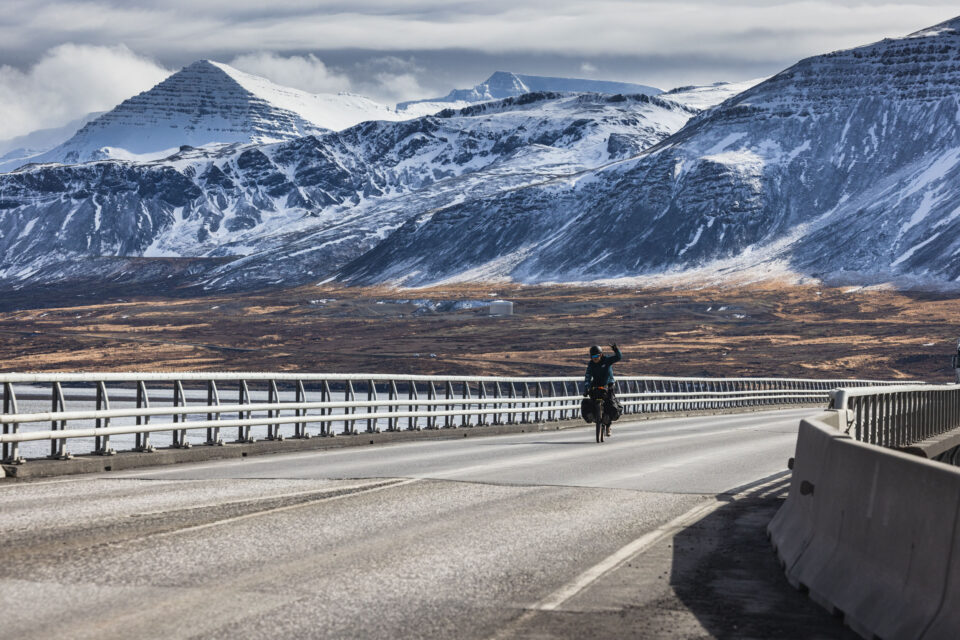
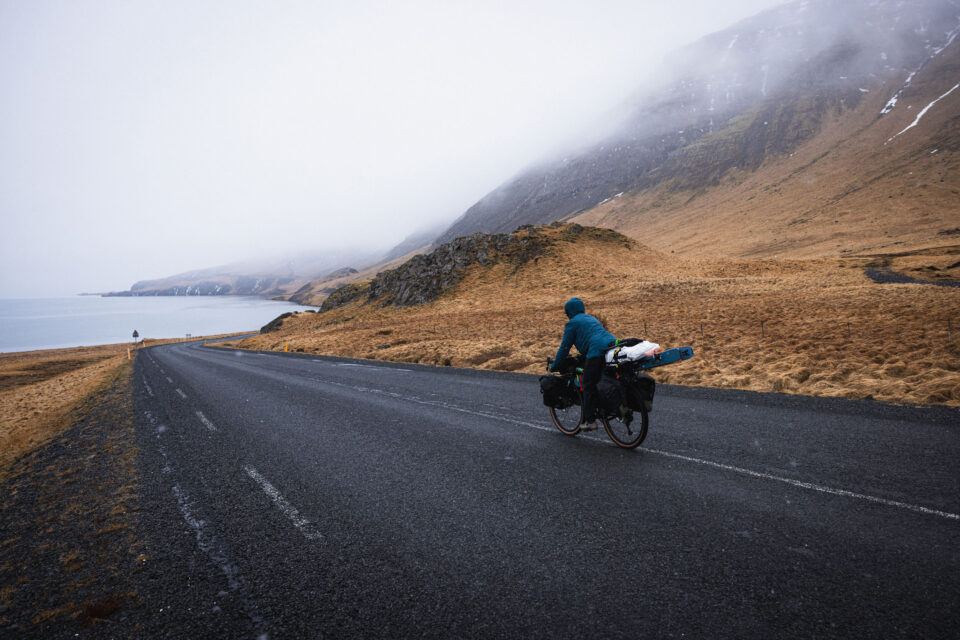
As the sun set, our legs grew weary, and our initial excitement waned. To move a 50-kilogram bike was hard enough, and coupled with unrelenting headwinds, it felt almost impossible at times. Trepidatiously, we donned headlamps, found a place to camp just off the road, and called it quits for the day. We were almost completely silent during dinner—a collective, unspoken feeling of, “Whoa, we may actually be in over our head this time.” Still over 1,600 kilometers to go.
++++++++++
Our journey north only got more difficult. Soaked to the bone from wet snow, there was a constant barrage of headwinds and crosswinds that thrice blew me off the road. We were camping in ditches with frozen toes, and pedaling ice roads without studded tires. That first day had seemingly set the tone—to earn it, we’d have to endure. We had chosen this method to “feel it,” and we were feeling it alright. Well, everything except our toes.
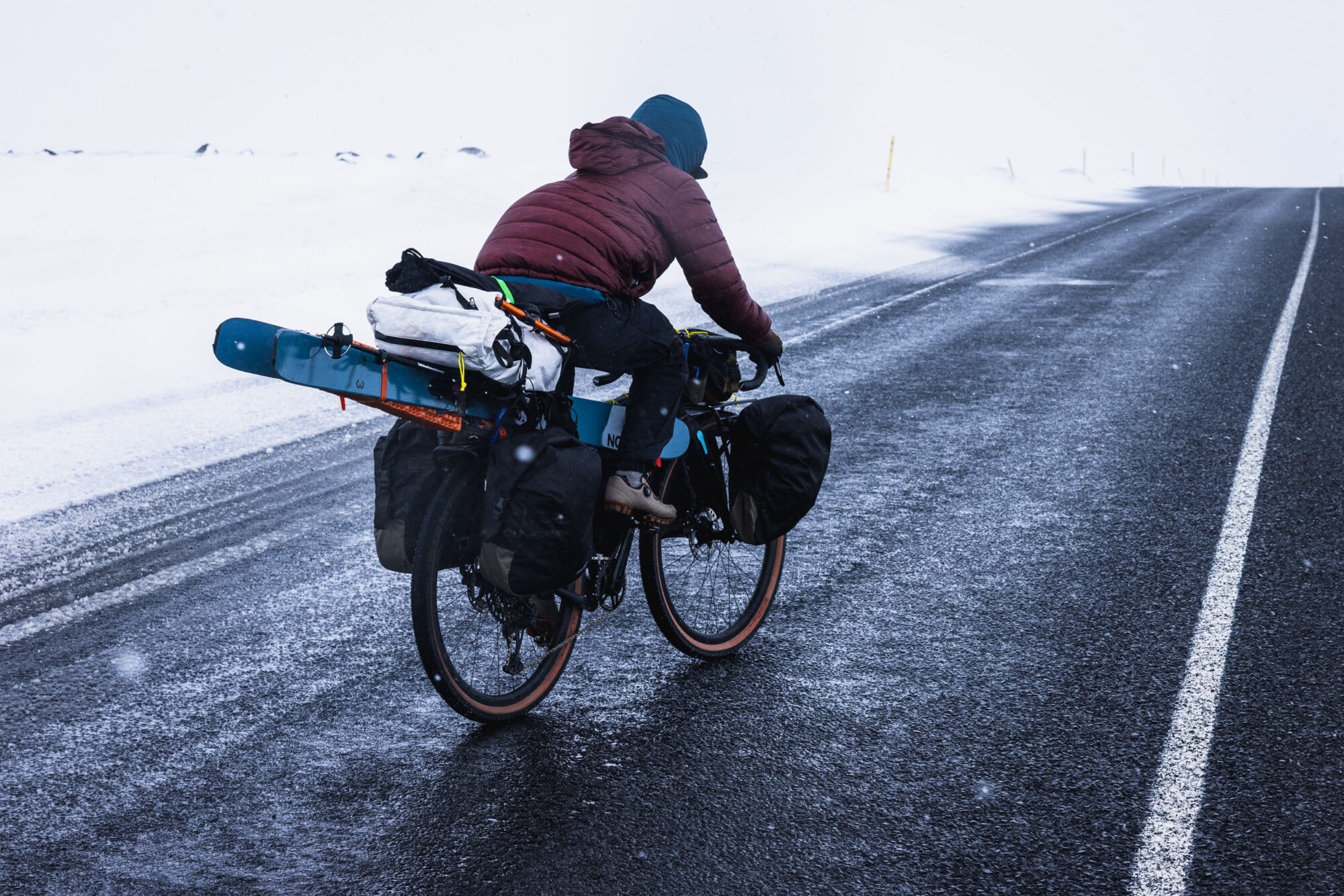
A few long days in the saddle later, we made it north to the famed Troll Peninsula where we could finally start the skiing portion of our adventure. We joked that we were simply paying the “troll toll” the entire way there. Hopefully our payments were enough, and we did the currency exchange correctly.

Touchy avalanche conditions and socked-in, stormy weather kept our first few days of ski touring limited. Iceland and its rugged northern coast are susceptible to arctic storms and ever-changing winds. It’s a place where the forecasts are hard enough to predict, let alone get right with any precision. Local ski guides were glued to the Icelandic national weather app. But the prevailing, “Þetta reddast,” saying kept us optimistic. It’s a traditional Icelandic motto, a positive take on “it’ll all work out.” We had to let go and trust the process.
++++++++++
After a few days on the west of the peninsula, we decided to keep moving north towards Siglufjordur. Although our skiing so far hadn’t been everything we’d hoped, the road beckoned.
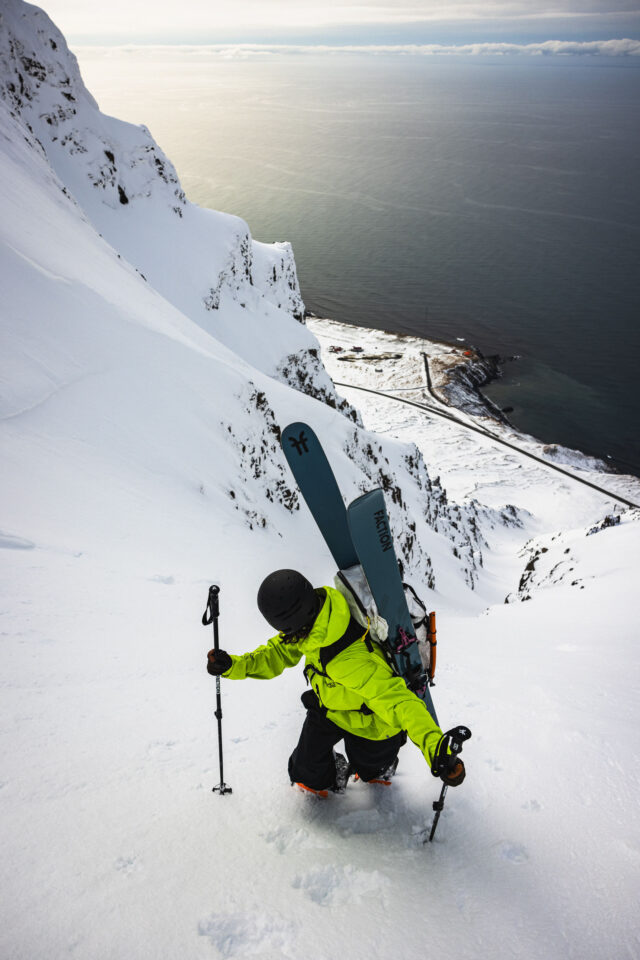
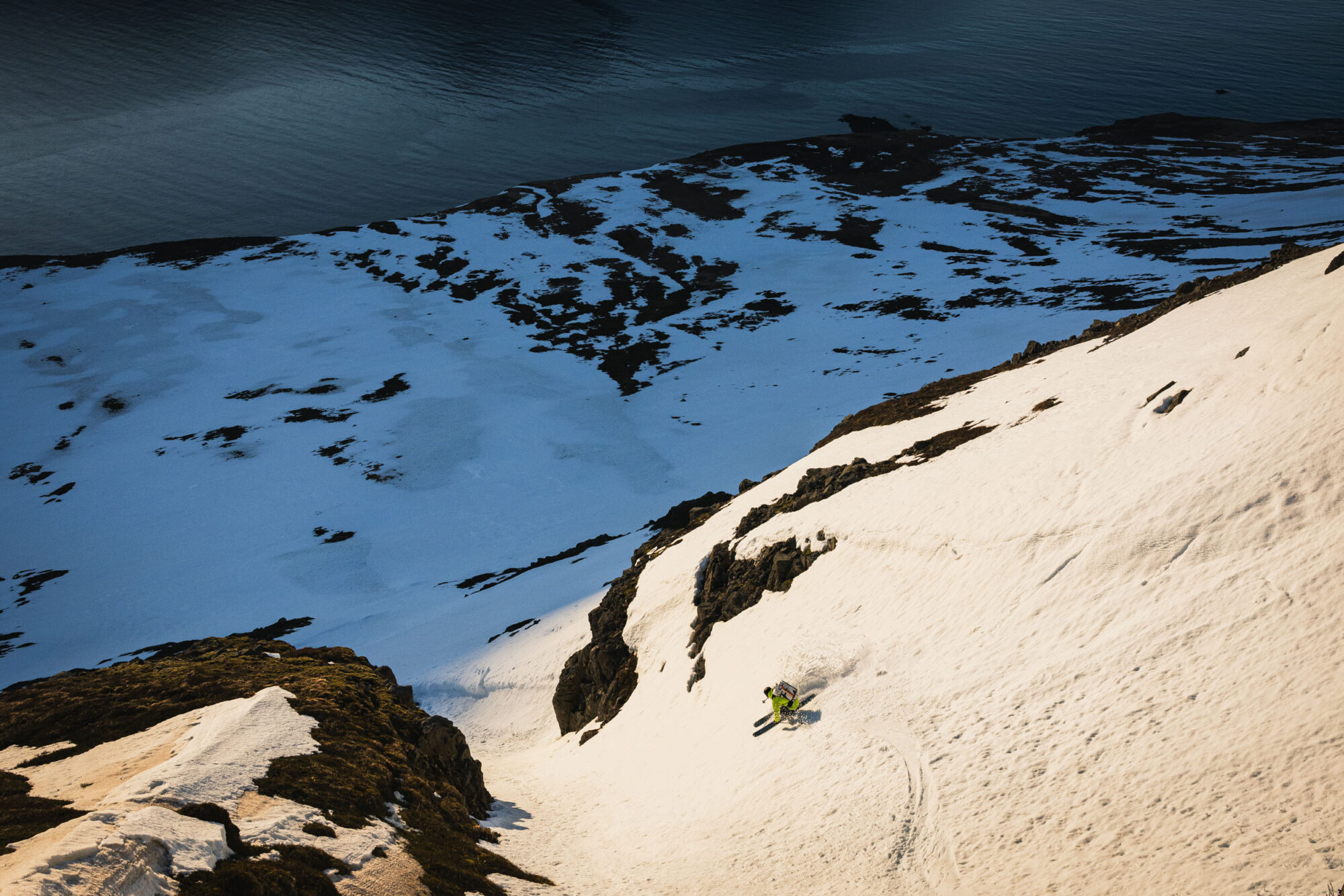
As we crested the northernmost point, we came to a screeching halt. On our left, a perfect Wes Anderson-esque orange lighthouse. On our right a perfect, 800-meter couloir with snow all the way down to the road. Open mouthed, beaming with excitement, Matt and I knew it was on. In a matter of minutes our bikes were laid against a mailbox, our cleats swapped with ski boots, and we started booting directly up the couloir.
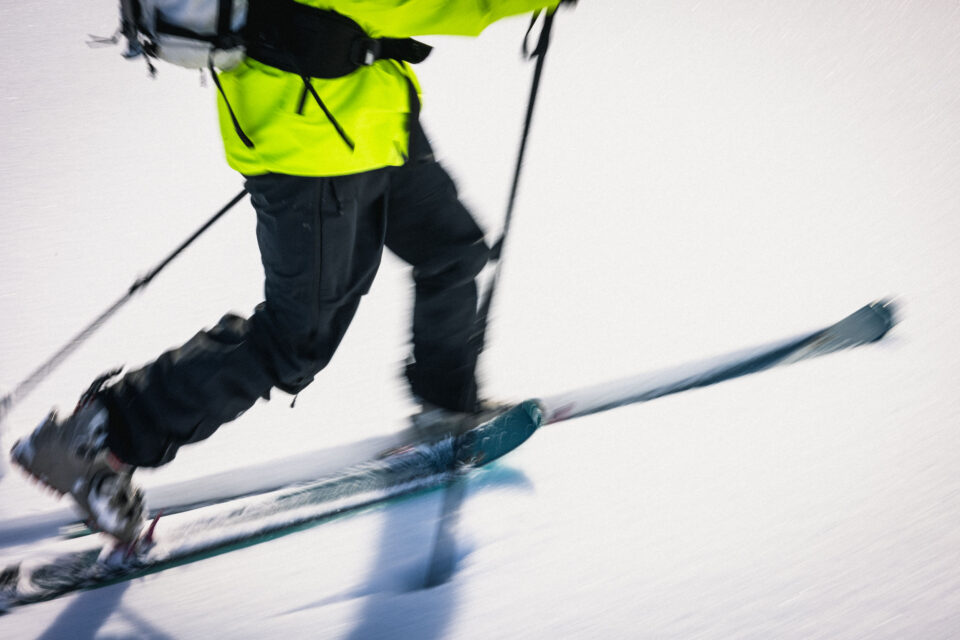
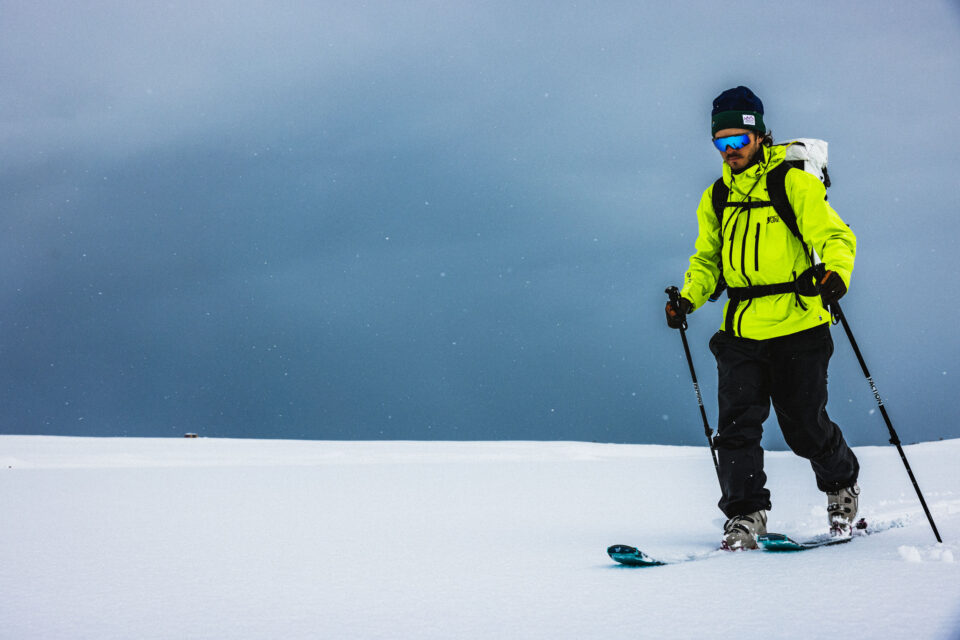
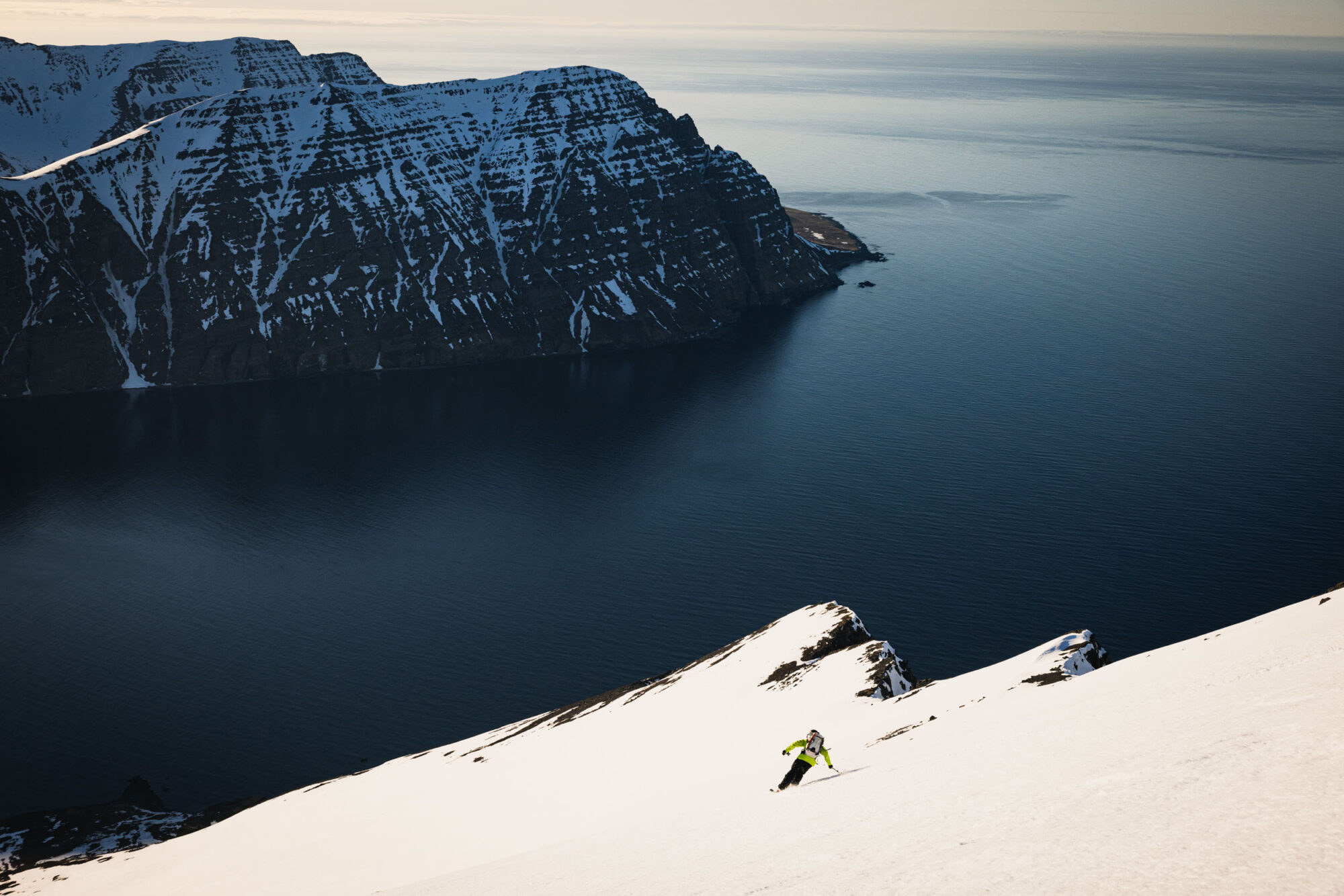
We pushed up with ease. Seagulls flocked overhead, the soft snow beneath our plates felt stable. No more than two hours later we were at the top, a softly glowing everlasting sunset stretched across the dark ocean, and our bikes sat idly below.

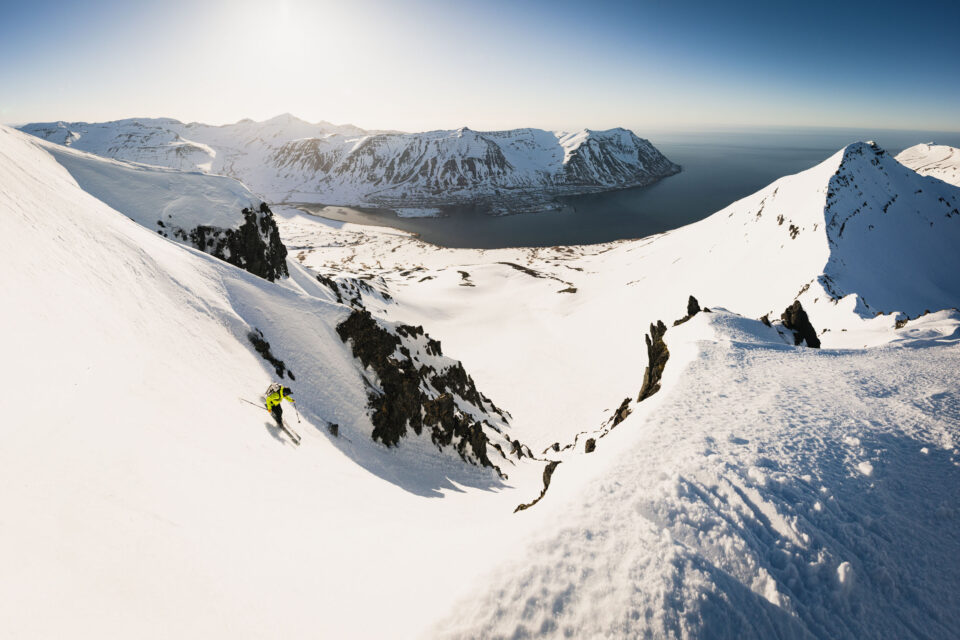
I dropped in first. The snow was far from perfect, a mix of windboard, ice, and boot-top powder. But, the location, the timing, how we had just ridden our bikes 500 kilometers to get there—it was all surreal. It was probably the best run of my life.
Þetta reddast indeed.
We spent a few more days ticking off lines in the north, but Iceland’s volatile weather soon had other plans. This time, African winds came in hot (literally), and the wintery scene we’d come to know had abruptly ended. Once again, we got the feeling it was time to venture onward.
We hopped back on the Ring Road and took it east, with the winds against us (naturally). We counted days by the amount of tortellini eaten and how tired we got of the delusional jokes we made to each other during the slog.
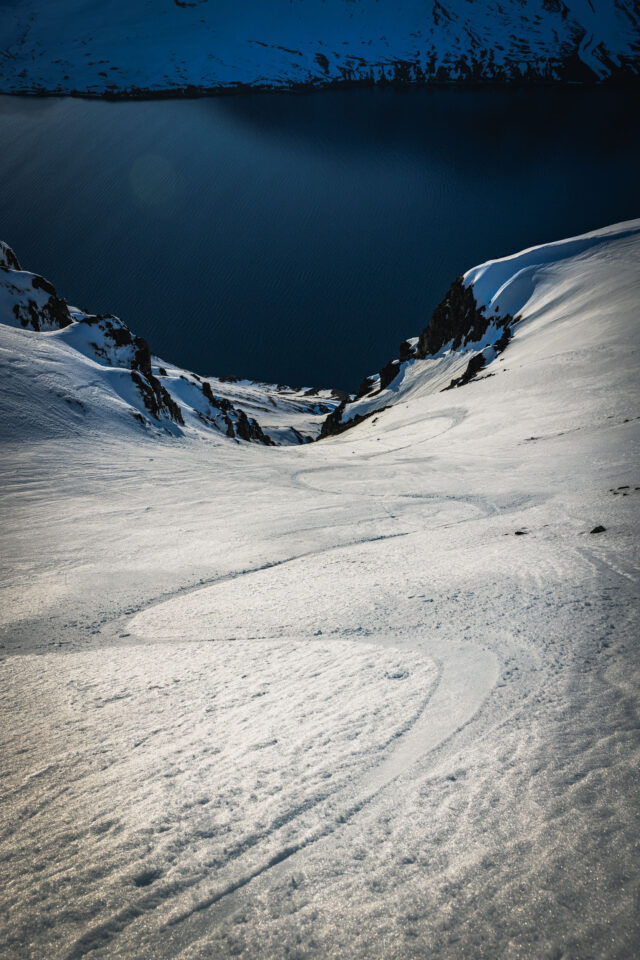
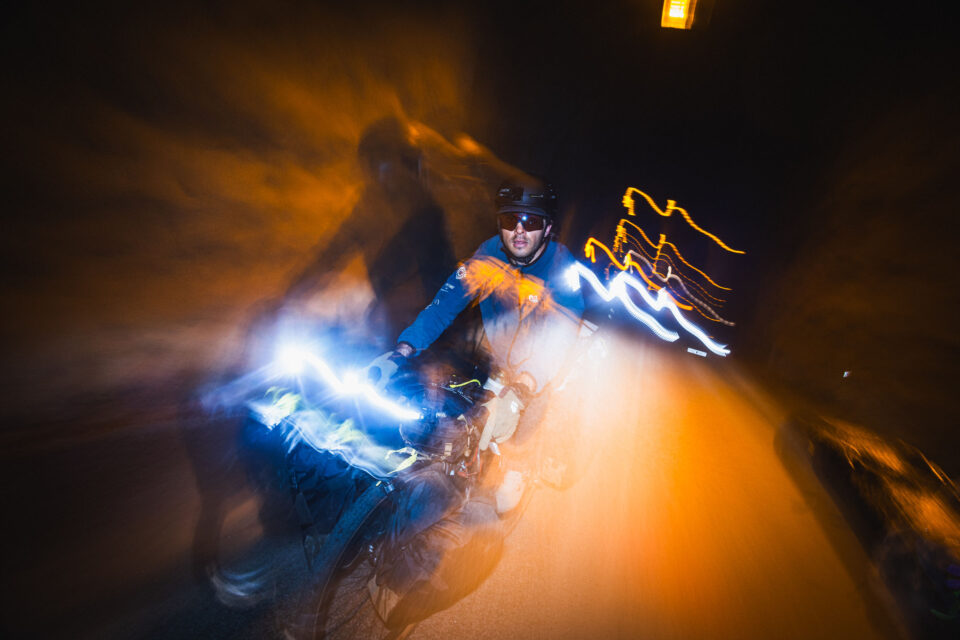
After a few hundred miles of riding, we decided that a self-imposed 70-kilometer detour off the Ring Road to the eastern fishing village of Seydisfjordur, was in store. Why? The potential of a ski line. Deep in the back of an old ski-touring photo from the area, I saw a couloir. We didn’t know if there was snow, or if it was possible, but if we wanted to find out, we’d have to bike there. The route, of course, a steep mountain pass that then sharply descended into the town. And the road cams showed blowing snow and ice-covered roads. Oh the lengths we’ll go to try and ski something.
The pass was steep and unforgiving. A blizzard with an onslaught of headwinds rendered us to a crawl. A barrage of tourist vans were coming down the pass continuously. Apparently, a ship from the Faroe Islands by way of Denmark has just landed in the fishing town.
But to our delight, upon descending into the quaint seaside village, we saw that the couloir wasn’t just possible, but it was entirely filled with snow. 900 meters of skiing awaited, from the alpine to the ocean, and once again we could park our bikes right at the bottom.
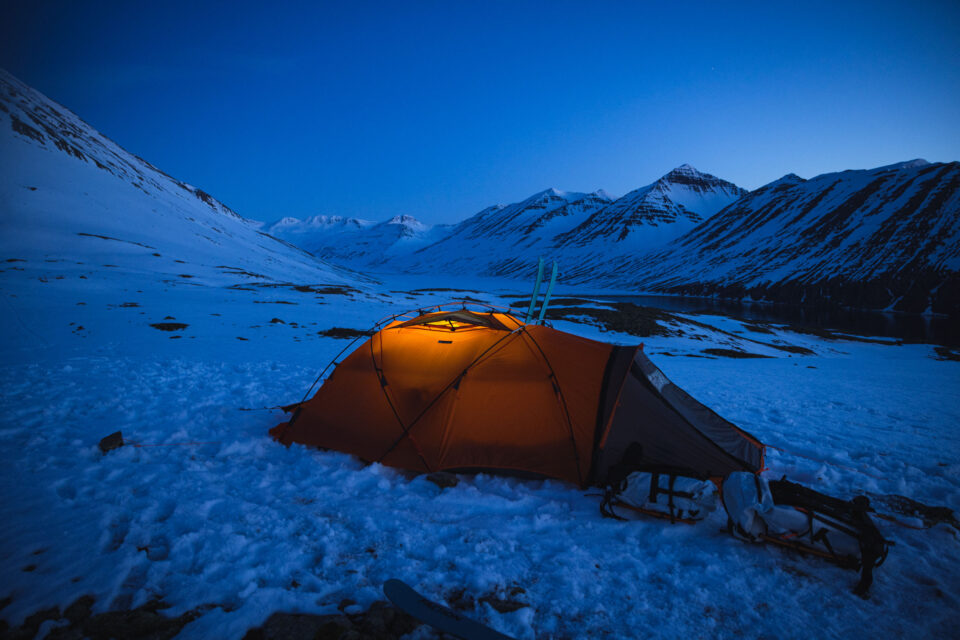

After our side-quest to Seyðisfjörður, it was time to head back west, completing our circular route around the island. The next few hundred kilometers were filled with breathtaking scenery, rogue storms, and a steady diet of snickers and tortellini. We joked that we were eating like ultrarunners but on a student budget. The south brought dark beaches, golden hills, and a plethora of tourists. We encountered our first full rain storm (which may have been singlehandedly the worst day of the trip), and found our rhythm in the weather’s madness.
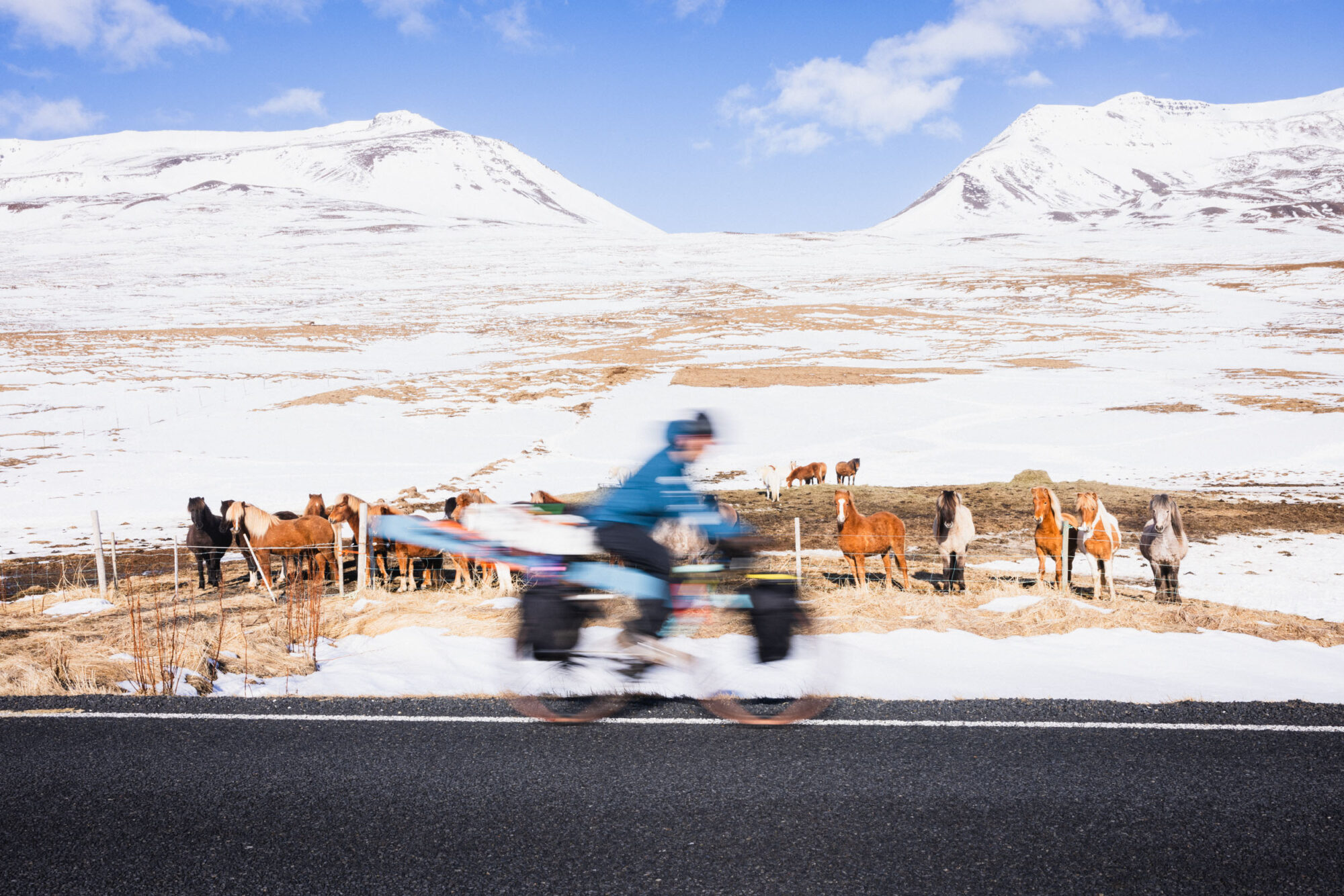

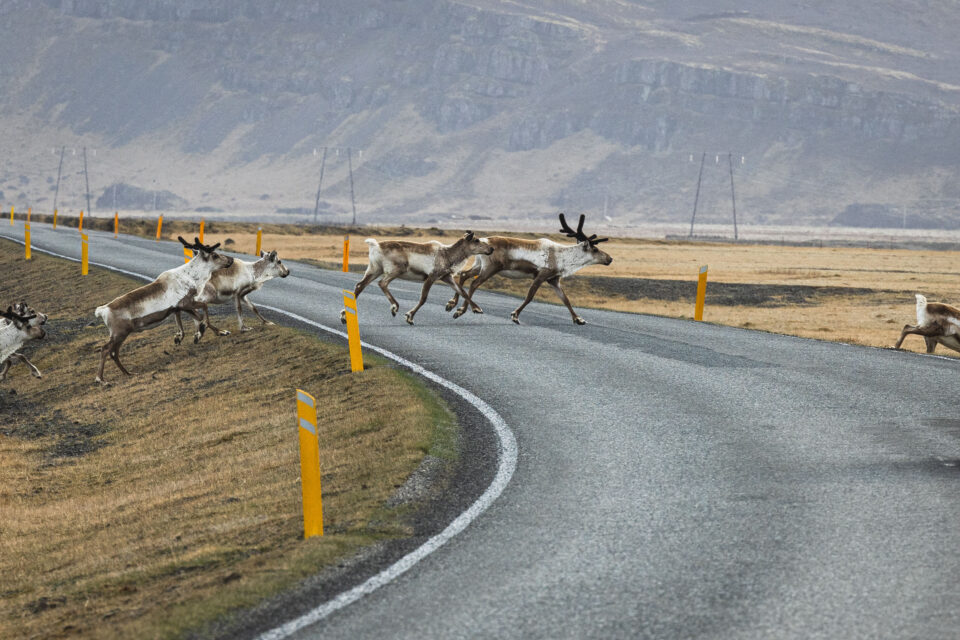
To be on a bike means to be vulnerable, and in Iceland, that means in all senses of the word, At times, we were the most miserable we’ve ever been—cue said rain storm or the myriad of days we spent in headwinds and blizzards. But at others, we existed in pure bliss, savoring the simple moments; a pause between oncoming fish-trucks, a bite of local licorice chocolate, a chat with a curious local, a sunset jet-boil dinner overlooking a fjord. We got to know this place at its worst, just as we had at its best. And in getting to feel and learn so many sides of it, we found ourselves connecting deeper to it, and deeper to ourselves. A constant reaffirming of why we chose to do this outlandish adventure, and why it needed to be done on bikes.
Further Reading
Make sure to dig into these related articles for more info…
Please keep the conversation civil, constructive, and inclusive, or your comment will be removed.