
This piece first appeared in the August edition of BikeBiz magazine – not subscribed? Get a free subscription.
Samuele Bressan, Head of Global Marketing of the Cycling Division at Pirelli, shares insights into the brand’s strategic relaunch in 2017, their “professional kitchen” approach to tyre production in Italy, and how pro team feedback is balanced with internal testing to meet diverse rider needs. As well as touching on their commitment to sustainable materials.
What’s the story behind what you’ve achieved since your relaunch in the cycling market in 2017?
Pirelli approached the cycling category with a combination of good planning and good execution. We maintained an open mindset, and we were keen to learn, instead of imposing fixed ideas.
Aligned with all Pirelli product development projects, we set up a program that puts performance at the centre and used our industrial and technical know-how to produce the best cycling products possible. The Pirelli Motorsport philosophy ensures we strive to deliver best-in-class products, designed and manufactured to the highest standard with no compromises.
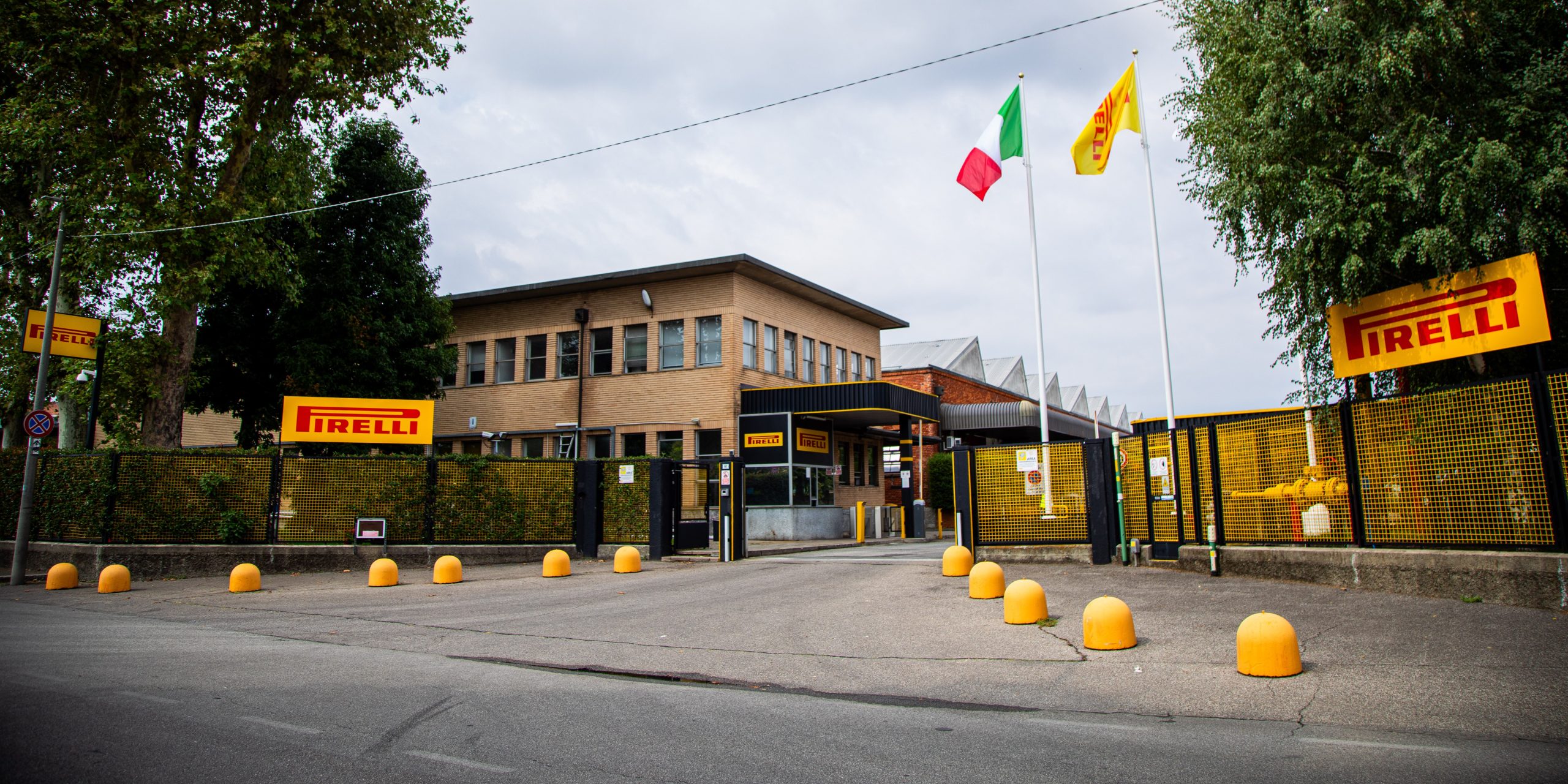
You are now making more tyres in Italy at the Bollate factory close to your Milan HQ. What are the advantages of this?
Rubber is a lot like cooking: with the right recipe, the finest ingredients, and a skilled chef, you can create a delicious dish. But there’s still one crucial factor – the kitchen. A professional kitchen, compared to a simple campfire setup, can make a significant difference in the final result.
Even with all the right elements in place, food cooked on a campsite can taste great, but it will taste even better when prepared in a well-equipped, professional kitchen.
The same applies to tyres. The manufacturing plant, with its advanced processes, skilled people, and precise machinery, is our professional kitchen. It’s what allows us to fully unlock the potential of our expertise.
How does your R&D expertise from automotive and motorsport translate to the development and testing cycling tyres?
At Pirelli, long before cycling returned to the company’s portfolio, the core areas of tyre development were already shared across all business segments. It’s common practice for technicians, whether they specialise in motorsport, automotive, or motorcycle tyres, to work across different product categories, including cycling.
This cross-functional approach applies to every aspect of research and development, from compound formulation to the proprietary equipment and techniques used in our industrial plants.
How does working with the likes of Lidl Trek, Trek Factory Racing, and more recently, Alpecin Deceunick contribute to the development of new products?
This is a key piece of the puzzle in the product development phase – but it’s not enough on its own. Relying solely on feedback from professional athletes could lead to a product that’s perfect for them, but not necessarily enjoyable for the average rider.
That’s why we’ve added an internal field-testing department to the equation. Our team of professional testers ride daily – in both controlled environments and on open roads – performing repeatable manoeuvres that simulate a wide range of real-world riding conditions.
By combining insights from both professional athletes and our internal testers, we’re able to develop products that meet the needs of elite riders while also delivering a great experience for everyday cyclists.
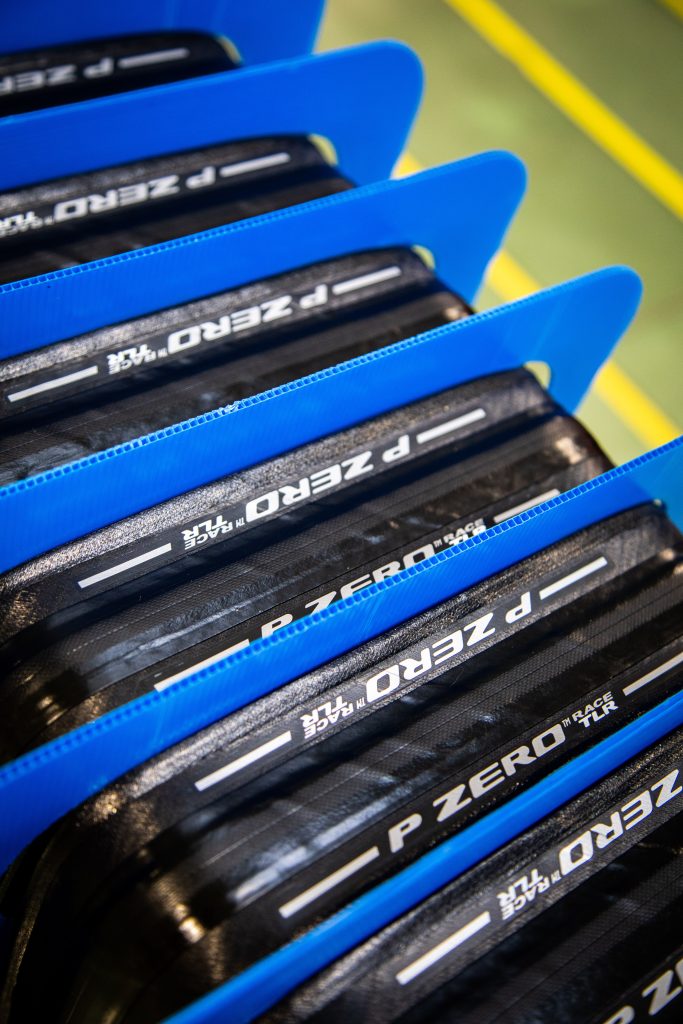 The launch of the P ZERO Race RS saw the introduction of your first cycling tyre made of FSC-certified natural rubber, and the latest launch of the Cinturato EVO sees your sustainability claims verified by Bureau Veritas. What does it mean to attain these credentials?
This progress is the result of a broader company vision and long-term action plan that began years ago. As the cycling division, we’ve been able to execute our part within a relatively short time frame, thanks in large to our dedicated manufacturing plant in Milan–Bollate. Wider-reaching initiatives are also underway across Pirelli’s entire global product portfolio.
We firmly believe that sustainability must come with no compromise to product performance. In other words, the end consumer shouldn’t have to sacrifice quality to choose a more sustainable product – something that, unfortunately, is still common in many product categories today.
That’s why Pirelli is focusing on the source: raw materials. Our goal is to use bio-based or recycled materials that not only reduce environmental impact but also outperform their fossil-based counterparts. This is not an insignificant challenge – recycled chemicals often deliver lower performance than virgin materials, and high-performance bio-based alternatives are rare, complex to manufacture, and difficult to integrate into advanced formulations.
This is the demanding work we’re tackling on a global scale. And being part of a larger organisation gives us, as the cycling division, a significant advantage in making these innovations a reality.
Recently, you brought out the 40mm width P ZERO Race and the Cinturato EVO, currently up to 40mm, with wider sizes up to 55mm coming soon. What was the decision behind this, and how has it been received by the market?
This direction was driven both by market trends (subtle demand shifts and broader trend analysis) and by performance-based insights and analysis drawn from our extensive experience in vehicle dynamics across Pirelli’s R&D divisions.
On rough surfaces (average tarmac can often be a rough surface), the general rule is: the wider the tyre, the better the performance in nearly every aspect. While there are a few exceptions, this principle is well-established in other sectors and is only now being fully embraced in the world of cycling.

At Eurobike, you launched a new collaboration with the CAST MTB Collective. How did this collaboration come about, and what does it mean for the products in this range?
This collaboration began with a shared belief in their business model: putting riders at the centre of the business, not treating them simply as brand ambassadors with sponsorship contracts. That approach resonated with us as a genuine and honest way to engage with the cycling community.
While our structure as a large and complex organisation makes it more difficult to fully implement such a rider-centric mission ourselves, it felt natural to support CAST in doing so. Their focus on rider-driven product performance aligned seamlessly with our values. We saw it as an opportunity to extend Pirelli’s technology to a different type of consumer, co-developing products hand-in-hand with the CAST team, using our expertise to bring their vision to life.
Importantly, this initiative doesn’t overlap with the Pirelli range of gravity tyres, which remain focused on World Cup-level racing and the relentless pursuit of ultimate performance. We see CAST as a complementary project, both in terms of brand positioning and product range, offering something distinct to the broader Pirelli ecosystem.