
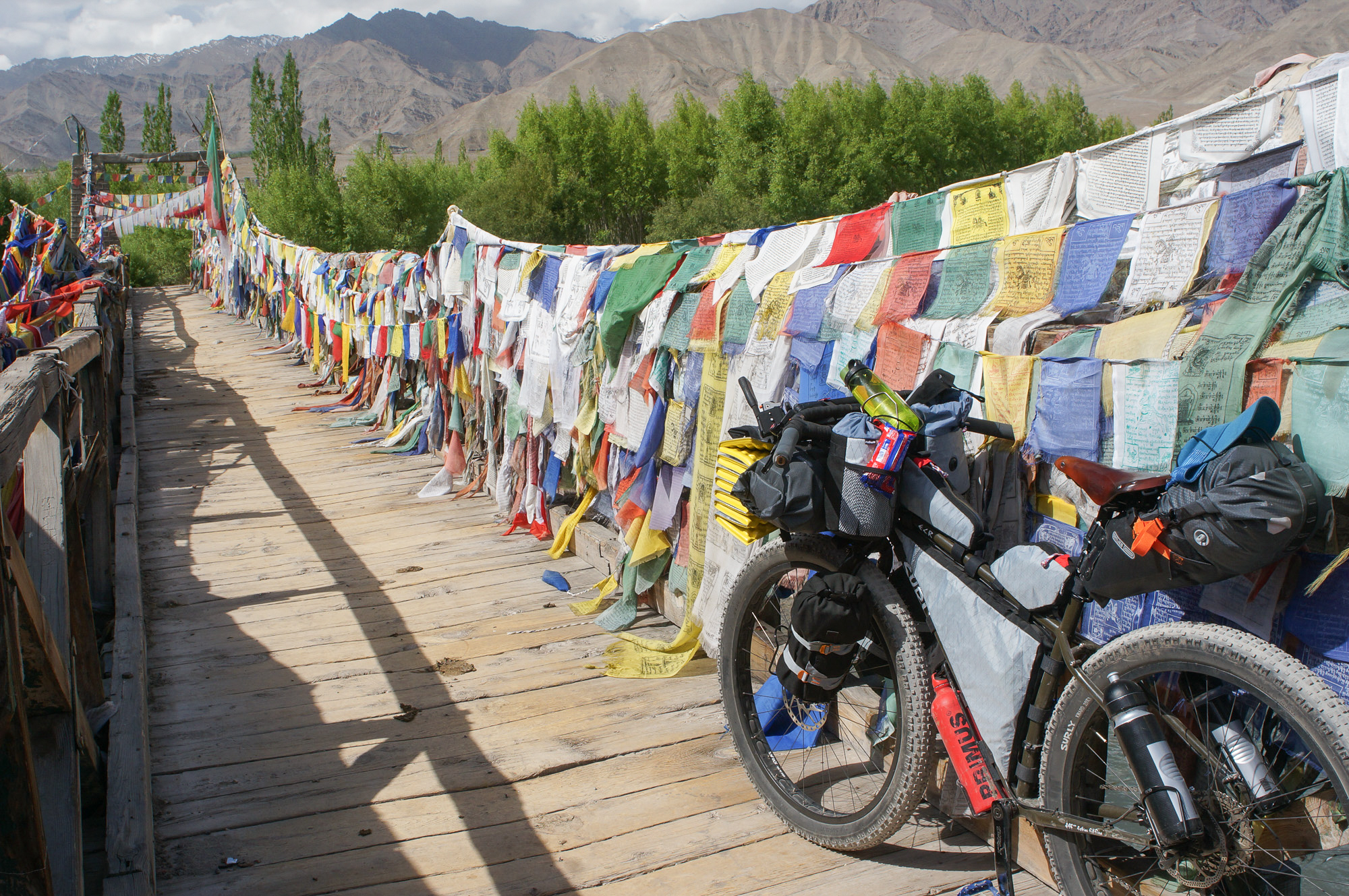
When the ride turns to a hike-a-bike deep in the Indian Himalaya, you know you’re neck-deep in a big adventure. Jan Zdansky set out to ride one of the Indian Himalayas’ most famous trekking routes by bicycle. Altitude, weather, and terrain put this rider through a true test of fortitude; perhaps your fortunes will differ. Today, the Radavist brings you inspiration for your own Himalayan bikepacking expedition…
After three necessary, though agonizing, days in Leh, the capital of Ladakh, which I dedicated to initial acclimatization, settling formalities, and getting to know the area, the time finally came to hit the pedals. My goal was the Markha Valley, which is home to probably the most famous and popular trek in Ladakh.
Why Markha? It was a logical choice: it’s the most accessible from Leh, it doesn’t require any special permits, and its route offers a decent number of places for refreshment and lodging. Although it is a tourist “classic,” only a handful of people had attempted the route on a bike before me. It is a genuine, tough trek, usually completed with a heavy backpack or with mule support. Trekkers typically manage it in 6 to 8 days, which led me to estimate that my pace on the bike could fit into 5 to 6. The night before the departure, I bought five days’ worth of food, with an optimistic backup plan – surely I could buy some hot soup in the valley if things got dire.
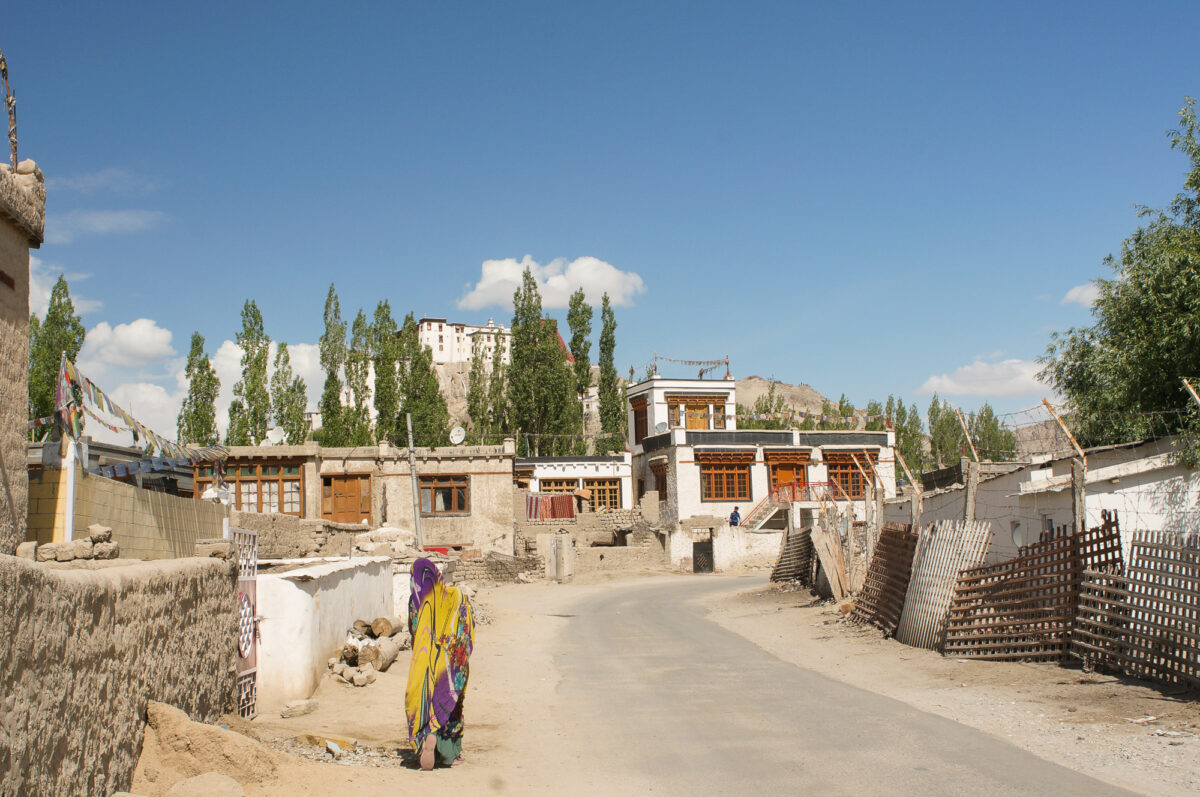
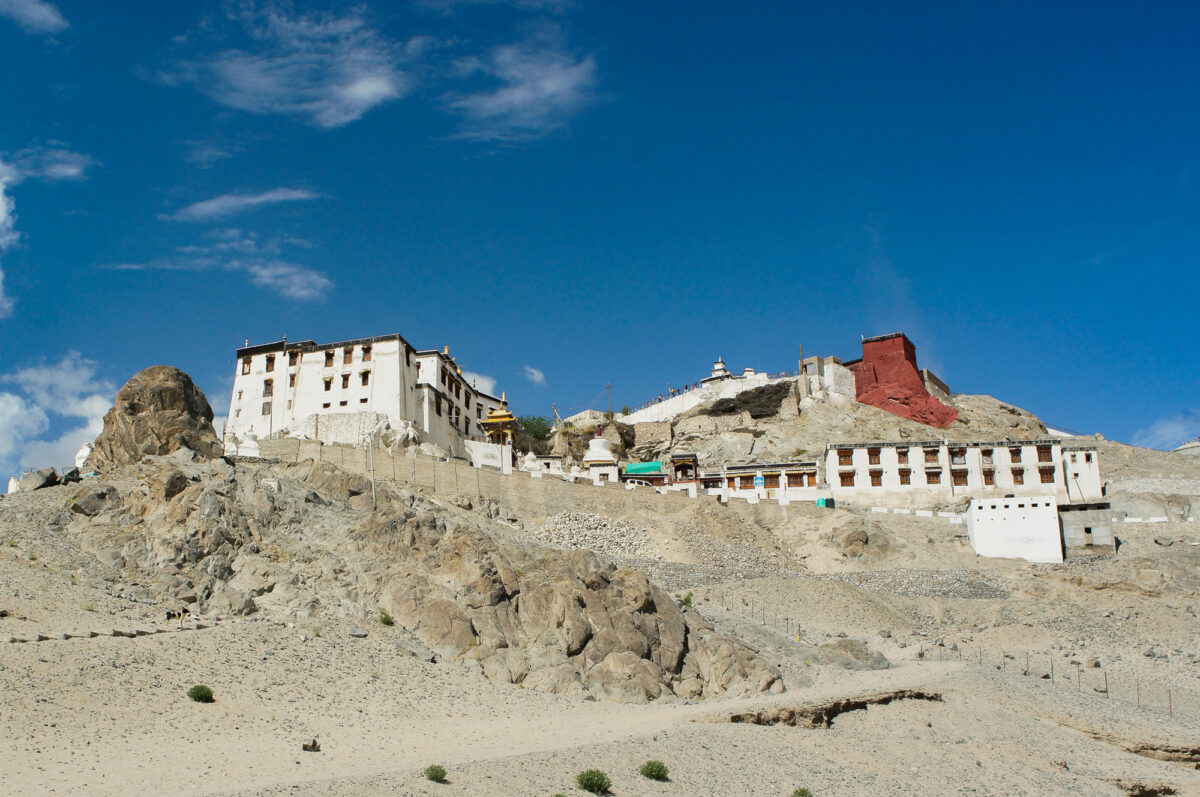
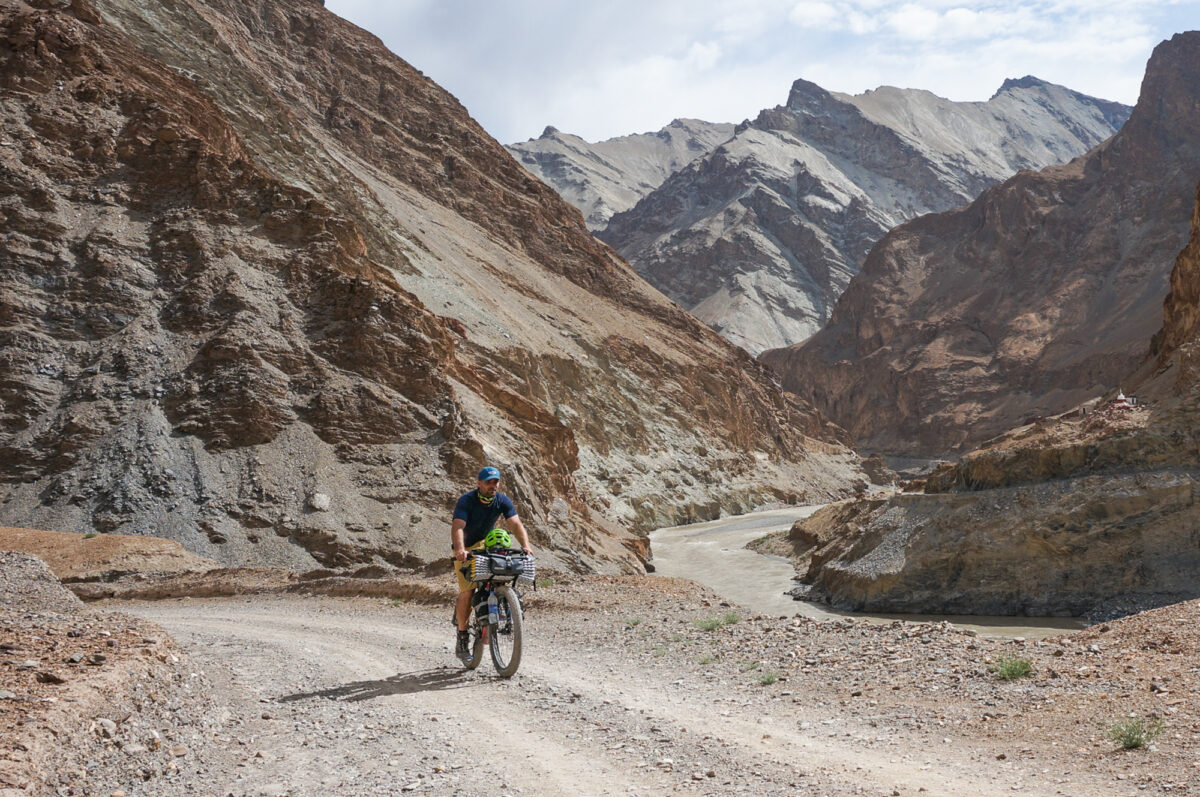
Monday morning saw me set off. First, I faced an unpleasant 30 kilometers on the main road toward Kargil. This section was a necessary evil. From Nimo, where the majestic Indus meets the wild Zanskar, I finally turned onto the side road toward the village of Chiling. The new asphalt flew beneath my wheels with ease, but that pleasure lasted only about 10 km. Then the road broke into hard gravel and stone.
The headwind forced me to use the lowest gears my Surly ECR has, so I was more crawling than sailing against the river’s current. The clouds of dust were so thick that they made both breathing and following the path difficult. It was hell – the wind here blows incredibly strong.
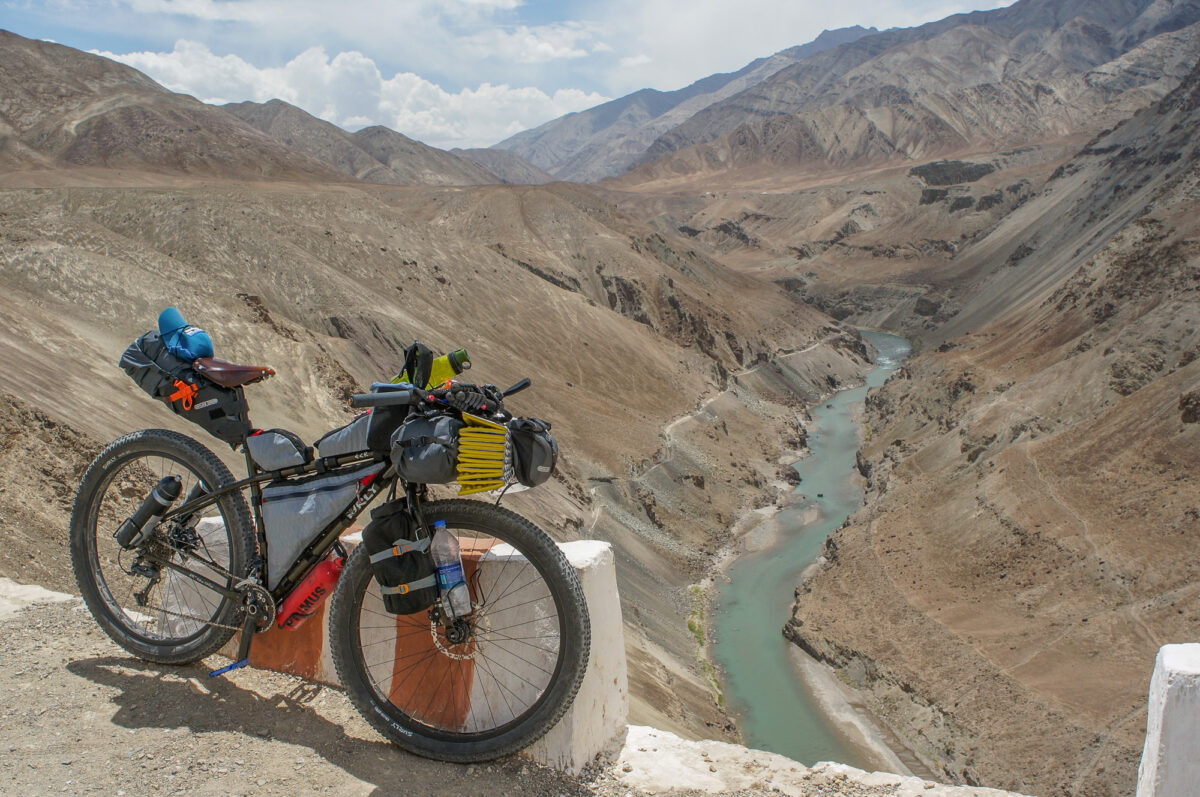
In Chiling, the last village before the start of the Markha Valley, I treated myself to a cold Coke and, without much delay, rushed further into the scorching canyon. I took the left turn. I saw people with backpacks, but suddenly my heart sank: where is the bridge? I stared with an open mouth at the manual cable car with a wooden basket that people were using to cross the Zanskar River.
The basket was clearly too small for my loaded bike. I struggled with the logistics for a moment; ultimately, I had to take off a couple of bags and, with the bike in my hand – hanging outside the basket, above the wild river – I threw myself toward my destiny. During those approximately 30 meters, my ECR became quite heavy in my wrist, but I held on.
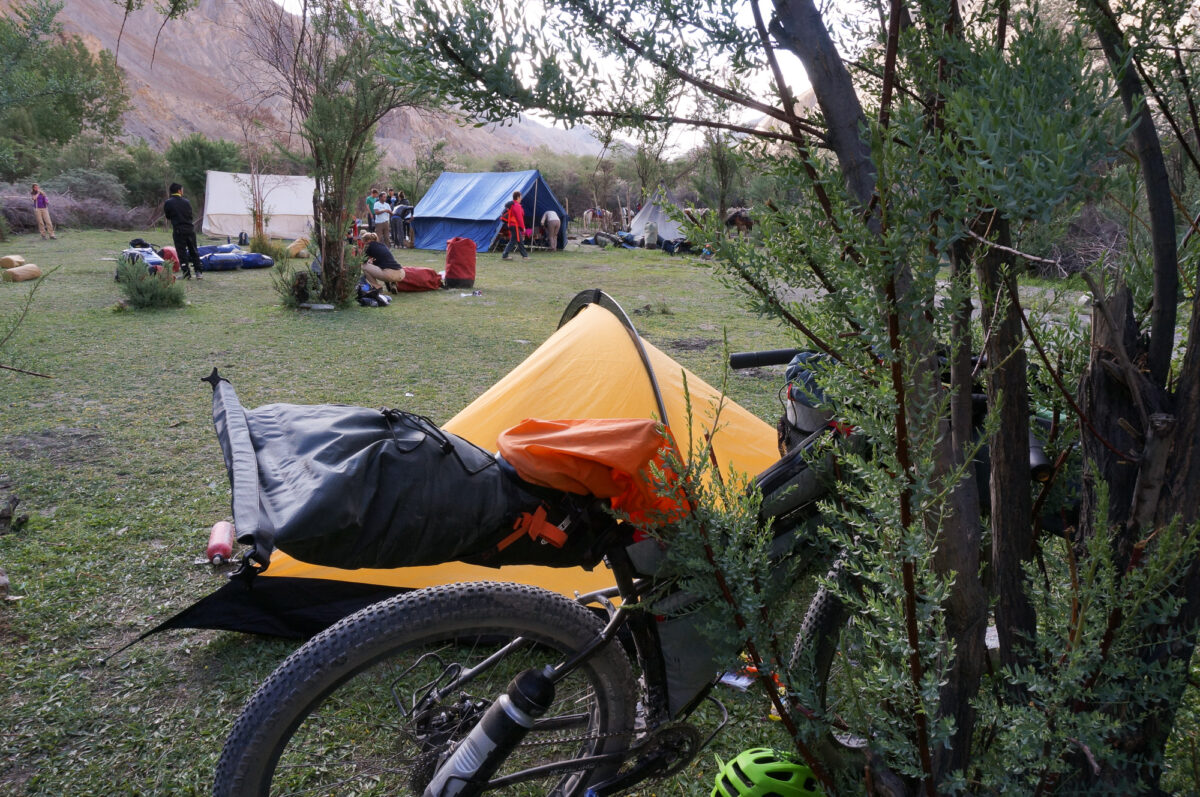
Following a wide supply road, I reached Skiu. Right near the first house, a group of hikers curiously photographed me and directed me to the camp. Another group of tourists from all corners of the world was already waiting there. They were truly the “masters of the mountains”, trekking with an entire caravan. They didn’t even pitch their tents themselves; they had local helpers for that.
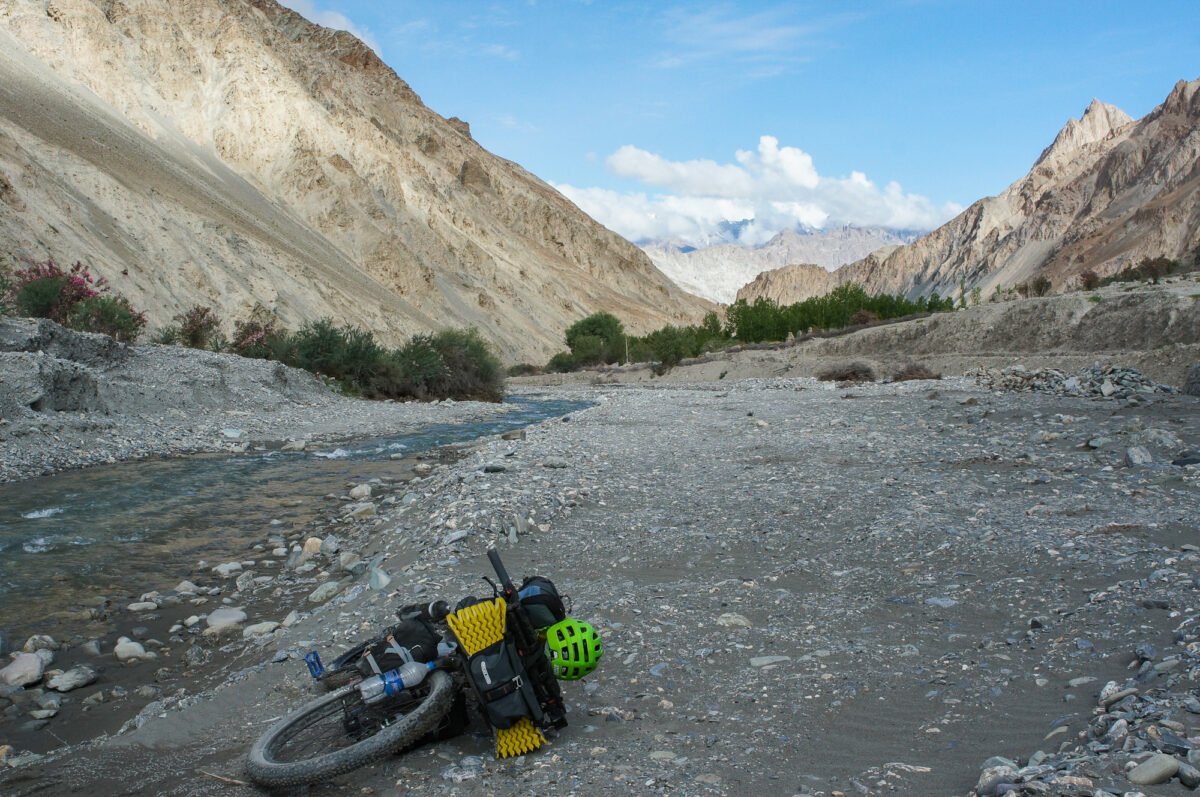
The next morning, there was no time to wait; I quickly packed and hurried onto the trail. From Skiu, I rode for a while on a wide track, which soon turned into a clear footpath. No drama, a beautiful trail drew me deeper into the valley. Occasionally, there was a sharp climb onto a bank or, conversely, deep sand and stones in the riverbed. The path was nicely compacted by the thousands of hiking boots and mule hooves that pass through it every year. I covered more kilometers without much effort, enjoying the ride on my three-inch tires.

The turnaround happened before the settlement of Chalug. Here, I had to ford the river for the first time. I took off my shoes and stepped into the icy, stinging water. A few steps and I was on the other side. Put the shoes back on. Wait, no, take them off again and ford. And again. One more time. The fifth time was finally the last. Wow, my feet looked like they had just had a pedicure from that ice bath.
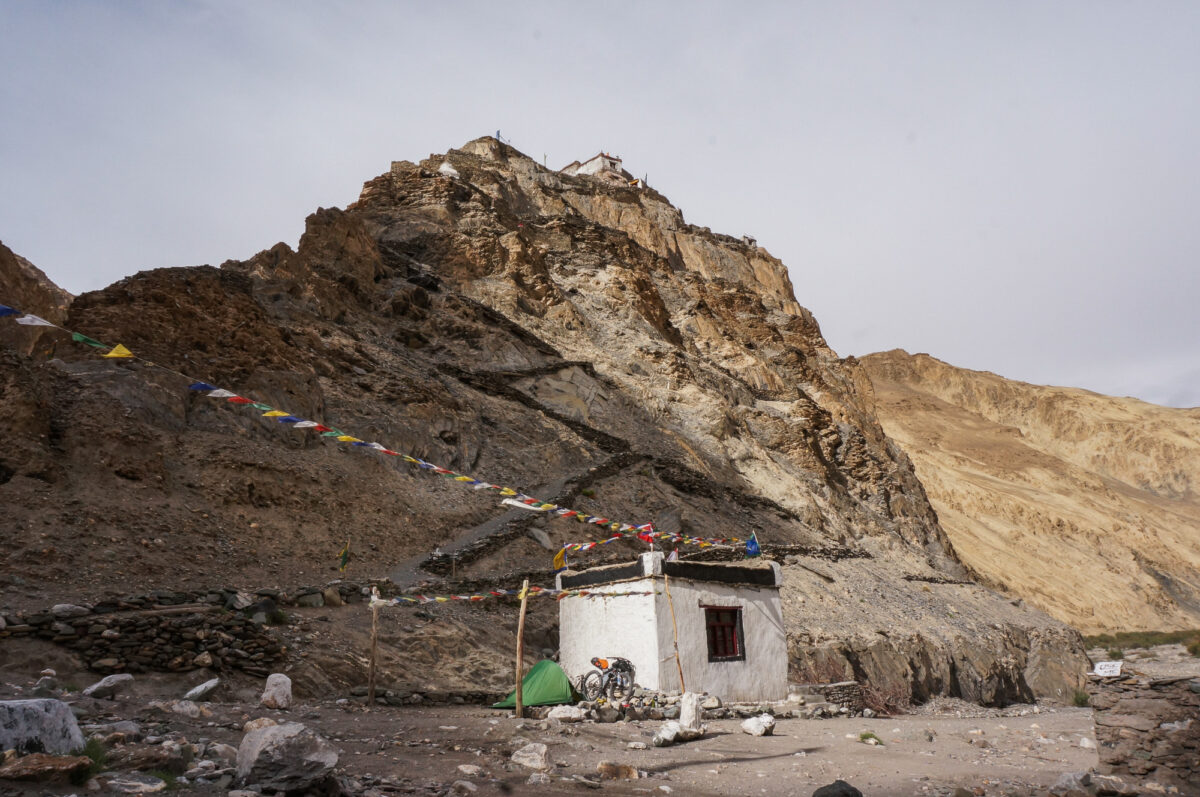
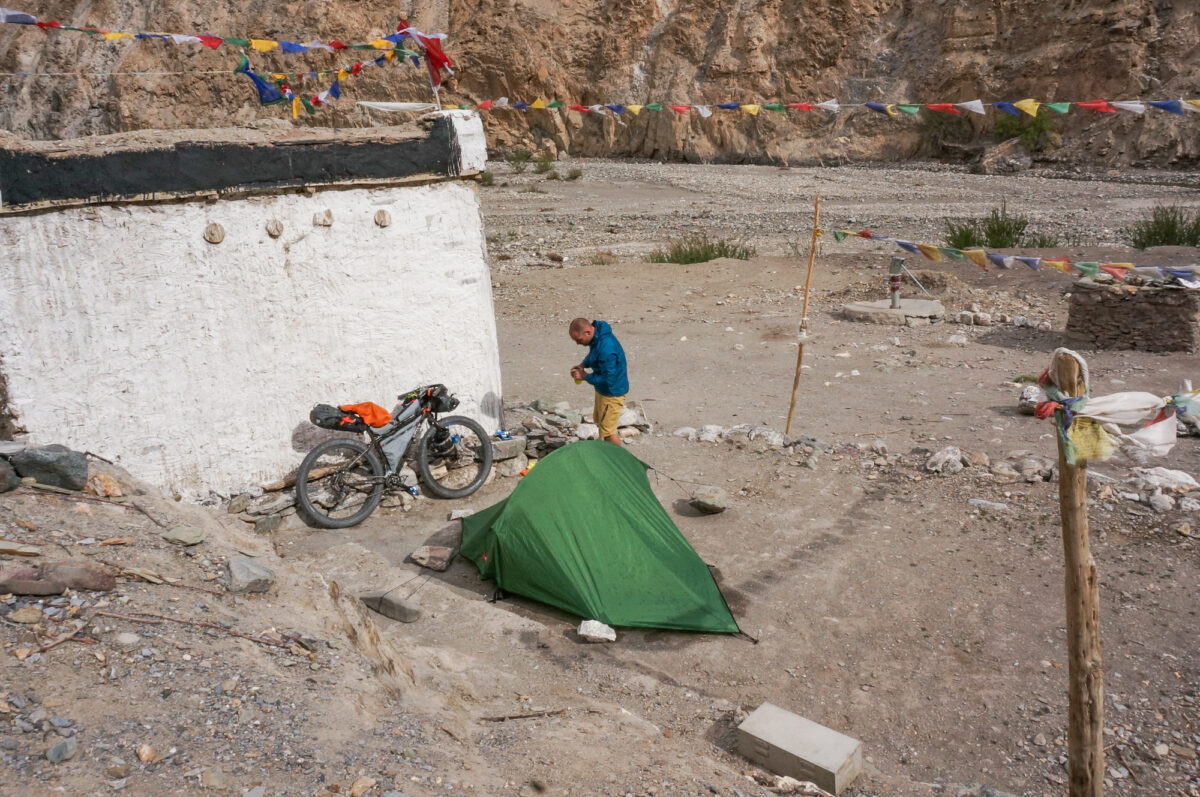
I arrived in the village of Markha, the largest in the entire valley, around two o’clock. The whole valley echoed with a loud “heee hooo,” as everyone directed their yaks on the miniature fields. I stood for a moment, fascinated by how they plowed with a wooden plow, after which I got up to look for a place to sleep outside the village. Unfortunately, a heavy rain stopped me near the Tetsa Monastery. My head began to ache, which is always a warning sign at this altitude. I wisely crawled into my sleeping bag early.
I woke up with a twisted stomach – probably those liters of green tea. Why did I buy it when I know I don’t like it…? As first aid, I swallowed a spoonful of peanut butter. Then I set off toward Nimaling. According to the map, today was going to be “serious.” Everything was calm up until the village of Hangkar. Occasionally, I had to jump over a creek, but otherwise, it was a pleasant ride.
A little past Hangkar, the trail turned left. Riding ends here. I dismounted and started pushing upstream against the creek. It was sweltering—I hadn’t noticed it while sitting on the bike. I filtered water for my supplies and pushed upward. At a place called Mordichan, I waited out a thunderstorm and, with throbbing temples and a headache, I pushed the bike upward toward a better tomorrow.
Uh-oh. The terrain seemed to have turned perpendicular. This is bad. I was panting like a sick person; my head was pounding, and my strength was draining away to the valley floor. I slowly wrestled the bike uphill, meters at a time, having to rest every few moments. The prospect of sleeping in the Nimaling camp slowly dissolved. Twenty steps, a break, another twenty, and so on.
I won’t prolong this. Simply put, totally exhausted, I stopped at the first water source about 4 km before Nimaling. My head was splitting, and my body could barely stand. The situation was more than tragic. I poured water on my ramen and huddled on my sleeping pad. This was the price for the rapid progress. My acclimatization was completely insufficient.
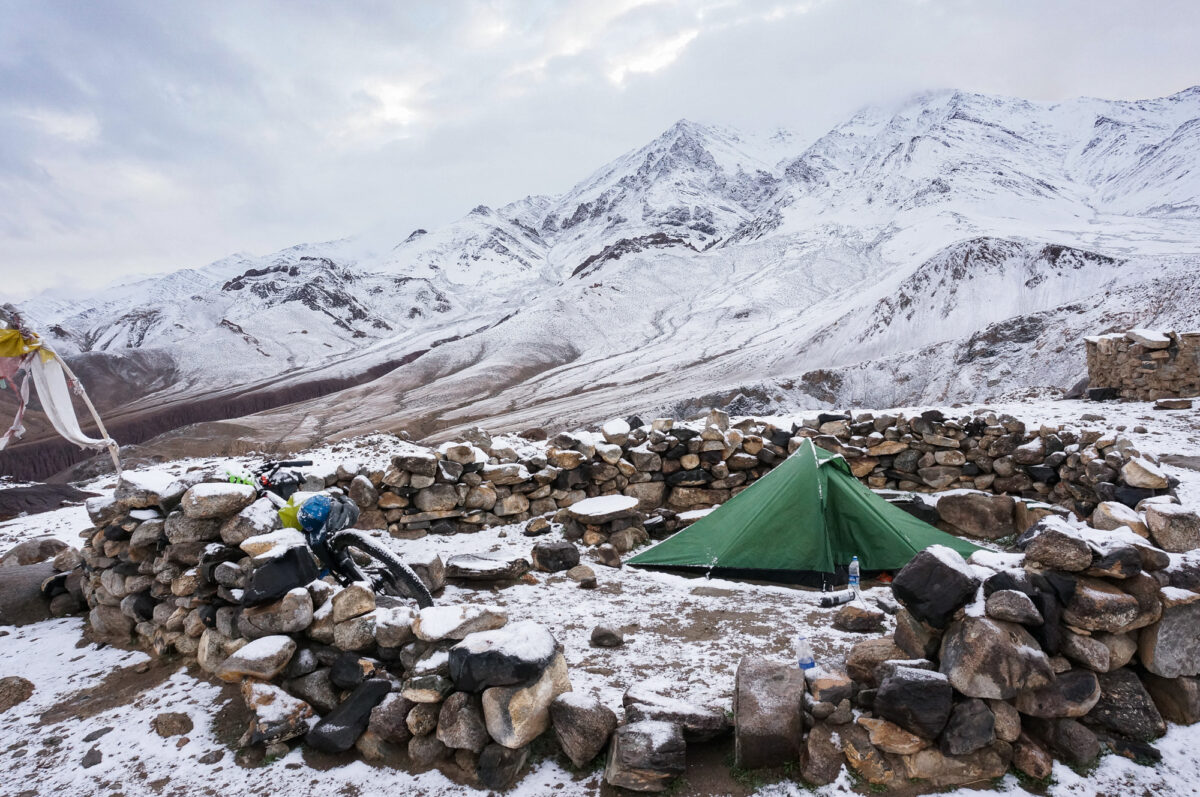
It snowed all night, and in the morning, things didn’t look much better. I quickly packed my wet tent and started climbing higher again. Or rather, I was barely crawling, to be more precise.
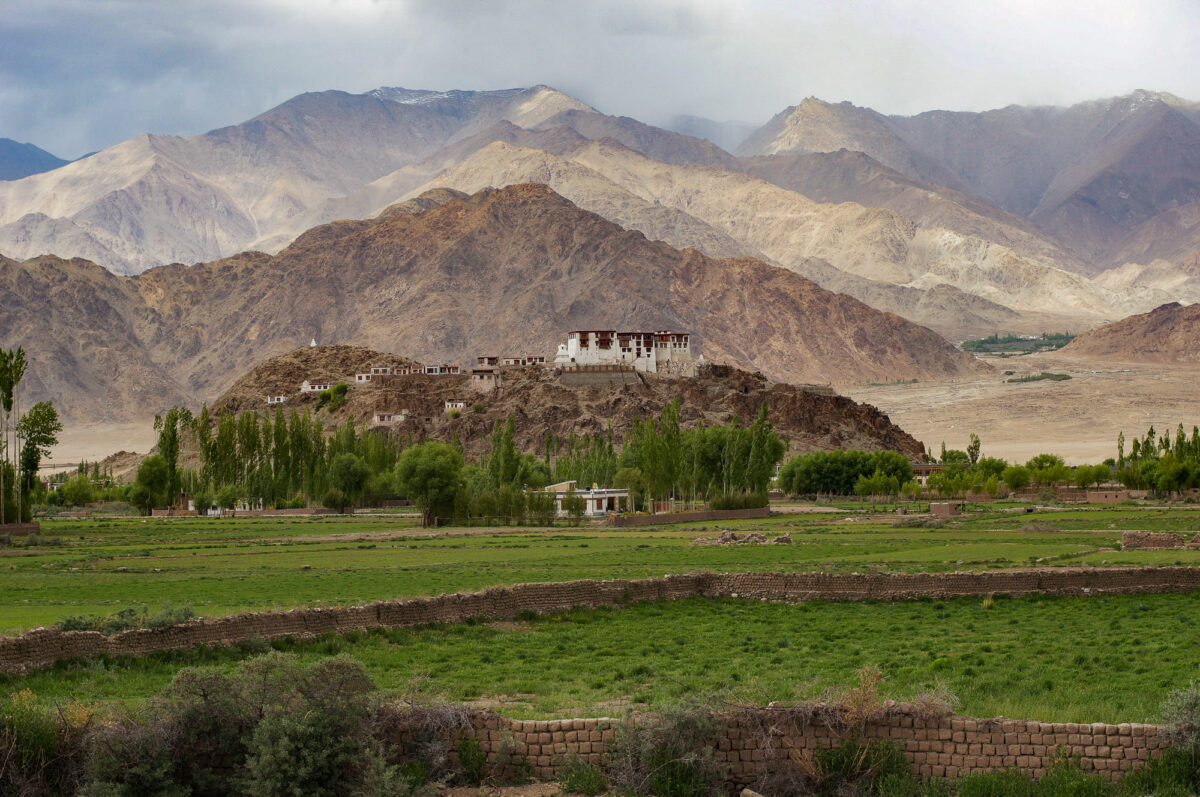
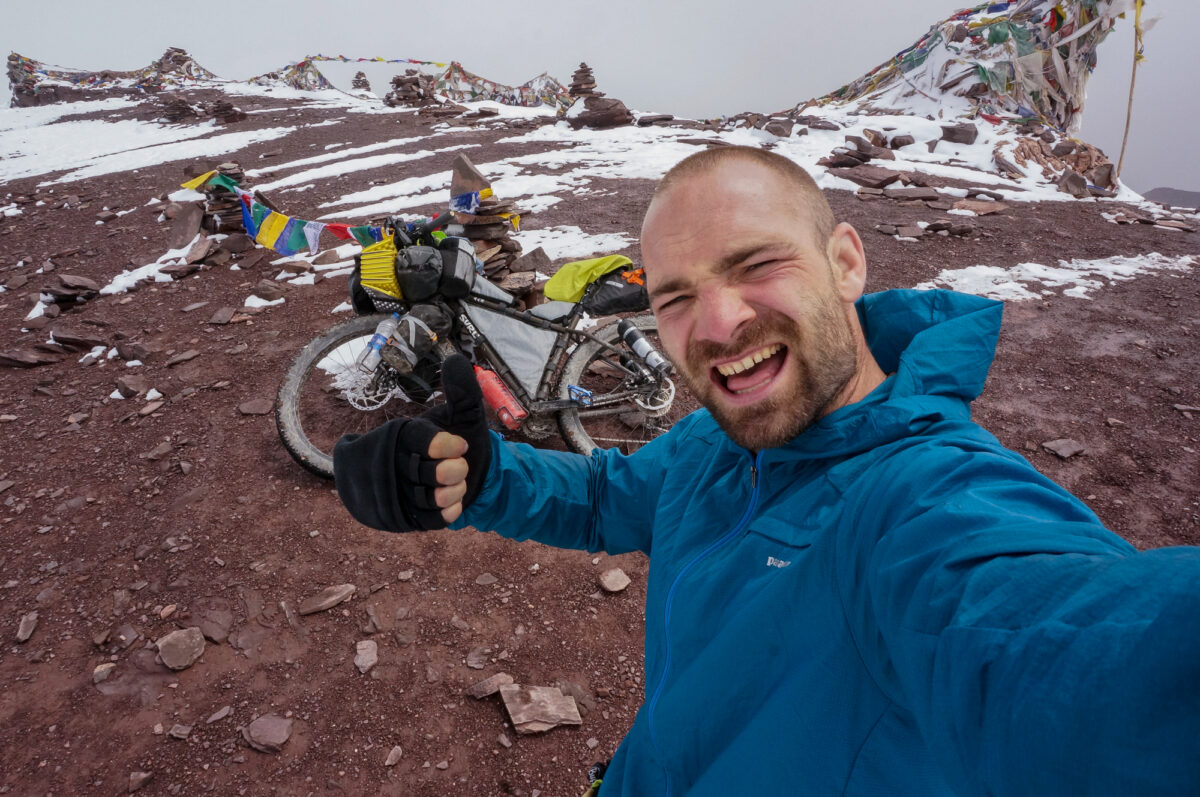
Nimaling is an improvised camp with prepared tents and, most importantly, the possibility of refreshment. I settled my upset stomach with black tea and got to it: the final, most brutal section up to the 5,250-meter-high Konmaru La Pass. It was snowing, my legs weren’t listening, and my lungs couldn’t cope. I tried to maintain a rhythm: 20 steps, 10 breaths, and another 20 steps, just to see some progress.
On the final ascent to the pass, I was standing more than walking. Moreover, I started sliding on the soaked mud. What the hell was I thinking?
Unbelievable. I was standing in the pass. My bike lay on the ground, and I simply couldn’t comprehend how I had gotten here. No great romance, just the necessity of getting down quickly. The treacherous descent on the waterlogged path still wore me out. I had been looking forward to a long descent, but so far, it looked nothing like that. The trek dropped almost vertically.
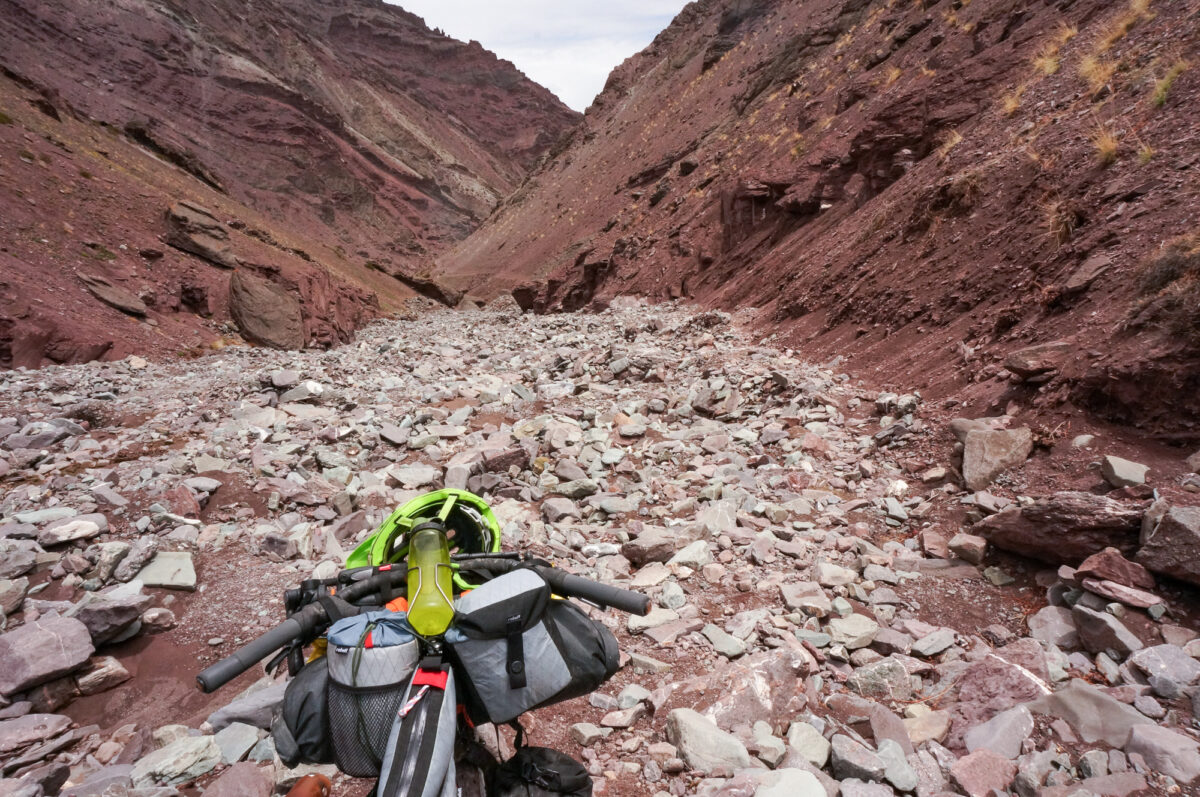
What was worse, the descent continued through the riverbed. Stones, stones, and more stones. Occasional snowfields and climbing down icy cascades. There was no sign of a path. I waded through this rock quarry all the way to the village of Shang. I must say: the trek from Shang to Konmaru La is the worst I have ever seen and, unfortunately, walked with a fully loaded bike.
A little past Shang, I pushed my bike up a steep bank one last time and finally got on the bike. A beautiful singletrack led me to the end of the valley. With a smile from ear to ear, I bombed down a three-kilometer descent to Shang Sumdo. This is what I had been imagining! All the hardships of yesterday and today seemed to vanish. I connected to the road, descended another six kilometers to Martselang, and then headed back toward Choglamsar.
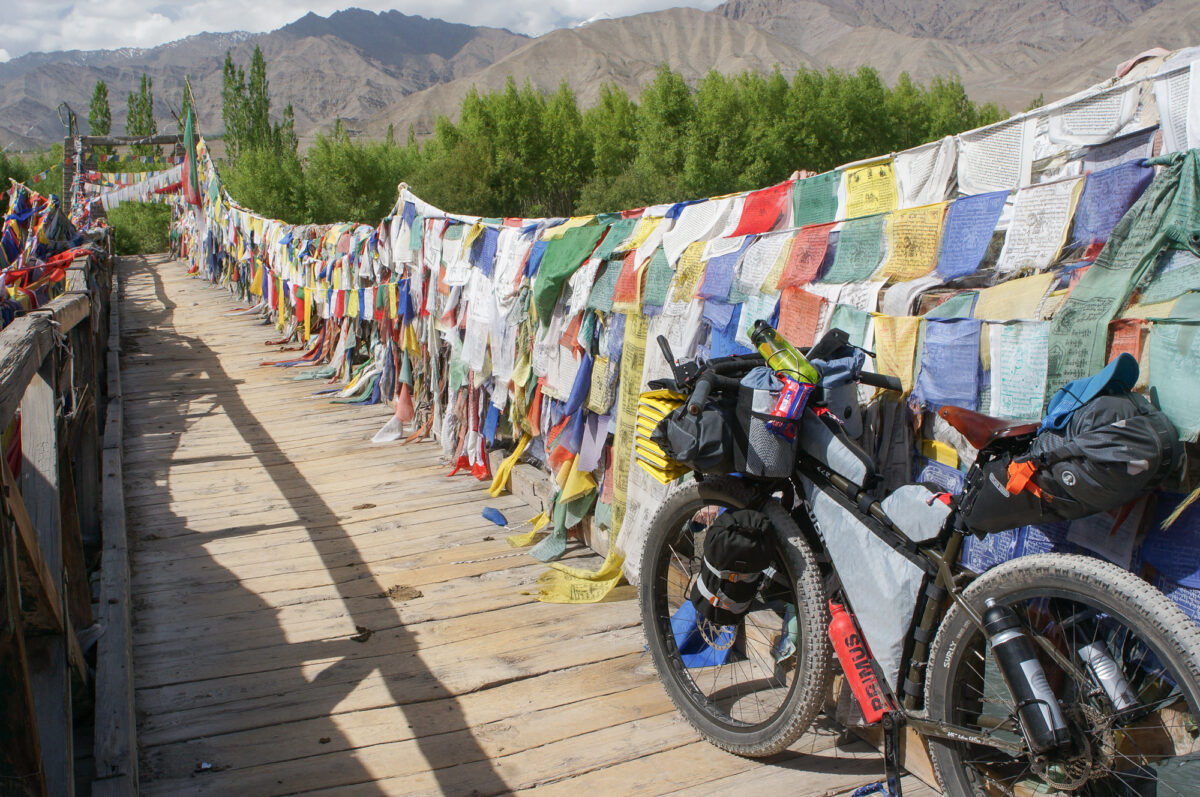
I completed the entire trek a day earlier than planned, which unfortunately reflected how poorly I tolerated the altitude, which simply didn’t suit me.
It was clear to me that I would be the only one in the valley on a bicycle. But what truly surprised me was that I was the only one without a guide, and I carried (rode with) all my own food and tent. From this, I deduce that the entire route could be done much lighter. And trust me, in those final sections, that would have been sorely needed!
I rode this route in 2018, so it is likely that many things have changed completely. I believe that today, a nice asphalt road leads to Markha Valley, and the Zanskar River is crossed by an iron bridge.
Have you bike-toured the Himalayas? Tell us of your experience in the comments!