
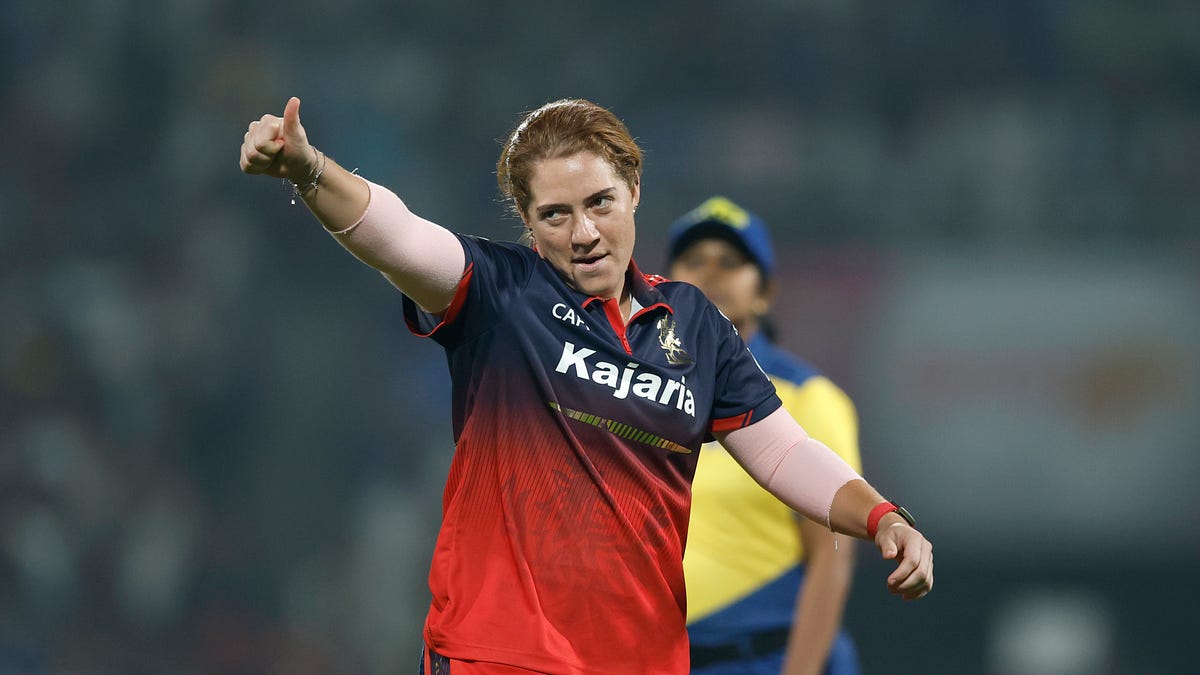
RCB beat MI by 3 wickets, courtesy some nonsensical shenanigans from Nadine de Klerk (63* (44) & 4/26). The ice-cool South African pulled off two different 20th over miracles to give RCB a perfect start to the 2026 WPL.
But, what happened beyond the headlines?
If you’re reading this online, remember: you can get it via WhatsApp or direct to your email👇!
✍️ Written by Aman Patel. Follow him on X.

Choosing to open with Amelia Kerr against the right-arm pace of Lauren Bell was a tactical mistake. Not only does Bell’s tall stature (she stands at 6-foot-2) give her bounce that troubles the 5-foot-7 Kerr, opening the batting in T20s is not the Kiwi all-rounder’s strong suit.
Although she averages 43 with 780 runs across 25 T20 innings as an opener, 671 of those runs came in a single Super Smash season. She averages just 18 otherwise as a T20 opener, and has scored just 28 runs opening for MI in 4 innings.
Bell utilised this potential unease to her advantage by repeatedly bowling good length out swingers aimed at the 4th stump. Her first over to Kerr was a maiden, with the Kiwi swinging and missing six times.
More impressively was how Bell used the impact of the dots to throw the normally cool Kerr off-balance. The bouncier, 4th stump line – combined with RCB’s offside heavy field with a slip and third man – forced Kerr to stick to her crease as she wafted at the wide balls. By just the third ball of the innings, Bell had established her psychological advantage by surprising the Kiwi with a sudden inswinger. Kerr tried to play the ball without moving her feet, missed completely and was nearly out LBW.
Bell also tried to exploit Kerr’s lack of footwork with fuller out swingers, trying to make her drive loosely outside off. The last 3 balls of the maiden opener went away from right hander, but they evaded the batter’s edge. A similar strategy in the third over had Kerr swinging and missing repeatedly again. In all, Kerr played 10 dots before she could get off the mark against Bell.
By this point, Bell had sown enough seeds of doubt in Kerr’s mind. The good length deliveries meant Kerr was stuck in her crease, and she could only have a go at the out swingers with no footwork.
Bell had started both of her overs with good length deliveries to Kerr then followed it up going fuller. Thus when she got back on strike in the 5th over, Kerr was anticipating another length delivery to start and she was mentally prepared to come down the track.
Anticipating Kerr coming down the pitch, Bell bowled a short ball that got big on Kerr whose pre-emptive walk down the pitch led to a wild swing and a splice to the cover fielder on off. In all, Kerr managed a miserable 4 off 15, with the english pacer ringing her bell early and often.
Data from the author’s personal ball tracking.
✍️ Written by Aarush Adil Khan.

Lauren Bell forced a terrible start on MI, getting Amelia Kerr out early leaving them teetering at 21/1 after 5 overs. To overcome such a poor batting performance and get to a decent total, Mumbai required some cool, calm, and collected batting to not implode their innings immediately. Enter Gunalan Kamalini.
While Kerr was struggling against Bell, the 17-year old Kamalini took the game to left arm-orthodox spinner Linsey Smith in the 2nd over by hitting her for 10 runs, including two boundaries. By the end of the 3rd over, Kamalini had a control percentage of 86% while Kerr was at a mere 27%. By the end of the powerplay, the teenager had scored 5 of MI’s 6 boundaries as she kept their innings alive.
Kamalini’s tactic was simple. She didn’t try to heave her bat at every delivery. She clearly enjoyed spin (23 off 15) more than pace (9 off 13). Anything a little short or a little full was easily smacked into the cover and extra cover region, especially against Smith (19 off 10).
Meanwhile, when she faced anything on a good length near off-stump, she stuck to gently defending or nudging them for quick runs. She had a relatively average dot-ball percentage of 53.13%, but found the important pressure-relieving singles without resorting to lofted shots.
Then came Shreyanka Patil, RCB’s own prodigy. Unlike Smith, Patil is a right-hander. Also unlike Smith, she had more control of her lines and lengths. She stuck to good and just short of a good length near the off-stump, restricting those easy boundaries and runs. This was clearly frustrating Kamalini, as demonstrated by how she played two Patil deliveries.
On the 3rd ball of the 8th over, Patil threw her a full, flighted delivery just outside off. Kamalini greedily tried to slog her on the legside, but couldn’t make enough contact and the ball landed short of the fielder at long-on.
On the final ball of the 10th over, Patil repeated the trick with another full, flighted delivery just outside off. And again, Kamalini tried to heave one over the leg side. This time, Patil learned from the previous mishit, and delivered an arm-ball with lower bounce. Kamalini made even worse contact and edged it onto her stump.
Kamalini stabilised MI after a difficult start, and gave Nicola Carey & Sajeevan Sajana the foundation to reach 154/6. The teenager’s batting stood amongst her far more experienced top order peers, and gave MI a real shot at winning the game.
Data from the author’s personal ball tracking, ESPNcricinfo & the Jio broadcast.
✍️ Written by Tanish Taneja. Follow him on X.

After 7 overs, MI were reeling at 35/2 with both Amelia Kerr and Nat Sciver-Brunt back in the pavilion. Teenager G Kamalini had scored early boundaries but she wasn’t getting easy singles until Harmanpreet Kaur walked in.
The skipper’s presence (and RCB’s confusing bowling choices) had a helpful impact. While batting with Kerr in the first 5 overs, Kamalini scored 16 off 15 but 9 dot balls meant that she was over reliant on her 3 boundaries. After the dismissal of Kerr, she only faced 3 dot balls in the next 13 while scoring 12 runs. Kaur’s insistence on quick runs – she faced just 4 dots in her stint – changed MI’s scoring pattern.
The template which Kaur and Kamalini followed showed signs of promise, and the pair of Carey and Sajana doubled down. Their 82 run, 49 ball partnership saw just 11 dot balls as they kept the run rate ticking with smart strike rotation. Even without boundaries, they had a healthy SR of 83.3 scoring 35 runs in 42 balls.
While Sajana dealt in the big shots, Carey played the perfect support role with a non-boundary strike rate of 96 (24 off 25) while also picking 4 boundaries along the way, including a cheeky reverse sweep.
RCB’s sloppy fielding gave Sajana two lifelines along the way at 2 and 4, but she made full use of that luck and hitting seven 4s and a 6 on her way to 45 (25). Even against the very economical De Klerk, who ended up with 4 wickets, Sajana scored 13 runs in a single over with 3 boundaries.
De Klerk would have the final laugh of the first innings by cleaning up both batters for the first of her two 20th over miracles today. Sometimes you can’t battle fate, but Sajana & Carey salvaged a miserable MI start that nearly did just that.
Data from ESPNcricinfo.
✍️ Written by Neha Shetty, host of the Never on the Backfoot podcast. Follow her on Twitter.
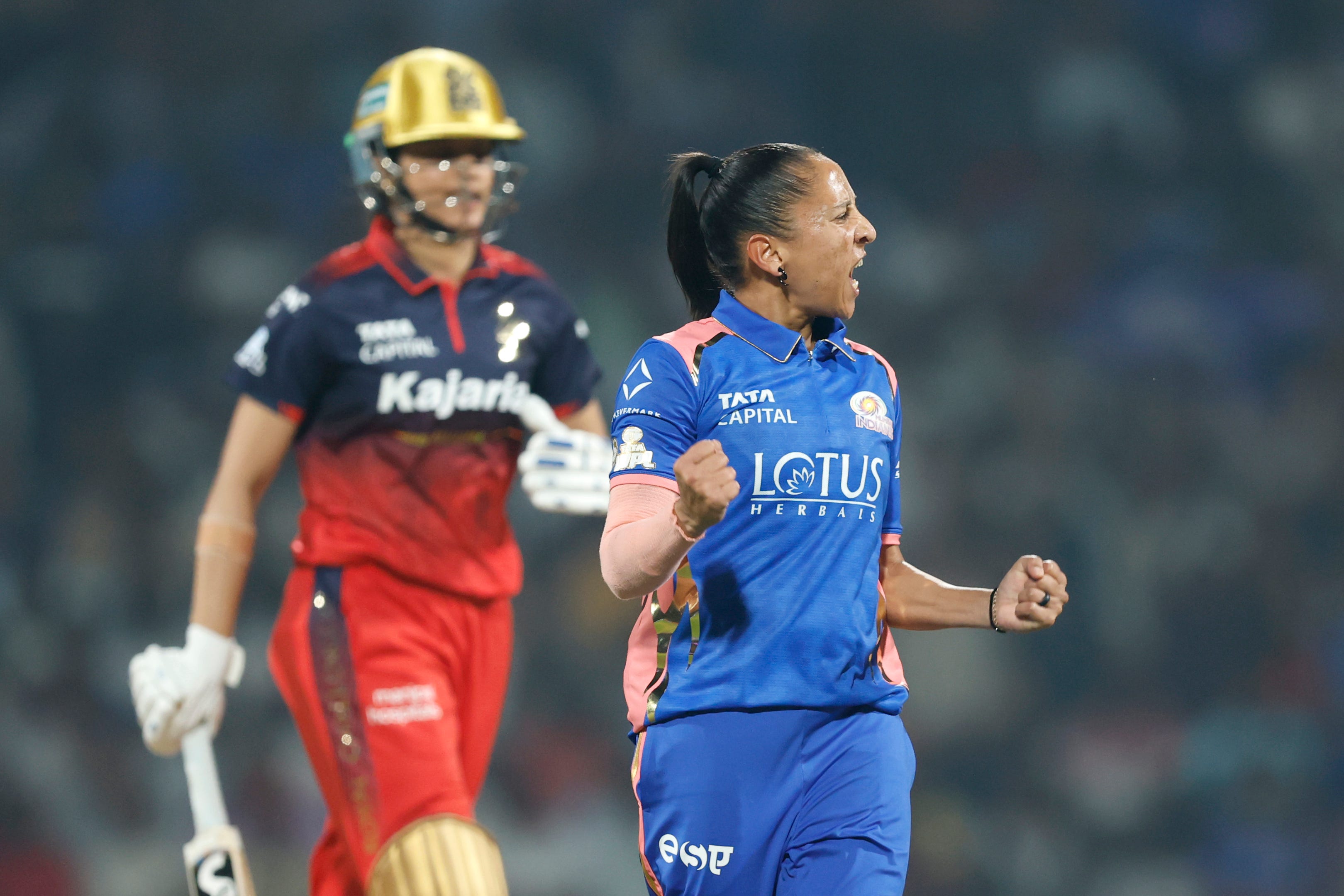
There are fast bowlers who intimidate with pace, and then there are fast bowlers who remember. Shabnim Ismail belongs firmly to the second category. On a Navi Mumbai night where margins kept dissolving into chaos, her four overs told a story that stretched well beyond the 26 runs she conceded. It was about recall, repetition, and a left-hander who keeps being lured into the same trap.
The first over didn’t hint at what was coming. Smriti Mandhana, quick on the pull and serene through the covers, latched onto a back-of-a-length ball in Ismail’s opening spell and sent it over midwicket with disdain. It was the sort of stroke that reminds bowlers why Mandhana is Mandhana – early dominance, instant authority. Two 4s came off Ismail in the first over of hers, and yet, beneath the surface, something was already being planted.
Ismail didn’t flinch. She didn’t chase swing or overcorrect her line. Instead, she narrowed her method. The pitch map later told the truth: a relentless concentration just back of a length, just outside off, especially to the left-hander. By the time she returned for her second spell, Mandhana wasn’t being offered freedom anymore, she was being denied release.
The fourth over told the real story. Four dots in a row. One full ball driven but cut off brilliantly. A bouncer that made Mandhana sway rather than swing. A back-of-a-length delivery punched straight to cover-point. Nothing dramatic, nothing spectacular — just suffocation. The pressure didn’t arrive with noise; it arrived with repetition.
And then, almost inevitably, came the shot.
Mandhana stepped down, looking to hack across the line at a ball that never quite arrived on the bat. The shape went first, the timing followed. The ball ballooned off the toe-end, hanging long enough for Poonam Khemnar to settle under it at mid-on. Ismail didn’t celebrate wildly — she roared, a release as much as a triumph. She had seen this before.
Because she had.
A year earlier, at Bengaluru, the script had unfolded with eerie similarity. Back of a length. Outside off. Mandhana, flying that night, tried to manufacture a boundary across the line. The ball held up, seamed away just enough, and skewed into the air for Yastika Bhatia to complete the simplest of catches. Different year, different fielder, yet the same ending.
The head-to-head explains why the plan felt so deliberate. Across three WPL seasons, Mandhana has faced 33 balls from Ismail and scored 48 runs, but nearly 58 per cent of those deliveries have been dots. Even in 2025, when Mandhana struck at 177.8 and looked largely in control, she was stalled for 10 dot balls before eventually gifting her wicket.
Come this edition of the WPL 2026, the squeeze was complete: seven balls, six dots, four runs, and dismissal. The strike rate crashing to 57.1 wasn’t just a bad over; it was evidence of a contest narrowing, of Ismail learning exactly how long she needed to wait before impatience crept in.
Data from ESPN Cricinfo, Cricmetric & Cricbuzz
✍️ Written by Tarun Pratap, who runs The Rank Turner. Follow him on X.
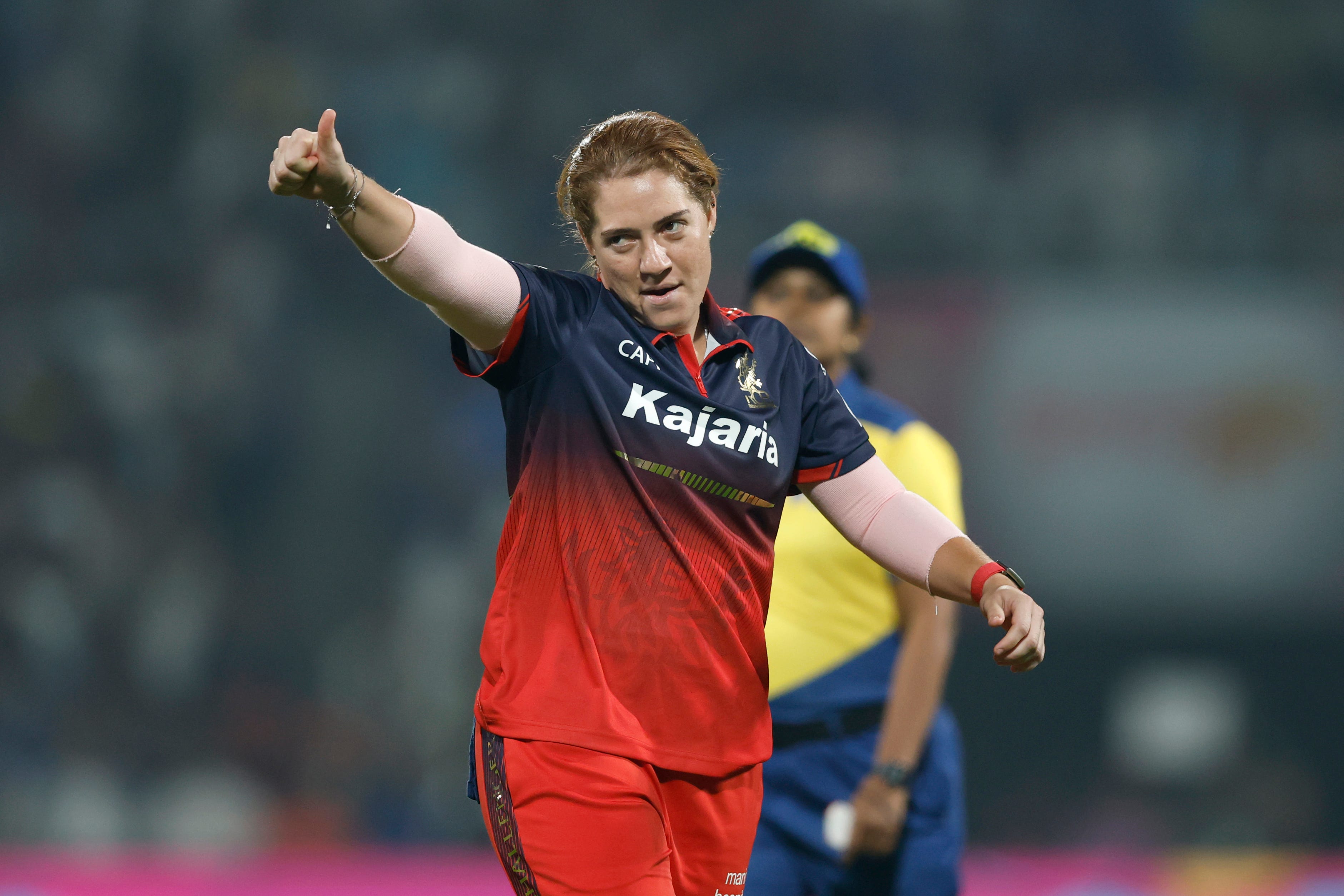
RCB were 65/4 when Richa Ghosh skied a loopy Amelia Kerr delivery straight to long-off. Just like that, they had put themselves in a position to lose a match that should have been unloseable. Some would call it classic RCB.
At that point, Nadine de Klerk walked in.
Two months ago, South Africa were 142/6 in the 36th over chasing 252 against India, when de Klerk produced an all-time innings, silencing a home crowd. She followed it up with another rescue act against Bangladesh. By the World Cup final, as much as Indian fans feared Laura Wolvaardt, Nadine de Klerk loomed like the Undertaker once did in 2000s wrestling, inevitable when the lights dimmed.
Tonight, as RCB unravelled, de Klerk looked composed. Commentators talked about “the look in her eye”. All of this, of course, is post facto. Once a player has done something often enough, the narrative builds, in the audience’s mind, in the opposition’s plans, and perhaps even in the player herself.
But until October 9, in the World Cup against India, there was little in de Klerk’s numbers to suggest this was coming. Even today, her T20I strike rate sits below 107.
So what has actually changed?
The first noticeable shift is volume of intent. In T20s, her dot-ball percentage dropped from 50% in 2024 to around 40% in 2025. The ODI trend is even clearer: from the high 60s early in her career to 46% last year.
Firdose Moonda once mentioned that de Klerk played hockey, which perhaps explains her historical strength in slogging and sweeping. Her strike rates on those shots are significantly higher than the average batter (+32 for slogs, +46 for sweeps).
What’s new is the off-side.
Historically, de Klerk has been relatively inefficient with her drives (scoring at a strike rate of -25 compared to the average batter). Tonight, it was her most productive shot. 7 of her 9 boundaries came between extra cover and long on. Until the final over, when she picked up two boundaries behind square off a slower bouncer and a length ball on leg stump, most of her scoring came through the off side.
Her traditional strong zones remain leg-side, from deep midwicket to behind square. But this innings showed an expansion, one that the numbers haven’t fully caught up with yet. Nadine de Klerk is making De Klerking regular. And like all real shifts in a player’s game, the evidence is arriving before the statistics do.
Data from Cricmetric & Opta.
✍️ Written by Raunak Thakur, who runs Dead Pitch’s Society.
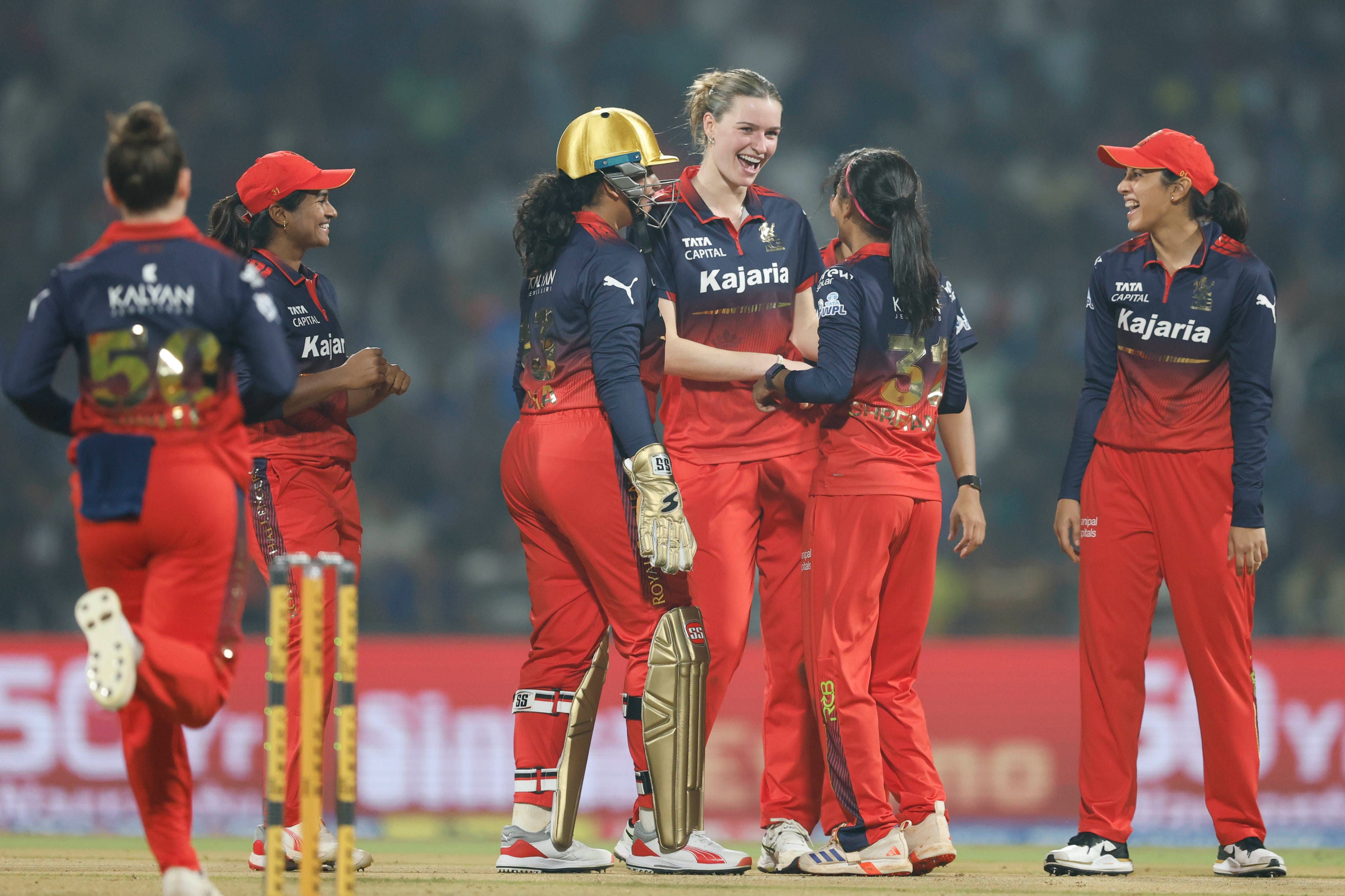
Mumbai Indians were at 34/1 by the end of the powerplay, a position that was evenly balanced. Lauren Bell had applied pressure early, yet the follow-up lacked alignment. Rather than reinforcing that control with similar disruption, RCB’s non-Bell overs alternated between caution and predictability, allowing Mumbai to settle.
Between overs 4 and 16, RCB rotated six fragmented spells, never allowing a single bowler a continuous run with the exclusion of bowling out Bell and Shreyanka Patil.
Arundhati Reddy initially offered a viable alternative and could’ve easily bowled another over in the powerplay. Utilised in the 4th and 14th overs, she bowled with control and variation, operating at an economy of 4.5, before being ignored until the death. Her 19th over, which went for 16 runs, appeared expensive in isolation, but it arrived after extended underuse, at a stage where batters were already set and looking to accelerate.
RCB’s preference for spin in the non-Bell overs further complicated the balance. Linsey Smith’s left-arm orthodox spell went for 23 runs in two overs, a decision that did not align well with the matchup. Against orthodox spin, Kamalini has scored 35 runs off 21 balls at a strike rate of 166.7, numbers that underline her comfort against that style. Smith’s introduction did not disrupt Kamalini’s rhythm; it reinforced it.
Another odd case of bowler use lay with Nadine de Klerk. Across her first 2 overs, she conceded just eight runs while removing Nat Sciver-Brunt and Harmanpreet Kaur. Despite that impact, De Klerk was taken off. Her 17th over, conceding 14, came late in the innings, when margins were narrow and risk had become inevitable.
This was not a bowling performance short on options. Bell supplied control, De Klerk delivered breakthroughs, and Arundhati offered stability. The issue lay in sequencing rather than execution.
In a bowling innings marked by hesitation elsewhere, Bell’s overs offered clarity – hard lengths, discipline, swing and control. The broader question for Royal Challengers Bengaluru lay not in Bell’s usage or the quality of their bowlers, but in their strategy of their bowler rotation.
✍️ Written by Shayan Ahmad Khan. Follow him on Twitter.
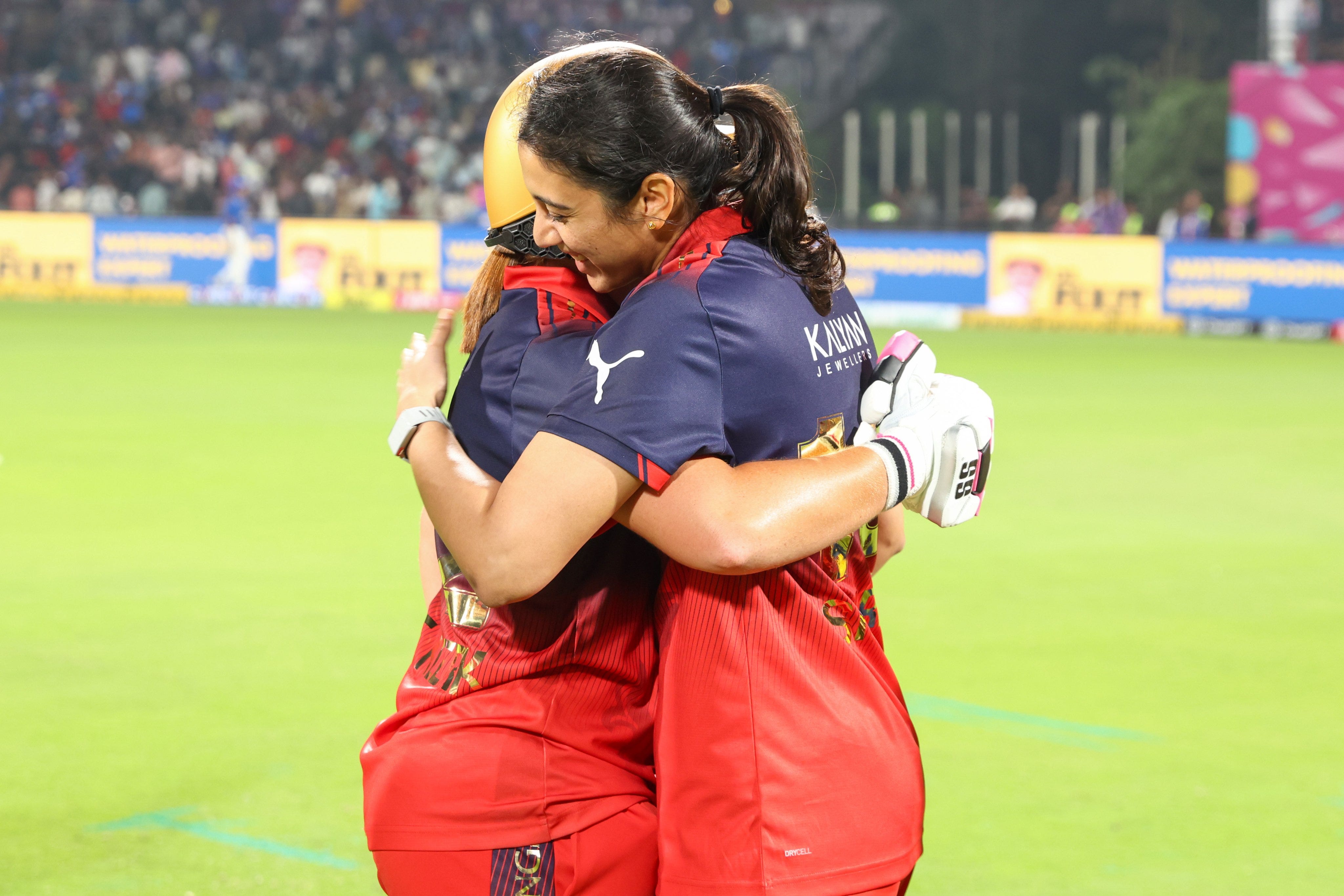
Three overs into the run-chase, RCB were flying at 40/0. Grace Harris was on fire, while Smriti Mandhana was punishing the bad balls with ease. The question was how soon they would win. Cut to the 8th over, and they were struggling at 65/5. All hopes were pinned on Nadine de Klerk. She had done it before in the ODI World Cup, could she bail her team out of trouble once again?
The answer would be a resounding yes, as the South African dropped an all-time classic performance. But, her all-round brilliance shouldn’t distract us from RCB’s fundamental selection errors today. The regulation chase of 155 should not have required a performance of that magnitude, especially after the start RCB’s openers gave them.
As the team XIs filtered through, they seemed one batter short. Before today, Radha Yadav had batted at No. 5 only once – against Malaysia in October 2022 – and only nine more times in the top seven in 49 innings across all T20 cricket. She’s only crossed into double figures twice, and has never scored more than 26.
Another odd selection choice was Dayalan Hemalatha ahead of Gautami Naik at No.3. Hemalatha scored just 27 runs off 48 balls in 6 innings last season. Meanwhile, Naik has shown a lot of promise opening with Mandhana in the Maharashtra Premier League in 2025, scoring 173 runs in 6 innings.
Ellyse Perry was another reason why RCB had a good year with the bat in 2025. She was an incredible accumulator in the middle overs (ave: 92, SR: 131.4), who could then launch at the death (213.6 SR). While she is irreplaceable, RCB didn’t even try to slot in an extra batter. Instead, they decided to double down on their bowling depth.
RCB chose both Lauren Bell and Linsey Smith, which meant their batting lineup did not have as much pedigree. RCB’s decision to open the bowling with the pace-spin pair of Lauren Bell and Linsey Smith backfired due to the latter’s matchup issues with Kamalini, while Yadav didn’t show much promise with the ball either. The spin duo ultimately conceded 44 runs for 0 wickets in 4 combined overs.
Oh, and I forgot about Prema Rawat. But can you really blame me when RCB themselves forget her in the first innings? The legspinner was called the Indian Georgia Wareham (minus the batting) by the head coach. Quite the show of trust to not give her a single over, even when MI were down and out in the middle overs.
De Klerk papered over the cracks tonight with bat and ball, but even her purple patch can’t last forever. RCB need to balance their XI better if they plan on building on this come-from-behind win.
Data from Cricinfo and Cricmetric.