
Updated January 10, 2026 07:30AM
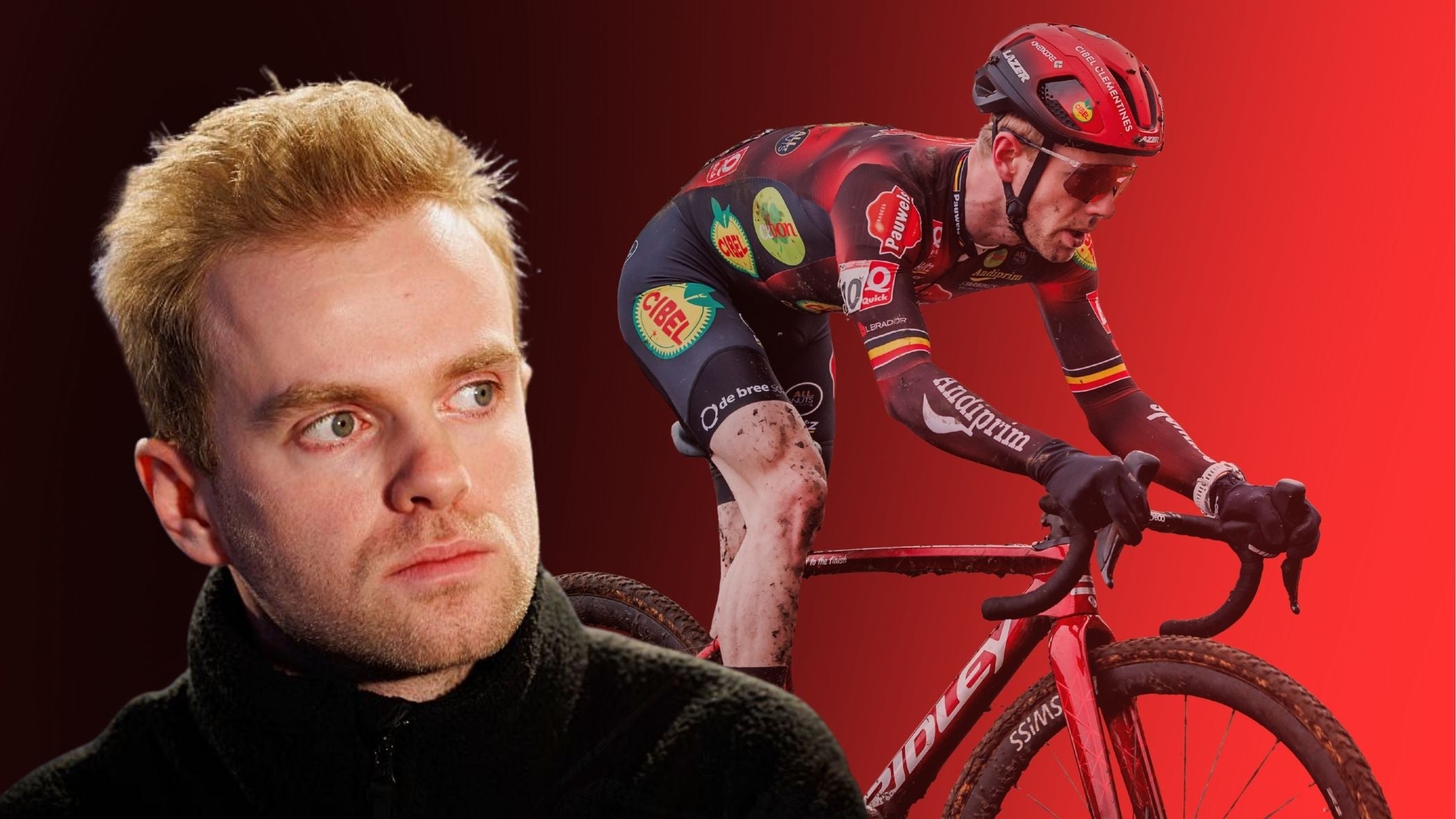
Eli Iserbyt — one of Belgium’s biggest cyclocross stars — is the latest pro racer forced to retire from cycling’s most feared vascular condition.
The 28-year-old shared the news in an emotional video posted to Instagram, revealing a year-long battle to treat iliac artery endofibrosis, a condition that impaired blood flow in his left leg and ultimately proved impossible to resolve.
“In recent weeks, I have received news from multiple doctors that it is no longer medically advisable for me to ride my bike, recreationally and competitively,” Iserbyt said on social media.
“I have always shared the beautiful moments with you, but now I also want to give you this news,” he said. “Unfortunately, it is no longer possible for me to continue with my career.”
Speaking to Sporza on Friday, Iserbyt described how all the medical solutions were exhausted after he underwent four surgeries and endless rehab during the past year.
“I put everything into cyclocross. And now that life suddenly disappears”, Iserbyt told Sporza. “I didn’t want to stop at all, that’s not me. But after four surgeries and a long process, the doctors said the medical trajectory was exhausted. That was hard to take.”
Cycling’s most dreaded diagnosis
Iserbyt — a two-time U23 CX world champion — is the latest big name to see their racing career come to a screeching halt after complications with iliac artery endofibrosis, something of a bête noire among pro cyclists.
Several top pros have faced the condition over the years. Proper treatment and some luck usually see them return to the peloton.
One recent high-profile case includes Shirin van Anrooij, who underwent successful surgery last spring, and she’s since returned to racing.
Other leading pros who were successfully treated and resumed racing include Fabio Aru in 2019 and Bob Jungels in 2021. Others who dealt with different iterations of the issue include Joe Dombrowski, Marianne Vos, and Annemiek van Vleuten.
French star Pauline Ferrand-Prévot successfully dealt with similar blood-flow issues in 2018 and later went on to win the Olympic gold medal in mountain bike and became France’s first winner of the Tour de France Femmes.
Sometimes surgery doesn’t work.
Iserbyt underwent four interventions in less than one year and tried in vain to return to training in November.
“I was given a plan to gradually build up my training load. But when I was allowed to do everything at the training again, it deteriorated very quickly in a week,” he told Sporza. “Anything above a heart rate of 100 caused a huge pain in my leg.”
Things ended badly for others as well.
Former CX world champion and classics star Zdenek Stybar was riddled with issues and underwent surgery in May 2023 to address IAE. Coupled with other health complications, he retired at the end of that year.
American pro Tayler Wiles underwent surgery in 2022, but was later forced to retire the following summer.
Fabio Jakobsen also underwent surgery last spring for restrictive blood flow in both legs, only to crash out with a broken collarbone in August 2025. No word yet on his 2026 calendar.
Just this week, Nils Eekhoff, also of Picnic PostNL, is undergoing surgery for the condition and will miss the spring classics.
Cycling’s top occupational hazard
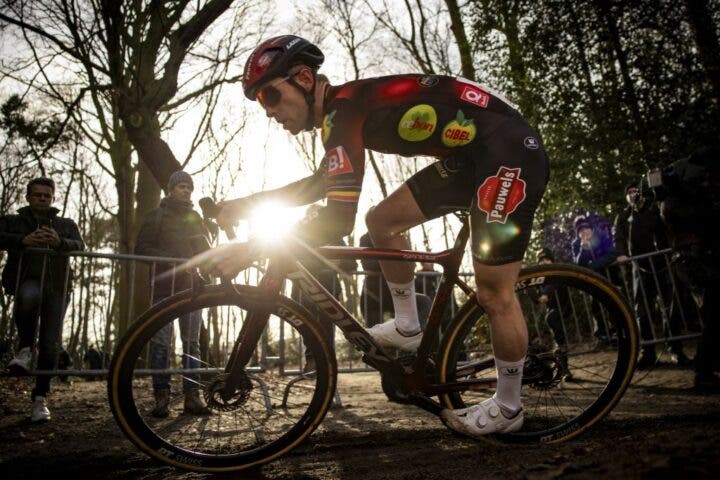
Iliac artery endofibrosis (IAE) is something of an occupational hazard for elite pros.
But what is it, and why is it so costly to a pro cyclist’s career?
“The medical term is endofibrosis of the pelvic artery,” Dr. Roel Beelen told Sporza, the vascular surgeon who operated on Iserbyt and others in his career. “It mainly occurs in athletes who make a deep hip movement, such as cyclists and skaters.”
Dr. Beelen described IAE as a vascular condition particularly acute for elite cyclists.
The repeated efforts of riding tens of thousands of kilometers per season over a career can trigger a narrowing of the iliac artery, one of the main pipelines that carries blood from the pelvis to the legs.
That narrowing can cause leg pain, numbness, swelling, cramping, and — worse for top pros — a loss of power and endurance during intense efforts due to reduced blood flow to the leg, Dr. Beelen said.
“As the complaints persist, they become less typical. Then you often see that it turns into chronic pain,” he said. “One compares it to a continuous bruise, the other feels exactly electric current through his leg. And some of them are in really stabbing pain.”
For elite athletes, who use blood flow like jet fuel, the diagnosis can be even more traumatic.
The real gut punch comes with a drop in power and efficiency that’s immediately noticeable in training and racing. Sprinters can no longer ramp up the watts, and climbers don’t have the power to stay close in the 20-minute-plus efforts on Europe’s steepest roads.
Dr. Beelen said the problem has been rampant for decades in the peloton, often leading to surgical intervention to clear the duressed arteries.
Today’s power meters and more detailed training and racing data, however, allow doctors and trainers to detect the problem earlier than before, he told Sporza.
“In the beginning, it’s about a few percent difference between left and right. Then you see that the explosiveness is fading,” Dr. Beelen said. “Being able to sprint for less time or sustain an effort uphill.
“You see that a rider starts overcompensating with the other leg, which also causes overload.”
Diagnosed early, bike-fitting with a more upright position can help alleviate symptoms, but that’s hardly a solution for top pros seeking the most aerodynamic position that elite racing demands today.
Often, the only solution is surgery and patient rehab for the lucky, or, in the most extreme cases, forced retirement like Iserbyt.
Four surgeries and no solution
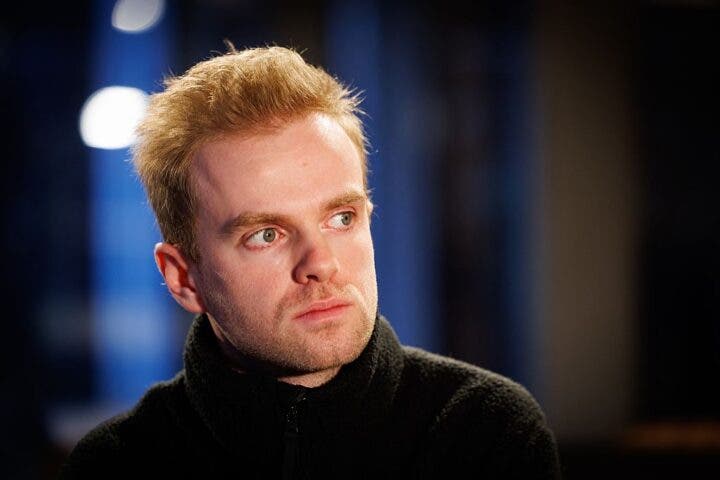
Iserbyt, 28, has not raced since February 2025. Now we know why.
Doctors delivered the bad news last winter. Iserbyt tried everything, but after four operations, doctors said the risk was too high.
“It’s just bad luck. Surgery on an artery is also a very heavy procedure,” he told Sporza. “The more you cut into an artery, the worse the tissue becomes. And I’ve had that operation four times.”
The medical verdict this winter marked an end to his pro career, and Iserbyt said doctors warned him that even light riding could carry health risks.
“I can only walk at the moment. Cycling and running are off the table, and I’ll probably never be able to do that again, because the artery in my left leg is very battered,” Iserbyt said. “I am very sorry about that. Mentally, it’s also tough. The uncertainty eats me.”
It marks an abrupt end to one of Belgium’s most reliable cyclocross careers of the past decade. Iserbyt made his name as a pure CX specialist, and occasionally lined up on the road.
His palmarès includes 54 wins in CX, including two U23 world championships and a Belgian national title in 2024. He consistently hit podiums across the World Cup, Superprestige and X2O Trophy series.
Several colleagues, from Wout van Aert to Mathieu van der Poel, shared their condolences.
“I didn’t sleep anymore, I locked myself up and didn’t live anymore,” Iserbyt told Sporza. “Fortunately, in the course of my career I have a team that supports me enormously. I think that’s my salvation right now.”