
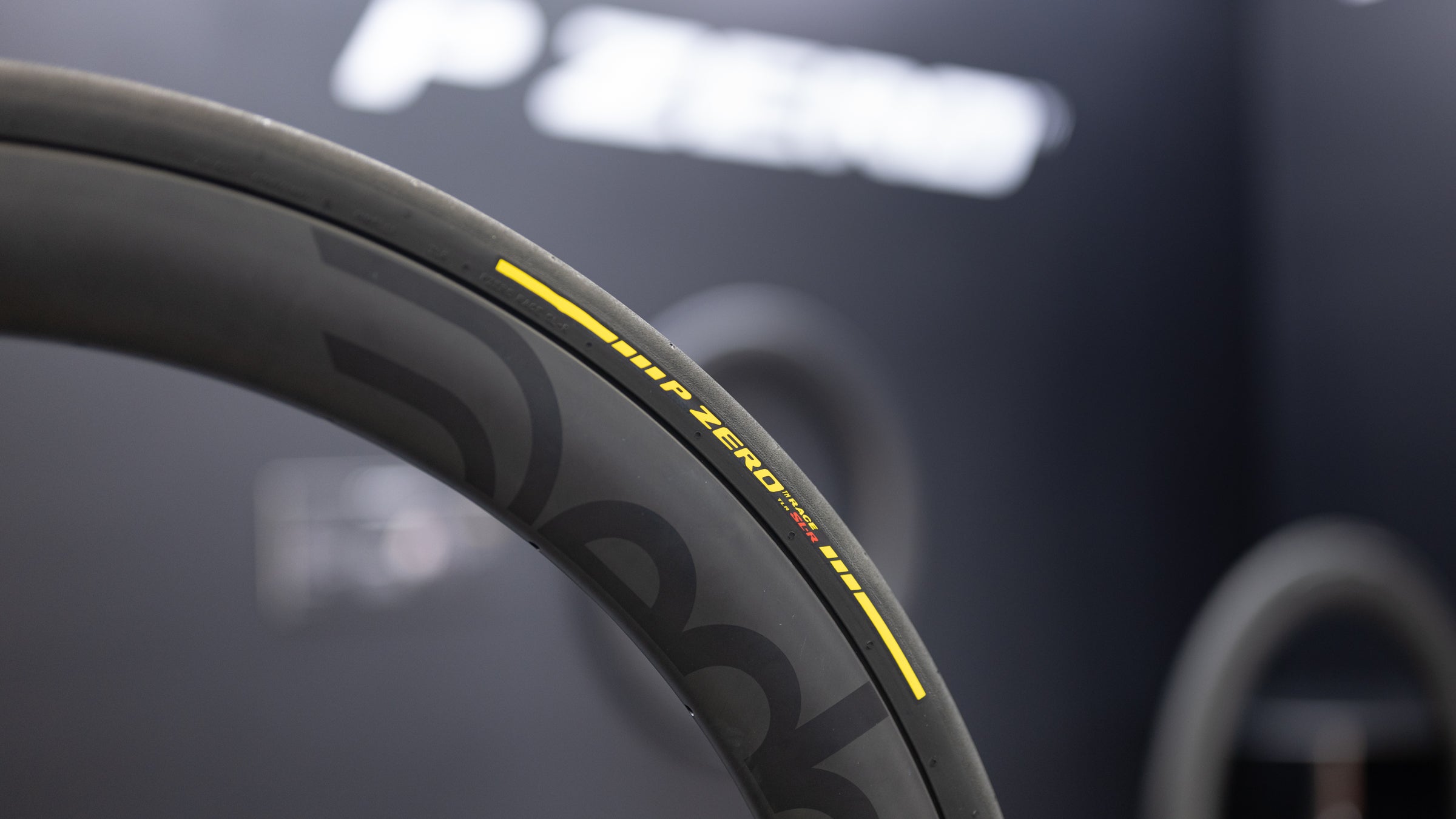
The real innovation of Pirelli’s new aero tire isn’t just the straight sidewall—it’s how they maintained low rolling resistance while doing it.
(Photo: Josh Ross/Velo)
Published March 27, 2026 05:48AM
Welcome to Velo’s Taipei Cycle Show coverage, where we share our favorite things we’ve found at the 2026 show. Bikes, components, accessories, and more: if we think it’s cool, you’ll see it. See the rest of our coverage here.
During the Taipei Cycle Show, Pirelli launched a new aero race tire called the Pirelli P ZERO Race TLR SL-R that makes some big claims.
This isn’t the first aero tire we’ve seen, and it’s certainly not the first to make big claims. Aero savings on a frame are not easy to come by anymore. Every watt requires serious engineering, and we are increasingly seeing brands look at the entire system to drive the numbers that marketing departments know sell bikes. Tires continue to offer an opportunity for significant gains, and Pirelli is no different, claiming an “average savings of up to 5 watts in crosswind conditions, with peaks of up to 15 watts under specific conditions.”
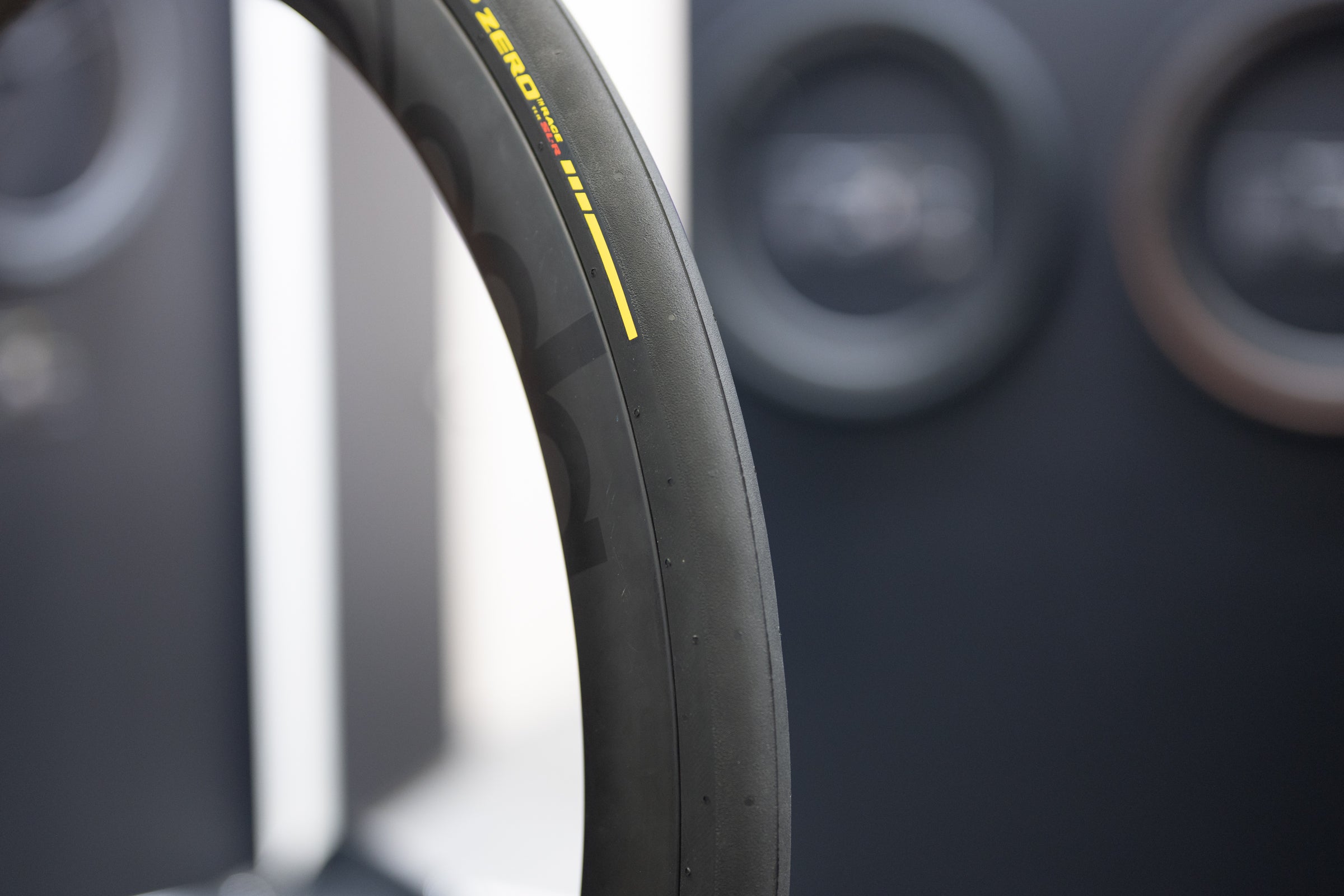
Pirelli is achieving this through a kind of fairing that solves a known problem. Typically, a tire curves in somewhat, then the rim edge meets the casing and juts back out. Heading into the wind, this creates a point of potential separation that sheds airflow. As you shift into higher yaw angles, the airflow sees increasing disruption and higher shed rates.
To solve this, Pirelli created PAAS (Pirelli Advanced Aerodynamic System), which is really just a fancy name for a straighter sidewall and a bit of an overhang. The tire is essentially shielding the edge of the wheel from the wind and creating a smoother surface.
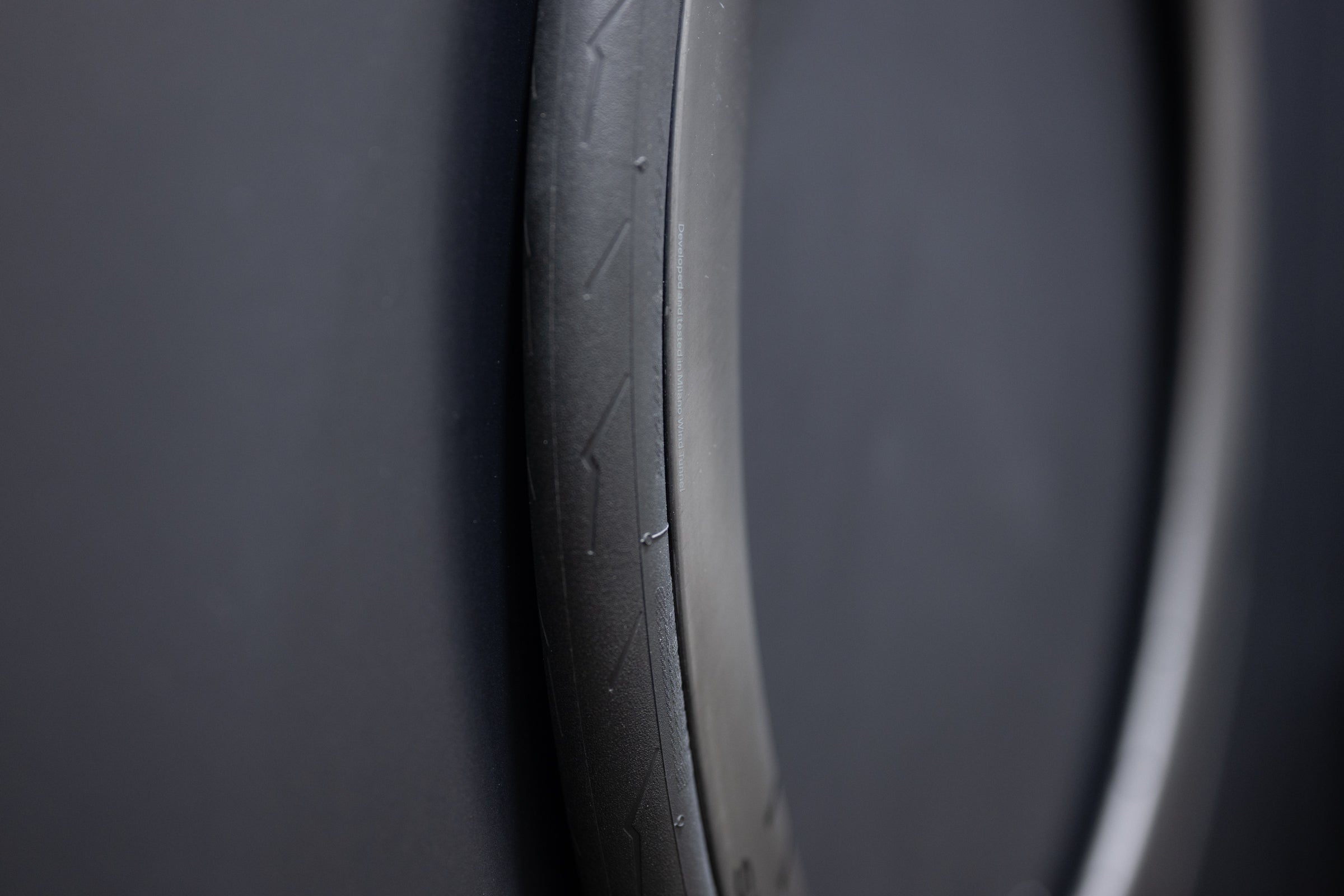
This alone has the potential to save watts, but as I was walking the floor of the expo, Josh Poertner of Silca stopped me to look at the new tire. Poertner explained that the real innovation wasn’t the sidewall shape, as that has been tried and proven in the past. Instead, it was the “LiteCORE casing, which delivers a further 10% reduction in rolling resistance compared with Pirelli’s best-performing tyre in the range.”
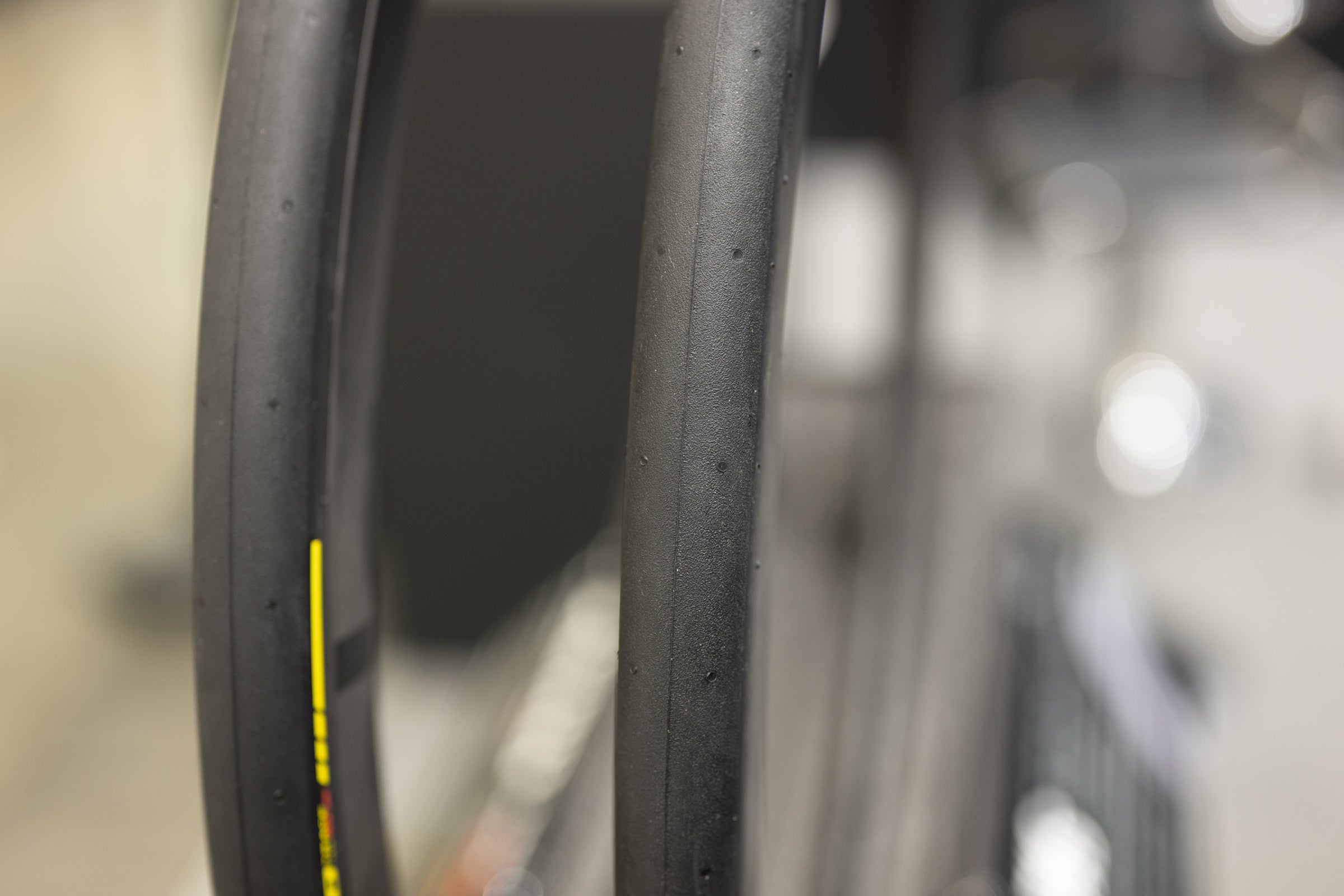
This is a big deal because building up a sidewall to get the shape needed for aero gains typically negatively impacts rolling resistance. Poertner told me that in the past, this concept never really worked because aero gains were canceled out by the watts lost to increased rolling resistance. If Pirelli was able to do what’s being claimed, it means the brand preserved established rolling resistance while also gaining aerodynamic benefits.
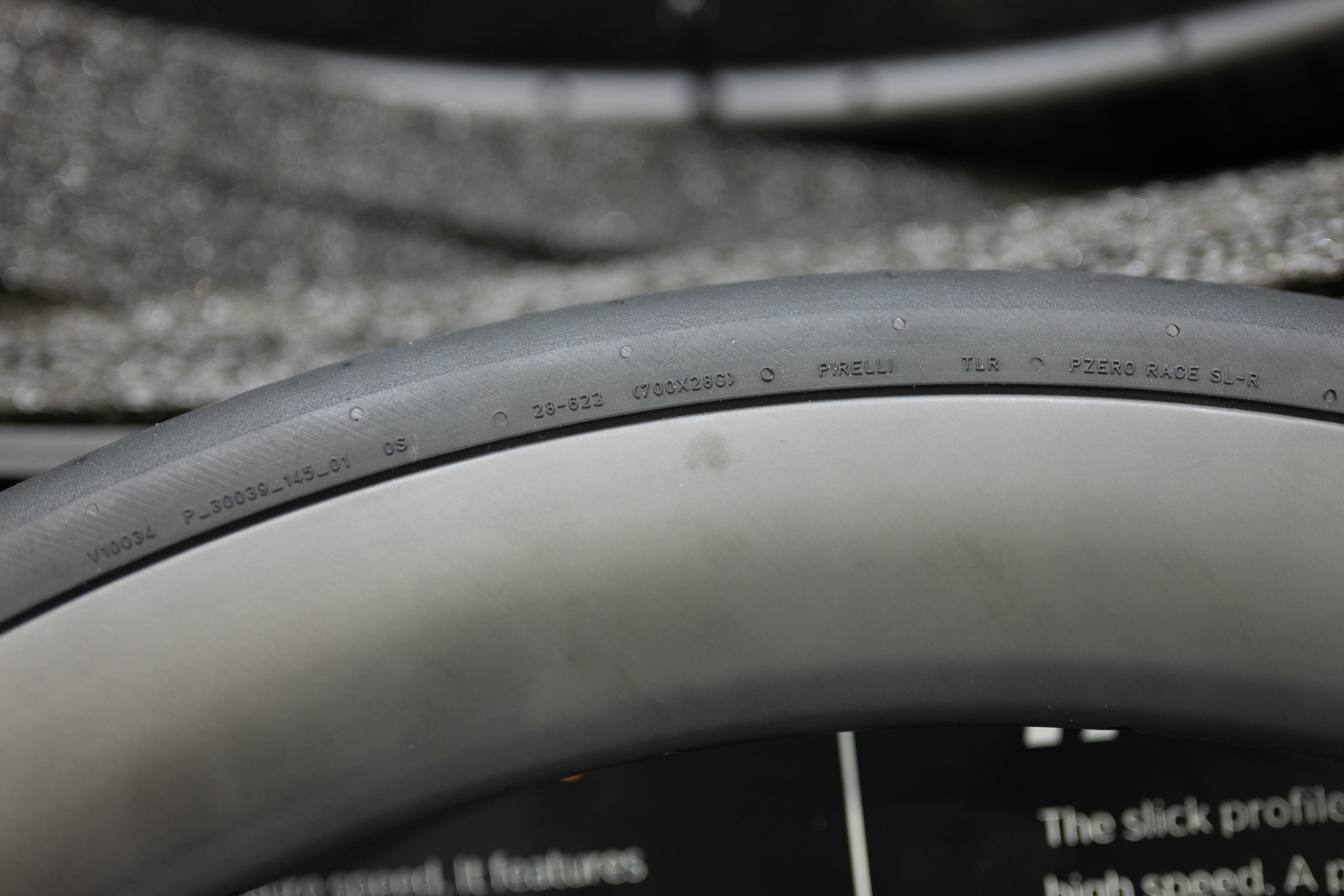
We have not tested this new tire, so how it feels out on the road remains to be seen, but the possibilities are exciting. 28 and 30mm options available. For more information, visit the Pirelli website.