
Carlos Alcaraz defeated Taylor Fritz 6/4 6/4 in the final of the Japan Open ATP 500 on Tuesday to lift his eighth title of the season. Alcaraz now leads their H2H 4-1.
Fritz’s lone win in this rivalry came recently at the Laver Cup, which some thought was a meaningful victory for the American. I felt it didn’t really matter, given Alcaraz obviously didn’t “prepare” for Laver Cup so soon after winning the US Open.
Tokyo was a different story.
Points on the line, matches under the belt, a final. There’s playing Carlos Alcaraz, and then there’s playing Carlos Alcaraz. The latter was on court in the opening game, firing the game’s best forehand early:
Alcaraz’s forehand has always been generational, but even that rarefied label has degrees of excellence. Talent and athleticism do the heavy lifting for these sorts of things, but technique is the lever:
Technique is really just a form of technology. You can use it to leverage your capabilities beyond what is possible without it, just as the fastest runner can’t keep up with a mediocre cyclist. That’s why I’m prone to saying that tennis is a backswing game. How you set up for shots dictates what kind of tech you’re playing with.
— Fonseca vs Cerundolo: Buenos Aires Final (if you read this piece, note how high the hands and elbows are on these two heavyweight forehands also)
When Alcaraz first became a household name circa Madrid 2022, defeating Nadal (#3), Djokovic (#1) and Zverev (#2) back-to-back-to-back on his way to the title, the forehand was a weapon that he could live and die by. A quote from the Djokovic match (emphasis added):
Alcaraz hit a lot of forehand winners and it was the shot that steered the fate of this match. When he is set he can unload on it with great power, and the real killer is how well he mixes in the drop shot (a new stat we will need at this rate). However, this forehand does have a chink in the armour: when he’s running to his forehand side it is far more erratic. I counted 24 misses on running forehands for just one winner (which happened at 4-4 30-30 in the third set. Talk about clutch). Although one match is too small of a dataset, I think it might be the playbook. As much as I love the Alcaraz forehand, his initial set-up with an inverted racquet head and high elbow means he needs time to unload. It’s reminiscent of Thiem’s forehand when he first came on tour, and I think long-term drifting toward a lower elbow/modern forehand like Thiem did (and which subsequently allowed him to start winning on all surfaces against the Big-3) might make it even better.
That last bolded sentence has come to fruition in 2025.
I touched on this in the ill-fated Cincinnati final preview, noting how much lower the setup had become since bursting on the scene; tip-of-the-spear attacks from his rivals had whittled away his setup, much to their own disadvantage now.
When Alcaraz first arrived the hitting elbow was lifted very high, with the racquet tip inverted and facing the opponent. It’s a great way to project the ball with a lot of power, but not a great way to receive a ball with a lot of power.
“Tennis is a game of reception then projection. If a player does not receive the ball well, it adversely affects how they send it.”
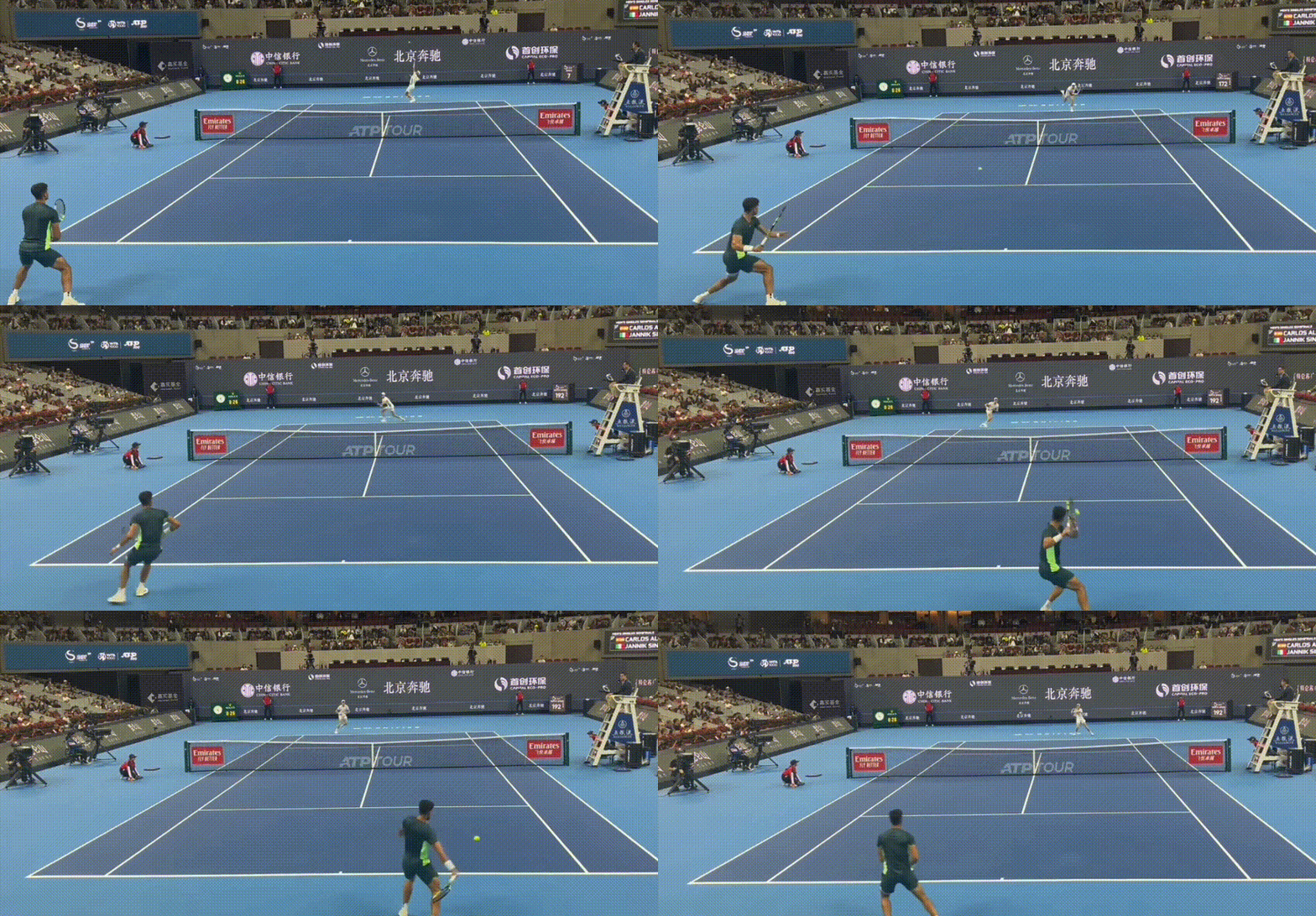
Here’s a point showcasing the different elbow/hand positions for a return (low/minimal elbow and hand lift for reception), versus an in rally groundstroke (higher lift for projection), from Alcaraz’s 2023 Beijing match against Sinner:
Whereas Sinner (ditto Fritz) has always kept a low elbow and hand profile on the forehand groundstroke; reception and projection were closely blended:
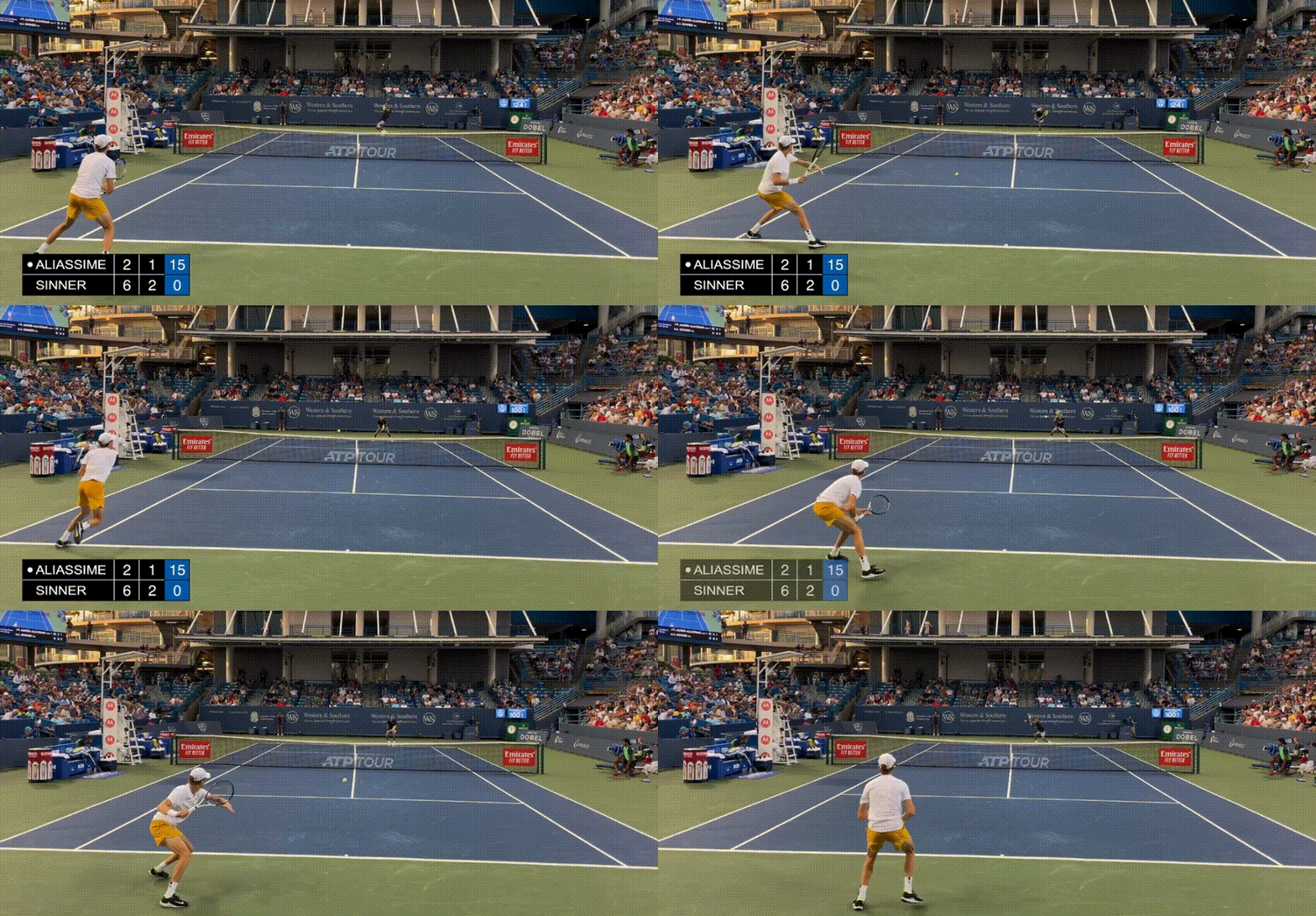
Such differences helped explain why Sinner always excelled in linear power exchanges, whereas Alcaraz was more easily rushed.
Emphasis on ‘was’.


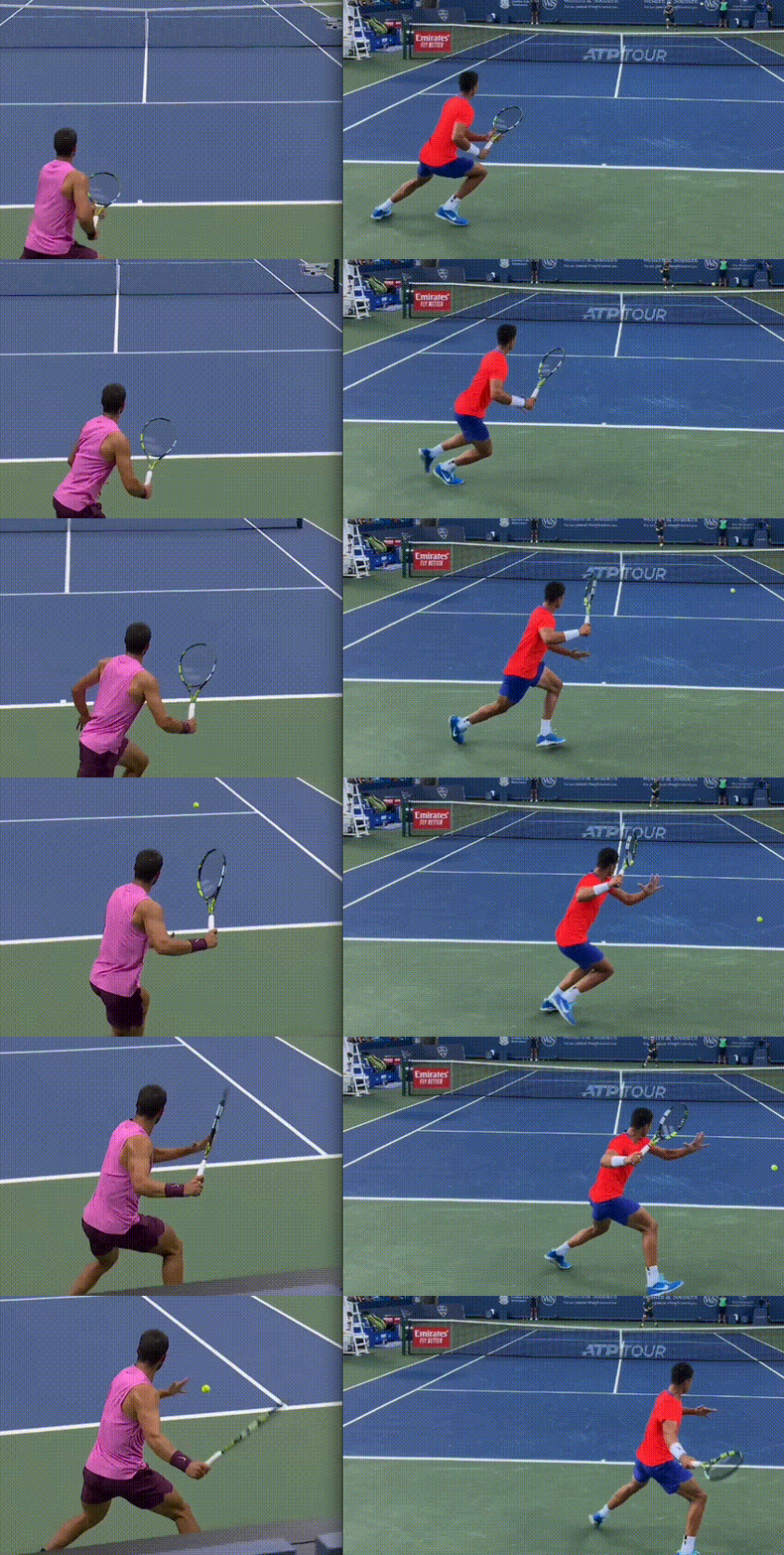
It’s a subtle adjustment when taken as a singular frame like this. But when you are challenged with receiving 100 mph bullets wide to your forehand, the milliseconds saved by shaving off inches in reduced elbow and hand lift make all the difference. Compare how quiet the Alcaraz elbow and hand loop is now (2025 US Open left), with his setup from Cincinnati 2022 (right) in slow motion footage below:
And it isn’t just when rushed on wide balls that the Spaniard adopts this shaved down motion.
He does it all the time now, even when given an opportunity to load up for an attacking ball:
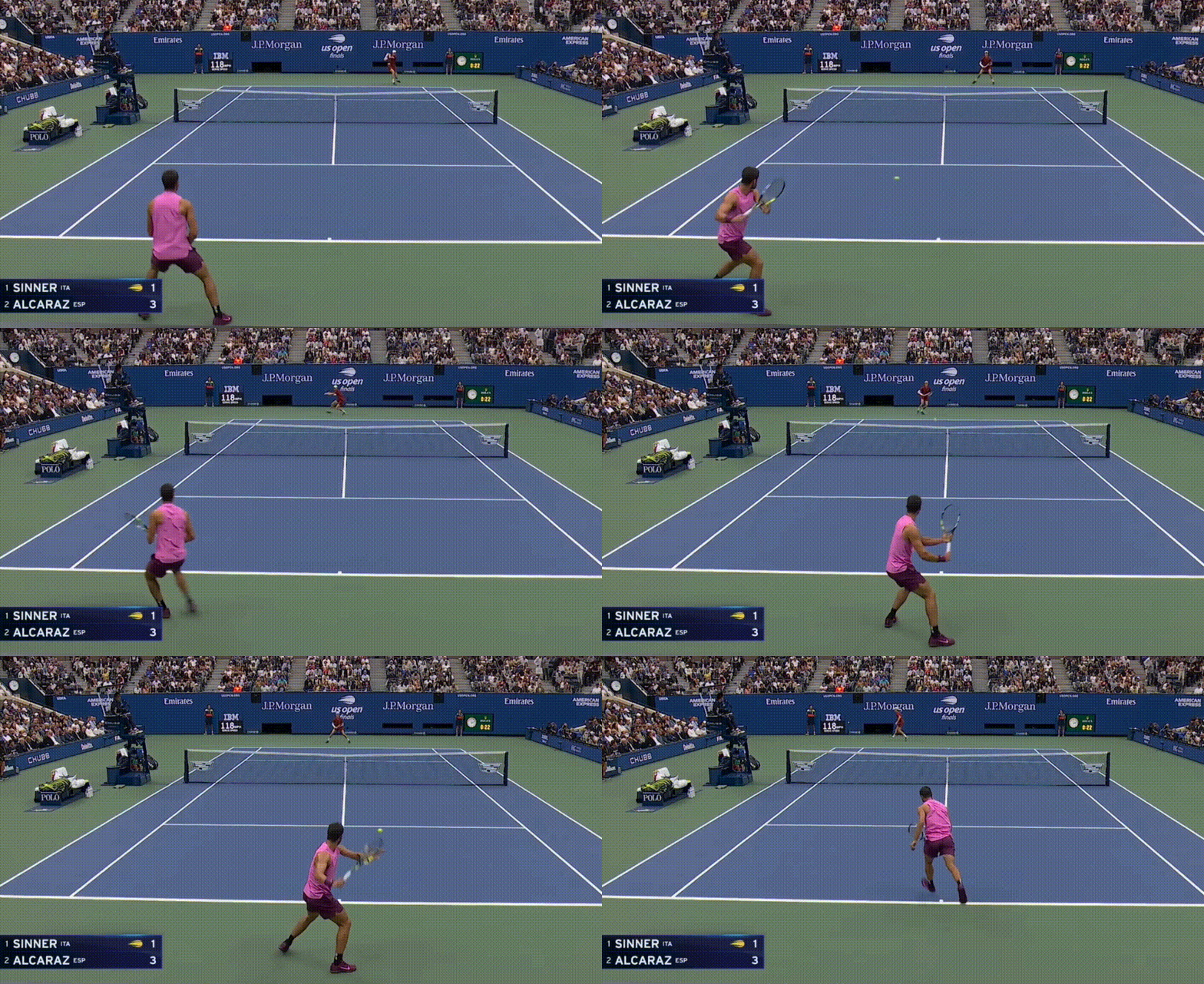
It’s a similar story to Dominic Thiem’s forehand evolution (great video here from Top Tennis Training):
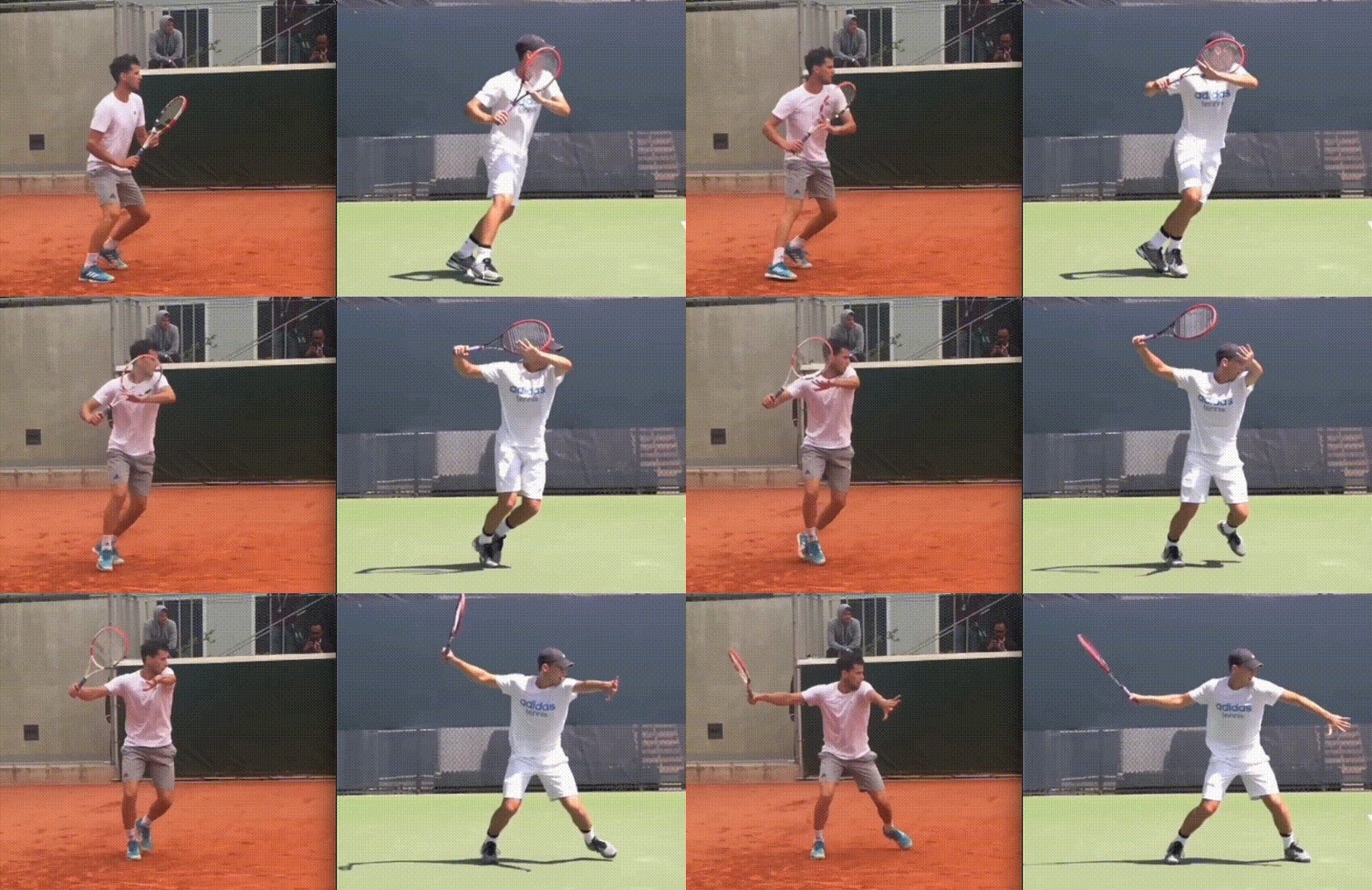
An excerpt from a prior piece on the Austrian:
The one youngster who did approach the Big-3’s technical efficiency was Dominic Thiem. When Thiem first came on tour his strokes were powerful and technically sound, but very long; he couldn’t take the ball early, and his attempts to beat top players on a hard court always fell short as he tried to hit through them standing three-metres behind the baseline. He was similar to the current crop of young players I just mentioned: dangerous, but tamed over five sets.
Up until 2019, Thiem was 0-6 v the Big-3 on hardcourts.
In 2019, under the guidance of Nicholas Massu, Thiem’s strokes were shortened, and he adopted a more aggressive court position. I wrote about this here. For an in-depth look at Thiem’s forehand evolution, check out this video. The shorter swing made Thiem a hardcourt threat in the space of months.
Since 2019 Thiem is 6-1 against the Big-3 on hardcourts. (2-0 v Federer, 2-0 v Nadal, 2-1 v Djokovic). The single loss was against Djokovic in the final of the Australian Open. A five-set defeat.
I think it’s fair to say that we were robbed of some great Thiem versus the New-2 matches. Look how compact and ferocious peak Thiem was on the forehand, using the equally ferocious Berrettini forehand as a canvas:
Given so many points are in the 1-4 shot category, and that these shots are necessarily: (a) against very fast incoming serves as the receiver; or (b) played inside or on the baseline as the server for the ‘+1’ shot; and (c) on a hard court that is likely to be medium-fast, it’s paramount to adopt a forehand motion that can handle speed and a lack of prep time if you are wanting to play an aggressive brand of tennis in 2025.
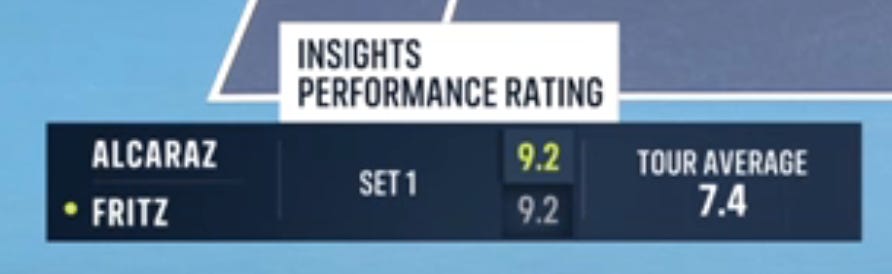
For these reasons, I’m more bullish than ever on Alcaraz’s indoor swing campaign: Turin and Paris haven’t seen this forehand. And he’s been obliterating the Tennis Insight forehand ratings all week: a 9.5 in today’s final, a 9.7 in the quarterfinal against Nakashima (watch that match if you have time. Ridiculous ball-striking), a 9.3 against Baez.
Well, we’ve gone off track and we’re only two points in.
Back to the match.
At last year’s Laver Cup Team World were calling Alcaraz ‘Fed 05’ — a nod to the Swiss’ mythical Playstation-cheat-code-only level of play. Alcaraz modestly said such levels were impossible to achieve, but this is eerily similar: the early +1 forehand off a compact setup, the sharply-angled inside-in, the premeditated approach follow-through.
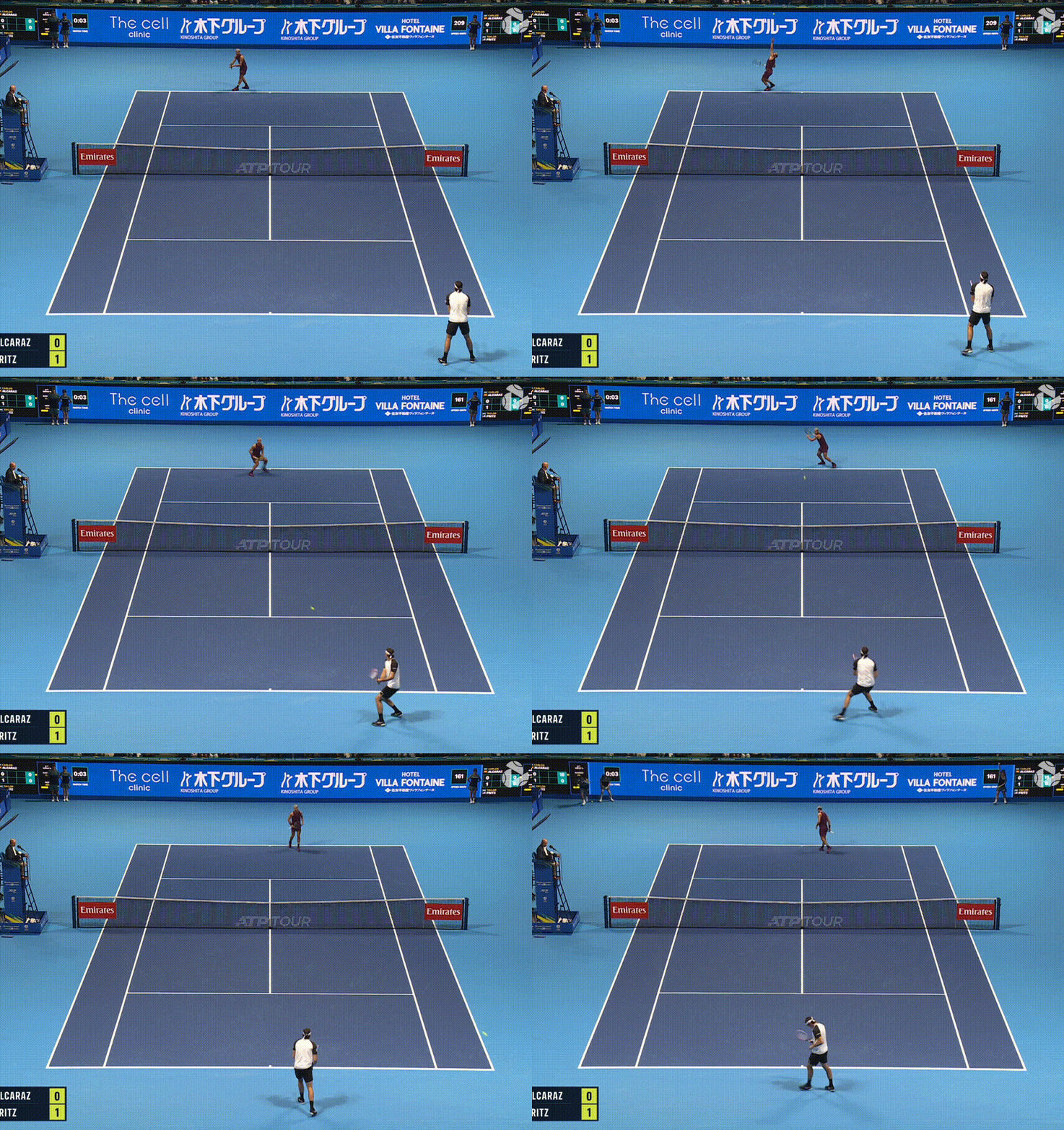
Then there’s the preternatural forecourt awareness. Fritz does everything right on the two-shot pass here, dipping his backhand return low and immediately pressing forward in anticipation of a drop shot (that’s a volleyer’s best bet once the ball is below the net), but Alcaraz on the fly sees all this and just pushes it deeper right onto the American’s shoelaces, who is forced to lob-volley from no-man’s-land.
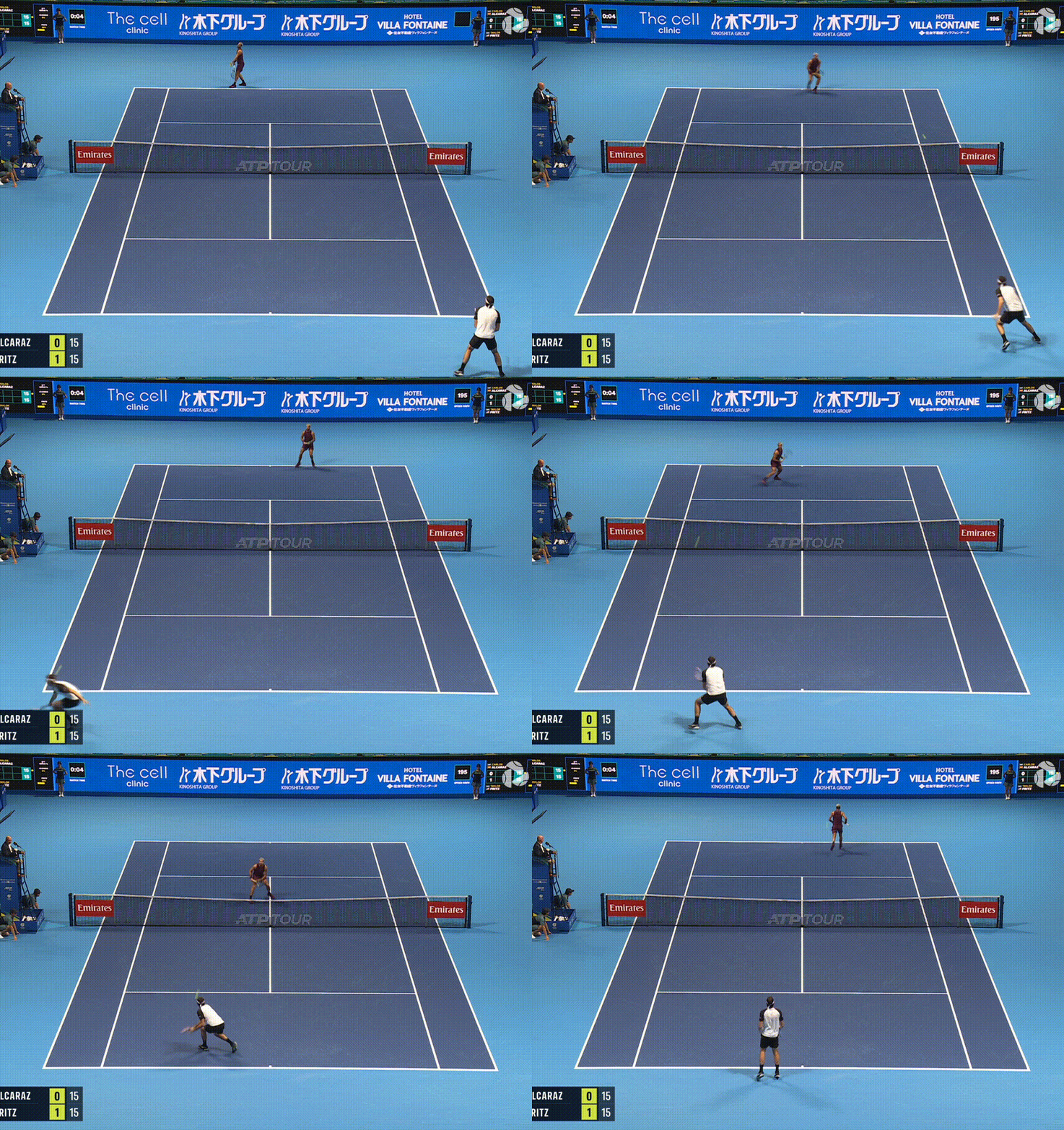
We also saw three slice backhands from Alcaraz in the 1-1 game. The first was played deeper, and here Fritz did well to run around and use the length to really unload on the ball:
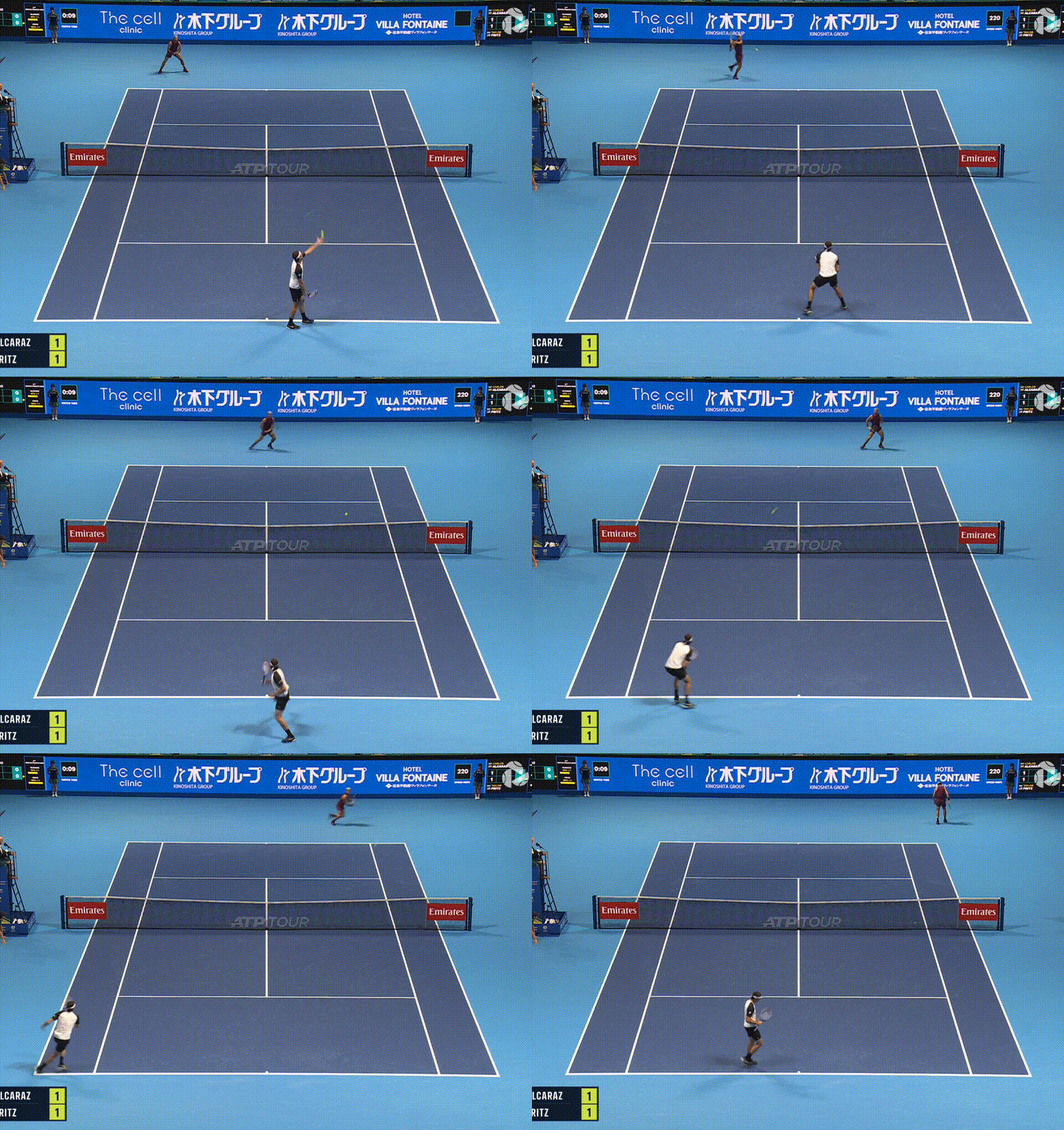
The second was played much shorter, and here Fritz realises he’s going to have to sacrifice a lot of racquet head speed in service to ball spin (instead of ball speed) against the tour’s preeminent passer, so he opts instead for a drop shot — not really in his repertoire, and with a lack of disguise (Carlos takes off so early!) — and engages in a game of cat-and-mouse with the tour’s preeminent cat-and-mouse player. This is all very Fed-Roddick in the noughties stuff. It’s exactly the kind of slice I think players can still use today to bring guys in on unfavourable terms.
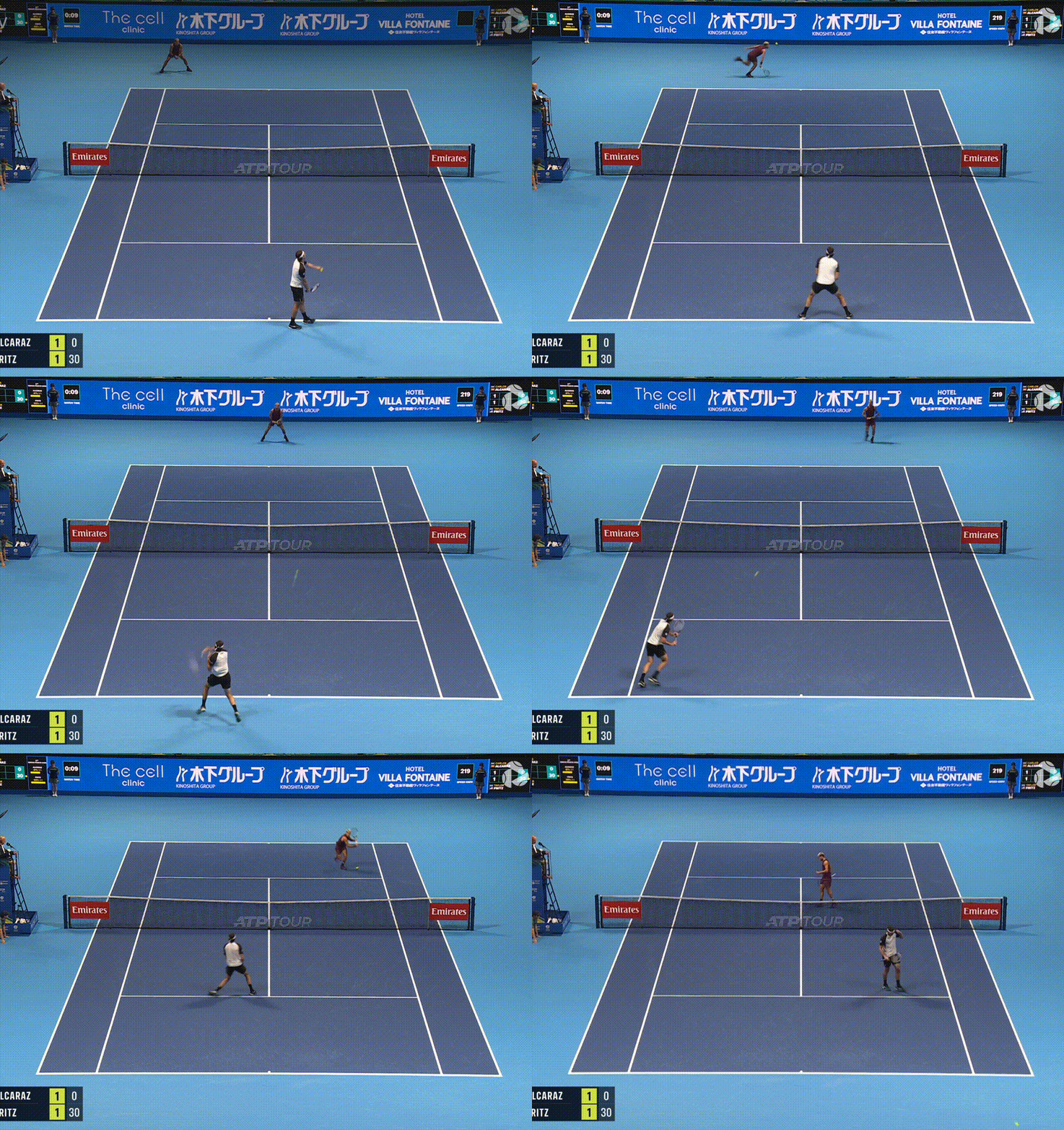
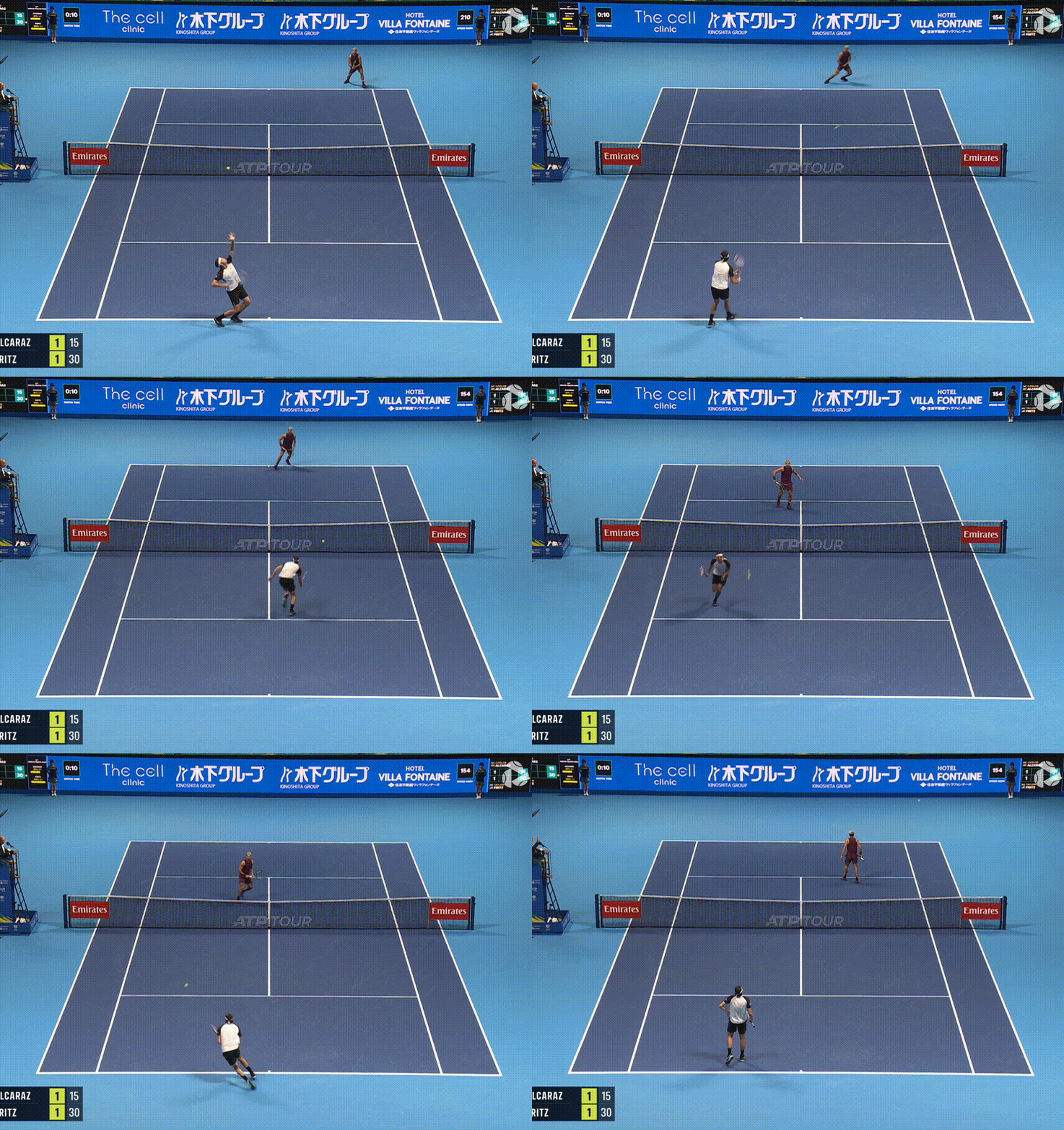
And of course Alcaraz then plays a disguised drop shot slice on the very next point. The whole point is on brand.
It pains me to skip ahead to the second set, because the quality and variation of some other points throughout the opener were worthy of discussion and touching upon, but this is meant to be a recap.
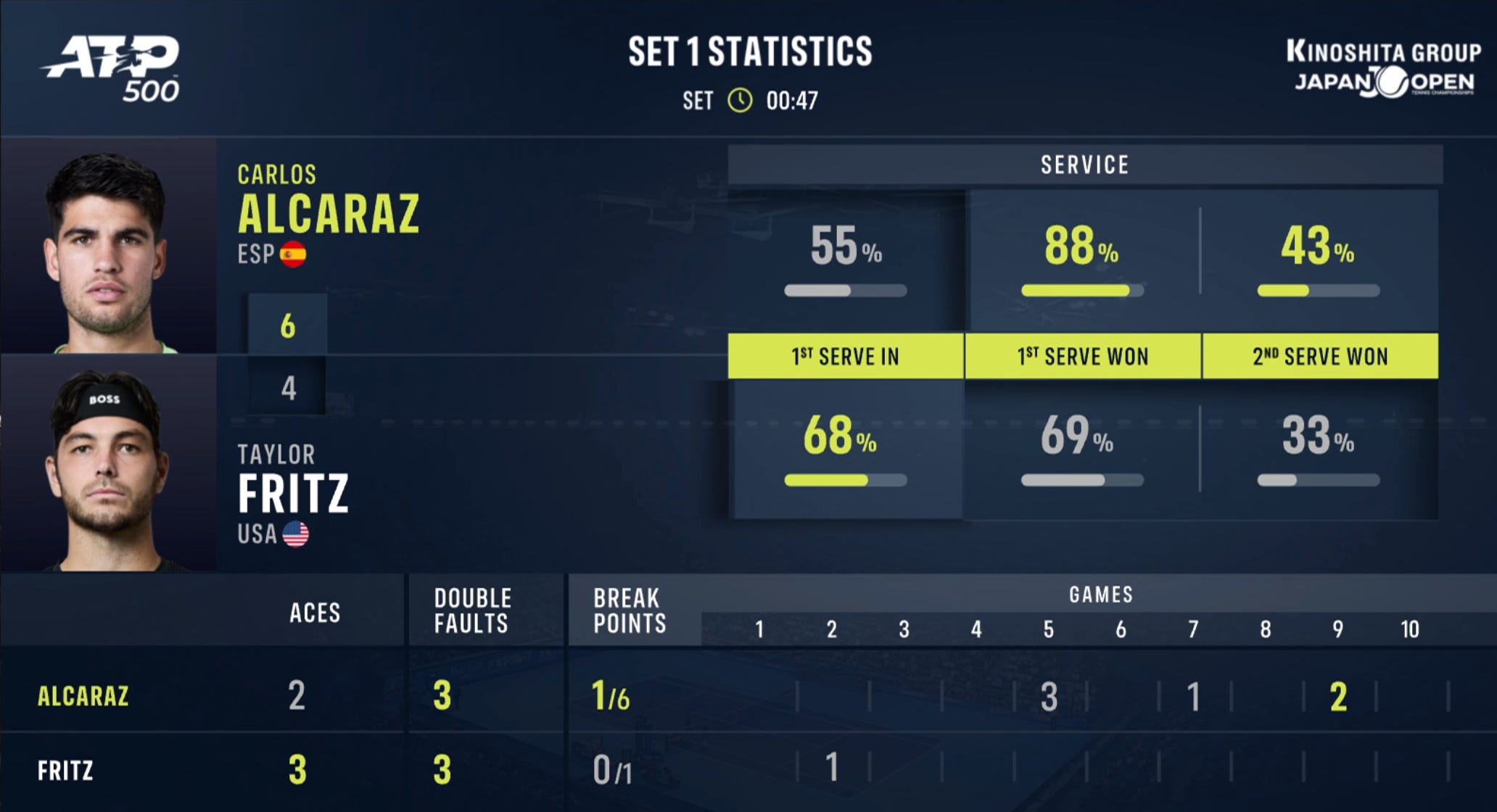
The one thing I’ll say is that Fritz was playing well, serving well, and he was hanging on by the skin of his teeth in most of his service games, saving break points in the 5th, 7th, and 9th games. He took a medical at the end of the first, but by my eyes he didn’t look physically hampered in the opener.
Alcaraz is just in a technical and mental inflection point at the moment: the serve and forehand have never been better, and he’s amassed a record of 51-2 since April. He’s oozing confidence to the point you just know he isn’t getting nervous (maybe to a fault), but he also looked tired: uncharacteristically tempered with the umpire, casual on some points, slicing the backhand more as a result of the left ankle injury he picked up earlier in the week: he dominated in fourth gear against the world number 4 and then pulled out of Shanghai.
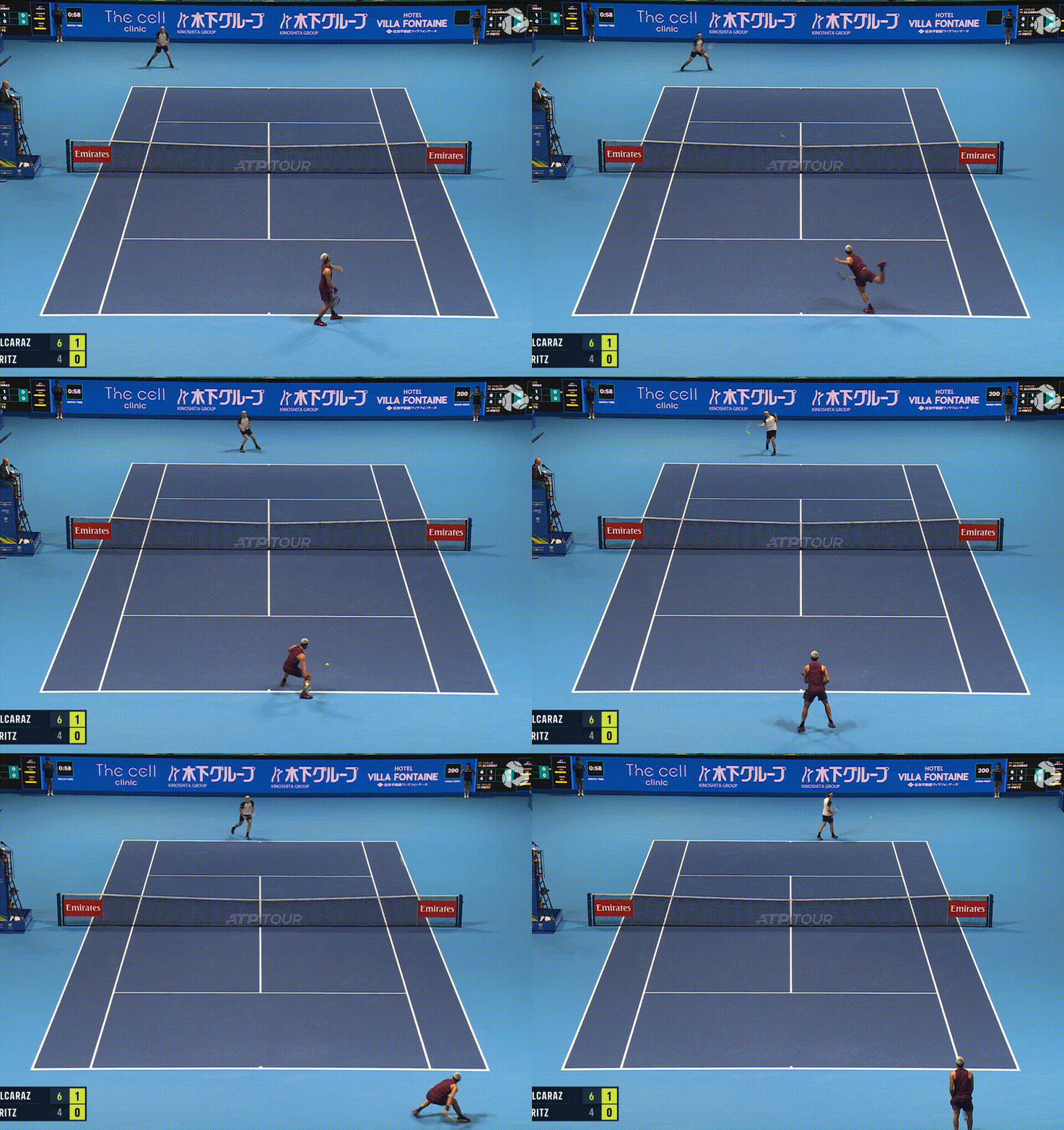
I have to show some love for Fritz. His ball striking is right up there, seen here unloading down a break in the second. I like how he got on the left leg here to play this from a neutral stance a la Jannik Sinner and Stan Wawrinka:
But Alcaraz just has every answer.
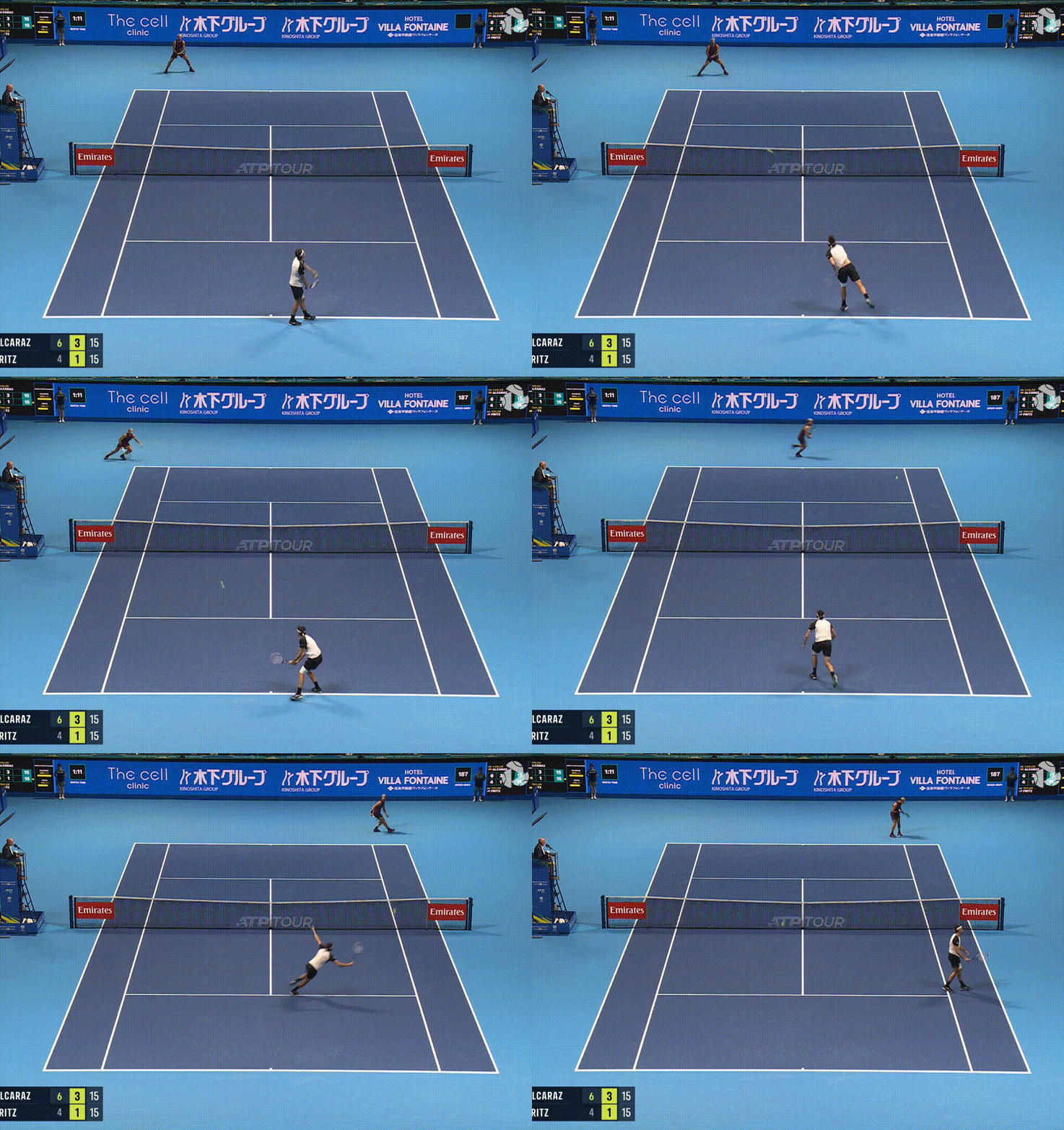
Unable to defend the two hander open-stanced because of a left ankle injury? Well I’ll just slice pass down the line so I can put all the pressure through my right foot:
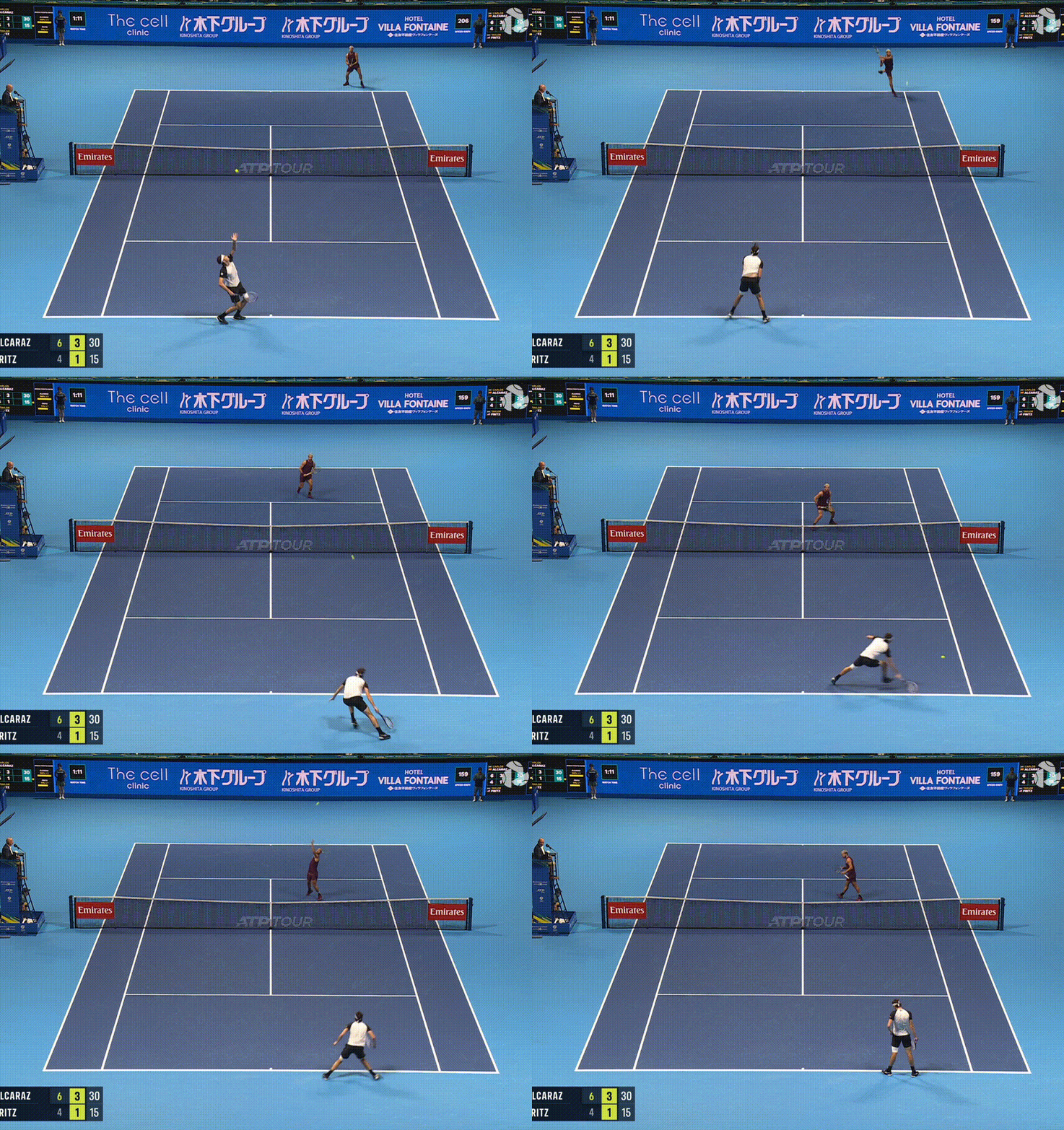
And Fritz needs to retire the kick serve when Carlos is in this mood. You’re just asking to be crush-and-rushed by the best volleyer on tour.
The Spaniard served for it at 5-2, but Fritz broke back — his lone break for the match — and held serve to make it a little more competitive in the second set. He even got out to 15-30 in the 5-4 game when Alcaraz was serving for it a second time, but the Spaniard’s hands rarely betray him, and he feathered three drop shots in this game alone to seal the deal.
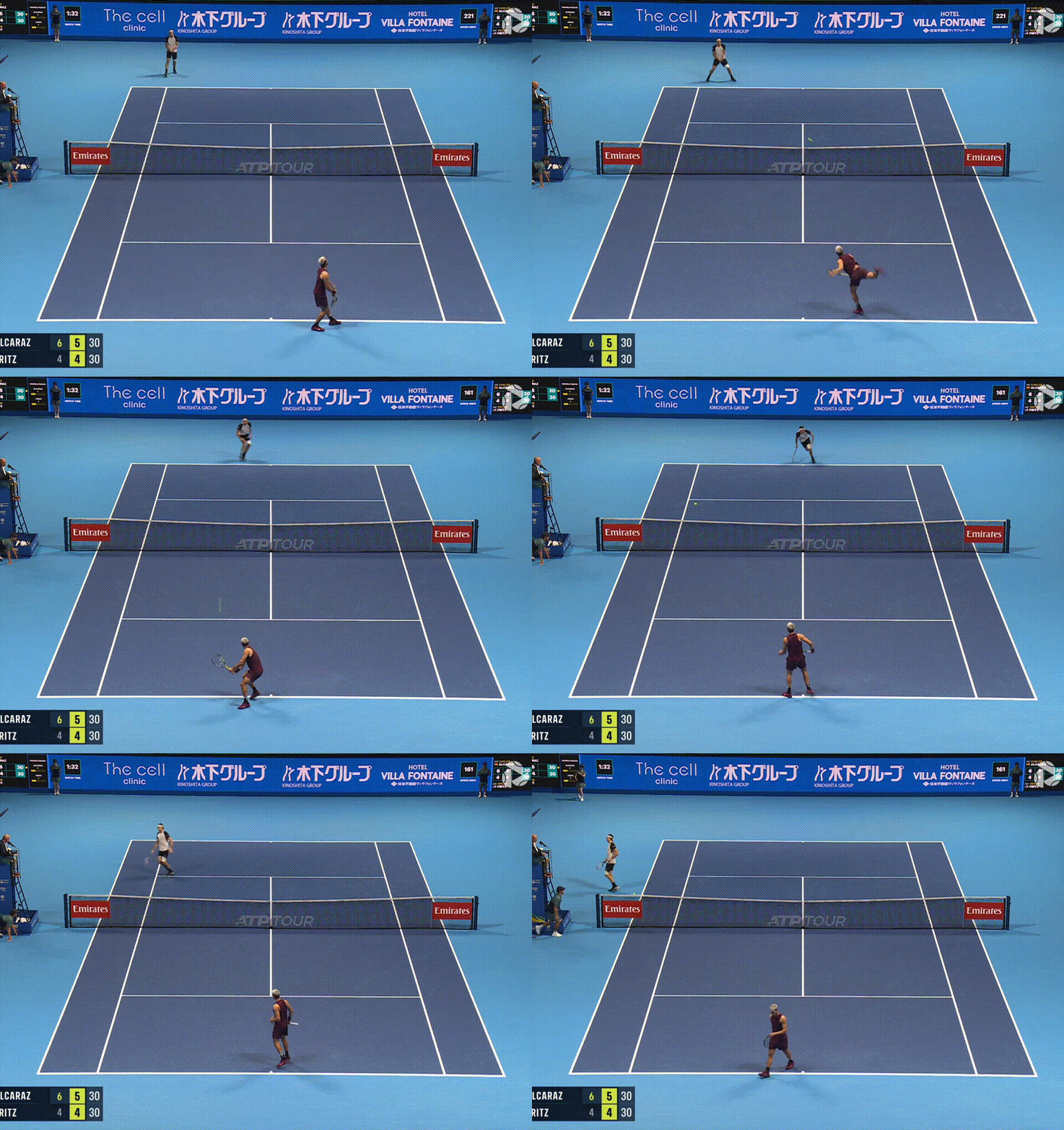
This one at 30-30 was one of his best:
“It’s been my best season so far without a doubt,” Alcaraz said. “Eight titles, 10 finals… That shows how hard I’ve worked just to be able to experience these moments and accomplish my goals. I didn’t start the year that good, struggling emotionally, so how I came back from that, I’m just really proud of myself, and of all the people around me who have helped me to be in this position.”
Alcaraz will return to action at the Paris Masters.
See you in the comments. HC