
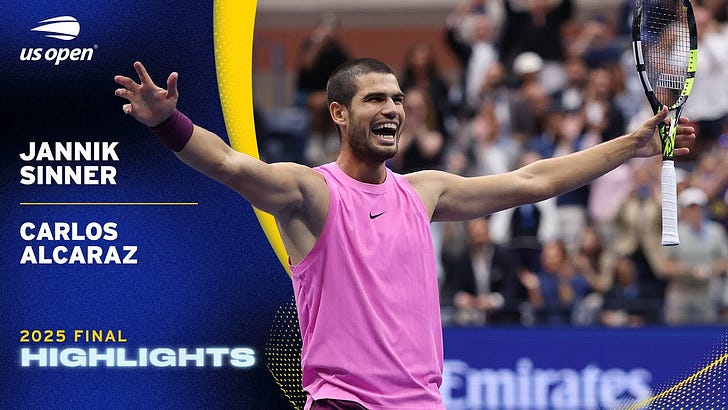
Carlos Alcaraz defeated Jannik Sinner 6/2 3/6 6/1 6/4 in the final of the US Open on Sunday to clinch his second US Open title and sixth grand slam title overall. He’s the second youngest ever to win six slams (behind Borg). The win also means Alcaraz returns to world #1 on Monday.
I kept an eye on the radar gun of Sinner’s opening game, given the Italian had taken an off-court medical timeout in his semifinal win over Felix Auger Aliassime with abdominal issues. Then there were the reports that he didn’t practice on Saturday.
Sinner seems every bit as lean as the F1 car he is an ambassador for. Not a gram is spared on his reaper-ish physique as he slides into backhands, slashing at balls with that sickled Head Speed. But there’s a fragility to this anatomy, or something of a sensitivity, as if he’s constantly aware of hairline cracks forming in his lithe frame after the brilliance of a bruising rally. Perhaps that explains the tempered racquet-waggle celebration, and the tight-hipped strut; there’s an arrogance — and an agony — that comes with being the world’s premier heavyweight baseliner.
Alcaraz looks sturdier by contrast. More G.I Joe, less Slim Reaper. The impromptu martial buzz cut and tank-top helped to solidify such notions this fortnight. Compressed within his six-foot body lie the talent and athleticism that is the envy of every player, probably even Sinner.
But the serve speed was there today from the start, and by my eye the Italian didn’t look hampered — at least not by his own body.
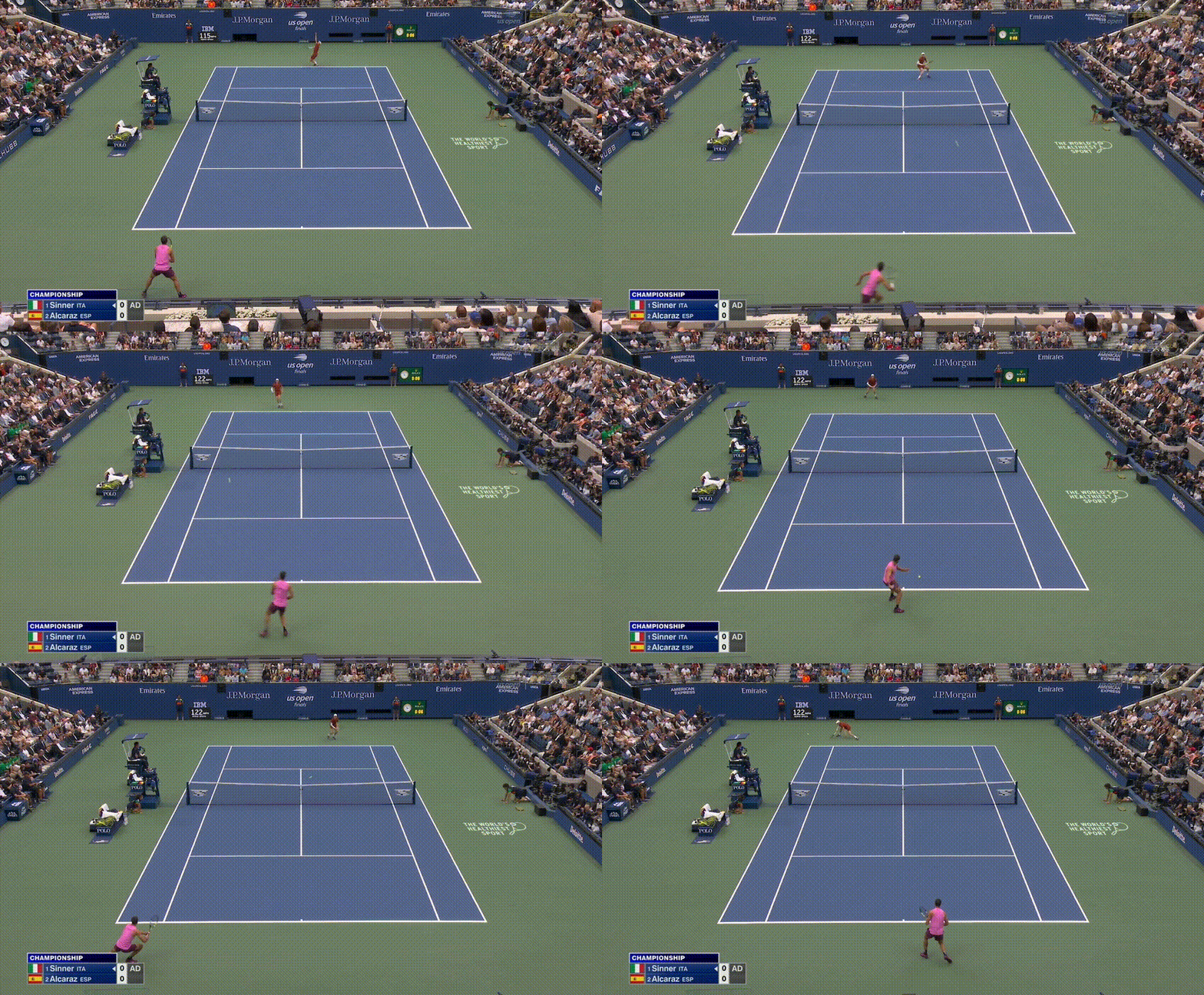
It didn’t stop Alcaraz from breaking Sinner’s opening service game with an array of shots that suggested he’d done his homework since Wimbledon.
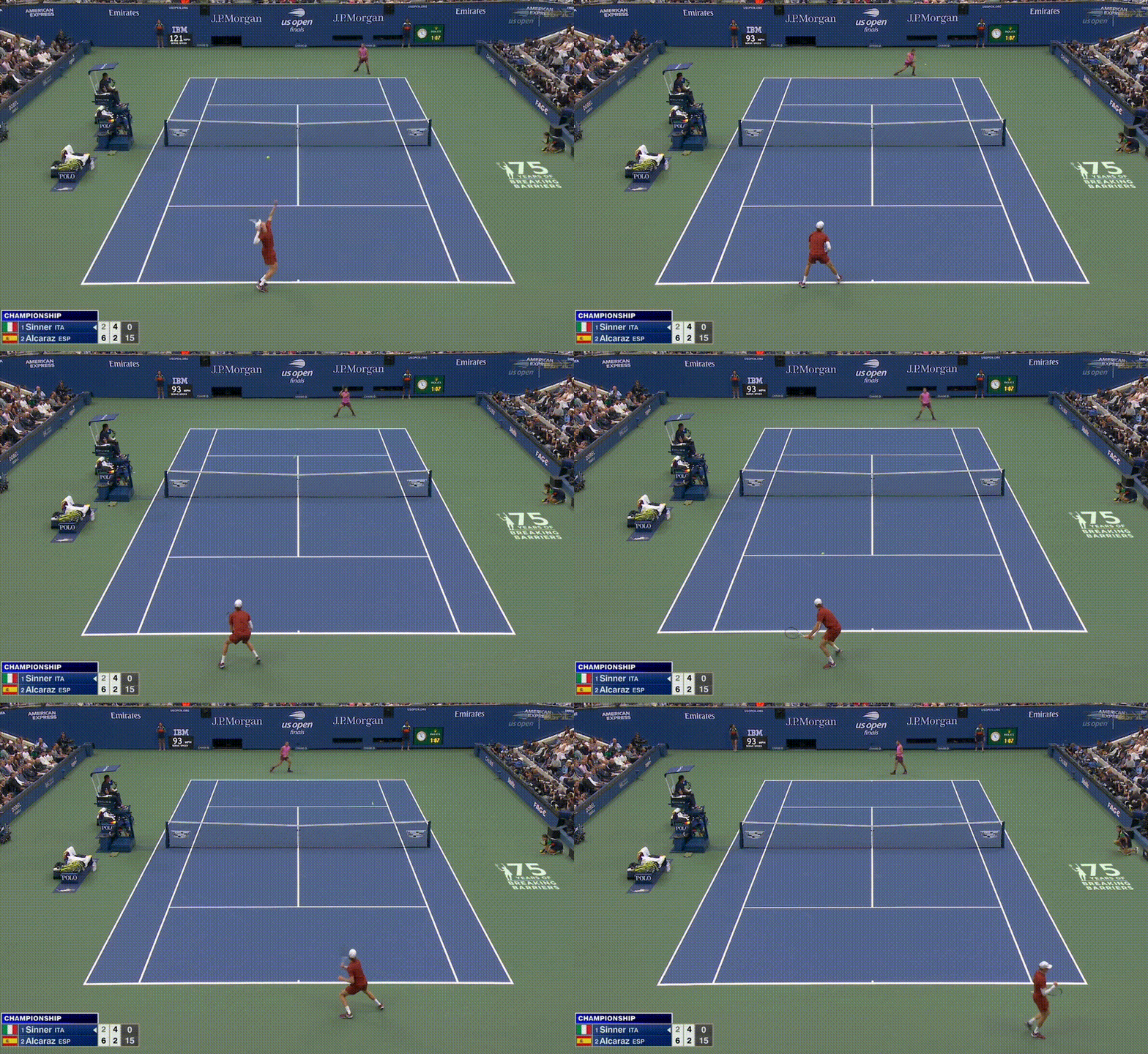
At 30-30 he was sitting on the wide deuce second serve and absolutely minced his forehand return off the back of a 102mph Sinner delivery. A few points later and he went nuclear on the crosscourt forehand twice from a court position that can only be described as ‘emergency defense’ territory, and somehow hit these:
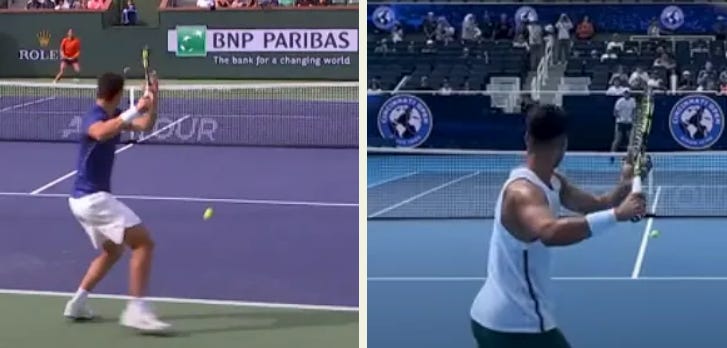
In my doomed Cincinnati preview I highlighted how Alcaraz’s forehand is now lower and more compact compared to when he first won here in 2022, the ornamental and heavily inverted racquet head somewhat shaved down by the grindstone of today’s power-hitting rivals:
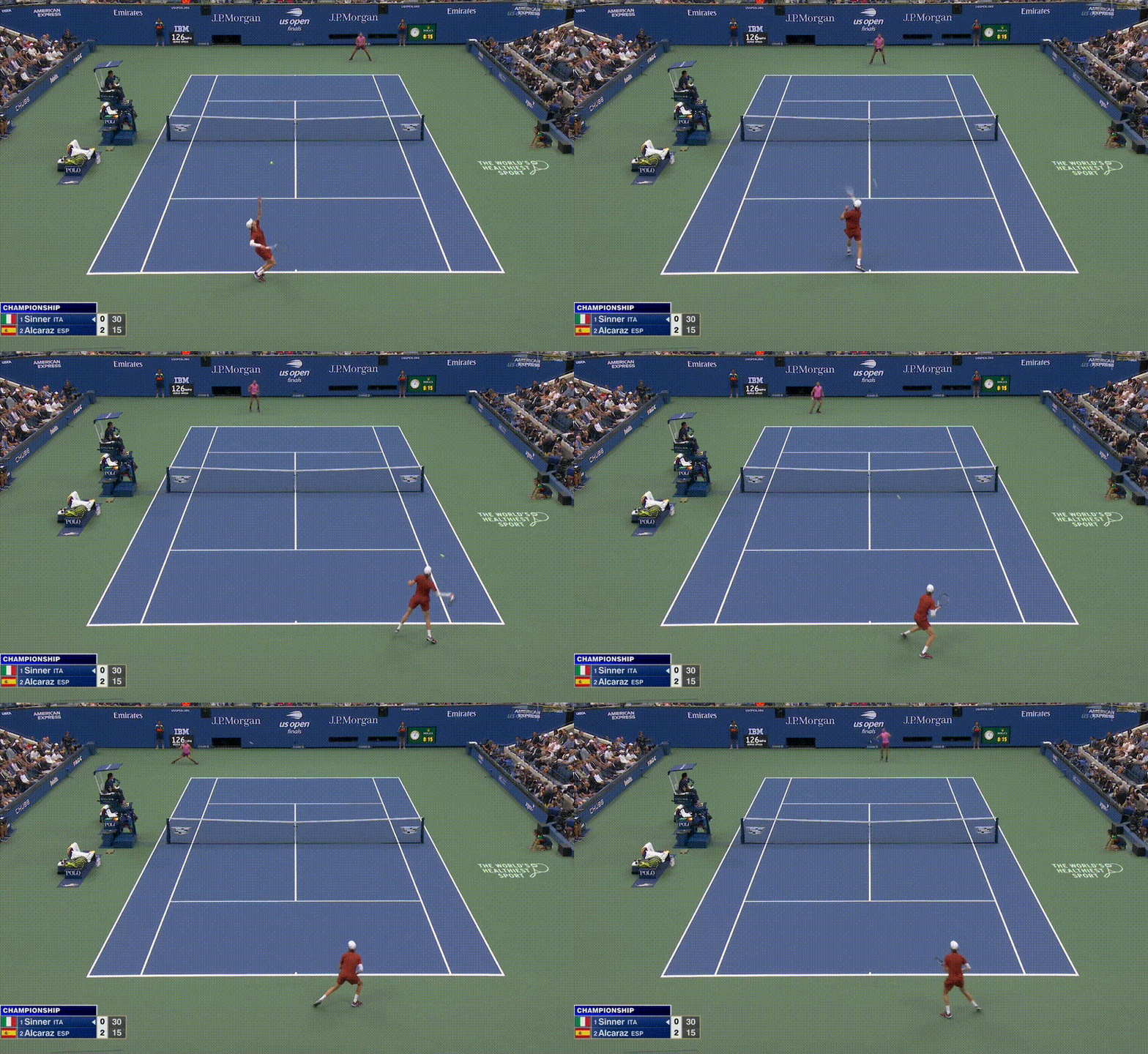
But it wasn’t just pure forehand power that was disrupting the Italian early on. Alcaraz broke serve off the back of a slice backhand that Sinner netted with his own double-hander; that was an early sign of a more cerebral Alcaraz. At 40-15 on serve Alcaraz consolidated the break with a fake drop shot forehand slice approach. At 2-0 30-15 Alcaraz leaned into his clay skillsets to flight some balls into uncomfortable contact zones, earning the unforced error from Sinner’s own forehand:
And to hold for 3-1 Alcaraz played his first forehand drop shot, earning the forced error.
It was one of the most impressive stretches of tennis I’ve ever seen, with the occasional court-level perspective acting as a soothing balm for the eyes after a fortnight of Ponged nosebleed angles. Down here you you get an aspect that almost forces some version of synesthesia onto the viewer.
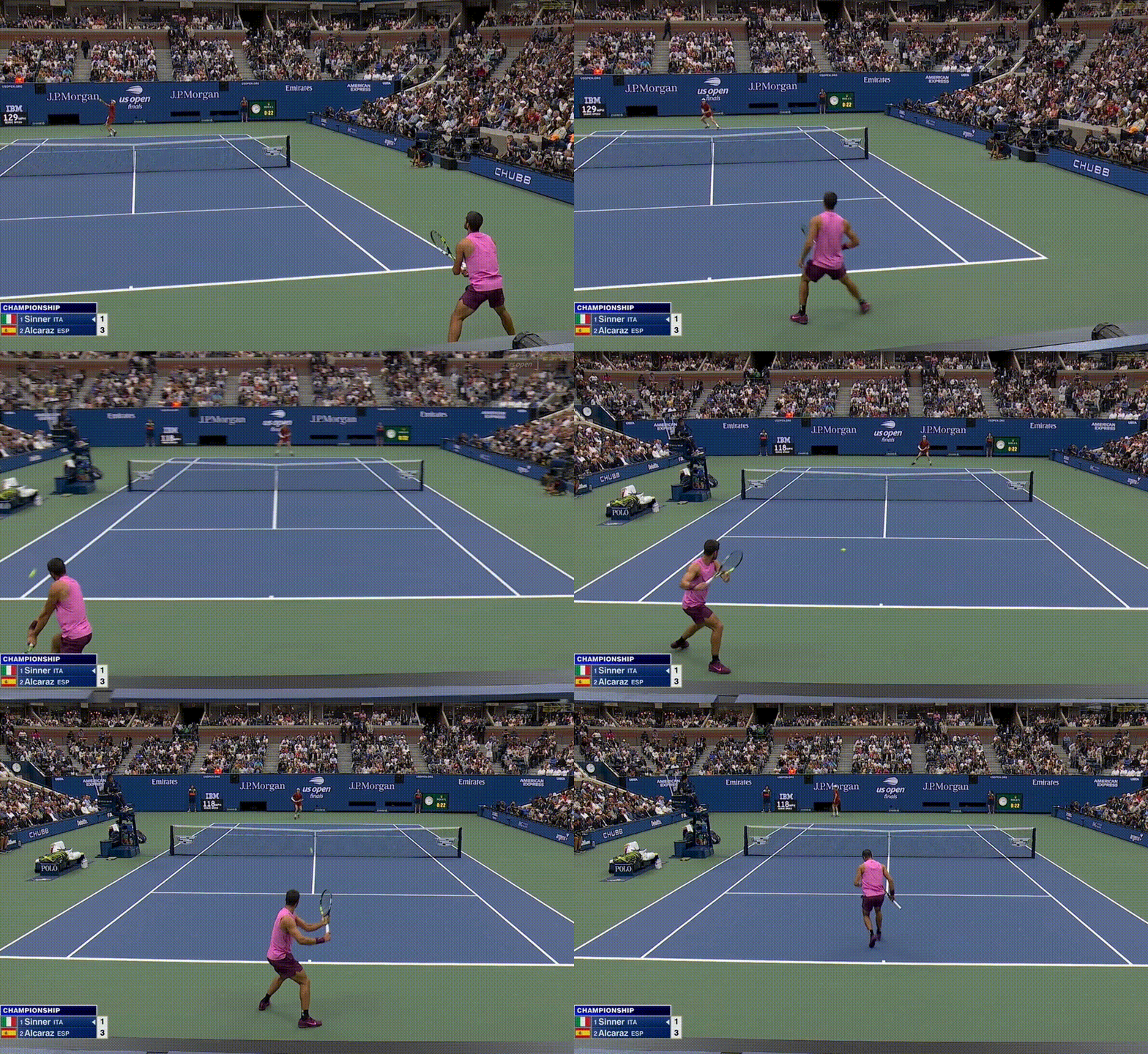
Oh, he also hit this:
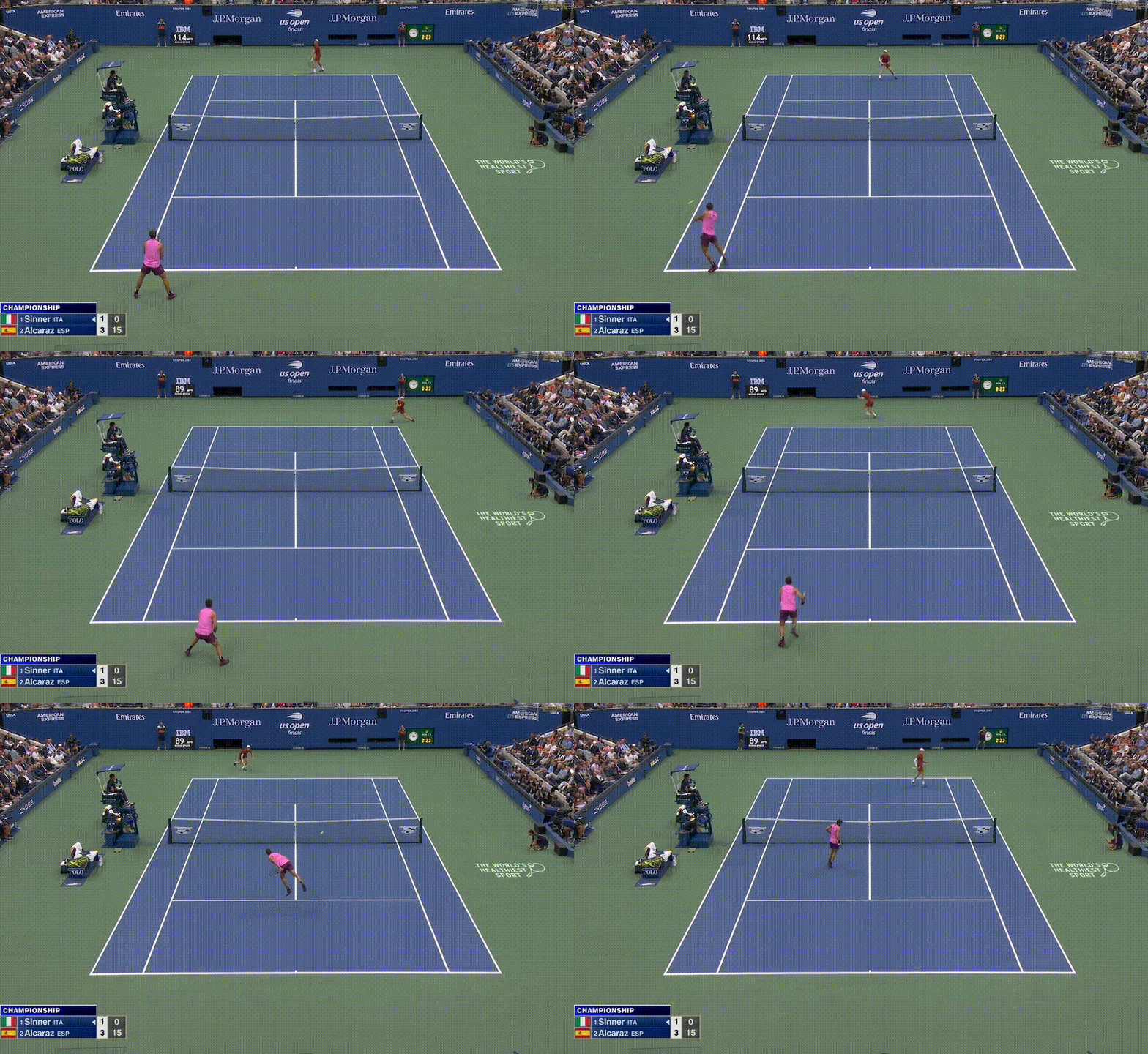
The backhand slice was brought out numerous times in this set, none better than this knifed crosscourt shorty:
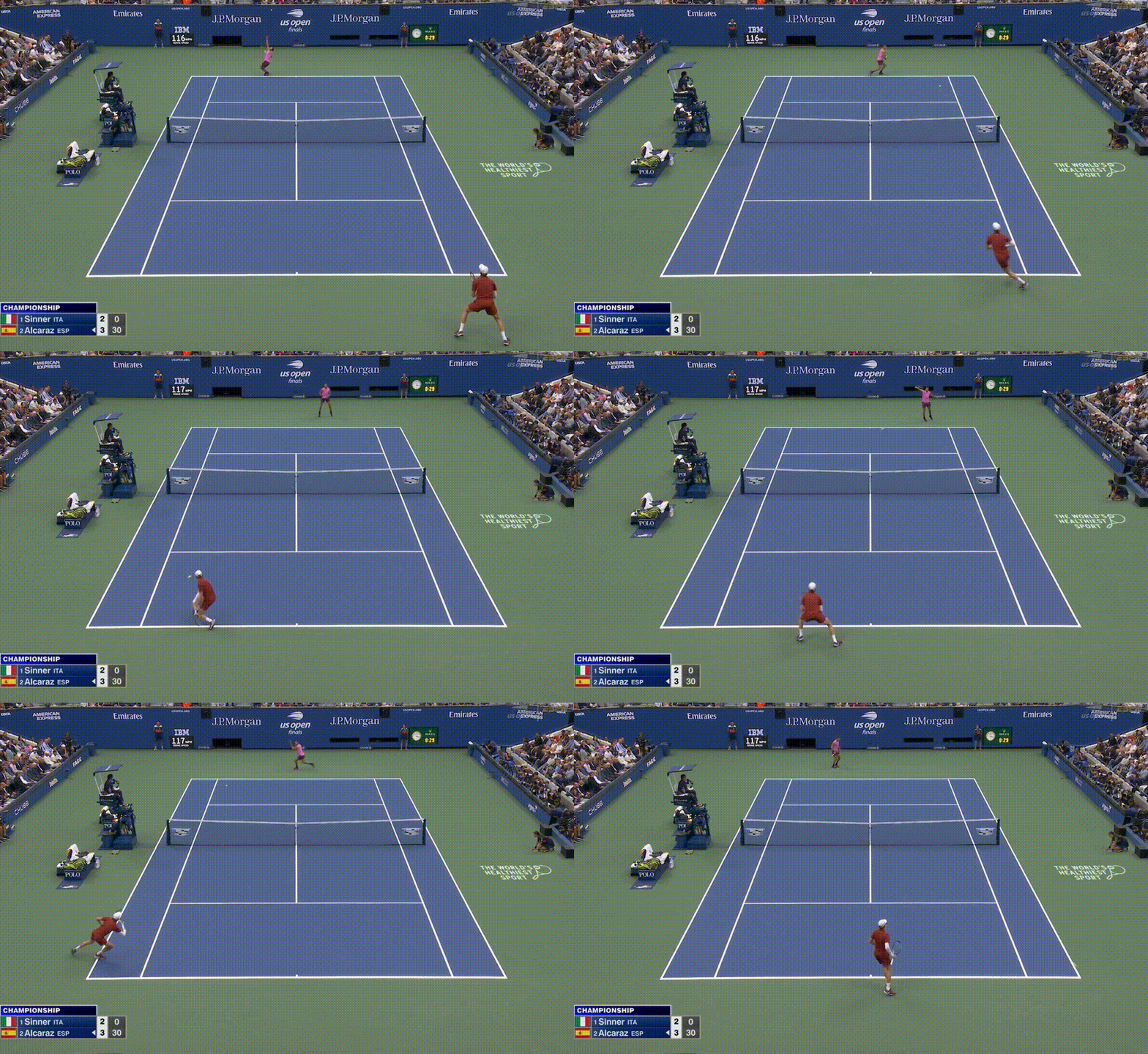
Alcaraz broke again for a 5-2 lead, aided overall by a Sinner who was admittedly a step off his usual blistering and ruthless pace:
“I feel like it depends on how you arrive to play Carlos. When the matches before are comfortable, but you always do the same things, like I did during this tournament, you know, I didn’t make one serve-and-volley, I didn’t use a lot of drop shots, and then you arrive to the point where you play against Carlos where you have to go out of the comfort zone. So I’m going to aim to, maybe even lose some matches, but try and do some changes and be a bit more unpredictable as a player, because that’s what I have to do to become a better tennis player, and at the end of the day that’s my main goal.”
— Jannik Sinner
Perhaps most telling was Alcaraz’s efforts to make this a match of forehands, firing his biggest shot into the Sinner forehand more often in the opening set.
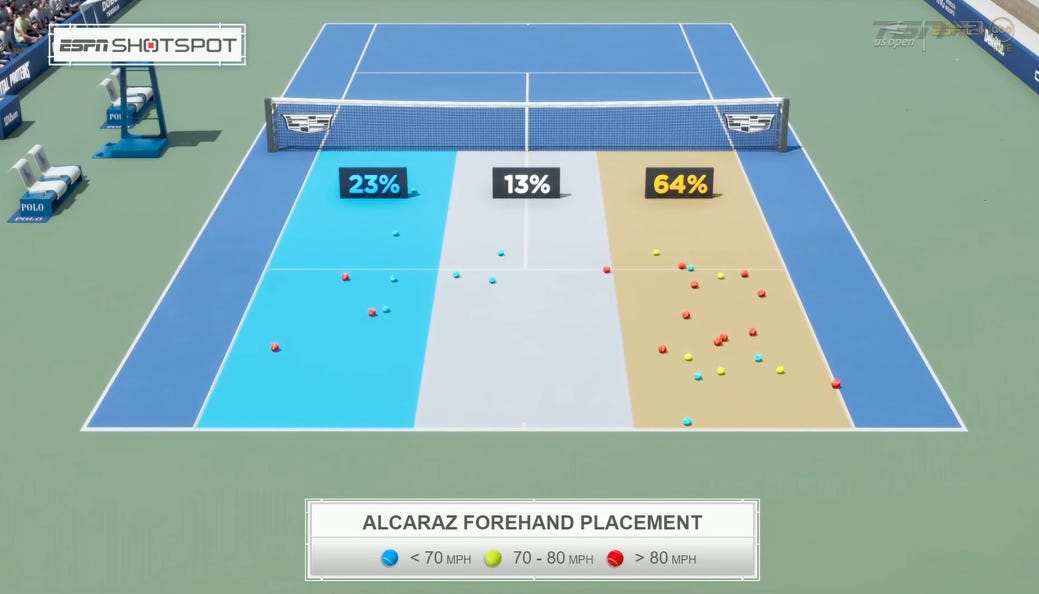
Eleven winners. 6/6 at the net. Only two unforced errors despite all that aggression and change of rhythm. A quote following his Miami loss to David Goffin:
While the rest of the tour seems to be leaning into a linear, powerful, and unimodal baseline style, Alcaraz should be venturing further into what makes him unique, namely, his variation.
The variation was there early in the second as well:
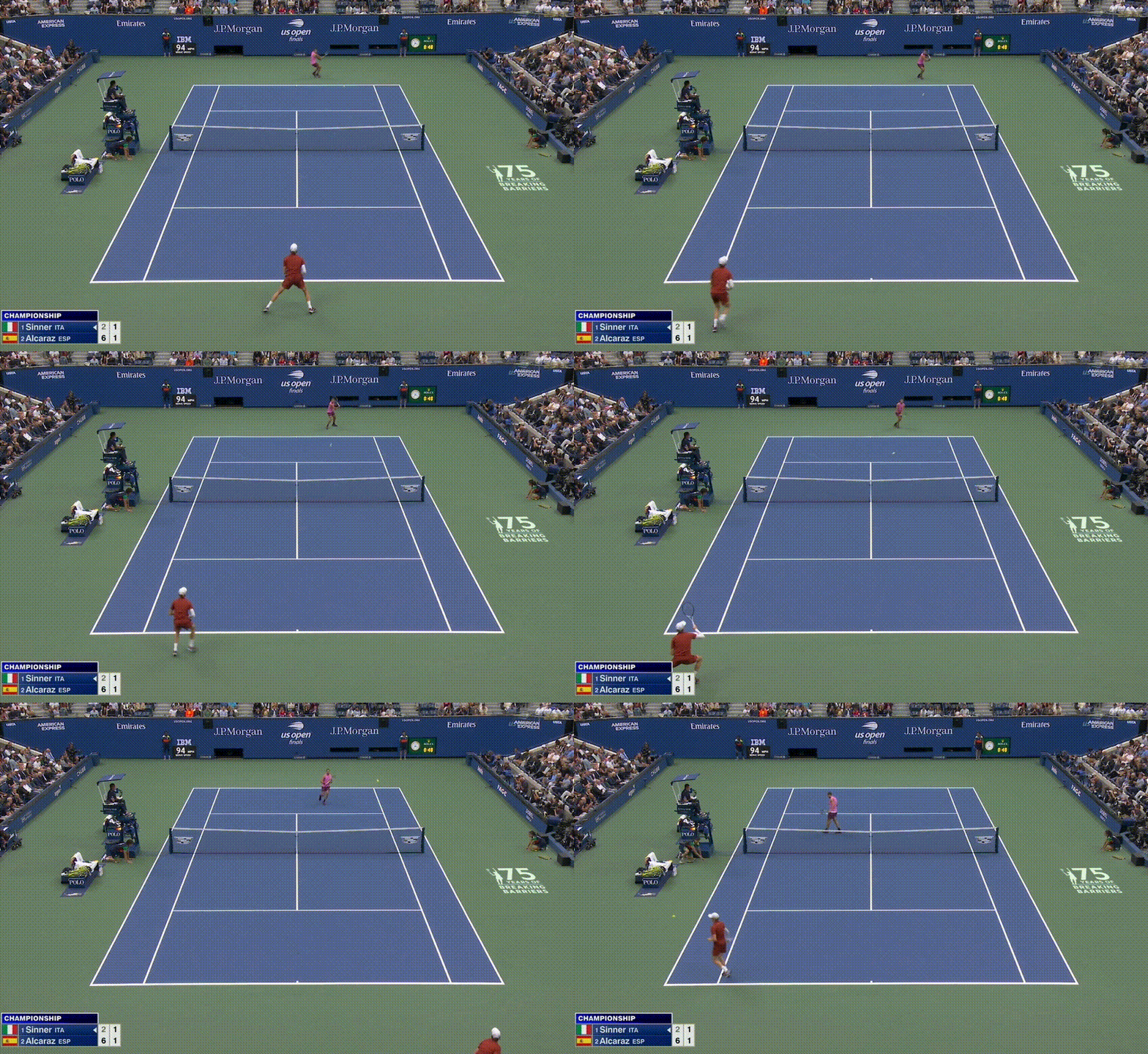
Alcaraz had won 13 points on serve in a row before Sinner lit up a couple of returns and broke to love out of nowhere. This vicious angled forehand helped him get there, and perhaps in the post mortem, Sinner will realise that this kind of angled shot will be a necessary addition going forward:
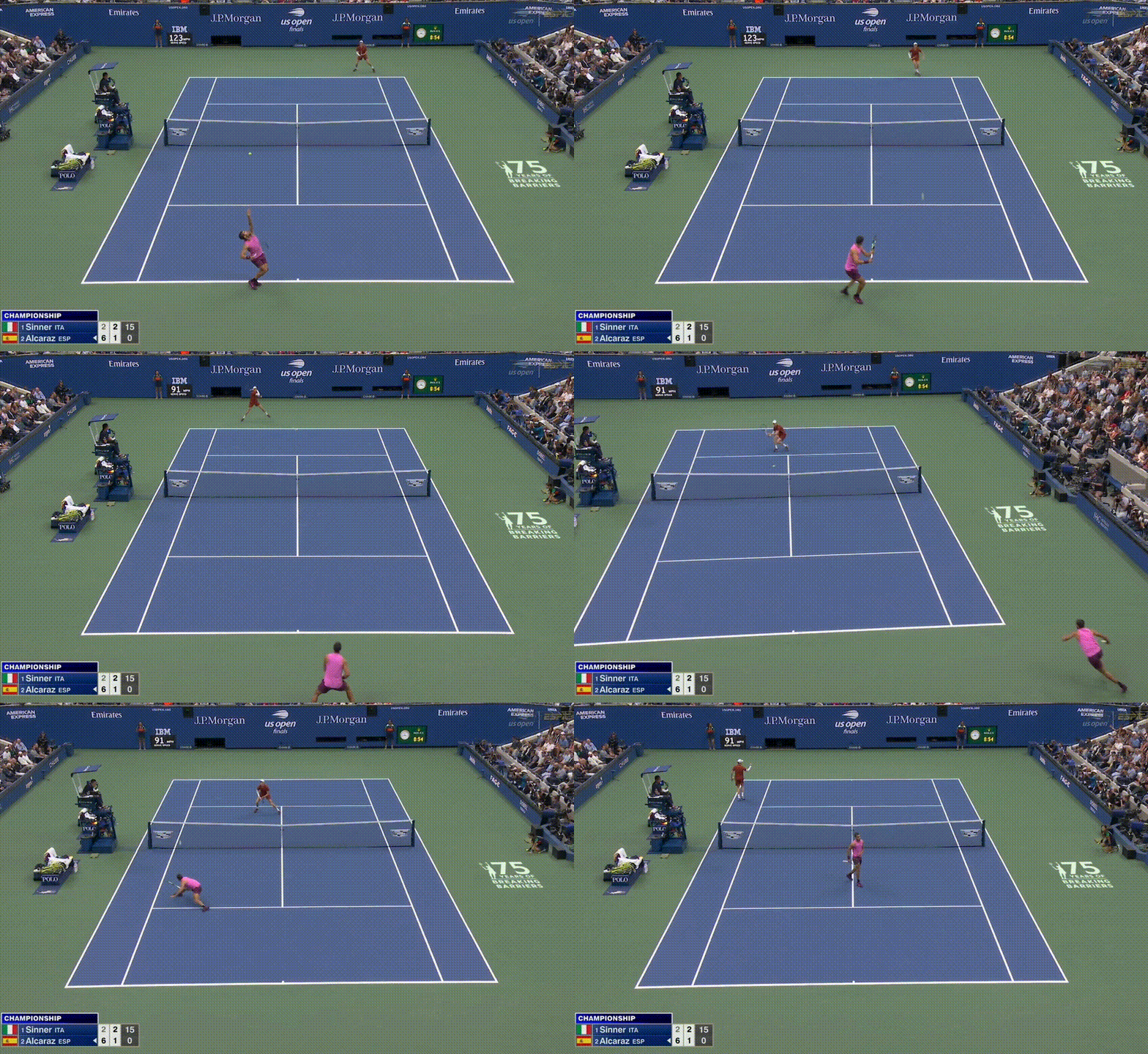
Within the space of a couple of minutes the momentum completely switched. The Sinner forehand that had murdered wide balls all Summer returned:
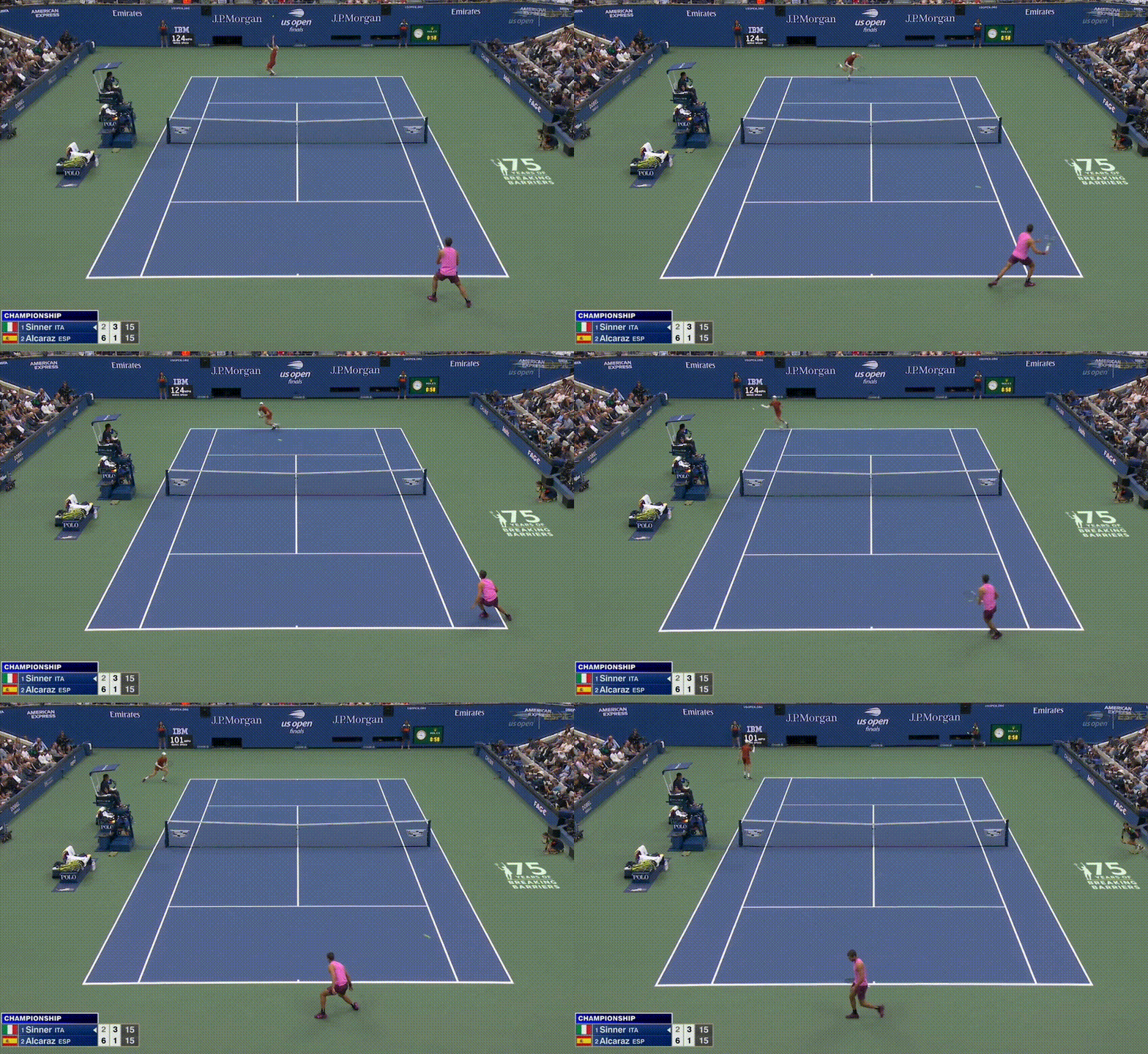
At an X’s and O’s level, the Italian made a subtle adjustment in his rally direction in the second set, hitting more balls into the Alcaraz backhand side, and using his backhand down-the-line as a means to attack the Alcaraz forehand when the Spaniard was caught on his ad-side mound; a pattern that featured prominently in his Wimbledon win.


The adjustment was very effective. Alcaraz hit eight forehand winners in the first set.
He hit zero in the second.
You felt that maybe Sinner would slowly steer the match his way with this shift in rally dynamics. It was a simple tactic: Do not let Carlos hit forehands. Make it a match of backhands.
Yet early in the third Alcaraz again found ways to hurt the Sinner forehand with his own. At 1-0 he returned a sharp forehand angle to go 0-15 (again that great returning from deuce wide: his usual kryptonite), and then weathered a barrage of linear Sinner blows to his ad-side before turning the point on its head with one elliptical swing of the forehand from several metres behind the baseline:
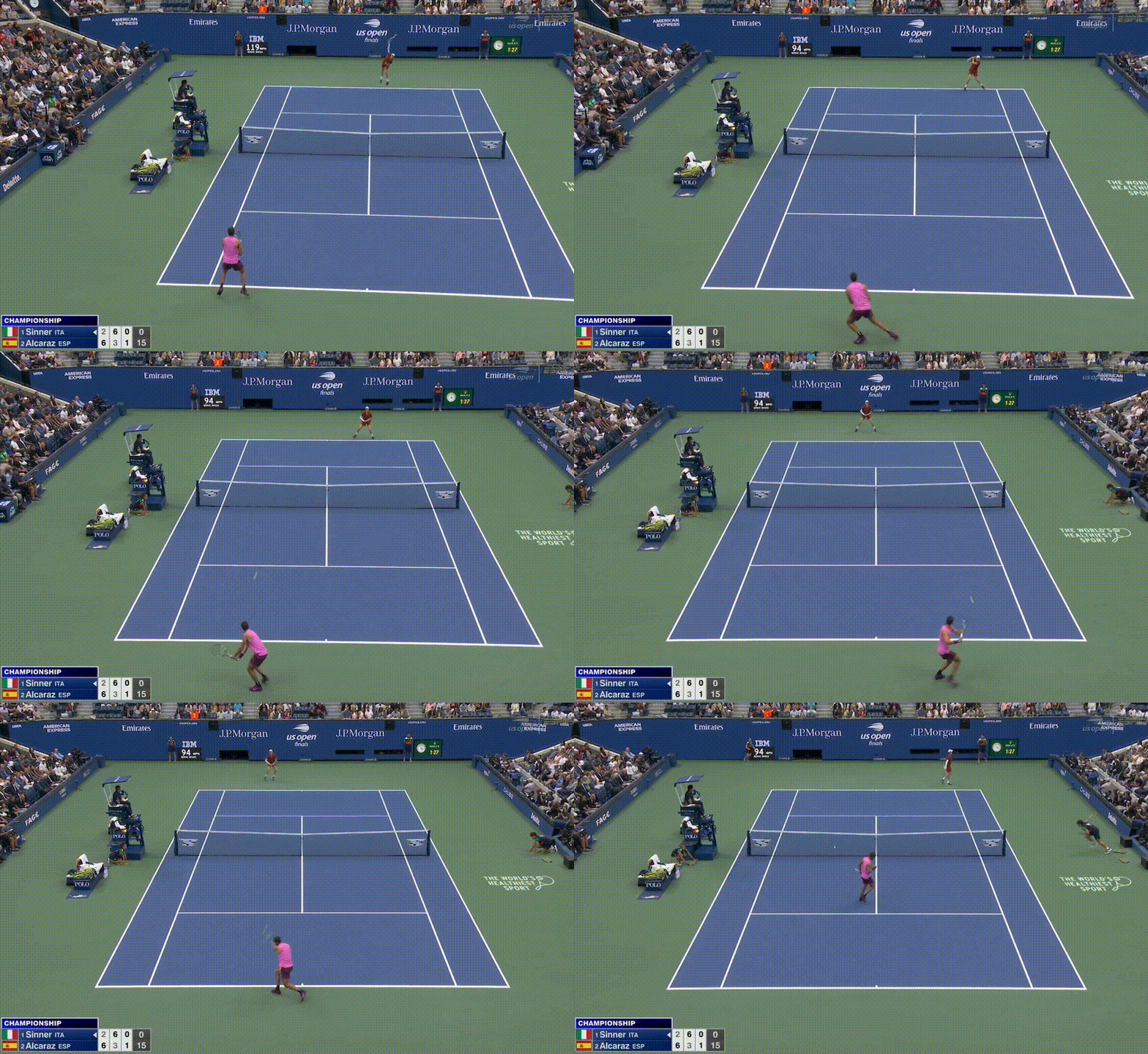
The same was true at 30-30. Over and over again, Alcaraz was rushing the Sinner forehand with a forehand conviction of his own that was impossible to contain. Court position was somewhat irrelevant, because Alcaraz was dominating the rally with his forehand even when several metres behind the baseline. He broke then, and once again at 3-0 with shots like this:
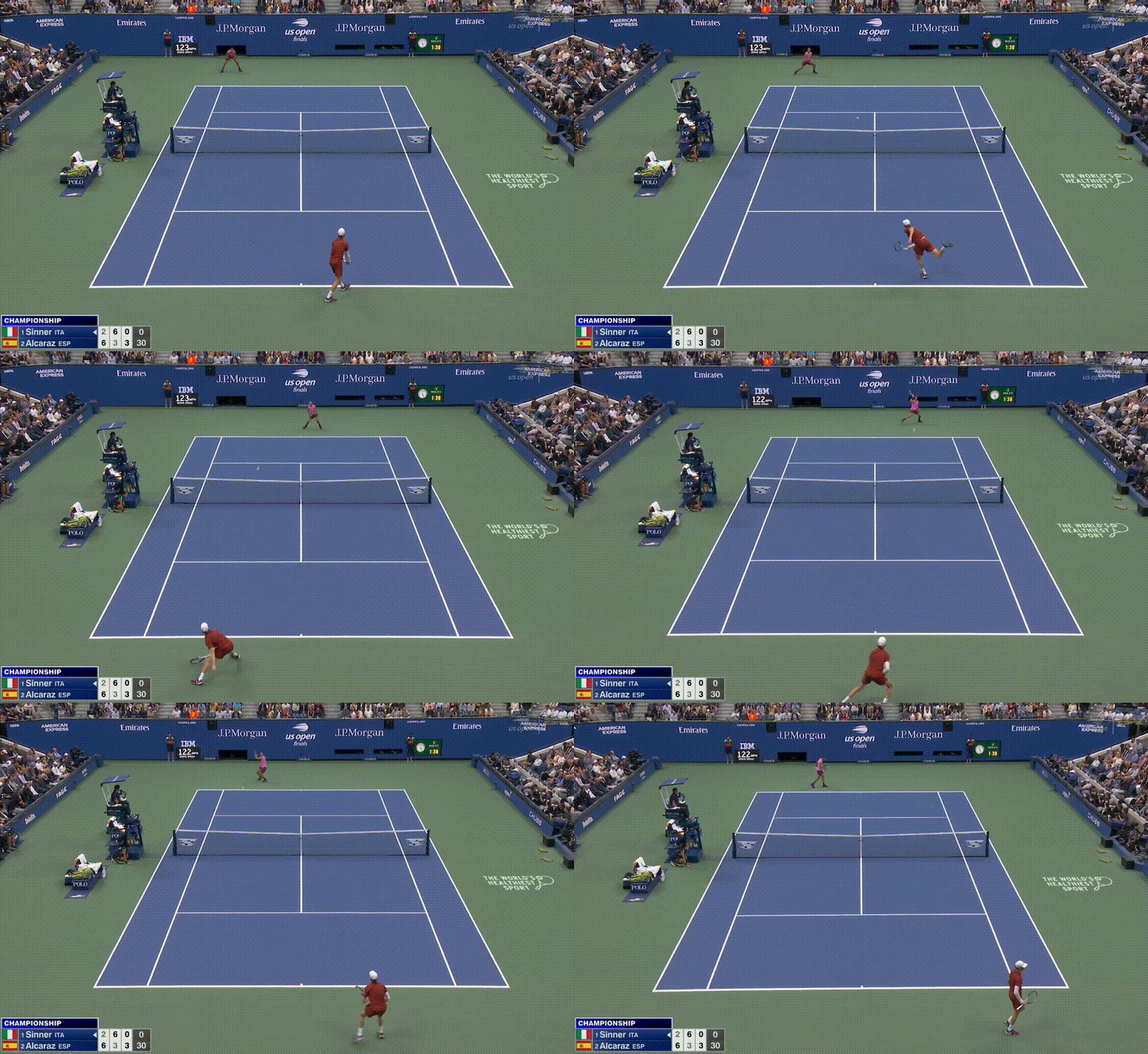
Alcaraz won the third set in half an hour and wasted no time applying pressure in the fourth, earning a break point in the opening game.
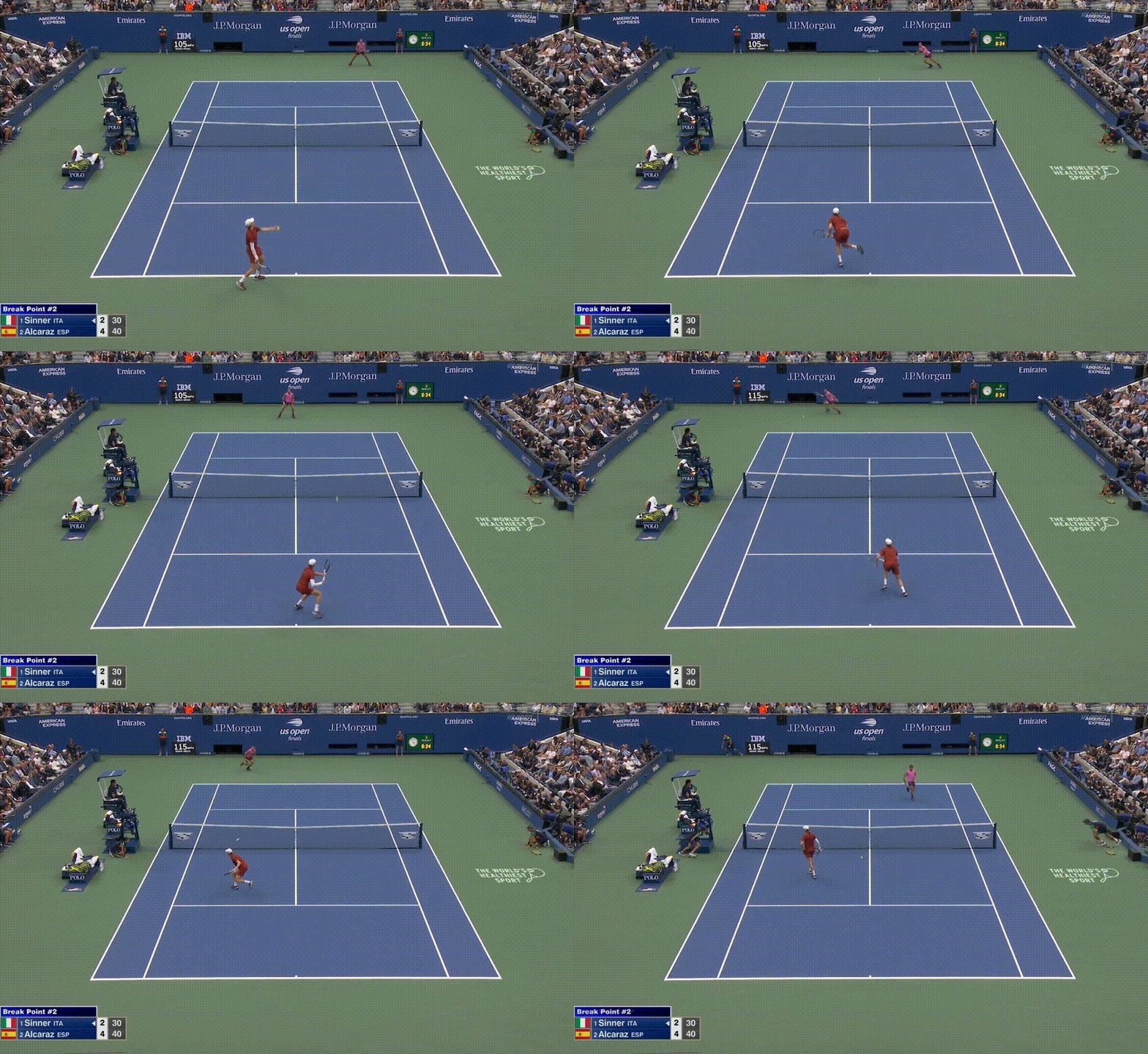
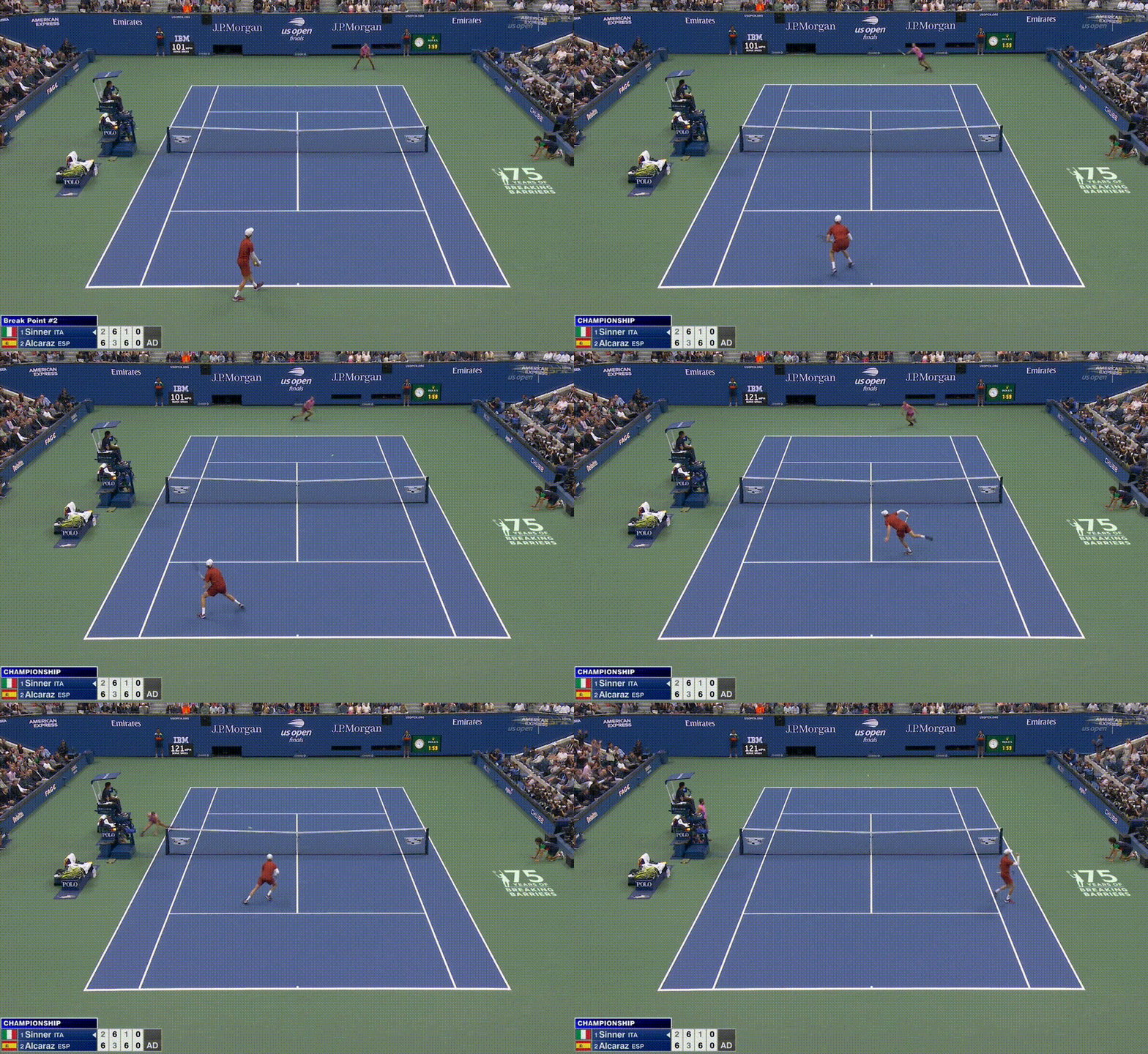
Sinner saved it with a volley that is more often reserved for exo-showmanship rather than crucial break points in grand slam finals, cutting across the inner meridians to make the ball jump away from a chasing Alcaraz, who still got there somehow. John McEnroe was gushing in the booth:
“I think we prepared the match very good. Watching some matches and seeing the specific details we had to play. And Carlos did it 100%. It’s easy to say and very difficult to do it. The performance today was perfect.”
— Juan Carlos Ferrero, coach of Alcaraz
It was an important hold for Sinner, and you felt that the history of their rivalry suggested we were heading for five sets if he could just sink his teeth into another Alcaraz service game when the Spaniard dipped. But Alcaraz never blinked. The guy hit everything with a first-take freedom that makes you question if his short-term memory was even functioning.
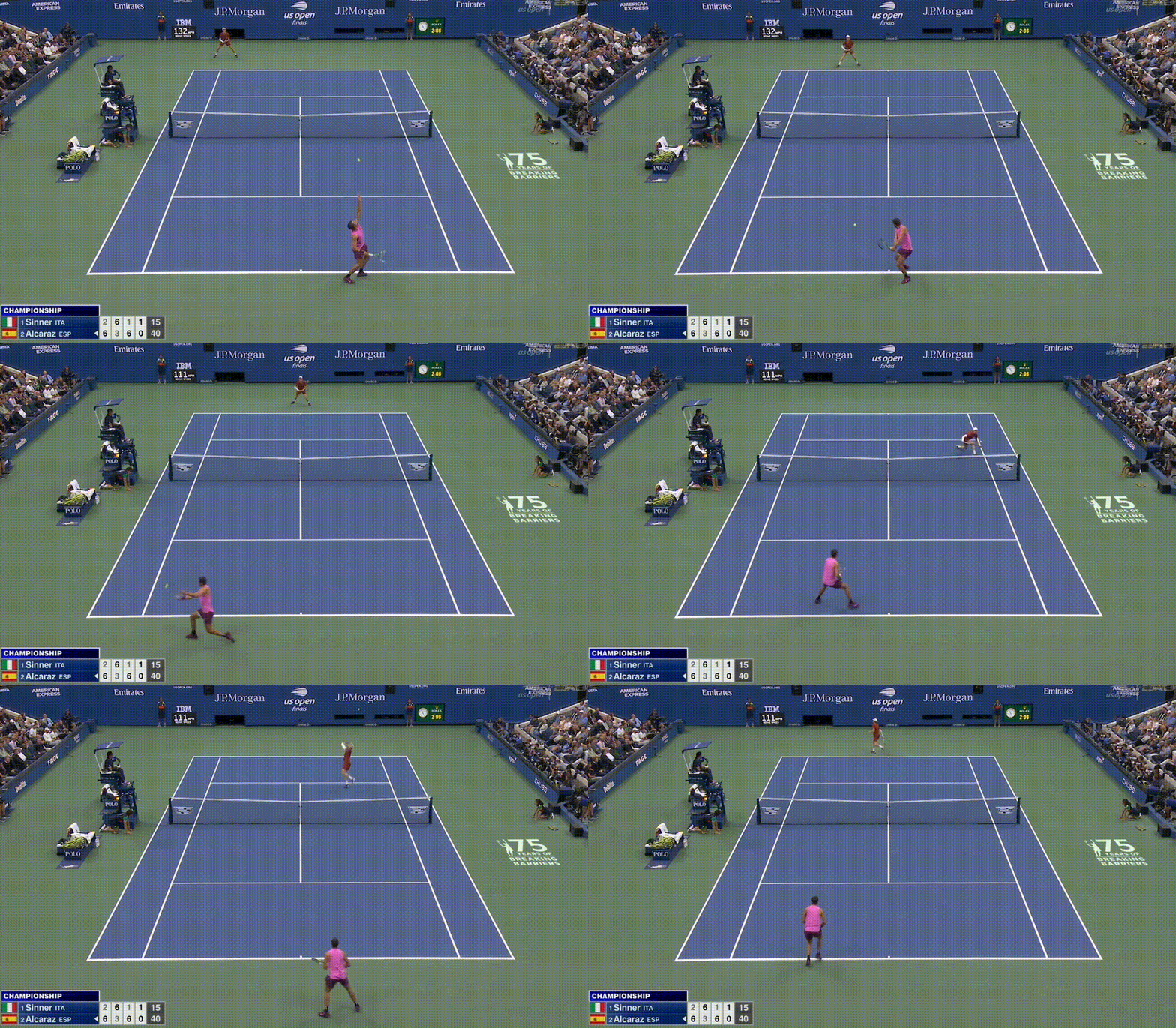
At 2-2 30-30 Sinner went for a big second serve down the T. It was the kind of courageous serving that won him Wimbledon, but he missed it tonight, and then sprayed a wild forehand on the break point. These shot selections felt more like a quickly-learned helplessness than anything else. If Djokovic’s style has been described as “suffocating”, tonight’s version of Alcaraz was like being suffocated, while also being hit in the face, with a hammer.
“I felt like he was a bit cleaner today. The things I did well in London he did better today, and that’s the result. I felt like he was doing everything slightly better today, especially the serving. Both sides very clean, and I think that’s it.”
— Jannik Sinner
Any dip in the serve score and Alcaraz found an unreturnable serve or plus one bazooka forehand.
Any time given on the forehand and he’d deliver an 85mph+ heater.
Enterprising forward movement at every opportunity.
Slice, drop shots, angles, and lobs bow-tied on his nuclear arsenal.
And a fearlessness in big moments that must make the rest of the tour shake their head in disbelief. Sinner came at him in this final game. The forehand was big, the line backhand return at 40-30 saved a second match point, but the kid seemed right at home back at deuce:
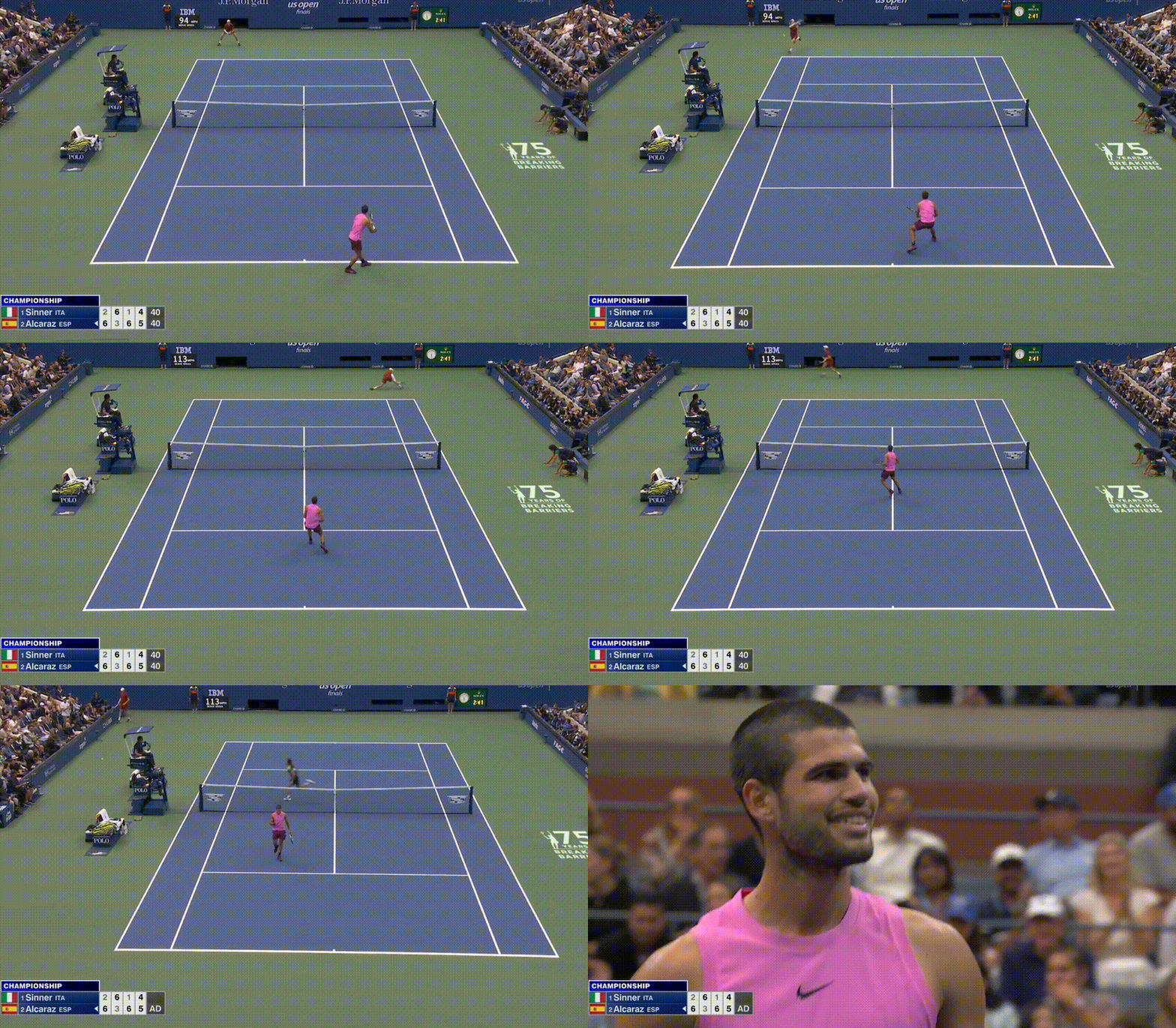
In the aftermath of one their most lob-sided matches, the question is whether this is going to be the new normal for Alcaraz moving forward. All year he’s been tinkering — the serve and backhand have gone through iteration after iteration — and it seemed this fortnight that he put together a game that was rock solid in every department: no mental lapses, wide forehand protection (nay, destruction), elite serving (and perhaps the smoothest motion so far?), movement and end-range physicality as good as ever. The result? Maybe the most dominant slam run of all-time in terms of holding serve.
“We realised how important the serve is nowadays. Every player is playing faster, playing harder, and the return is something that everyone has improved a lot. So I have to improve my serve if I want to win and be in good positions, so I paid more attention to it, and I’m really happy in this tournament I served unbelievable.”
“I feel this is the best tournament I have ever played, from the first round to the end of the tournament. The consistency of my level during the whole tournament has been really really high, which I’m really proud of and something I’ve been working on.”
— Carlos Alcaraz
Alcaraz dominated the forehand, hitting 14 drive winners to Sinner’s five. And somewhat related to that, the Ad-side service points were literally untouchable for the Spaniard, winning 24/26 first-serve points:


Thanks to Twitter/X user @snack_attacck for the serving data graphics
It must be said that Sinner’s serve percentage was a very low 48%. He had struggled all tournament to get his rhythm on that shot, and it’s something he’ll need to refine if he’s to wrestle more match wins in this H2H. I also think his forehand let him down overall today. A lot of that is due to the way Alcaraz came at Sinner, putting him on the back foot early, but there were countless misses on slower balls that he’s made a habit of making in recent times.
“I was very predictable today. He did many things, he changed up the game. That’s also his style, that’s how he plays. Now it’s going to be on me if I want to make changes or not, so we’re definitely going to work on that and be prepared for the next match against him.”
— Jannik Sinner
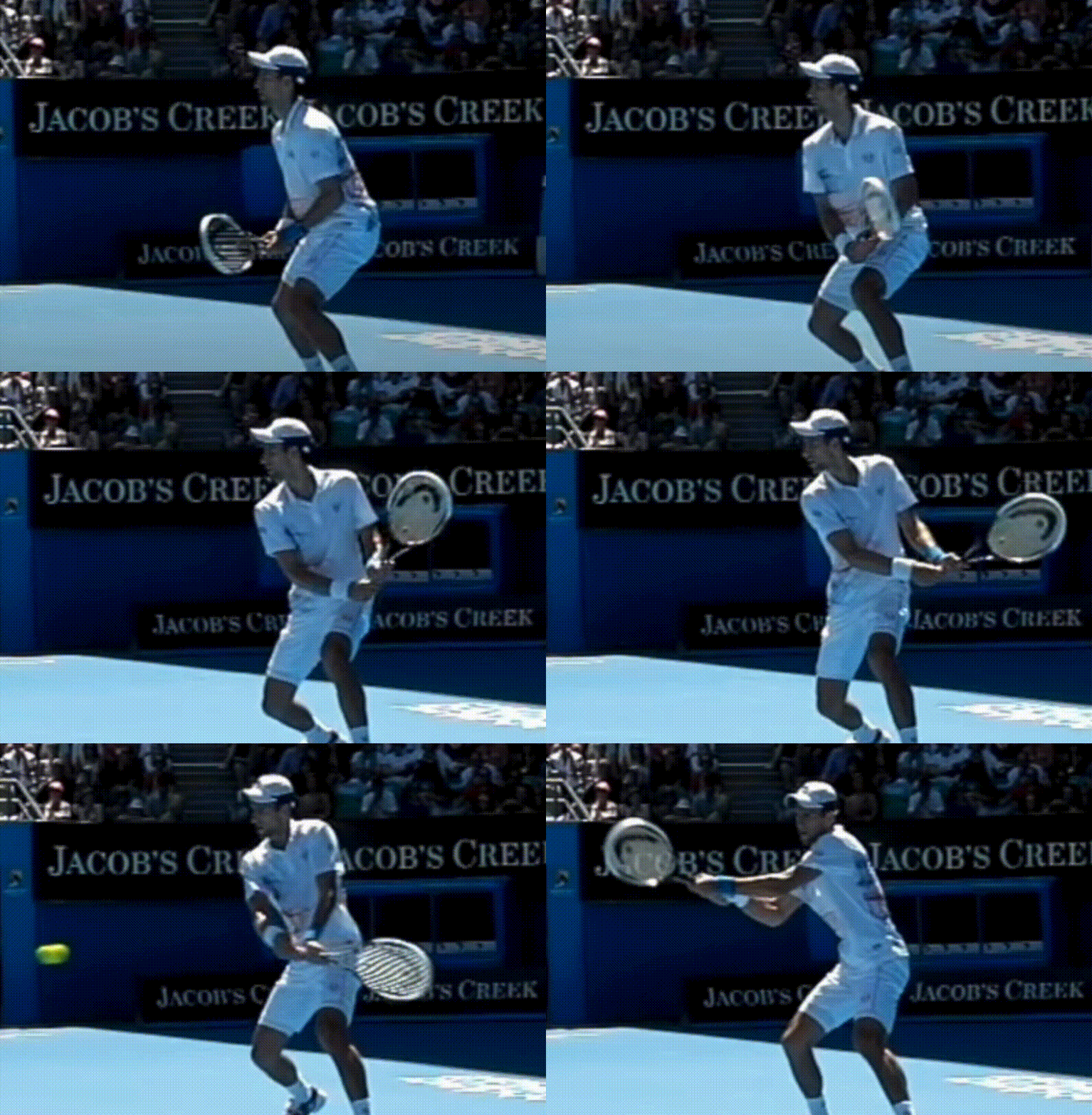
If I may put on my technical hat and get hyper critical of the Sinner game, I think a small chink in his armour his how much racquet drop he gets on return-of-serves. I think this particularly makes it a little harder for him to take on second serves early and guide the ball with the kind of flat aggression that results in Alcaraz doing crush-and-rush, or Djokovic hitting both corners at will from inside the baseline. Let’s look how linear the Djokovic return is: the racquet head only ever drops to level with the hands before getting pulled forward to contact:
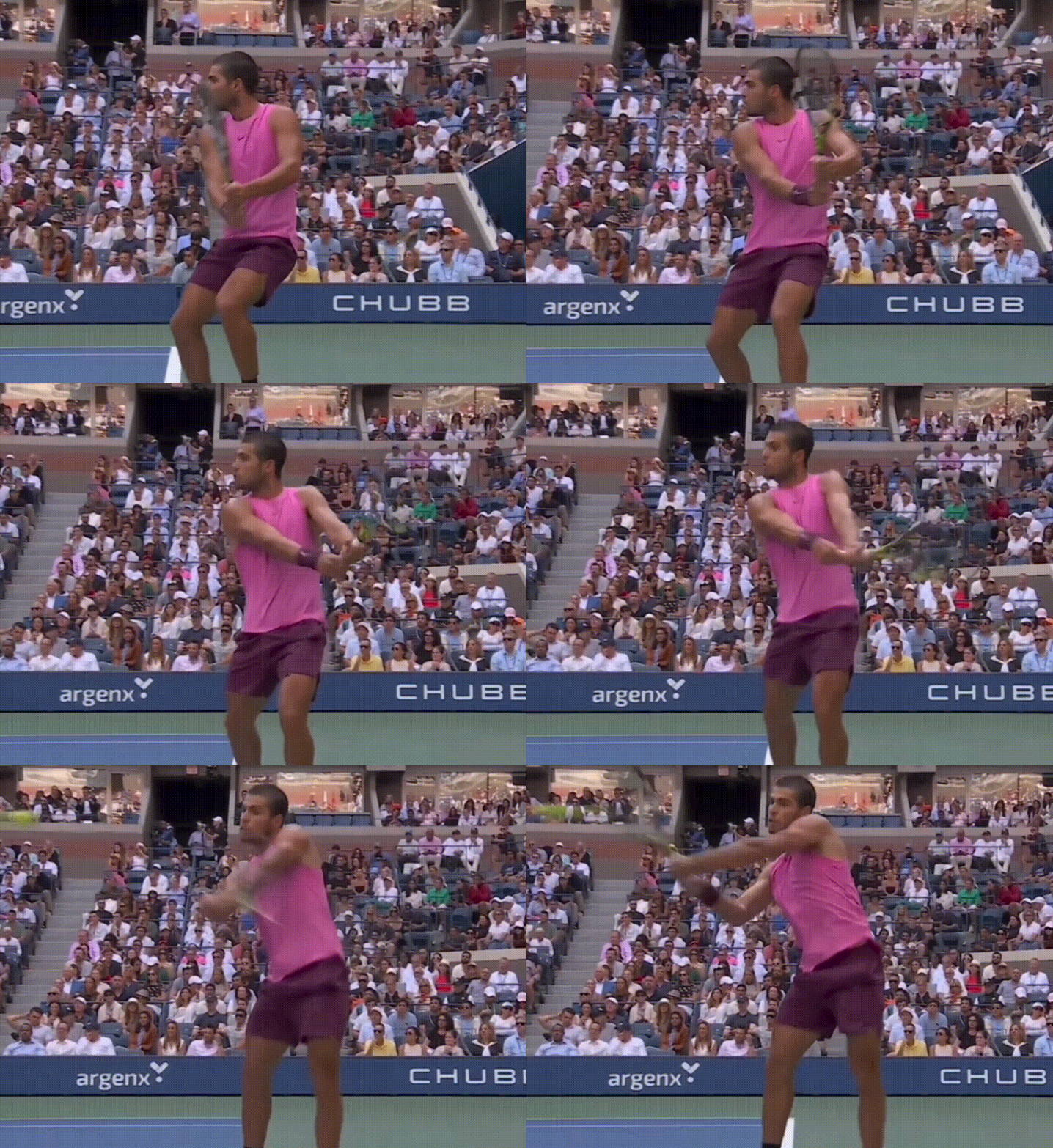
Ditto Alcaraz:
But Sinner’s rubber-gloved wrists give way much more:
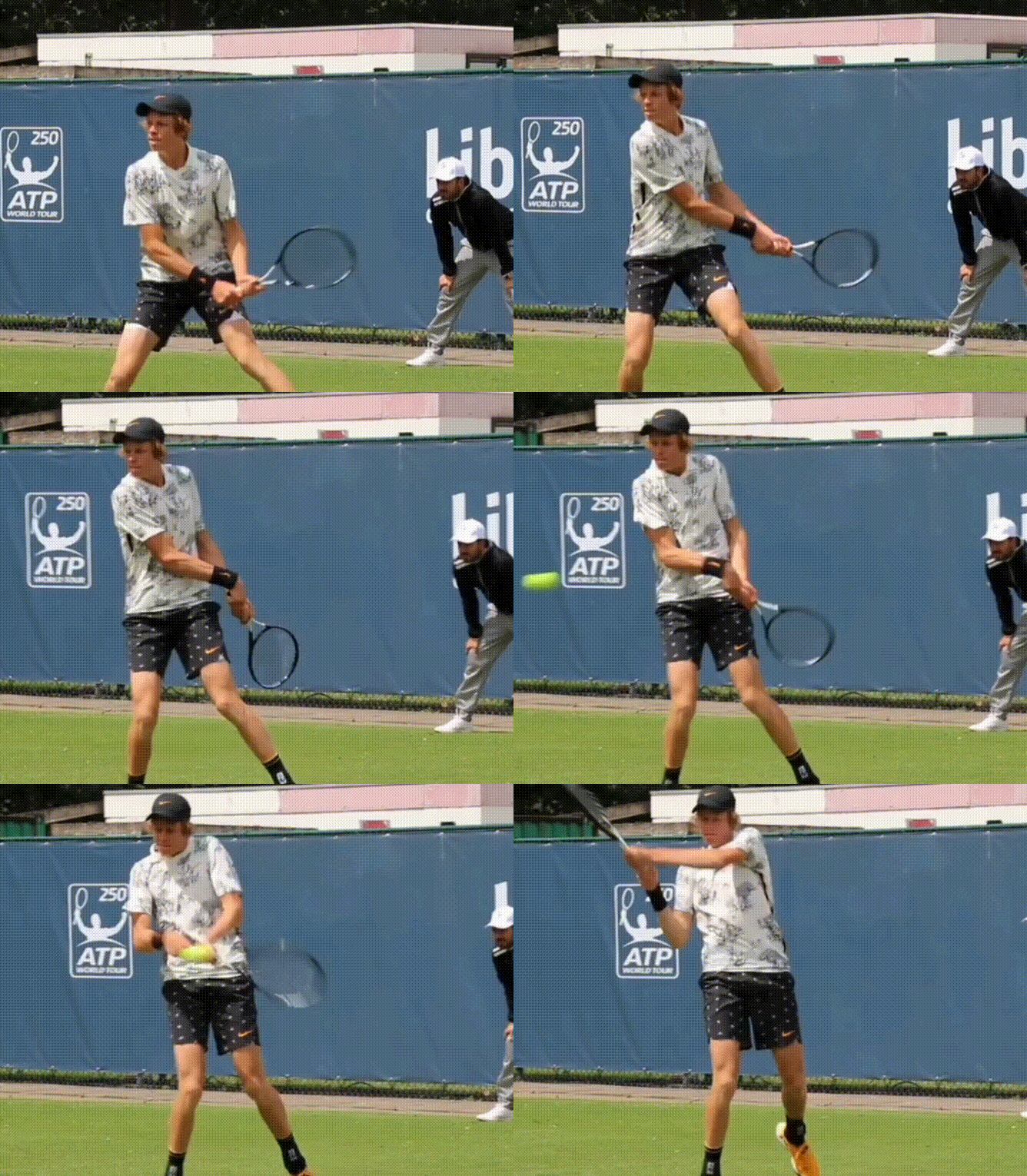


It’s not a ‘weakness’ as much as it is a tradeoff. That length and drop on his backhand is why he can access so much speed and spin when in baseline rallies. But serves come faster and at steeper angles than most shots. Readers may recall a quote from my Tsitsipas backhand weaknesses piece:
Getting your hand/racquet at ball level for first-serve returns is necessary as it’s more of a blocking shot; you don’t need racquet head speed as much as the ability to quickly find good contact angles when deflecting 200+ km/h serves.
Anyway. I’m sure their team is across this.
Overall, the narrative — at least for me — has shifted from, “Sinner is the best player in the world with an Alcaraz problem” to “Alcaraz is the best player in the world, and if he plays like this, everyone else has a problem”.
All tournament long the forehand was steady, and he defended the wide return well against Djokovic and Sinner.
For several months now the serve has produced matches of excellence.
At 22, it may be that he is starting to understand his complex game with a degree of clarity that only comes with time.
We’ll know more down the home stretch of the season, as Alcaraz looks to build on his number one ranking. It’s going to be fascinating to watch Sinner work out new avenues of attack across the Fall swing; does he serve-and-volley more? The forehand drop shot gets used some, will that increase? Will he develop his own backhand slice to counter those of Dimitrov and Alcaraz? I think a more angled and shorter forehand cross court would be a priority, given his power pushes players deep behind the baseline.
And how will Alcaraz finish the season? The last few years the indoor swing hasn’t been his best, but his game seems better than ever for faster surfaces, and with the number one ranking and bucketload of confidence, I’d be very keen to see these two duke it out some more in 2025.
That’s all from me. I’ll see you in the comments. HC.