

Jannik Sinner came back from a set down to defeat Carlos Alcaraz 4/6 6/4 6/4 6/4 in the final of Wimbledon on Sunday to clinch his maiden grass slam. The Italian snapped a five match losing streak against Alcaraz, and now holds three of the four major titles, as well as a commanding points lead in the ATP rankings.
Tactically, this match had everything we expected: Sinner bringing the linear heat from middle corridors trying to go through Alcaraz. Alcaraz looking to weather that heat with variation, angle, and sub-net defence, in a bid to go over, under, and around the Italian.
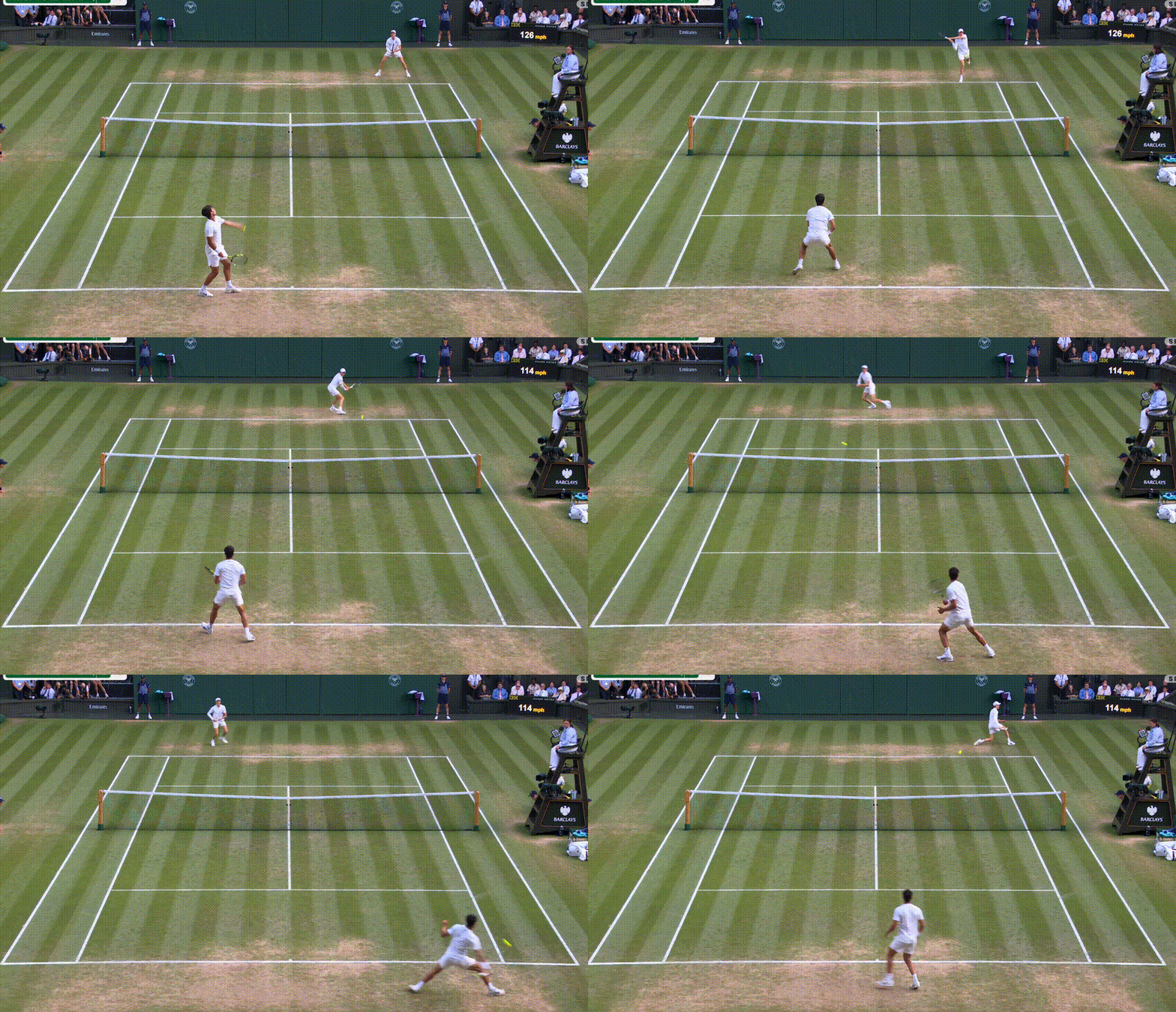
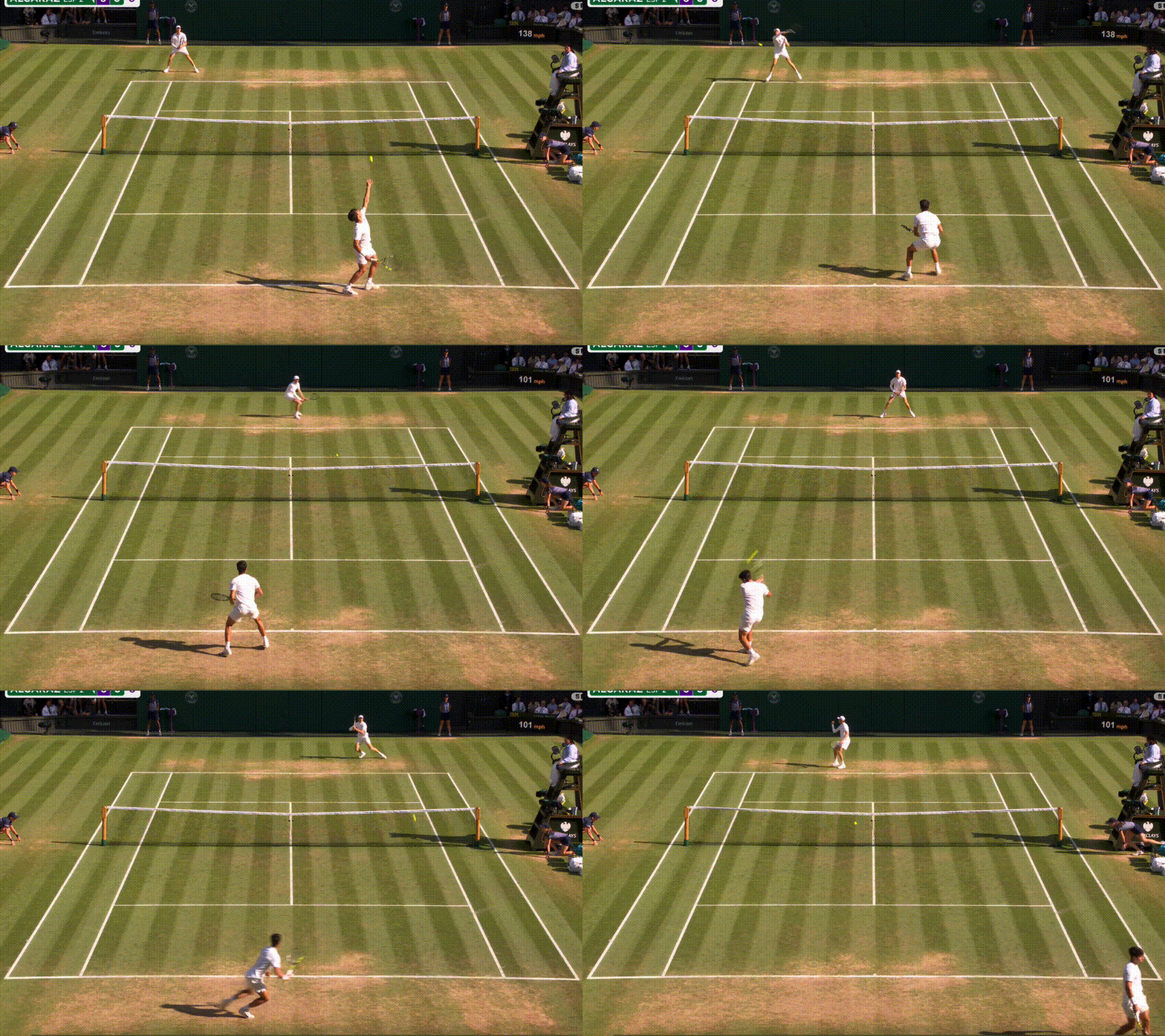
The first point won against the serve had many themes that would play out over the course of the match: body second serves, Sinner’s deep middle returns and subsequent line/off backhand, Alcaraz somehow – even on this — getting the defense below the net, and Sinner finishing at net (the first of many for him today).
“In practice yesterday Alcaraz was practicing the serve, and then getting someone slamming a ball back at him down the centre. He knows what is coming, but in that particular game, the next part was Sinner going hard into the Alcaraz forehand.”
— Todd Woodbridge commentary
The Sinner down-the-line backhand proved pivotal in key moments today, and he used it to good effect twice more in the 2-2 game to earn the first break of the match.
Rushing the Alcaraz forehand has been the tactic against the Spaniard ever since he burst on the scene, and Sinner’s game is well-tailored to execute just that. And yet, Alcaraz has done well in recent years to adjust his footwork to that side, especially on the lawns of SW19. He said he studied Federer, and it shows:
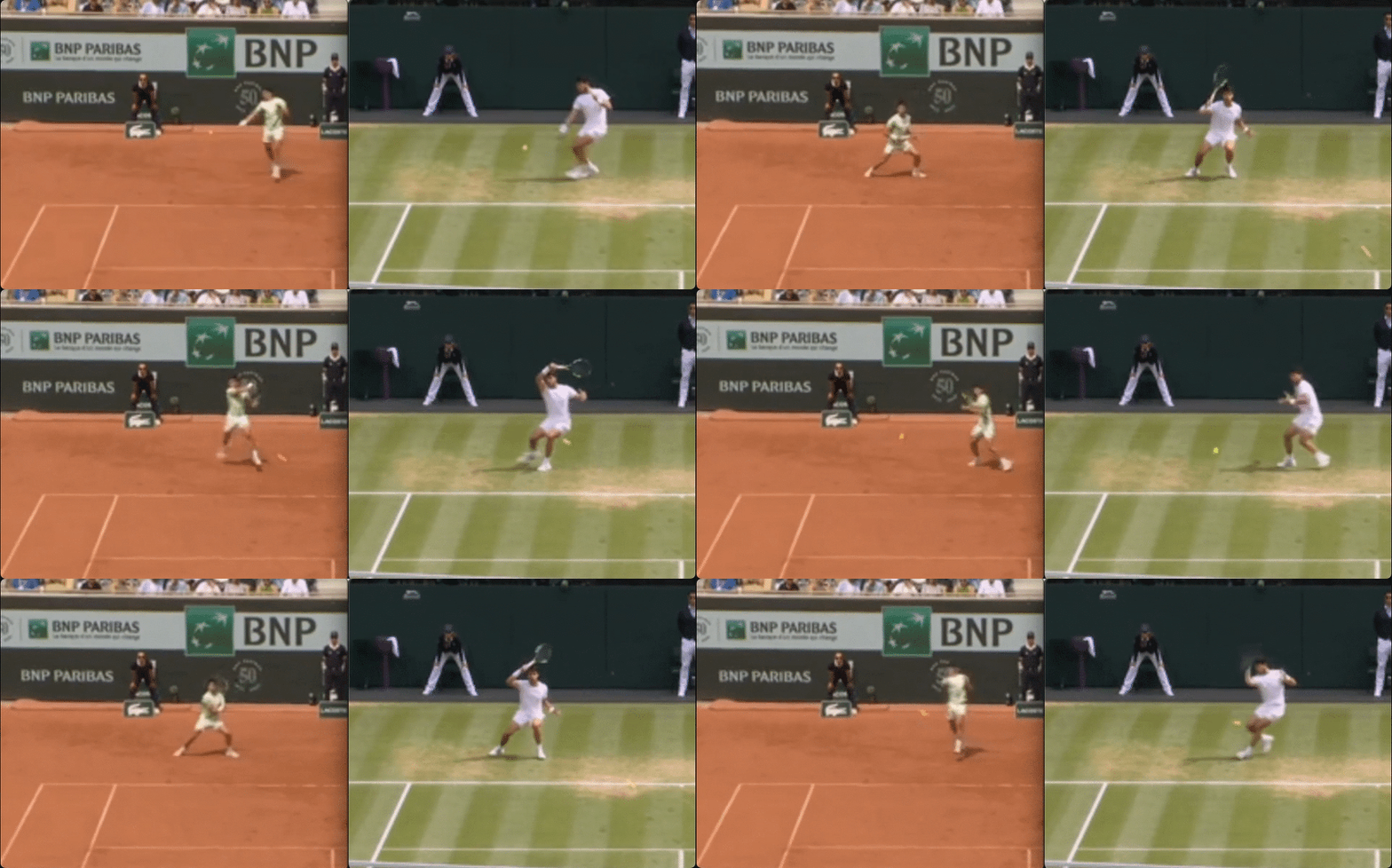
But Sinner’s pace of play from every inch of the baseline is unmatched in recent history. His long levers allow him to cover returns from closer in, meaning he gets the ball back on you quicker. From there, his low, hip-holstered setups can trade in speed on the baseline better than most, and his Djokovic-inspired sliding footwork out wide enables him to play offense from defense; the attack and recovery are blended into one.
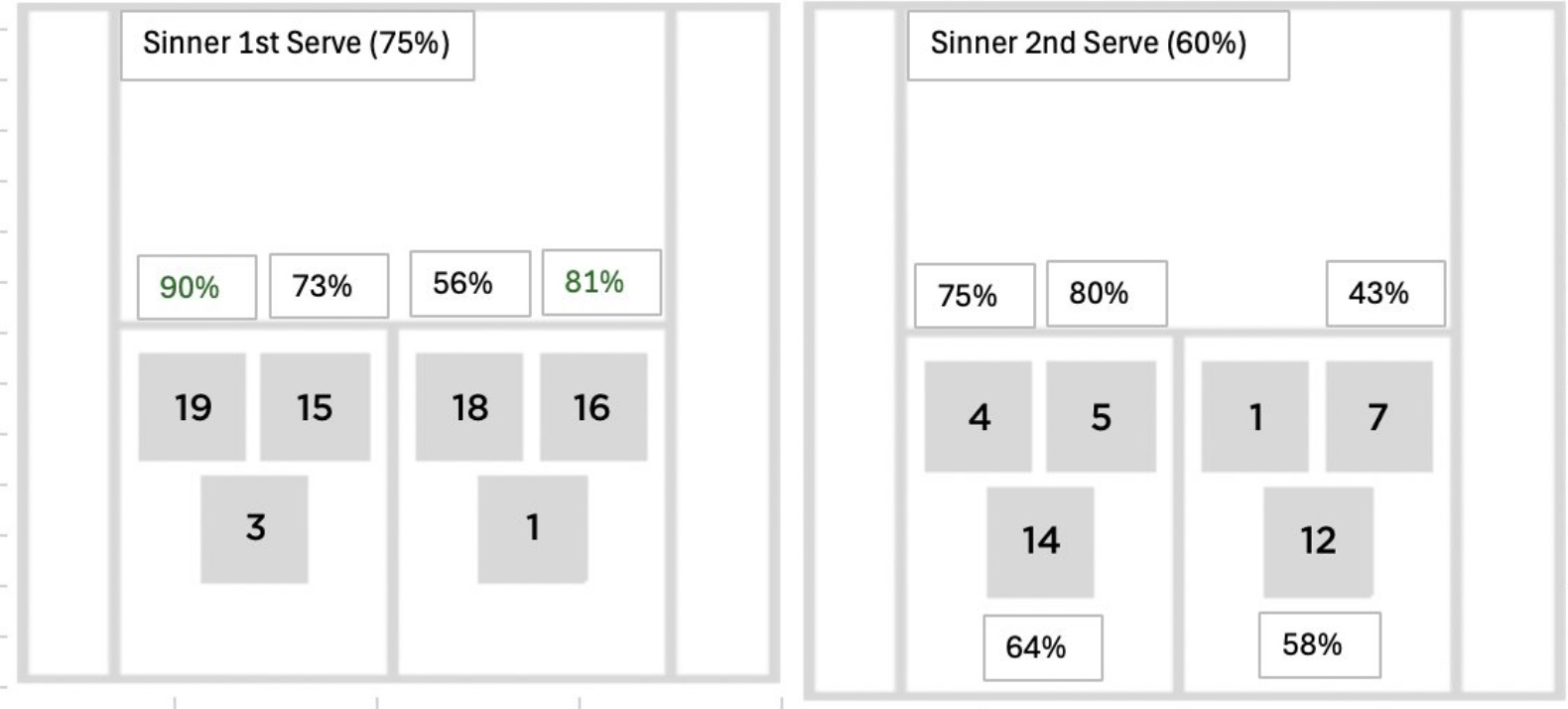
Sinner also had great success serving deuce wide to the Alcaraz forehand as well. Twitter user snack_attacck sent me some serving data after the match, showing Sinner won 90% of the 19 deuce wide serves he hit in the match:
But Sinner himself has often been vulnerable on wide forehands in his career. I felt Djokovic exposed him there — on this very court — in their 2022 and 2023 Wimbledon encounters, and Alcaraz used more angled forehands in Paris last month to pressure Sinner’s game on the red brick. I’ve touched on the subtleties of the Italian’s running forehand footwork before, most notably in Beijing in 2023 against non other than Carlos Alcaraz. Back then, I made the observation that I felt Sinner’s forehand was better when on the dead-run or when sliding into it, and that he often made errors out wide when employing open-stances like this:
I’m always keeping an eye on the cross-over footwork of the Sinner forehand, and we saw the first glimpse of how dangerous that shot is when he needed it most: down set point.
He absolutely melted it.
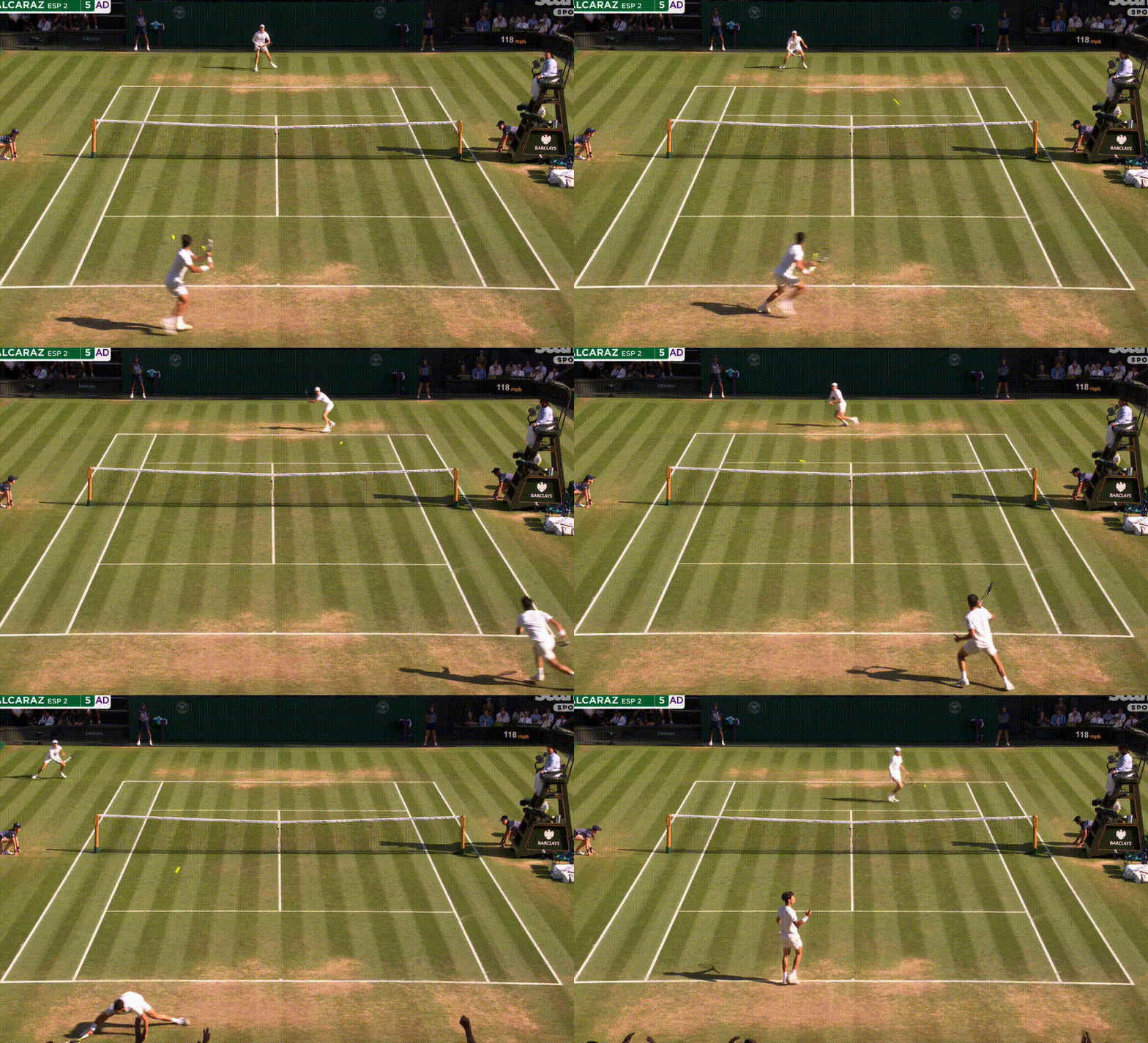
But Carlos did Carlos things, throwing the racquet out on a reverse split and displaying an ungodly degree of racquet-face awareness to feather this one back over the net low and short, just in case Sinner had somehow teleported to a net position in the interim. It was an electric end to what had been a cagey start to the final.
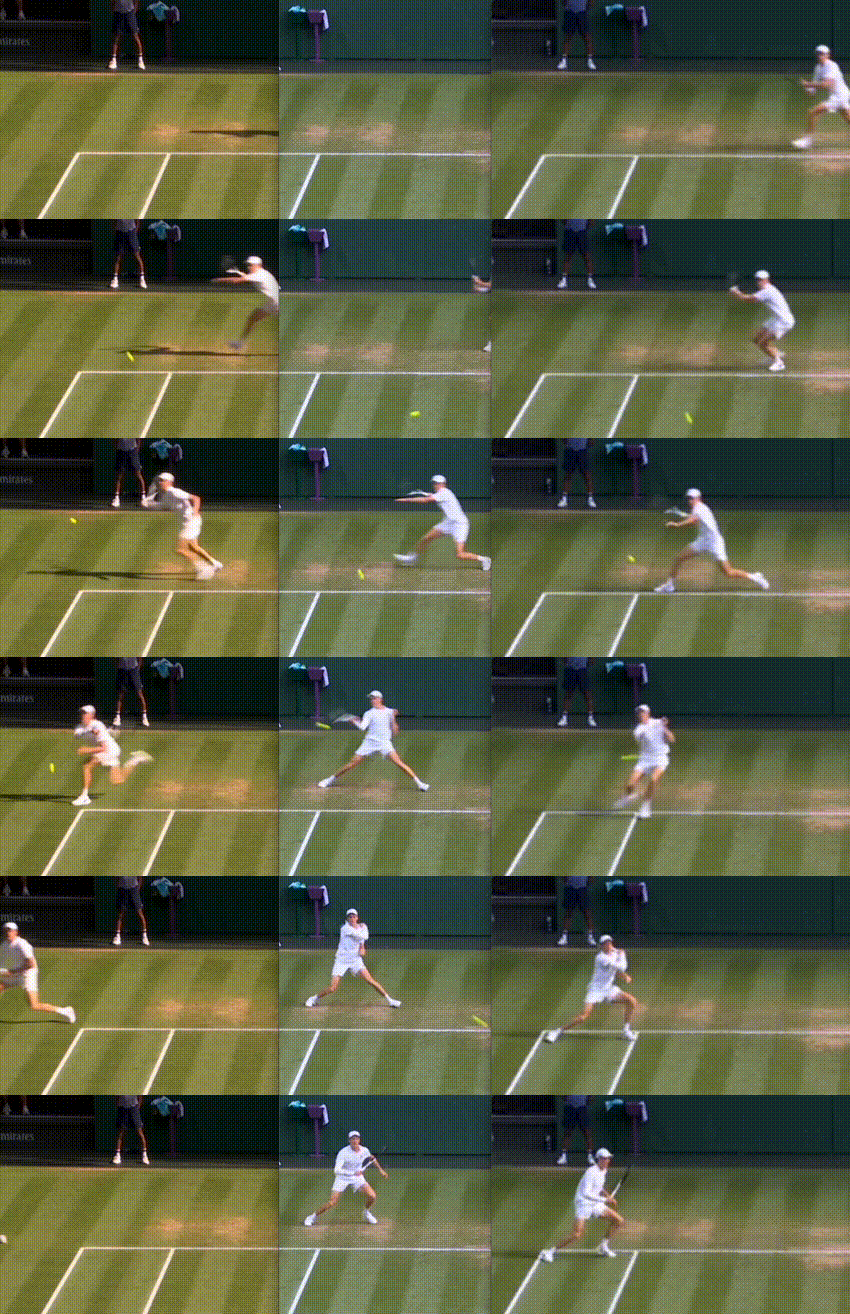
But do note that Sinner footwork on the forehand, in this match and all future endeavours. Maybe I’m biased as it’s a pet theory of mine. Here are the three movements he often uses, depending on the difficulty/width of the incoming ball.
At this point I wondered just how deeply Alcaraz had wedged himself in the brain of Sinner: another set slips away. So much momentum and promise in that first set for the Italian, but the scoreboard read ‘first set Alcaraz’.
Barely enough time had registered for Sinner to feel sorry for himself before he had an opportunity to open his second set account with a break, courtesy of some loose play from Alcaraz, which he might be ruing in the post-mortem, whenever that occurs. He has a habit of letting his level rise and fall like some King tide, dictated less by celestial bodies and more by scoreboard mass; so good in big moments, so careless in inconsequential ones, so much so that they end up having some consequence.
Sinner needed no more invitation to lock in once more. Here again, the backhand down-the-line, this time off the back foot, set up the break points:
There’s only one other guy I can think of who could play with this much ‘strength’ on a back foot two-hander: Rafael Nadal. I don’t think it’s a coincidence that they both had long, sweeping, in-to-out swings that enabled the top hand to get dominant. At this level, tennis is a backswing game. Technique is a lever.
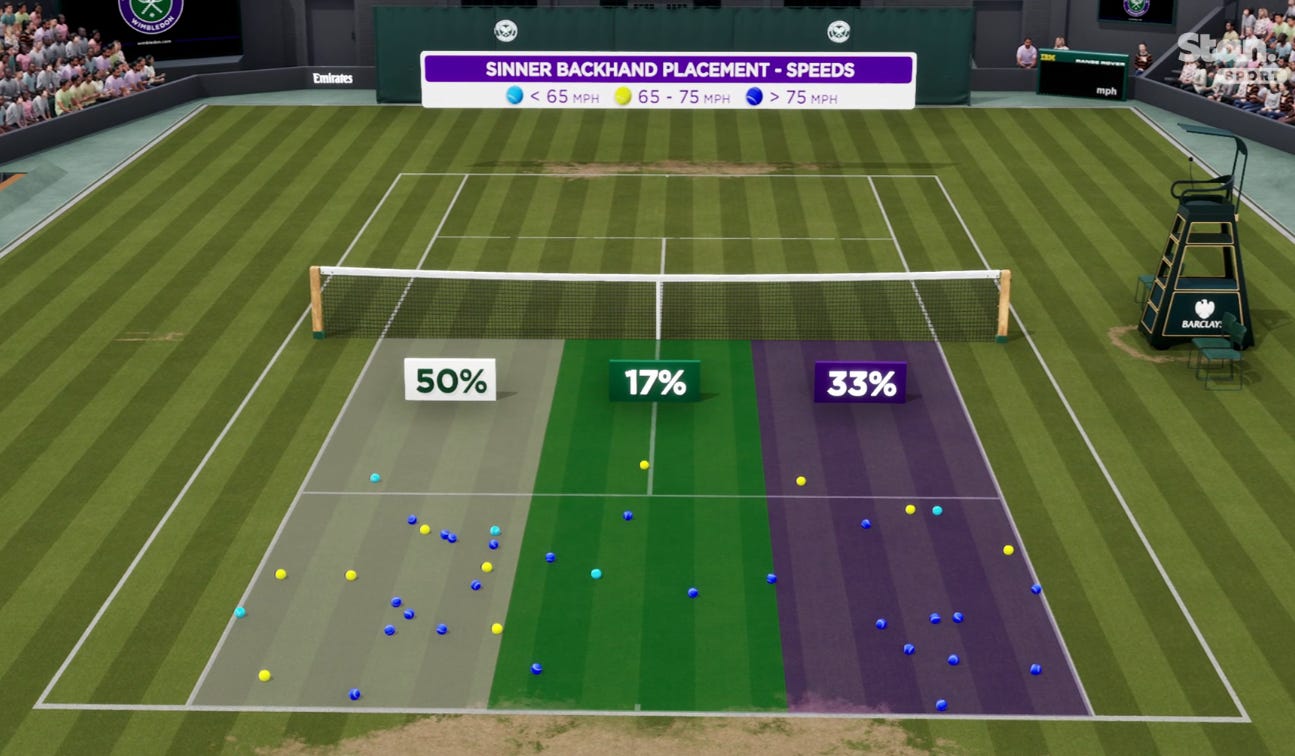
Look how often Sinner was finding some of his biggest backhands when going line:
I want to skip ahead to 5-4 to touch on the Alcaraz slice backhand. I’ve always felt that Alcaraz needs to use his slice into the righty’s double-handed backhand to buy him time in these fast-court/aggressive player affairs. Todd Woodbridge said he used it 28% of the time enroute to the final, but that seemed far less today, which is understandable given Sinner’s ball speed, but I do wonder if he could have thrown it in more than he did. Here Sinner runs around the slice for a forehand, but he still has to dedicate his racquet speed to lifting the ball from such a low contact point, and the whole cadence of the rally shifts enough when Alcaraz hits it this well to enable him to get creative.

A couple of points later and Sinner earned himself two set points off the back of more running forehand brilliance.
“At the beginning of my career I knew that I could potentially play well here because my groundstrokes are quite flat and the ball goes through.”
— Jannik Sinner post-match
There was a pivotal game at 4-3 in the third, Sinner serving. Alcaraz was throwing all the variation he could muster: forehand drop shots, deeper return positions, backhand drop shot and lob combo deals; if he couldn’t work in variation through the East-West cardinals, he tried going North-South, which is just another intangible trademark of his:
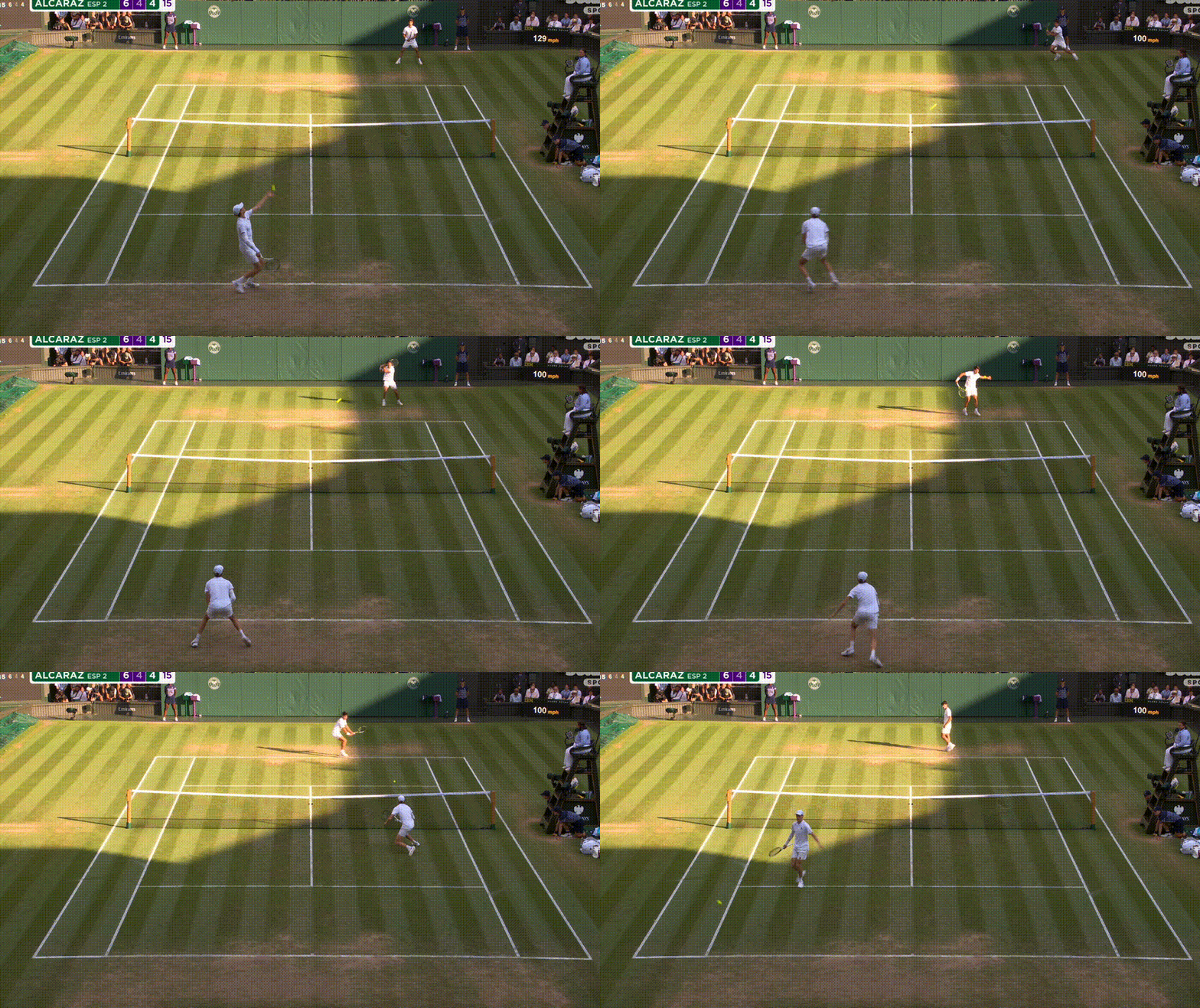
Beyond the rally dynamics, the serve battle was proving pivotal. Through the first two sets Alcaraz had hit 9 aces to Sinner’s 0, but in the third set Alcaraz’s serve got loose, and the Italian’s came alive, firing seven aces, as well as a couple of extremely clutch second serves in key moments that are often the shots that steer the fate of these grass court affairs. I said as much in the preview:
We have to talk about serving. For some it’s boring. It’s unsexy; balance sheet quant chat for New Balance squares. But it’s also the bedrock of a tennis player’s game. It’s hard to serve well and not play well, because plus-one forehands and easy holds and saving break points are so often down-stream of making first-serves.
Two such serves occurred at 30-30 and 40-30 following that drop shot point from Alcaraz, when you felt the Spaniard was making a push to take the third set.
“The margins are very small, and the differences are tiny, and today I felt I got lucky a couple of times, hitting some lines. The things that went his way in Paris went my way this time. I felt in the beginning we both weren’t serving well, but we struggled to return the second serve, and then after I found a good rhythm on the serve.”
— Jannik Sinner
“I played against one of the best returners on tour, so it [Alcaraz’s serve] was a weapon I wished could be better, but today with the nerves and everything it was difficult to serve better”
— Carlos Alcaraz
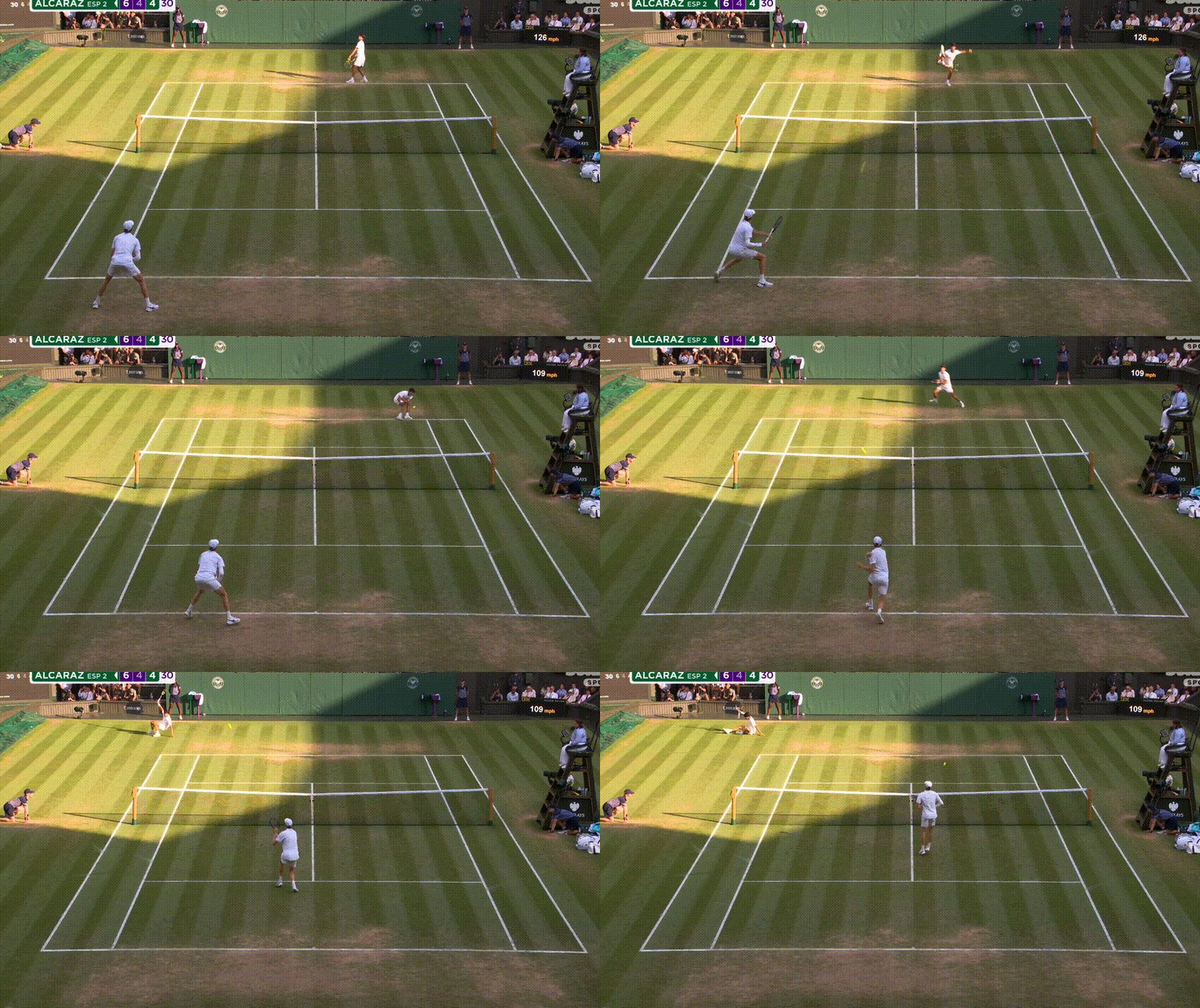
At the start of the match the Alcaraz drop shot had brought Sinner to his knees several times, but that same shot betrayed him later in the match, and ended up being his undoing in the 4-4 game, missing one to go 0-15, before missing multiple first serves and letting Sinner take big cuts on the second delivery, seen here with that front foot forehand that he does better than anyone:
On the changeover Alcaraz had words with his team that I’m told roughly translated to “he [Sinner] is playing mucho better than me from the baseline”.
At 5-4 Sinner also served a blinder of a game to seal the third set.
“There’s a sting in the serve today. The first serve percentage today is the highest it’s ever been against Carlos and because of that he’s getting the ability to dictate most of the points, he’s getting shorter returns which is allowing him to stop Alcaraz from using all the repertoire he has.”
—Todd Woodbridge
Sinner broke early in the fourth at 1-1 to put himself on the home stretch. Like in most games where Sinner broke serve, it was the line backhand that featured prominently, again here, fading backwards from a deep position
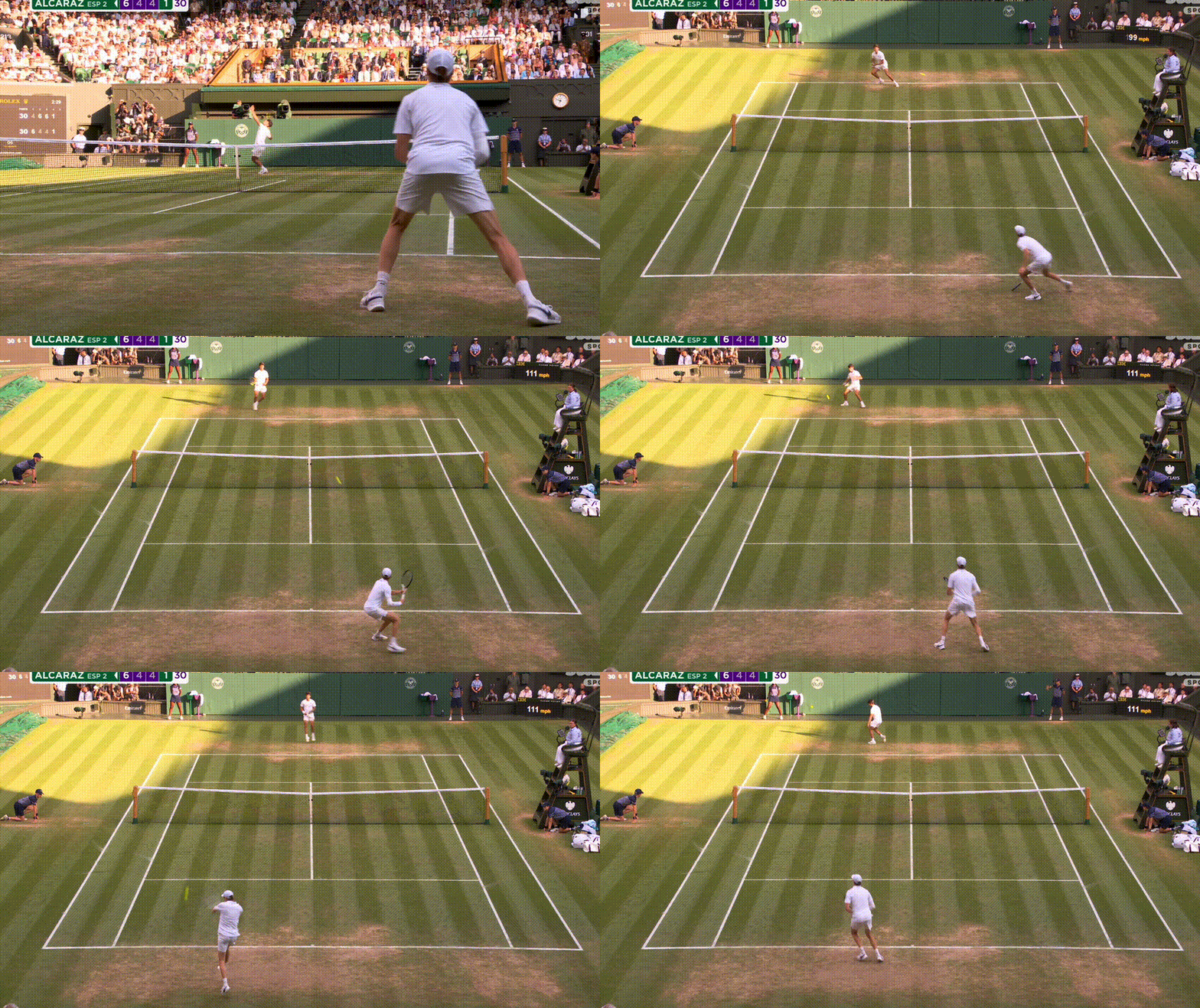
It’s hard to see just how far the racquet lags in his backswing, so here’s a better slow motion version from his 2023 Toronto title recap:
He held easily for 3-1, and it was at this point that I was told that Sinner had been to net 36 times to Alcaraz’s 18. That bucked the trend of other recent analyses I had done, such as their Beijing 2024 classic, where off the second-serve return alone Alcaraz was a wildly successful 8/11 at net. Today there was no crush-and-rush, perhaps due to the skiddier bounce and bigger second-serving from Sinner.
The final pivotal moment arrived with Sinner serving up a break at 4-3. There was a shank forehand following a nervous opening point, and Alcaraz opened up a 15-40 break opportunity with the crowd spirits rising off the back of Champagne in the sun.
The first was saved with a 110mph wide second serve to the forehand of Alcaraz that he missed. We can’t gloss over that because I have to emphasise just how big a point that was in the context of what happened five weeks earlier. The second was another Alcaraz forehand error that we had become accustomed to him making in these moments. He’d dug back the first serve, got to neutral, and then out of nowhere sailed it long. He has the clutch gene, no doubt, but it was hard to express that part of his nature in the face of Sinner’s relentless, central hitting on this type of court.

True to form, Sinner held with an unreturned first serve down the T to the Alcaraz forehand.
Alcaraz held, hitting one of those service line drop volleys that excite the crowd right when they are itching for a comeback and fifth set. ‘Carlos! Carlos!’ was the cry on the changeover. Paris, remember?
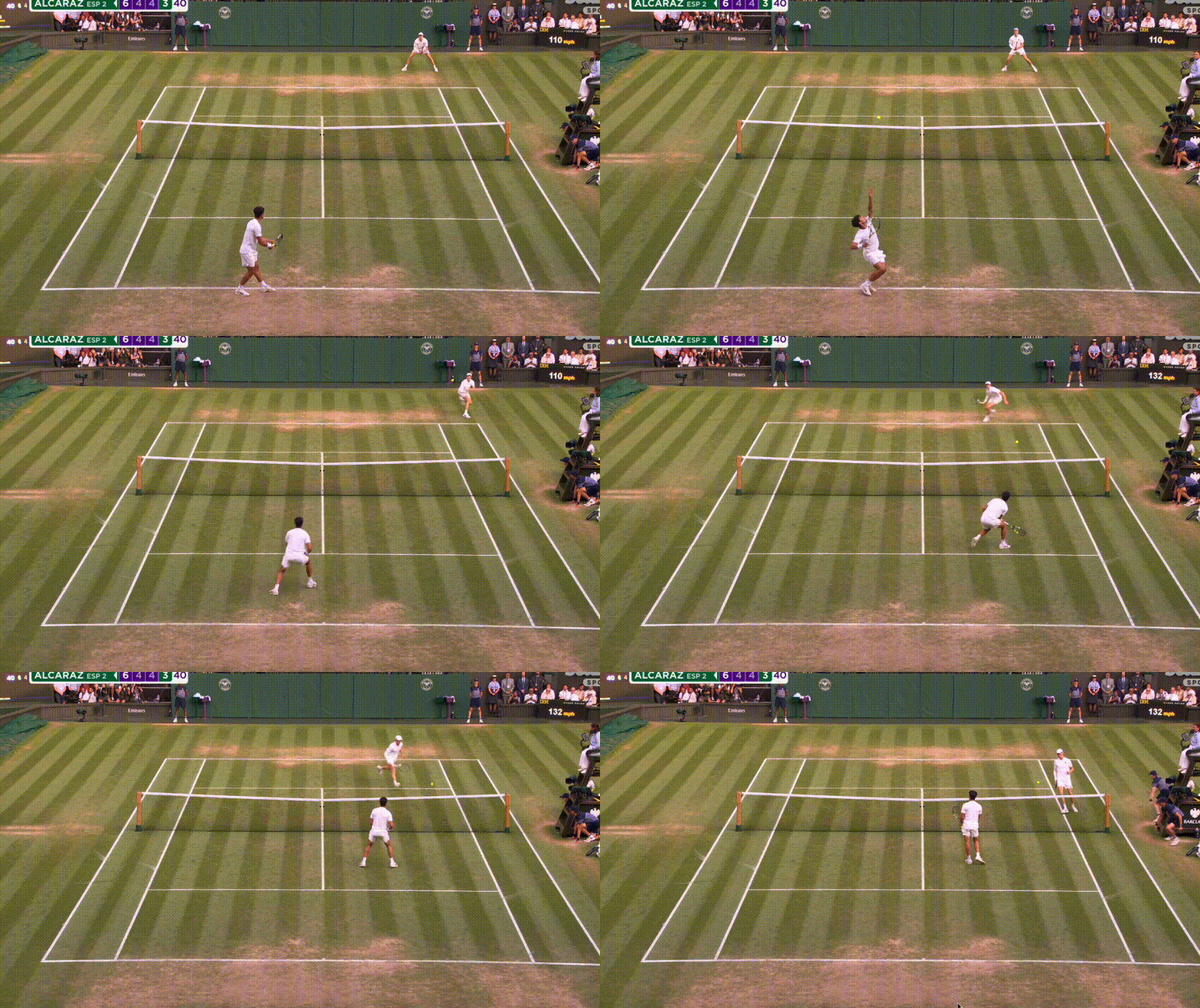
But Sinner had ice in the veins today. He went out to a 40-0 lead and missed a backhand on the tape that had his mother in an unbearable fixation:
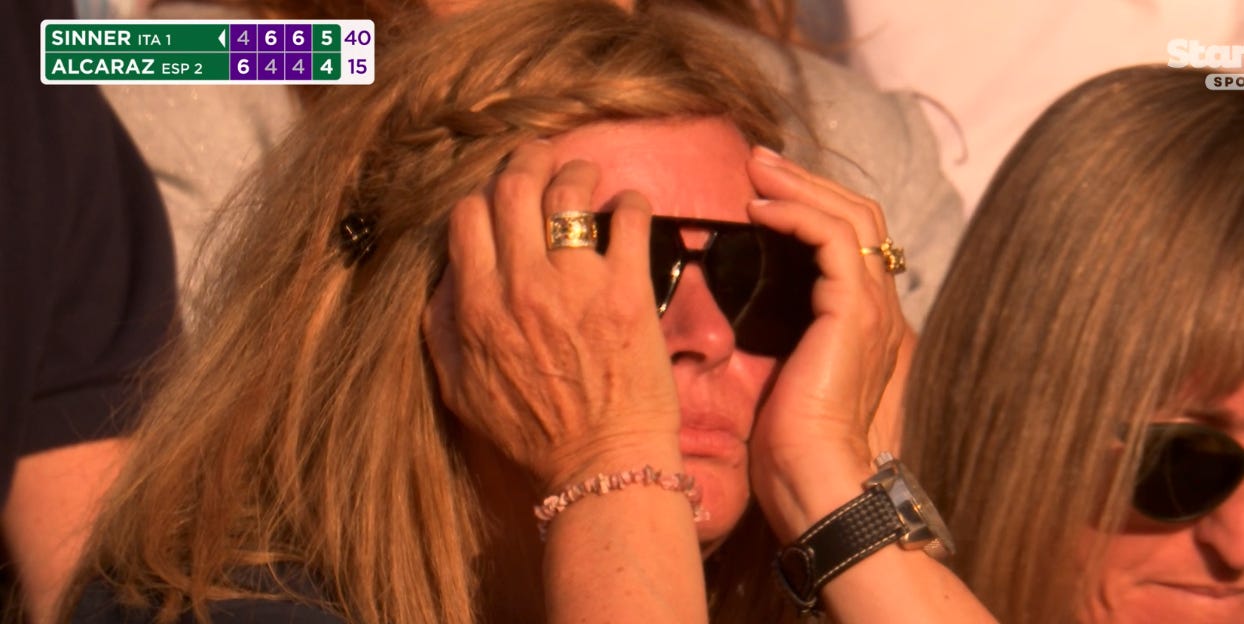
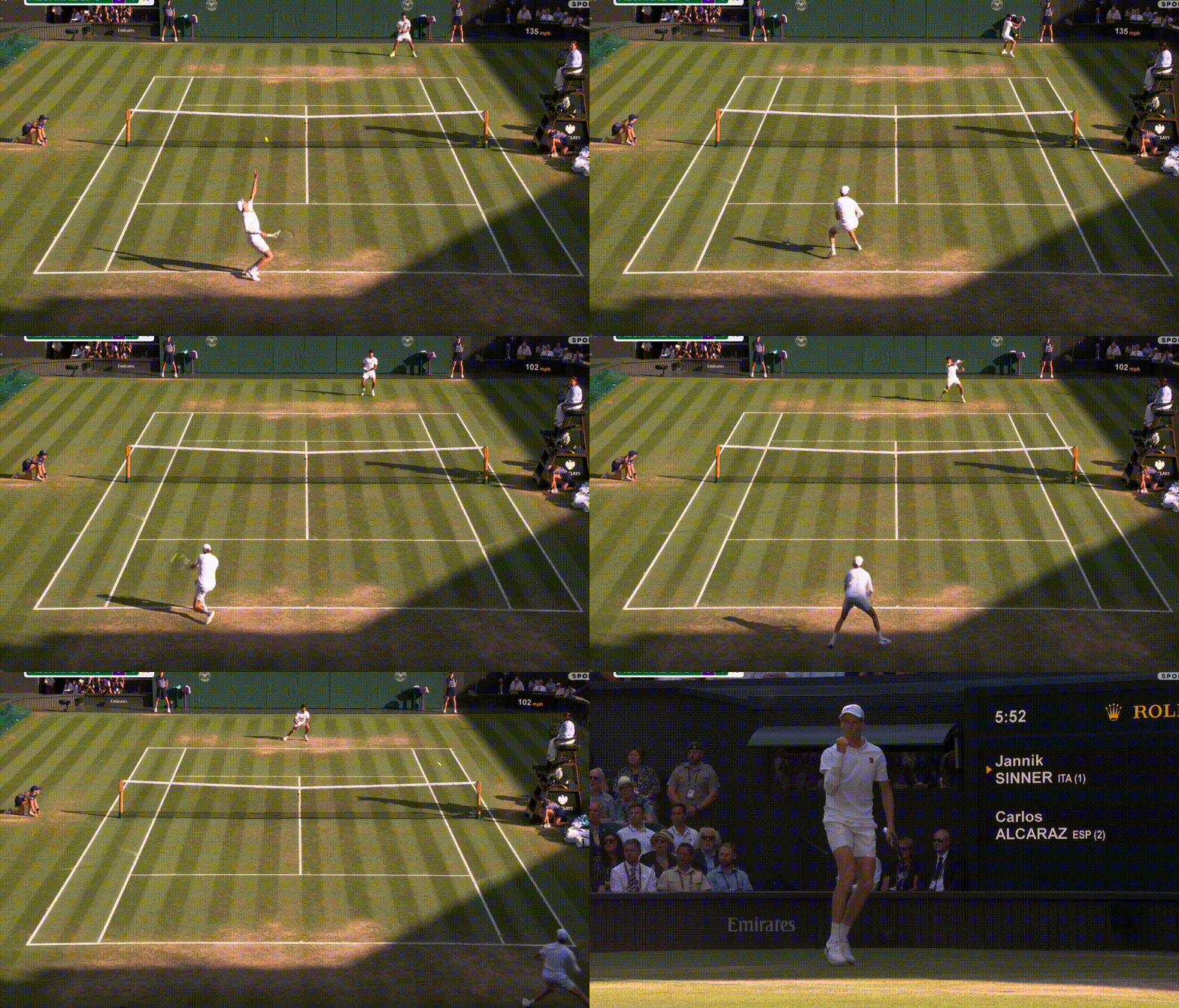
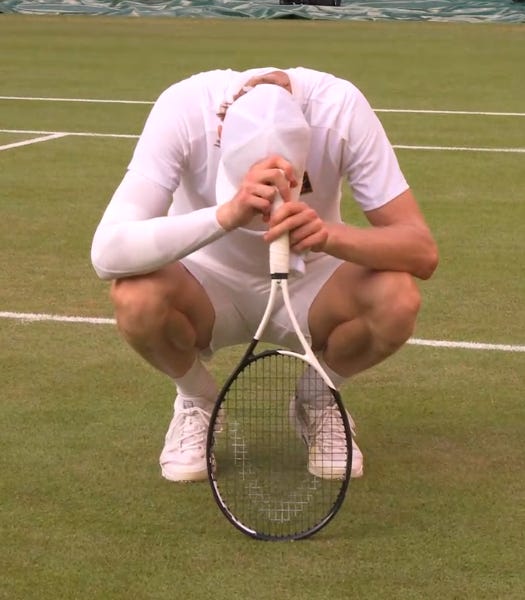
One swing of the racquet later, and her son was a Wimbledon champion, sealed with another unreturned serve.
It was a celebration of relief; prospect theory on full display. Mental demons exorcised at the first opportunity.
In the wake of this result, I think we have to consider that this match up is less surface/movement dependent, and more court speed/bounce dependent. Gill Gross asked the question on his recap, and given Sinner is now 2-0 against Alcaraz at Wimbledon, and Alcaraz has won numerous slow hard court affairs, I think it has merit. As I said in the preview, for all of Wimbledon’s grass oddities, in the end, it’s still a fast court with the same dimensions as any other court. We’ll keep an eye on that.
Alcaraz was gracious in defeat, as Sinner was last month. The sportsmanship is 10/10 between these two, and it’s the icing on top of what is becoming a generational rivalry that tennis is lucky to have.
I’ll be back on the North American hardcourt swing, and hopefully with something before then.
See you in the comments. HC.