
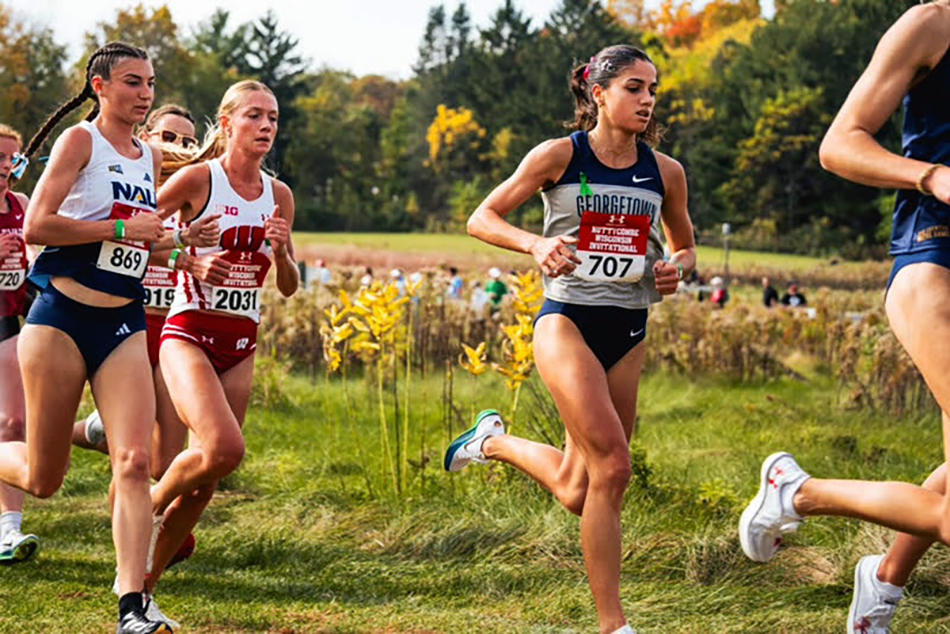
A post graduate student athlete at Georgetown University, Almi Nerurkar writes about her experiences of college life in the US and how drastically it contrasts to the approach taken in Britain.
In the United States of America, sport functions not just as entertainment but as a powerful storytelling arena. From the Super Bowl’s electric arena and its million-dollar adverts to the frenzy of media attention around the half-time show, sport embodies a distinctly American narrative. It sells a dream deeply tied to national identity – one built on hard work, competition, exceptionalism and consumerism. This broader narrative trickles into the college system. Often seen as a bridge to the professional world, collegiate sport shows how education meets enterprise, competition meets community and performance defines identity.
After finishing my undergraduate degree in the UK, I decided I wanted to experience collegiate sport in the US. I had never been there before, but some of my friends from the UK had gone out to the US on full sports scholarships. They would tell me about the atmosphere at the football games in huge stadia; copious amounts of food in the student canteens; the extent of the high-performance facilities; the support staff; the luxurious hotel stays around competitions. How could I say no?
Making a choice
From around the age of 16, I had been contacted by various US college coaches, first with offers for undergraduate degree options, and later with graduate programmes. It was exciting but there are just over 1200 schools in the NCAA, spread across all 50 states. Where should I even begin looking?
Some people make their choice depending on the academic programme, others on the coach, the facilities or the team’s legacy. For some, the decision is based on family ties and prestige – factors that, to my surprise, seemed to matter more than I’d imagined.
The little I had heard about sport at American colleges painted a worrying picture: many coaches saw their athletes more as numbers than as individuals, and treated them accordingly. I had heard stories of girls being run into the ground, health issues completely ignored for short-term success. This was something I was determined to avoid. Choosing an athletic programme with a supportive coach was my priority.
As I was coming from the UK, I decided to narrow my options to the east coast which would make travel and time differences easier. I contacted a family friend in Boston who was knowledgeable about the different programmes (and coaches) on that side of the country. With his help, I selected Georgetown in Washington DC, Duke in North Carolina and Boston College. I sent details of my running results to the coaches, asking whether they would consider recruiting me with a full scholarship. Again, this process is different for everyone. Some athletes go through agencies, while others are scouted directly.
Then came the introductory recruiting calls, the submission of paperwork, the campus visits, academic verification and National Collegiate Athletic Association (NCAA) eligibility checks…the length of the procedure alone spoke of the professional and often high-pressure nature of joining a US collegiate sports team.
Navigating a different world
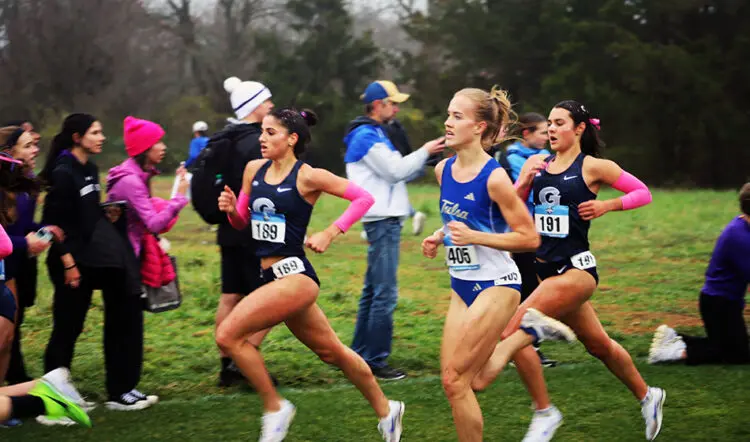
The professional environment of collegiate sport in the US stands in stark contrast to university sport in the UK, which is considered by many as a leisure past-time, a welcome distraction from study and a place to meet other students or to try something new. In the US, sport is deeply embedded within the university experience. It promotes the institution’s reputation, attracts prospective students, engages alumni and can generate significant funding.
Collegiate athletics is governed by the NCAA, which regulates everything from athlete eligibility and revenue opportunities to training schedules and academic commitments. While the system is structured and professional, offering support and clear pathways for student-athletes, it also brings a relentless pressure to perform both academically and athletically.
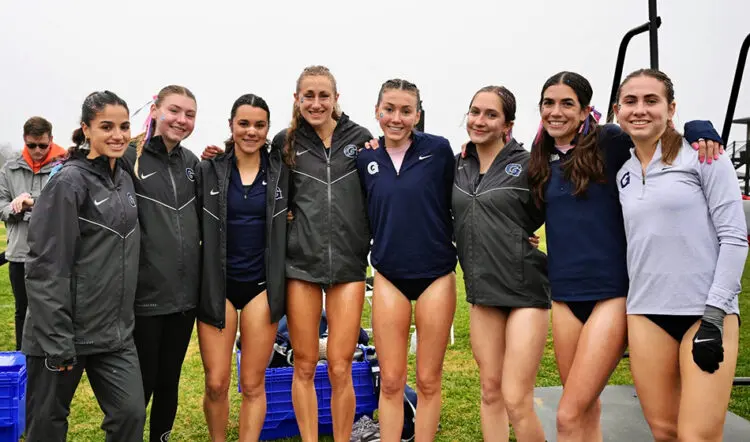
I started at Georgetown in August of 2024 and, on the track and field team, we are lucky to be led by a thoughtful and compassionate coach. As the mentor of one of the top distance running teams in the country, he still has to navigate the demands of competitive collegiate sport, yet there is also a sense of a genuine community that encourages teamwork and promotes life skills like leadership, confidence and resilience. Through a shared passion for running, we are not only building fitness, but also learning discipline and self worth.
All of that apart, there is still a perception that sport brings with it prestige. Merely calling yourself a “student-athlete” gives you a feeling of superiority; in fact the common nickname for non-athletes among student-athletes is NARP (non-athletic regular person). “Media day”, a fixture early in the season, where hours are dedicated to a photoshoot in our team uniform, is a big date in the calendar.
For many young American athletes, college sport is seen as the pinnacle of their careers. Sport acts as a gateway to attending their dream university and then academic success becomes just as important as running success. For many of my British friends attending American colleges, however, competing in the NCAA is seen as a stepping stone to a professional career in athletics. It is a way of being part of a professional set-up and also serves as a developmental phase within their sporting careers.
The age at which you join the team affects your relationship towards it, too. As an undergraduate, it’s likely that you will start out with a vision of student life – spending your mornings on the sports field, your weekends at competitions and parties, and your evenings sharing meals at the dining hall. You start and end each day together, sharing the same feelings of exhaustion and the same sense of purpose. Your team-mates are your community.
Graduate students come in with a different vision – their time on the team is limited and their sense of self is more developed. When it works, this can bring a dynamic energy to the team, with new members bringing broader perspectives and a sense of balance to a community that can easily become all-consuming. With each new incoming class, the team at Georgetown naturally evolves, making change inevitable and limiting the creation of rigid hierarchies.
Autonomy v accountability
Arriving with no prior experience of American collegiate sport, I initially struggled to understand the expectations, social codes and dynamics of the team. In many ways, I felt like a freshman – getting lost in unfamiliar corridors, juggling classes, training and travel, meeting new faces every day. In reality, I was the oldest member of the team. Having travelled a lot during my teenage years, I joined the team with plenty of experiences of my own.
To add to this, the running communities I had previously been part of were constructed differently to the one I was joining. The group I was part of during my undergraduate degree in Leeds, for example, was just one of several communities I felt part of; sport at university was less all-consuming and so were my relationships within it. We met three times a week as a big group and, outside of that, training and socials were self directed. I got used to a sense of autonomy.
Here, the more commercial and professional aspect to sport means that there is funding for a more structured approach. We have a better support system, and therefore more people to whom we are accountable. Motivation is less self-directed and you learn more from your team-mates than from your own mistakes.
Unlike in the UK, where athletes individually decide on what races work best for them, everyone here follows a similar schedule – around five cross country races in the autumn, five indoor races in winter and five to six outdoor races in the spring. However, depending on the size of the team and the amount of funding they have, not everyone on the team is given the opportunity to race.
As the season goes on, the rosters become more selective, with competitions only allowing seven athletes to race. In our team of around 25 girls at Georgetown, team priorities go beyond performance and value is also placed on other roles, like organising social events, providing race-day support, and helping the coach communicate training plans. Involvement goes beyond performance, to embrace lifestyle and identity.
The expectation is always to make connections with others, with a high value placed on bonding with other members of your team. This was a new perspective for me, and in a lot of ways I admire it. It reflects an attitude of being friendly and involved, of keeping high standards and making everything, including human connection, an organised collaboration. For a society that prides itself on the pursuit of individual freedom, there is a lot of emphasis placed on teamwork.

Identity and community
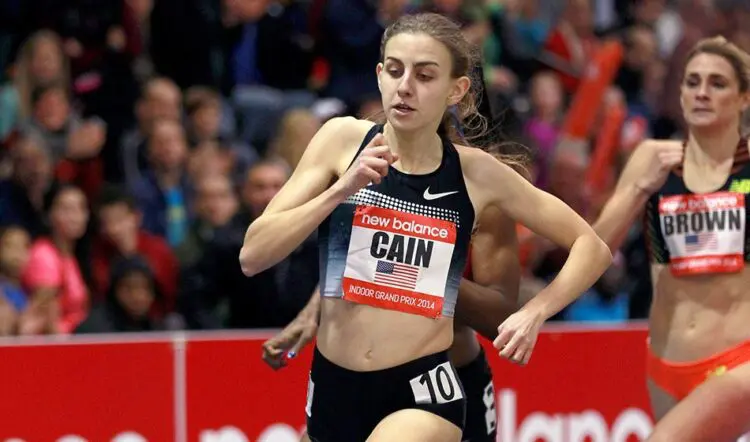
Universities act as anchors for identity and community. From the uniforms people wear, the lifelong alumni ties and the devotion for college sports, the walls are pulsing with pride and passion. But sport is not immune to the pressures felt more widely across society as a whole: where ambition and the relentless pursuit of success can come up against consumerism and a “win-at-all-costs” mentality. In such circumstances we can see the emergence of stories like that of Mary Cain, once one of America’s most promising young runners, who spoke out about the damaging effects of a completely results-driven system that ultimately led to her leaving the sport.
During my time at Georgetown, I have felt fortunate to be participating in a sport which is not trapped in a culture driven by financial targets. I have valued the personal approach taken by our coach to take account of individual needs while still trying to foster a strong sense of team. I have also reflected on how my past experiences have made me more aware of how easily athletes can succumb to the pressures of performance and profit.
I feel grateful for all that sport has already given me: a sense of structure to my routine and a sense of purpose in the way I participate. It has also given me intense moments of connection both with the people with whom I train and with my environment. Within the US collegiate system, I’ve come to appreciate a new kind of community that surrounds sport, which is uniquely powerful as we pursue our sport together. We compete alongside and against each other, celebrating our shared and personal victories. I feel excited, not stressed; the weight of pressure feels lighter when it’s shared.