
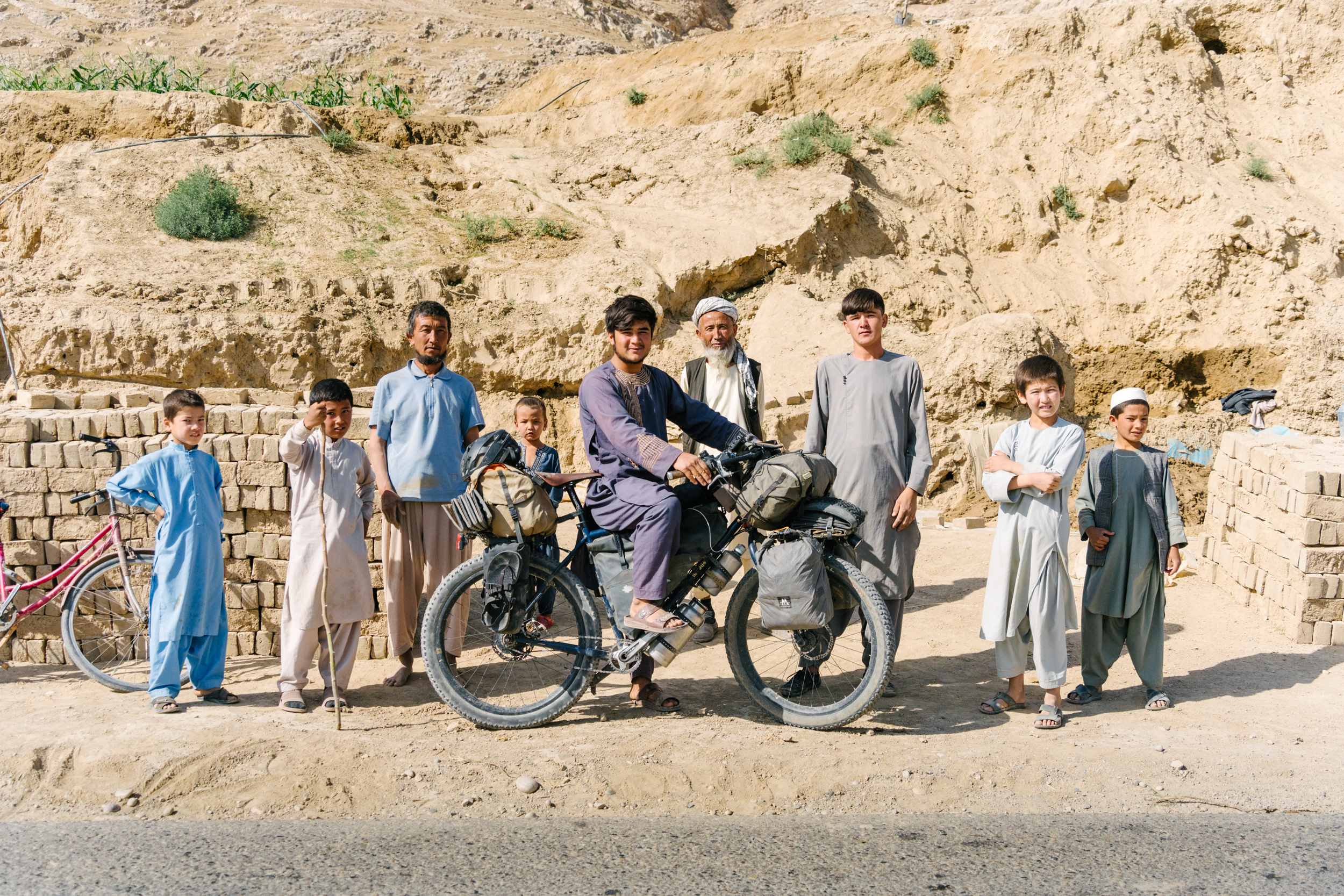
Continuing his trip through Central Asia, Ryan Wilson ventures south into the Hindu Kush mountains of Afghanistan, where he’d attempt to ride through some of the most spectacular terrain in the world and navigate the complexities of life under the Taliban.
I arrived in the border city of Termez, Uzbekistan, after crossing from Tajikistan in the morning. I checked into a hotel that is a stone’s throw from the Afghanistan consulate and walked over with my documents to apply for my visa. A slightly faded red, green, and black Afghan national flag hung from a pole on the outside of the building. As a man in a long, traditional Afghan outfit known as a “tunban” briefly popped his head out from the side door, I caught a momentary glimpse inside the courtyard and spotted a large, white Taliban flag hanging inside.
It’s hard not to have a million thoughts and doubts running through your head when you present your American passport to a Taliban official for the first time. Even the notion that they might allow me in the country is kind of crazy. Once I got inside the building, the room was entirely full of truckers, mostly from Uzbekistan, but some from as far as Türkiye, all trying to ship goods across the border. Then there was me, looking very out of place.
When I was called up to the counter, the official spoke in perfect English, asking what my purpose was. He had me write down my intended route on a blank sheet of paper, which was to be faxed over to the Taliban office in Kabul for approval. They had me print out a photo of my bicycle, and the man gave me some tips on things I should write that would increase my chances of success.
A few hours later, I was back at the consulate with all of my new Uzbek trucker friends, awaiting the news. Most of them got their passports back as soon as the afternoon pickup time came, but mine was delayed. For over an hour, I waited until finally a man opened the door and handed mine back to me. I opened it up to find a fresh 30-day Afghanistan visa taking up one of the pages. It was starting to feel real.
Doubts and Indecision
That night, I went to a nearby restaurant and managed to give myself the worst food poisoning I’ve had since a very rough stint in Peru in 2015. I woke up unable to summon the energy to move. I wasn’t about to ride into Afghanistan in this condition, so I opted to wait a handful of days before getting back on the bike and crossing the border.
During these days, I had nothing but time to think and to second-guess all of this Afghanistan stuff. Every doubt swirled through my mind, and this peaked on the day that Donald Trump randomly proclaimed that he was going to take back Bagram airbase outside of Kabul— an insane notion to anyone with a minimal knowledge of the situation, but suddenly, the trip felt more risky. What if he did something crazy and lashed out with a random strike somewhere? I could only imagine the scenarios that might follow.
At that point, I was healthy enough to ride again, but had decided I wasn’t going to cross into Afghanistan at all. I have always been curious about visiting the country, since my first time riding along its border in the Wakhan valley, but I’m not the type that’s out there looking for high adrenaline, high-risk scenarios. So, without a backup plan, I waited in Termez for a couple more days to try to come up with where I was going to go next.
Of course, as easily as I talked myself out of it, I talked myself right back in over those next couple of days. Maybe I summoned up some courage, or maybe I just suppressed those doubts deep enough to overcome them. I was a 20-minute bike ride from the Afghan border, and I already had the visa in my passport, but the thing that tipped the scales for me was thinking that I may never have this opportunity again. You never know when these borders might close, or another conflict could grip these lands. Worst case scenario, I’d enter Afghanistan, and turn right back around if I wasn’t feeling it.
Land of Mysteries
The contrast at the border could not be more stark. Uzbekistan has a big, modern border complex, but as soon as I crossed the “Friendship” Bridge, it was like time-traveling back decades. I rode up to the dusty immigration compound, and a Taliban soldier with a worn-down AK-47 slung over his shoulder greeted me with a big smile, guiding me through the dark halls of the old building with fluorescent lights flickering. I got stamped in and directed over to the X-ray machine. Inside was a big line of Afghan locals. All of the men were wearing their traditional, loose-fitting and “modest” tunbans, and all of the women were wearing either blue burqas that covered their eyes with a veil or some that were in all black, with their eyes visible through an open slit.
Every person in the room turned to stare at me. I dropped my bags on the X-Ray conveyor belt as the man running the machine asked: “Which country?”. I gulped and ripped the band-aid off, replying “America,” with a little nervous laugh attached to the end. An audible reaction came from about half of the people in the room. Some whispered to each other while the man running the X-Ray looked at the Taliban officer with a concerned face. The Taliban officer broke the tension with “You are welcome in Afghanistan!”, and he approached me to grasp my hand with both of his.
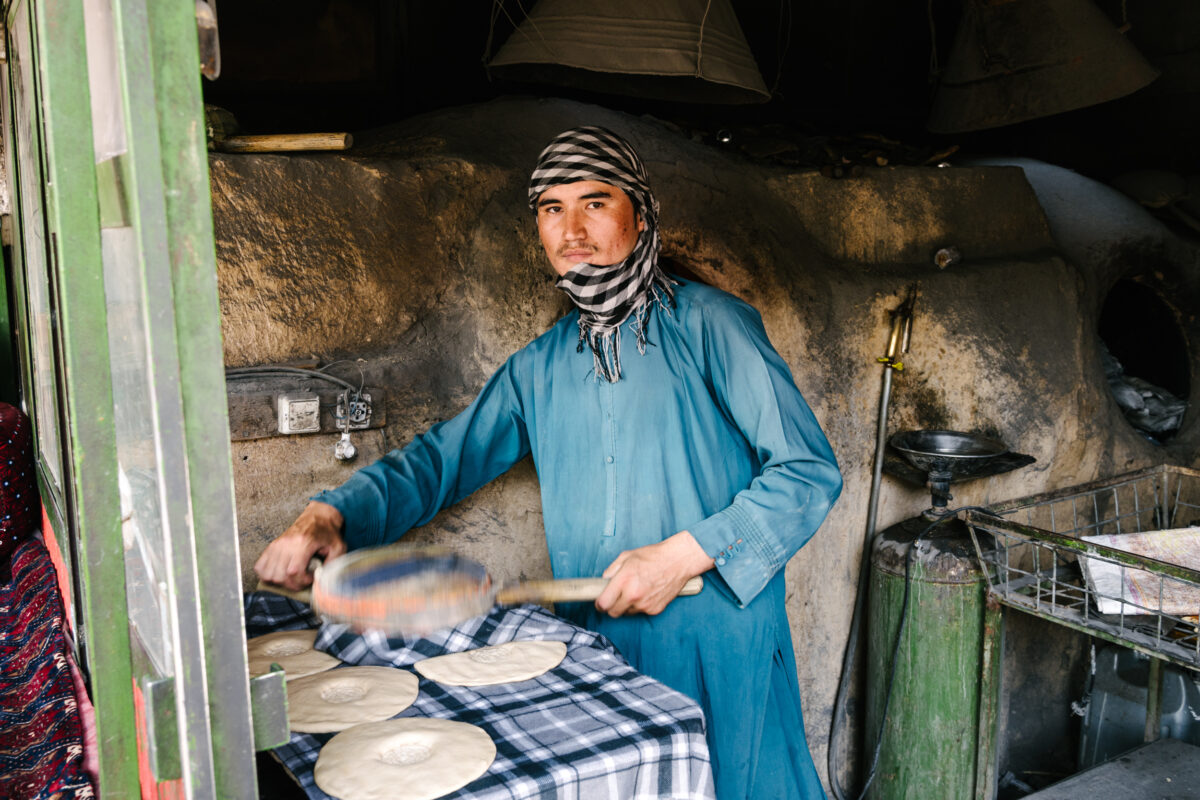
With that, I was loose on the streets of my first Afghan town, Hairatan. The attention did not stay at the border, however. As I rode through the bustling village center, every person in sight stopped to stare in confusion or give a big wave, yell “Hello!”, or “Asalamu Alaikum!” with a huge smile on their faces. I stopped for a brief moment to buy some Afghan tandyr bread for the road, and within moments, a crowd had gathered simply to observe me. There were a few women around shopping for groceries, but rather than swarm around as the men and boys did, they kept a distance, but still looked on curiously in glances.
All of the attention became a bit too much too soon, and I had about 100km to crank out by the end of the day, so I decided to jump on the bike before things got out of hand and say goodbye to the crowd that had begun to form.
My First Taliban Brunch
Taliban checkpoints are a constant presence all across Afghanistan, and there are numerous on the desolate, sand-dune-flanked road from the border to Mazar-i-Sharif. Sometimes they are large compounds with broken-down US military Humvees out front and armed guards blocking the road, and sometimes they’re a random little shack with a small white flag hanging outside and a guy sitting on a little bench.
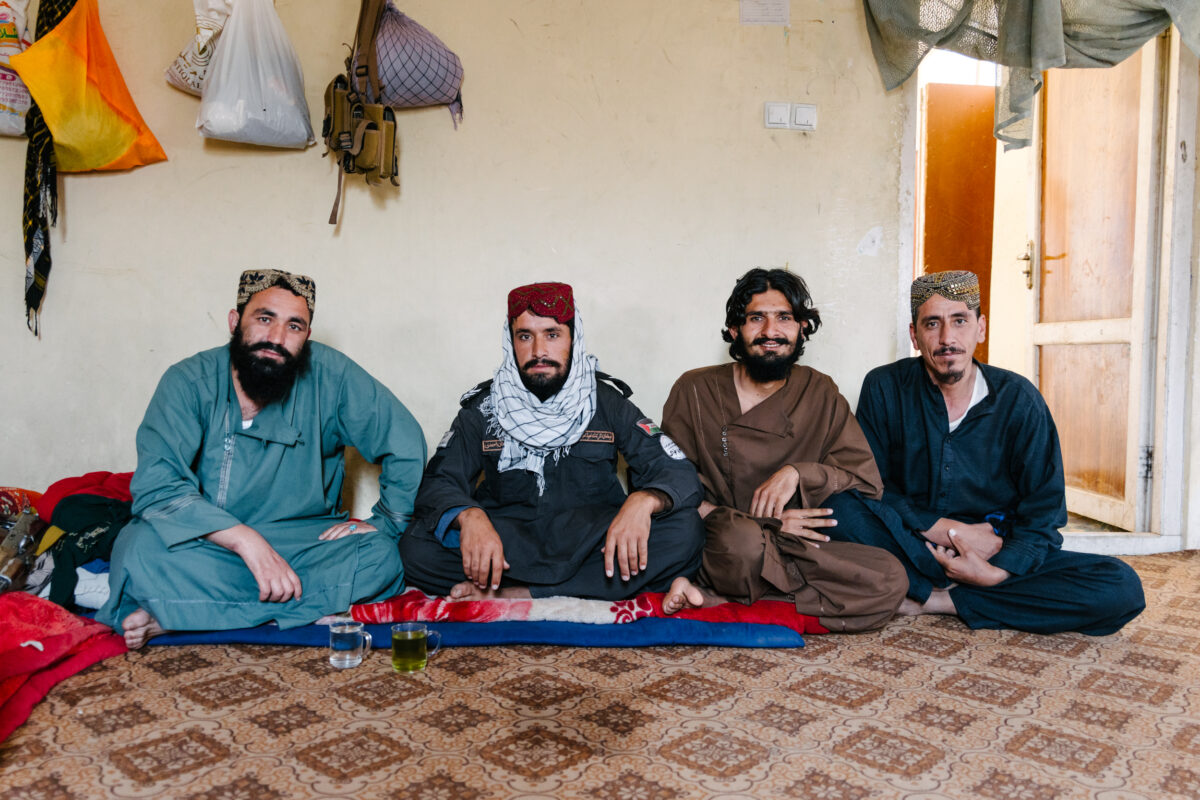
They’ll almost always come out to check your passport, but with a rare bicycle traveler like myself, they would often invite me in for tea. It was hard to tell whether this was optional or required, as it usually blurred the lines of casual questioning and interrogation. Either way, I was trying to present myself as friendly and harmless as possible, given the origin of the passport I was handing them, so I accepted just about any time it was offered. This is a reality of traveling across Afghanistan. They’re in charge, so you play by their rules, and it always helps to be as friendly as possible with them, no matter what you think of some of their domestic policies.
On my first invite, about 40km into the country, I sat in a room with AK47’s strewn across the floor and hanging from the walls, one of which had a big hole blown out of it. Six Talibs sat down around me, with one bringing out a large tray with big plates of chickpea curry and bread. Most of the Taliban here were young, and many never fought against the American occupation, but soon a slightly older commander came in and sat down, shook my hand, though he appeared less enthusiastic about my presence. I could tell by his grip that something was not quite right with his hand. He pointed down to a bullet wound through the top of his knuckles that went out the underside of his wrist, before pointing at my chest as if to say, “it was one of you that shot me”, with a stern face, before breaking out in laughter and shrugging.
I ended up there for over an hour before telling them I’d have to hit the road to make it to the city before it got dark. Riding into the night on my first day in Afghanistan didn’t seem like a great idea, nor did I really want to venture out looking for a wild campsite in this border desert area, which is potentially scattered with landmines.
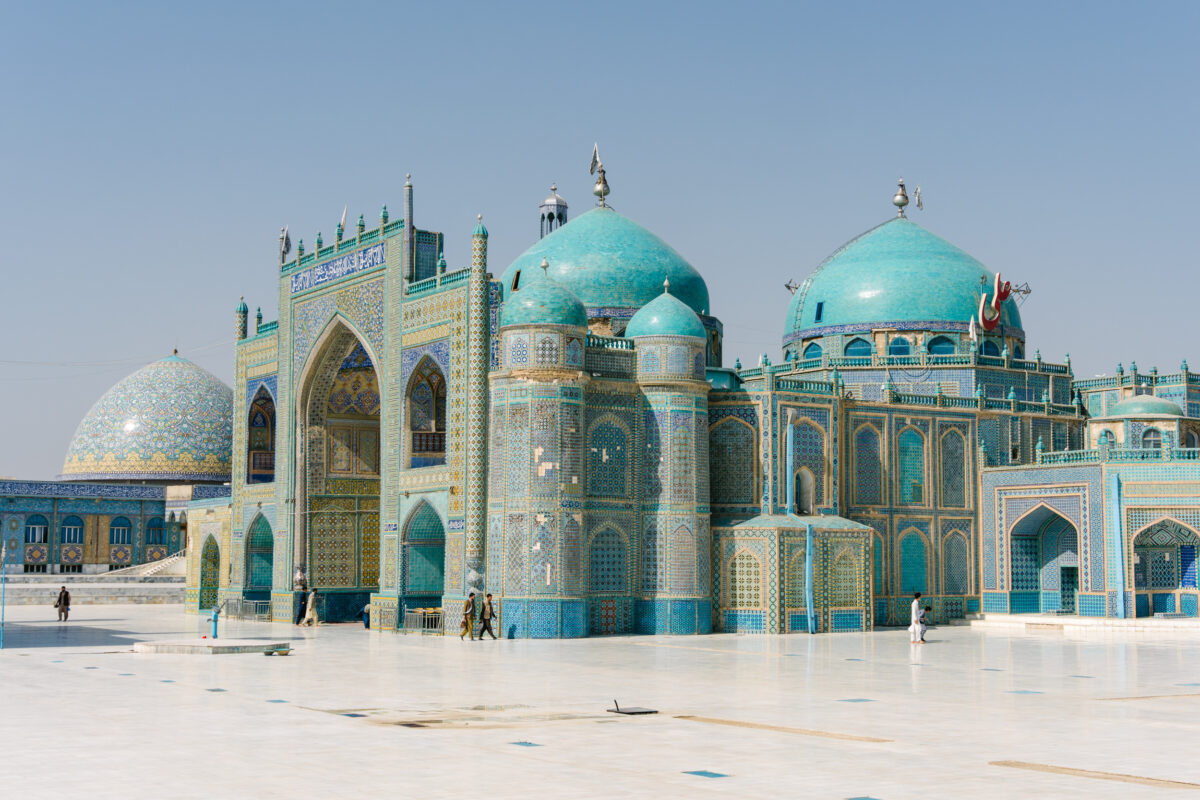
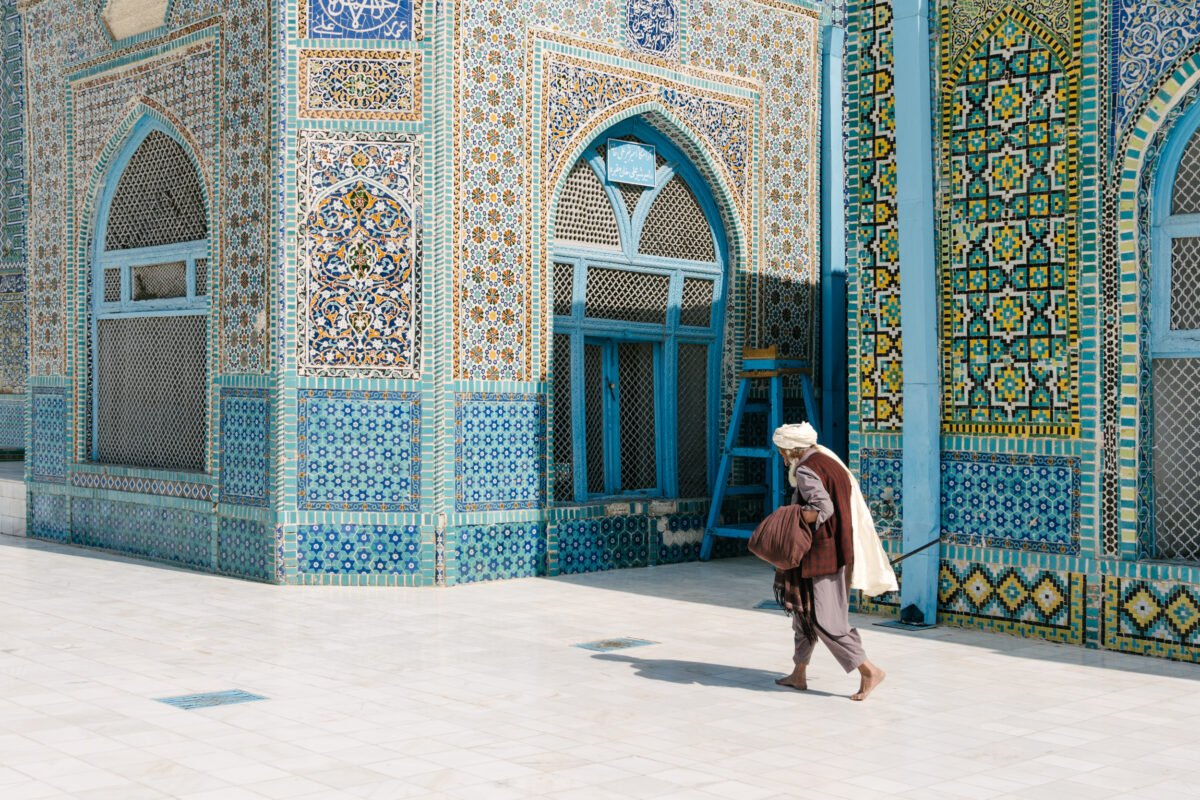
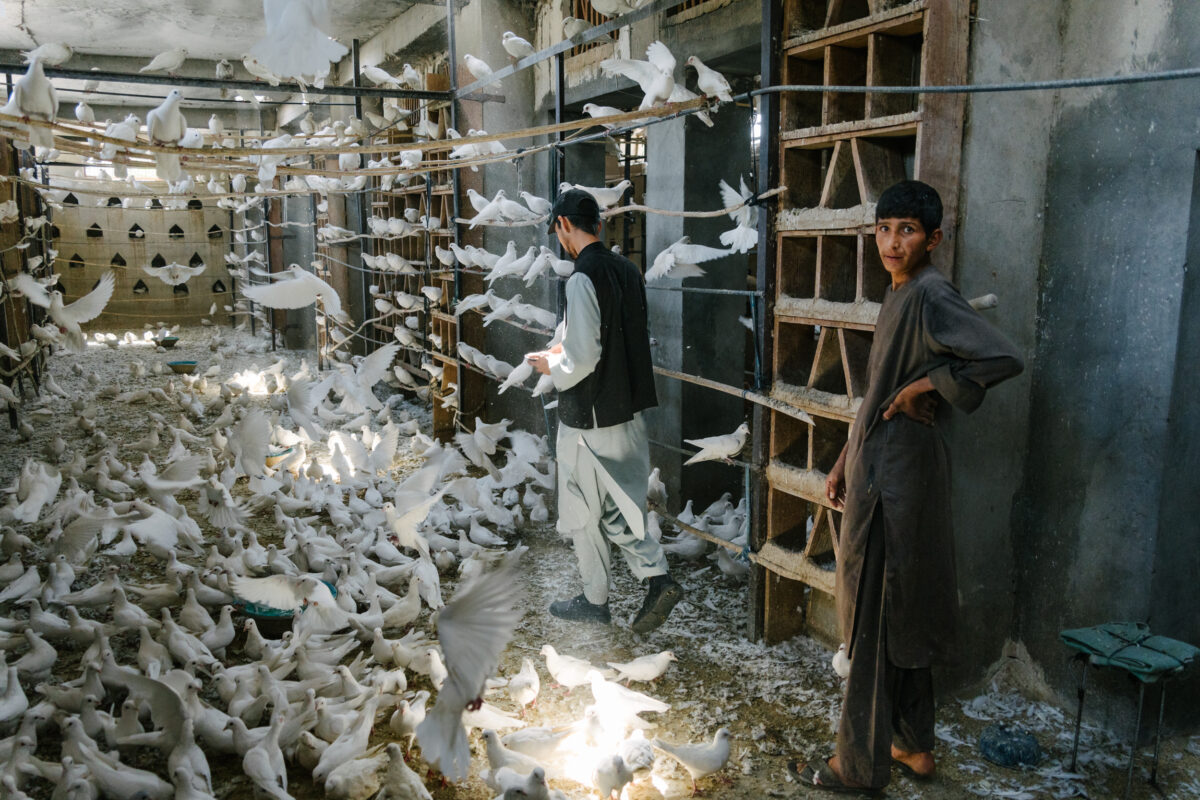
Mazar-i-Shariff
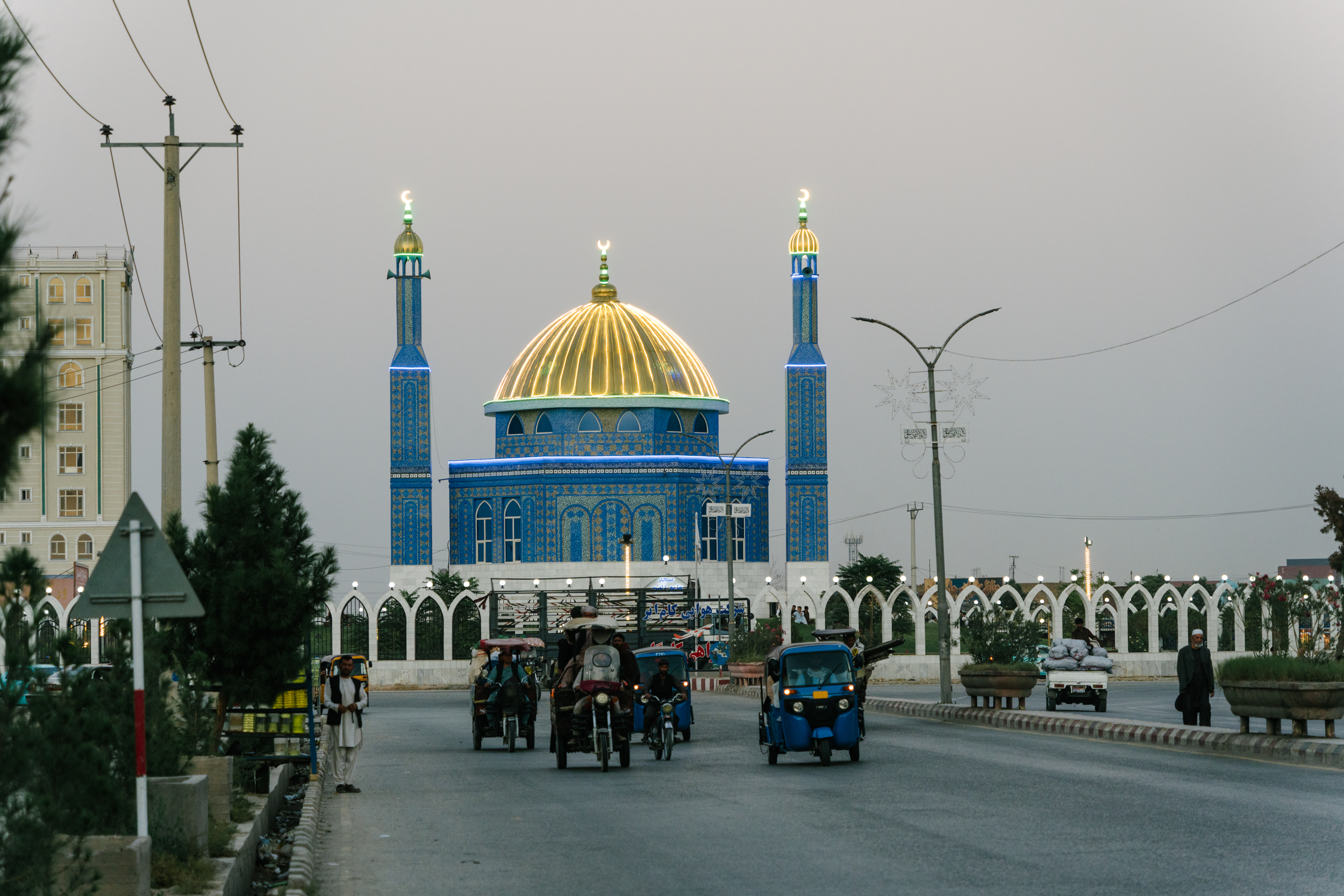
I arrived in Mazar-i-Sharif at dusk, with chaos in the streets. Cars, motorbikes, and tuk tuks were going in every direction all at once, squeezing between street vendors. I rode next to a white-bearded man cycling into the center of town for a few kilometers, who was quite amused by my presence. We didn’t say many words to each other, but when we got to a big intersection, and we were set to go in opposite directions, he motioned as if to invite me to his home. It was the third invite I’d received in the last hour on the road, and it would be a theme of my time in Afghanistan, though I had to decline because I’d already agreed to meet someone else for dinner in a restaurant in the city center, whom I’d met shortly after crossing the border.
Walking through the streets of Mazar the next morning was a sensory overload. I’ve had the fortune of being able to travel all over the world, but I’ve never been in a place quite like this. A densely packed city of 700k people, and every eye was on me. People were shouting toward me from every little shop and sidewalk stand.
Twenty years of American occupation have resulted in far more English speakers than in places like Uzbekistan and Tajikistan, and everyone wants to chat about life in Afghanistan, show you a local site, offer some food, or share a piece of Afghan culture. The hospitality I received in just a couple of days in the city was already beyond anything I could imagine.
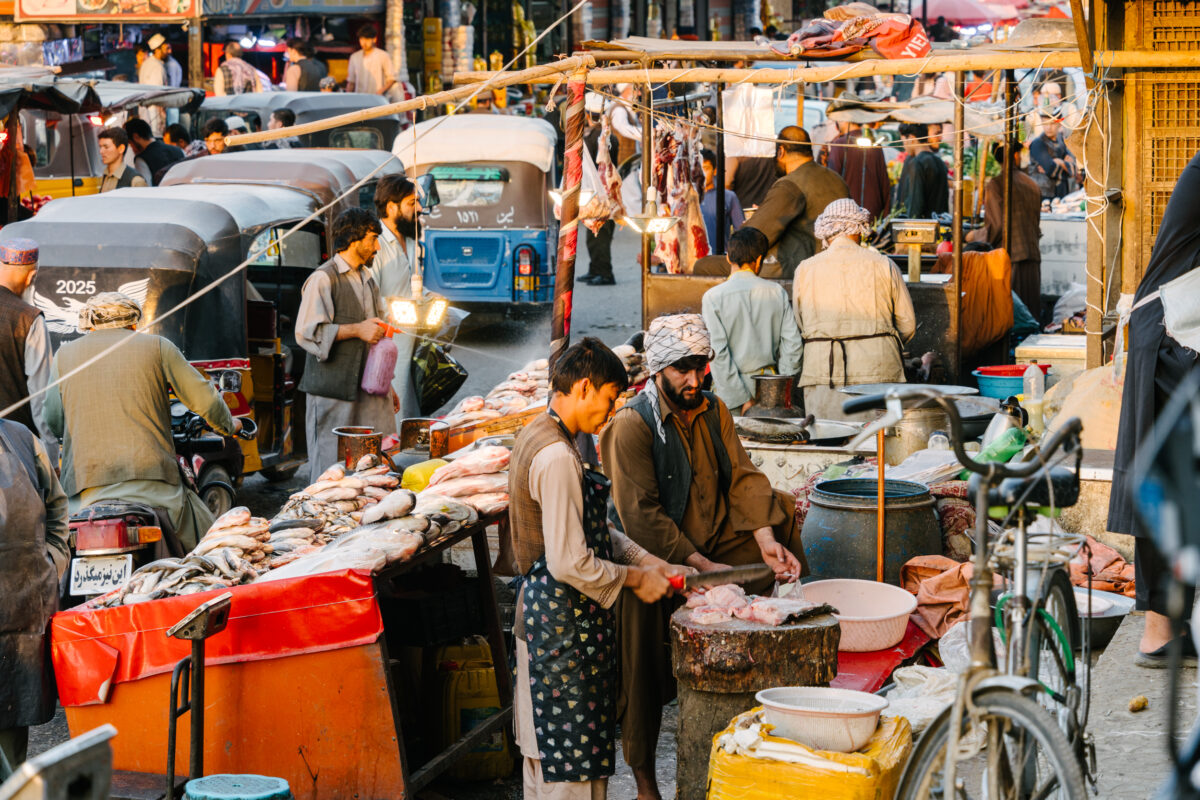
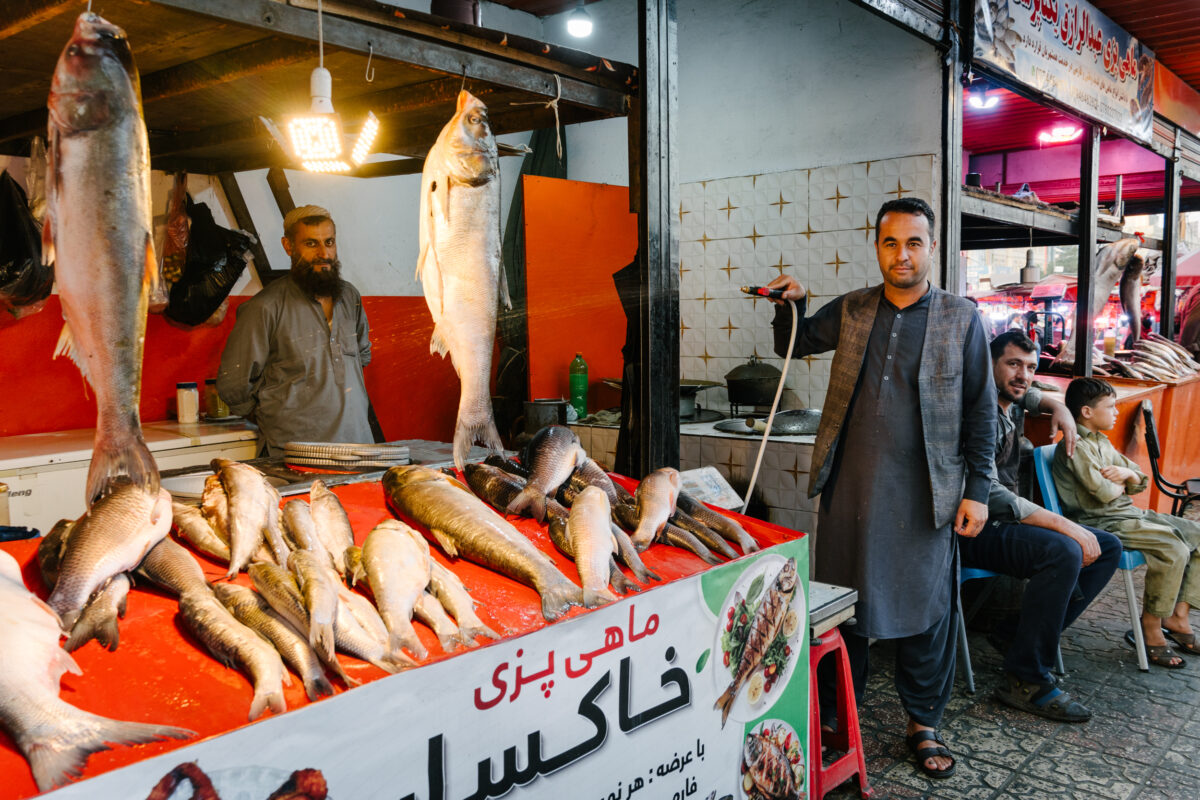
Note that while I did see some women out and about, albeit outnumbered dramatically by men, I was very careful not to take photos that prominently included them, as this can be considered both culturally inappropriate and also highly frowned upon by the Taliban, whom I was not trying to piss off– and they did check my photos numerous times. It is also the case that for the most part, women will not interact with men who aren’t family, and men do not interact with women who aren’t family, especially out in public. This does not seem to apply to kids, as younger girls had no problem running up to me and giving me high fives or practicing some basic English phrases.
I snagged my travel permits and got my route approved by the head of the Taliban Ministry of Culture. He assured me that the (extremely remote and rugged) route that I planned would be totally fine and safe, no problem, though there does seem to be a general push to gloss over that aspect to some degree.
It was also not lost on me that I, as an American man, would be able to travel freely as I please across Taliban controlled Afghanistan just a handful of years after we packed up and left, but an Afghan woman would not be able to do the same. Even foreign women can travel solo throughout the country on a much more relaxed set of “rules” than the locals. It’s all quite difficult to absorb and understand as a person who hit the spawn point lottery, being from a place that hasn’t been subjected to decade after decade of war. From a place where I can easily get a passport and travel all over the world– an impossibility for 99% of Afghans, since so few countries allow them in, solely based on the coordinates of their birth and these invisible lines we draw to divide us. These realities were never more clear for me than in this country.
Into the Hindu Kush
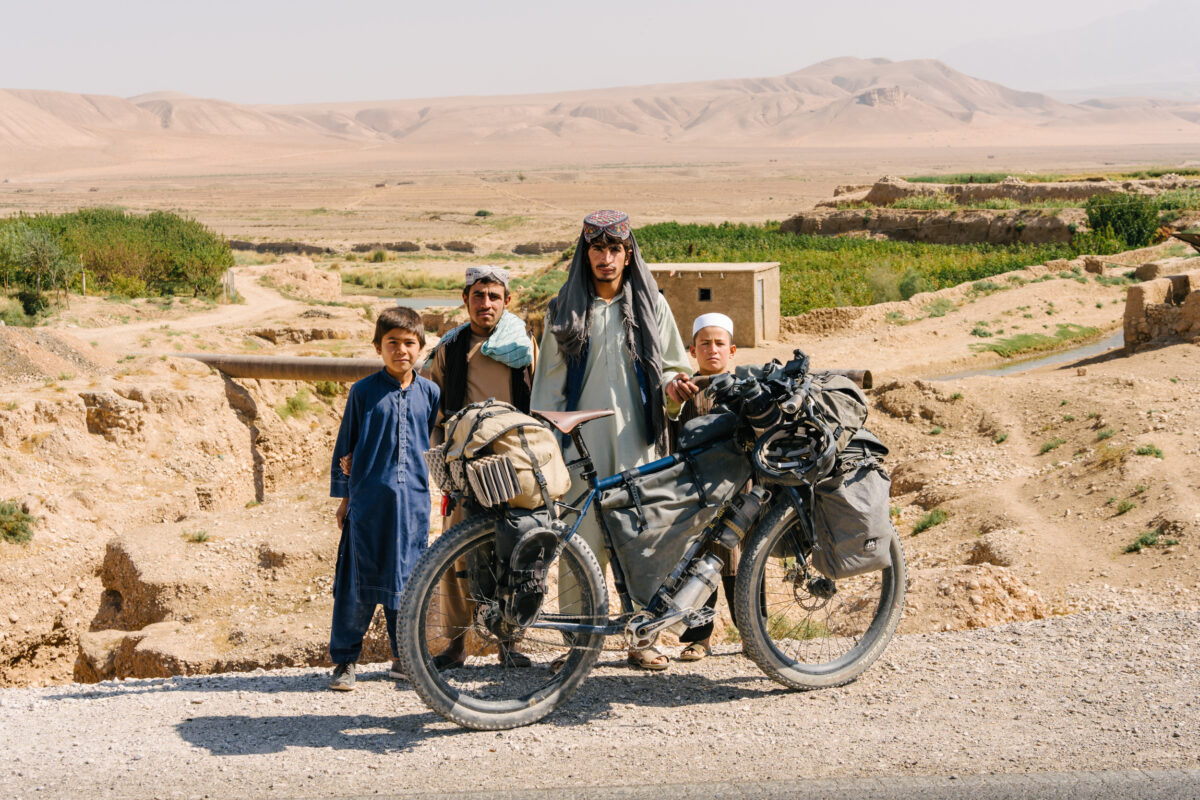
I gathered some supplies and acquired enough cash to last me the next few weeks (not many ATMs in Afghanistan), and I hit the road toward the Balkh river, which I’d be following for at least the next week or so.
The driving in Afghanistan is a level of terrible that I never imagined possible, so I was relieved to get off the main ring highway and onto the lesser-traveled roads that cross the center of the country. Most cycle tourists I’ve seen who have ridden in Afghanistan have spent the bulk of their time on this ring road, but I cannot fathom dealing with the constant near-misses of people buzzing past your shoulder in both directions, at breakneck speeds.
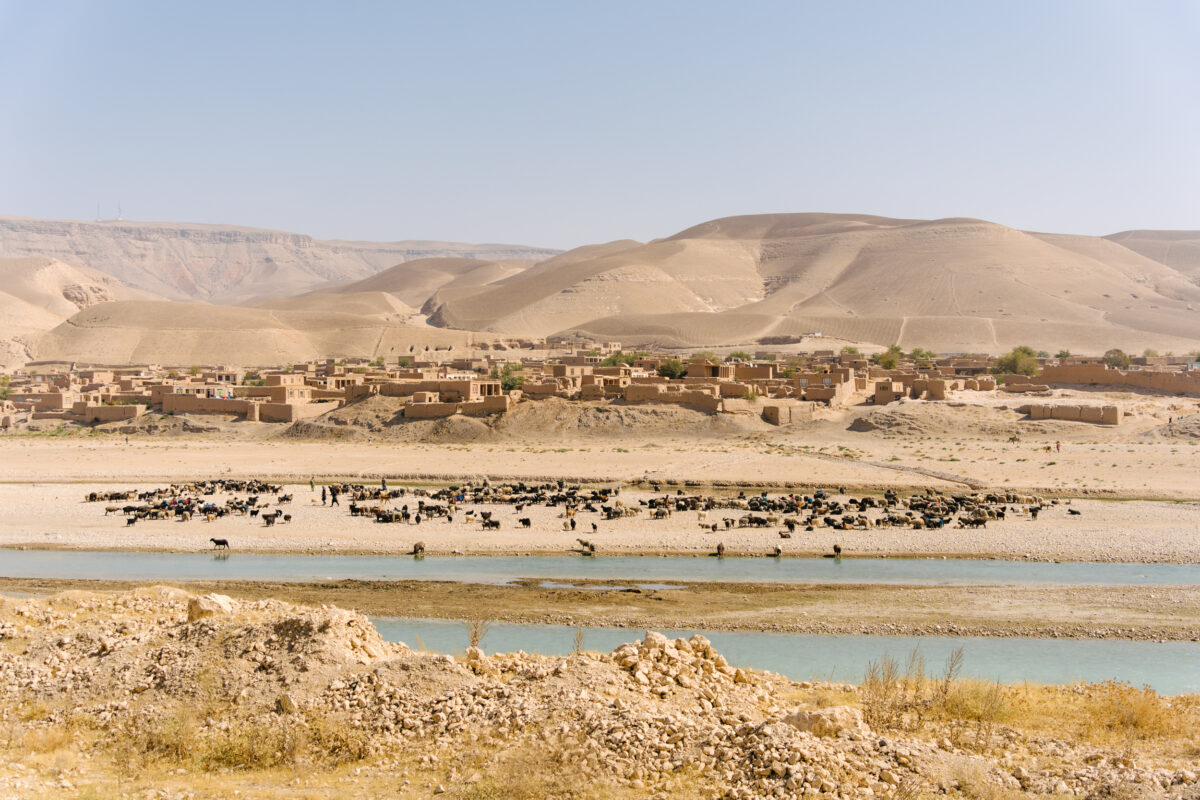
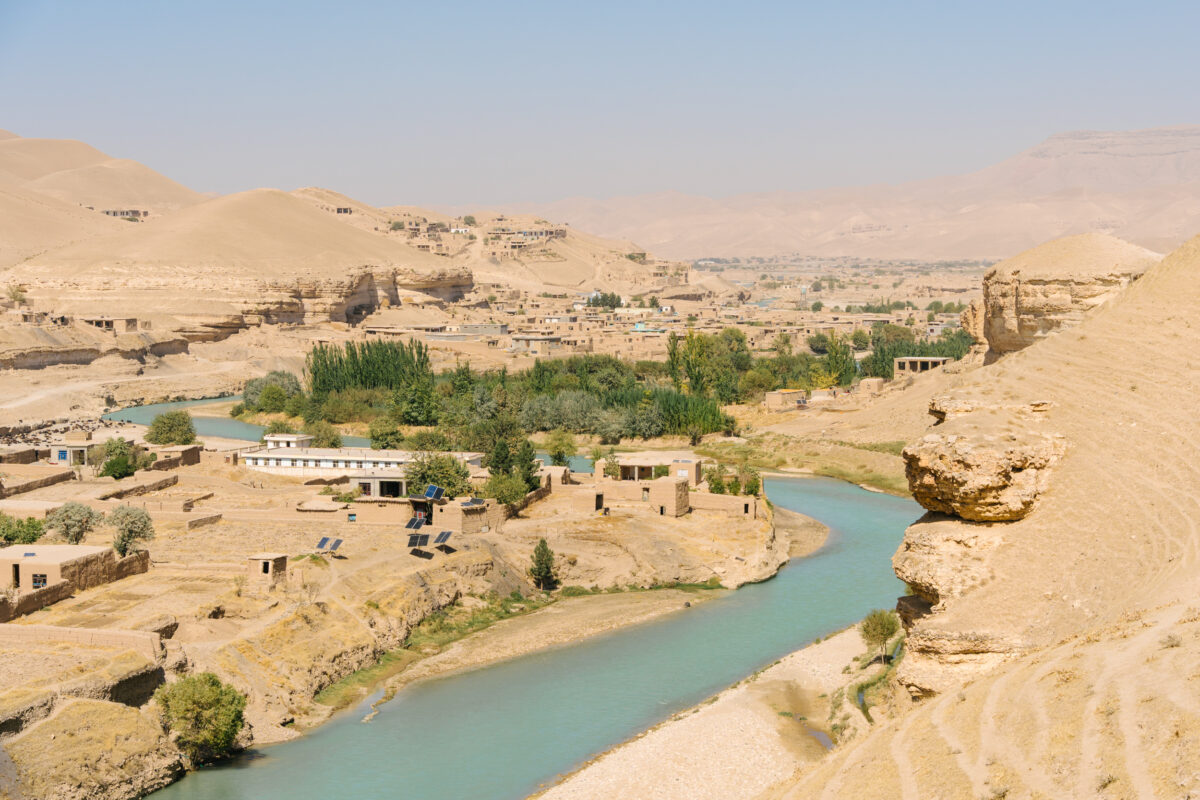
Leaving the main road also meant that I was starting to get into the lower hills of the Hindu Kush mountains. Here, the people don’t use modern building materials, but rather what is available around them, so the villages often blend in with the arid terrain. Donkeys, motorcycles, and bicycles are the primary modes of transportation.
The road made its way through a sharp canyon. People from homes off the side of the road and shepherds with their goats and sheep would approach me any time I stopped to take a photo. Cars would film me on their phones with excitement as they passed by, or they would pull over and flag me down to offer some fruit, bread, or really anything they had on them. If I had to guess, I probably took about 100 selfies with people per day, especially in these more populated areas.
It can honestly be quite overwhelming at times, this feeling of so many people watching you all the time, and people gathering around every time you stop. It’s hard for your mind not to wander towards dark thoughts, as it only takes one person harboring resentment, and you’re an easy target on a bike. I was also stressing out about where I was going to sleep, as there were no accommodations marked on the map in this region, and stealth camping can be very tricky with how many people inhabit these rural areas.
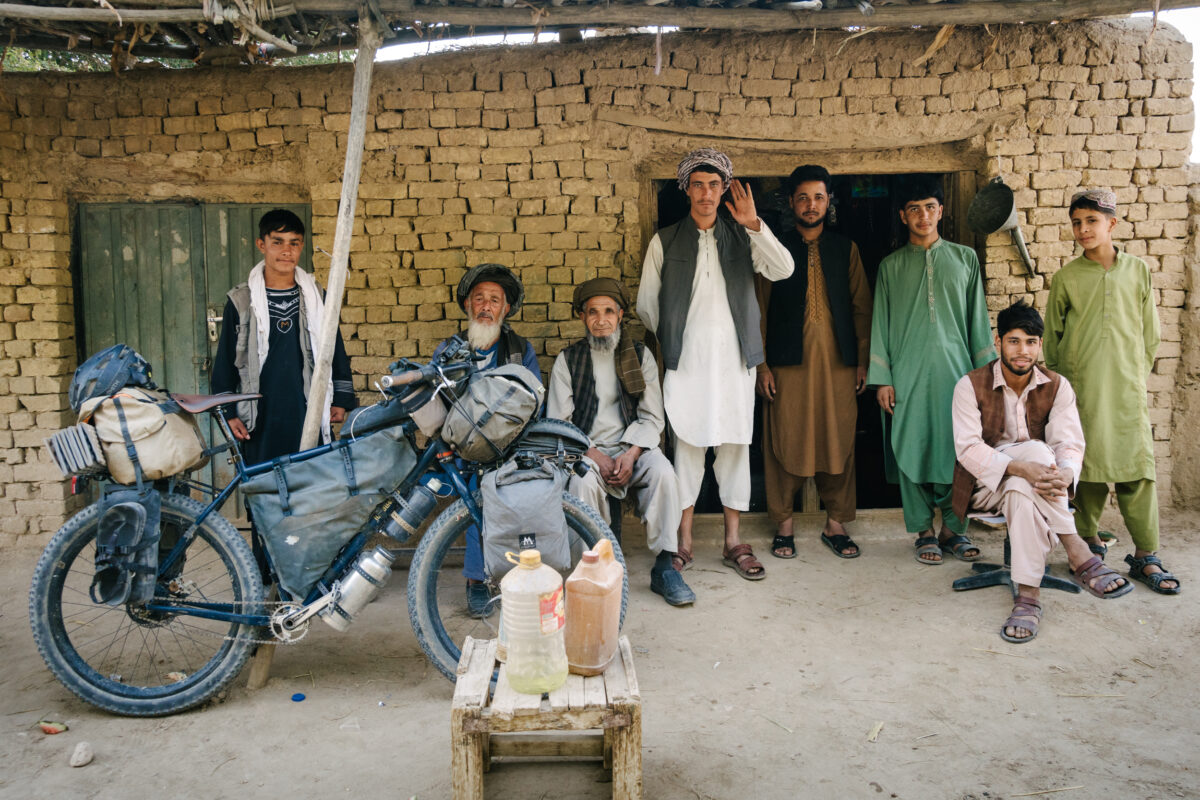
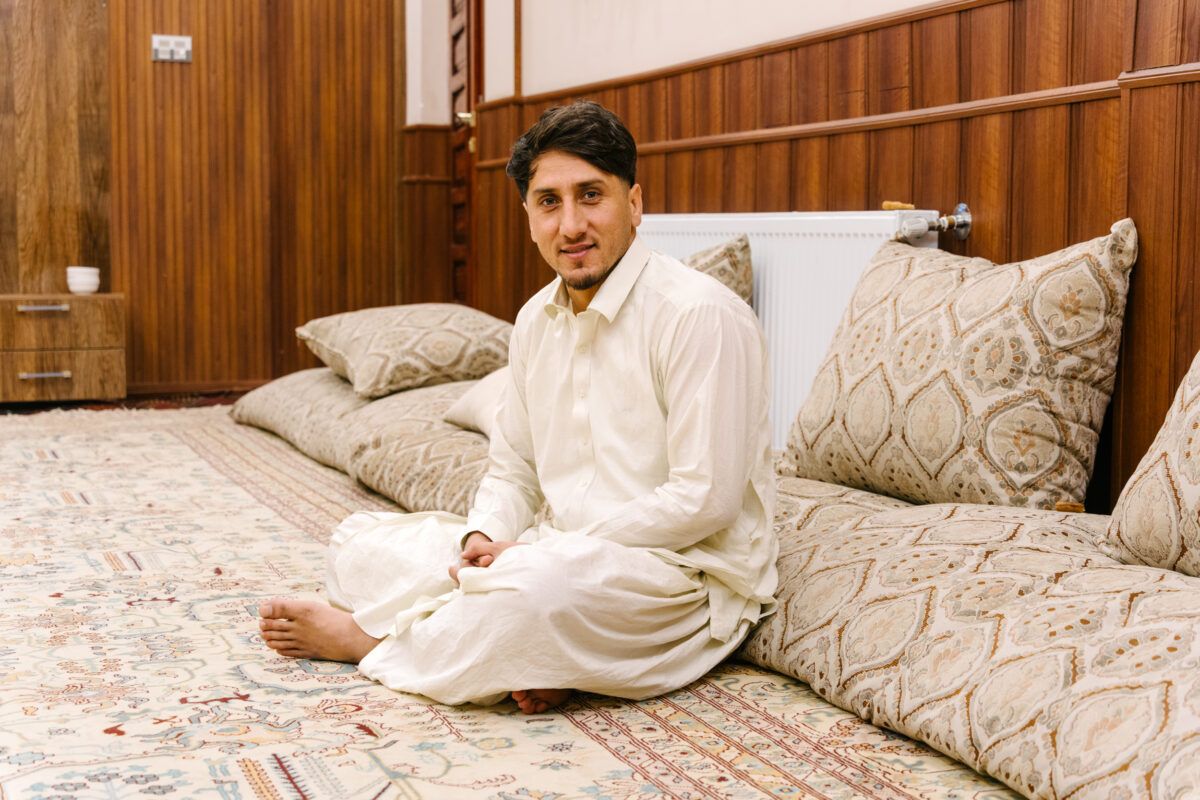
But then I’d meet a family like the Sayafpoors, who run a hospital in this rural valley, with their entire family full of doctors, and they’d invite me to stay in their home and share a huge Kabuli pulao. Or I’d run into Mahdi, a doctor who travels to different rural villages to provide health care access in remote places, and he would take hours from his day to help me find a place to stay, food to eat, and make sure I was comfortable. In Mazar, it was Nik and Sefat showing me all around the city. It seemed like every day I was running into these people who would go above and beyond to make my experience in Afghanistan a positive one. Without meeting so many incredible people like this, I might have just turned around and taken a taxi back to Uzbekistan on one of those first few days.
Expecting the Unexpected
I woke up at the home/clinic of the Sayafpoors, and one of the brothers brought their phone into the room where we would have breakfast and showed me the news… Pakistan had bombed Kabul the evening prior, and the Taliban responded by attacking some border posts. Suddenly, the Pakistan/Afghanistan border was now closed. I already had my Pakistan visa ready, and that was the only way I could get there without flying.
I wondered about safety, but you could tell how used to this sort of thing the locals are. It was like any other Tuesday. They assured me it was far away and I shouldn’t have any issues, at least until Kabul, though I was now starting to have to think of alternative plans if the border doesn’t reopen.
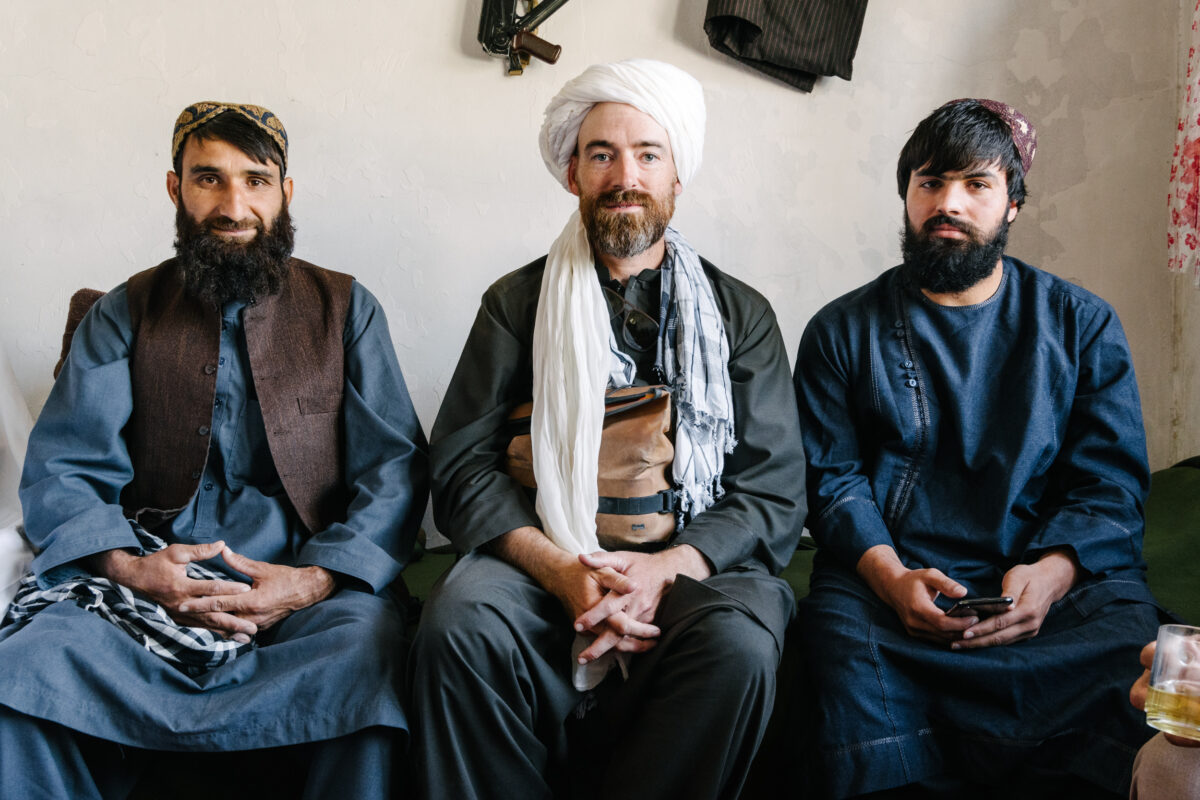
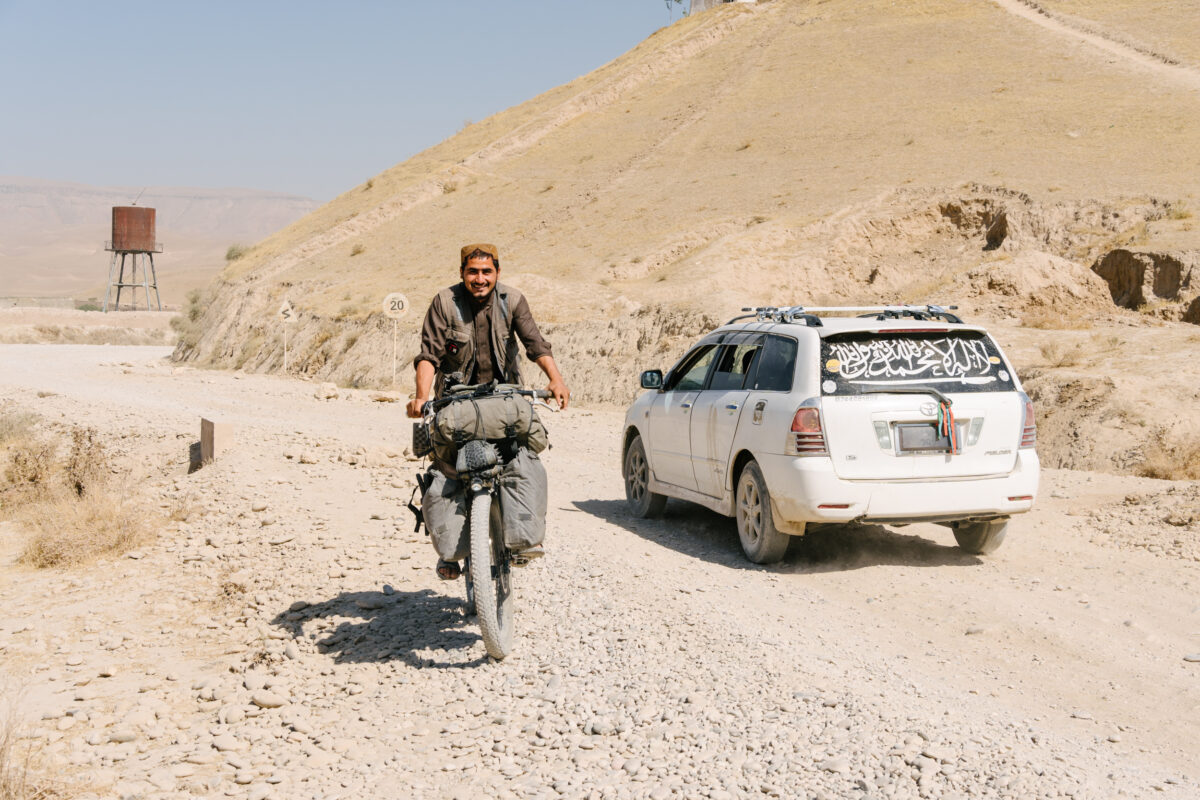
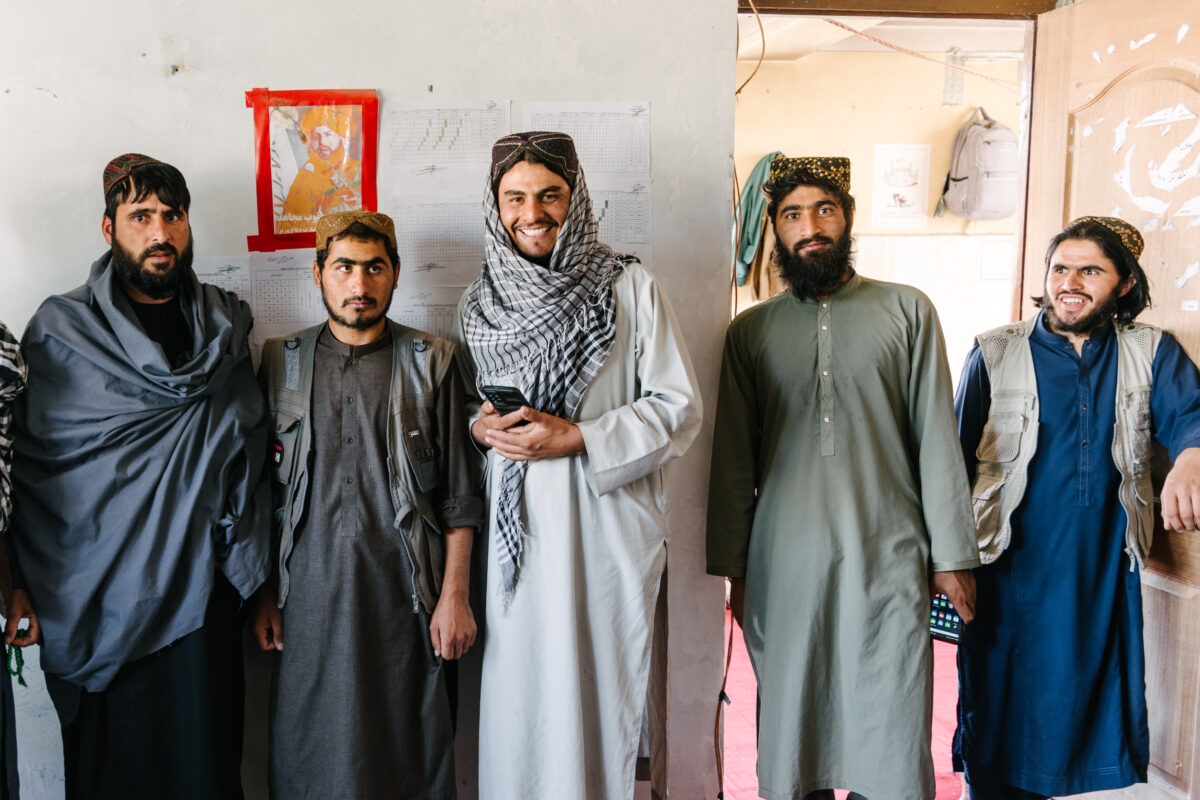
After leaving Sholgara, I made my way toward Kishendeh, but I wouldn’t get there before a long stop at another Taliban checkpoint. They brought me into the compound for tea in a small room that slowly filled with 20-25 Talibs who must have gotten word that a foreigner had shown up, and they outfitted me with the “wise cleric” drip before taking turns riding my bike. One of the Taliban guys went to the shop next door and bought me some snacks and water for the road, and I finally made my way off of the last bit of pavement that I’d see for hundreds of kilometers.
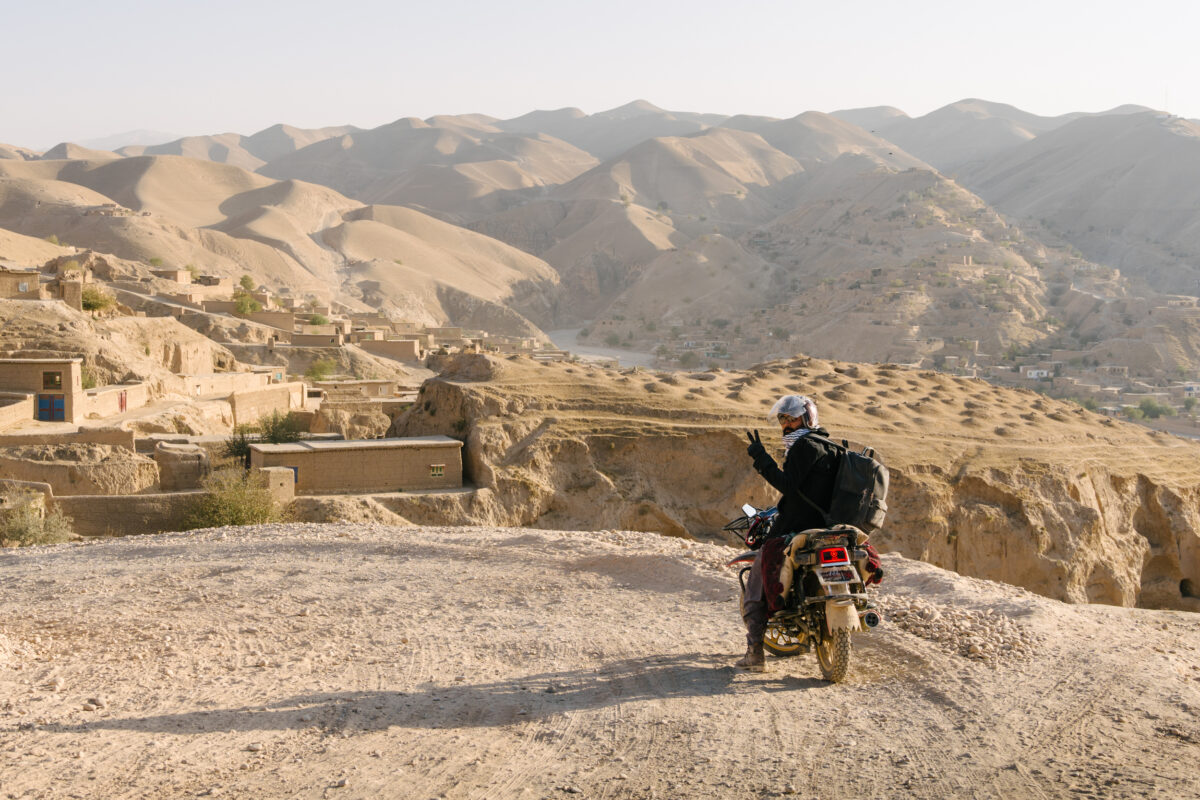
This stretch of road undulates steeply up and down hills with no regard for gradient, something that would soon become a familiar trend. This is where I met the other doctor, Mahdi, who caught me crawling my way up some ridiculously steep incline. I must have looked quite exhausted, because he decided to wait for me to get to the top and ride with me into town to sort out everything I needed and find me a room to stay. Out here, there are no “hotels”, but sometimes restaurants/teahouses called “Chaikhanas” will allow people to sleep in them, and some have private rooms where families can eat or stay.
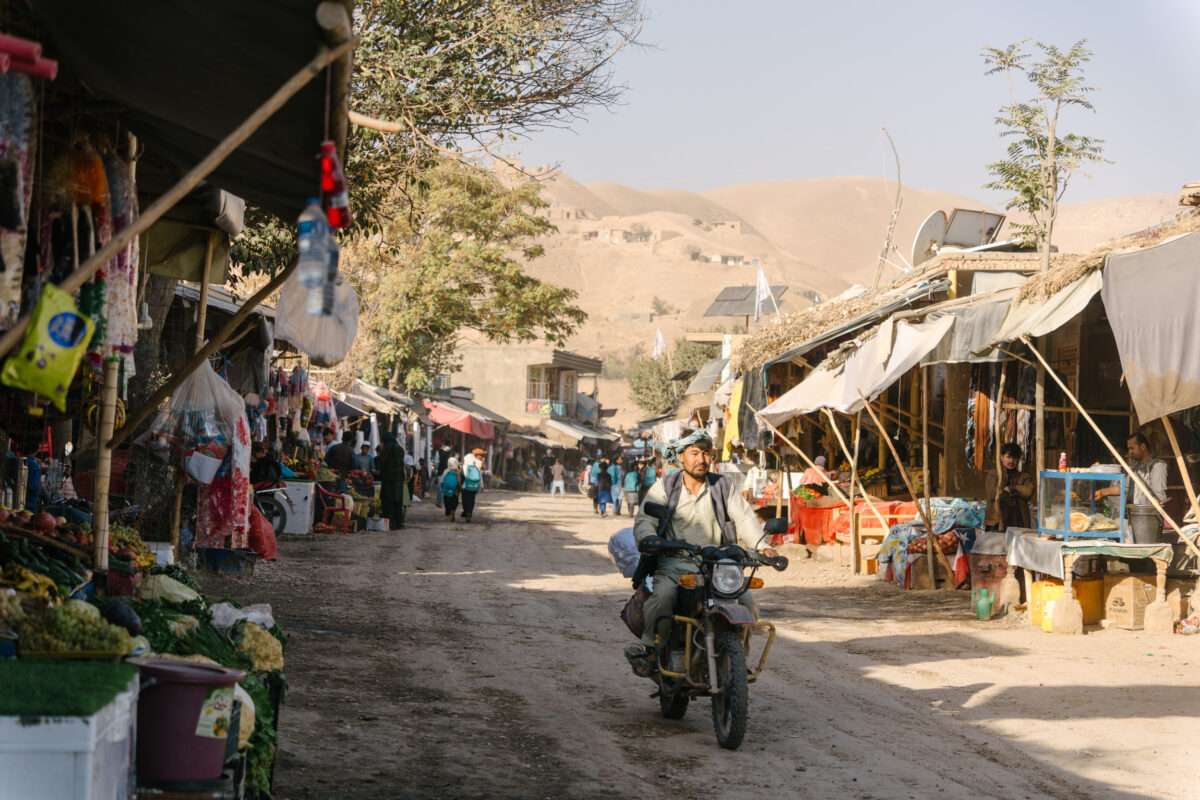
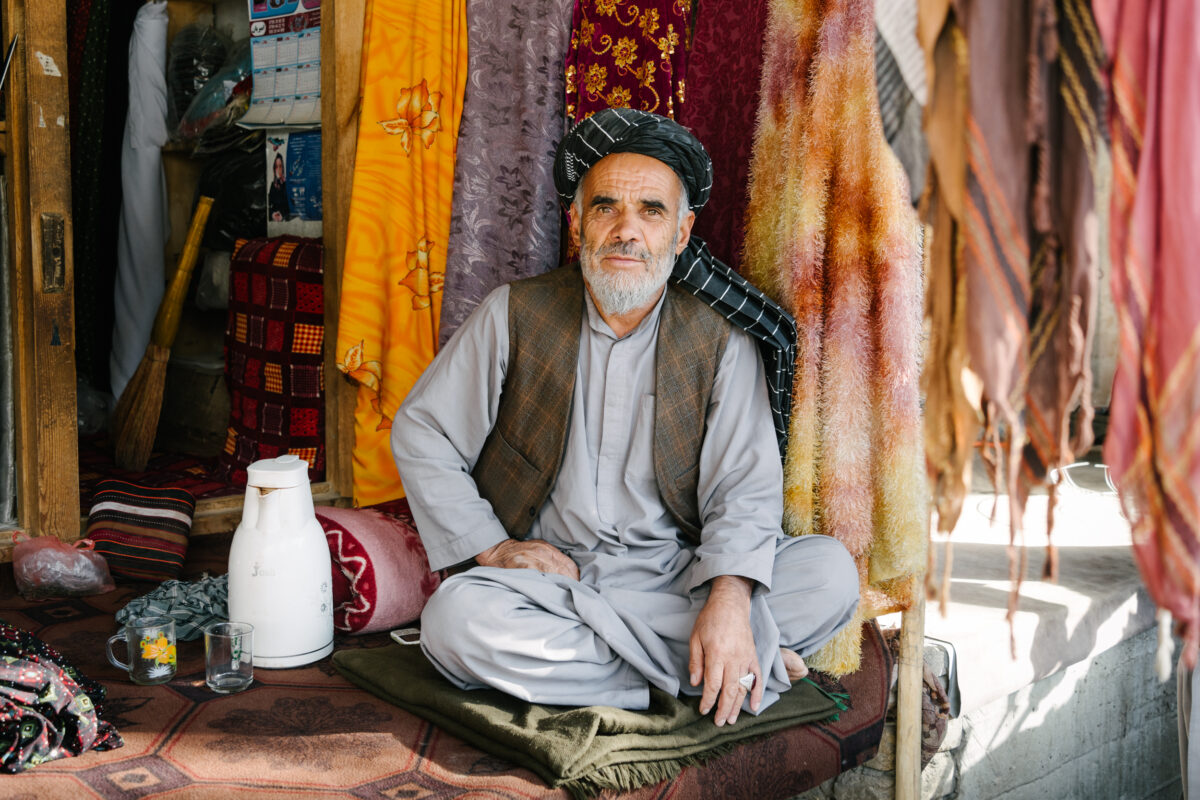
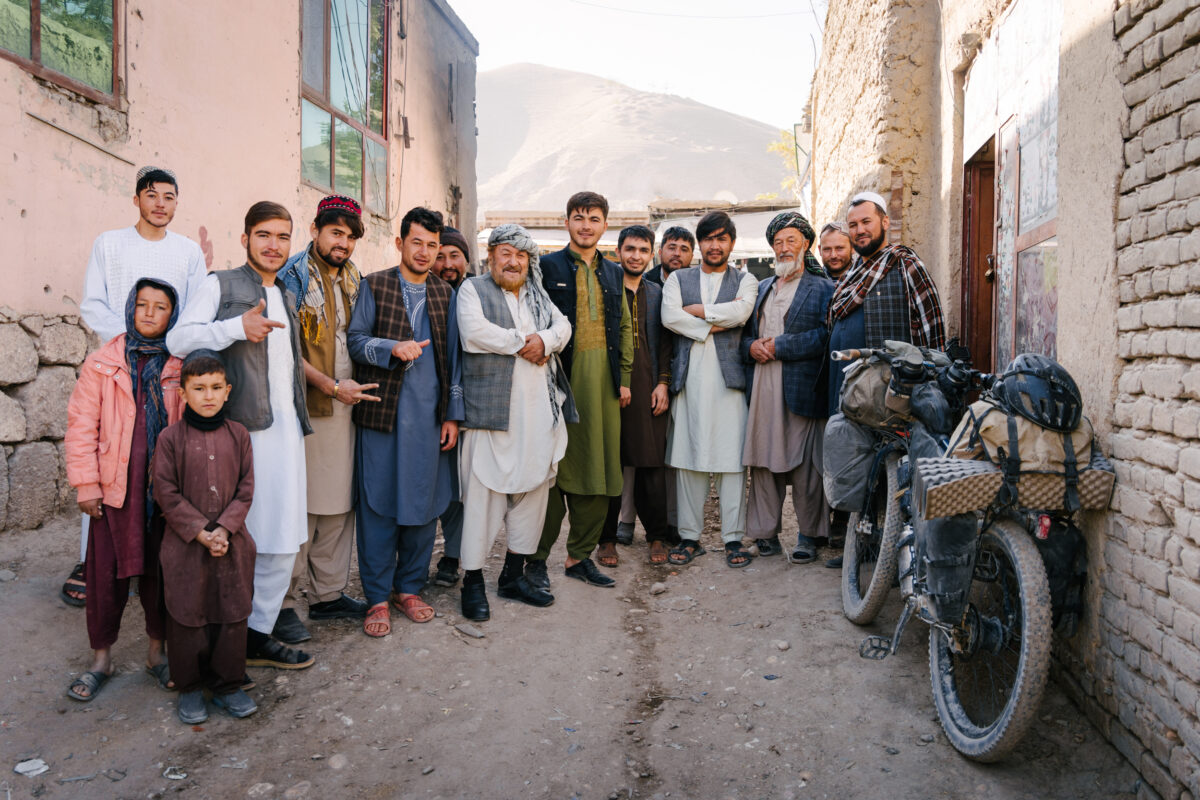
Mahdi set me up with a good spot, right in the main bazaar, and I had a chance to wander around the street, meeting all sorts of different vendors at small shops. When I talk about Afghan hospitality, I’m also thinking of this man selling head scarves and shemaghs (keffiyehs) in the bazar. He not only invited me for tea, but tried to offer me clothes for free, and even pulled out his wallet and asked if I needed any money to help on my trip. Given how incredibly difficult it is to come by money here, with most Afghans in these rural areas earning a few dollars per day, it really stuck with me how quickly this man was willing to offer up anything he could to a total stranger he met two minutes ago.
Up the River
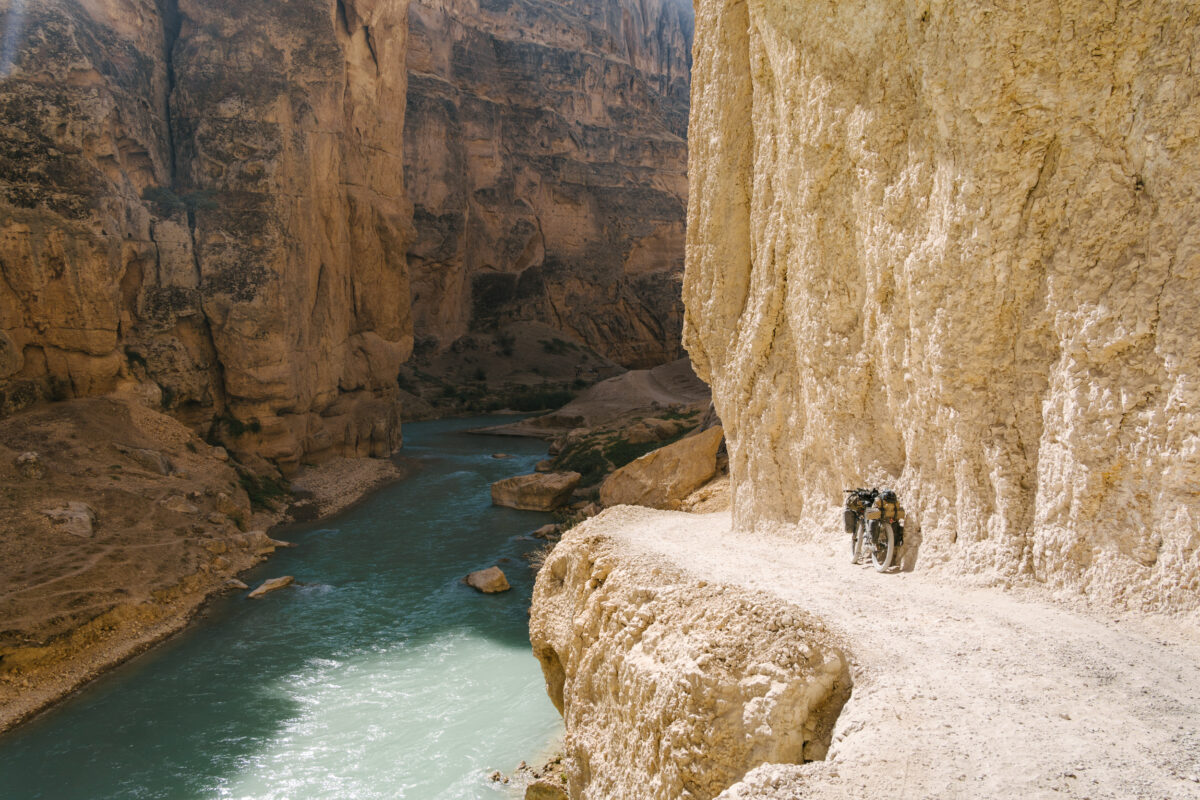
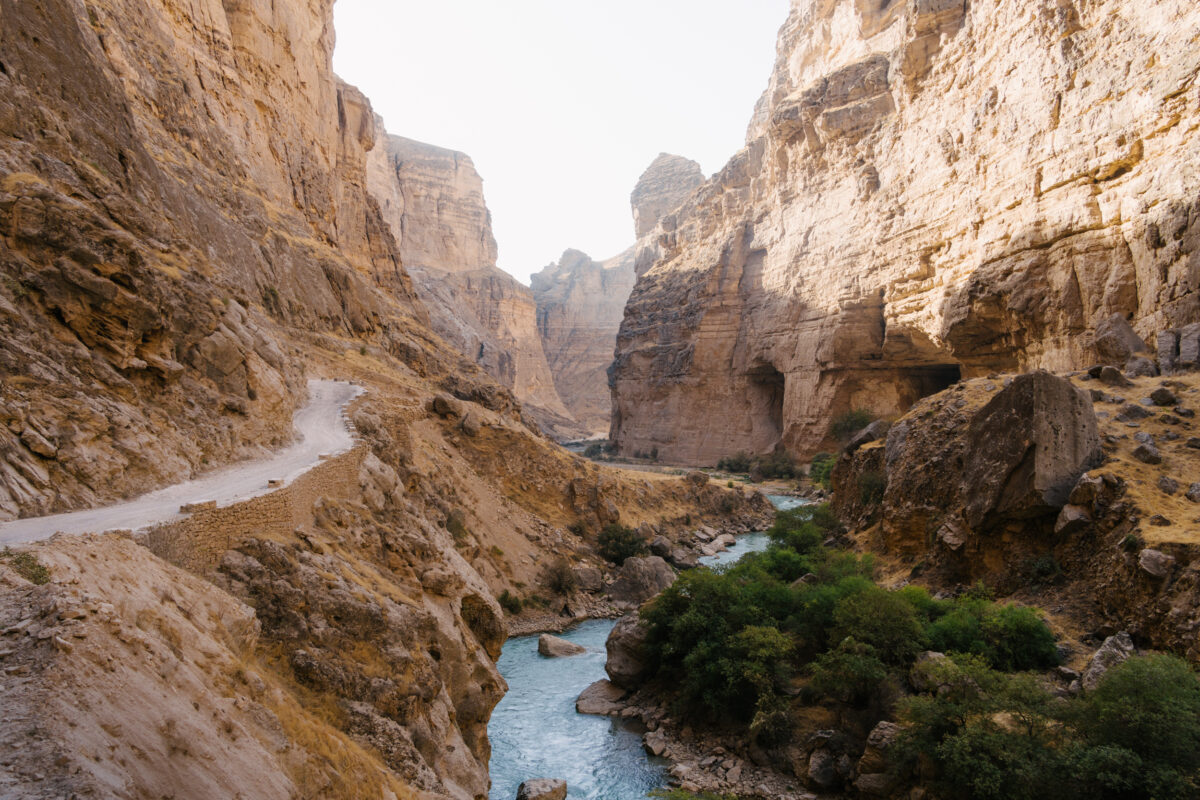
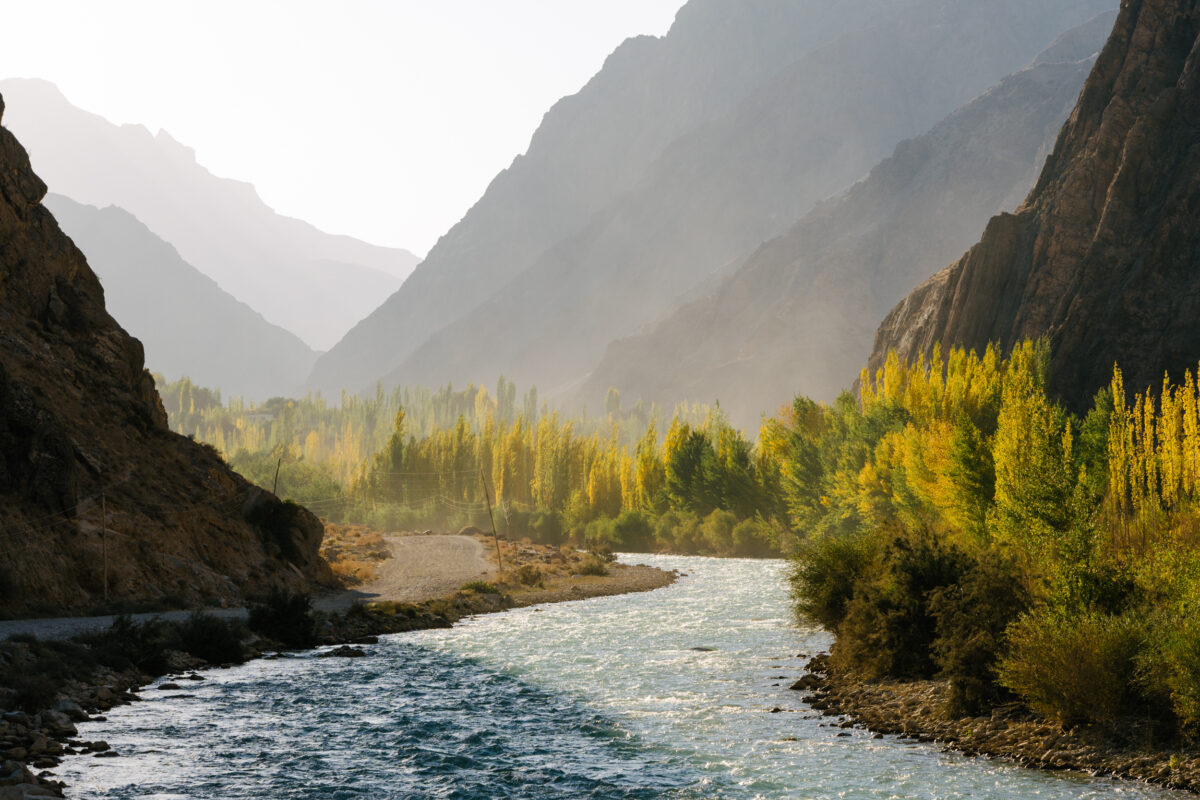
In the morning, it felt like half of the village watched as I packed up my bike before heading out of town, with the scenery suddenly becoming a lot more dramatic. I entered a narrow canyon with a rough road hugging a steep cliff at the edge of the turquoise Balkh River.
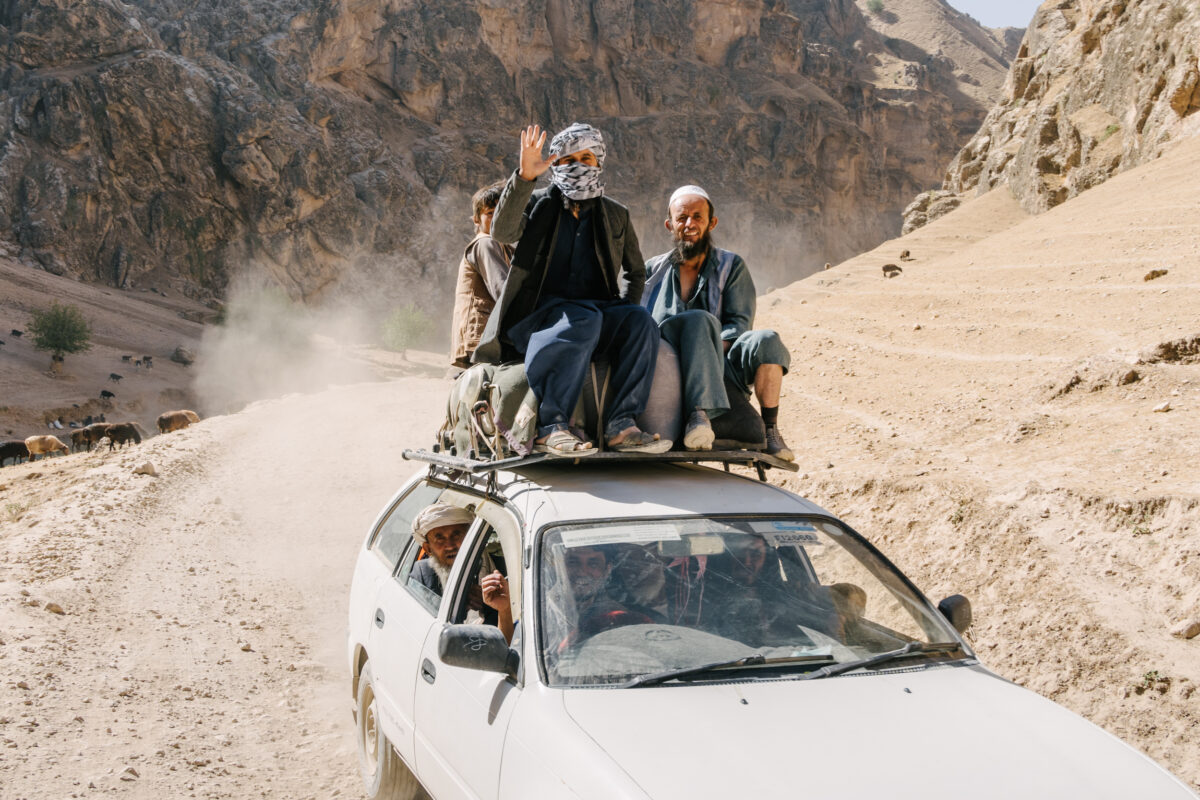
Every now and then, the canyon would widen out enough to squeeze a couple of small settlements in, but the imposing walls kept growing taller. Passers by stopped with confused looks on their faces, lifting their hands as if to ask, “What are you doing out here?!” Some locals take multiple days to travel this road to and from their villages because the condition is so bad that they can barely go faster in cars than I can on my bike. And if the rare truck breaks down and has to be fixed, as I saw multiple times, it often leaves other vehicles stranded for hours or days as a mechanic has to come out and fix it to stop the road block.
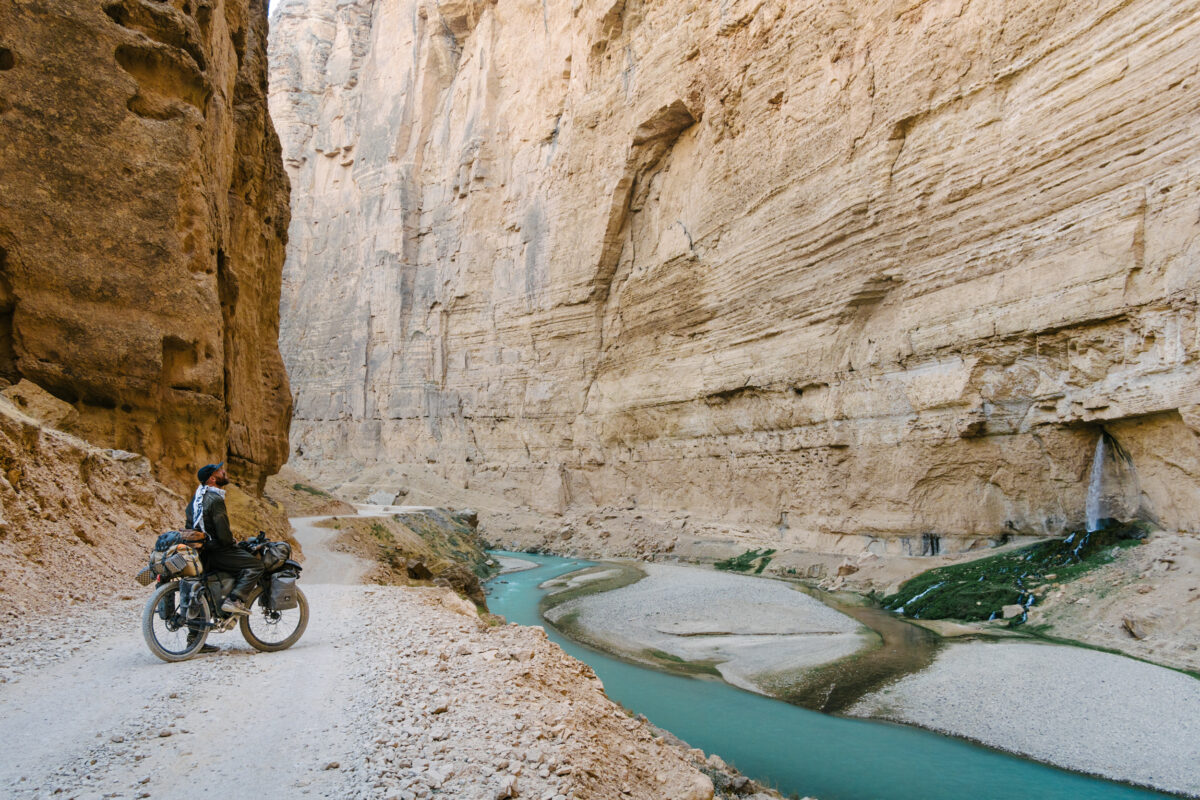
Soon, the canyon walls closed back in, and 1000+ meter cliffs rose up like they smushed two El Capitan’s right next to each other and put a road in between. This place easily rivaled anywhere else that I’ve been on earth, and I imagine it rivals most places on other planets. If it weren’t in Afghanistan, people would be flocking here in droves.
I needed to find a campsite, but as you can imagine, there weren’t a ton of options in this super narrow canyon. I did stumble onto a small patch of land where I was mostly hidden from the lights of vehicles that might pass in the night, though I was still quite close to the road. Not ideal, but it would have to work.
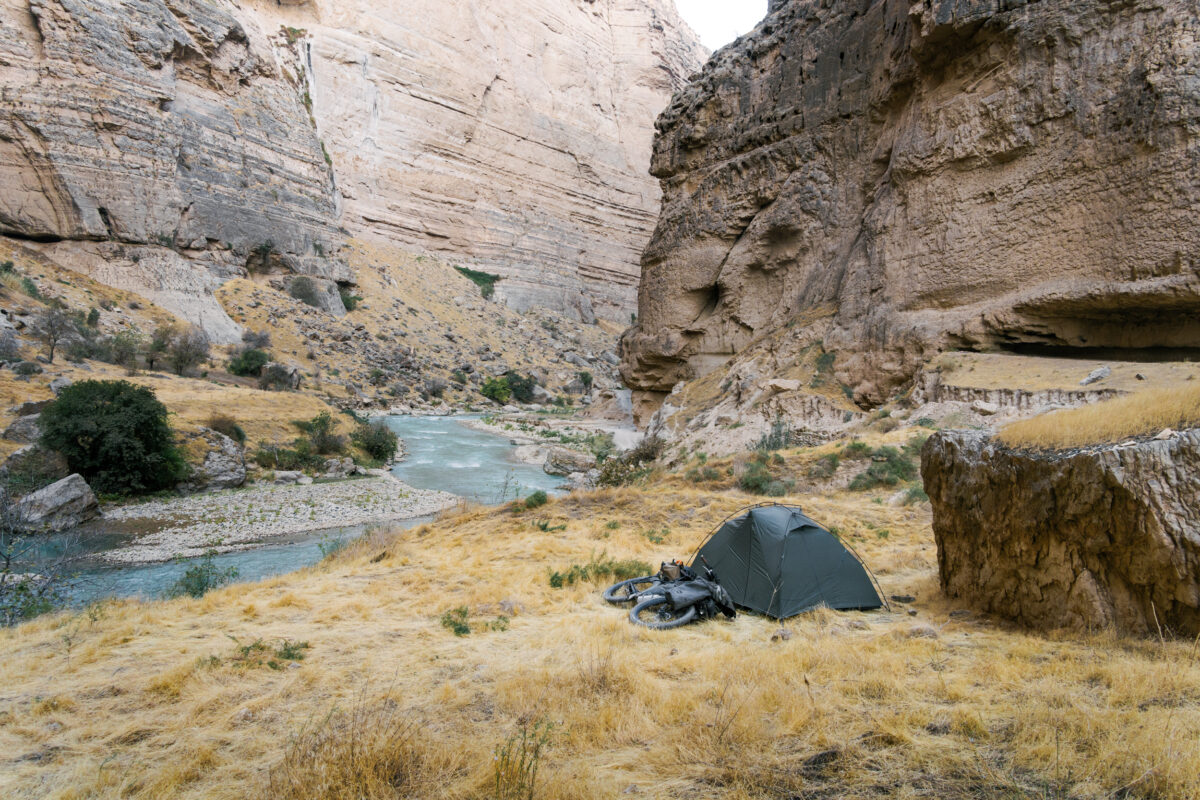
I hid behind a big boulder from the road and waited until evening to set up my tent without my headlamp. I started to get pretty good at setting up my whole sleep system in near total darkness, not wanting to attract attention. I must have been pretty tired, because I passed out almost immediately to the roar of the river echoing off the canyon walls.
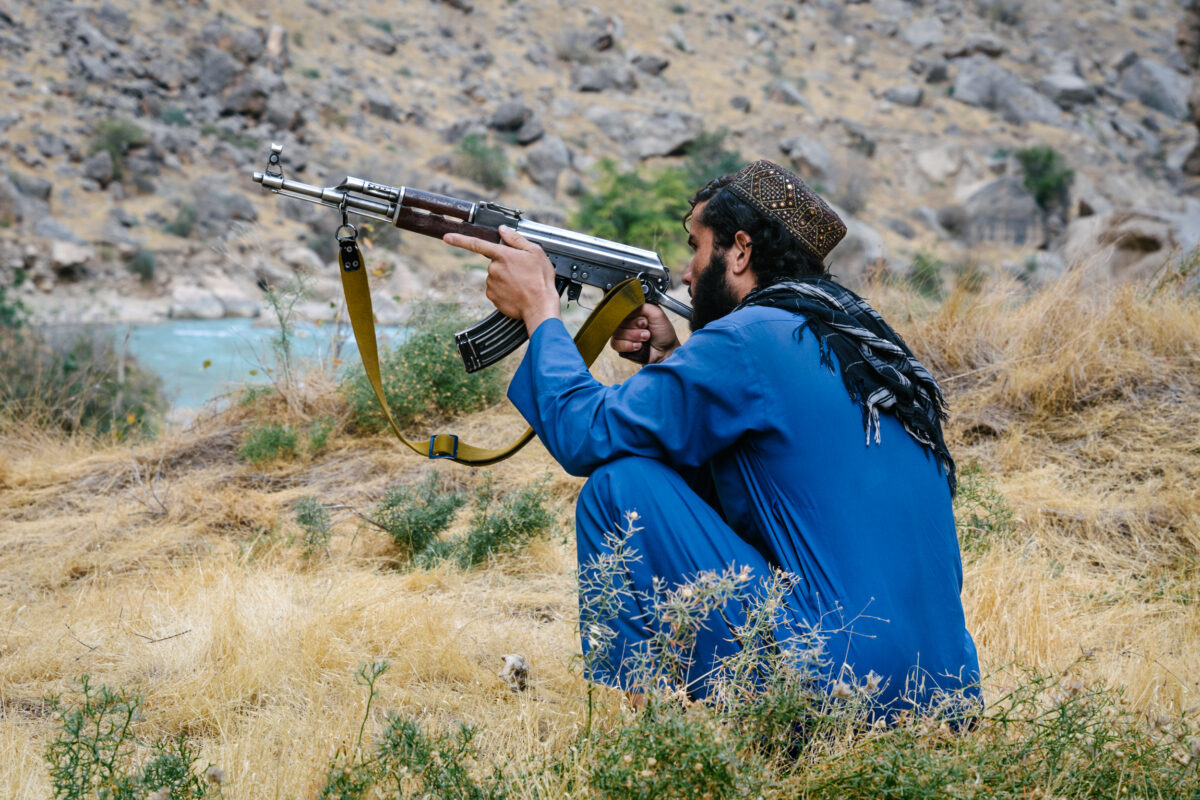
In the morning, it was gunshots firing just outside my tent that launched me out of slumber. I poked my head out to find a Taliban guy and a few civilians taking turns firing an AK47 against the canyon wall. It was my proper “Welcome to Afghanistan” moment.
The Climb Continues
The road continued in spectacular fashion after I packed up camp. My jaw was on the floor every time a curve in the river opened up another mindblowing view. Villages were perched on hilltops, with terraces for crops etched into the hillsides.
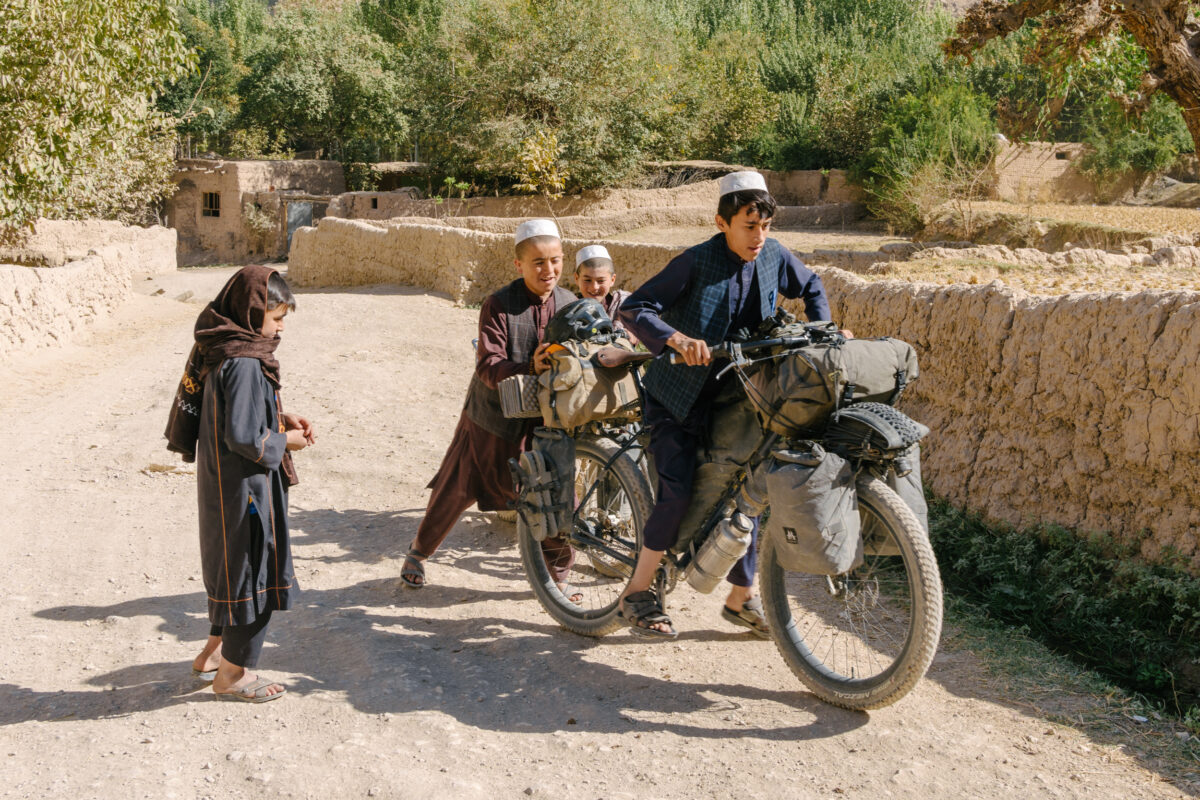
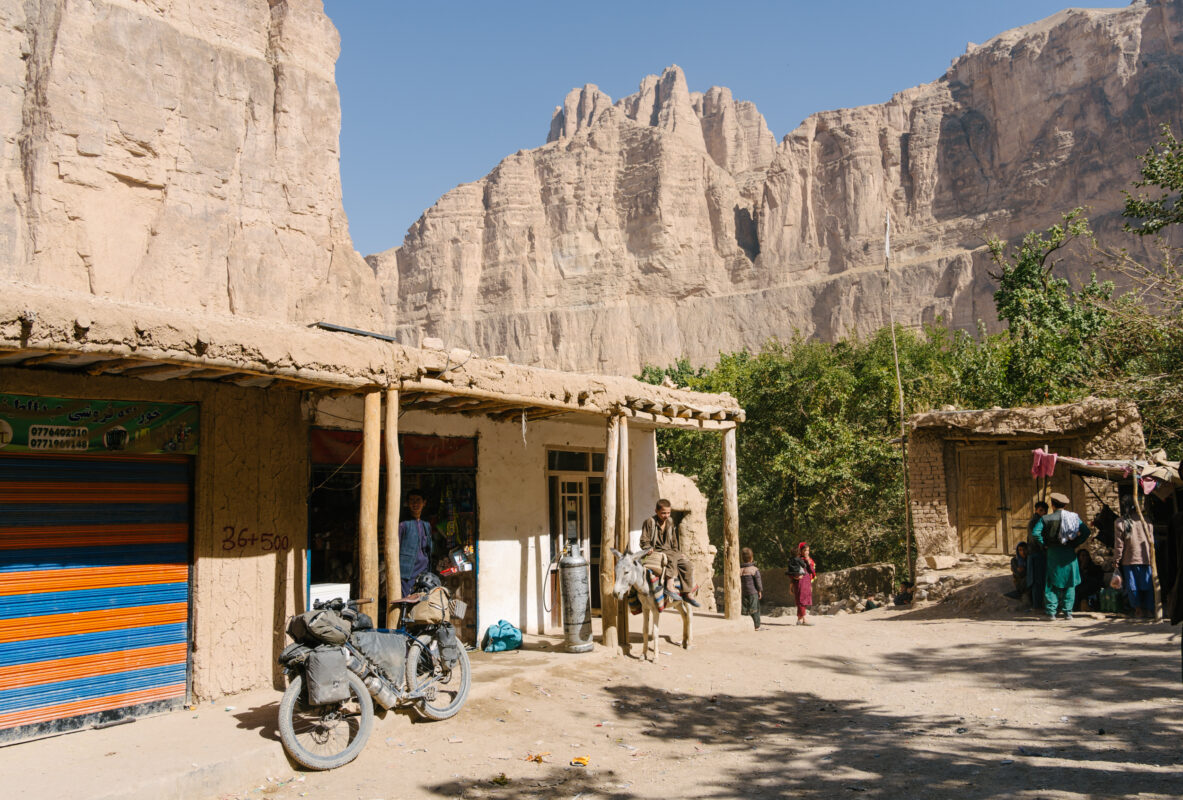
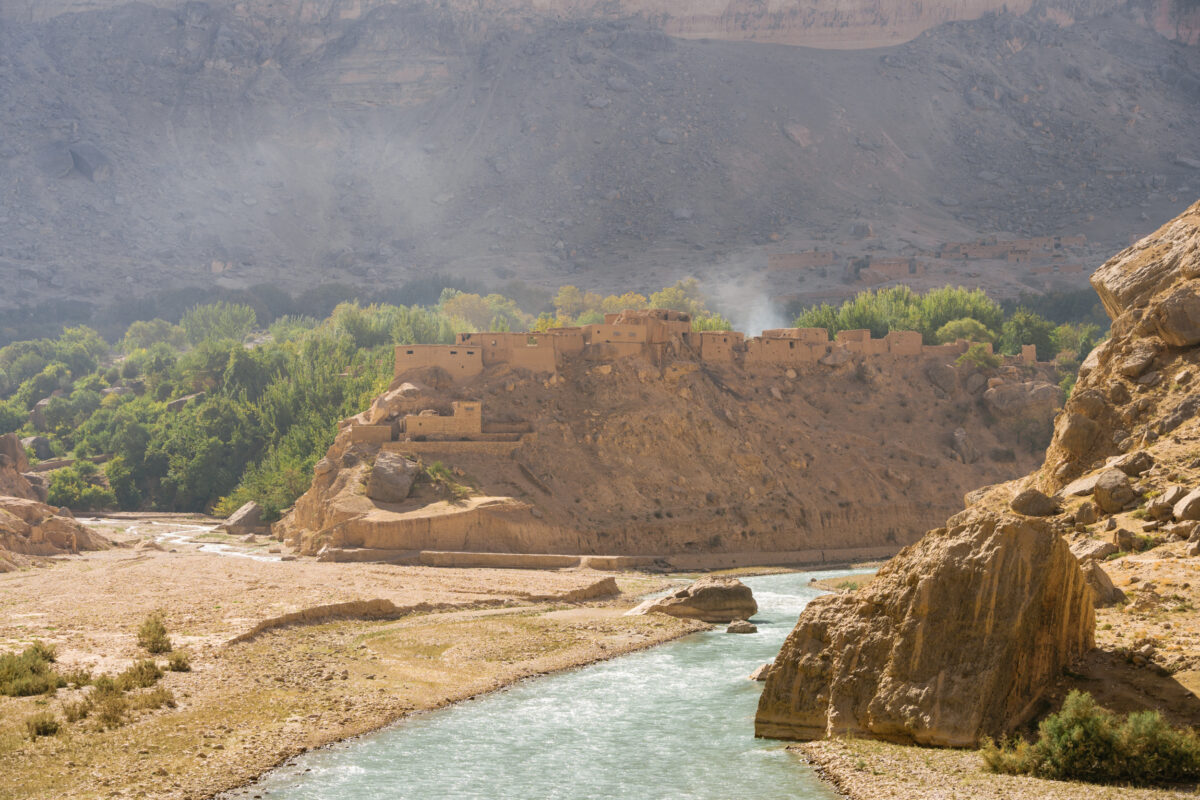
Locals in one village laughed as I stood in awe at the view surrounding the tiny village square. I translated to one of the villagers that it was one of the most beautiful places I’ve ever been. He looked around at the cliffs like, “This old thing?” and told me he wants to see a beautiful place like New York City.
Up the road, I came across a coal mining town with people working through absolutely brutal conditions. Some kids who looked quite young were covered in black soot from head to toe. Their teeth looked bright white from the contrast as they smiled and waved at me. I wanted to take a photo, but it just felt wrong, so I settled for stopping and stringing together the few Farsi words that I’ve gained over the last few days.
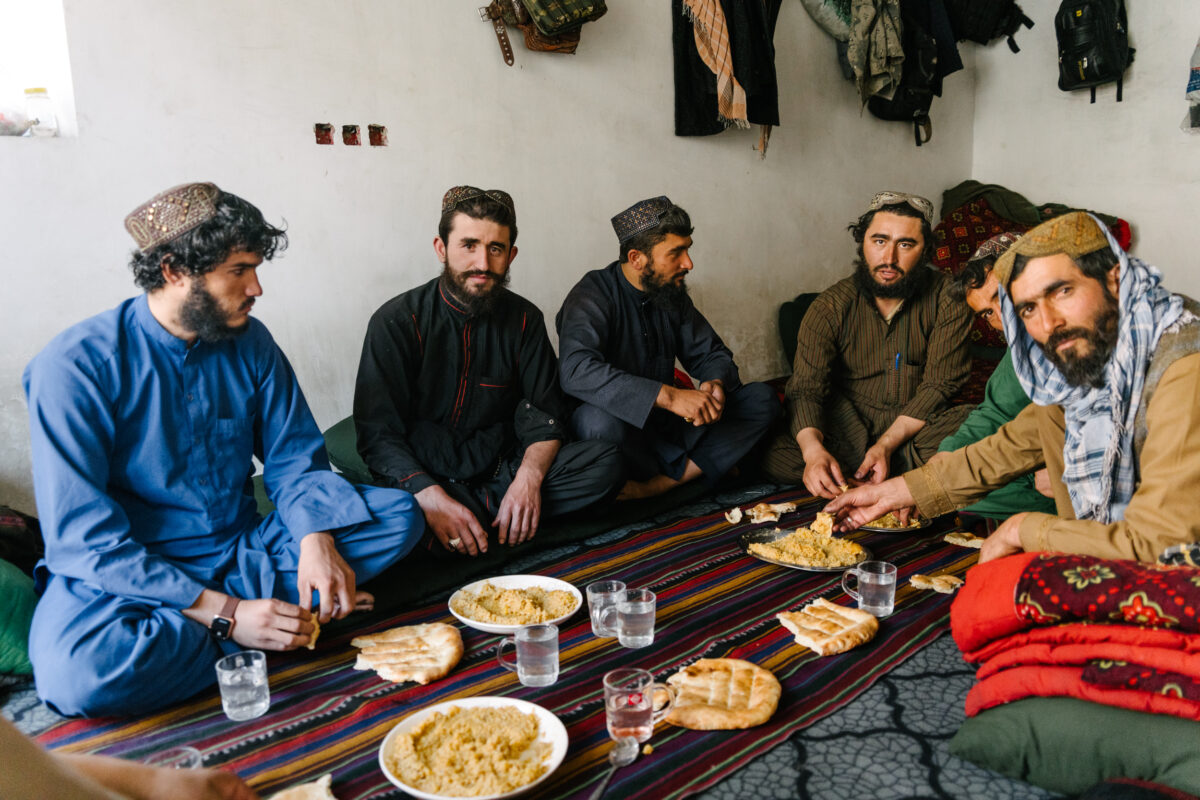
As I got into the center of the coal mining outpost/village, a Taliban soldier swooped me up and told me to come with him. It was the usual questions once again, asking where I was going, where I’ve been, where I’m from, what I do, and if I’ve ever been to Afghanistan before (aka was I in the military). Then, it was time for another Taliban luncheon. Even the guy who was shooting outside of my tent in the morning showed up! One thing I noticed is that while most meals in restaurants and homes have meat of some kind, the Taliban seem to be on a vegetarian diet in these places, I assume because money is tight.
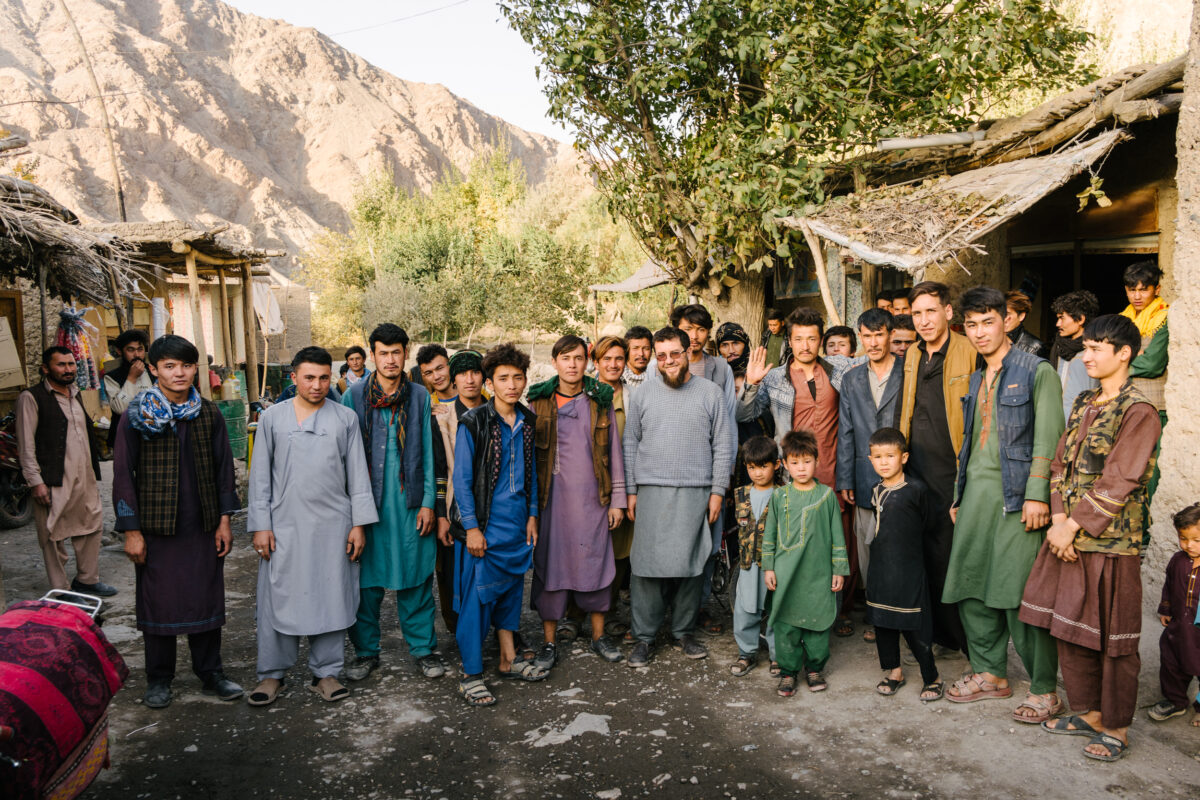
The further I got away from the city, it seemed like many of the “rules” were easing off a bit. This area is predominantly made up of the Hazara ethnic group, who are mostly shia muslims, and tend to be a bit more relaxed with that sort of thing. It was much more common for me to see women out walking around with their faces exposed, and some would wave to me, but rarely more than that. I would also hear people riding by on their motorcycles with music blasting, which is technically against the rules, too.
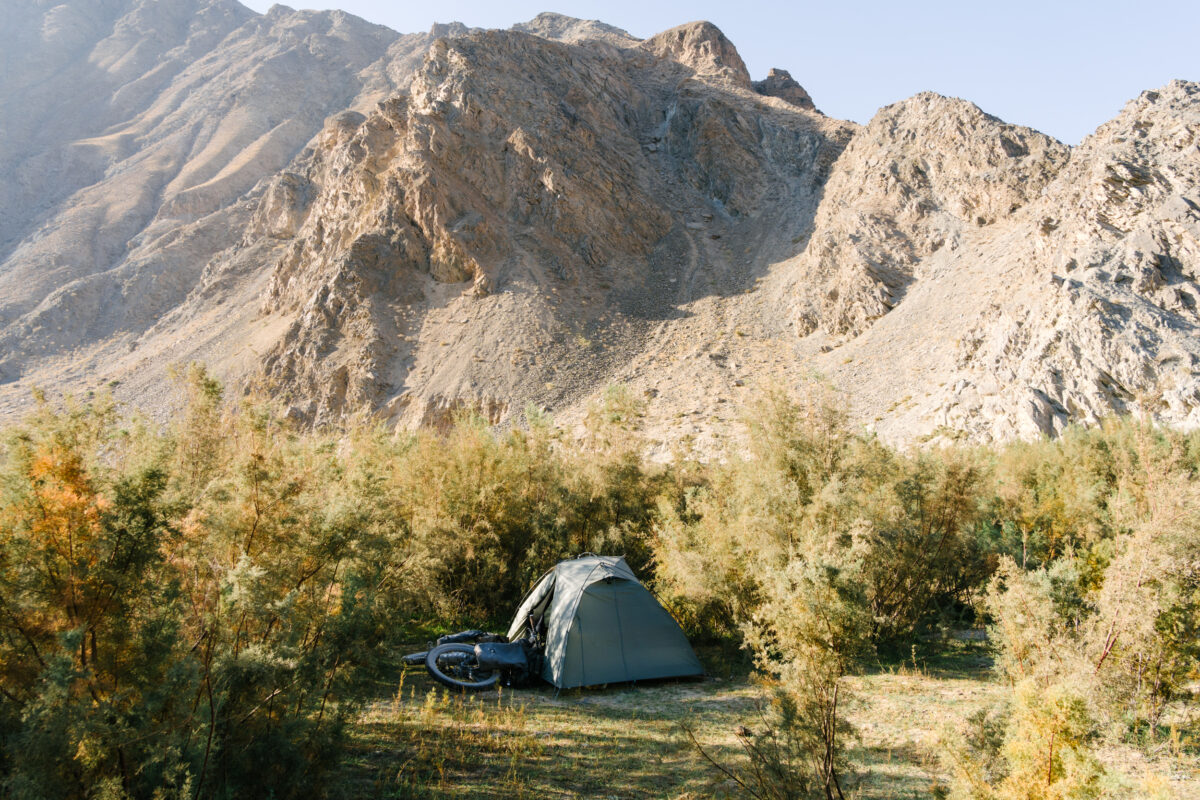
As I slowly gained elevation, the steepness of the canyon walls eased off, and sections of the road turned into a thick moondust. I found a spot to camp, hidden amongst some tall foliage around the banks of the river, though I still managed to get spotted during the night by someone with a light who was shining it from the other side and must have perfectly caught a reflection off of something on my bike. I could hear people talking and watched their light repeatedly aim straight back at my tent, though they never bothered to come by and investigate. That didn’t stop me from losing some sleep wondering if they would, though.
Change of Plans
The next day, I made my way toward the largest village on this road, delayed by more Taliban lunches and tough road conditions. When I finally arrived in the town, it was already dark, but I was looking forward to staying in the town’s chaikhana and maybe getting a shower and having a giant plate of kebabs. But after a few minutes of arriving at the place I planned to stay, some guys came in who appeared to be some sort of higher-level “special forces” of the Taliban, and told me I had to throw all of my stuff in their pickup truck and come with them.
I got sandwiched between two guys with their rifles as the driver floored it up a steep dirt road, further into the middle of nowhere. They blared a wild-sounding “Nasheed” on the stereo, which accented the highly processed vocal chants with sounds of gunfire, explosions, and crowds screaming. This seems to be how they get around instruments being considered “haram” to the Taliban leaders. Throw in some war sounds instead.
At one point, a dog strolled across the road in the headlights of the truck, and the driver accelerated and briefly steered toward it, laughing as it barely ran out of the way in time. At this point, it felt pretty clear that they were trying to freak me out, and let’s be real, it was kinda working. I couldn’t help but have an out-of-body experience, thinking about how I got myself into this ridiculous situation.
The truck stopped next to a Taliban compound, and they brought me into a room inside, which was already filled with more than a dozen Taliban soldiers. I didn’t know it then, but I’d be there a while.
To Be Continued in Part II…

See the Prospector frame he’s touring on and more at Tumbleweed Bikes.