
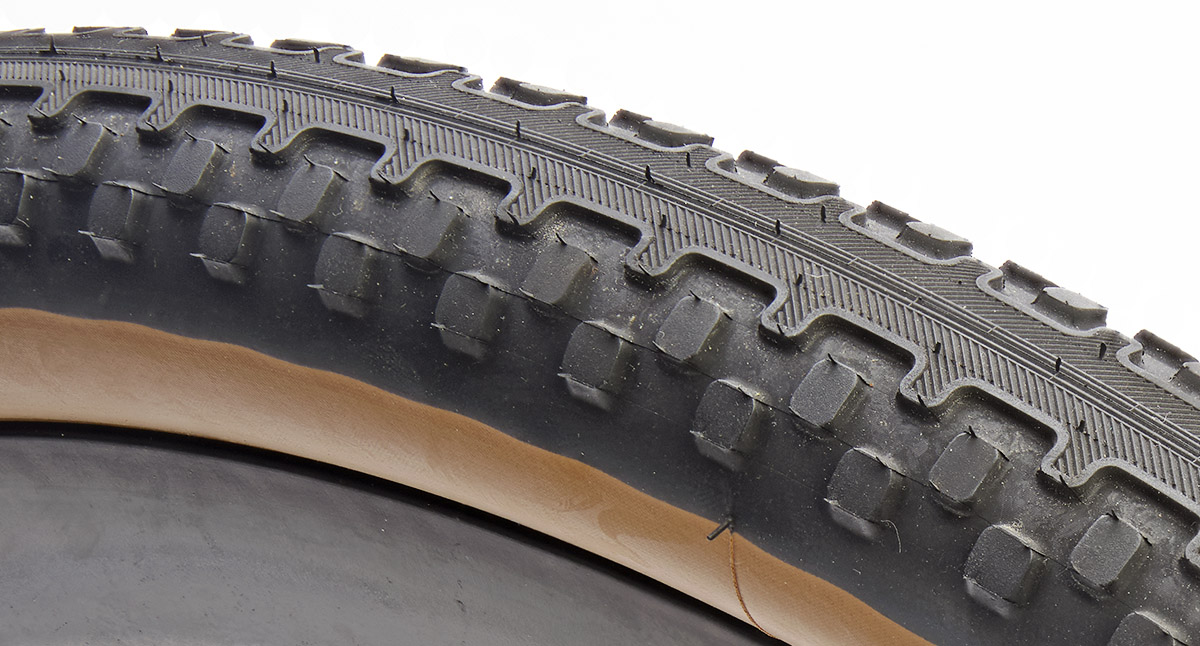
How do you make a semi-slick tire that lives up to the promise of smooth-surface speed and traction on loose surfaces? How do you avoid the pitfalls of conventional semi-slicks—especially the sudden transition from smooth center tread to bumpy side knobs? And how do you improve power transfer during out-of-the-saddle sprints, when the bike rocks from side to side and rolls on the (often flexy) side knobs?
Addressing these issues required an innovative approach—so innovative that we filed three patents for our Rene Herse semi-slicks. In the first part of this mini-series, we talked about the first patent, for the gradual transition from slick center to side knobs. That way, grip doesn’t change abruptly as you lean the bike into a corner—avoiding the problem Gerard Vroomen (of OPEN and Cervelo fame) described: “The last thing you want is side knobs hitting the road instead of smoother rubber.”
The gradual transition has another benefit. That’s where the second patent comes in: The first row of side knobs is anchored on the center tread, rather than free-standing. That increases the stiffness of the knobs, so they transmit power better when sprinting out of the saddle.
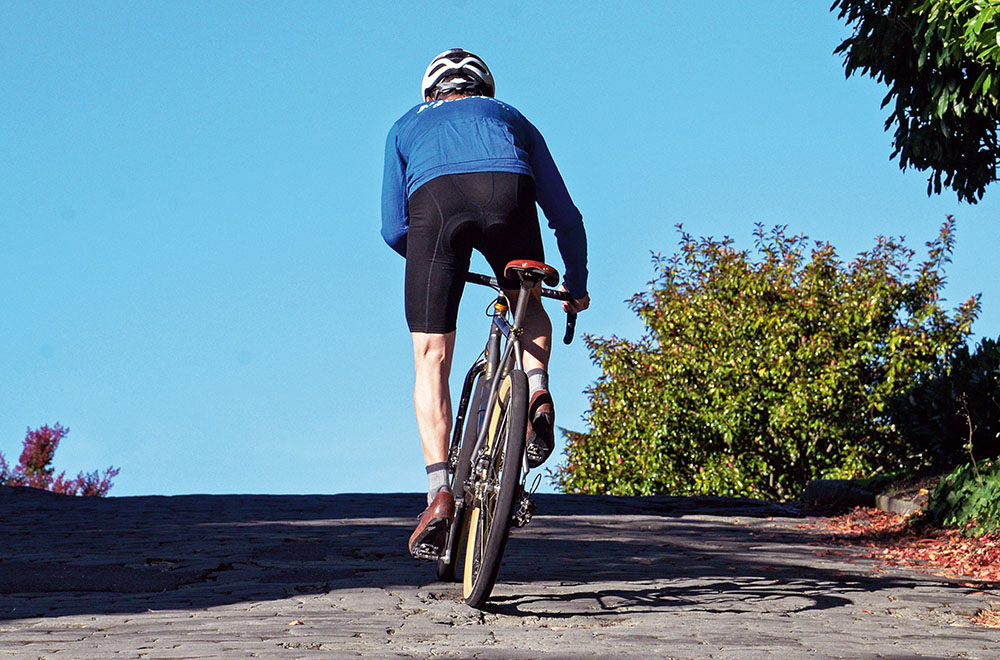
We’ve studied the angles of the bike during sprints and out-of-the-saddle climbs, and we’ve designed the tread so that the first row of knobs engages in those situations.
Plus, the anchored knobs deform less at all times, so they absorb less energy. How much less? In our real-road tests (on pavement), they saved 7 watts at 20 mph (32 km/h).
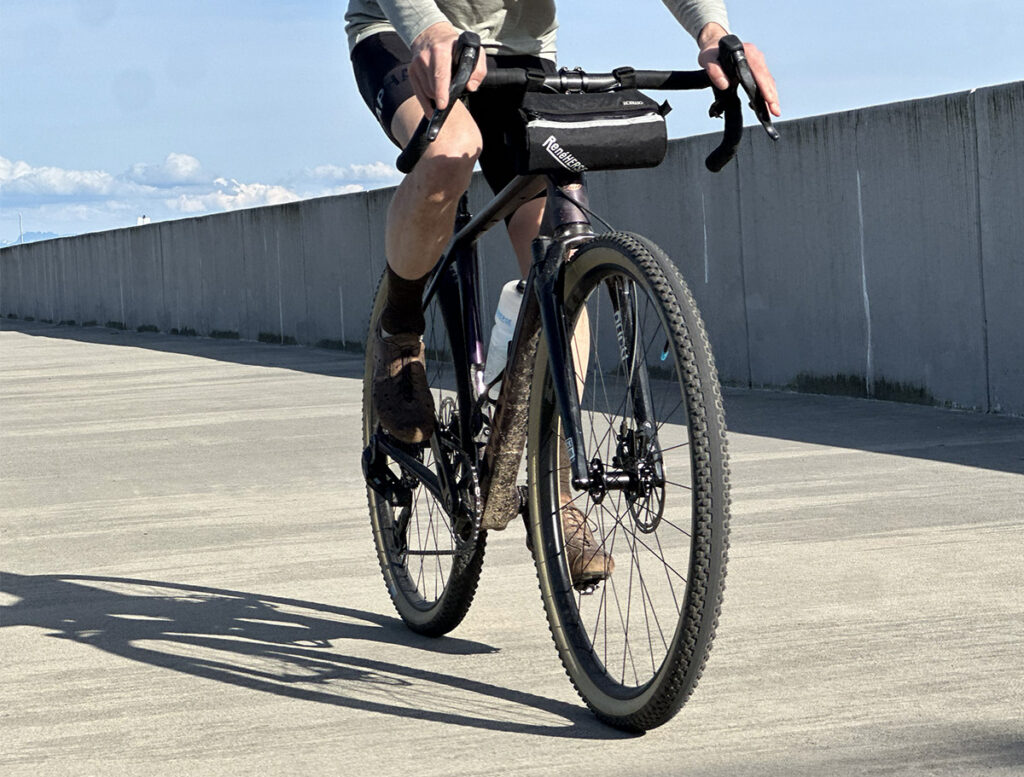
You can also hear that the knobs don’t flex. Or, more accurately, you don’t hear the usual roar of knobbies flexing as they hit the surface. Rene Herse semi-slicks are eerily quiet at all speeds.
Part of that is the noise canceling that’s also featured on our dual-purpose knobbies. However, the noise canceling is most effective at speeds between 18-21 mph, where the frequencies overlap the most. (When designing the noise canceling, we had to choose the speed range where it would be most effective.) The anchored knobs reduce flex at all speeds. That’s a benefit for all riders, fast and slow.
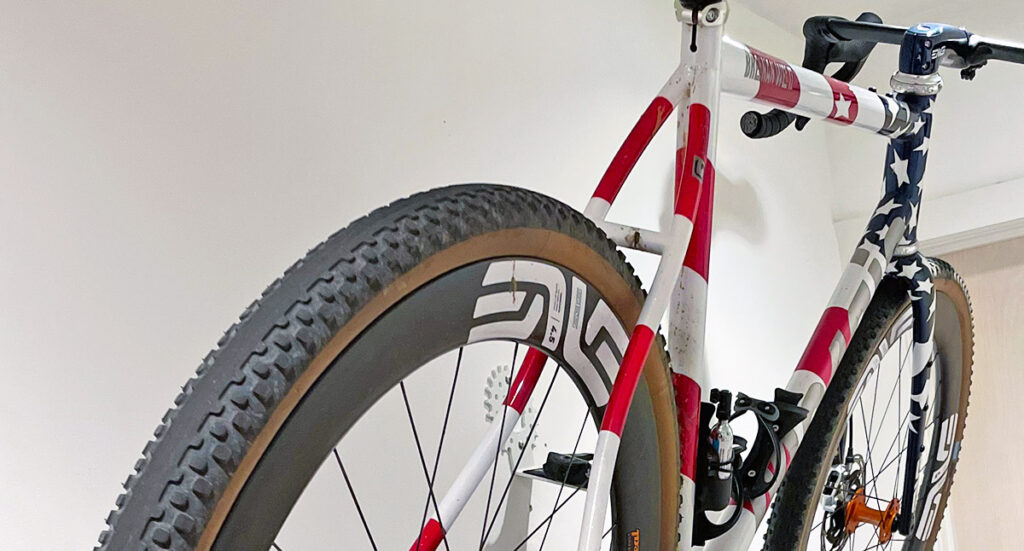
Once you see the anchored knobs, you wonder why nobody has come up with this idea before. It’s just a better way to do a semi-slick. There are no disadvantages. The tread clears mud just as well, and there’s no extra weight—just more traction and lower rolling resistance.
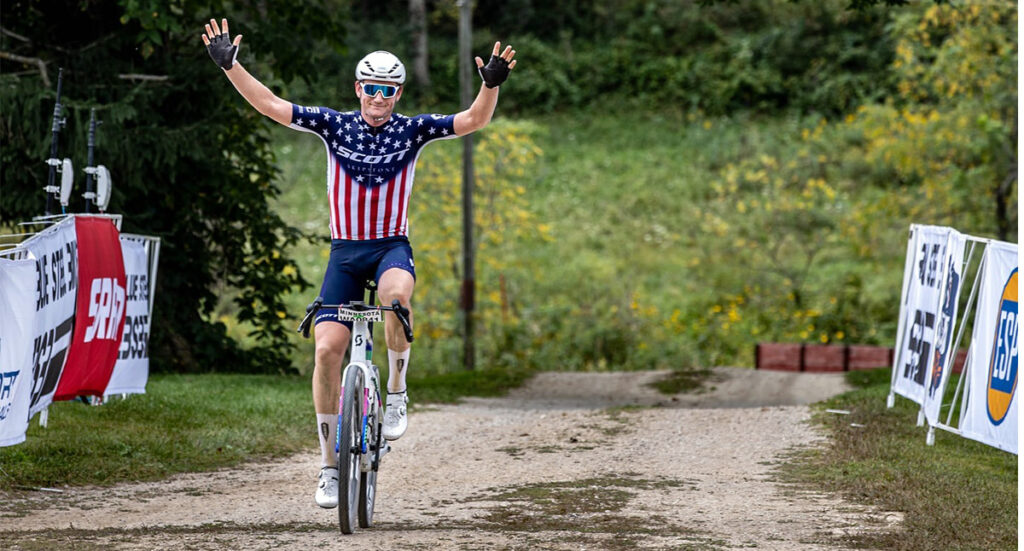
Of course, theory and patents don’t mean much if the new tech doesn’t work in the real world. That’s why a big part of our R&D is working with racers like 2024 U.S. Gravel National Champ Brennan Wertz (above). He’s ridden the 700×44 Corkscrew Climb semi-slicks to a number of race wins. His comment: “I’m really liking them!”
In the next part of this mini-series, we’ll discuss the third patent for the Rene Herse semi-slick tires.
More Information:
Photo credit: Jim Merithew / @tinyblackbox (Brennan winning in stars-and-stripes jersey); Brennan Wertz (U.S. Gravel Champion Bike with Corkscrew Climb tires); Natsuko Hirose (Salsa Flyway with Poteau Mountain tires)