
“At the Slams there was already pressure because I understood that I wanted a contract, and I was dreaming of Nike,” she says.
An offer came quickly after Paris. It wasn’t Nike, though. It was Adidas, and the deal was too good to refuse.
“After Roland Garros I got an offer, but very quickly that changed and I moved to Adidas. The offer was simply better.”
The jump from junior star to fragile pro
Kalinskaya was one of the top juniors in the world, ranked No. 3, but the move to the professional circuit was far from seamless.
“When you move from juniors to the pro tour, people expect the same results from you,” she explains. “But if you think realistically, I was very, very physically underdeveloped. I was very skinny. I didn’t have power. My body couldn’t cope.”
The consequences came quickly. “The injuries started — back injury first. I had to change my fitness coach and adjust the whole approach because the loads were completely different. The speed, the intensity, the pressure, the expectations — it all affects you. And when your mind isn’t ready yet — you’re still only 16 — it’s hard.”
Instead of finishing juniors traditionally, she accelerated the process. “I didn’t play my last junior year. I went straight into ITF tournaments at 16–17.”
In hindsight, she would have done things differently. “If I could go back, I would actually play less, travel less.”
Separating tennis from family
Behind the scenes, her family dynamic was evolving too. “My dad was always very calm about tennis. Only in the last five years he’s become more interested. Before that he was more into football. My mum was the one managing everything. She probably expected more results.”
At 18, Kalinskaya made a difficult but defining decision — she stopped travelling with her mother. “That helped me a lot and improved our relationship. I separated tennis and family. Tennis is my job; family is personal. I didn’t want to mix them.”
It wasn’t painless. “There were moments when she was upset. We had periods when we didn’t really talk much. Not zero contact, but the relationship suffered. Setting boundaries helped.”
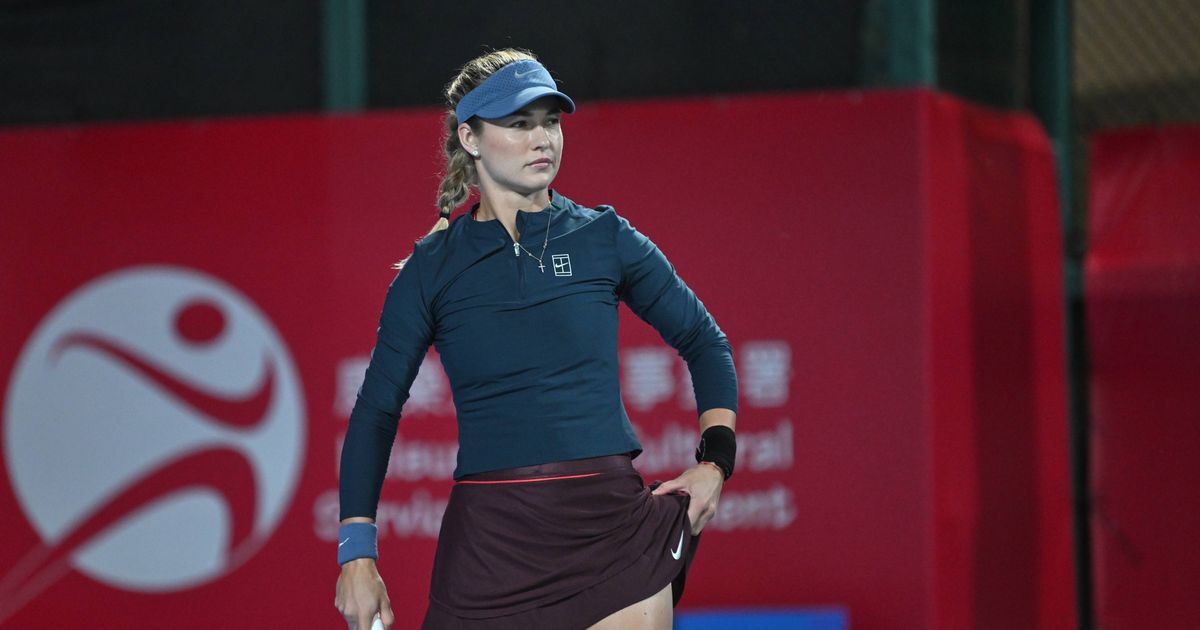
Anna Kalinskaya in Hong Kong.
Mouratoglou and the first major setback
After Roland Garros, without a coach but with an agent, Kalinskaya joined Patrick Mouratoglou’s academy on a free junior programme. “Stefanos Tsitsipas was there in the same program. Coco Gauff was younger; she came later.”
The facilities were world-class. The training was intense. “They started loading me physically very heavily. I wasn’t ready. Until 16 I barely did any weight training.”
There was little individualisation. “If Alizé Cornet was doing something, I might repeat it, even though she was already a tour player and I was just starting.”
The results improved, but her back began to break down. “That was my first injury. And it still sometimes comes back. I think they overloaded me when I wasn’t ready. I needed a more careful approach.”
Coaching instability didn’t help. “In 10 days I had three different coaches. Priorities were tour players. After that, I didn’t return.”
At that stage, there was no single person overseeing her health. “I just treated them and kept going. I was constantly searching for a coach. There wasn’t one permanent person responsible for my health.”
Money, independence and early reality
Financially, Kalinskaya was fortunate. “I signed with Octagon and had my Adidas contract, which was paid. I was also part of the national team and got help from the federation.”
The Mouratoglou programme had been free. Travel was sometimes alone, sometimes with her mum. “I never really thought about money running out. I was lucky with the Adidas contract. For me at 16 it was like, wow, that amount of money. I understood which coach I could afford and which I couldn’t.”
Interestingly, she insists she never grew up chasing the very top. “Maybe I’m like Alexander Bublik. I never had a dream to go to a Slam or be world No. 1. I lived in the moment. Even travelling abroad was already cool.”
Only later did ambition sharpen. “Now I understand my potential and that it’s possible. It’s somewhere nearby.”
Rebuilding the body and the mindset
Five years ago, Kalinskaya’s physique looked very different. The transformation has been deliberate. “I changed my lifestyle. I pay attention to what I eat, how important routine is, I listen to my body more. Even how many hours I sleep matters.”
She tracks her sleep — though that hasn’t always been healthy. “I stopped because it got into my head, if I didn’t sleep enough, I would obsess over it. It wasn’t good for my mental state.”
Now she uses data differently. “Even if I didn’t sleep enough, I just know it, I don’t focus on it.”
The connection between mental strain and physical injury has become clear. “If something is weighing on me, I feel tired immediately. The body feels heavy. I definitely connect my injuries with my psychological state.”
A coaching change was pivotal. “From my first conversation with Patricia, I felt trust. I understood I could talk not only about my backhand but also about how I feel mentally.”
The approach is flexible and human. “If I didn’t fall asleep until 2 a.m., we won’t train at 9 a.m. She will try to move practice so I can recover and train better. She wants me to be happy first, but of course disciplined too.”
It’s a contrast to the mentality she grew up with. “You feel like you have to earn rest. Even if something hurts and you skip practice, you feel guilty. That’s from the mentality.”
Now there is balance.“Sometimes she says, ‘Anya, you don’t have to go,’ and I say, ‘No, we’re going.’ We complement each other.”
Adidas disappointment and the Alo chapter
In 2024, Adidas chose not to renew her deal. “I even played in Adidas without a contract. The head of the tennis department came to my box at a quarter-final and asked for tickets. I thought, ‘Okay, they’ll renew.’ It didn’t happen. That was disappointing.”
She made a decision. “After that I decided I wouldn’t wear Adidas anymore out of principle.”
Her interest turned to Alo. “I wanted Alo a year earlier. I care about how I look on court. Even if someone pays me, I won’t wear something I don’t like — unless it’s 10 million, maybe!”
With no offer on the table, she bought the clothes herself. “I liked how it looked and no one else on tour wore it. I wanted to stand out.”
A chance connection through her coach led to a surreal experience in Dubai. “The whole staff was there just for me. It felt like a dream. They customised visors for me within three days because I said I didn’t like theirs.”
Ultimately, though, she chose Nike. “I had two offers — Nike’s was more financially attractive and more professional in terms of tennis structure and bonuses. That’s why I chose Nike.”
Calm on court, ambitious underneath
Kalinskaya is often described as emotionally reserved.
“My brother said he watches my matches and can’t tell if I’m winning or losing; my emotions are the same.”
She sees it as part of her style. “I’m more like Elena Rybakina — I keep everything inside. Tennis for me is elegant. I’m not a fan of breaking rackets. It’s just not me.”
That doesn’t mean she doesn’t care. “I cry after matches, I react but not on court.”
When asked whether she considers herself beautiful and successful, she answers without hesitation. “Yes. That’s important.”
But self-criticism is constant. “I’m very demanding of myself… I need to praise myself more. I consider myself successful, but I always want more.”
She measures success in experiences as much as titles. “I’ve played on almost all the biggest courts except Philippe-Chatrier. I’ve played against almost all the top players — and beaten some of them. Not just once, but several times.”
The belief is there. “Of course I want more. I want to win a Grand Slam one day. But overall, my career is already successful.”
Miami, Russia and what matters
If there is one tournament that feels personal, it is Miami. “It feels like a second home. To win there and celebrate with friends and family would be special.”
She has never considered changing nationality. “I want to play for Russia. I’m a patriot in that sense. I miss playing for the national team. It was always a huge honour.”
When she returns to Moscow, life becomes structured and grounded. “Training in the first half of the day — tennis or fitness. In the second half I take care of things I can’t do during the season: doctors, documents, seeing my grandfather, aunt, friends.”