

Bikepacking bike weight is a common concern for many riders, and it’s easy to see why. You’re already using ultralight gear to keep your luggage compact and your speed up, so it’s natural to apply the same thinking to the bike itself.
But what counts as a normal weight for a bikepacking bike, and when does it become too heavy? And what are you actually giving up by using a heavier bike?
To answer this, I’ll share the average weights of over 380 bikepacking bikes across 12 different travel categories. These categories are primarily defined by the bike’s intended use; some are designed for gravel roads, while others are built to tackle rough off-road terrain.
Let’s take a closer look.
Bikepacking Bike Weights
To give you a sense of what a bikepacking bike should weigh, almost all bikes fall within the 9 to 16 kg (20–35 lb) weight range. The differences in weight come down to several factors:
- Intended use – off-road bikes tend to be heavier than gravel bikes
- Price – cheaper bikes are often heavier
- Materials – lower-cost materials add weight
- Tyre width – wider tyres increase overall weight
- Drivetrain type – gearbox drivetrains add weight
- Suspension – bikes with suspension are heavier
A heavier bike in a similar price range to a lighter model is usually stronger, meaning it can withstand bigger impacts, reducing the likelihood of component failure during extended bikepacking trips. It also often provides greater lateral and torsional stiffness, helping the frame stay rigid even when carrying luggage.
A little extra weight isn’t necessarily a drawback if it gives you added strength and stiffness in return.
Finding The Weights of Different Bikepacking Bikes

I’ve collected the weights of more than 380 bikepacking bikes and listed them in my Bikepacking Bike Buyer’s Guide.
The guide explains everything you need to know about these bikes and gives you the tools to easily compare different models.
At the back of the book, you’ll find a comprehensive comparison section where you can review your options side by side, check their weights, and identify the bike that best suits your needs. I’ve listed models available from all around the world.
You can get a copy of the Bikepacking Bike Buyer’s Guide HERE.
Touring vs Bikepacking Bike Weight

A touring bike is generally 3 to 4 kg (6–9 lb) heavier than a typical bikepacking bike. This is because touring bikes are built with stiffer, stronger frames and more durable components, all designed to handle heavier loads – often 20 kg (44 lb) or more of luggage. You can see the full touring bike weight breakdown in my separate resource HERE.
Bikepackers, by contrast, usually travel with a lighter, more minimal setup, so their bikes and components don’t need to be as heavy-duty.
In short, if you carry less gear, you can use a lighter bike. But there’s another important factor to consider…
The Effect of Your Body Weight

Bikepackers vary widely in body weight. On the trail, I’ve met riders weighing anywhere from 50 to 130 kg (110–290 lb).
Lighter riders can usually get away with lighter bikes because the frame and components experience less overall stress than they would under a heavier rider.
For example, a 50 kg (110 lb) rider might never have issues with a lightweight wheelset, while a 130 kg (290 lb) rider using the same wheelset could break multiple spokes or even crack a rim in a single day of riding!
How Much Does Weight Slow You Down?
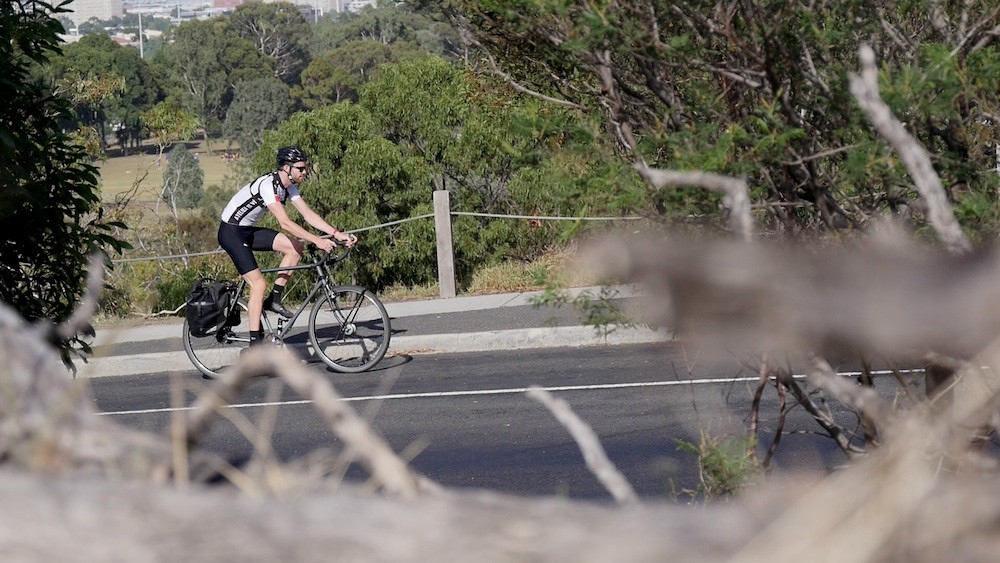
Many people assume bike weight has a huge impact on speed, but when you run the numbers, its effect is relatively small compared to factors like rolling resistance or aerodynamics.
When you ride your bike up a hill, it’s not just your bike’s weight that you are hauling. You are pushing your body, clothes, shoes, water, food, pump, spare tube, and any luggage you might be carrying. In practical terms, choosing a bike that’s one kilogram lighter might reduce your total system weight by 1%, but this changes your cycling speed by very little.
I’ve run experiments with bikes of different weights, and also modelled the results using software. From my testing, I’ve found that carrying an extra kilogram of weight costs me roughly one to two minutes per 100km (62 mi) on a hilly route. And on a flat route? There’s almost no difference.
This ultimately means that you shouldn’t be too concerned about adding a couple of kilograms of bike weight if it also means you get extra strength and stiffness in return.
You can read more about my weight testing HERE.
Spending Money To Save Weight

By using lighter, more exotic materials such as carbon and titanium, it’s possible to build a frame that’s just as stiff and durable as a heavier frame, but with a significant weight reduction. However, the cost of saving weight rises very quickly!
For example, most gravel bikes in the 9 to 10 kg (20–22 lb) range cost US $3000 or more. However, comparable gravel bikes that are just one kilogram heavier often fall in the US $1500 to $2000 price range.
In short, there are diminishing returns when it comes to reducing bicycle weight. Once you hit about US $1000, you end up with bikes that fall in a reasonable weight range.
It’s now time to check out the weights of different bikepacking bikes across various categories found in my buyer’s guides. I’ll start with the gravel bike categories, and then we’ll move on to the off-road bike categories.
Bikepacking Bike Weight Comparison
Bikepacking Gravel Bikes

Gravel bikes with 700C wheels are the most common type for bikepacking. I’ve listed more than 130 models in my books alone, and the category continues to grow.
They’re typically the lightest option, combining speed on smooth surfaces with enough tyre clearance for moderately rough routes. Most 700C gravel bikes fit tyres between 45 mm and 55 mm, striking a balance between efficiency and capability.
On average, they weigh around 10.5 kg (23 lb), with anything over 13 kg (29 lb) considered heavy. Steel frames and high-volume tyres tend to account for most of the extra weight.
The Ari Shafer Sport is a good example. This carbon bike is just over 10 kg (22 lb) with 50 mm tyre clearance and a wide-range 1X drivetrain.

Gravel bikes are also available with smaller 27.5″ (650B) wheels, usually paired with tyres around 2.1″ wide (about 53 mm). While this setup was once favoured for its added comfort and traction, many modern 700C bikes now offer similar tyre clearance, reducing the need for smaller wheels.
As a result, 650B gravel bikes are less common and tend to be slightly heavier, averaging about 11.5 kg (25 lb). Bikes around 14 kg (31 lb) are considered heavy, although this is more a reflection of fewer high-end builds – there are simply not as many carbon or titanium frames in this category.
The All-City Space Horse is a typical example, with its steel frame and fork, wide slick tyres, and Shimano GRX drivetrain.

Flat bar gravel bikes share the same foundations but replace drop handlebars with a flat bar, creating a more upright riding position and a more stable ride.
These bikes average about 12.0 kg (26 lb), with 14 kg (31 lb) on the heavier side. The added weight isn’t due to the handlebar style itself, but rather their positioning at more affordable price points, where aluminium frames are more common than carbon or titanium.
The Norco Search A Flat is a typical example, featuring an aluminium frame, carbon fork, and clearance for 700C × 50 mm tyres.
Bikepacking Gravel Bikes With Suspension & Gearboxes

Some gravel bikes are built around short-travel suspension forks, offering extra comfort, improved front-tyre traction, and better control on rough surfaces.
Despite the added complexity, these bikes weigh about the same as typical rigid 700C gravel bikes. On average, they come in around 10.6 kg (23 lb), with 13 kg (29 lb) considered heavy. This is largely because suspension-equipped models tend to sit at the higher end of the market, often using lighter frames and components.
The Propain Terrel CF is a good example, pairing a carbon frame with a RockShox Rudy suspension fork, a wide-range 1× drivetrain, and 50 mm tyre clearance.
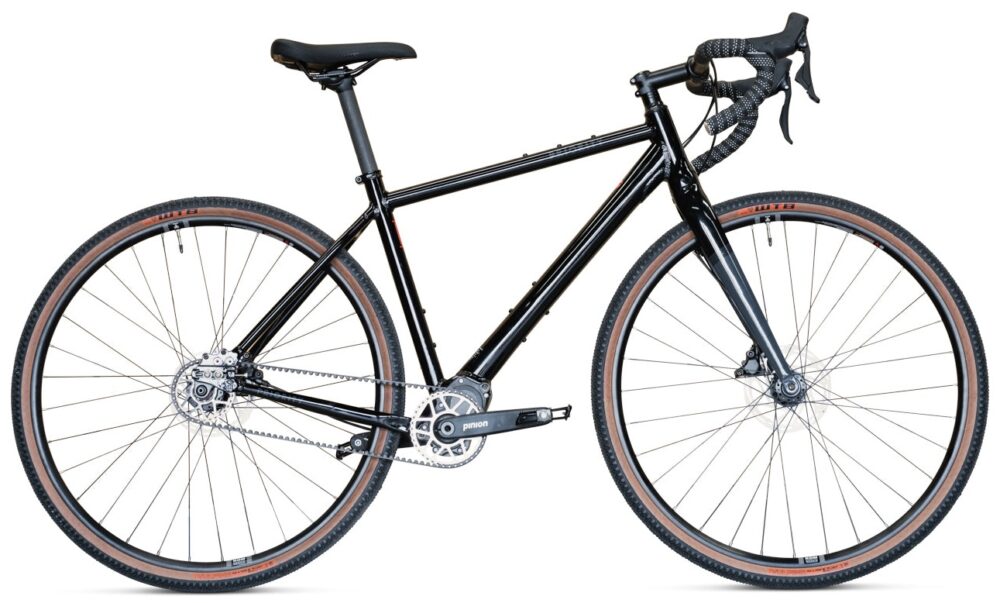
At the other end of the spectrum are gearbox gravel bikes. Using either a gearbox or internal gear hub, these systems typically add 1 to 2 kg but deliver a long-lasting drivetrain with a wide gear range and minimal maintenance.
As a result, complete bikes average around 13.0 kg (29 lb), with 15 kg (33 lb) considered heavy. Alongside the added drivetrain weight, most gearbox gravel bikes prioritise durability, using tougher components throughout rather than chasing weight savings.
The Priority Gemini is a good example of this category, combining an aluminium frame, carbon fork, and a Pinion 12-speed gearbox with 50 mm tyres.
Let’s now get stuck into the off-road bikepacking bike categories.
Off-Road Bikepacking Bikes With Drop Bars

With wider tyres and tougher frames, drop bar adventure bikes are slightly heavier than typical 700C gravel bikes, usually by only 1 to 2 kilograms. In return, they offer significantly more off-road capability and comfort, largely due to their higher-volume tyres.
Bikes designed around 2.3″ to 2.5″ tyres average about 11.9 kg (26 lb), with 14 kg (31 lb) and above considered heavy.
The Salsa Cutthroat is a great example, combining a carbon frame with clearance for 2.4″ tyres, a more upright riding position, and a very wide gear range. It can even be fitted with a suspension fork for rougher terrain.

Moving to even larger tyres, models built for 2.6″ to 3.0″ rubber only gain a modest amount of weight. On average, they come in around 12.3 kg (27 lb), with 14 kg (31 lb) again marking the heavier end of the spectrum.
The Cinelli Hobootleg Geo is a good example here. This steel adventure bike pairs a full carbon fork with stable handling, an upright riding position, clearance for 3.0″ tyres, and a wide-range 1X drivetrain suited to mountainous terrain.
Off-Road Bikepacking Bikes With Flat Bars

Bikepacking bikes in this category are mostly cross-country hardtail mountain bikes. They’re highly capable off-road thanks to suspension forks, long wheelbases, and wide handlebars, yet still light and efficient enough for covering ground on dirt roads. Many use carbon frames to help keep weight down.
Despite their capability, they’re often surprisingly light due to their racing heritage. Across the category, the average weight is about 11.5 kg (25 lb), with 14 kg (31 lb) considered heavy.
The Cannondale Scalpel HT is a good example, pairing a carbon frame with a 100 mm suspension fork and a Shimano 1X drivetrain. It comes in at around 11 to 12 kg (24–26 lb), which is not dissimilar to the weight of a gravel bike with a suspension fork.

As tyre size increases, hardtail bike weights rise noticeably. This is partly because more bikes in this segment use aluminium or steel frames rather than carbon. In addition, it lumps in bike models with more suspension travel and more durable components, such as stronger wheels, more powerful brakes, and often dropper seatposts.
As a result, bikes in this broader category average about 14.3 kg (31.5 lb), with the heavier end reaching around 16 kg (35 lb).
The Kona Unit X is a typical example, featuring a steel frame and fork, 29 × 2.6″ tyres, and a wide-range 1X drivetrain. Complete builds usually sit around 14 to 15 kg (31–33 lb).

Fat bikes sit in a similar weight range to bikes running 2.6″ to 3.0″ tyres, despite their much heavier wheels and tyres. This is because the category includes more carbon and titanium frames and fewer suspension forks, which helps offset the additional rotational weight.
The average fat bike weight is around 14.3 kg (31.5 lb), with 16 kg (35 lb) and above considered heavy.
The Trek Farley is a good example, combining an aluminium frame, carbon fork, and 4.5″ tyres. It weighs between 14 and 15 kg (31–33 lb).
Off-Road Bikepacking Bikes With Gearboxes and Full Suspension

Adding a gearbox or internal gear hub to an off-road bikepacking bike inevitably increases weight. Compared to similar bikes with derailleur drivetrains, models in this category are typically around 1 to 2 kg heavier on average. Bikes with a gearbox average about 15.6 kg, with 17 kg considered heavy.
The Priority Bruzer is a good example, using an aluminium frame with a steel fork and typically weighing in the 15 to 16 kg range.

The final category is full-suspension mountain bikes. With around 100 to 140 mm of travel front and rear, these are among the most capable options for technical singletrack.
Despite their complexity, they are often lighter than many rigid bikepacking bikes, thanks to their cross-country racing heritage and the widespread use of carbon. On average, full-suspension bikepacking bikes weigh around 13.2 kg (29 lb), with 15 kg (33 lb) and above considered heavy.
The Canyon Lux Trail CF is a good example, pairing a carbon frame with 120 mm of front travel and 115 mm at the rear, and weighing approximately 13.4 kg (29.5 lb).
Summary
| Lightest | Average | Heaviest | |
|---|---|---|---|
| Gravel – Drop Bar | 8 to 10 kg | 10 to 12 kg | 14 to 15 kg |
| Gravel – Flat Bar | 10 to 11 kg | 12 to 13 kg | 14 to 15 kg |
| Gravel – Suspension | 9 to 10 kg | 10 to 11 kg | 12 to 13 kg |
| Gravel – Gearbox | 11 to 12 kg | 13 to 14 kg | 15 to 16 kg |
| Off-Road – Drop Bar | 9 to 11 kg | 11 to 13 kg | 13 to 15 kg |
| Off-Road – Flat Bar | 9 to 13 kg | 11 to 15 kg | 13 to 17 kg |
| Off-Road – Gearbox | 12 to 13 kg | 15 to 16 kg | 16 to 17 kg |
| Off-Road – Fat Bike | 11 to 12 kg | 14 to 15 kg | 15 to 16 kg |
| Off-Road – Full Sus | 10 to 11 kg | 13 to 14 kg | 15 to 16 kg |
Almost all bikepacking bikes fall within a weight range of 9 to 16 kg (20–35 lb).
Where a bike sits within that range depends on a combination of factors, including its intended use, suspension setup, frame material, tyre width, drivetrain type, and, of course, price.
The “ideal” weight also varies from rider to rider. It depends on your luggage load, body weight, riding style, and whether you prefer a bike with extra durability in reserve for unexpected impacts.
In practice, as long as a bike sits within the typical ranges outlined in this resource, differences in weight will usually have only a small impact on overall speed.
If you’d like to see the individual bike weights of over 380 different bikepacking models, check out my Bikepacking Bike Buyer’s Guide, which is available HERE.