
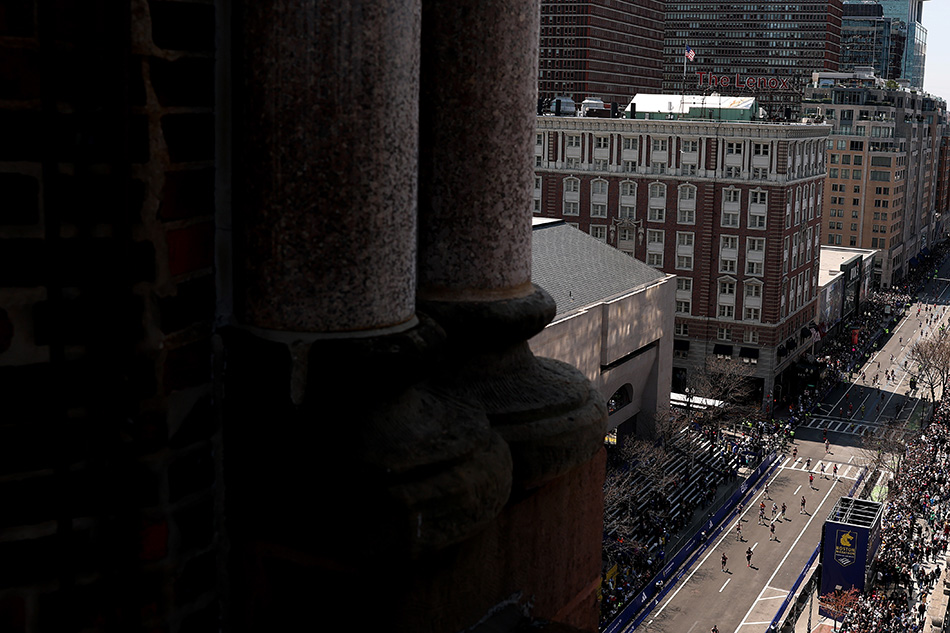
As it prepares to stage its 130th edition, those who know it best help to explain what makes the world’s oldest annual marathon so special.
“It’s something that’s important to note,” says Mario Fraioli, warming to one of his favourite topics of conversation. “It’s the marathon. For people in Massachusetts, whether you’re a runner or not, it’s not the Boston Marathon. It’s the marathon. It’s the only one that matters.”
And he should know. The coach and writer – the man behind the The Morning Shakeout newsletter and podcast, as well as being a rather useful runner himself – was born and raised in Worcester, “about 45 minutes west of Boston”. He grew up with his local marathon embedded into his psyche, has run it six times and has only missed one edition of the race since 2003.
He will be on the sidelines to support his athletes again this month, continually drawn back by an occasion that he openly admits has him firmly under its spell. He is far from being the only person that this has happened to.
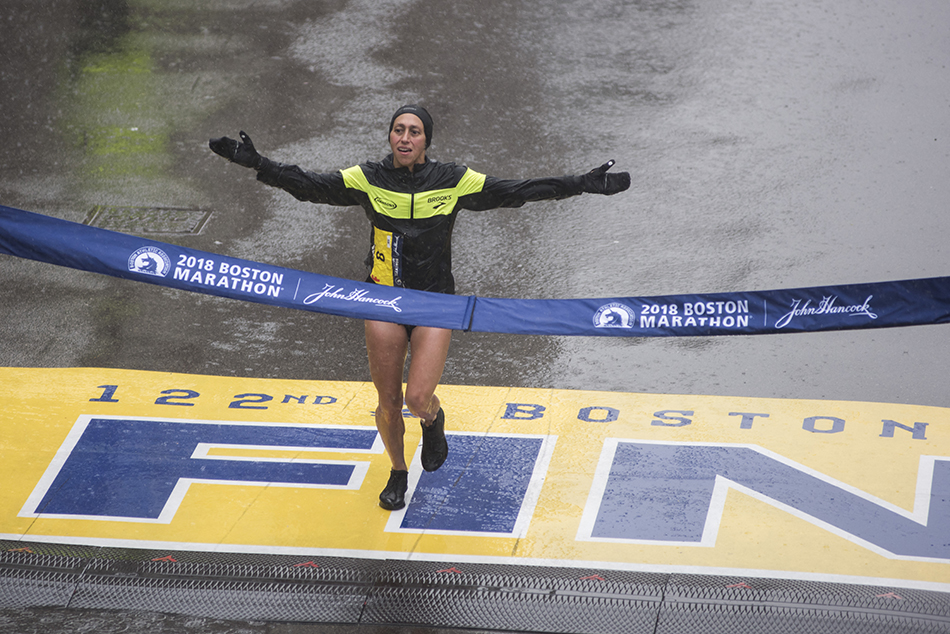
Des Linden, for example, grew up on the opposite side of the United States and knew little of the “lore of Boston”, yet it took just one appearance for the Olympian to fall in love with an event in which she participated a total of 12 times and famously battled through atrocious conditions to win in 2018.
Incredibly, this will be the 130th edition of the world’s oldest annual marathon and, ever since John J. McDermott emerged victorious from the 15-strong starting field back on April 19, 1897 to become the first ever Boston Marathon champion, it has woven its way into distance running folklore.
There is a personality to each of the marathon majors, but Boston is different – and for all sorts of reasons. It is a behemoth that manages to feel simultaneously huge yet intimate, that has the capacity to celebrate smalltown America as well as one of the country’s great cities in equal measure. And while so many of the finest names ever to lace up a pair of running shoes have toed the start line, it is the Boston course that will always be the true star of the show.
“The Boston Marathon is a little bit of a misnomer,” says Fraioli. “You only really run in Boston for maybe 5km and the rest of the race is run through all of these smaller towns that are taking you closer to the city.”
So let’s look more closely at an occasion – and a route – that so many people have chosen to follow and experience.
“Marathon Monday is Patriots Day in Massachusetts,” says Fraioli of the celebration that takes place on the third Monday of every April. “It’s a holiday and, as a kid, even before I had an interest in running, I loved that, because we didn’t have to go to school. But the race was all over the place. It was on every TV channel, all the local channels broadcast the race live.
“The coverage would start the week of [the event], and the local newspaper, which I read every morning, was all about Boston Marathon, the local athletes that were running, and the internationals that were coming into town. There’s just a lot of excitement in the general Massachusetts area about the marathon.”
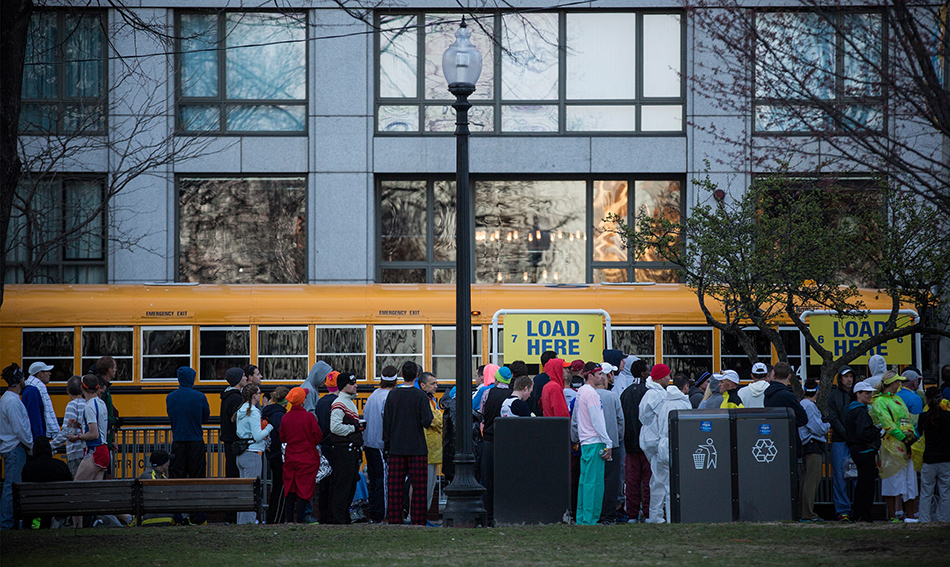
That same anticipation will be starting to ramp up as you read this, too – for residents, spectators and runners alike. It’s an event day quite unlike any other. The first task for those taking part is to catch one of the fleet of yellow school buses that will transport the runners from the pick-up point at Boston Common in the heart of the city to the start line that is situated in the town of Hopkinton, which lies 26.2 miles to the west but, at first glance, could almost be from another world.
“A lot of the buildings are very historic and still look very old,” says Fraioli. “They’ve done a good job of preserving them. You feel a little bit like you’re going back in time.”
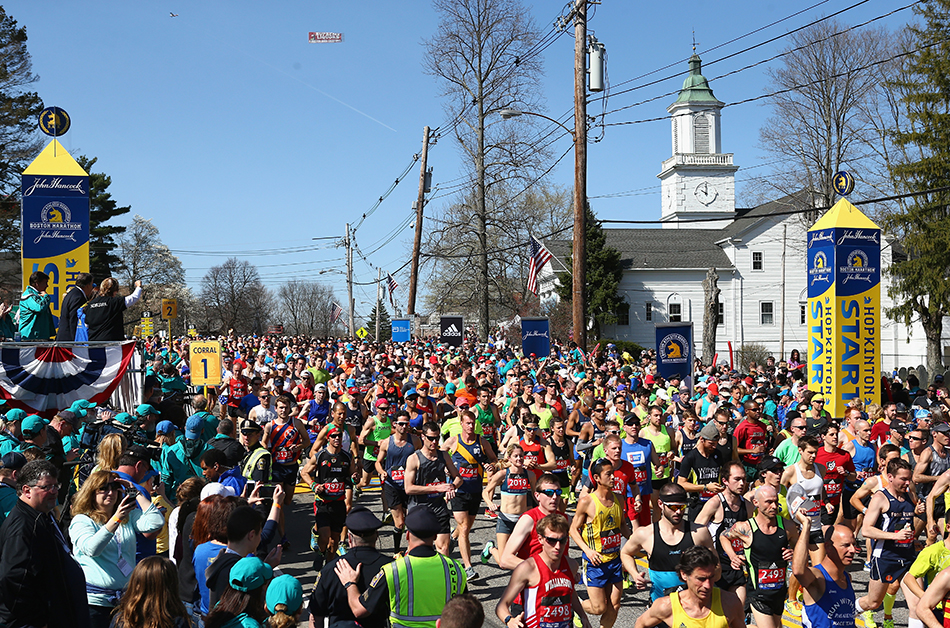
It’s from there that the thousands of runners who have hit qualifying times just to stand on the start line in the first place – another quirk that is unique to Boston – will follow the largely downhill first half through the towns of Ashland, Framingham and Natick before reaching the “scream tunnel” at halfway in Wellesley, where students of the nearby college follow the tradition of lining up to offer some encouragement of the exuberant variety.
All of that precedes the challenge of the Newton Hills that commences around 17 miles in and ends in the 21st mile with the both famously, and ominously, named Heartbreak Hill. Survive that in good shape and the closing stages through Brookline and into Boston itself, taking the famous turns of “right on to Hereford Street, left on to Boylston Street” to the finish line can represent the happiest of endings. Overcook your earlier efforts, however, and it will be a very different experience indeed. But we’ll come back to that.
“I think of the course,” says Linden when asked what first comes to mind at Boston’s very mention. “I’ve spent so much time doing training runs on the Boston course that I immediately picture a series of landmarks along the route: the finishing stretch on Boylston always stands out, and the worn out painted finish line from the year prior on training day, but then of course the spruced up and updated finish line on race day.
“The history sets it apart from all the other marathons. There’s tradition on the course, the landmarks and challenges on the route all have a story that pair with them, and the fans have knowledge and respect for the event, there’s an ownership of it unlike anywhere else in the world.”
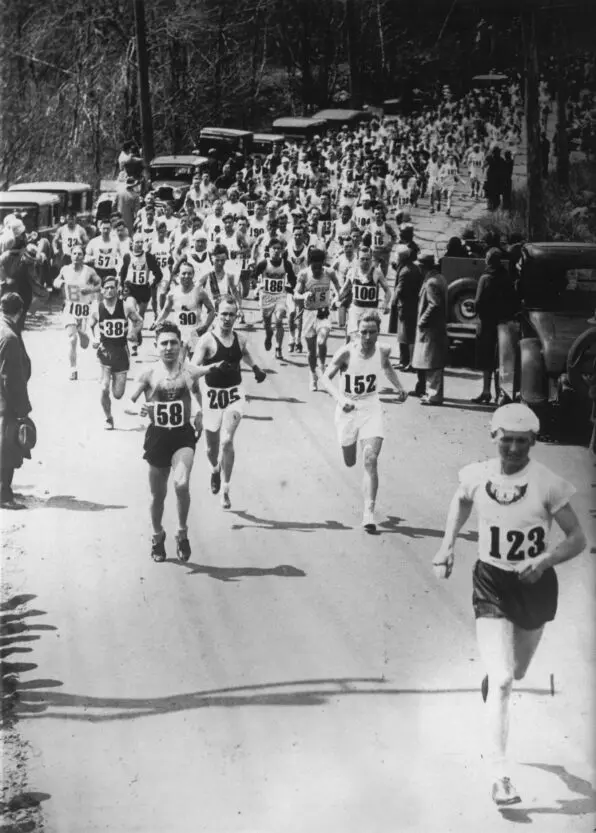
The original Boston course was 24.5 miles long, beginning at Metcalf’s Mill in Ashland and finishing at the Irvington Oval in Boston, close to the site of the current Boylston Street finish line. To conform with Olympic standards, it was lengthened in 1924 to the now standardised 26 miles and 385 yards, with the start moving to Hopkinton. The finish line has moved a few times but the bulk of the course has been left largely unchanged since.
“As I’ve made my way through the course, I’ve always noticed: ‘There’s the old church and all those historic homes’ along the way,” says Fraioli. “And then, as you get to the city you start to see [Fenway Park, home of the Boston Red Sox] and skyscrapers off in the distance. I think that makes it unique.
“One of my favourite aspects is some of the history along the course. A lot has changed in the last 100 and however many years, but a lot of families still live along the course, and they have their traditions every year.
“One of my favourite things to do is to go out on the Saturday or Sunday before the marathon and just drive along the course in Hopkinton, Ashland, Framingham and you see the chairs that are already put out. People have already established their spots, like: ‘This is where we are going to be on Monday. This is where we, or my family, has been for the last however many decades’. I think that’s a really special thing, and you feel that.
“I love the whole damn course because it’s so unique, and some of the things that I love about it aren’t really that obvious. Right at the 10km mark [in Framingham], for example, there’s a Brazilian bakery. My wife has stood there and cheered for me, and when I’m spectating that’s usually where I go.
“Framingham is very much a working class community, which is similar to where I grew up in Worcester, and I just feel like those are my people. When I run through there, I just feel that kind of a gritty town in central Massachusetts and I love that.
“But it’s not one of the big highlights. The Wellesley College ‘scream tunnel’ is amazing, running past Boston College is amazing, the start is electric. Coming into the city, the noise just becomes deafening. The right on Hereford, left on Boylston…it gives me chills just vocalising that.”
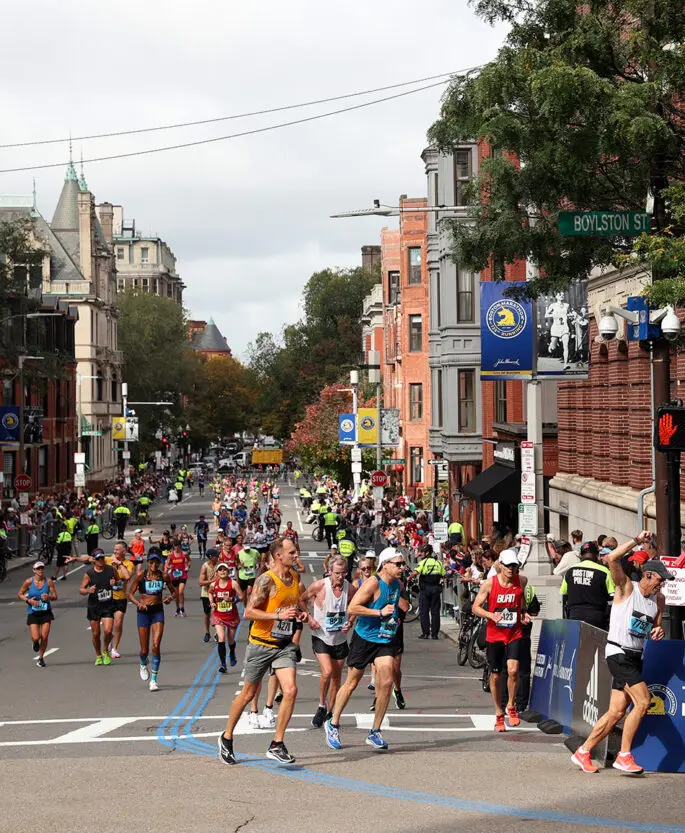
The art of getting into the city in the position to finish strongly is a skill in itself, though. Given its point-to-point nature and the fact that it is downhill overall means the course is not eligible for records. The fact that many of the downhills come in the opening half means that it can be easy to get carried away in the early stages and suffer the consequences when the uphills begin. Many a competitor has come unstuck by underestimating the undulations.
”I think of the course as the sage who knows all but only answers questions with questions, making the runner solve the marathon puzzle on their own but also proving that they, too, had the wisdom inside them the entire time and just needed to put in the work to find the answers on their own,” says Linden.
“Experience is probably one of the best tools that you can take with you to the start line in Boston,” says Fraioli. “Some people do it well the first time, but most people need to get a rep or two before they really feel like they can nail it. As Bill Rodgers famously said: ‘The marathon will humble you and the Boston Marathon will humble you ten times over if you’re not careful’.
“I grew up in the area. I trained on the course before [I ran] my first Boston in 2008, like hundreds and hundreds and hundreds of miles. I knew every inch of it like the back of my hand and I still went out too fast, and I still did exactly what I knew I shouldn’t do.
“I remember coming through Ashland at 5km, looking at my split and saying to myself: ‘You are f***ed!’. I went through halfway in 1:12:11, hitting the brakes, and ended up suffering through a 1:18 second half – the real hard way to run a 2:30 marathon at Boston.
“But I knew at 5km that I’d ruined my day. In some other marathons, I feel like you can get away with a little bit of a quick start and make some adjustments and still be okay. But Boston, if you get too greedy in that first half, the second half will really put you in your place. It really requires abnormal levels of patience and control early on and, in the years that I’ve done it well, I’ve been able to do that.
“With the athletes that I’ve coached, the main thing I tell them, from an execution standpoint, is: ‘Be present, take in all this energy but, from an effort standpoint, you almost need to be bored’.
“Because the course is net downhill everybody’s excited, everyone’s running fast, you’re fresh. It’s easy to just run fast during that first half and not have it feel hard.
“I joke all the time that if Boston were a half marathon, everyone would PR. If you were just racing a half marathon, everyone would go into Wellesley feeling like a hero. But if you want to race the entirety of the Boston marathon course well, you really have to be bored early on and just try to be as controlled as possible through halfway so you can have the legs when the topography of the course changes, around 16-17 miles.”
It’s Heartbreak Hill that gets all the attention. It was so named in 1936 by Boston Globe reporter Jerry Nason when he wrote about the duel between Ellison “Tarzan” Brown and John A. Kelley. Brown had been leading but was caught in the Newton Hills by Kelley, who tapped his rival on the shoulder to signal his arrival. Brown would have the last laugh, however, retaking the lead on the final hill, “breaking Kelley’s heart” and going on to win. However, it’s that first climb that can inflict considerable damage.
“I love all the challenges; it makes the racing meaningful and more than just another time trial,” says Linden. “But I hate the specific challenge of the Lower Newton Falls, something about the big climb there just always got the best of me.”
Fraioli nods in agreement when asked if this is in fact the point in proceedings where marathon dreams can die. “That’s really the first significant climb in the race and if you’ve burned all your matches early on that one really stings,” he says. “And if that one really stings, you’re in for it the next 10 miles.”
All hope is not lost, however.
“But if you can get over that one, and you’re still in pretty good shape, the next couple aren’t too bad,” he adds. “Heartbreak really isn’t that long, it’s really not that steep.
Maybe I can say that because I’ve run up and down it more times than I care to remember, but if you can get over Heartbreak, and you’re in good shape, and you can really roll the last five miles, you’ll feel like a rock star going into the city.”
The 600m long finishing straight on Boylston Street becomes a moving sea of humanity on marathon day and brings to mind the special moments and performances that have taken place down the decades. For example, this year marks 60 years since Roberta “Bobbi” Gibb created her own slice of history.
She might not have been an official entrant (women weren’t allowed to enter at the time), but snuck into the field after the starting gun had been fired and ran 3:21:40 to finish 126th and become the first woman to run the Boston Marathon.
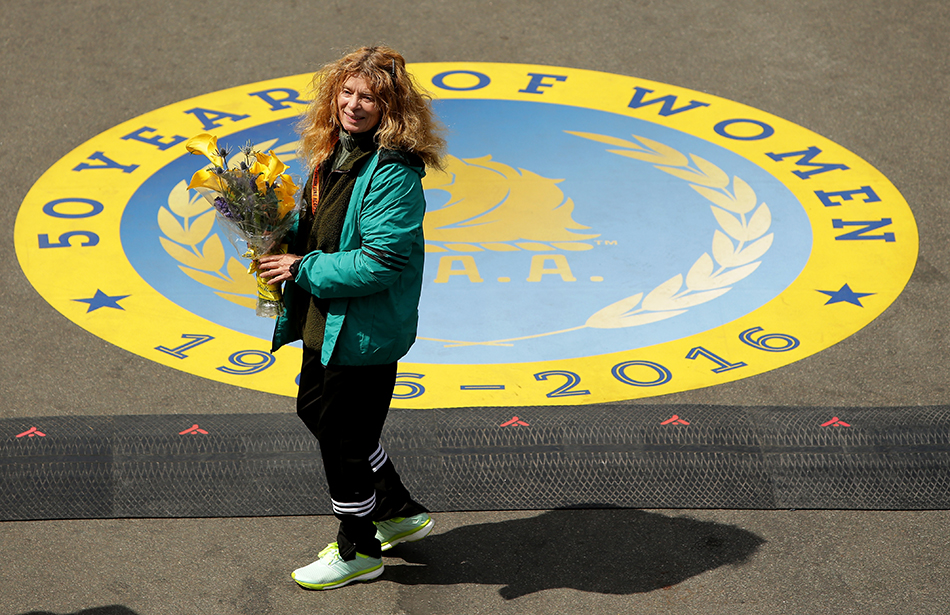
Gibb would also claim the “unofficial title” for the next two years, with Kathrine Switzer – who had signed her entry form KV Switzer and became the first woman to receive a Boston number – also finishing the 1967 race, despite official Jock Semple’s efforts to wrestle her off the course. Women were officially able to enter the race in 1972.
“It was always awesome knowing that I was racing in the steps of legends,” says Linden. “It was inspiring to know that, if I did something meaningful enough on the course, I could make a name for myself in running history.”
The now 42-year-old did just that eight years ago during an edition of the race that has well and truly entered running folklore. As the wind blew, the rain lashed, the temperatures plummeted and many of the other leading contenders struggled to cope, Linden was able to use a wealth of experience that she had built up since her first Boston appearance back in 2007.
Looking back on that debut, which delivered similarly awful conditions, she says: “In 2007 it was the USATF National Marathon Championship so it made sense to get in a high calibre national competition at the time. Boston was also slated to host the Olympic Trials the following year so it was a good chance to get familiar with the American competition and the surroundings of the host city.
“Embarrassingly, it had little to do with the lore of the Boston Marathon, but after meeting with folks from the BAA and experiencing the atmosphere on race day I truly fell in love with the event and the distance. It was unlike any other race experience I had ever had.
“The weather was the star of the show and I remember having to adjust my race day goal because of conditions; having heard so many stories about weather impacting races in Boston it was a valuable lesson in how important being ready for all conditions can be.”
She was ideally placed, then, to cope with anything that would be thrown at her in 2018 – even though she had very nearly been forced to quit the sport entirely due to health problems the previous year. Japan’s Yuki Kawauchi produced a similarly brilliant and controlled performance to win the men’s race.
“It’s very special to be on the list of champions and be a small part of the long history of the race,” says Linden, who had missed out on victory by just two seconds in 2011, and became the first American to win the women’s title in 33 years. “After coming so close in 2011 and getting a glimpse of what it could be like to win, but also learning that even two seconds away from winning isn’t in the same stratosphere as breaking the tape, it felt more meaningful to step in the winner’s circle and fully experience that world.
“It felt so unexpected. Of all the years I lined up and felt like I had it in me to win, this was the one year I went in with no expectations or pressure on myself to have a big day. It was eye-opening to realise how badly I wanted it and that maybe I needed to be less attached to results and just focus on the process a bit more.”
Fraioli also ran that year and recalls it fondly, too. “I stayed at my dad’s house before the race,” he says. “He’s retired now, but he was a plumber, and he had all these drawers of old, thick, warm, work socks. I basically cut the ends off them and I made arm sleeves for myself!”
That single edition of Boston he has missed since 2003 is one that has gone down in history for reasons that have little to do with running. “It was 2013, the year of the bombings,” he says of a weekend filled with emotional significance. “My wife and I got married on April 13 and the marathon was Monday the 15th.”
It was on that day that two bombs were detonated close to the finish line, killing three people and injuring hundreds, but the response to the terrorist attack gave rise to the phrase “Boston Strong” and galvanised not just the local community but the running community at large.
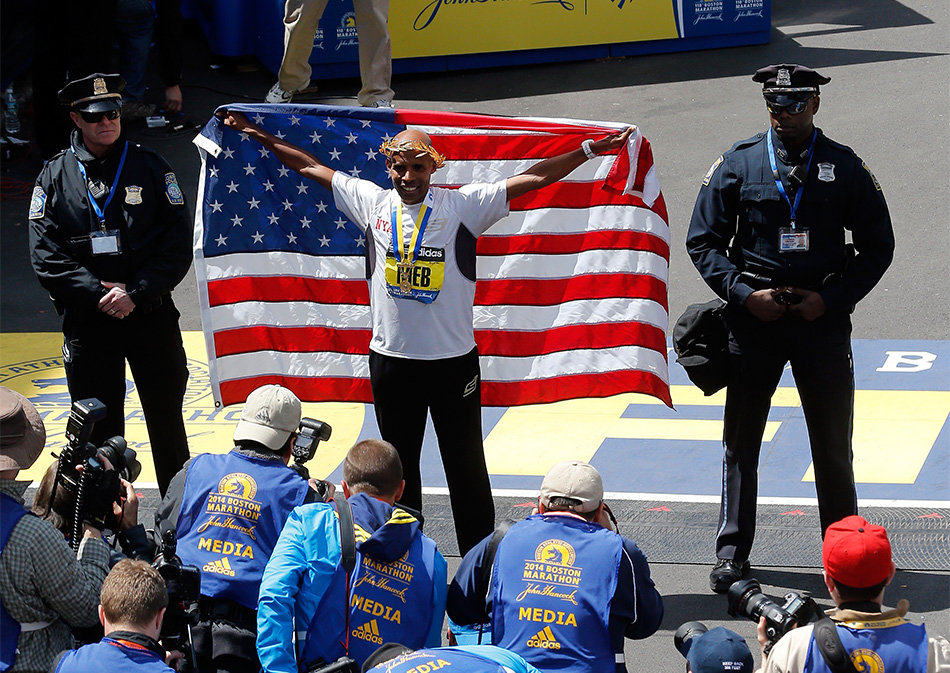
“Everyone wanted to go back and be part of that [the 2014 Boston Marathon],” remembers Fraioli. Running with the names of the victims on his bib, Meb Keflezighi rose to the occasion, riding an outpouring of emotion and support to become the first American man to win since 1983.
“It felt like a giant celebration that scoffed at the idea of anyone or anything holding us, the running community, down,” says Linden, who also ran that day. “All the things that runners go through, that set us back but don’t hold us down were on display: defiance, resilience, grit, persistence and fight.
“Watching Meb win in 2014 was special. He was always counted out or looked at as an underdog, even though he had proven himself repeatedly. He had more credentials than me but it was a position I could relate to and seeing him have his day when so many wrote him off was inspiring.
“I remember chatting with his wife at the finish line that day. They were always big supporters of mine and, even as he was having his big moment, she took the time to say she knew I could do it too and she believed I would have my winner’s moment. That always stuck with me and was something I thought about again in 2018.”
The story of 2026 is soon to be written and Linden and Fraioli will be two of the countless intrigued onlookers waiting to see what unfolds next. Given the significance of the occasion, and the weight it carries, does his advice to his athletes differ when Boston is concerned compared to other marathons?
“[I tell them] to be present and take it all in,” he says. “It is such a unique experience, and for most of these athletes to qualify for the Boston Marathon is, in many ways, the crowning achievement of their running career.
“Of course, we have splits we want to hit, strategies that we want to execute, but I also don’t want them to miss out on the experience. It’s like: ‘Take a minute to just appreciate the environment, to thank a volunteer’.
“I’ve had years in Boston where I haven’t done that myself. I didn’t do it in 2021 but I went back in 2023, I knew I was fit, I knew the course, I knew what I had to do, but my goals were just to be present, to thank the volunteers, to acknowledge the crowd, to really take into account that: ‘This is amazing. I’m here. I get to do this again’.
“That’s the number one thing I encourage my athletes to do – not to take for granted how incredible an opportunity it is to be able to do this race, whether it’s your first time or your 15th time.”